![Shigaraki-yaki Flower Vase: Where to Buy This Six-Kilns Ware [2026]](https://jpmono.com/wp-content/uploads/2026/07/shigaraki-yaki-flower-vase-where-to-buy-2026-featured.jpg)
- What it is: An unglazed Shigaraki-yaki ceramic ikebana flower vase (hanaire), with natural wood-ash glaze and orange scorch markings.
- Made in: Shigaraki, Koka, Shiga Prefecture — one of Japan’s Six Ancient Kilns (Rokkoyo).
- Price band: Mid-range for hand-formed Japanese stoneware flower vases — check the live listing, as our snapshot carried no price.
- Best for: Ikebana practitioners and collectors who want a rugged, wabi-sabi vessel with visible kiln character.
- Skip if: You want a flawless, uniform, glossy vase — no two Shigaraki pieces match.
- Shipping: ships internationally from Amazon Japan — jump to our pick ↓
ℹ️ Live pricing and some specs were not in our snapshot — the linked Amazon listing is authoritative, and unconfirmed attributes are marked below. Prices in USD are approximate and depend on the current exchange rate.
The clay for this vase was pressed out of an ancient lakebed. In the southern hills of Shiga Prefecture, potters dig a coarse, feldspar-rich earth laid down over roughly four million years by the sediment of Lake Biwa — the same stratum that feeds neighboring Iga-yaki across the Mie border. Fired in a wood kiln, that grit refuses to sit still: it pushes tiny stones to the surface, catches falling ash into a glassy green skin, and blushes orange where the flame licked bare clay. Shigaraki ware (信楽焼, “Shigaraki-yaki”) is one of Japan’s Six Ancient Kilns, and this ikebana vase carries its oldest, most austere lineage.
What makes a Shigaraki flower vase notable to an international buyer is not decoration but the lack of it. Where much export ceramic leans on painted patterns, this hanaire (花入, “flower container”) is defined by accidents the potter courts rather than avoids: the natural ash glaze (shizen-yu, 自然釉) that pools where wood ash melted onto the shoulder, and the hibake (火色, “scorch color”) scorch that stains the unglazed body. Muromachi-era tea masters treated exactly these marks as the essence of wabi-cha — the aesthetic of the imperfect and the plain — long before the town became famous for its grinning ceramic tanuki.
This guide is written for readers shopping from outside Japan who want a genuine Six-Kilns piece rather than a mass-market lookalike. We cover what the listing actually confirms, how it compares to sibling Japanese wares, where the craft comes from, and every practical path to buy it — Amazon US, Amazon Japan’s Global Store, and proxy services — with honest notes on shipping and customs.
🗓️ Published: ·
🔄 Last updated: ·
⏱️ Read time: about 9 minutes

- Who this is for — and who should skip it
- Product overview (from published specs)
- Where this comes from — place, era, and the craft tradition
- 📦 Shipping & where to buy from outside Japan
- Price snapshot across stores
- What it does well
- Weaknesses and things to verify before buying
- Conclusion — which buyer type are you?
- Other ways to approach this purchase
- 🏆 Editor’s Pick
- ❓ Frequently Asked Questions
Who this is for — and who should skip it
- Practice ikebana and want a hanaire with real kiln character, not factory uniformity.
- Value wabi-sabi — you read ash pooling and scorch as beauty, not as flaws.
- Collect the Six Ancient Kilns and want an austere Shigaraki piece over the tourist tanuki.
- Prefer an unglazed, tactile surface that changes subtly with age and use.
- Are comfortable buying a one-of-a-kind object that will differ from the photo.
- Expect a flawless, glossy, perfectly symmetrical vase.
- Need an exact color match to room decor — kiln effects are unpredictable.
- Want a dishwasher-safe, worry-free everyday object.
- Dislike coarse, gritty stoneware texture against the hand.
- Require confirmed dimensions and weight before buying — verify these on the live listing first.
Product overview (from published specs)
Shigaraki-yaki Flower Vase
信楽焼 花器 灰釉流し丸花瓶・7号
通常4~5日以内に発送します。 · Sold by ★虹八-Kohya- · ASIN B0D3NYDB2T
Price and availability as of 2026-09-01 05:22 JST. The Amazon listing at the time of purchase is authoritative. jpmono.com earns a commission on qualifying purchases at no extra cost to you.
| Attribute | What the listing indicates | Source |
|---|---|---|
| Craft | Shigaraki-yaki (信楽焼) stoneware, one of the Six Ancient Kilns | Maker direct |
| Object type | Ikebana flower vase (hanaire, 花入) | Amazon JP Global Store |
| Surface | Unglazed body with natural wood-ash glaze (shizen-yu) and hibake scorch | Amazon JP Global Store |
| Clay | Coarse, feldspar-rich clay from ancient Lake Biwa lakebed sediment | Maker direct |
| Made in | Shigaraki, Koka, Shiga Prefecture, Japan | Maker direct |
| Dimensions / weight | Unconfirmed — check manufacturer / Amazon listing | — |
| Price | Not in our snapshot — see live listing (JPY authoritative) | — |
Per the Amazon listing snapshot as of July 13, 2026. Only the Amazon JP listing was available; live pricing and exact dimensions may have shifted since writing.
📖 Glossary — key Shigaraki terms
- Shigaraki-yaki (信楽焼) — stoneware fired in the Shigaraki district of Koka, Shiga; one of the Six Ancient Kilns.
- Rokkoyo (六古窯, “Six Ancient Kilns”) — the six medieval Japanese kiln sites in continuous production since roughly the Kamakura era: Shigaraki, Seto, Tokoname, Echizen, Tamba, and Bizen.
- Hanaire (花入) — a flower container used in ikebana and the tea ceremony.
- Shizen-yu (自然釉, “natural glaze”) — the glassy green skin formed when wood ash melts onto the clay during firing, not applied by hand.
- Hibake (火色, “fire color”) — the orange-to-brown scorch that colors bare, unglazed clay where the flame touched it.
- Wabi-cha (侘び茶) — the tea aesthetic of restraint and imperfection that made Shigaraki’s rough surfaces prized in the Muromachi era.
- Tanuki (狸) — the raccoon-dog figure; Shigaraki’s ubiquitous ceramic tanuki are the town’s popular modern emblem.
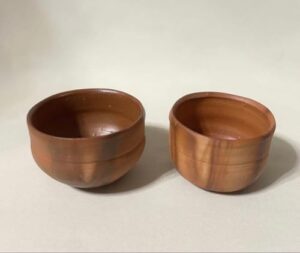 Bizen-yaki Guinomi (Six Kilns) →
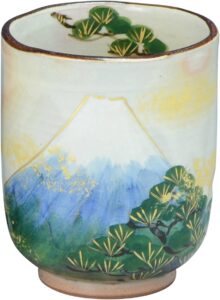 Aito Kyoyaki Yunomi (Shiga) →
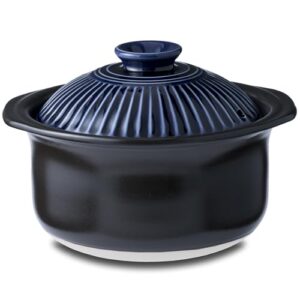 Banko-yaki Donabe →
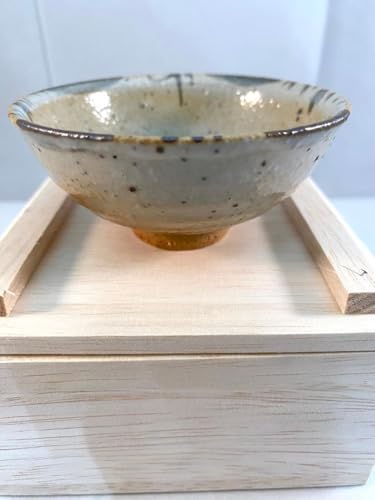 Karatsu E-Garatsu Guinomi →
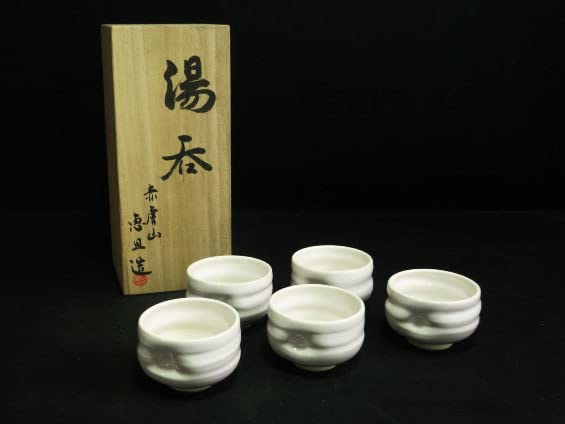 Akahada-yaki Yunomi (Nara) →
Arita Sometsuke Mug →
Where this comes from — place, era, and the craft tradition

Shigaraki sits in the southern hills of Shiga Prefecture, in the Kansai region, a short drive southeast of Kyoto and just west of the Mie border. The district belongs to the modern city of Koka, tucked into wooded uplands rather than the plain. Its craft took root for a concrete geological reason: the ground here is packed with a coarse, feldspar-rich clay left behind by the ancient lakebed sediment of Lake Biwa — the same four-million-year-old strata that also supply neighboring Iga-yaki across the prefectural line.
The area’s moment on the national stage came early. In 742, Emperor Shomu built the Shigaraki-no-miya palace in these hills, briefly making the district an imperial capital before the court moved back to Nara. That imperial episode was short, but the kilns that followed were not.
From the Kamakura period the Shigaraki kilns fired coarse storage jars and grinding mortars for farms and kitchens — utilitarian work, valued for durability. By the Muromachi era, tea masters had reversed the hierarchy of taste: they prized exactly the raw, unglazed surfaces, feldspar grit, accidental ash glaze (shizen-yu), and orange scorch (hibake) that a decorator would have hidden. Those “defects” became the visual grammar of wabi-cha, and Shigaraki tea and flower wares entered a lineage that has never fully lapsed.
- 742 CE — Emperor Shomu builds the Shigaraki-no-miya palace; the hills briefly serve as an imperial capital before the court returns to Nara.
- Kamakura period (1185–1333) — Kilns fire coarse storage jars and grinding mortars for farm and kitchen use.
- Muromachi period (1336–1573) — Tea masters prize Shigaraki’s raw surfaces, ash glaze, and scorch as the essence of wabi-cha.
- Momoyama period (late 1500s) — Shigaraki flower vases and tea containers reach an aesthetic high point in the tea ceremony.
- Edo period (1603–1868) — Production broadens to everyday wares; the ceramic tanuki lineage develops.
- 20th century — Shigaraki is counted among the Rokkoyo (Six Ancient Kilns); the tanuki becomes a national mascot.
- Today (2026) — Koka’s kilns still fire flower vases and tea ware in the older, austere lineage.
“In Shigaraki, the marks a decorator would hide — the melted ash, the scorch, the stray stone in the clay — are the reason to buy the pot.”
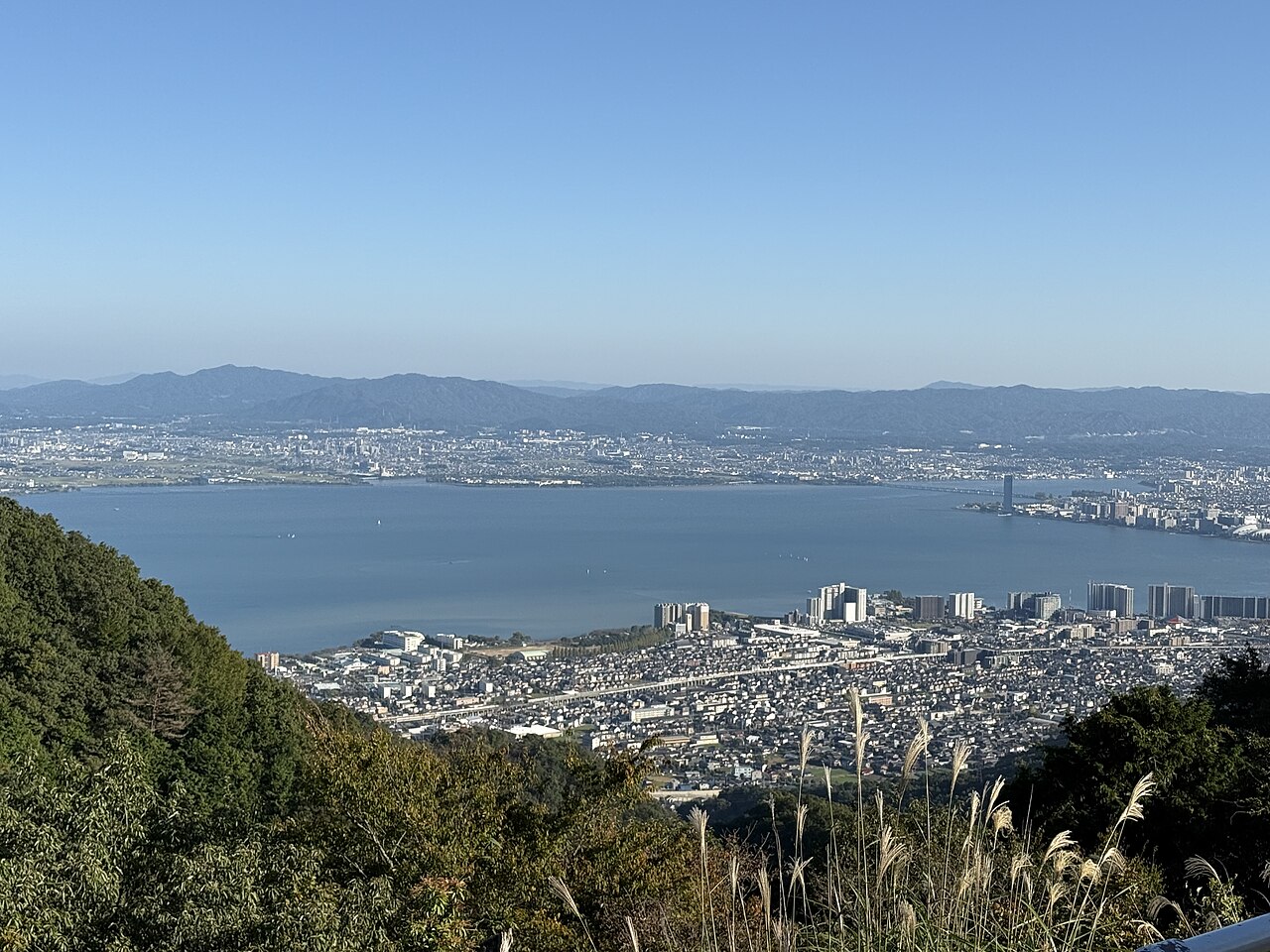
The wider province carries its own weight of history. Shiga — historically Omi province — wraps around Lake Biwa, Japan’s largest freshwater lake, and its feudal castle towns framed the small kiln districts that survived in the hills. Hikone Castle, still standing above the lake’s eastern shore, is one emblem of that Omi past.
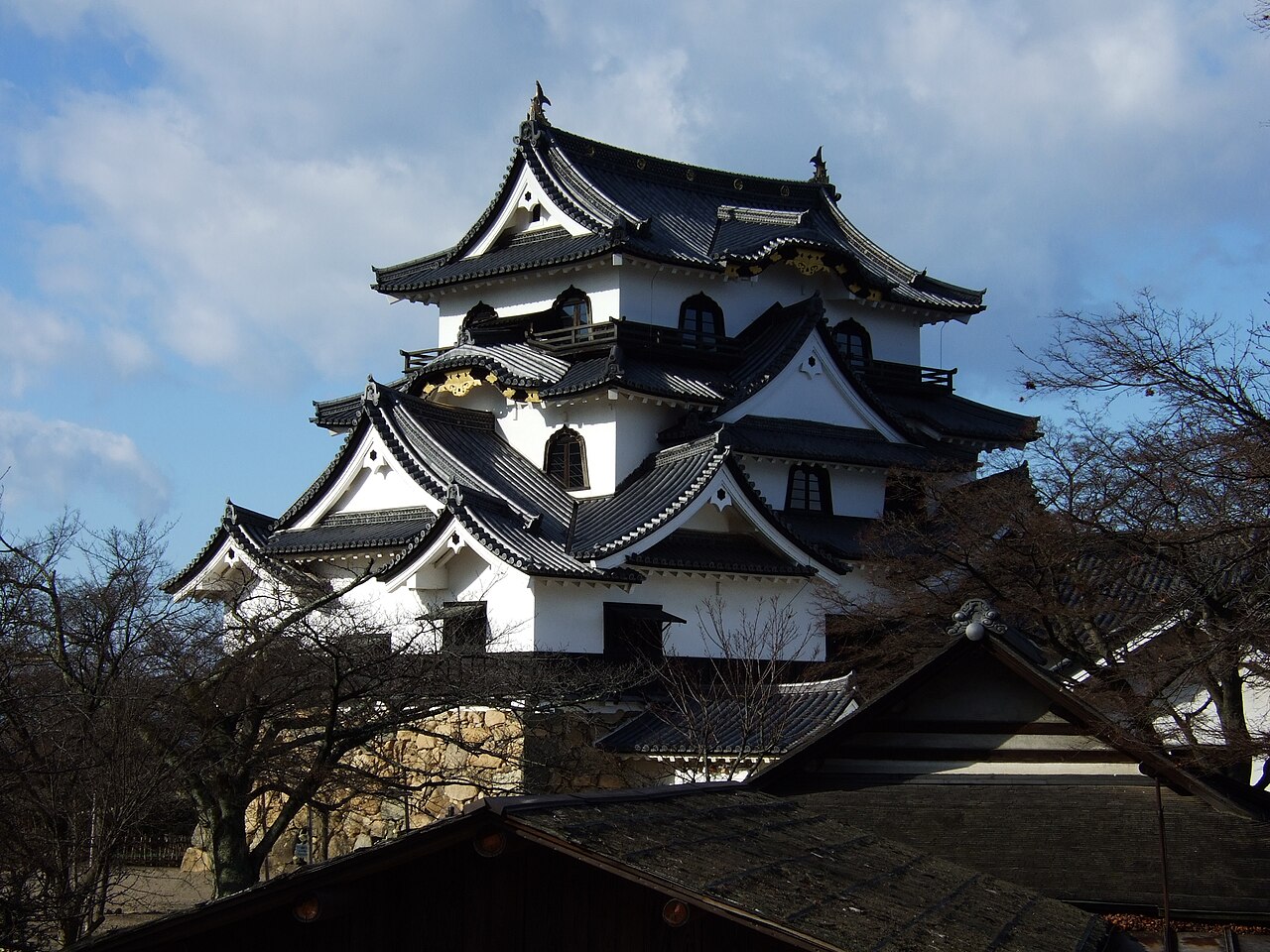
What “still made here” means for Shigaraki is a living kiln town rather than a museum piece. The district is now best known to Japanese visitors for its ceramic tanuki, sold everywhere along the pottery streets — but the same workshops that shape those good-luck figures also fire flower vases and tea wares in the older, plainer lineage. Buying this hanaire is buying the austere branch of a tradition that runs unbroken from medieval storage jars to the present kilns.
📦 Shipping & where to buy from outside Japan
The specific vase in this guide is sourced from the Amazon Japan Global Store, which ships household ceramics to 65+ countries — including Canada, the UK, and Australia, not only the United States. Amazon estimates and typically collects any import fees at checkout for most destinations, so there are rarely surprise charges on delivery.
If you are shopping from outside the US, our per-country guides walk through duties, thresholds, and delivery times: Canada, the UK, and Australia. Typical international shipping runs roughly $15–$40 to the US, EU, Canada, the UK, and Australia, depending on weight and speed.
Alternative paths exist if the Global Store listing is unavailable in your country: proxy services such as Buyee or Tenso can forward a domestic Amazon JP or maker-direct order, and Koka’s kilns and pottery-street shops sometimes sell direct. For a fragile, unglazed vase, prefer a path that offers tracked, insured shipping.
- 🍽️ Dishwasher: no — hand-wash the unglazed stoneware gently.
- 💧 Water use: holds water for fresh ikebana; the porous, unglazed body may show faint moisture patches, which is normal.
- 🧴 Daily care: rinse and air-dry fully; the bare clay can darken subtly with use, which is part of its character.
- 🔧 Repairs: chips and cracks can be mended with kintsugi (gold-joinery) rather than discarded.
Price snapshot across stores
| Store | Item / Variant | Price (JPY + USD est.) | Notes |
|---|---|---|---|
| 🇺🇸 Amazon.com (US) | Browse Japanese Shigaraki & ikebana flower vases | varies (USD) | Best if you are shopping from the US — Prime shipping, USD pricing, no international customs. Amazon US carries Japanese ceramic and ikebana vases from various makers; this exact Shigaraki piece ships from Japan (next row). |
| 🇯🇵 Amazon JP Global Store | This exact Shigaraki-yaki hanaire (ASIN B0D3NYDB2T) | Live price on listing (JPY authoritative) — not in our snapshot | Ships internationally from Japan to 65+ countries — including Canada, the UK, and Australia — with import fees estimated at checkout. |
| Maker direct | Shigaraki kiln / pottery-street shops | Varies — unconfirmed | Some Koka kilns sell direct; international shipping is not always offered — verify before ordering. |
| Proxy services (Buyee / Tenso) | Forwarded domestic JP order | Item + forwarding fee | Useful when the Global Store listing is region-blocked; adds a handling fee but reaches most countries. |
USD figures are approximate estimates (¥150/USD baseline as of mid-2026); the JPY price on the live listing is authoritative. Prices and stock fluctuate — confirm at the retailer before purchasing.
What it does well
Weaknesses and things to verify before buying
- Dimensions and weight are unconfirmed in our snapshot. Check the live listing for exact height, mouth width, and capacity before buying — a small hanaire may be smaller than photos suggest.
- No price was captured. Our snapshot carried no figure; treat the live JPY listing as authoritative and budget for shipping and possible import fees.
- Every piece differs from the photo. Ash glaze and scorch are firing accidents; the exact pattern you receive will not match the listing image.
- Unglazed and porous. The bare clay can seep faint moisture and may darken over time; it is not a wipe-clean, uniform surface.
- Fragile in transit. Ceramics need tracked, well-packed shipping; confirm the seller’s packaging and insurance for a long international route.
- Not dishwasher-friendly. Hand-washing only — a poor fit for anyone wanting a low-maintenance decorative object.
Conclusion — which buyer type are you?
Other ways to approach this purchase
🏆 Editor’s Pick
❓ Frequently Asked Questions
Does Amazon Japan ship this Shigaraki vase internationally?
Yes. The item is sourced from the Amazon Japan Global Store, which ships to 65+ countries — including Canada, the UK, and Australia — with import fees estimated at checkout for most destinations.
Will my vase look exactly like the photo?
No. The ash glaze and hibake scorch are firing accidents unique to each piece, so the exact markings will differ from the listing image. That variation is intrinsic to Shigaraki ware.
How do I care for an unglazed Shigaraki flower vase?
Hand-wash gently and air-dry fully; it is not dishwasher-safe. The porous, unglazed body may show faint moisture and can darken slightly with use, which is normal for the clay.
What is the difference between Shigaraki and Iga ware?
Both are fired from the same ancient Lake Biwa lakebed clay bed — Shigaraki in Shiga and Iga just across the border in Mie — so they share a rugged, feldspar-rich character. They are treated as distinct kiln traditions with different histories and forms.
Is Shigaraki ware just the ceramic tanuki figures?
No. The tanuki are the town’s popular modern emblem, but the same kilns also make flower vases and tea wares in an older, austere lineage that tea masters prized from the Muromachi era onward.
How much does shipping cost from Japan?
International shipping typically runs roughly $15–$40 to the US, EU, Canada, the UK, and Australia, depending on weight and speed. Amazon usually estimates import fees at checkout, so surprise charges on delivery are rare.
Can a Shigaraki vase be repaired if it chips or cracks?
Yes. Chips and cracks can be mended with kintsugi (gold-joinery), which repairs the piece while highlighting the break rather than hiding it.
jpmono.com is curated by a Japan-based editorial team (working out of Toyama in the Hokuriku region and Nara in Kansai) and is independent. We do not take payment from the makers we feature; income comes from affiliate links. Read more about our editorial standards.
🤖 This article was produced with AI assistance and reviewed against the source listing and public references. Facts on pricing and specifications may change after publication; verify on the retailer’s page before buying.
Affiliate disclosure: jpmono.com may earn a commission on qualifying purchases made through links on this page, at no additional cost to you.