![Suruga Sashimono Kiri Paulownia Accessory Box: Where to Buy [2026]](https://jpmono.com/wp-content/uploads/2026/05/japan-map-regions-and-prefectures-800x1050.png)
Suruga Sashimono is the nail-free joinery woodwork of Sumpu — the castle town that is now central Shizuoka City. A kiri (桐, paulownia) accessory box in this tradition is built the way a good drawer is built: boards cut and fitted with hidden tenon-and-groove joints (kumitsugi), so the wood holds together through clamping geometry rather than glue or nails. The result is a light, pale, slightly warm box that opens and closes with a soft cushion of air, and that can be taken apart and repaired generations later.
What makes this notable to an international reader is less the look than the logic. Paulownia is one of the lightest cabinet woods in common use, it resists insects, and it swells and shrinks gently with humidity — which is exactly why Japanese households have stored kimono, documents, and jewelry in kiri boxes for centuries. Pair that wood with joinery designed to breathe and move, and you get a container that moderates moisture around whatever you keep inside it. This is not decorative heritage; it is a humidity tool that happens to be beautiful.
This guide is written for readers shopping from outside Japan who want to understand what they are actually buying before they compare prices: what Suruga Sashimono is, where it comes from, who it suits, who should skip it, and the realistic routes to purchase from the US, Europe, and elsewhere. We lead with the practical buying paths and stay honest about where our source data was thin.
🔄 Updated: May 31, 2026
⏱ Read time: ~9 min
- Who this is for — and who should skip it
- Product overview (from published specs)
- Where this comes from — place, era, and the craft tradition
- 📌 How does it compare?
- 📦 Shipping & where to buy from outside Japan
- Buying options
- What it does well
- Weaknesses and things to verify before buying
- Conclusion — which buyer type are you?
- Other ways to approach this purchase
- ❓ Frequently Asked Questions
Who this is for — and who should skip it
- Want a humidity-moderating box for jewelry, watches, accessories, or small heirlooms
- Value joinery and repairability over decoration and gloss
- Prefer pale, quiet, natural wood that ages slowly rather than lacquered color
- Appreciate owning a designated national traditional craft from a documented region
- Are comfortable buying from Japan and waiting for international shipping
- Want a hard-wearing, scratch-proof box — paulownia is soft and dents easily
- Need a waterproof or sealed container; kiri is designed to breathe, not seal
- Are shopping on a tight budget (hand-cut joinery is not commodity-priced)
- Expect a glossy lacquer finish or bright color
- Need it tomorrow — most pieces ship from Japan with customs lead time

Product overview (from published specs)
The kiri (paulownia) used for Suruga Sashimono boxes is light and moisture-buffering, qualities associated with the region’s traditional joinery. Because handmade boxes vary by workshop, compare the joinery, construction, and finish of each piece rather than assuming every box is identical.
| Attribute | Value | Source |
|---|---|---|
| Craft | Suruga Sashimono (駿河指物) — nail-free joinery woodwork | Verified craft notes |
| Object | Kiri (paulownia) accessory / jewelry box | Spec |
| Primary material | Paulownia (kiri); hinoki cypress also used in the tradition | Verified craft notes |
| Construction | Hidden tenon-and-groove joints (kumitsugi), no nails | Verified craft notes |
| Origin | Shizuoka City (former Sumpu), Shizuoka Prefecture | Verified craft notes |
| Status | Designated a national traditional craft (dentōteki kōgeihin) | Verified craft notes |
| Dimensions / weight | — | Not in dataset |
| Price | Unconfirmed — not present in source data at time of writing | Not in dataset |
📖 Glossary — key terms
Sashimono (指物) — joined woodwork (furniture, boxes, chests) assembled by interlocking boards with cut joints, traditionally without nails.
Kumitsugi (組接ぎ) — the family of hidden tenon-and-groove joints that lock the boards of a sashimono piece together.
Kiri (桐, paulownia) — a very light, pale hardwood prized for resisting insects and for swelling and shrinking gently with humidity; the classic Japanese storage wood.
Sumpu (駿府) — the historical name of the castle town that is now central Shizuoka City; the seat to which Tokugawa Ieyasu retired.
Sashimono-shi (指物師) — a master joiner specializing in sashimono work.
Dentōteki kōgeihin (伝統的工芸品) — “traditional craft product,” Japan’s national designation recognizing a regional craft’s materials, techniques, and heritage.

Where this comes from — place, era, and the craft tradition

Suruga is the old provincial name for the central belt of present-day Shizuoka Prefecture, facing Suruga Bay on the Pacific side of Honshū. The land here is a narrow strip between sea and mountain — warm, humid, well-watered, and historically a logistics corridor, because the Tōkaidō, the great road linking Edo (Tokyo) to Kyoto, ran straight through it. Good timber came down from the surrounding hills, and a steady traffic of travelers, officials, and goods kept skilled trades busy. Those are the conditions a fine-joinery industry needs: raw wood, demand, and a town wealthy enough to want well-made things.
The town’s pivotal moment was political. Sumpu became nationally important when Tokugawa Ieyasu, founder of the shogunate that would rule Japan for over 250 years, chose it as his retirement seat. After stepping down as shogun, he ruled as Ōgosho (“retired shogun”) from Sumpu Castle, and he ordered the rebuilding of the local Sengen Shrine on a grand scale.
- c. 1607 — Tokugawa Ieyasu, having stepped down as shogun, makes Sumpu Castle his retirement seat as Ōgosho; the castle town expands.
- Early Edo period — Master joiners (sashimono-shi) summoned to rebuild Sengen Shrine and furnish the castle settle in the Sumpu castle town.
- Mid-Edo period — These joiners turn to cabinetry, chests, and fine boxes, refining hidden tenon-and-groove (kumitsugi) joinery that uses no nails.
- Late Edo to Meiji (1800s) — The trade persists as a domestic furniture-and-box craft as Sumpu becomes modern Shizuoka City.
- 20th century — Suruga Sashimono is recognized as a national traditional craft by Japan’s METI.
- 2026 — Workshops in Shizuoka City continue to cut joints by hand for paulownia boxes and small furniture.
The shrine project and the castle household pulled skilled joiners into Sumpu, and many stayed. With the founding-era construction work finished, those sashimono-shi turned their hands to what a prosperous Edo-period town wanted: chests, cabinetry, document boxes, and the small fitted boxes that protected valuables. The technique that defined them was kumitsugi — interlocking the boards with cut joints so the structure holds without nails. A nailed box rusts, splits along the iron, and is hard to repair. A jointed box can be eased apart and re-fitted, and it moves as one piece of wood when the weather changes.
“A nailed box is held shut by metal. A sashimono box is held shut by geometry — which is why it can be opened, repaired, and handed down.”
“Still being made here” means something specific. Suruga Sashimono remains a niche, largely domestic craft, carried by a small number of Shizuoka City workshops rather than a large export industry — which is precisely why the realistic purchase path runs through Japan rather than a US shelf. The continuity is in the method, not in marketing: the joints a maker cuts today belong to the same family of joints that furnished a retired shogun’s castle town. We draw these facts from verified craft notes; where a date or designation year is not firmly attested, we have flagged it rather than invent precision.

📌 How does it compare?
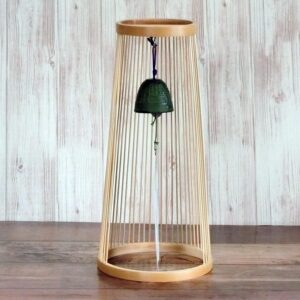 🎐 Suruga bamboo wind chime (same prefecture)
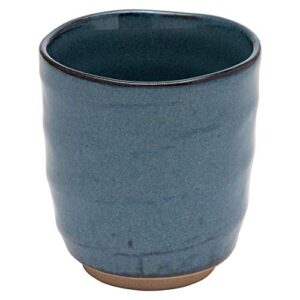 🍵 Shitoro-yaki Yunomi (same prefecture)
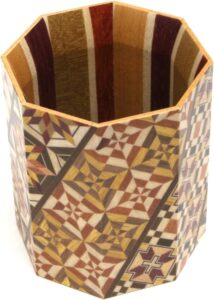 🪵 Hakone Yosegi pen stand (neighboring woodwork)
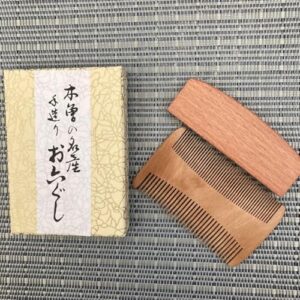 💈 Kiso Oroku-gushi comb (Chubu woodwork)
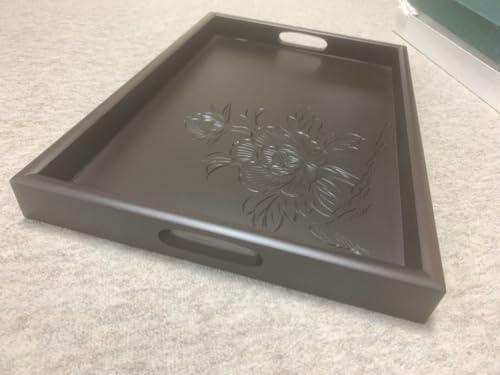 🍽 Nikko-bori carved tray (woodwork)
🔲 Edo Kumiko joinery coasters (woodwork)
♟ Tendo Shogi koma (woodwork)
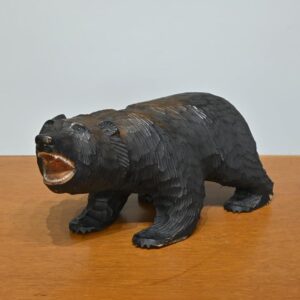 🐻 Hokkaido kibori bear (wood okimono)
📦 Shipping & where to buy from outside Japan
Because Suruga Sashimono is a small, domestic craft, the dependable route from outside Japan is to search Amazon Japan for the craft name (駿河指物 / 桐) or to contact a Shizuoka-region workshop or dealer directly. International shipping for small wooden boxes is generally available through carriers serving Japan, with the exact route confirmed by the seller.
- Amazon JP Global Store — ships internationally from Japan; international shipping to the US/EU typically runs in the $15–$40 range for a box of this size, higher to other regions.
- Proxy services (Buyee / Tenso) — useful if a maker-direct or domestic-only option is not available for international checkout; they re-forward from a Japanese address for a fee.
- Customs & duties — orders above your local de-minimis threshold may incur import duty or tax on arrival; budget for this separately from the item price.
- Voltage / certification — not applicable; this is an unpowered wooden box.
Buying options
| Store | Item / variant | Price | Notes |
|---|---|---|---|
| 🇺🇸 Amazon US (search) | Browse Japanese paulownia (kiri) & jewelry boxes | varies (USD) | Best if you are shopping from the US — Prime shipping, USD pricing, no international customs. Amazon US carries comparable Japanese wood boxes and storage goods; this exact Suruga Sashimono piece is sourced from Japan (next row). |
| 🇯🇵 Amazon JP Global Store | Suruga Sashimono kiri accessory box | — | Ships internationally from Japan. Confirm the current total before ordering. |
| Maker direct | Shizuoka City sashimono workshops | varies (JPY) | Some workshops sell directly but may not support international checkout; a proxy service can bridge this. |
| Proxy services (Buyee / Tenso) | Re-forwarding from a Japanese address | item + fee + shipping | Use when a Japan-only option is unavailable internationally; adds a service fee on top of the purchase and international shipping. |
What it does well
Weaknesses and things to verify before buying
- Soft surface. Paulownia dents and scratches easily; this is a quiet keepsake box, not a knockabout container.
- Not sealed or waterproof. A breathing box is the point — do not expect it to keep out water or to hold a precise internal humidity.
- Confirm the box’s interior and lid before ordering.
- Finish may vary. Confirm grain, color, and finish before ordering.
- Largely domestic craft. Selection is limited and international availability can be thin; a proxy service may be needed if direct shipping is unavailable.
- Shipping lead time and customs. Expect Japan-to-overseas transit and possible import duty above your local threshold.
Conclusion — which buyer type are you?
Other ways to approach this purchase
❓ Frequently Asked Questions
Does Amazon JP ship a Suruga Sashimono box internationally?
Why is paulownia (kiri) used instead of a harder wood?
What does “nail-free joinery” actually mean here?
How should I care for it?
Is it a good gift?
How does it compare with Hakone Yosegi or Edo Kumiko woodwork?
Why was no price shown in this guide?
jpmono.com is curated by a Japan-based editorial team (working out of Toyama in the Hokuriku region and Nara in Kansai) and is independent. We do not take payment from the makers we feature; income comes from affiliate links. Read more about our editorial standards.
Affiliate disclosure: jpmono.com may earn a commission on qualifying purchases made through links on this page, at no additional cost to you.