![Tamashimaya Tama Yokan Balloon-Wrapped Adzuki Yokan Spheres (玉羊羹, individually sealed pieces in a gift box) — the Nihonmatsu, Fukushima confectioner that turned yokan into a portable sphere [2026 Guide for International Readers]](https://jpmono.com/wp-content/uploads/2026/09/tamashimaya-tama-yokan-where-to-buy-2026-featured.jpg)
- What it is: adzuki-bean yokan portioned into spheres, each one sealed inside a small rubber balloon and boxed by the dozen
- Made in: Nihonmatsu, Fukushima — by Tamashimaya (玉嶋屋), a confectioner that dates its founding to the Tenmei era of the 1780s and describes itself as a former supplier to the Nihonmatsu domain
- Price band: boxed gift-count wagashi; our snapshot carried no live figure, so read the price on the listing itself
- Best for: readers who want a shelf-stable, plant-based Japanese sweet that survives a long shipping route and needs no knife or plate
- Skip if: you want a soft, fresh-made wagashi, or there are small children who might reach the box before the casing is removed
- Shipping: ships internationally from Amazon Japan — jump to our pick ↓
Pierce the skin with a toothpick and the sweet falls out whole. No knife, no cutting board, no plate: a glossy black-red sphere of adzuki yokan, about the size of a large plum, that has been sitting sealed inside a rubber balloon since it left the workshop. This is tama yokan (玉羊羹, “sphere yokan”), and it is the signature product of Tamashimaya, a wagashi house in the old castle town of Nihonmatsu in central Fukushima.
Most yokan reaches a buyer as a firm rectangular bar wrapped in paper and foil, to be sliced into portions. Tamashimaya’s version dispenses with the slicing entirely. Each portion of hon-neri adzuki yokan is enclosed in a thin rubber casing, tied off at the neck, and packed by the dozen into a paper box. The format is commonly reported to date from the late 1930s, developed in response to a request for a yokan that could be carried and kept without refrigeration, and it has stayed in production ever since.
For readers ordering from outside Japan, that origin story has a practical afterlife. A sealed sphere travels far better than a paper-wrapped bar: it cannot dry at the cut edge, cannot pick up odors from the rest of the parcel, and cannot lose its shape in a warm sorting facility. This guide covers who Tamashimaya are, what the Nihonmatsu domain has to do with their sweets, how tama yokan differs from the yokan already covered on this site, and how to buy the box through Amazon Japan.
🔄 Last updated:
⏱️ Read time: about 11 minutes

ℹ️ Live pricing and the exact piece count were not in our snapshot — the linked listing is authoritative, and unconfirmed attributes are marked as such below.
- Who this is for — and who should skip it
- Product overview (from published specs)
- Which finish should you choose?
- 📍 Where this comes from — place, era, and the craft tradition
- 📌 How does it compare?
- 📦 Shipping & where to buy from outside Japan
- Price snapshot across stores
- What it does well
- Weaknesses and things to verify before buying
- Conclusion — which buyer type are you?
- Other ways to approach this purchase
- 🏆 Editor’s Pick
- ❓ Frequently Asked Questions
Who this is for — and who should skip it
- You want a Japanese sweet that survives an international shipping route without melting, drying, or crumbling.
- You eat plant-based: the standard composition is sugar, adzuki bean paste, starch syrup, and agar — no dairy, egg, meat, alcohol, or chocolate.
- You want single-serving portions with no cutting, no plate, and no leftover open package.
- You are buying a gift and want something visually unusual that still reads as traditional wagashi.
- You are building a Japanese tea-and-sweets pairing at home and already have sencha, bocha, or matcha on the shelf.
- You wanted fresh, soft, same-week wagashi — nerikiri or daifuku — rather than a keeping sweet.
- There are toddlers in the household: the rubber casing is packaging, not food, and is a choking-risk object until it is removed and thrown away.
- You dislike dense, sweet bean paste. Yokan is concentrated by design; this is not a light sponge cake.
- You need a confirmed allergen profile before ordering and cannot read the printed label on the box.
- You want a large sliceable centerpiece bar to cut for guests — the sphere gives you fixed portions instead.
Product overview (from published specs)
The table below reflects what is stated on the listing and by the maker. Where our snapshot did not carry a value, the cell says so rather than guessing — Amazon Japan food listings change piece counts and box configurations between seasons, and the live page is the authority.
| Product | Tamashimaya Tama Yokan (玉嶋屋 玉羊羹) — individually sealed adzuki yokan spheres in a gift box |
|---|---|
| Maker | Tamashimaya, Nihonmatsu, Fukushima Prefecture — founding publicly cited as 1782 (Tenmei era) |
| Type | Hon-neri yokan (fully kneaded, agar-set bean paste), portioned into spheres |
| Typical composition | Sugar, nama-an (adzuki bean paste), mizuame (starch syrup), kanten (agar) — verify the printed ingredient and allergen line on the actual box |
| Packaging | Each sphere sealed in a thin rubber balloon casing tied at the neck; casing is packaging, not food |
| Box counts | Commonly 10, 20, or 24 pieces — confirm the count on the listing you order |
| Storage | Room temperature, away from direct sun; no refrigeration required. Chilling before eating is a preference, not a requirement |
| Keeping | Measured in months from production rather than days — read the 賞味期限 (best-by) date printed on the box |
| Dietary | Entirely plant-based in standard composition; contains a legume (adzuki). Confirm the printed allergen line rather than assuming an allergen-free product |
| Weight / dimensions | Unconfirmed — not in our snapshot; check the listing |
| Reference ID | B0C5QZ9TP9 (Amazon JP Global Store listing) |
📖 Glossary — the Japanese terms used in this guide
- yokan (羊羹) — a firm confection of sweetened bean paste set with agar, cut into portions and eaten in small pieces alongside tea.
- tama yokan (玉羊羹) — literally “sphere yokan”: yokan portioned into balls rather than a bar. Tamashimaya’s signature format.
- hon-neri (本練り) — the fully kneaded style of yokan, cooked down to a dense, glossy set rather than a soft steamed one.
- nama-an (生あん) — unsweetened bean paste made from cooked and sieved adzuki, the base ingredient before sugar is added.
- mizuame (水飴) — starch syrup. It keeps the set supple and glossy rather than brittle.
- kanten (寒天) — agar, a seaweed-derived setting agent. It sets firmer than gelatin and holds at room temperature, which is why yokan does not need chilling.
- wagashi (和菓子) — the broad category of traditional Japanese confectionery, typically bean-, rice-, or sugar-based and served with tea.
- go-yo kashi-shi (御用菓子司) — a confectioner appointed to supply a feudal domain’s household. Tamashimaya describes itself as a former go-yo kashi-shi to the Nihonmatsu domain.
- shōmikigen (賞味期限) — the best-by date printed on Japanese packaged food. This is the number to read on the box rather than relying on a stated shelf life.
Which finish should you choose?
This piece is listed in 2 sizes. The photos below are the actual size options on the listing right now — pick the one you want and confirm it on the product page before ordering, since hand-finished wares vary slightly piece to piece.
![Tamashimaya Tama Yokan Balloon-Wrapped Adzuki Yokan Spheres (玉羊羹, individually sealed pieces in a gift box) — the Nihonmatsu, Fukushima confectioner that turned yokan into a portable sphere [2026 Guide for International Readers] — ピーチ玉羊羹(12個入) finish](https://m.media-amazon.com/images/I/51NJHUowZ0L._SL500_.jpg)
📍 Where this comes from — place, era, and the craft tradition

Fukushima is usually described in thirds. The Pacific coast is Hamadōri; the mountainous west around Aizu is Aizu; and the inland corridor between them, where most of the prefecture’s castle towns and rail lines run, is Nakadori. Nihonmatsu sits in that middle corridor, with the Abukuma highlands on one side and the Adatara volcano on the other. It is a town shaped by a road and a domain rather than by a port.
The domain is the part that matters for the sweets. Nihonmatsu was ruled by the Niwa clan from 1643 until the Meiji Restoration, and a domain of that size sustained a small circle of appointed suppliers — including confectioners. Tamashimaya dates its own founding to the Tenmei era of the 1780s, publicly citing 1782, and describes itself as a former go-yo kashi-shi: a confectioner supplying the domain household.
-
1643 — The Niwa clan takes Nihonmatsu, beginning a rule of the domain that lasts until the end of the Edo period. -
1782 — The founding year Tamashimaya publicly cites, in the Tenmei era. The shop describes itself as a go-yo kashi-shi to the domain. -
1868 — Nihonmatsu Castle falls during the Boshin War, an episode remembered locally through the Nihonmatsu Shōnentai, the domain’s teenage defenders. -
1868 onward — The Meiji Restoration ends the domain system, and with it the formal patronage that had supported appointed confectioners. -
Late 1930s — By the maker’s account, and as commonly reported, the sphere format is developed in response to a request for a yokan that could be carried and kept without refrigeration. -
Today — The castle site is Kasumigajō Park, known for its autumn chrysanthemum doll exhibition, and tama yokan is still boxed and sold as Tamashimaya’s signature product.
The 1868 background is regional context, not a claim about the confection. Nihonmatsu’s Boshin War history and its teenage defenders belong to the town’s memory; the sphere came decades later, and there is no reason to tie the two together. What the domain era does explain is why a confectioner in a modest inland castle town had a reason to be good at its work for two centuries before anyone thought about export.
The late-1930s origin deserves the same restraint. The commonly reported account is that the sphere was developed for a yokan that could be carried and stored without refrigeration — a practical brief, in a period when that brief was being asked seriously. The maker’s account is the source here, and precise years or commissioning bodies are not something we can verify. The result outlived the circumstance, which is the interesting part.
“Yokan is a preservation technology that happens to taste good — sugar concentration plus an agar set, which made bean paste portable centuries before anyone had a refrigerator to put it in.”
That is the underlying logic of the whole category. Cooking bean paste down with a high proportion of sugar and setting it with kanten produces a body with very little free water, firm enough to hold its own shape at room temperature. Bar yokan already exploited this. Tamashimaya’s contribution was to notice that if you also seal each portion, the last remaining weakness — the drying, odor-absorbing cut face — disappears too.
Nihonmatsu is not a one-industry craft town in the way Takaoka is for metalcasting or Arita is for porcelain, and it would be dishonest to present it as one. It is a former castle town in which a confectioner has kept making a specific thing for a long time, in a prefecture whose other well-known makers include the potters covered elsewhere on this site — Ōbori Sōma-yaki and Aizu Hongō-yaki, the latter the oldest kiln district in Tōhoku. Buy the yokan and a Fukushima yunomi together and you have most of an afternoon.
📌 How does it compare?
Yokan is a tea sweet before it is anything else, and Tamashimaya’s spheres are best understood next to what you would drink with them — and next to the Fukushima potters who would serve that tea. All of these are covered in their own guides.
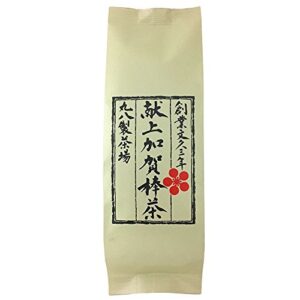

Maruhachi Seichajo Kenjo Kaga Bocha (献上加賀棒茶, sealed bag/tin)

Hoshino Seichaen Yame Matcha (星野製茶園 八女抹茶, sealed 30–40g tin)
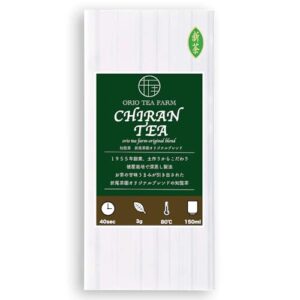

Chiran-cha Deep-Steamed Sencha (知覧茶 深蒸し煎茶, sealed 100g bag)

Ooigawa Chaen Fukamushi Sencha (大井川茶園 深蒸し煎茶, sealed foil bag)
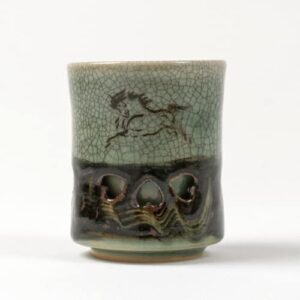

Obori Soma-yaki Double-Walled Yunomi Tea Cup: Where to Buy
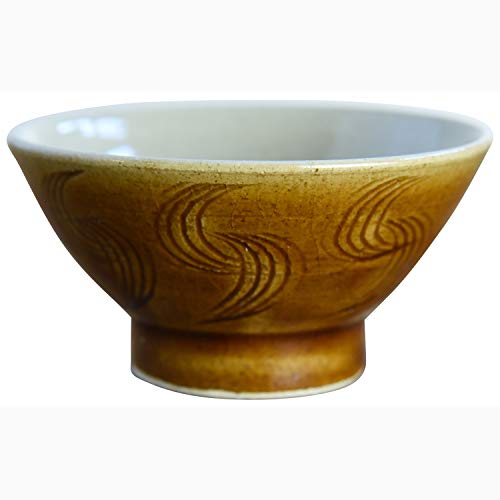

Aizu Hongo-yaki Yunomi: Tōhoku’s Oldest Kiln Amber-Glaze Tea Cup
Within the yokan category itself, this site has already covered several distinct approaches, and tama yokan does not overlap with any of them. Tora-ya sells boxed small bars out of Kyoto; Imuraya makes mini packs in Mie; Muraoka’s Ogi yokan from Saga is known for its crystallized sugar crust; and Tsuchiya in Gifu sets persimmon yokan inside a bamboo tube. Tamashimaya’s distinguishing features are the sealed sphere format and the Fukushima origin.
📦 Shipping & where to buy from outside Japan
This is a shelf-stable packaged food with a printed best-by date, and it moves through the Amazon Japan Global Store like any other room-temperature grocery item. Amazon Japan ships to 65+ countries, including Canada, the UK, and Australia, with import fees estimated and collected at checkout for most destinations. Country-specific walkthroughs are here: Canada, the UK, and Australia.
Food is the one category where eligibility genuinely varies by destination, because some countries restrict food imports regardless of what the item is. The AmazonGlobal eligibility check at checkout is the only reliable answer for your address — if the item cannot ship to you, the cart will say so before you pay.
- 🌡️ Storage: room temperature, away from direct sunlight. No refrigeration required.
- 🧊 Chilling: optional. Cooling the spheres before serving is a preference, not a requirement.
- 🍢 Opening: prick the casing with a toothpick or cocktail pick and the sphere drops out whole. The rubber casing is packaging — discard it, do not eat it.
- 📅 Keeping: read the 賞味期限 (best-by) date printed on the box rather than assuming a fixed shelf life.
- 👶 Household safety: keep the box away from small children until the casing has been removed and thrown away — it is a choking-risk object.
- 🍵 Serving: small portions, at room temperature, with plain green tea or black coffee.
Price snapshot across stores
Our data snapshot for this item returned no live price, so no figure is shown below. Prices and stock fluctuate; the linked listings are authoritative at the moment you open them.
| Store | Item / variant | Price | Notes |
|---|---|---|---|
| 🇺🇸 Amazon.com (US) | Browse Japanese yokan & wagashi | varies (USD) | Best if you are shopping from the US — Prime shipping, USD pricing, no international customs. Amazon US carries boxed yokan, dorayaki, and other shelf-stable Japanese sweets from several makers, useful for comparing sweetness levels and box sizes. Tamashimaya’s own spheres are sourced from Japan (next row). |
| 🇯🇵 Amazon JP Global Store | Tamashimaya Tama Yokan — boxed spheres (B0C5QZ9TP9) | See live listing (no price in our snapshot) | Ships internationally from Japan to 65+ countries — including Canada, the UK, and Australia — with import fees estimated at checkout. This is where the exact item in this guide is sourced. Confirm the piece count and the printed best-by date on the listing. |
| Maker direct | Tamashimaya, Nihonmatsu | Unconfirmed — check maker site | Japanese-language ordering, and small confectioners frequently ship domestically only. Practical mainly if you are already in Japan or using a forwarder. |
| Proxy services (Buyee / Tenso) | Any Japanese storefront | Item price + service fee + forwarding | A route to shops that do not export directly. For food, check the forwarder’s own restrictions first — several proxies limit or refuse perishable and food shipments regardless of shelf life. |
Prices in USD would be approximate and depend on the current exchange rate (a ¥150/USD baseline is used elsewhere on this site). Because no JPY figure was available in our snapshot for this item, no USD estimate is shown.
What it does well
Weaknesses and things to verify before buying
- The casing is packaging, not food. This needs saying plainly for anyone unfamiliar with the format: the rubber balloon is discarded, never eaten, and it is a choking-risk object for small children before it is removed. Keep the box out of reach until the pieces are opened.
- Piece count and box configuration are not fixed. Boxes are commonly 10, 20, or 24 pieces, and Japanese food listings rotate configurations. Read the count on the listing you are actually adding to the cart.
- No live price was in our snapshot. We do not publish a figure we cannot verify, so the listing is the only price source for this item at the moment you read this.
- The allergen line must be read on the physical box. Adzuki is a legume, and manufacturing lines vary. Do not treat “plant-based” as equivalent to “free of everything you are avoiding” — confirm the printed label.
- Keeping time is a printed date, not a promise. Shelf life is measured in months from production rather than days, but the number that matters is the 賞味期限 on your box — and an international shipping leg eats into it before the parcel arrives.
- Food shipping eligibility varies by destination. Some countries restrict imported food regardless of shelf stability. Verify eligibility at the AmazonGlobal checkout for your address before assuming it will ship.
- Fixed portions cut both ways. If you wanted a bar to slice thin for six guests, the sphere decides the portion for you. It is a strength for solo eating and a limitation for hosting.
- It is a dense, sweet confection. Yokan concentrates sugar by design. Readers expecting a light or mildly sweet dessert will find it more intense than anticipated.
Conclusion — which buyer type are you?
Other ways to approach this purchase
🏆 Editor’s Pick
❓ Frequently Asked Questions
Is the rubber balloon edible?
No. The casing is packaging, not food. You remove it and throw it away, and only the yokan sphere inside is eaten. Because it is a small rubber object, keep the box away from small children until the pieces have been opened and the casings discarded.
How do you open one?
Prick the casing with a toothpick or a cocktail pick. The skin splits and the sphere drops out whole, holding its shape without a knife, a plate, or a wrapper to peel. That is the entire technique.
Does it need refrigeration, and how long does it keep?
It does not need refrigeration. Store it at room temperature away from direct sunlight; chilling before eating is a preference rather than a requirement. Keeping time is measured in months from production rather than days, but read the 賞味期限 (best-by) date printed on your box rather than relying on a general figure.
Is it vegan, and what about allergens?
The typical composition is sugar, nama-an (adzuki bean paste), mizuame (starch syrup), and kanten (agar) — entirely plant-based, with no dairy, egg, meat, alcohol, or chocolate. Adzuki is a legume, and manufacturing lines differ, so confirm the printed allergen line on the actual box rather than treating it as an allergen-free product.
Can it ship to my country?
It is a shelf-stable room-temperature food, sold through the Amazon Japan Global Store, which ships to 65+ countries including Canada, the UK, and Australia. Food eligibility varies by destination more than most categories, so check the AmazonGlobal International Shipping eligibility for your address at checkout, where import fees are also estimated. Order in small personal quantities.
How is this different from ordinary bar yokan?
Ordinary yokan arrives as a firm bar that you slice, and the cut face begins to dry once the wrapper is open. Tama yokan arrives as fixed single portions, each still sealed, so there is no cutting, no drying edge, and nothing left half-open. Compared with the other yokan covered on this site — Tora-ya’s boxed small bars from Kyoto, Imuraya’s mini packs from Mie, Muraoka’s sugar-crusted Ogi yokan from Saga, and Tsuchiya’s bamboo-tube persimmon yokan from Gifu — this one is distinguished by the sealed sphere format and the Fukushima origin.
What should I serve with it?
Small portions at room temperature, with plain green tea or black coffee. Yokan is concentrated and sweet, so an unsweetened drink balances it; sencha, roasted bocha, or matcha all work, and one sphere per person is a normal serving rather than a small one.
jpmono.com is curated by a Japan-based editorial team, working out of Toyama in the Hokuriku region and Nara in Kansai, and is independent. We focus on items with verifiable craft heritage and clear international shipping paths. We do not physically test every product — we read makers’ specs and source listings — and we do not take payment from the makers we feature; income comes from affiliate links. Read more about our editorial standards.
This article was prepared with AI assistance and reviewed by the jpmono editorial team. Product data reflects listings and maker statements available on September 3, 2026; our snapshot for this item contained no live price, and figures on the linked listings supersede anything written here.
Affiliate disclosure: jpmono.com may earn a commission on qualifying purchases made through links on this page, at no additional cost to you.