![Goto Seika Usuki Senbei Ginger-Glazed Wheat Crackers (臼杵煎餅 手割, boxed assortment) — Oita’s Castle-Town Baked Confection from the Usuki Domain [2026 Guide for International Readers]](https://jpmono.com/wp-content/uploads/2026/09/goto-seika-usuki-senbei-where-to-buy-2026-featured.jpg)
- What it is: a thin baked wheat-flour cracker brushed with ginger sugar syrup, cracked by hand into irregular pieces — not a rice cracker
- Made in: Usuki, Oita Prefecture, Kyushu — a walled Edo-period castle town, by Goto Seika (後藤製菓), a long-established Usuki maker working there since the Meiji era
- Price band: everyday gift-box confectionery; the live Amazon Japan listing is authoritative (our snapshot carried no price)
- Best for: readers who want a shelf-stable, individually wrapped Japanese sweet that survives international transit without melting
- Skip if: you cannot eat wheat, or you dislike ginger — the glaze is the entire flavor signature
- Shipping: ships internationally from Amazon Japan, eligibility confirmed at checkout — jump to our pick ↓
Most senbei that reach a reader outside Japan began as steamed rice, pounded, dried, and brushed with soy. Usuki senbei begins as wheat flour and sugar, is baked into a large flat sheet, and is then finished with a coat of ginger syrup that dries to a thin pale glaze. It belongs to a different family of Japanese confection altogether — the baked castle-town sweets that grew up around domain seats, where sugar arrived by ship and keeping quality mattered more than freshness.
The town in question is Usuki, a small fortified port on the Bungo Channel, on the southeastern coast of Oita Prefecture in Kyushu. It is known today for three things: the Usuki Stone Buddhas, a group of cliff-carved Heian- and Kamakura-period figures designated National Treasures; a soy sauce and miso brewing quarter that has operated for centuries; and a merchant district whose stone-walled lanes still follow their Edo-period layout. Goto Seika (後藤製菓) has made the local confection in that town since the Meiji era, and still sells the signature grade in te-wari (手割, “hand-broken”) form — large baked sheets cracked by hand, so no two pieces share a shape.
This guide is written for a reader ordering from outside Japan, and it covers the practical case alongside the regional one: what the product actually is, why irregular pieces are the product rather than transit damage, how the wheat-and-ginger recipe compares to the rice-based senbei you already know, what the allergen situation looks like, and how to order it from Amazon Japan. Based on listings, this is a room-temperature dry good with a long best-by window and nothing in it that melts.
📅 Published: September 8, 2026
🔄 Last updated: September 8, 2026
⏱️ Read time: about 13 minutes

ℹ️ Live pricing and the exact piece count were not in our snapshot — the linked Amazon Japan listing is authoritative, and unconfirmed attributes are marked below.
- Who this is for — and who should skip it
- Product overview (from published specs)
- 📍 Where this comes from — place, era, and the craft tradition
- 📌 How does it compare?
- 🧼 Care & everyday use
- 📦 Shipping & where to buy from outside Japan
- Price snapshot across stores
- What it does well
- Weaknesses and things to verify before buying
- Conclusion — which buyer type are you?
- Other ways to approach this purchase
- 🏆 Editor’s Pick
- ❓ Frequently Asked Questions
Who this is for — and who should skip it
- Want a Japanese sweet that ships well — nothing melts, nothing needs refrigeration, and the pieces stay in their own wrappers
- Already know soy-glazed rice senbei and want the drier, snappier, faintly sweet wheat-baked counterpart
- Like ginger as a flavor: warm, sharp, and aromatic on the finish rather than hot
- Are buying for an office, a class, or a family — individually wrapped pieces divide cleanly without opening a shared bag
- Collect regional Japanese confections tied to a specific castle town rather than national brands
- Avoid wheat — wheat is a declared allergen here and it is the base of the dough, not a trace
- Dislike ginger; the syrup glaze is the defining flavor and there is no way to eat around it
- Expect uniform, machine-cut pieces — the hand-broken grade is deliberately irregular
- Want a soft or chewy sweet; this is a dry, brittle baked cracker
- Need a confirmed vegan or dairy-free certification — read the listing’s own ingredient panel rather than assuming
Product overview (from published specs)
| Attribute | Value | Source |
|---|---|---|
| Product | Usuki senbei (臼杵煎餅), te-wari hand-broken grade, boxed | Amazon JP Global Store |
| Maker | Goto Seika (後藤製菓), Usuki City, Oita Prefecture | Maker direct |
| Category | Baked wheat-flour confection (yaki-gashi family) — not a rice cracker | Maker direct |
| Base ingredients | Wheat flour, sugar, ginger (some variants may add starch, honey, or sesame — check the listing panel) | Amazon JP Global Store |
| Surface finish | Brushed ginger sugar syrup (生姜蜜) dried to a thin pale glaze | Maker direct |
| Piece shape | Irregular by design — large sheets cracked by hand, so shapes and sizes vary | Maker direct |
| Packaging | Individually wrapped pieces inside a paper gift box | Amazon JP Global Store |
| Piece count / net weight | Unconfirmed in our snapshot — check the live listing | — |
| Storage | Room temperature, cool and dry, away from humidity and direct sun | Maker direct |
| Best-by window | Long for the category (commonly several months from production) — quote the live listing, not this line | Amazon JP Global Store |
| Declared allergen | Wheat. Reproduce the full allergen line from the live listing before ordering | Amazon JP Global Store |
| ASIN (JP listing) | B0D59NB61S | Amazon JP Global Store |
| Proxy availability | Possible via Buyee / Tenso for destinations Amazon Japan does not serve directly; food forwarding rules vary by service | Proxy services (Buyee / Tenso) |
📖 Glossary — the Japanese terms used in this guide
- senbei (煎餅) — an umbrella word for flat baked or grilled Japanese crackers. Outside Japan it is usually assumed to mean the rice kind; the wheat-flour branch is older in some regions and equally standard inside Japan.
- te-wari (手割) — “hand-broken.” Large baked sheets are cracked by hand rather than cut by machine, giving irregular outlines and slightly varying thickness.
- shōga-mitsu (生姜蜜) — ginger sugar syrup, brushed onto the surface and left to dry into a thin pale glaze.
- yaki-gashi (焼き菓子) — “baked confection,” the family of dry oven- or iron-baked sweets that Usuki senbei belongs to, as distinct from steamed or fresh bean-paste sweets.
- arare (あられ) — small rice crackers, usually soy-seasoned, often confused abroad with flat senbei.
- jōkamachi (城下町) — “castle town,” a settlement laid out around a feudal lord’s castle. Usuki’s merchant quarter still follows its jōkamachi street plan.
- han (藩) — a domain, the administrative unit of Edo-period Japan. Usuki Domain was governed by the Inaba clan.
- Amazon JP Global Store — the export channel through which Amazon Japan ships eligible items abroad, with import fees estimated at checkout.
📍 Where this comes from — place, era, and the craft tradition

Usuki sits on the southeastern coast of Oita Prefecture, on the Bungo Channel — the strait that separates Kyushu from Shikoku. That position matters for the confection. A sheltered channel port is a place where ships call, and where a coastal town gets access to imported goods, sugar among them, earlier and more reliably than an inland one. The surrounding countryside grows ginger. The two arrive at the same workbench.
The town itself was built as a defensive proposition. In 1562, during the Sengoku wars, Ōtomo Sōrin constructed Usuki Castle on an island in the coastal shallows, and the town grew inward from the water around it. Sōrin was a Christian daimyo, and his era gave Usuki early and unusual contact with Portuguese traders — an exposure most Japanese towns of comparable size simply did not have in the sixteenth century.
-
Heian period (794–1185) — the earliest of the Usuki Stone Buddhas are carved into the cliffs outside town -
Kamakura period (1185–1333) — carving of the cliff figures continues; the group is later designated a National Treasure, the only stone sculpture in Japan to hold that status -
1562 — Ōtomo Sōrin builds Usuki Castle on a coastal island; the castle town forms around it, with Portuguese trade contact during Sōrin’s Christian-daimyo era -
Early Edo period — Usuki becomes the seat of the Usuki Domain under the Inaba clan; the merchant quarter’s stone-walled lane layout is set -
Edo period — local tradition traces Usuki senbei to the domain era: a durable baked wheat confection made with locally grown ginger (a traditional attribution, not a documented date) -
1868 onward (Meiji Restoration) — the domain system ends; Usuki’s brewing and confectionery trades continue as commercial businesses -
Meiji era — Goto Seika begins producing Usuki senbei in the town (the maker states the era rather than a founding year we can verify) -
2026 — the signature grade is still sold hand-broken, and still ships from Usuki in room-temperature boxes
From the early Edo period until the Meiji Restoration, Usuki was the seat of the Usuki Domain under the Inaba clan. That is roughly two and a half centuries of a stable administrative town with a resident samurai class, a merchant quarter, and the gift and ceremonial economy that goes with both. Much of that merchant quarter’s stone-walled lane layout survives today, which is unusual; most Japanese castle towns of Usuki’s size lost their street plans to twentieth-century road widening.
The town’s other continuous industry is fermentation. Soy sauce and miso brewing houses have operated in Usuki for centuries, and they are still working — an old brewing town is, structurally, a town that already knows how to buy grain in quantity, store it dry, and sell a shelf-stable product to people who do not live there.
“A port with early foreign sugar contact, a domain-era appetite for baked goods that keep, and a local ginger crop — three ordinary facts about one small town, converging into a cracker that is still broken by hand.”
Local accounts commonly trace Usuki senbei back to that domain era, describing a durable baked wheat confection made with ginger grown nearby. This is a traditional attribution rather than a documented fact, and it is worth reading it as such — but the shape of the claim is at least consistent with what the town was. Sugar reached coastal Kyushu ports before it reached most of inland Japan. A domain seat needed gifts that traveled. Ginger grew locally.
What “still being made here” means in this case is narrower and more concrete than the phrase usually implies. Goto Seika has worked in Usuki since the Meiji era, and the te-wari grade is defined by an operation that has never been automated away: the sheets come out of the bake large, and someone cracks them.
That is why the pieces in your box will not match each other. It is the production method, visible in the product.
Usuki is also, for a reader who might one day visit, a place where the confection sits inside a legible whole. The Stone Buddhas are a short distance outside the town center; the brewing houses are in it; and the senbei is the thing you carry home from both. Regional Japanese confections are frequently bought that way — not as snacks, but as the portable, keepable form of a place.
📌 How does it compare?

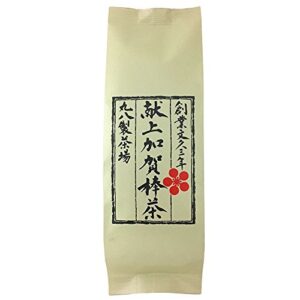


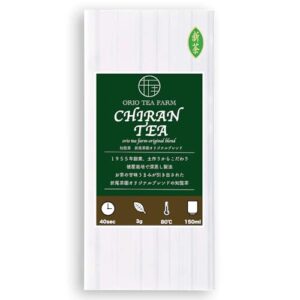


Kenichi Shizen Noen Yamato-cha Sencha (健一自然農園 大和茶 煎茶, sealed)
Nara’s Yamato-cha, grown without agrochemicals — the quieter, more delicate cup.
🧼 Care & everyday use
- 🌡️ Storage: room temperature, cool and dry, away from humidity and direct sunlight
- ❄️ Refrigeration: not required and not recommended — chilling softens a dry baked cracker
- ♨️ Reheating: unnecessary; this is finished as sold and is eaten at room temperature
- 📦 After opening: keep the remaining pieces in their individual wrappers, or reseal the box promptly — humidity is the only real enemy of the texture
- 🚫 What is not in it: no cream, custard, chocolate, or fresh bean paste, so nothing melts or spoils in transit
📦 Shipping & where to buy from outside Japan
This is a shelf-stable food item, which puts it in the easier half of the Japanese-confection catalog for international ordering. Based on the listing, it is sold through Amazon Japan and routed abroad via the Amazon JP Global Store, which ships to 65 or more countries — including Canada, the UK, and Australia alongside the US and the EU. Eligibility for food items is determined per destination, so the decisive check is at checkout rather than on this page.
Country-specific import notes for our three largest non-US readerships are collected here: Canada, the UK, and Australia.
Price snapshot across stores
| Store | Item / Variant | Price | Notes |
|---|---|---|---|
| 🇺🇸 Amazon.com (US) | Browse Japanese senbei & baked confections | varies (USD) | Best if you are shopping from the US — Prime shipping, USD pricing, no international customs. Amazon US carries Japanese rice senbei, arare, and assorted baked confections from several makers, useful for comparing formats and box sizes. Goto Seika’s Usuki senbei itself is sourced from Japan (next row). |
| 🇯🇵 Amazon JP Global Store | Goto Seika Usuki senbei, te-wari (hand-broken), boxed — ASIN B0D59NB61S | See live listing (JPY authoritative; our snapshot carried no price) | This is the exact item covered in this guide. Ships internationally from Japan to 65+ countries — including Canada, the UK, and Australia — with import fees estimated at checkout. |
| Maker direct | Goto Seika’s own range, including gift boxes and tins where offered | Unconfirmed — check the maker’s site | Japanese-language ordering and, in most cases, domestic-only delivery. Useful mainly for confirming the current lineup and the official ingredient panel. |
| Proxy services (Buyee / Tenso) | Any Japanese-domestic listing, forwarded | Item price + service fee + forwarding | Relevant only if the Global Store does not serve your country or a specific box size is domestic-only. Food forwarding rules differ by service and destination — verify before paying. |
Prices and stock fluctuate. Where a JPY figure appears on jpmono, the JPY price is the authoritative one and any USD figure is an approximation at a ¥150/USD baseline. For this item our snapshot contained no price at all, so the linked listing is the only current source.
What it does well
Weaknesses and things to verify before buying
- Wheat is a declared allergen, and it is the base. This is not a trace-contamination note — the dough is wheat flour. There is no gluten-free version of this product to substitute.
- Do not assume “vegan” or “dairy-free.” The core recipe is essentially wheat flour, sugar, and ginger, with no dairy and no meat, which is what makes it straightforward for EU-bound personal orders relative to milk- or meat-containing confections. But some variants may include starch, honey, or sesame. Read the live listing’s ingredient panel; do not take a blanket claim from any article, including this one.
- Pieces arrive irregular, and that is the product. Overseas buyers regularly read te-wari shapes as breakage in shipping and open a return. They are hand-cracked sheets. If you want uniform rectangles, buy a machine-cut grade instead.
- Ginger is not optional here. The glaze covers the surface. A reader who dislikes ginger will not enjoy this regardless of how good the bake is — look for a lighter-syrup or smaller pack version if you want to test tolerance before buying a full box.
- Our snapshot carried no price, piece count, or net weight. Only the Amazon Japan listing is authoritative on all three. Verify before assuming the box size matches what you need.
- Humidity ruins the texture faster than time does. A half-opened box left in a humid kitchen goes soft well before the best-by date. Keep pieces in their wrappers.
- The founding year is not something we can verify. Goto Seika has produced the confection in Usuki since the Meiji era; we state the era rather than an exact year, because the exact year is not confirmed in our sources.
- Food shipping eligibility is destination-dependent. Amazon Japan ships broadly, but food categories are the ones most often excluded for specific countries. Confirm at checkout rather than at the end of a long wishlist.
Conclusion — which buyer type are you?
Other ways to approach this purchase
🏆 Editor’s Pick
❓ Frequently Asked Questions
Why did my pieces arrive in different shapes? Did they break in transit?
They did not. This is the te-wari (手割, “hand-broken”) grade: large baked sheets are cracked by hand into irregular pieces, so no two are the same shape or exactly the same thickness. Irregularity is the product feature that names the grade. Genuine transit damage looks different — fine crumbs and shattered fragments rather than clean, palm-sized shards.
Is Usuki senbei the same as the soy-sauce rice crackers sold as “senbei” abroad?
No. Most senbei exported to Western markets are rice crackers — steamed rice dough, grilled, brushed with soy sauce, savory and dense. Usuki senbei is baked from wheat flour and sugar and glazed with ginger syrup, which puts it in the yaki-gashi (baked confection) family instead. Expect a drier, lighter, snappier cracker that is faintly sweet rather than salty.
Does it contain allergens, and is it dairy-free or vegan?
Wheat is a declared allergen and is the base of the dough — that one is definite. The core recipe is essentially wheat flour, sugar, and ginger, with no dairy and no meat, but some variants may include starch, honey, or sesame. Don’t treat “vegan” or “dairy-free” as settled from an article; read the ingredient and allergen panel on the live listing for the exact box you’re ordering.
How should I store it, and how long does it keep?
Room temperature, somewhere cool and dry, out of direct sun and away from humidity. Don’t refrigerate — chilling softens a dry baked cracker rather than preserving it. Keep unopened pieces in their individual wrappers and reseal the box after opening. Best-by windows in this category are long, commonly several months from production, but quote the date printed on the live listing rather than any figure from an article.
Can it ship to my country from Amazon Japan?
It ships through the Amazon JP Global Store, which serves 65 or more countries including Canada, the UK, and Australia alongside the US and the EU. Food categories are the ones most often restricted for specific destinations, so the decisive check is AmazonGlobal International Shipping eligibility at checkout for your address. It’s a room-temperature packaged good intended in small personal quantities, which is the least restricted profile, and import fees are estimated at checkout for most destinations.
How old is Usuki senbei, and how long has Goto Seika made it?
Goto Seika has produced the confection in Usuki since the Meiji era; we state the era rather than an exact founding year, because the exact year isn’t confirmed in the sources available to us. The confection itself is commonly traced by local accounts to the Edo-period domain era, as a durable baked wheat sweet made with locally grown ginger — that’s a traditional attribution rather than documented fact, and worth reading as such.
What should I drink with it?
Japanese green tea is the default pairing, and the ginger glaze sits comfortably with most of it. Roasted twig tea (Kaga bocha) is the low-astringency, easy option; a deep-steamed sencha such as Chiran-cha from neighboring Kagoshima gives you a thicker cup that stands up to the sweetness; matcha is the formal-service choice. All three have their own guides linked in the comparison box above.
jpmono.com is curated by a Japan-based editorial team, working out of Toyama in the Hokuriku region and Nara in Kansai, and is independent. We focus on items with verifiable craft heritage and clear international shipping paths. We do not physically test every product — we read makers’ specifications and source listings, and we say so when the data is thin. We take no payment from the makers we feature; income comes from affiliate links.
🤖 This article was drafted with AI assistance and reviewed by a Japan-based human editor. Product facts are taken from the source listing and the maker’s published information; where our snapshot was incomplete — in this case pricing, piece count, and net weight — we say so rather than filling the gap. Historical material about Usuki is presented as documented history or as traditional local attribution, and is labeled accordingly.
Affiliate disclosure: jpmono.com may earn a commission on qualifying purchases made through links on this page, at no additional cost to you.