![Yaeyama Minsa Cotton Card Case: Okinawa’s 5-4 Love Weave [2026]](https://jpmono.com/wp-content/uploads/2026/06/yaeyama-minsa-cotton-card-case-where-to-buy-2026-featured.jpg)
At the far southwest end of Japan, closer to Taiwan than to Tokyo, the Yaeyama Islands have a textile that says something specific: stay with me forever. Yaeyama Minsa (八重山ミンサー) is a hand-woven cotton kasuri band from Ishigaki and Taketomi, and its defining stripe alternates a block of five squares with a block of four. Read in old island speech as itsu (5) no yo (4) made — “for ever and ever” — that 5-and-4 rhythm turned a humble cotton sash into Okinawa’s textile of marriage and devotion.
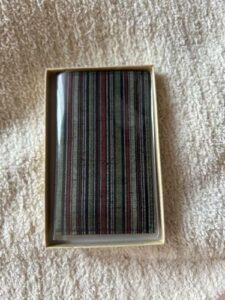
The card case covered here takes that whole tradition and shrinks it to something you can carry to work. It is woven, not printed, so the 5-4 stripe and the small mukade-ashi (centipede-leg) border run through the cloth itself. The specific item in this guide is an Azamiya / Minsah Kogeikan piece from Ishigaki Island, sold through the Amazon Japan Global Store as ASIN B0H6WR6JMK.
Writing from a Japan-based desk (our editors work out of Toyama in Hokuriku and Nara in Kansai), this guide covers what the weave actually means, how to tell an authentic Ishigaki minsa from a generic “Okinawa-pattern” lookalike, where international buyers can order one, and how it compares to other Ryukyu craft you may be considering as a gift.
🔄 Updated:
⏱️ Read time: ~9 min

- Who this is for — and who should skip it
- Product overview (from published specs)
- Where this comes from — Okinawa, the Ryukyu Kingdom, and the 5-4 weave
- Price snapshot across stores
- What it does well
- Weaknesses and things to verify before buying
- Conclusion — which buyer type are you?
- Other ways to approach this purchase
- 🏆 Editor’s Pick
- ❓ Frequently Asked Questions
Who this is for — and who should skip it
- Want a gift with a built-in meaning — the 5-4 stripe literally reads “together forever,” which suits weddings, anniversaries, and farewells.
- Prefer woven cloth over printed pattern, and like that hand-loom texture shows on a small daily object.
- Carry business cards or a few credit cards and want a slim, lightweight cotton case rather than leather.
- Are collecting Ryukyu / Okinawan craft and want a piece distinct from bingata dyeing or Tsuboya pottery.
- Value a METI-designated traditional craft made on Ishigaki, not a mass-market souvenir.
- Need a rugged, rigid cardholder — woven cotton is soft and will flex and wear like fabric, not metal.
- Want a large wallet with coin and bill compartments; this is a slim card sleeve, not a billfold.
- Expect a colorfast, machine-washable item — hand-woven dyed cotton needs gentle care.
- Are shopping purely on price and do not care about provenance — generic printed “Okinawa pattern” cases cost far less.
- Require confirmed live pricing before buying — at the time of writing, only the listing snapshot was available (see caveat below).
Product overview (from published specs)
Source data for this specific item was thin at the time of writing. The notes below are drawn from the Amazon JP Global Store listing snapshot (ASIN B0H6WR6JMK) and the maker’s general description; live pricing and stock may have shifted since the writing date. Where a value was not stated in the fetched data, it is marked “Unconfirmed — check listing” rather than guessed.
Yaeyama Minsa Cotton Card Case
[BECOS] 名刺入れ 八重山みんさー織 伝統工芸品 メンズ レディース プレゼント 就職祝い 職人手織りの日本製 あざみ屋 (綾羽 (グレー茶))
残り1点 ご注文はお早めに · Sold by BECOS 伝統工芸品 · ASIN B0H6WR6JMK
Price and availability as of 2026-09-01 05:22 JST. The Amazon listing at the time of purchase is authoritative. jpmono.com earns a commission on qualifying purchases at no extra cost to you.
| Attribute | Detail |
|---|---|
| Item | Hand-woven card / business-card case |
| Craft | Yaeyama Minsa (八重山ミンサー), cotton kasuri weaving |
| Maker / seller | Azamiya (Minsah Kogeikan / みんさー工芸館) |
| Material | Cotton (woven, not printed) |
| Signature motif | 5-square / 4-square stripe (“forever”) + mukade-ashi border (“visit often”) |
| Origin | Ishigaki Island, Yaeyama, Okinawa Prefecture |
| Designation | METI-designated traditional craft |
| Dimensions / weight | Unconfirmed — check listing |
| ASIN | B0FX47WKW6 (Amazon JP Global Store) |
Spec sheets indicate the case is small and light — a card sleeve rather than a full wallet. Based on the listing, the pattern is genuinely woven, which is the single most important authenticity point for this craft (see the buying-checks section below).
📖 Glossary — key terms in this article
- Minsa (ミンサー) — a narrow woven cotton band; the name joins min (“cotton”) and sa (“narrow band”).
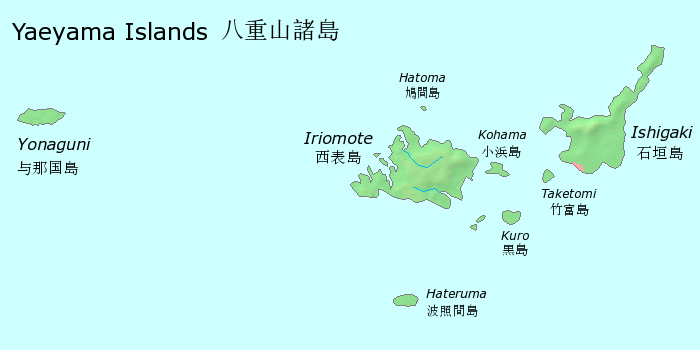
- Yaeyama (八重山) — the southwesternmost island group of Okinawa, including Ishigaki and Taketomi.
- Kasuri (絣) — ikat; yarns are pre-dyed in sections before weaving so the pattern emerges in the cloth itself.
- Mukade-ashi (ムカデ足, “centipede legs”) — the small toothed border woven along the band’s edges, read as a wish to “visit often.”
- Bingata (紅型) — Okinawa’s stencil-dyed (not woven) textile; a separate craft from minsa.
- Ryukyu (琉球) — the kingdom that ruled Okinawa before it became a Japanese prefecture; its sea trade carried cotton weaving into the islands.
- METI — Japan’s Ministry of Economy, Trade and Industry, which formally designates traditional crafts (dentō kōgeihin).
Where this comes from — Okinawa, the Ryukyu Kingdom, and the 5-4 weave

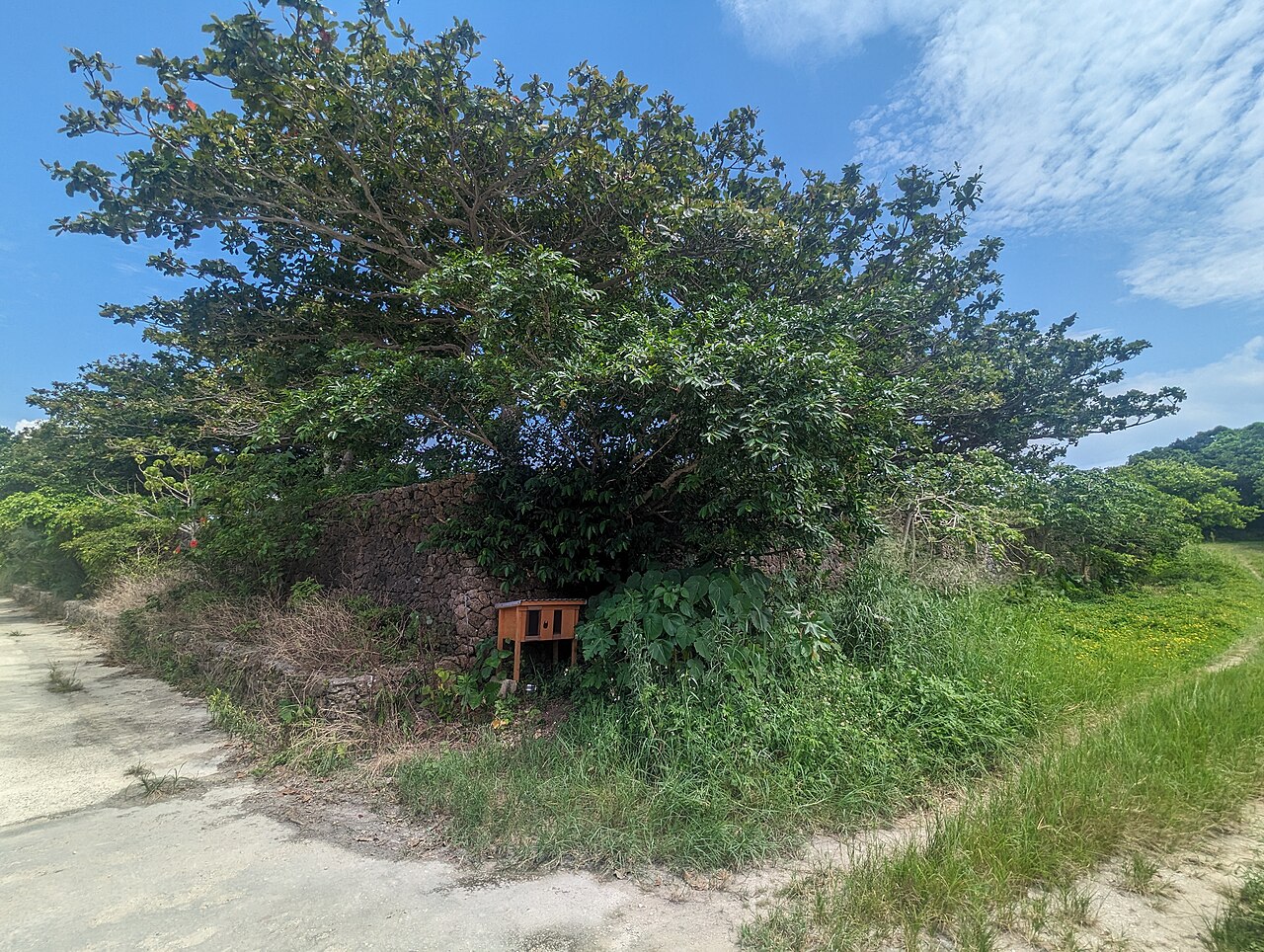
The Yaeyama Islands sit at the bottom-left corner of Japan, a scatter of coral and limestone islands at the end of the Ryukyu arc. Ishigaki is the hub; tiny Taketomi, with its single village of red-tiled houses, is a short ferry away. This is not the Japan of cold winters and tetsubin kettles — it is subtropical, and the cotton textile tradition here grew out of warm-weather island life rather than the silk culture of the mainland.
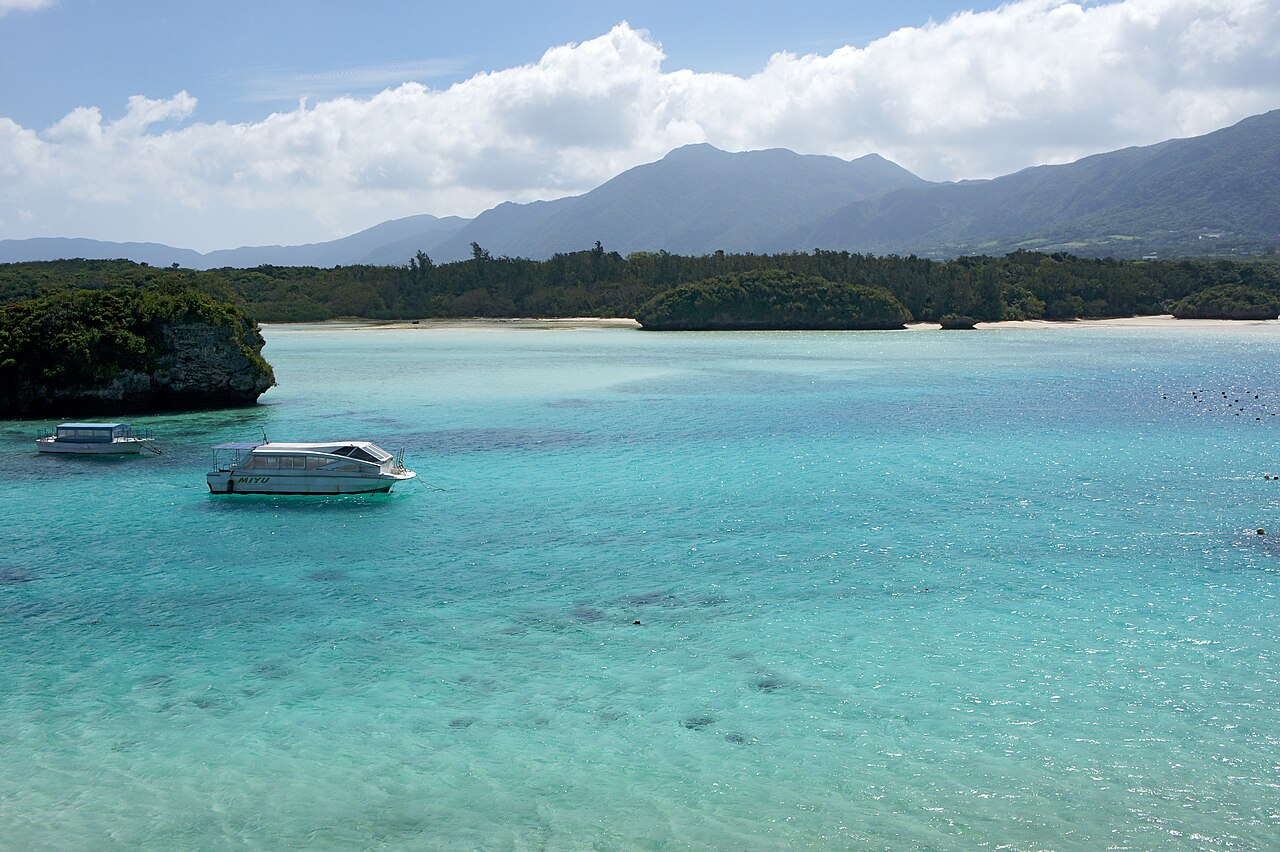
How did cotton weaving reach this far edge of Japan at all? Through the sea. The Ryukyu Kingdom, ruled from Shuri Castle on the main island, ran one of East Asia’s busiest trade networks, linking China, Southeast Asia, and Japan. Cotton-weaving techniques traveled north along those routes during the Edo period, and the islanders adapted them into the narrow banded cloth they called minsa.
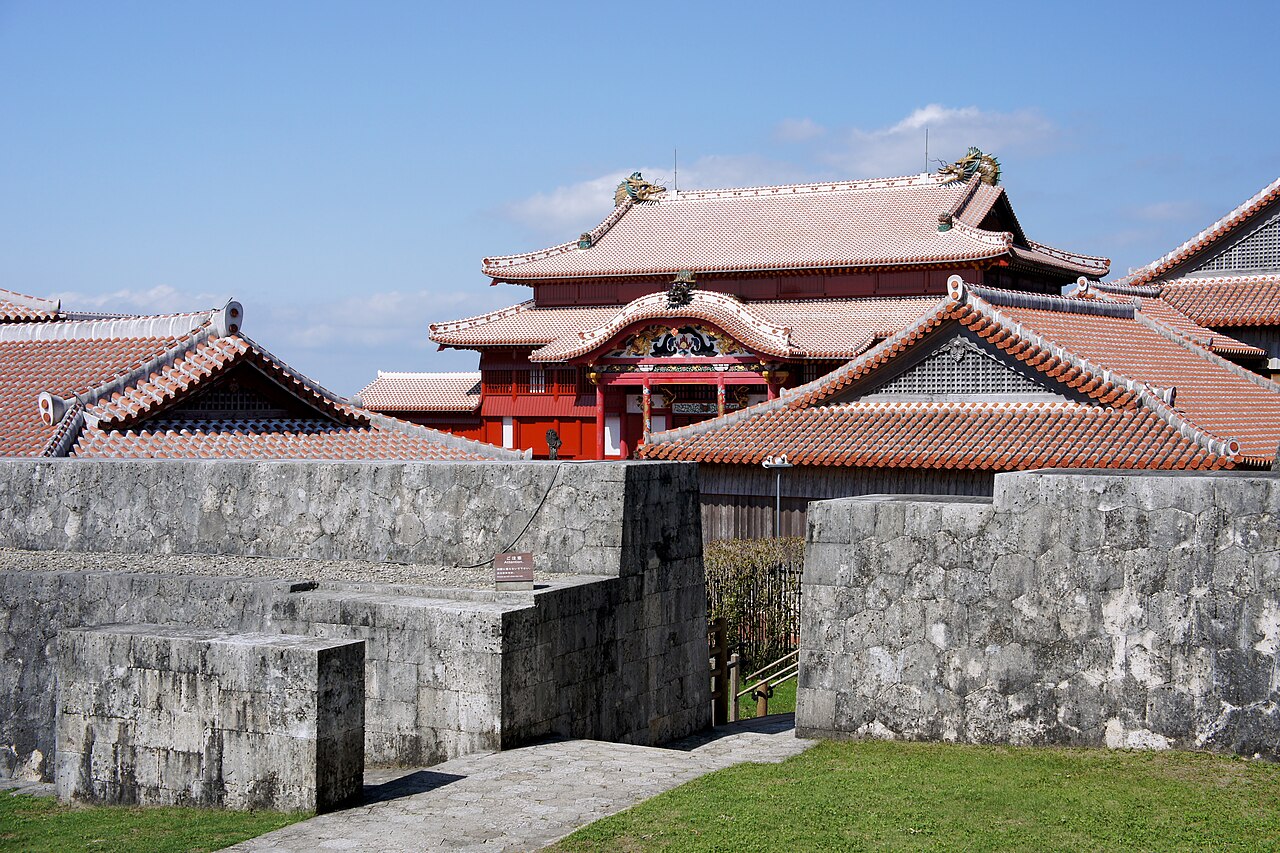
- 1429 — Shō Hashi unifies the principalities into the Ryukyu Kingdom; Shuri Castle becomes its seat.
- 15th–16th c. — Ryukyu’s maritime trade links China, Southeast Asia, and Japan, moving goods and craft techniques along the islands.
- 1609 — Satsuma’s invasion places Ryukyu under dual subordination during the Edo period, while sea trade continues.
- Edo period — Cotton-weaving methods reach the Yaeyama Islands; women weave minsa sashes, including as betrothal gifts.
- 1879 — The Ryukyu Kingdom is abolished and becomes Okinawa Prefecture within Japan.
- 1989 — Yaeyama Minsa is designated a traditional craft by METI.
- 2026 — Minsa is still hand-woven on Ishigaki and Taketomi, now as sashes, card cases, pouches, and accessories.
The heart of the tradition was domestic and devotional. A bride traditionally wove a minsa sash by hand and gave it to her groom as a betrothal gift — which is why this cloth, more than any other Okinawan textile, is read as a vow rather than a decoration. The pattern carries the message directly: the alternating block of five squares and block of four is read in island speech as itsu no yo made, “for ever and ever,” and the toothed mukade-ashi border along the edge asks the beloved to “visit often.”
“Five squares and four — itsu no yo made, ‘for ever and ever.’ On Yaeyama, a textile became a way to say it without words.”
That continuity is what “still made here” means in Yaeyama. The craft survives on Ishigaki and Taketomi as a living trade, kept alive largely by island women and workshops such as Minsah Kogeikan, and the same 5-4 reading is woven into every authentic band. The card case in this guide is a modern, carryable version of that promise — small enough for a jacket pocket, but carrying the full grammar of the weave.
Other Ryukyu and card-case guides on jpmono.com worth reading alongside this one:
Price snapshot across stores
At the time of writing, only the Amazon JP Global Store listing snapshot was available for this item, and a confirmed live price was not captured in the fetched data. Treat the figures below as directional and verify at the retailer before buying. JPY is the authoritative currency; USD is an approximate estimate at a ¥150/USD baseline as of mid-2026.
| Store | Item / variant | Price (JPY + USD est.) | Notes |
|---|---|---|---|
| 🇺🇸 Amazon.com (US) | Browse Japanese woven cotton card cases | varies (USD) | Best if you are shopping from the US — Prime shipping, USD pricing, no international customs. Amazon US carries Japanese textile card cases and pouches from various makers; the exact Ishigaki minsa piece ships from Japan (next row). |
| 🇯🇵 Amazon JP Global Store | Azamiya Yaeyama Minsa card case (B0FX47WKW6) | Check live listing (price unconfirmed in data) | The sourced listing for the specific item in this guide. Ships internationally from Japan to most major destinations. |
| Maker direct | Minsah Kogeikan (Azamiya), Ishigaki | Unconfirmed — check maker site | The workshop sells minsa goods on Ishigaki Island; overseas shipping terms vary. |
| Proxy services (Buyee / Tenso) | Forwarding from JP shops | Item price + service fee + forwarding | Useful if a seller does not ship abroad directly; adds a handling fee and a second leg of shipping. |
Prices in USD are approximate and depend on the current exchange rate. Always verify at the retailer before purchasing.
What it does well
Weaknesses and things to verify before buying
- Confirm it is woven, not printed. The whole value of minsa is the woven kasuri. Some inexpensive “Okinawa-pattern” cases are printed on plain fabric — check listing photos and wording for hand-weaving before paying a craft price.
- Live price was not captured. Only the listing snapshot was available at the time of writing; verify the current price and stock on the Amazon JP Global Store page before ordering.
- Cotton needs gentle care. Hand-woven dyed cotton is not a wipe-clean leather case. Expect to keep it away from heavy moisture and friction, and do not machine-wash.
- Capacity is limited. This is a slim card/business-card sleeve, not a wallet with coin and bill sections. Confirm it holds the number of cards you carry.
- Dimensions and weight are unconfirmed. The fetched data did not state exact measurements; check the listing’s size details if pocket fit matters to you.
- International shipping and customs. Shipping from Japan typically runs roughly $15–$40 to the US or EU, with possible customs duties over local thresholds; confirm the seller ships to your country, or use a proxy forwarder.
Conclusion — which buyer type are you?
Other ways to approach this purchase
🏆 Editor’s Pick
❓ Frequently Asked Questions
What does the 5-and-4 stripe actually mean?
The alternating block of five squares and block of four is read in old island speech as itsu (5) no yo (4) made — “for ever and ever.” Paired with the toothed mukade-ashi (centipede-leg) border meaning “visit often,” it makes minsa Okinawa’s textile of marriage and devotion.
How is Yaeyama Minsa different from bingata?
Minsa is woven cotton kasuri — the pattern is built into the cloth on the loom. Bingata is a separate Okinawan craft where motifs are stencil-dyed onto already-woven fabric. They look and are made very differently.
Does the Amazon JP Global Store ship internationally?
Yes — the Amazon JP Global Store ships many household and textile items to most major destinations. Shipping typically runs roughly $15–$40 to the US or EU, and customs duties may apply over your country’s threshold. Confirm shipping eligibility on the listing before ordering.
How should I care for a hand-woven cotton card case?
Treat it as dyed hand-woven cotton, not leather. Keep it away from heavy moisture and abrasion, do not machine-wash, and spot-clean gently if needed. With care, the cloth ages softly rather than cracking.
How do I know it is an authentic Ishigaki minsa and not a printed copy?
Check that the pattern is woven, not printed on plain fabric, and look for a known Yaeyama workshop such as Minsah Kogeikan (Azamiya). A genuine piece sits within the METI-designated Yaeyama Minsa tradition; generic “Okinawa-pattern” goods usually do not.
Is it a good wedding or anniversary gift?
It is well suited to it. Minsa was traditionally woven by a bride as a betrothal gift for her groom, and the 5-4 stripe means “together forever,” so the case carries an explicit message of lasting devotion.
Why does the price show as unconfirmed?
At the time of writing, only the Amazon JP Global Store listing snapshot was available and a live price was not captured in our data. JPY is the authoritative currency; check the current listing for the exact price before purchasing.
jpmono.com is curated by a Japan-based editorial team (working out of Toyama in the Hokuriku region and Nara in Kansai) and is independent. We don’t take payment from the makers we feature; income comes from affiliate links. We don’t physically test every product — we read maker’s specs and source listings.
This article was prepared with AI assistance and reviewed against the source listing snapshot and Wikimedia-sourced imagery. Facts about the craft and region are drawn from the provided data notes; please verify live prices and shipping at the retailer.
Affiliate disclosure: jpmono.com may earn a commission on qualifying purchases made through links on this page, at no additional cost to you.