![Yonezawa-ori Silk Necktie: Where to Buy Yamagata’s Uesugi Silk [2026]](https://jpmono.com/wp-content/uploads/2026/05/japan-map-regions-and-prefectures-800x1050.png)
Yonezawa-ori Silk Necktie: Where to Buy Yamagata’s Uesugi Silk [2026]
Yonezawa-ori (米沢織, ‘Yonezawa weaving’) is the dyed-silk textile tradition of the Okitama basin in southern Yamagata Prefecture — the snow country that the Uesugi domain rebuilt around sericulture and the loom. Yonezawa-ori neckties may use yarn-dyed silk and jacquard weaving, carrying that regional lineage into an object you can knot on a Tuesday morning.
What makes Yonezawa interesting to an international reader is not a romantic legend but an economic one. After the Uesugi clan was relocated to a sharply reduced domain in 1601 and fell into deep debt, weaving became survival infrastructure — and the late-18th-century reformer Uesugi Yōzan turned it into the region’s backbone. The result is a textile center that still dyes and weaves silk today, with a benibana-red and plant-dyed heritage behind it.
This guide is for readers deciding whether a Yonezawa-ori silk tie is worth buying from outside Japan — what ‘Yonezawa-ori’ actually denotes, how to read the silk and the pattern, who it suits and who should pass, how it compares with other Japanese woven ties, and the realistic shipping and pricing picture. Because price and dimensions vary by maker, several fields are marked unconfirmed and should be checked with the seller before purchase.
Last updated:
Reading time: ~13 min
Categories: Japanese Craft · Yamagata · Textile
- Who this is for — and who should skip it
- Product overview (from published specs)
- 📍 Where this comes from — place, era, and the craft tradition
- 📌 How does it compare?
- 📦 Shipping and where to buy from outside Japan
- Buying options
- What it does well
- Weaknesses and things to verify before buying
- Conclusion — which buyer type are you?
- Other ways to approach this purchase
- ❓ Frequently Asked Questions
Who this is for — and who should skip it
- Buyers who want a full-silk, made-in-Japan tie with a verifiable regional weaving tradition behind it.
- People who prefer a woven (jacquard) pattern with depth over a flat printed design.
- Anyone assembling a small collection of Japanese woven neckties (Kiryu-ori, Hakata-ori, Nishijin-ori) and wanting a Tōhoku entry.
- Gift-buyers looking for an object with a story — the Uesugi domain’s textile reconstruction — rather than a logo.
- Office and daily-wear users comfortable with hand-care silk rather than machine-washable polyester.
- Shoppers who need a confirmed length, width, and color before buying — check the seller’s specifications first.
- Anyone wanting a machine-washable, no-care tie; silk needs untying after wear and occasional dry cleaning.
- Buyers expecting a hand-painted one-of-a-kind piece — this is a loom-woven product, not a single-artisan original.
- Price-sensitive shoppers who will not click through to confirm the current figure, since no price was available at the time of writing.
- Readers outside the Amazon JP Global Store shipping map who are not willing to use a proxy forwarder.
Product overview (from published specs)
The table summarizes what the Yonezawa-ori weaving tradition establishes about this kind of tie. Because prices and full dimensions vary by maker, those rows are marked unconfirmed; verify them with the seller before purchasing.
| Spec | Value | Source |
|---|---|---|
| Item type | Necktie, jacquard-woven (Yonezawa-ori 米沢織) | Amazon JP |
| Material | Silk (full-silk) | Amazon JP |
| Weave / dyeing | Yarn-dyed (sakizome 先染め) jacquard — pattern woven from pre-dyed silk threads | Yonezawa-ori tradition (data notes) |
| Origin | Yonezawa, Okitama region, Yamagata Prefecture, Japan | Maker tradition / data notes |
| Length / width / weight | Not specified — confirm with the seller | Unconfirmed |
| Color / pattern | Varies by colorway — confirm the swatch with the seller | Unconfirmed |
| Price | — | Unconfirmed |
| International shipping | Amazon JP Global Store → US/EU/AU/CA where eligible | Amazon JP Global Store policy |
Pricing, dimensions, and color can vary by maker and may change over time. Any USD figures shown elsewhere are approximate at a ¥150/USD baseline; compare current JPY prices before purchasing.
📖 Glossary — key Yonezawa and textile terms
Yonezawa-ori (米沢織, “Yonezawa weaving”) — the dyed-silk weaving tradition of Yonezawa and the wider Okitama basin in southern Yamagata. Historically a yarn-dyed silk and dyeing center; modern output ranges from kimono cloth to ties, scarves, and stoles.
Okitama (置賜) — the southernmost of Yamagata Prefecture’s regions, an inland basin ringed by mountains. Yonezawa is its principal city.
Uesugi Yōzan / Harunori (上杉鷹山・治憲) — the 9th lord of the Yonezawa domain (late 18th century), a reformer still widely cited in Japan, who promoted sericulture, safflower cultivation, and weaving to rebuild the domain’s finances.
Benibana (紅花, “safflower”) — the safflower whose petals yield a prized red dye. Yamagata was a historic benibana-producing region, and the red-and-plant-dyed palette is part of the Yonezawa textile lineage.
Sericulture (養蚕, yōsan) — the raising of silkworms to produce raw silk. Promoted as cottage industry in the Yonezawa reconstruction, well-suited to the long indoor winters.
Aoso / ramie (青苧) — a bast fiber from a ramie-type plant, woven in the region before the shift toward silk; an early stage in Yonezawa’s textile economy.
Sakizome (先染め, “yarn-dyed”) — dyeing the threads before weaving, so the pattern is built from colored yarns. The opposite of atozome (後染め), printing or dyeing finished cloth. Jacquard Yonezawa-ori ties are typically yarn-dyed.
Jacquard — a loom mechanism that lifts warp threads individually, allowing complex woven patterns rather than printed ones. A jacquard tie’s design is in the structure of the cloth, visible from both faces.
Kokudaka (石高) — a domain’s official rice-yield valuation, the basis of samurai-era finances. The Uesugi kokudaka was sharply cut after the 1601 relocation, which is what pushed the domain toward weaving as a revenue source.
📍 Where this comes from — place, era, and the craft tradition

The region — Yonezawa, in the Okitama basin of southern Yamagata
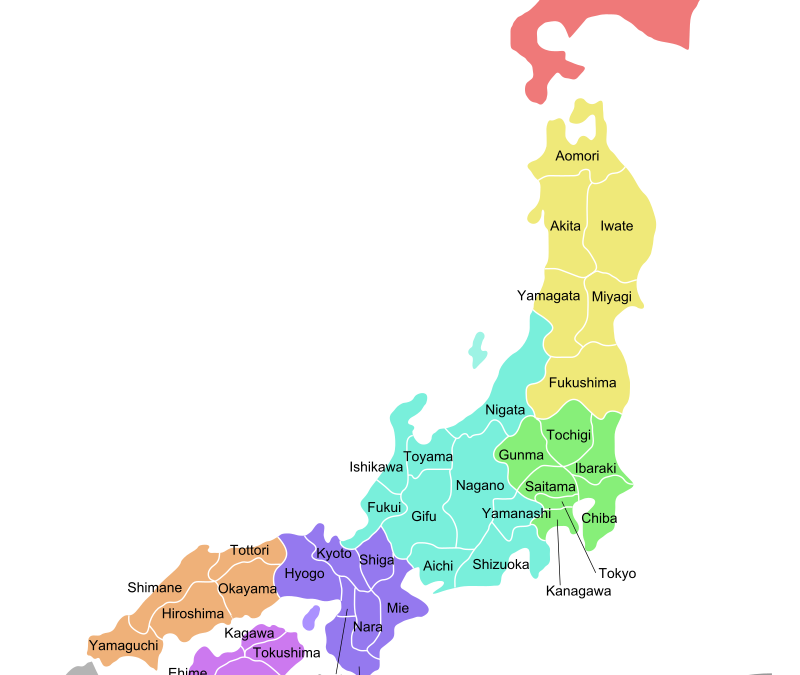
Yonezawa (米沢) sits at the southern end of Yamagata Prefecture, in the inland Okitama basin near the headwaters of the Mogami River. It is mountain-ringed snow country: the prefecture lies on the Sea of Japan side of northern Honshū, and the Okitama winters are long, cold, and deeply snowbound. From Tokyo the route runs about 2 hours 10 minutes by the Yamagata Shinkansen (Tsubasa) line, which branches from the Tōhoku Shinkansen at Fukushima and climbs over the prefectural border to Yonezawa.
That climate is the quiet reason a textile economy took root here. Snowbound months kept households indoors for long stretches, and indoor weaving was a natural fit for the agricultural off-season — a pattern repeated across Japan’s snow-country textile districts. Combined with deliberate domain policy, it turned the basin into a silk-weaving and dyeing center rather than a place known for a single luxury good.
Yamagata’s better-known crafts are Tendō woodwork — the shōgi (Japanese chess) pieces of Tendō city — and Yamagata imono, the metalcasting tradition behind iron kettles. Yonezawa-ori is the prefecture’s textile entry, sitting in the same Tōhoku domain-history frame: a craft that exists because a feudal administration needed it to.
The historical anchor — a bankrupt domain and the loom
The story begins with a relocation. In 1601, in the reshuffling that followed the battle of Sekigahara, the Uesugi clan was moved — by way of Echigo and Aizu — into the Yonezawa domain, and its kokudaka (official rice valuation) was sharply slashed. A large samurai retinue now had to be supported on a fraction of the former income, and the domain fell into deep debt over the following generations.
The turning point came in the late 18th century under the 9th lord, Uesugi Yōzan (Harunori) — a reformer whose name is still invoked in Japanese discussions of frugal, hands-on leadership. Facing near-insolvency, Yōzan pushed sericulture, benibana (safflower) cultivation, and weaving — first aoso (ramie) and then increasingly silk — as cottage industry to rebuild domain finances. Samurai households, not just farmers, took up the loom to survive.
“In Yonezawa the loom was not a hobby and not a luxury — it was how a bankrupt domain and its samurai households worked their way out of the snow and the debt.”
Out of that program Yonezawa grew into a silk-weaving and dyeing center with a distinct benibana-red and plant-dyed palette. In the Meiji era (1868–1912) the district modernized — adopting Western power looms and chemical dyeing — while keeping the yarn-dyed, plant-dye lineage that distinguishes it. That combination, old dyeing identity plus industrial-era looms, is what still defines Yonezawa-ori today.
-
1601 — The Uesugi clan is relocated (Echigo → Aizu → Yonezawa); the domain’s kokudaka is sharply cut, and finances fall into deep debt. -
17th–18th c. — Snowbound Okitama winters make indoor weaving a natural off-season industry for the domain’s households. -
Late 18th c. — 9th lord Uesugi Yōzan (Harunori) promotes sericulture, benibana cultivation, and aoso-then-silk weaving; samurai households weave to rebuild domain finances. -
19th c. — Yonezawa consolidates as a silk-weaving and dyeing center with a benibana-red, plant-dyed identity. -
Meiji era (1868–1912) — Western power looms and chemical dyeing are adopted while the yarn-dyed, plant-dye lineage is retained. -
20th c. — Yonezawa-ori endures as Yamagata’s textile craft, alongside Tendō woodwork and Yamagata imono metalcasting. -
2026 — Okitama weavers produce full-silk jacquard neckties for daily wear, reachable internationally via Amazon JP Global Store.
What “still being made here” means — and what “Yonezawa-ori” denotes on a tie
Yonezawa is not a single-workshop town; it is a textile district. The continuity case here is the district itself — sericulture, dyeing, and weaving have been the basin’s economic spine since the Yōzan reforms, and the city is still associated with silk and dyed cloth today. A modern Yonezawa-ori necktie is the contemporary, daily-wear face of that same dyed-silk economy, made on jacquard looms rather than the hand frames of the Edo period.
For an international buyer it helps to be precise about what the name carries. ‘Yonezawa-ori’ tells you the place and the dyed-silk weaving tradition; it is a regional textile label, not a single brand or a guarantee of hand-looming. Treat it the way you would ‘Harris Tweed’ or ‘Hakata-ori’ — a marker of origin and method, with quality still varying by maker and grade. A Yonezawa-ori tie may be full-silk and jacquard-woven; confirm the exact maker, pattern, and silk content with the seller.
📌 How does it compare?
Other Japanese woven textiles and Tōhoku / Yamagata crafts we have covered — useful comparison points for buyers weighing one regional weaving tradition against another, or building a coordinated set.
Kiryu-ori silk necktie
Gunma · woven silk
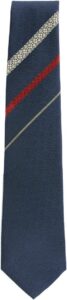
Hakata-ori necktie
Fukuoka · Hakata-ori silk
Tendo shogi pieces (Yamagata)
Yamagata · woodwork
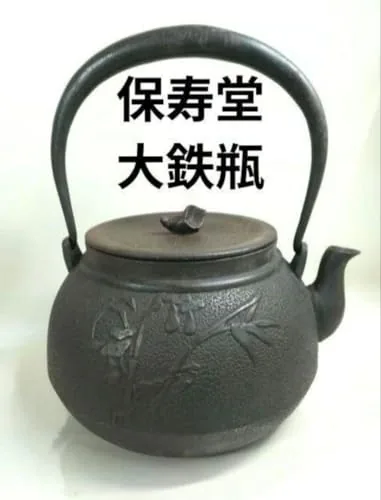
Yamagata imono tetsubin
Yamagata · metalcasting
Hirosaki kogin sashi
Aomori · kogin embroidery
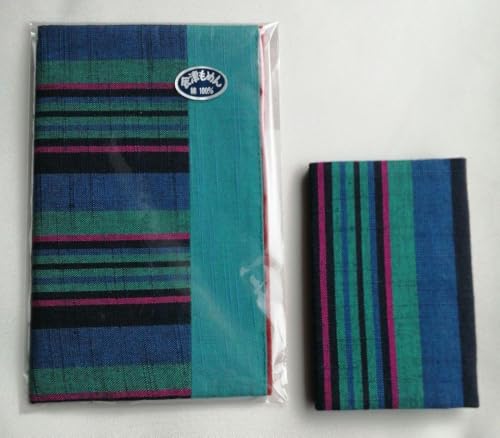
Aizu momen pouch
Fukushima · cotton weaving
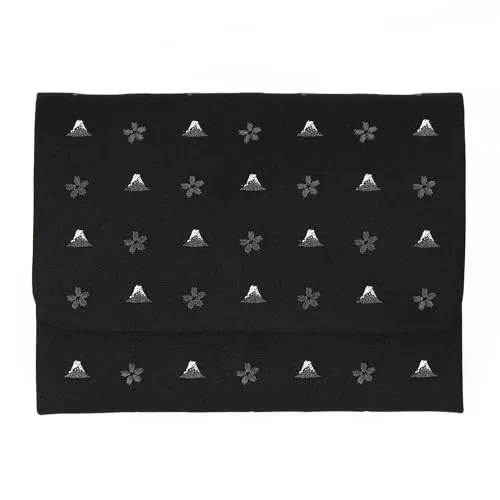
Nishijin-ori silk card case
Kyoto · Nishijin-ori silk
📦 Shipping and where to buy from outside Japan
Amazon JP Global Store offers eligible items for international delivery to the US, EU, UK, Australia, Canada, and most major destinations. Because a tie weighs very little, shipping is typically at the low end of the range — often well under the figures that apply to heavier craft goods — with 1–2 weeks of transit common. Verify destination eligibility and the exact shipping quote at checkout, since coverage varies by item and seller.
Customs duties are not a practical concern at single-tie value. A necktie sits far below the personal-import de minimis thresholds of the major destinations — roughly $800 USD for the United States, £135 for the UK, €150 for the EU, and AUD 1,000 for Australia — so a lone tie clears as duty-free personal import in almost every case.
If a Yonezawa-ori tie is not eligible to your country or goes out of stock, a proxy-forwarding service such as Buyee or Tenso can relay it from Japanese marketplaces; budget roughly 10–20 percent in service and domestic-forwarding fees. Yonezawa-ori is also sold by Okitama-area weavers and Yamagata craft retailers directly, though English-language ordering is limited and slower than marketplace buying.
Buying options
| Store | Item | Price (JPY) | USD est. | Notes |
|---|---|---|---|---|
| 🇺🇸 Amazon.com (US) | Browse Japanese silk neckties | varies | USD | Best if you are shopping from the US — Prime shipping, USD pricing, no international customs. Amazon US carries Japanese and Italian woven-silk ties useful for comparing pattern style and price tiers. The exact Yonezawa-ori piece in this guide is sourced from Japan (next row). |
| Amazon JP Global Store | Yonezawa-ori full-silk jacquard necktie | — | — | The selected Japanese source. Ships internationally from Japan where Global Store eligibility applies. |
| Maker direct (Okitama / Yonezawa weavers) | Yonezawa-ori silk ties — various | Unconfirmed — check maker site | — | Yamagata weavers and craft retailers sell Yonezawa-ori directly; English ordering is limited and slower. Useful for patterns and colors not on Amazon. |
| Proxy services (Buyee / Tenso) | Yonezawa-ori silk tie via Rakuten / Yahoo! relay | Varies (item + ~10–20% fees) | — | Worth using if the Amazon JP option is not eligible to your country or is out of stock. Adds service and domestic-forwarding fees. |
Treat the price cells as current-market checks rather than fixed quotes. Any USD estimate elsewhere uses a ¥150/USD baseline; compare the current JPY price and verify details before purchasing.
What it does well
Weaknesses and things to verify before buying
- No confirmed price in the dataset. A live JPY price was not captured at the time of writing. Do not assume a figure — click through and read the current price before deciding.
- Length, width, and color unconfirmed. The selected colorway and proportions should be checked with the seller, especially if you are tall or prefer a narrow blade.
- Silk needs care. This is not a machine-washable tie. Untie it after each wear, rest it a day between wears, store it rolled or hung, and spot-clean or dry-clean rather than washing. Buyers wanting zero-maintenance should choose polyester instead.
- It is a loom product, not a hand-painted original. “Yonezawa-ori” denotes a regional woven-silk method, not a single-artisan one-off. If you are expecting a unique hand-dyed piece, this is not that.
- Pattern and color can differ from the photo. Dyed-silk lots and screen calibration both vary; the received tie may read slightly different from the product image. Treat the photo as indicative.
- Shipping eligibility varies. Amazon JP Global Store coverage depends on the item and seller. Confirm your country is eligible at checkout; if not, a proxy forwarder (Buyee / Tenso) is the fallback, with added fees.
- Gift packaging unconfirmed. Whether the tie ships in a presentation box was not in the data. If it is a gift, plan for separate packaging or confirm with the seller.
Conclusion — which buyer type are you?
Other ways to approach this purchase
❓ Frequently Asked Questions
What does “Yonezawa-ori” actually mean on a necktie?
Can it ship to my country, and will I owe customs duty?
How do I care for a silk Yonezawa-ori tie?
What length and width should I expect?
Is a woven (jacquard) tie better than a printed one?
How does Yonezawa-ori compare with Kiryu-ori, Hakata-ori, and Nishijin-ori?
Does it make a good gift?
jpmono.com is curated by a Japan-based editorial team (working out of Toyama in the Hokuriku region and Nara in Kansai) and is independent. We do not take payment from the makers we feature; income comes from affiliate links. Read more about our editorial standards.
This article was drafted with AI assistance and reviewed by the jpmono editorial team. Place-and-history context is drawn from the documented history of the Yonezawa (Uesugi) domain and the Yonezawa-ori weaving tradition. Product details are described from the craft tradition; any unconfirmed price or dimensional fields should be checked with a seller.
Affiliate disclosure: jpmono.com may earn a commission on qualifying purchases made through links on this page, at no additional cost to you.