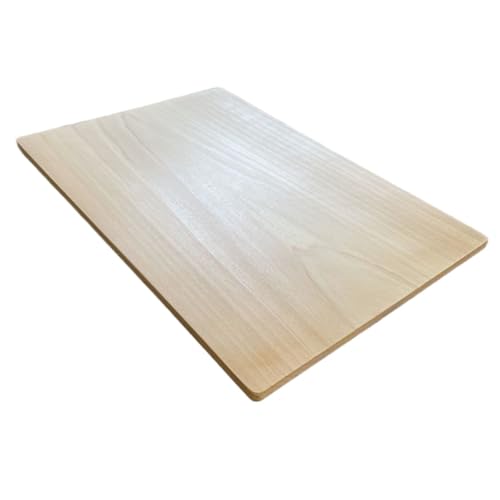
- What it is: A thin, ultra-light hinoki cypress cutting board, about 17.5–18 cm wide by 30 cm long and 5 mm thick
- Made in: Yoshino, Nara Prefecture, Kansai — cypress listed as Nara-grown, the region’s plantation forestry district
- Price band: Budget end for a Japanese cypress board — ¥2,353 (about $16 USD) as of October 29, 2026; verify on the listing
- Best for: Vegetables, fish and light prep in a small kitchen, where a board has to be stored upright or hung
- Skip if: You need a heavy block for cleaver work, or you want something that survives a dishwasher
- Shipping: ships internationally from Amazon Japan — jump to our pick ↓
A Yoshino hinoki cutting board is thin enough — about five millimeters — that it reads as a sheet of wood rather than a block. That single dimension explains most of what the board is good for and most of what it is not.
The wood behind it comes from Yoshino, in the mountains of southern Nara Prefecture, a forestry district where sugi cedar and hinoki cypress have been planted densely and worked over centuries. Hinoki is the softer of the two, fine-grained and resinous, and it is that softness that makes the wood forgiving under a thin Japanese blade: the edge sinks slightly into the surface instead of skating across it.
This guide looks at one specific board listed on Amazon Japan — the ultra-light Yoshino hinoki board sold by FIVESHOP at ¥2,353 — and sets it against the practical questions an overseas buyer actually has: how thin is too thin, what the listing does and does not state, how the wood behaves in daily use, and which route gets it to a kitchen in the US, Canada, the UK or Australia. No US Amazon listing for this board appeared in the data reviewed for this article, so the Japanese listing is the source of record here, and its stated price is quoted as written.
Last updated: October 29, 2026
Read time: about 11 minutes

- Who this is for — and who should skip it
- Product overview (from published specs)
- 📍 Where this comes from — place, era, and the craft tradition
- Price snapshot across stores
- 📦 Shipping & where to buy from outside Japan
- What it does well
- Weaknesses and things to verify before buying
- Conclusion — which buyer type are you?
- Other ways to approach this purchase
- 🏆 Editor’s Pick
- ❓ Frequently Asked Questions
Who this is for — and who should skip it
- Cook mostly vegetables, fish and fruit, and cut rather than hack
- Have a small kitchen where a board has to stand behind the sink or hang on a hook
- Use thin Japanese knives and want a surface that gives slightly under the edge
- Want a second, lighter board for quick prep instead of hauling out a heavy block
- Prefer to spend in the region of ¥2,000–2,500 once rather than replace a warped plastic board every year
- Break down whole chickens or work through bones — 5 mm is not a cleaver block
- Rinse everything in the dishwasher; thin cypress warps when it stays wet
- Cook for a large household and need one big surface for a full batch of prep
- Need a maker’s name, a brand, or a stated finish before you buy
- Want a board that arrives in days — the listing quotes 6–7 days handling before dispatch
Product overview (from published specs)
The listing below is the item this article treats as its subject. Amazon US search results for the same board returned no matching listing in the data reviewed, so the Japanese listing carries the specification and the price. Where a value is absent from that listing, the table says so rather than filling the gap.
Yoshino Hinoki Cypress Cutting Board
超軽量まな板 奈良県吉野産桧 17.5〜18×30×0.5センチ 檜
通常6~7日以内に発送します。 · Sold by FIVESHOP · ASIN B0H42BF5DD
Price and availability as of 2026-10-29 09:12 JST. The Amazon listing at the time of purchase is authoritative. jpmono.com earns a commission on qualifying purchases at no extra cost to you.
| Attribute | Stated value | Source |
|---|---|---|
| Item | 超軽量まな板 奈良県吉野産桧 — “ultra-light cutting board, hinoki from Yoshino, Nara Prefecture” | Amazon JP listing title |
| Material | Hinoki cypress (桧) | Amazon JP listing title |
| Dimensions | 17.5–18 cm × 30 cm × 0.5 cm (about 7 × 11.8 × 0.2 in) | Amazon JP listing title |
| Thickness | 5 mm | Amazon JP listing title |
| Set contents | One board | Amazon JP listing title (singular まな板) |
| Weight | Not stated in figures; described as 超軽量 (“ultra-light”) | Amazon JP listing title |
| Growing region | Yoshino, Nara Prefecture (seller’s stated origin; no independent certificate on the listing) | Amazon JP listing title |
| Maker / brand | Not named on the listing | — |
| Seller | FIVESHOP | Amazon JP listing |
| Condition | New | Amazon JP listing |
| Availability | Usually dispatched within 6–7 days (通常6~7日以内に発送します) | Amazon JP listing |
| Surface finish / edge treatment | Not stated | — |
ℹ️ Only the Amazon JP listing snapshot was available for this board; live pricing may have shifted since the writing date, and unconfirmed attributes are marked above.
📖 Glossary — the Japanese terms in this article
Hinoki (桧 / 檜) — Japanese cypress, Chamaecyparis obtusa. Pale, straight-grained, aromatic when cut, and soft enough to be used for bath tubs as well as cutting boards.
Sugi (杉) — Japanese cedar. Grown alongside hinoki in Yoshino, but used more for structural timber than for food surfaces.
Yoshino (吉野) — The mountain district in southern Nara Prefecture associated with plantation forestry and, in spring, with cherry blossom on the slopes of Mount Yoshino.
Manaita (まな板) — A cutting board. The listing’s title uses this word, which is why the set contents read as one board.
Chō-keiryō (超軽量) — “Ultra-light.” A marketing descriptor, not a measured weight; the listing gives no gram figure.
Heijō-kyō (平城京) — The Nara capital, modelled on the Tang-dynasty grid plan, occupied from 710.
📍 Where this comes from — place, era, and the craft tradition
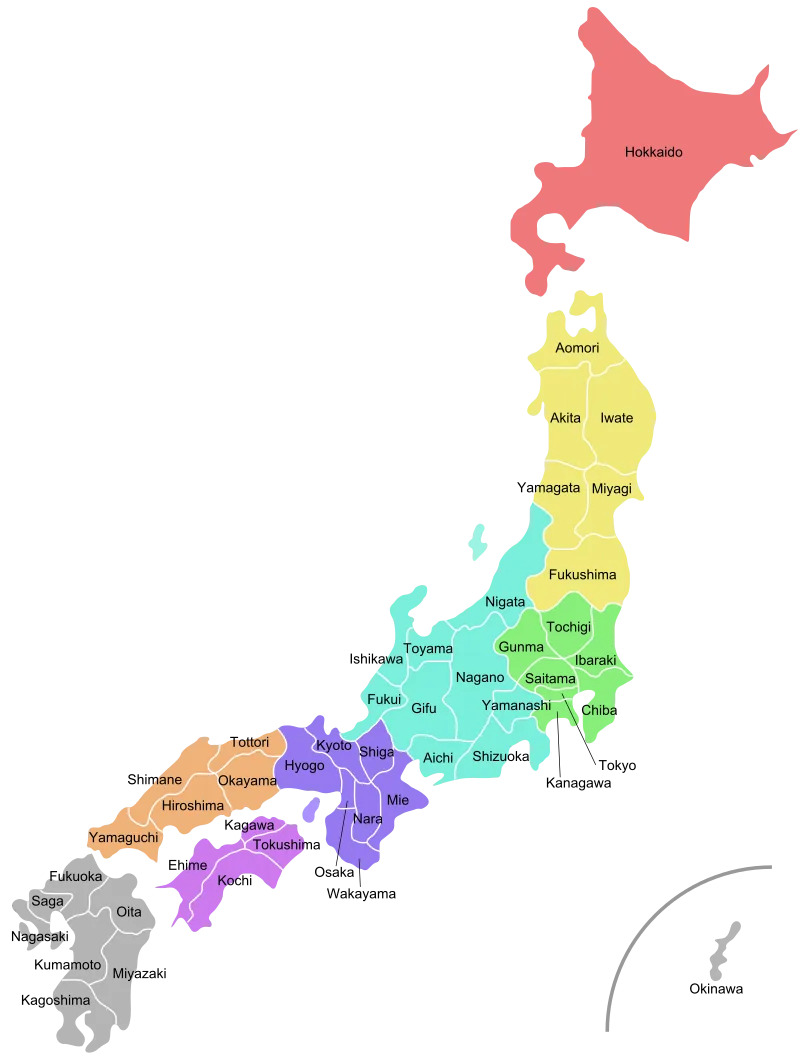
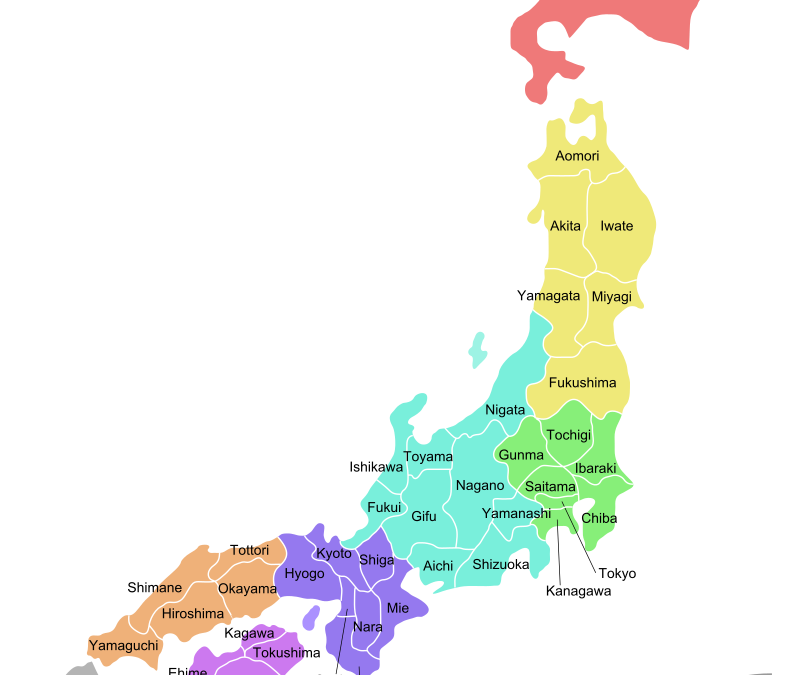
Nara Prefecture occupies the eastern half of the Kii Peninsula, and Yoshino sits in its mountainous south — the part of the prefecture where the land rises away from the Nara basin and the valleys narrow. Timber growing there is shaped by the terrain: slopes steep enough that machines cannot easily work them, soil that drains fast, and stands planted close together so that trees grow slowly and straight as they compete for light.
That slow growth is the whole commercial case for the wood. Dense planting produces narrow annual rings, and narrow rings mean a fine, even grain that holds a clean edge and takes a light, resinous scent. The same conditions that make the slopes difficult to work make the timber worth carrying out of them.

The historical anchor for the demand side of this story is Nara itself. The city was Japan’s capital from 710 to 794, the Nara period, when the imperial court concentrated temple building, bronze casting, papermaking and carpentry into a permanent capital for the first time. Tōdai-ji, the temple that still dominates the city’s north side, belongs to that moment; its Great Buddha was consecrated in 752.
A capital built largely of wood creates a standing appetite for timber — for temple halls, for pagodas, for the workshops and warehouses that served them. Hōryū-ji, southwest of the city, preserves wooden buildings from the 7th century and is a reminder of how long that building culture has been continuous in this part of Japan. The point is not that every Yoshino board descends from temple carpentry. It is that the region’s forestry grew up serving a market that had been consuming fine timber for well over a thousand years before anyone thought to cut a kitchen board from the offcuts.
-
7th century — Hōryū-ji is founded southwest of Nara; its pagoda and main hall are among the oldest surviving wooden buildings in the world. -
710 — The capital moves to Heijō-kyō, on the site of present-day Nara, and the court begins building a permanent wooden city. -
752 — The Great Buddha of Tōdai-ji is consecrated, the high point of Nara-period temple construction. -
794 — The capital shifts to Heian-kyō (Kyoto); Nara’s political role ends, but its temples and their timber supply chains do not. -
17th–19th century — The plantation system that still defines Yoshino forestry takes shape; continuous management of these slopes is counted in centuries. -
2004 — The sacred sites and pilgrimage routes of the Kii Mountain Range, including the Yoshino–Ōmine area, are inscribed as UNESCO World Heritage. -
2026 — Yoshino hinoki boards are sold internationally through Amazon Japan, at sizes and prices set for household kitchens rather than temple workshops.

What “still being made here” means for a board at this price is narrower than the heritage language suggests. The listing names a growing region, not a workshop: it says the hinoki comes from Yoshino, it does not name the sawmill, the finisher, or a family business with a generation count. Buyers who want a named maker and a documented line of succession should look at the workshop-branded boards in the comparison box below. Buyers who want the wood itself, cut thin and priced for a household kitchen, are the audience for this listing.
“Yoshino’s timber is slow-grown on slopes too steep to farm easily — the years are in the grain, not in the label.”

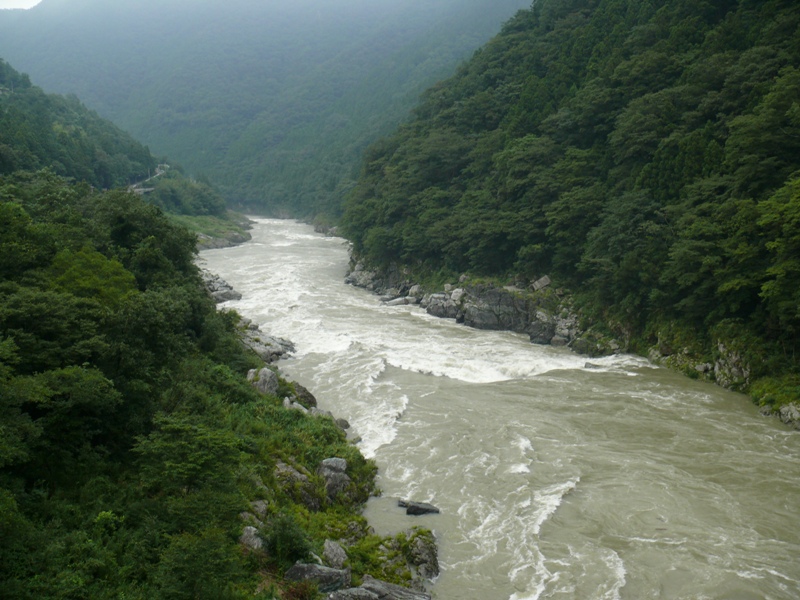
The logistics side of the story is the part that shaped the district’s economy rather than its architecture. Before roads reached these valleys, timber came down by water — cut in winter, floated or dragged to a river, and collected at lowland towns where sawmills and merchants turned logs into cash. Mountain villages that had no flat land to farm could still earn from the slope, which is why the planting was so deliberate and why the stands were harvested on long rotations rather than cleared.
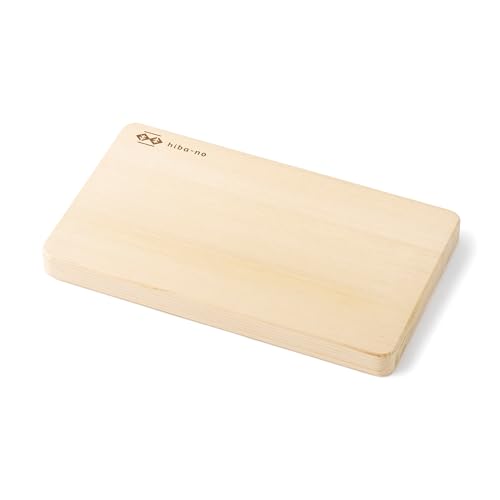 Aomori Hiba Cutting Board
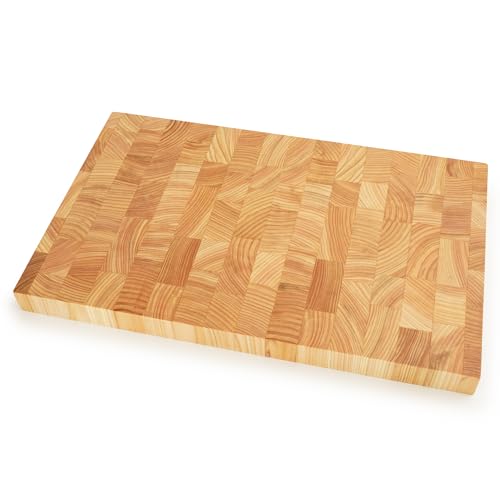 Kiso Hinoki Cutting Board
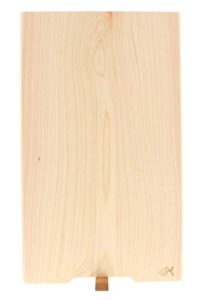 Tosa Hinoki Cutting Board
 Nara Ittobori Carved Wood Deer Figurine: Where to Buy [2026]
 Nara Ittobori Carved Wooden Deer Okimono: Where to Buy [2026]
 Suikaen Takayama Chasen Bamboo Matcha Whisk — Where to Buy [2026]
The three hinoki boards are the closest comparison: same wood family, different growing regions and often different thicknesses. The Nara ittobori pieces are the other side of the same prefecture — wood as carving rather than as a working surface.
Price snapshot across stores
JPY is the authoritative figure for the board; the USD number beside it is an estimate at a ¥150/USD baseline and will shift with the exchange rate. The table moves left to right for small screens.
| Store | Item / variant | Price | Notes |
|---|---|---|---|
| 🇺🇸 Amazon.com (US search) | Browse Japanese cypress and hinoki cutting boards | varies (USD) | Best if you shop from the US — Prime delivery, USD pricing, no customs paperwork. Comparable cypress boards from other sellers sit here; this exact board is not among the listings we could confirm on amazon.com, so it ships from Japan (next row). |
| 🇯🇵 Amazon JP Global Store | 超軽量まな板 奈良県吉野産桧 17.5〜18×30×0.5センチ, sold by FIVESHOP, new | ¥2,353 (about $16 USD) |
Ships internationally from Japan to 65+ countries — including Canada, the UK and Australia — with import fees estimated at checkout. Quoted dispatch is 6–7 days. Price as of 2026-10-29; verify on the listing. |
| Maker direct | — | — | No maker or workshop is named on the listing, so there is no direct channel to point to for this board. |
| Proxy services (Buyee / Tenso) | Same listing, bought on your behalf | ¥2,353 + proxy fee + international shipping | Worth considering only where Amazon JP will not ship directly, or when you are consolidating several Japanese items into one parcel. |
Prices in USD are approximate and depend on the current exchange rate. Stock and shipping quotes change; the linked listing is authoritative.
📦 Shipping & where to buy from outside Japan
The board itself is sold on Amazon Japan, and Amazon JP Global Store ships to more than 65 countries, including the US, Canada, the UK and Australia. That matters here because there is no US listing for this exact board to fall back on: the parcel starts in Japan whichever English-speaking market you are in.
Kitchenware is not usually restricted, but a wooden board is a plant product entering some countries under phytosanitary rules. In practice, finished hinoki boards sold through Amazon JP pass routinely; if your destination is unusually strict, confirm with the carrier before ordering rather than after.
What it does well
- 🍽️ Dishwasher: not stated on the listing — hand-wash is the safe default for thin cypress
- ♨️ Microwave: not stated, and wood has no reason to go in one
- 🧴 Daily care: rinse, wipe, and stand the board upright to dry; do not leave it flat and wet in a sink
- 🔧 Repairs: light sanding with the grain restores the surface, though a 5 mm board has limited material to remove
Weaknesses and things to verify before buying
- Five millimeters cups. A board this thin has almost no mass to hold it flat. Left soaking, or dried on one face only, it will bow, and a bowed board rocks under the knife.
- No maker is named. The listing identifies a region and a seller but not a workshop, a sawmill, or a finish. That is a real difference from a branded board, and it is the main reason the price is where it is.
- Provenance is stated, not certified. “Nara Prefecture Yoshino grown” is the seller’s description; the listing carries no forestry certificate or species paperwork you could check independently.
- Construction is not described. The title does not say whether the board is a single piece of wood or laminated from narrower strips. Both exist at this thickness, and the difference affects how it moves with moisture.
- No US listing. You cannot order this from amazon.com. Everything arrives through Amazon JP Global Store or a proxy, with the shipping cost and waiting time that implies.
- Small for batch cooking. At 30 cm long and about 18 cm wide it is a prep board, not a carving surface. A family prepping several dishes at once will want more room.
- Dispatch is quoted at 6–7 days. That is handling time before shipping, so a two-week arrival is the realistic expectation, not an exception.
Conclusion — which buyer type are you?
Other ways to approach this purchase
🏆 Editor’s Pick
超軽量まな板 奈良県吉野産桧 17.5〜18×30×0.5センチ 檜 — sold by FIVESHOP, new, ¥2,353 (about $16 USD) as of 2026-10-29; verify on the listing. One hinoki cypress board from Yoshino, Nara Prefecture, roughly 17.5–18 cm by 30 cm, 5 mm thick, described by the seller as ultra-light.
- The wood is the argument: slow-grown Yoshino hinoki, soft and fine-grained, which is what a thin Japanese blade wants underneath it.
- The size and the 5 mm thickness solve storage — it stands behind a sink or hangs on a hook, so it gets used rather than avoided.
- The price leaves room for the shipping: even landed, the total stays under what a branded block costs before postage, which makes trying hinoki a low-risk decision.
No US listing for this exact board was found in the data reviewed, so the US button opens an Amazon.com search for comparable cypress boards; the Japanese listing is where this specific item ships from. Availability is quoted at 6–7 days before dispatch.
❓ Frequently Asked Questions
Is the board really made from hinoki grown in Nara?
The listing title states 奈良県吉野産桧 — hinoki from Yoshino in Nara Prefecture — and that is the only provenance statement available for this item. No independent certification appears on the listing, so treat the growing region as the seller’s stated origin until you can confirm it with the seller.
Five millimeters sounds thin. Is that enough for everyday chopping?
For vegetables, fish, fruit and light boning, a 5 mm hinoki board is workable, and its thinness is why the listing calls it ultra-light. It is not a cleaver block. Heavy chopping, hacking through bones or repeated hard strikes belong on a thicker board.
What are the exact dimensions?
The title gives 17.5–18 cm by 30 cm by 0.5 cm, so roughly 7 by 11.8 inches and 5 mm thick. The width is given as a small range, which is normal for a natural-wood product finished by hand.
Can it go in the dishwasher or microwave?
The listing does not state dishwasher or microwave suitability. Thin cypress warps when it stays wet, so hand-washing, a quick wipe and upright drying are the safer routine.
Will it fit a small kitchen?
Yes — 30 cm long and 5 mm thick means it stores upright behind a sink or hangs on a hook. It is also small for prepping several vegetables at once.
How much is it in US dollars, and where does it ship from?
¥2,353 is about $16 at the ¥150/USD baseline used here (as of October 29, 2026; verify on the listing). It ships from Japan through Amazon JP Global Store, which delivers to 65 or more countries including the US, Canada, the UK and Australia, with import fees estimated at checkout.
Is hinoki better for knives than plastic or bamboo?
Hinoki is softer than most hardwoods and much softer than bamboo, so an edge sinks slightly instead of skating. That is easier on a thin Japanese blade. The trade-off is that soft wood scars, and a 5 mm board has less material to sand back over the years.
jpmono.com is curated by a Japan-based editorial team (working out of Toyama in the Hokuriku region and Nara in Kansai) and is independent. We do not take payment from the makers we feature; income comes from affiliate links. Read more about our editorial standards.
AI assistance note: this article was drafted with the help of AI tools and reviewed by our editorial team. Product facts, prices and specifications are taken from the linked marketplace listing as of the date shown; images of Nara are from Wikimedia Commons.
Affiliate disclosure: jpmono.com may earn a commission on qualifying purchases made through links on this page, at no additional cost to you.