![Suruga Take-Sensuji-Zaiku Bamboo Wind Chime ‘Hatsukaze 25’ — 200-Year Shizuoka Bamboo Tradition (¥5,500 / ≈$37 USD) [2026 Buyer’s Guide]](https://jpmono.com/wp-content/uploads/2026/05/suruga-take-sensuji-fuurin-where-to-buy-2026-featured-1400x1050.jpg)
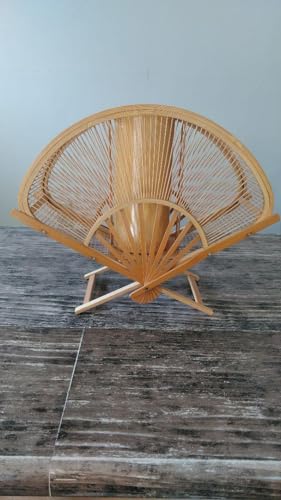
Suruga take-sensuji-zaiku (駿河竹千筋細工) is the fine bamboo basketry tradition of Shizuoka City, and it is the only major Japanese bamboo craft built from slender round bamboo rods rather than the flat split-bamboo strips used in Beppu (Ōita), Beppu-Hita, and most other bamboo-working regions. The technique was developed in the early nineteenth century by an artisan named Sugayama Kihachi (菅山喜八), under the patronage of the Tokugawa Sumpu domain, and was designated a METI Traditional Craft Product (経済産業大臣指定伝統的工芸品) in 1976. The “Hatsukaze 25” (初風 25, “first wind”) wind chime covered in this guide is an entry-tier piece in that lineage — a 25 cm hanging cage of dozens of planed round bamboo rods threaded together with cotton and glue, with a small glass bell suspended in the center.
At ¥5,500 (approximately $37 USD as of May 2026), the Hatsukaze 25 sits on the threshold between souvenir and serious craft. It is one of the more affordable METI-designated traditional craft pieces routinely available through Amazon JP Global Store, and one of the few Suruga take-sensuji items with reliable international shipping. The piece is delicate by construction — bamboo, cotton thread, and glue — and is intended as indoor or sheltered-veranda summer décor, not weatherproof outdoor hardware.
This guide covers what take-sensuji-zaiku is and why Shizuoka City — not Beppu or Kyoto — became the home of round-rod bamboo work; how the technique differs from the more familiar flat-strip lineages; what to expect from the Hatsukaze 25 at this price point; and the international purchase path for a 100 g handmade bamboo object shipped out of Japan. Comparison covers related Japanese craft articles on jpmono, plus the practical questions a foreign buyer will have about care, hanging location, and the seasonal use case of a Japanese summer wind chime in a Western home.
🔄 Last updated May 17, 2026
⏱ ~12 min read
🏷 Japanese Craft · Shizuoka · Bamboo

- Who this is for — and who should skip it
- Product overview (from published specs)
- Where this comes from — Shizuoka City, Sumpu, and the round-rod bamboo lineage
- 📌 How does it compare? Related Japanese craft guides on jpmono
- Price snapshot across stores
- What it does well
- Weaknesses and things to verify before buying
- Conclusion — which buyer type are you?
- Other ways to approach this purchase
- 🏆 Editor’s Pick
- ❓ Frequently Asked Questions
- 📌 Related Japanese Crafts
Who this is for — and who should skip it
- Want a METI-designated Japanese craft piece under $50 USD that ships internationally
- Have a sheltered veranda, eaves, window niche, or interior airflow spot where a fragile bamboo object can hang protected from rain
- Are giving a “summer in Japan” gift to a friend interested in regional Japanese craft beyond ceramics and lacquer
- Appreciate the geometric, lightweight, round-rod look — distinct from the woven flat-strip aesthetic of Beppu or Hita bamboo work
- Want a starter piece in Suruga take-sensuji before committing to a lampshade or flower vase from the same tradition
- Need a loud, ringing wind chime — the glass bell on a Suruga piece is intentionally subtle
- Plan to hang it outdoors in full weather year-round (the bamboo and cotton thread will degrade)
- Want a hardy, child- or pet-safe object — this is a delicate handcrafted item, not décor for high-traffic spaces
- Prefer the woven-strip bamboo basket look (Beppu, Hita) — Suruga’s round-rod aesthetic is different and not interchangeable
- Are shopping under a tight budget for cheap mass-market souvenir wind chimes (Edo-style glass fuurin retail at ¥1,500–¥2,500)
Product overview (from published specs)
The table below summarizes the specifications published on the Amazon JP listing for ASIN B008GY485K as of May 16, 2026. Amazon.com (US) does not carry this exact piece individually; the US row links to a search across comparable Japanese wind chimes and bamboo craftwork from other makers.
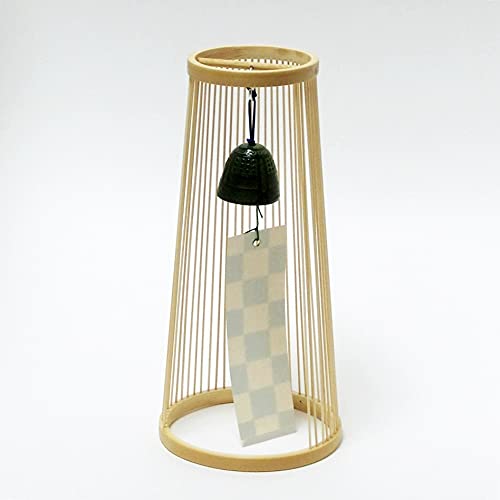
Suruga Take-Sensuji-Zaiku Bamboo Wind Chime 'Hatsukaze 25'
伝統的工芸品 駿河竹千筋細工 置き風鈴 初風 25
現在在庫切れです。 · ASIN B008GY485K
Price and availability as of 2026-08-31 02:30 JST. The Amazon listing at the time of purchase is authoritative. jpmono.com earns a commission on qualifying purchases at no extra cost to you.
| Attribute | Detail (from listing snapshot) |
|---|---|
| Item | Suruga Take-Sensuji-Zaiku Wind Chime “Hatsukaze 25” (初風 25) |
| ASIN | B008GY485K |
| Maker | Suruga Take-Sensuji cooperative workshops, Shizuoka City |
| Material | Hand-assembled round bamboo rods (sensuji 千筋, “thousand strips”), cotton thread, glue; glass wind-chime bell |
| Dimensions | Approximately 25 cm tall, suspended hanging form |
| Weight | ~100 g |
| Made in | Shizuoka City, Shizuoka Prefecture, Chūbu region, Japan |
| Certification | METI Traditional Craft Product, designated 1976 |
| Price (as of May 16, 2026) | ¥5,500 (≈$37 USD) |
| Care | Sheltered location; wipe with dry cloth; optional annual light wax if used outdoors |
| International shipping | Amazon JP Global Store; ~$8–$15 USD to most destinations; bamboo unrestricted for personal import in most countries |
Source: Amazon JP Global Store listing snapshot for B008GY485K, May 16, 2026. Only the Amazon JP listing snapshot is available; live pricing and stock may have shifted since the writing date. Verify at the retailer before purchasing.
📖 Glossary — Japanese craft terms used in this article
- Take-sensuji-zaiku (竹千筋細工)
- Literally “bamboo thousand-strip work.” A bamboo-craft technique that builds objects from many slender round bamboo rods (not flat strips), drilled and threaded together with cotton and glue at each crossing point.
- Suruga (駿河)
- The historical name of the southern half of modern Shizuoka Prefecture. The northern half was Tōtōmi (遠江) and the eastern coast was Izu (伊豆). The three provinces were unified into Shizuoka Prefecture in 1876.
- Sumpu (駿府)
- The historical name for the city now called Shizuoka. The seat of the Tokugawa Sumpu domain, and the political base of Tokugawa Ieyasu in his retirement years (1607–1616).
- Fuurin (風鈴)
- Japanese wind chime. Traditionally hung from eaves during the hot summer months (June through September) to suggest coolness through sound. The most common modern form is the Edo-style hand-blown glass fuurin; regional variants include Suruga bamboo, Nambu cast-iron, and Iwachū iron.
- Madake (真竹)
- Phyllostachys bambusoides, the bamboo species used for most Japanese bamboo crafts. Tall, straight-growing, with regular internode spacing — suited to splitting and rod-cutting work.
- METI Traditional Craft (経済産業大臣指定伝統的工芸品)
- A legal designation granted by Japan’s Ministry of Economy, Trade and Industry (formerly the Ministry of International Trade and Industry). To qualify, a craft must have at least 100 years of continuous regional production, use locally available materials, employ traditional hand techniques, and serve daily-life use. Approximately 240 crafts currently hold the designation. It is a certification of geographic origin and technique, not a marketing label.
- Hatsukaze (初風)
- “First wind.” A poetic Japanese term for the first breath of breeze of a new season — usually associated with early summer or early spring. Used here as the product name for this 25 cm wind chime.
- Shokunin (職人)
- Craftsperson; a worker trained through apprenticeship in a specific craft tradition. Distinct from “artist” (geijutsuka 芸術家) — a shokunin produces functional objects to a learned standard, not personal artistic statements.
Where this comes from — Shizuoka City, Sumpu, and the round-rod bamboo lineage

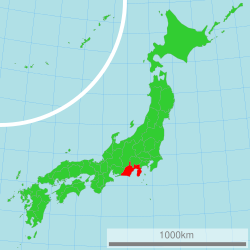
The region — central Pacific coast, bamboo from the Mt. Fuji foothills
Shizuoka City sits on the central Pacific coast of Honshū, roughly halfway between Tokyo and Nagoya along the Tōkaidō corridor. The city occupies a fan-shaped plain where the Abe River (安倍川) meets Suruga Bay, with Mt. Fuji visible to the northeast and the Southern Alps (赤石山脈) rising directly to the north. The climate is mild and Pacific-maritime — warm summers, mild winters, abundant rainfall — and the foothills around the city support dense stands of madake bamboo (Phyllostachys bambusoides), the species used for Suruga take-sensuji work.
The geographic combination matters. Madake culms grown in Shizuoka’s warm, humid foothills produce the slender, regular, evenly-spaced internodes needed for round-rod cutting. A take-sensuji rod is typically 1–3 mm in diameter, planed smooth from a strip of bamboo culm — to produce a uniform rod, you need a uniform culm, and Shizuoka’s bamboo growth supplies that consistently. Bamboo from cooler or drier regions tends to grow irregularly, with knots and uneven internode spacing that complicate the planing step.
For international-reader geography: Shizuoka is on the Tōkaidō shinkansen line, about one hour from Tokyo and 75 minutes from Nagoya. Mt. Fuji’s southern slope rises 40 km to the northeast of the city; the volcano is technically in neighboring Shizuoka and Yamanashi prefectures and the famous view from Miho-no-Matsubara is approximately 10 km from central Shizuoka. The Tokaidō — the historical highway connecting Edo (Tokyo) and Kyoto during the Edo period — passed directly through Sumpu (the historical name for Shizuoka City), making it a major waypoint town for centuries.
The historical anchor — Tokugawa Ieyasu’s retirement city and Sugayama Kihachi’s innovation
Shizuoka was historically known as Sumpu (駿府), and it carries a specific weight in Edo-period political history. After Tokugawa Ieyasu (徳川家康, 1543–1616) formally retired as shogun in 1605, he based himself at Sumpu Castle from 1607 until his death in 1616. The decade he spent here turned Sumpu into a major political center — second only to Edo itself for that brief window. Even after his death, Sumpu remained an important Tokugawa domain seat through the Edo period (1603–1868), governed by Tokugawa-affiliated lords.
The craft pedigree of the area runs in parallel. Sumpu’s status as a Tōkaidō highway town and a Tokugawa domain seat meant a steady flow of skilled artisans, merchants, and travelers — a customer base for high-quality craft objects. By the early nineteenth century, the city had developed clusters of lacquerware, cabinetry, ivory carving, and bamboo work.
“The round-rod technique that defines Suruga take-sensuji is unique in Japanese bamboo craft — nowhere else in Japan does a major bamboo tradition build from cylindrical sticks rather than flat woven strips.”
Suruga take-sensuji-zaiku as a distinct craft is traced to an artisan named Sugayama Kihachi (菅山喜八, active in the early nineteenth century), who developed the round-rod bamboo technique under the patronage of the Tokugawa Sumpu domain. Earlier Japanese bamboo work — including the bamboo basketry of Beppu in Ōita Prefecture, which is the largest bamboo-craft tradition in Japan — used flat split-bamboo strips woven over each other in various plaiting patterns (ajiro, hexagonal, square, twill). Kihachi’s innovation was to plane bamboo strips into smooth round rods, drill the joining points, and thread the rods together with cotton at each crossing, secured with glue. The result is geometric, lightweight, and visually delicate — closer to a wireframe drawing than a woven basket.
The technique spread through workshops in the Sumpu castle town during the late Edo and Meiji periods. After Japan opened to international trade in 1868, Suruga take-sensuji pieces were exported alongside other Japanese craft goods, valued in Europe and the United States for their distinctive geometric appearance. By the early twentieth century, Suruga take-sensuji workshops were producing wind chimes, lampshades, flower vases, tea-utensil stands, fruit baskets, and small decorative pieces.
In 1976, the Ministry of International Trade and Industry (now METI) formally designated Suruga Take-Sensuji-Zaiku as a Traditional Craft Product (No. 60 in the registry of approximately 240 currently designated crafts). The designation requires that pieces be produced in Shizuoka Prefecture using traditional round-rod techniques on madake bamboo.
-
1607–1616 — Tokugawa Ieyasu bases himself at Sumpu Castle in retirement. Sumpu becomes a major Tokugawa domain seat and a craft-cluster town on the Tōkaidō highway. -
Early 19th c. — Sugayama Kihachi develops the round-rod bamboo technique (sensuji) in Sumpu, under Tokugawa Sumpu-domain patronage. Distinct from flat-strip bamboo basketry practiced elsewhere in Japan. -
1868 onward — Meiji opening. Suruga take-sensuji pieces enter the international export market alongside other Japanese craft goods; visible at world expositions in Vienna (1873) and Paris (1878). -
1876 — The historical provinces of Suruga, Tōtōmi, and Izu are unified into the modern Shizuoka Prefecture. -
Early 20th c. — Suruga take-sensuji workshops diversify into lampshades, flower vases, tea-utensil stands, and decorative pieces. Wind chimes remain a seasonal staple. -
1976 — Suruga Take-Sensuji-Zaiku designated a METI Traditional Craft Product (国指定伝統的工芸品), No. 60 in the registry. -
2000s — Shizuoka City branding adopts Suruga take-sensuji as one of three signature city crafts, alongside Suruga lacquer and Suruga hina-doll work. -
2026 — A small number of certified workshops remain active in Shizuoka City; production output includes wind chimes (the Hatsukaze line among them), lamps, and flower vessels.
What “still being made here” actually means
The continuity case for Suruga take-sensuji is real but small. A limited number of certified workshops remain active in Shizuoka City, working under the cooperative structure required by the METI designation. The technique is taught through master-apprentice transmission — there is no formal school. A skilled artisan cuts bamboo culms in late autumn or winter, splits them into rough strips, planes each strip into a smooth round rod (typically 1–3 mm diameter), dyes the rods if the design calls for color, then drills the joining points and threads them with cotton secured by glue.
For a 25 cm Hatsukaze wind chime, the rod count runs into the dozens. Assembly of a single piece typically takes a skilled artisan most of a working day. This is one reason why a Suruga sensuji wind chime sits at ¥5,500 — the labor content per piece is substantial, even at the entry tier.
The succession question is open. The Suruga take-sensuji craft community is small relative to Beppu’s bamboo-craft scale, and apprenticeship numbers fluctuate. The METI designation provides legal protection of the name and technique, but does not guarantee economic continuity. Buying an entry-tier piece like the Hatsukaze 25 is one of the most accessible ways for an international buyer to support a workshop that is actively producing in 2026.
Seasonal context — the Japanese summer wind chime
Wind chimes are seasonally specific objects in Japan. They are hung from the eaves of houses, the edges of verandas, or the rims of porches during the hot summer months — roughly June through early September — and are taken down and stored when the season ends. The Japanese aesthetic logic is straightforward: the sound of a soft bell triggered by wind is associated with coolness. A breeze that you can hear is a breeze you notice. Hanging a fuurin in winter is a category error; the object is summer hardware, like an ice-cream stand or a yukata.
The Hatsukaze 25 is on the quieter end of the fuurin spectrum. The glass bell at the center of the bamboo cage produces a delicate, light sound — less projection than the Nambu cast-iron fuurin from Iwate, which is heavier and rings further. For a Western home, this means it works well in an interior window niche or a covered porch with light airflow; it will not carry across a backyard like a louder garden chime.
📌 How does it compare? Related Japanese craft guides on jpmono
If you are exploring Japanese craft for the home and want to see how Suruga take-sensuji sits in the broader landscape — different region, different material, different price tier — these guides on jpmono cover related METI-designated traditions worth comparing against.

Marugame Uchiwa Linen Tonbo (Kagawa)

Echizen Washi Goshuincho (Fukui)
Hakone Yosegi Pen Stand (Kanagawa)

Kobaien Nara Sumi (Nara)
Takachiho Kagura Mask (Miyazaki)
Price snapshot across stores
The table below tracks where this specific piece can be purchased and how the consumer experience differs by store. The Amazon JP Global Store row is the sourced listing for the Hatsukaze 25 (B008GY485K) at ¥5,500. The Amazon.com (US) row is a search across comparable Japanese wind chimes and bamboo craftwork for buyers who would rather purchase in USD with Prime shipping.
| Store | Item / variant | Price (JPY + USD est.) | Notes |
|---|---|---|---|
| 🇺🇸 Amazon.com (US) | Browse Japanese bamboo wind chimes | varies (USD) | Best if you are shopping from the US — Prime shipping, USD pricing, no international customs. Amazon US carries Japanese fuurin from Edo glass and Nambu cast-iron makers — useful for comparing sound profile and material. The exact Suruga Hatsukaze 25 is sourced from Japan (next row). |
| 🇯🇵 Amazon JP Global Store | Suruga Take-Sensuji Hatsukaze 25 (B008GY485K) | ¥5,500 (≈$37 USD) | Ships internationally from Japan. ~$8–$15 USD shipping to most destinations. 100 g; bamboo personal-import is unrestricted in most countries. This is the sourced listing for this guide. |
| Maker direct | Suruga Take-Sensuji cooperative workshops | — | The cooperative workshops do not operate a direct international e-commerce site. Domestic buyers can order through Shizuoka City craft retailers; international buyers should route via the Amazon JP row or a proxy. |
| Proxy services (Buyee / Tenso) | Japan-only listings (Rakuten, Yahoo!, workshop sites) | ¥5,500 + proxy fee + shipping | Useful if you want a Suruga sensuji piece that is not listed on Amazon JP Global Store — taller wind chimes, flower vases, lampshades. Adds 10–15% in proxy fees on top of the item price. |
Prices and stock fluctuate. The JPY price for B008GY485K is the authoritative figure for the specific listed item; USD figures are approximate, calculated at a ¥150/USD baseline as of mid-2026.
What it does well
Suruga take-sensuji is the only major Japanese bamboo craft built from cylindrical rods, not flat woven strips. The geometric look is visually distinct from Beppu or Hita bamboo basketry and gives the piece a wireframe, almost architectural appearance.
Legal certification of regional origin and traditional technique (designated 1976). This is not marketing copy — pieces sold under the Suruga take-sensuji name must meet the cooperative’s technique and material standards.
At ~100 g, the Hatsukaze 25 ships at the lowest Amazon JP Global Store international rate band. Bamboo is unrestricted for personal import in most destinations; no CITES, no phytosanitary paperwork.
A working summer object, not just decorative. Hung in a window niche or sheltered veranda during the warm months and stored in the off season, it carries the Japanese seasonal-object rhythm intact.
Weaknesses and things to verify before buying
- Delicate by construction. The bamboo rods are held together by cotton thread and glue at every crossing point. Drops, hard knocks, or rough handling will damage joints. This is not décor for a household with active children or large pets.
- Outdoor weather exposure will degrade it. The care notes from the listing call for a sheltered hanging location and an optional annual light wax if outdoor use is unavoidable. Rain, prolonged direct sunlight, and freeze-thaw cycles will all shorten the lifespan. A covered porch or window niche is the correct placement; an open balcony in a rainy region is not.
- Bell sound is intentionally subtle. The glass bell rings softly; it will not project across a garden the way a Nambu cast-iron fuurin does. If you want a loud, ringing chime, a different fuurin tradition is a better fit.
- Bamboo can fade with prolonged direct sunlight. The natural bamboo color will lighten over years of exposure to direct sun. This is normal aging, not a defect; pieces displayed in indirect light retain color longer.
- No English-language maker support or repair service internationally. If a joint breaks or a thread loosens, repair requires either a domestic Japanese specialist or a careful DIY repair with cotton thread and PVA glue. There is no maker-side warranty or international repair path.
- Winter / off-season placement. Hanging a fuurin year-round contradicts Japanese seasonal convention. Most Japanese households take the wind chime down in autumn and store it wrapped until the following early summer. Western buyers who hang it as permanent décor are using it differently from the cultural intent — not wrong, but worth knowing.
- Listing snapshot only, not live verification. The specs and price in this guide come from a single Amazon JP listing snapshot dated May 16, 2026. Live pricing, stock status, and shipping availability may have shifted since the writing date. Verify at the retailer link before purchase.
Conclusion — which buyer type are you?
If you already collect Japanese craft and want a substantial Suruga sensuji item, skip the Hatsukaze 25 and target a lampshade or flower vase in the ¥15,000–¥40,000 tier via Buyee or a specialist craft retailer.
The Hatsukaze 25 at ¥5,500 is designed for this buyer: someone curious about Japanese craft, with a sheltered hanging location and modest budget. The strongest match.
If $37 USD is a stretch and you mainly want the wind-chime sound, an Edo glass fuurin retails at ¥1,500–¥2,500 on Amazon JP, ships internationally, and produces a brighter bell tone.
No sheltered hanging spot, very small children or large pets, or a preference for loud chime sound. The fragility plus the subtle bell make it a poor fit for those conditions.
Other ways to approach this purchase
Suruga take-sensuji is not heavily discounted, but late-summer end-of-season clearance (late August through early September) sometimes brings 10–15% reductions on Amazon JP listings as sellers clear summer inventory.
Not a meaningful path for this category. Handmade bamboo work does not have a refurbished market, and second-hand Japanese craft listings on Mercari or Yahoo Auctions Japan are domestic-only without a proxy service.
Amazon Prime members in the US can apply Prime points or credit-card cash-back to Amazon JP Global Store orders. A 2–5% effective discount stacks on top of the listing price. Verify your card’s foreign-transaction fee — some cards charge 1–3%.
If the fragility or subtle sound rules out the Hatsukaze 25 for your space, an Echizen washi notebook, a Hakone yosegi marquetry piece, or a Kobaien Nara sumi inkstick are alternative entry-tier Japanese craft pieces at similar price points, with different practical use cases.
🏆 Editor’s Pick
- The most reliably internationally-available entry into Suruga take-sensuji-zaiku — the only major Japanese bamboo tradition built from round rods rather than flat strips.
- A functional summer object with real cultural use, not just décor. METI-designated; cooperative-workshop produced; ships at the lowest international weight band.
- At ¥5,500 (≈$37 USD), one of the more affordable METI Traditional Craft pieces routinely shipped through Amazon JP Global Store. A meaningful first piece in Japanese bamboo craft.
❓ Frequently Asked Questions
Will the Hatsukaze 25 wind chime ship internationally from Amazon JP?
Yes. The listing for B008GY485K is enrolled in Amazon JP Global Store, which ships to most major international destinations (US, EU, AU, UK, and others). The piece weighs about 100 g, which falls into the lowest international shipping weight band — typically $8–$15 USD to North America or Europe, more to other regions. Bamboo is unrestricted for personal import in most countries; no CITES paperwork or phytosanitary certificate is required. Verify the current shipping availability for your destination on the listing page before checkout.
How loud is the bell, and where should I hang it?
The bell is intentionally subtle — a small glass clapper inside the bamboo cage. It produces a soft, light tone in a gentle breeze, not the projecting ring of a Nambu cast-iron wind chime. The best placement is a sheltered indoor or covered-outdoor spot with some natural airflow: a window niche where a window opens to a breeze, a covered porch eave, or an interior doorway between rooms. Avoid hanging it in a fully open exterior location exposed to rain.
What does “METI Traditional Craft Product” mean?
METI (経済産業省, the Ministry of Economy, Trade and Industry, formerly MITI) designates a craft as a Traditional Craft Product (伝統的工芸品) if it meets four criteria: at least 100 years of continuous regional production, use of locally available raw materials, employment of traditional hand techniques, and an intended daily-life use case. Approximately 240 crafts currently hold the designation. Suruga Take-Sensuji-Zaiku was designated in 1976 (No. 60 in the registry). The designation is a legal certification of geographic origin and technique, not a marketing tier — a piece sold under the Suruga take-sensuji name must come from a certified Shizuoka workshop using the round-rod technique on madake bamboo.
How is Suruga take-sensuji different from Beppu bamboo work?
The two are different in technique, region, and visual character. Beppu bamboo work (Ōita Prefecture, Kyūshū) is the largest bamboo-craft tradition in Japan and uses flat split-bamboo strips woven over each other in plaiting patterns — the conventional Japanese bamboo basketry look familiar from baskets, tea-ceremony flower containers, and tea whisks. Suruga take-sensuji (Shizuoka, Chūbu) uses slender round bamboo rods, planed smooth from culm strips, threaded together with cotton at each crossing point. The Beppu aesthetic is woven and textured; the Suruga aesthetic is geometric, lightweight, and almost wireframe-like. The two are not interchangeable; they are different crafts that happen to share the same raw material.
Will the bamboo darken or fade over time?
Yes, but slowly. Natural undyed bamboo gradually lightens with exposure to direct sunlight and may take on a slightly warmer tone over years of indoor display. This is normal aging and is generally considered part of the appeal of bamboo objects. To slow the color change, hang the piece in indirect light rather than direct sun. The care notes from the listing also suggest a light annual wax treatment if the piece is used outdoors, which helps protect against moisture as well as UV exposure.
Can I hang this outdoors year-round?
Not recommended. The Hatsukaze 25 is built from bamboo, cotton thread, and glue — three materials that all degrade with prolonged moisture, freeze-thaw cycles, and UV exposure. The Japanese seasonal-object convention is to hang the fuurin in summer (June through early September) and take it down for the off season; this protects the piece and matches the cultural seasonal logic. A sheltered eave or covered veranda is acceptable for summer-long outdoor use; year-round full exterior exposure will substantially shorten the lifespan.
What is the difference between the Hatsukaze line and other Suruga sensuji wind chimes?
Hatsukaze (初風, “first wind”) is the name of one specific Suruga wind-chime design — a hanging round-rod cage with a glass bell inside, available in a 25 cm size (this guide’s piece) and a taller variant. Other Suruga sensuji wind-chime designs include square-cage forms, pendant-style hanging pieces, and a smaller table-display “yusuzumi” line. The Hatsukaze 25 is the most consistently stocked variant on Amazon JP Global Store. For alternative shapes, search the listings periodically or use a proxy service like Buyee to target Shizuoka workshop retailers directly.
jpmono.com is curated by a Japan-based editorial team (working out of Toyama in the Hokuriku region and Nara in Kansai) and is independent. We do not take payment from the makers we feature; income comes from affiliate links. Read more about our editorial standards.
Editorial note: this article was drafted with AI assistance from the Amazon JP listing snapshot and public information on the Suruga take-sensuji craft tradition. Specifications, prices, and shipping details were drawn from the listing data available at the time of writing; live values may differ. Verify at the retailer before purchase.
Affiliate disclosure: jpmono.com may earn a commission on qualifying purchases made through links on this page, at no additional cost to you.