![Kobaien Gosei Beni-bana Sumi Inkstick (五星 紅花墨, ¥4,400 / ≈$29 USD) — 450 Years of Nara Sumi from a 1577-Founded Maker, From Heijō-kyō to Your Calligraphy Desk [2026 Buyer’s Guide]](https://jpmono.com/wp-content/uploads/2026/05/kobaien-nara-sumi-inkstick-where-to-buy-2026-featured-12.jpg)
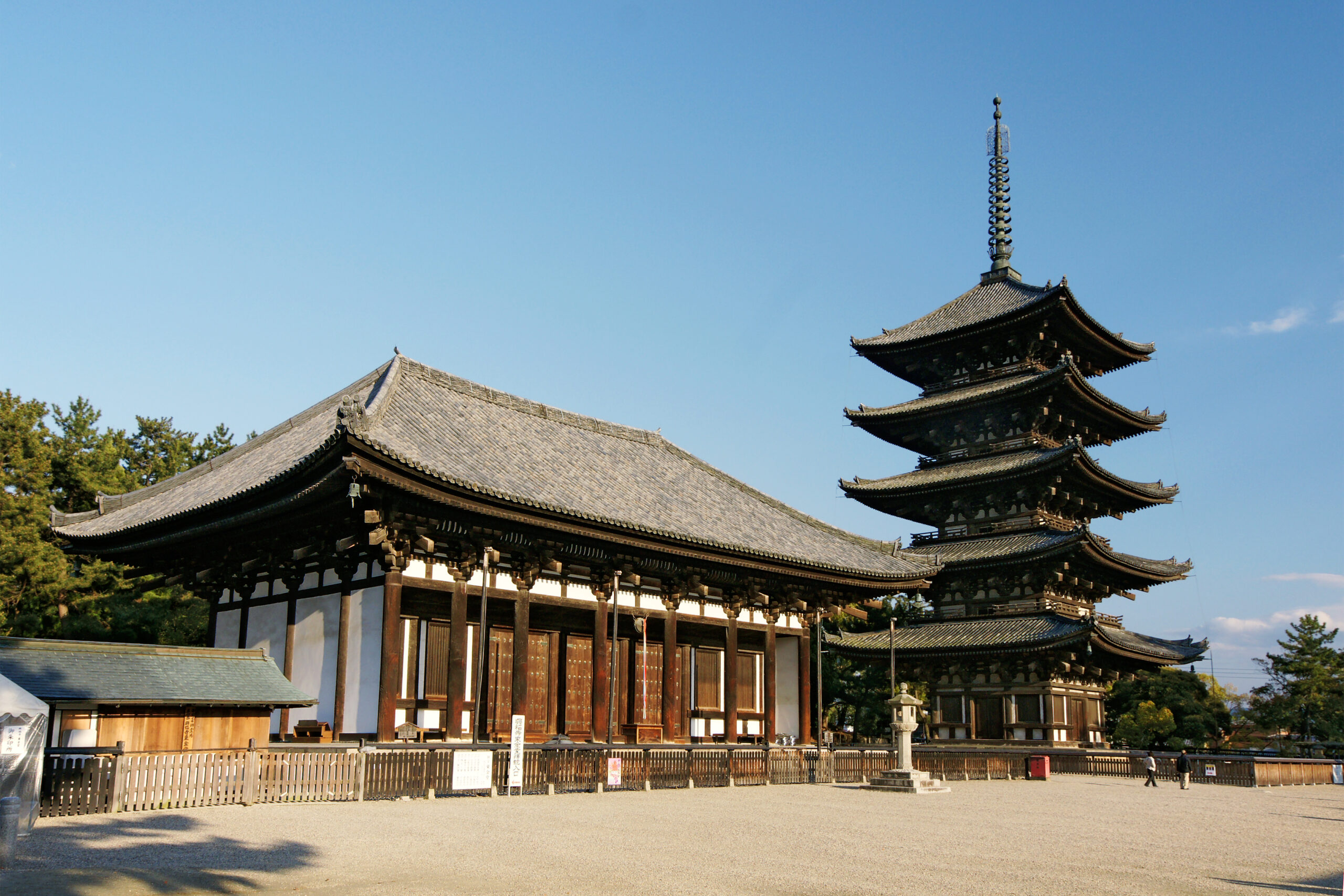
Kobaien (古梅園) was founded in Nara in 1577 by a former monk of Kōfuku-ji temple. Four hundred and fifty years later, the same workshop — in the same Tsubai-chō neighborhood, a few minutes’ walk from Sarusawa Pond — is still pressing sumi inksticks by hand through the cold months of every year. It is the oldest continuously-operating sumi maker in Japan, and the institutional descendant of a craft tradition that reaches back to the 7th-century Buddhist temple workshops of the Nara court.
The Gosei Beni-bana (五星 紅花墨, “Five-Star Safflower Ink”) is one of Kobaien’s better-known mid-range sticks. It is an oil-soot ink with a small addition of safflower extract during the mixing stage, which gives the ground ink a slightly warm, red-tinged black tone — favored historically for tea-ceremony calligraphy and for sumi-e (墨絵) painting, where pure cold-black can read harshly against shaded landscapes. The 1.0-丁 (ichi-chō) size is the standard “one stick” calibration that every Japanese calligraphy curriculum begins with: 27.5 g, 7.5 cm long, the form factor that fits any standard suzuri (硯) inkstone.
This guide is written for international calligraphers, sumi-e painters, and serious stationery readers who want to understand what they are actually buying when they order a Kobaien stick from outside Japan. We cover the 1,300-year craft tradition that sits behind the stick, the maker’s production cycle, the Beni-bana line’s tonal character, and the practical mechanics of buying a 27.5 g organic item across borders.
🔄 Last updated
⏱️ ~14 min read

- Who this is for — and who should skip it
- Product overview (from published specs)
- 📍 Where this comes from — Nara, the first capital, and 1,300 years of inkmaking
- 📌 How does it compare? — related jpmono guides
- Price snapshot across stores
- What it does well
- Weaknesses and things to verify before buying
- Conclusion — which buyer type are you?
- Other ways to approach this purchase
- 🏆 Editor’s Pick
- ❓ Frequently Asked Questions
- 📌 Related Japanese Crafts
Who this is for — and who should skip it
- Practice East Asian calligraphy (shodō, 書道) and want to move from bottled ink (墨液) to hand-ground stick ink
- Do sumi-e (墨絵) ink painting and want a slightly warm-black tone rather than a cold blue-black
- Prefer entry-to-intermediate price points; ¥4,400 is the standard ladder rung for a serious first Kobaien stick
- Want a maker with documented continuity — Kobaien has been listed in Japanese stationery records continuously since the late 16th century
- Are buying internationally and need an item under 50 g that ships without significant customs friction
- Practice Western copperplate, italic, or Spencerian calligraphy and want a cold pure-black — Kobaien’s plain Kotaikan or Hyakuraku line is the better starting point
- Have never used a suzuri (inkstone) and have no intention of buying one — this stick is useless without one
- Want a one-bottle solution for casual brush-pen practice; liquid sumi (Kuretake, Boku-undō Bokuteki) is more practical
- Need the ink right away — international shipping from Amazon JP Global Store typically runs 7-14 days
- Are budget-constrained and don’t yet know if you’ll stick with the craft; a ¥600 Akashiya brush set + ¥3 hanshi paper is a smaller commitment to test interest first
Product overview (from published specs)

Kobaien Gosei Beni-bana Sumi Inkstick (五星 紅花墨)
古梅園 五星 紅花墨 1.0丁
残り1点 ご注文はお早めに · Sold by Amazon.co.jp · ASIN B005C9AV3U
Price and availability as of 2026-08-31 02:30 JST. The Amazon listing at the time of purchase is authoritative. jpmono.com earns a commission on qualifying purchases at no extra cost to you.
| Field | Value |
|---|---|
| Product name | 古梅園 五星 紅花墨 1.0丁 (Kobaien Gosei Beni-bana, 1.0-chō) |
| ASIN | B005C9AV3U |
| Brand | 古梅園 (Kobaien) — maker-direct on Amazon JP |
| Type | Oil-soot ink (油煙墨, yuen-boku) with safflower (紅花, beni-bana) extract |
| Material composition | Oil-soot from rapeseed / sesame oil, animal-derived gelatine (膠, nikawa), aromatic fragrances, safflower extract |
| Dimensions | 10 × 18 × 75 mm (about 7.5 cm long) |
| Weight | 27.5 g |
| Size class | 1.0-丁 (ichi-chō) — the standard daily-use size |
| Origin | Nara City, Nara Prefecture, Japan |
| Price (Amazon JP, May 2026) | ¥4,400 (≈ $29 USD at ¥150/USD baseline) |
| Loyalty points | 44 Amazon points (1% of price) |
| International shipping | Available via Amazon JP Global Store; est. $10–$25 USD to US/EU/AU/Canada; under all customs de minimis thresholds |
Sources: Amazon JP listing (B005C9AV3U) snapshot as of May 14, 2026; Kobaien maker pages. Live pricing may have shifted since the writing date — verify at the retailer before ordering.
📘 Glossary — key Japanese terms used in this article
Sumi (墨) — solid Japanese ink, ground on a wet stone before use. The English word “sumi” refers specifically to the stick form; ground ink is sumi-eki (墨液) or simply sumi (in context).
Yuen-boku (油煙墨) — oil-soot ink. Soot collected from the controlled burning of rapeseed, sesame, or paulownia oil. Finer and more uniform than shō-en (松煙, pine-soot). The standard Kobaien method.
Shō-en (松煙) — pine-soot ink. Older technique using soot from burning pine resin or pine knots. Coarser texture, often a cooler matte tone. Used by some workshops in Mie Prefecture (Suzuka).
Beni-bana (紅花) — safflower. Its extract, added to the ink paste, gives the resulting black a warm, red-tinged undertone.
Chō (丁) — a traditional sumi-size unit. 1.0-丁 ≈ 27.5 g, the daily-use standard. Sizes scale from 0.3-丁 (travel) to 3.0-丁+ (gift / ceremonial).
Suzuri (硯) — inkstone. The stone slab with a flat grinding face and a sloped well for collecting ground ink. Required for using stick ink.
Nikawa (膠) — animal-derived gelatine, traditionally from cow hide. The binder that holds the soot together in stick form and that, once wetted and ground, produces the suspension of ink.
Shodō (書道) — “the way of writing.” East Asian calligraphy as a disciplined practice.
Sumi-e (墨絵) — ink painting; monochrome brush painting using sumi ink and varying water dilutions.
Heijō-kyō (平城京) — the imperial city laid out in 710 CE in what is now central Nara. Japan’s first permanent capital, modeled on Tang-dynasty Chang’an.
Kōfuku-ji (興福寺) — major Nara Buddhist temple founded 710 CE. Its sumi workshop (the Nitai-bō, 二諦坊) was the institutional ancestor of Kobaien.
📍 Where this comes from — Nara, the first capital, and 1,300 years of inkmaking

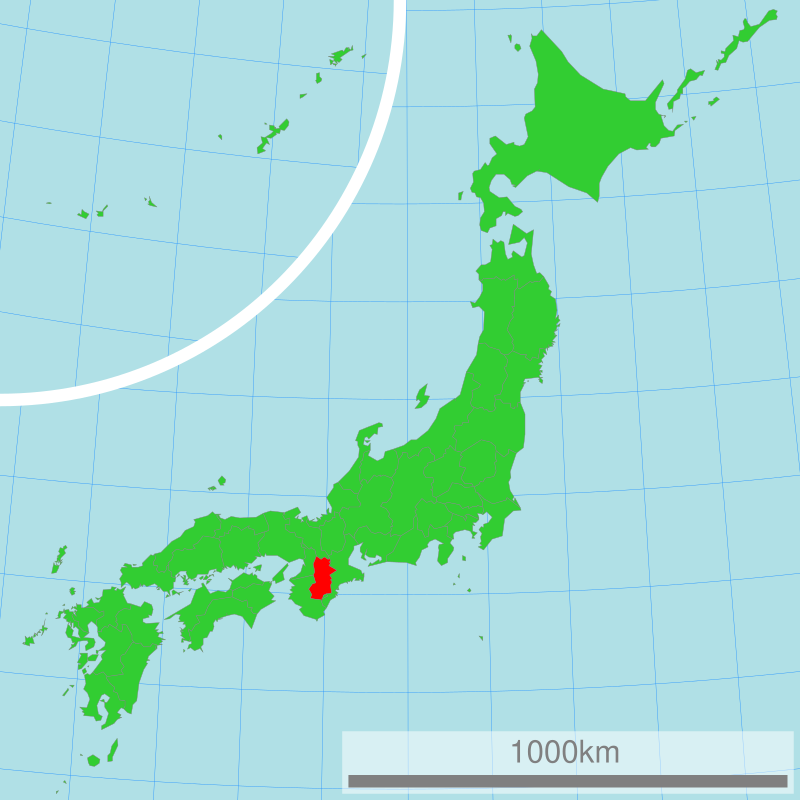
The region — Nara basin, the cradle of institutionalized Japanese craft
Nara is a city of roughly 350,000 people in Nara Prefecture, in the Kansai (関西) region of central-west Japan. For an international reader: Nara sits about 40 km east of Osaka and 35 km south of Kyoto, with the Yamato Highlands ringing the basin to the east and south. The basin opens north toward Kyoto and Osaka. Kansai International Airport (KIX) is the closest international gateway, roughly 80 km west.
The climate is hot-humid summers and cold-clear winters. That winter dryness — combined with the stable indoor temperatures of old-style sumi workshops — has historically governed the sumi-making season. Production runs roughly October through April, with the deep-winter months reserved for the most delicate pressing and drying work.
Nara’s modern identity is dominated by its historical role. It was Japan’s first permanent imperial capital, from 710 to 794 CE — the Nara period (奈良時代). When the imperial court relocated north to Kyoto in 794, the institutional craft that had taken root in Nara — Buddhist sculpture, lacquerware, paper-making, bronze casting, brush-making, and sumi-ink production — stayed where it was. This is why Nara today retains, in unbroken form, several craft traditions that elsewhere in Japan were lost or reset: Naranfude brushes, Nara-zumi (奈良墨) sumi-ink, and traditional papers among them.
The historical anchor — Heijō-kyō, Kōfuku-ji, and the Nitai-bō workshop
The Nara period (710–794) is when Japanese craft as an institutionalized, named tradition first took shape. The court — modeling itself on Tang-dynasty China — concentrated artisans, monks, paper-makers, sumi-makers, and bronze-casters into permanent workshops in and around the capital, Heijō-kyō (平城京). The surviving artifacts from this period, held in the Shōsō-in (正倉院) repository at Tōdai-ji, include 8th-century textiles, lacquerware, glass, bronze, paper, and original sumi inksticks. The Shōsō-in sits approximately 4 km from central Nara station and is opened to the public during an annual autumn exhibition.
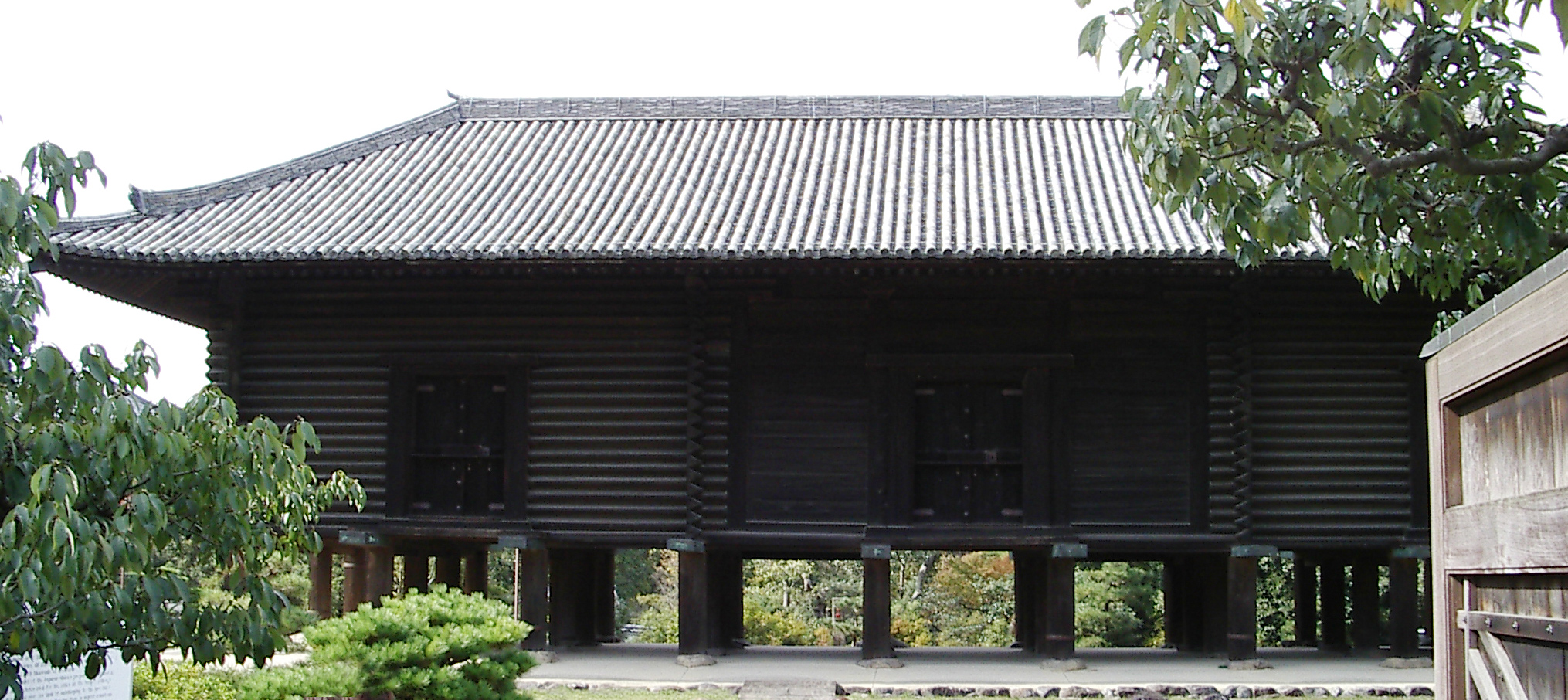
The craft of grinding soot with animal glue into a solid inkstick is Chinese in origin, traced to the Han dynasty around 200 BCE. The technique reached Japan in the 6th–7th centuries with Buddhism — initially as imported Chinese sticks, then as local production by Buddhist temple workshops. The earliest documented Japanese sumi production is at Kōfuku-ji (興福寺) temple in Nara, in the 8th century. Kōfuku-ji was one of the four great temples of the Nara court, and it operated a sumi workshop known as the Nitai-bō (二諦坊) — literally “Two-Truths Bunkhouse,” named after a Buddhist doctrine. The Nitai-bō produced sumi for sutra copying and for the court calligraphy bureau.
For approximately 800 years — from the 8th century through the late 16th — sumi production in Nara remained largely temple-attached. Output went into sutra-copying, official record-keeping, and the cultural exchange networks of the medieval tea-ceremony.
-
c. 200 BCE — Chinese sumi-making technique documented during the Han dynasty. -
6th–7th c. — Inkmaking arrives in Japan with Buddhism; initial use of imported Chinese sticks. -
710 CE — Heijō-kyō (Nara) established as Japan’s first permanent imperial capital. Kōfuku-ji temple founded the same year. -
729–749 (Tenpyō era) — Kōfuku-ji’s Nitai-bō (二諦坊) workshop documented as producing sumi for the court calligraphy bureau and sutra copying. -
752 — Tōdai-ji Daibutsu (15-m bronze Buddha) consecrated; the Shōsō-in repository receives 8th-century craft objects including original sumi sticks. -
794 — Imperial court relocates to Heian-kyō (Kyoto); Nara’s craft workshops remain in place. -
1467–1477 — The Ōnin War weakens the great Nara temples economically; secular workshops begin to take over craft output. -
1577 (Tenshō 5) — Matsui Dōchin, a former Kōfuku-ji monk, founds Kobaien (古梅園) in central Nara. First independent secular sumi workshop in Japan. -
1716–1745 — Tokugawa shōgun Yoshimune grants Kobaien the right to use the imperial chrysanthemum on its packaging. -
1805 — Boku-undō (墨運堂) founded by a former Kobaien employee; the Nara industry diversifies. -
1902 — Kuretake (呉竹) founded in Nara, later pivoting to liquid sumi and brush-pens. -
2018 — Nara-zumi (奈良墨) designated a METI Traditional Craft Product (伝統的工芸品), formally recognizing it as a craft of national-heritage value. -
2026 — Kobaien enters its 450th year of continuous operation, 16th-generation Matsui Junichi at the head of the workshop.
The secular turn — Kobaien, 1577
The transition of Nara sumi from a temple-side craft to an independent commercial trade is bracketed by two events. The Ōnin War (1467–1477) weakened the great Nara temples economically, and the rise of Toyotomi Hideyoshi in the 1580s further redistributed wealth away from religious institutions toward emerging merchant classes. In the middle of that transition — in 1577 — a former Kōfuku-ji monk named Matsui Dōchin (松井道珍) left the temple and established the first independent, secular sumi workshop in Nara. He named it Kobaien (古梅園, “Old Plum Garden”) after the plum tree in his courtyard.
The workshop site — in Tsubai-chō (椿井町), central Nara, a few minutes’ walk from Kōfuku-ji and Sarusawa Pond — is the same location where Kobaien operates today, 450 years later. Matsui Dōchin’s two innovations were systematizing oil-soot (油煙) production at scale, and segmenting output into a graded ladder (entry, mid, premium, gift, ceremonial) so that townsmen, samurai, court calligraphers, and Buddhist temples could each be customers at their own price point. That merchandising lineage continues in the modern Kobaien catalogue, and the Gosei Beni-bana 1.0-丁 sits squarely in the entry-to-intermediate rung of that ladder.
By the early Edo period (1603–1868), Kobaien had become Japan’s largest sumi-maker and was supplying inks to the shōgunate’s official calligraphy bureau, to Confucian academies, to Buddhist sects nationwide, and to private samurai households. The Tokugawa shōgun Yoshimune granted Kobaien the right to use the imperial chrysanthemum on its packaging — a privilege rarely extended to commercial workshops.
“A serious Kobaien stick you grind today may have been started six months ago — soot collected by feather quill from oil-burner cups in November, kneaded into paste in December, pressed in January, and then hung in straw-rope wrappings to dry slowly through deep winter.”
What “still being made here” actually means
Today, Nara has roughly 8–10 active sumi workshops; Kobaien and Boku-undō together produce approximately 60–70% of all Japanese-made sumi ink. The remaining production is divided among Suzuki Shōfūdō, Kuretake (modern liquid inks and brush-pens), and smaller specialty workshops. Kobaien itself is now in its 16th generation under the Matsui family, with current head Matsui Junichi having succeeded in the mid-2010s. Annual output is estimated at 200,000–300,000 inksticks across all grades, plus liquid inks.
The workshop is open to public visitors with advance booking — tours run November through March, the production season, and a visitor can watch the soot-collection stage where a single worker tends roughly 200 oil-burners simultaneously, scraping soot off inverted clay cups with a feather quill every 20–30 minutes during 10-hour shifts.
Heritage anchors visible within a few kilometers of the Kobaien workshop: Tōdai-ji (4 km, the bronze Daibutsu of 752 CE and the Shōsō-in repository), Kōfuku-ji (the original temple sumi workshop), Kasuga-taisha (768 CE, the Shintō shrine with ~3,000 stone lanterns), and the Nara National Museum.
How a Kobaien stick is actually made — the 4-to-6-month winter cycle
The basic production cycle for any Kobaien stick — including this Gosei Beni-bana 1.0-丁 — runs through six stages from October to April:
- Soot collection (October–November). Oil is burned in small stone pots; soot deposits on inverted clay cups suspended above the flame. A single worker tends ~200 burners simultaneously, scraping the soot off each cup with a feather quill every 20–30 minutes for 10-hour shifts.
- Glue preparation. Animal-derived gelatine (膠, nikawa), traditionally cow-hide, is melted at controlled temperatures and combined with aromatic fragrances (sandalwood, musk, camphor historically; specifics vary by maker and grade).
- Mixing and kneading (December). Soot, glue, and fragrances are kneaded into a stiff paste by hand. For the Beni-bana line, this is the stage where Kobaien adds safflower extract — the addition that gives the resulting ink its characteristic warm-black tone.
- Pressing into molds (December–January). The paste is pressed into carved wooden molds; each model has its own mold shape. The mold imprints the maker’s stamp and the model name on the stick’s surface.
- Drying (January–April, 3–4 months). Pressed sticks are dried slowly in covered straw-rope wrappings, hung from rafters in unheated workshop rooms. This is the longest and most critical phase — too fast and the stick cracks; too slow and the surface molds.
- Finishing. Dried sticks are unwrapped, polished, and gold- or color-stamped with the maker’s seal.
From soot collection to a finished stick: approximately four to six months. The Gosei Beni-bana stick you grind in your studio next month may have been started in autumn last year.
📌 How does it compare? — related jpmono guides
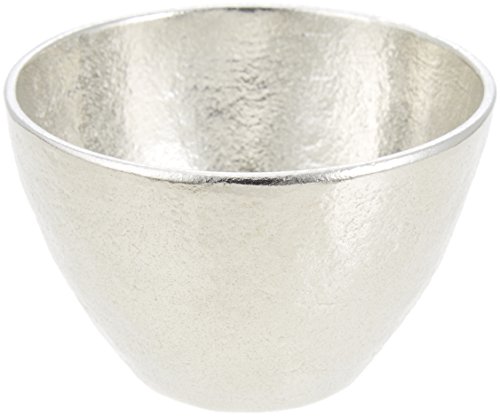
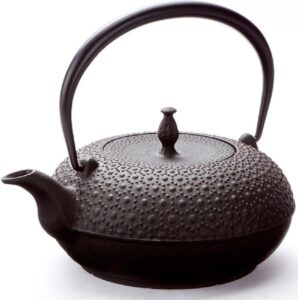
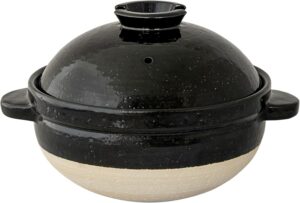
Sumi-ink fits inside a broader Japanese-craft household. If you are building a kit, these companion guides cover items from the same regional traditions — Nōsaku tin from Toyama, Oigen iron from Iwate, and Iga clay from Mie.



Price snapshot across stores
| Store | Variant | Price (JPY + USD est.) | Notes |
|---|---|---|---|
| 🇺🇸 Amazon.com (US) | Browse Japanese sumi inksticks & calligraphy supplies | varies (USD) | Best if you’re shopping from the US — Prime shipping, USD pricing, no international customs. Amazon US carries sumi inksticks (Kuretake, Yasutomo, and other makers) and calligraphy supplies; Kobaien’s specific Gosei Beni-bana stick is sourced from Japan (next row). |
| Amazon JP Global Store | Gosei Beni-bana 1.0-丁 (27.5 g) | ¥4,400 (≈ $29 USD) | Ships to US/EU/AU/Canada and most major destinations. Est. shipping $10–$25 USD. Brand listed as 古梅園 (Kobaien) — verify seller on page. |
| Maker direct (kobaien.com) | Full Kobaien catalogue, incl. limited editions | Listed in JPY; comparable to Amazon JP | Order by email; English correspondence workable but slow. Authentic packaging; access to vintage / limited sticks not on Amazon. |
| Proxy services (Buyee / Tenso) | Any Amazon JP / Rakuten listing forwarded | ¥4,400 + handling fee + forwarded shipping | Useful if Amazon JP Global Store does not ship to your country; required for mainland China and Taiwan. |
| International specialty shops | Selected Kobaien lines (Paper & Ink Arts, Calligraphity, John Neal Bookseller) | Typically 1.5×–2× Amazon JP price + local shipping | Faster delivery within US / EU; smaller line selection. Convenient if you also need brushes, paper, and stones in one order. |
Per the Amazon JP listing as of May 14, 2026. Prices and stock fluctuate; verify at the retailer before ordering. USD figures are approximate at a ¥150/USD baseline.
What it does well
Kobaien has been pressing sumi from the same workshop site since 1577. Entry sticks like the Gosei Beni-bana have predictable grinding behavior — a meaningful advantage over newer makers when a beginner is also learning the brush.
The Beni-bana addition gives the ground ink a slightly red-tinged black, traditionally favored for sumi-e and tea-ceremony calligraphy. For an international reader who hasn’t yet decided on a tonal preference, this is the forgiving middle ground.
At 27.5 g, this stick falls well under all major customs de minimis thresholds. No CITES flags, no controlled-substance concerns. Estimated Amazon JP Global Store shipping is $10–$25 USD to most destinations.
The Amazon JP listing shows the brand as 古梅園 (Kobaien) directly, not a third-party rebrander. Kobaien also maintains stock of every line for decades — replacement and re-ordering remain practical, even years later.
Weaknesses and things to verify before buying
- Requires a separate inkstone (suzuri). The stick is useless without one. Entry-grade suzuri run $10–30 on Amazon JP; hand-carved Chinese Tankei (端渓) stones start at $200. Budget accordingly; do not assume the stick is a complete kit.
- The warm-black tone is not universal-fit. For Western-tradition modern calligraphy — copperplate, italic, Spencerian — practitioners often prefer a cold pure-black. Kobaien’s plain Hyakuraku or the standard sumi-stick variant is the better fit for that work. The Beni-bana is best when warm or sepia undertones are desirable.
- Animal-derived gelatine (nikawa) binder. Traditional sumi is bound with cow-hide gelatine. This may not align with vegan or vegetarian buyers’ preferences; there is no vegetable-binder version of this specific product.
- Cracking risk in transit and over time. Sumi sticks crack if exposed to rapid humidity changes or to physical shock in shipping. Cracks over years are normal aging and the ink itself remains usable, but a fresh stick that arrives split can be disappointing. Buyers who plan to ship vintage sticks internationally should over-pack.
- Liquid sumi may be more practical for casual use. If you only do occasional calligraphy or you mainly use brush-pens, bottled sumi (墨液) from Kuretake or Boku-undō at ¥500–1,500 is more practical. Stick ink rewards regular practice; it punishes the user who grinds for 10 minutes once a month.
- Not shipped to mainland China or Taiwan from Amazon JP. Re-import restrictions apply to certain ink products. Use proxy services (Buyee, Tenso) for those destinations.
- Loyalty points are JPY-only and small. The listing shows 44 Amazon JP points — useful only if you buy regularly on Amazon JP and have a JPY-denominated account. International buyers can ignore the points line entirely.
Conclusion — which buyer type are you?
You already grind regularly and want to step up. The Cha-boku (¥10,700) or a vintage stick (¥33,000) is the right rung — not this entry-to-intermediate one. Save the Beni-bana for a backup.
You practice shodō or sumi-e regularly, want a documented maker, and don’t want to overthink the first Kobaien purchase. This is your match. Buy the Gosei Beni-bana 1.0-丁, pair it with a $20 suzuri and a $5 hanshi pack.
You are not yet sure if calligraphy will stick. Start cheaper: ¥600 Akashiya brush set + ¥500 bottled sumi-eki + ¥3 hanshi paper. If you are still grinding after six months, then upgrade to this stick.
If you only do Western calligraphy with metal nibs, or you want a cold pure-black, or you do not own a suzuri and don’t plan to — this product is the wrong tool. Buy a bottled Western calligraphy ink instead.
Other ways to approach this purchase
Some Amazon JP sellers package a Kobaien stick + entry suzuri + brush + hanshi together. The per-item premium is small and you avoid four separate orders.
Buyee or Tenso handles consolidation and forwarding from Japan. Adds a handling fee, but unlocks access to Rakuten and Yahoo! listings and to addresses Amazon JP Global Store cannot ship to.
Paper & Ink Arts (US), Calligraphity (Germany), John Neal Bookseller (US) stock select Kobaien lines at a markup, but with faster local delivery and English customer support if a stick arrives damaged.
If you are exploring calligraphy as a hobby and have not committed yet, a ¥500 bottle of Kuretake liquid sumi plus an inexpensive felt-tip brush-pen will tell you within a month whether you want to commit to a grinding setup.
🏆 Editor’s Pick
Why this one:
- The 1.0-丁 size is the standard “one stick” every Japanese calligraphy curriculum begins with. It is the right rung for a first serious Kobaien purchase.
- The safflower-added warm-black tone is forgiving for international buyers who haven’t yet decided whether their work wants cold or warm ink — it is closer to a neutral middle than the plain or the sepia variants.
- At 27.5 g, the stick ships internationally without significant shipping fees or customs friction, and is sold under the Kobaien brand directly on Amazon JP.
¥4,400 (≈ $29 USD as of May 2026)
❓ Frequently Asked Questions
Will Amazon JP Global Store ship this stick to my country?
How long does a 1.0-丁 (27.5 g) stick last?
What is the difference between Gosei Beni-bana and plain Kobaien sumi?
Do I need a Japanese inkstone, or can I use any flat stone?
How do I know the Amazon JP listing is authentic Kobaien?
Is the ink archival? Can I use it for work I want to last decades?
How should I care for the stick between sessions?
jpmono.com is curated by a Japan-based editorial team (working out of Toyama in the Hokuriku region and Nara in Kansai) and is independent. We don’t take payment from the makers we feature; income comes from affiliate links. Read more about our editorial standards.
🤖 This article was drafted with AI assistance from product-listing data and editorial source notes, then reviewed by a human editor before publication. Facts about specifications and pricing are sourced from the Amazon JP listing snapshot dated May 14, 2026, and from Kobaien’s published materials.
Affiliate disclosure: jpmono.com may earn a commission on qualifying purchases made through links on this page, at no additional cost to you.