![Senshu Towel Guide — Osaka Atozarashi Cotton Bath Towels [2026]](https://jpmono.com/wp-content/uploads/2026/05/senshu-towel-osaka-atozarashi-cotton-where-to-buy-2026-featured.jpg)
The Senshu region — the old province of Izumi, hugging the southern shore of Osaka Bay around the cities of Izumisano and Tarui — is where Japan’s modern towel industry was born. In 1887 a local entrepreneur named Satsuma Heiji adapted imported looms to weave the country’s first towels here, a full generation before Imabari on Shikoku rose to fame. What sets Senshu cloth apart is a finishing method called atozarashi (後晒し, “post-weave bleaching”): the towel is woven from raw, unscoured yarn and only afterward bleached and scoured as a finished piece. Stripping the cotton’s natural waxes at the very end means the towel drinks water from its first wash, with little of the “slides off the skin” feel that new towels often have.
This guide covers a Senshu face-and-bath towel set, 100% cotton, woven and finished in Izumisano. It is written from a Japan-based editor’s desk for an international reader who can order from Amazon but cannot simply walk into a Japanese department store. We focus on what the craft actually is, how atozarashi differs from Imabari’s yarn-first sakizarashi, who the towel suits, and the realistic paths to buying one from outside Japan.
One caveat up front, stated plainly because it matters for price-sensitive readers. The product dataset compiled for this article returned only the search keyword — no live listing snapshot, no current price, and no stock state. Where a number would normally appear, this guide says so rather than guessing. Treat every figure as “verify on the listing before you buy.”
🔄 Updated:
⏱️ Read time: ~9 min
![Senshu Towel Guide — Osaka Atozarashi Cotton Bath Towels [2026]](https://m.media-amazon.com/images/I/51k1HjDU1xL._SL500_.jpg)
- Who this is for — and who should skip it
- Product overview (from published specs)
- Where this comes from — place, era, and the craft tradition
- Which finish should you choose?
- Price snapshot across stores
- 📦 Shipping & where to buy from outside Japan
- What it does well
- Weaknesses and things to verify before buying
- Conclusion — which buyer type are you?
- Other ways to approach this purchase
- 🏆 Editor’s Pick
- ❓ Frequently Asked Questions
Who this is for — and who should skip it
- Want a towel that absorbs water on the very first use, with no breaking-in period
- Prefer a crisp, slightly firmer hand over the loftiest, fluffiest feel
- Like buying from the place a craft actually originated — Senshu is the birthplace of Japanese towels
- Are comparing Japanese cotton goods and want the atozarashi side of the atozarashi-vs-sakizarashi question
- Are shopping for a practical, everyday gift rather than a display object
- Want the maximum cloud-soft, deep-pile feel — Imabari’s sakizarashi often reads softer out of the package
- Need exact dimensions, GSM weight, and a confirmed price before ordering (these were not in the dataset)
- Expect Prime-speed delivery to a non-Japan address at the lowest possible shipping cost
- Are looking for a single luxury statement towel rather than a practical set
- Cannot tolerate any color or sizing variance between listing photo and shipped item

Product overview (from published specs)
The table reflects the maker-category description and the spec provided for this guide. Live listing fields — exact size, weight, and price — were not present in the fetched dataset and are marked accordingly. Per the Amazon listing convention, verify each field on the page before purchase.
| Attribute | Detail | Source |
|---|---|---|
| Item | Face + bath towel set | Spec sheet |
| Material | 100% cotton | Spec sheet |
| Finishing method | Atozarashi — post-weave bleaching / scouring | Spec sheet |
| Woven in | Izumisano, Osaka (Senshu region) | Spec sheet |
| Dimensions | Unconfirmed — check listing | Not in dataset |
| Weight (GSM) | Unconfirmed — check listing | Not in dataset |
| Price | Unavailable at time of writing — verify on listing | Not in dataset |
| Reference ID | B010Y6VAG2 (Amazon JP) | Spec sheet |
📖 Glossary — key terms in this guide
Senshu (泉州) — the old province of Izumi, the coastal strip of southern Osaka around Izumisano and Tarui. Today it leads Japan in face- and bath-towel production volume.
Atozarashi (後晒し, “post-weave bleaching”) — weaving with raw, unscoured yarn and bleaching/scouring the finished cloth afterward. Removing the cotton’s natural waxes at the end gives high absorbency from the first wash. This is the Senshu signature.
Sakizarashi (先晒し, “pre-weave bleaching”) — bleaching and scouring the yarn first, then weaving. Associated with Imabari; tends to produce a softer, loftier hand out of the package.
Izumisano (泉佐野) — the city at the center of the Senshu towel district, on Osaka Bay.
Naniwa (難波) — the old name for the Osaka area; site of the Naniwa-no-miya imperial palace.

Where this comes from — place, era, and the craft tradition

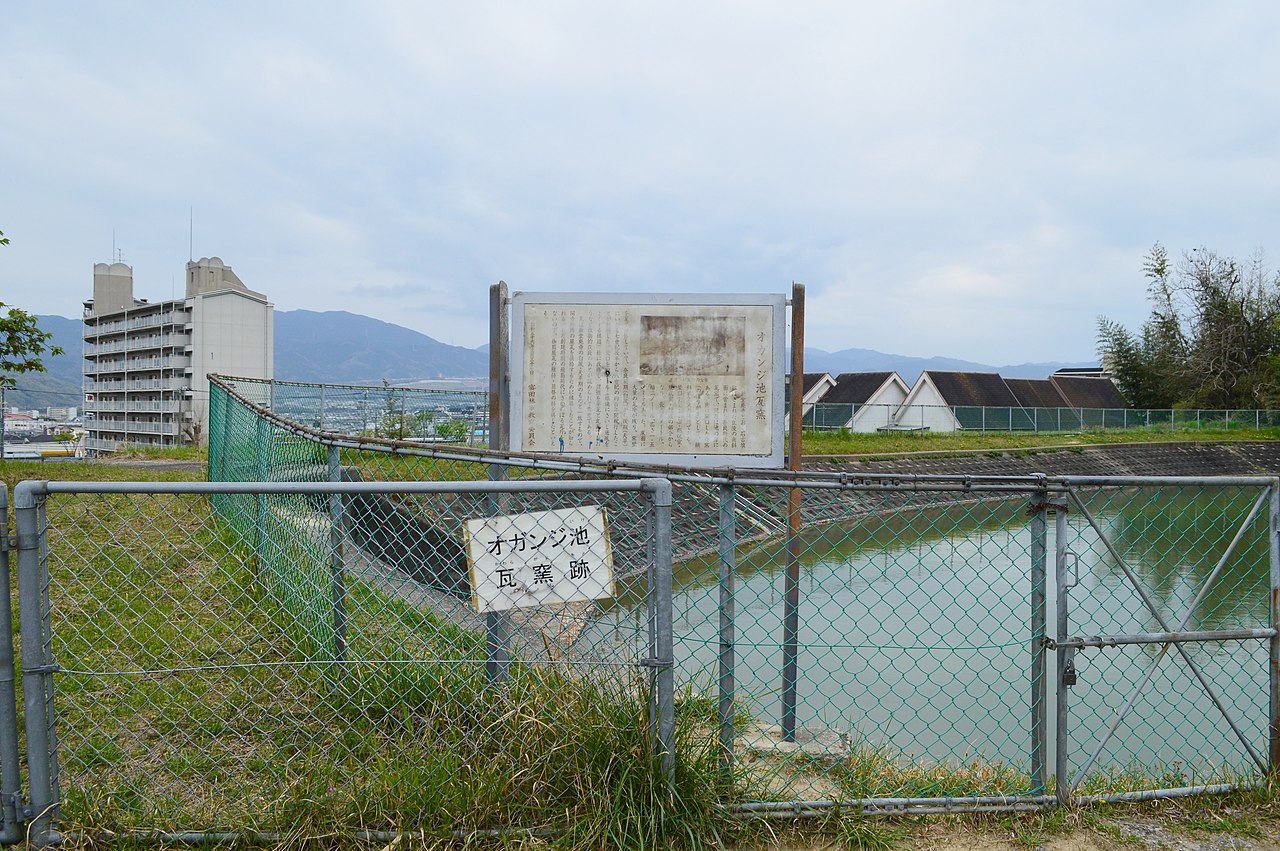
Senshu is the coastal southern edge of Osaka Prefecture, the strip of the old Izumi province that runs along Osaka Bay through Izumisano and Tarui. It is a mild, low-lying plain with clean river runoff reaching the sea — water chemistry that matters for a craft built on scouring and bleaching cotton. That combination of abundant soft water, a temperate coast, and proximity to one of Japan’s great commercial cities is exactly why a finishing-heavy textile industry took root here rather than somewhere drier or more remote.
Osaka itself carries unusually deep capital history. Naniwa-no-miya, in the heart of the city, served as imperial capital under Emperor Kōtoku in 645, and again under Emperor Shōmu in the eighth century. Centuries later Osaka became the merchant “kitchen of Japan” (天下の台所, tenka no daidokoro), the warehousing and trading hub through which much of the country’s rice and goods flowed, while the nearby port of Sakai grew into a free city of tea masters and overseas trade.
“Senshu wove Japan’s first towel in 1887 — a generation before Imabari — and the same water-rich coast that made it possible still finishes much of the country’s cloth today.”
- 645 — Naniwa-no-miya becomes imperial capital under Emperor Kōtoku.
- 8th c. — Naniwa again serves as capital under Emperor Shōmu.
- Edo period — Osaka becomes the merchant “kitchen of Japan”; nearby Sakai thrives as a free port of tea masters.
- 1887 (Meiji 20) — Satsuma Heiji adapts imported looms to weave Japan’s first towels in Senshu.
- Early 20th c. — Atozarashi (post-weave bleaching) becomes the Senshu signature finishing method.
- 2026 — Senshu still leads Japan in face- and bath-towel production volume.
The continuity here is industrial as much as artisanal. Senshu did not stay a single workshop; it scaled into a finishing district, with the cotton-and-water economy that Osaka’s commercial backbone made possible. More than a century after Satsuma Heiji’s first looms, the region remains the leading producer of face and bath towels in Japan by volume, and atozarashi remains the technique that defines its product.
Which finish should you choose?
This piece is listed in 10 finishes. The photos below are the actual 色 options on the listing right now — pick the one you want and confirm it on the product page before ordering, since hand-finished wares vary slightly piece to piece.
![Senshu Towel Guide — Osaka Atozarashi Cotton Bath Towels [2026] — ホワイト finish](https://m.media-amazon.com/images/I/317Z0BNohDL._SL500_.jpg)
![Senshu Towel Guide — Osaka Atozarashi Cotton Bath Towels [2026] — 空色 finish](https://m.media-amazon.com/images/I/510pQR-FScL._SL500_.jpg)
![Senshu Towel Guide — Osaka Atozarashi Cotton Bath Towels [2026] — ピンク finish](https://m.media-amazon.com/images/I/41bhPIeHP8L._SL500_.jpg)
![Senshu Towel Guide — Osaka Atozarashi Cotton Bath Towels [2026] — 桜色 finish](https://m.media-amazon.com/images/I/41JD+4oc9pL._SL500_.jpg)
![Senshu Towel Guide — Osaka Atozarashi Cotton Bath Towels [2026] — ピンク finish](https://m.media-amazon.com/images/I/51MpoDZa2VL._SL500_.jpg)
![Senshu Towel Guide — Osaka Atozarashi Cotton Bath Towels [2026] — 水色 finish](https://m.media-amazon.com/images/I/512AuJtWyVL._SL500_.jpg)
![Senshu Towel Guide — Osaka Atozarashi Cotton Bath Towels [2026] — 黄緑色 finish](https://m.media-amazon.com/images/I/51l1soPgoXL._SL500_.jpg)
![Senshu Towel Guide — Osaka Atozarashi Cotton Bath Towels [2026] — 淡黄色 finish](https://m.media-amazon.com/images/I/41hx9VGY9aL._SL500_.jpg)
![Senshu Towel Guide — Osaka Atozarashi Cotton Bath Towels [2026] — イエロー finish](https://m.media-amazon.com/images/I/41FkSwAjjbL._SL500_.jpg)
Price snapshot across stores
Live pricing was unavailable in the dataset at the time of writing, so the price cells point you to the listing rather than quoting a number. JPY (¥) is the authoritative price for the specific item; any USD figure you see at checkout is an approximate conversion (¥150/USD baseline as of mid-2026).
| Store | Item / Variant | Price | Notes |
|---|---|---|---|
| 🇺🇸 Amazon US (search) | Browse Japanese cotton towels | varies (USD) | Best if you’re shopping from the US — Prime shipping, USD pricing, no international customs. Amazon US carries Japanese cotton towels from various makers, useful for comparing pile, size, and price tiers. The exact Senshu set is sourced from Japan (next row). |
| 🇯🇵 Amazon JP Global Store | Senshu cotton face + bath set | ¥ — (verify on listing) | The sourced listing for the specific item. Ships internationally from Japan to most major destinations. Price was unavailable in the dataset. |
| Maker direct | Senshu towel makers’ own shops | varies | Several Izumisano makers sell direct, but international shipping is inconsistent. Check each maker’s policy. |
| Proxy services (Buyee / Tenso) | Forwarding from JP-only sellers | item + fee + shipping | Use when a seller does not ship abroad directly. Adds a service fee and consolidated forwarding cost. |
📦 Shipping & where to buy from outside Japan
The specific set in this guide is sourced from the Amazon JP Global Store, which ships internationally from Japan to most major destinations. Expect international shipping in the rough range of $15–$40 to the US and EU, with higher costs to other regions; the exact figure was not in the dataset, so confirm at checkout.
If you are in the US, the simplest path is often the Amazon US search link — you trade the exact Senshu listing for Prime-speed delivery, USD pricing, and no customs handling. If you want this particular set and the seller will not ship to you directly, a proxy forwarder such as Buyee or Tenso can receive the item in Japan and re-ship it to you for a service fee.
Orders above your country’s de minimis threshold may incur customs duties and import tax on arrival. Towels are textiles and are generally not restricted, but always confirm your local thresholds before ordering.
What it does well
Weaknesses and things to verify before buying
- No confirmed price. The dataset returned no listing price; budget shoppers should check the current figure before committing.
- No confirmed dimensions or weight. Exact towel size and GSM were not in the dataset — important if you need a specific bath-towel length.
- Softness expectations. Atozarashi tends toward a crisper hand than Imabari’s sakizarashi. If maximum plushness is your priority, this may read firmer than you expect.
- No product images supplied. Color and weave appearance should be confirmed on the live listing; this guide could not show them.
- International shipping cost and time vary. Cross-border delivery from Japan adds cost and customs exposure relative to a domestic-US purchase.
- Listing drift. The reference ID and availability were taken from spec data; verify the item is still the same configuration on arrival at the page.
Conclusion — which buyer type are you?
Other ways to approach this purchase
🏆 Editor’s Pick
❓ Frequently Asked Questions
Where are Senshu towels made?
What is atozarashi, and how is it different from Imabari’s sakizarashi?
Does Amazon JP Global Store ship Senshu towels internationally?
How should I wash and care for a Senshu towel?
Why does the listing price show as unavailable here?
Senshu or Imabari — which should I buy?
jpmono.com is curated by a Japan-based editorial team (working out of Toyama in the Hokuriku region and Nara in Kansai) and is independent. We do not take payment from the makers we feature; income comes from affiliate links. We do not physically test every product — we read maker specs and source listings.
This article was prepared with AI assistance and reviewed against the source spec. Where listing data was incomplete (price, dimensions, images), the gaps are stated explicitly rather than filled with estimates.
Affiliate disclosure: jpmono.com may earn a commission on qualifying purchases made through links on this page, at no additional cost to you.