![Kishu Negoro-nuri Lacquer Round Tray (Obon): Where to Buy [2026]](https://jpmono.com/wp-content/uploads/2026/05/kishu-negoro-nuri-lacquer-obon-tray-where-to-buy-2026-featured.jpg)
A Kishu Negoro-nuri round serving tray — an obon (お盆) — is one of the quieter objects in the Japanese lacquer canon. The form is plain: a shallow wooden disc, lacquered, used to carry tea, cups, or a small meal across a room. What sets the Negoro style apart is the finish. Vermilion urushi (漆, natural lacquer) is layered over a black ground, and as the tray is handled over years the red gradually wears through at the rim and high points to reveal the dark base beneath.
That worn, two-tone surface was originally an accident of daily use in temple kitchens, not a decorative choice. It was later recognized as an aesthetic in its own right and given a name — Negoro — after the temple where it first appeared. This particular tray is made in the Kuroe district of Kainan, Wakayama Prefecture, the center of Kishu Shikki (紀州漆器, “Kishu lacquerware”), which stands alongside Aizu and Echizen as one of Japan’s three major lacquer regions.
This guide is written for international buyers deciding whether a wood-based Negoro lacquer tray is the right object for their table, and how to actually obtain one from outside Japan. We cover what the published listing does and does not confirm, how the piece compares to other Japanese lacquer and carved-tray traditions, the realistic shipping paths, and who should pass on it. Per the source data, only limited listing information was available at the time of writing, so we flag verification points throughout rather than guessing.
🔄 Last updated: May 31, 2026
⏱️ Read time: ~12 min
![Kishu Negoro-nuri Lacquer Round Tray (Obon): Where to Buy [2026]](https://m.media-amazon.com/images/I/31QzVA7nc2L._SL500_.jpg)
- Who this is for — and who should skip it
- Product overview (from published specs)
- 📌 How does it compare?
- Price snapshot across stores
- What it does well
- Weaknesses and things to verify before buying
- Conclusion — which buyer type are you?
- Other ways to approach this purchase
- Where this comes from
- 🏆 Editor’s Pick
- ❓ Frequently Asked Questions
Who this is for — and who should skip it
- Want a real urushi lacquer tray rather than a printed or urethane-coated lookalike
- Like the idea of a finish that visibly ages and improves the more you use it
- Serve tea or small meals and want a lightweight wood-based tray that is easy to lift
- Are building a collection across Japan’s lacquer regions (Kishu, Aizu, Echizen)
- Prefer restrained, monastic design over gold maki-e ornamentation
- Want something fully dishwasher- and microwave-safe — urushi is neither
- Need an exact published price and dimensions before buying (the snapshot was thin)
- Expect a flawless, uniform red surface — wear-through is the point, not a defect
- Live somewhere with very dry indoor air and won’t manage occasional humidity
- Want a heavy, rigid serving board — this is a light wooden disc, not stoneware or metal

Product overview (from published specs)
The source snapshot for this item was limited. Where a value was not present in the fetched data, the table says so rather than estimating. Treat every “Unconfirmed” cell as something to verify on the listing before purchase.
Kishu Negoro-nuri Lacquer Round Tray (Obon)
紀州漆器 天然木製30cm丸盆 紀州根来塗
在庫あり。 · Sold by 工房 百の手 · ASIN B007EMDU90
Price and availability as of 2026-09-01 05:22 JST. The Amazon listing at the time of purchase is authoritative. jpmono.com earns a commission on qualifying purchases at no extra cost to you.
| Attribute | Detail (per source data) |
|---|---|
| Craft tradition | Kishu Shikki (紀州漆器), Negoro-nuri (根来塗) style |
| Object type | Round serving tray — obon (お盆) |
| Base material | Wood (wood-based body under urushi lacquer) |
| Finish | Vermilion urushi layered over a black ground (wears to reveal black) |
| Origin | Kuroe district, Kainan, Wakayama Prefecture (Kansai) |
| Diameter / dimensions | Unconfirmed — check the listing |
| Weight | Unconfirmed — check the listing |
| Reference item ID (ASIN) | B007EMDU90 |
| Price | Not captured in the latest snapshot — verify at the listing |
Source: Amazon US search (primary, moonill-20) for comparable Japanese lacquer trays, plus the Amazon JP Global Store listing (secondary, moonill-22) where this specific item is sourced. Only a limited listing snapshot was available; live pricing and exact dimensions may have shifted since the writing date.
📖 Glossary — key terms
- Urushi (漆) — natural lacquer, the refined sap of the lacquer tree, applied in thin layers and hardened in humid conditions. Durable, food-safe once cured, but not dishwasher- or microwave-proof.
- Negoro-nuri (根来塗) — a lacquer style of vermilion over black, named for Negoro-ji temple. With use, the red wears through to show the black underneath; the resulting two-tone surface is the signature look.
- Kishu Shikki (紀州漆器) — “Kishu lacquerware,” the lacquer industry centered on Kuroe in Kainan, Wakayama. One of Japan’s three major lacquer regions alongside Aizu and Echizen.
- Obon (お盆) — a serving tray. Here a round, shallow wooden disc used to carry tea or a light meal.
- Kuroe (黒江) — the historic lacquer district of Kainan, Wakayama, where production consolidated after the 16th century.
- Gosanke (御三家) — the three senior collateral branch houses of the Tokugawa family. The Kishu (Kii) domain was one of them, and its patronage supported Kuroe lacquer in the Edo period.

📌 How does it compare?
Related lacquer and tray guides on jpmono.com — useful for comparing regions, forms, and price tiers before you commit:
 Wakayama’s Kishu binchotan charcoal
 Echizen lacquer soup bowl
 Aizu-nuri marumi wan
Wajima-nuri sakazuki pair
Kawatsura Akita lacquer bowl
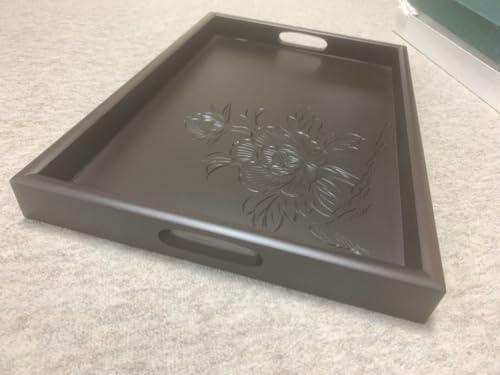 Nikko-bori carved tray
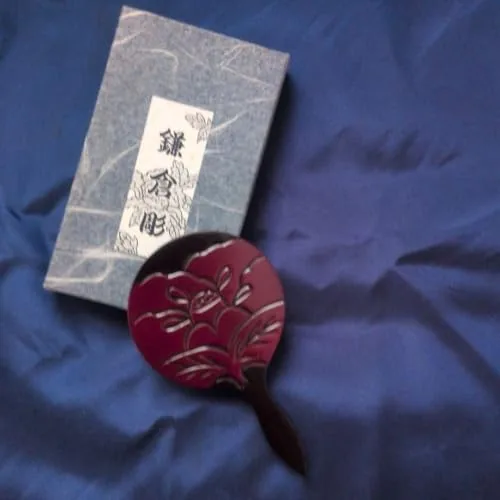 Kamakura-bori carved lacquer
 Honyama Kiso lacquer cups
Price snapshot across stores
| Store | Item / Variant | Price (JPY + USD est.) | Notes |
|---|---|---|---|
| 🇺🇸 Amazon.com (US) | Browse Japanese lacquer trays | varies (USD) | Best if you’re shopping from the US — Prime shipping, USD pricing, no international customs. Amazon US carries Japanese urushi and wood serving trays from various makers, useful for comparing forms and price tiers. This exact Negoro obon is sourced from Japan (next row). |
| 🇯🇵 Amazon JP Global Store | Kishu Negoro-nuri round obon (B007EMDU90) | Not captured in snapshot — verify at listing | Where the specific item is sourced. Ships internationally from Japan to most major destinations. |
| Maker direct | Kuroe lacquer workshops / Kishu Shikki cooperative | Unconfirmed | Some Kainan makers sell direct in Japanese only; international shipping varies by workshop. |
| Proxy services (Buyee / Tenso) | Forwarding from JP-only sellers | Item price + forwarding fee | Useful when a workshop or marketplace won’t ship abroad. Adds a service fee and a second shipping leg. |
Prices and availability fluctuate; the affiliate links carry current data. USD figures, where shown, are approximate at a ¥150/USD baseline as of mid-2026 — the JPY price is authoritative for the specific listed item.
What it does well
“The worn red of a Negoro tray began as wear in a temple kitchen — the flaw that monks could not prevent became the look that collectors would later seek out.”
Weaknesses and things to verify before buying
- Thin listing data. The fetched snapshot did not include diameter, weight, or a confirmed price. Verify all three on the listing before ordering.
- No dishwasher or microwave. Urushi is hand-wash only. Heat, abrasives, and the dishwasher will damage the surface; prolonged soaking can lift the lacquer.
- The finish changes — by design. If you want a permanently uniform glossy red, Negoro-nuri is the wrong choice. The red is supposed to wear through to black.
- Sensitive to very dry air. Wood-based urushi can crack in extremely dry indoor conditions; some ambient humidity is preferable.
- No product photo in the snapshot. Confirm the actual color depth, sheen, and rim shape from the listing’s own images — appearance varies between workshops.
- International shipping and customs. Buying via the JP Global Store or a proxy adds shipping time and possible import duty depending on your country’s threshold.
Conclusion — which buyer type are you?
Other ways to approach this purchase
Where this comes from

Kishu is the old provincial name for Wakayama, the prefecture that occupies the southern half of the Kii Peninsula in the Kansai region. The lacquer trade is concentrated in the Kuroe district of Kainan, a coastal city just south of Wakayama City, facing the Kii Channel. The peninsula’s mountains, forests, and humid maritime climate gave the region the two things urushi work needs most: a supply of suitable wood for turning bases, and the steady humidity that hardens lacquer well.
The Negoro style is older than the Kuroe industry itself. It is named for Negoro-ji, a major temple in what is now Iwade, Wakayama. In the Kamakura and Muromachi periods its monks coated everyday wooden ware — trays, bowls, utensils — in vermilion urushi laid over a black ground. With constant daily handling the red wore away at the edges and high points, exposing the black beneath. That accidental two-tone surface was later recognized as beautiful and given the name “Negoro.”
- Kamakura–Muromachi era (13th–14th c.) — Negoro-ji monks coat everyday wood ware in vermilion urushi over black; worn red reveals the black ground.
- 1585 — Toyotomi Hideyoshi’s forces assault Negoro-ji; the temple’s lacquer artisans scatter.
- Late 16th c. onward — Displaced artisans consolidate lacquer production at Kuroe, Kainan.
- Edo period — Kuroe lacquerware flourishes under the Kishu Tokugawa domain, a gosanke branch house.
- Today — Kishu Shikki stands as one of Japan’s three major lacquer regions, alongside Aizu and Echizen.
In 1585, Toyotomi Hideyoshi’s campaign against Negoro-ji broke up the temple’s community, and its lacquer artisans dispersed. Production gravitated to Kuroe, where it took root and grew. Under the Edo-period Kishu Tokugawa domain — one of the gosanke, the three senior collateral houses of the Tokugawa family — Kuroe lacquerware had powerful patronage, and the district matured into a major lacquer center.
What survives in Kuroe today is a working lacquer trade, not a museum. Kishu Shikki remains one of the three pillars of Japanese lacquer alongside Aizu and Echizen, and the round Negoro obon is one of its most classic forms — a plain object whose entire character is carried in how the red and black meet, and how that meeting shifts over a lifetime of use.
🏆 Editor’s Pick
❓ Frequently Asked Questions
Is the worn red-over-black surface a defect?
No. In Negoro-nuri, vermilion urushi is laid over a black ground on purpose, and with use the red wears through to reveal the black beneath. That two-tone effect is the defining feature of the style, not damage.
Can I put it in the dishwasher or microwave?
No. Urushi lacquer over a wood base is hand-wash only. Avoid the dishwasher, microwave, prolonged soaking, and abrasive scrubbers; wipe with a soft damp cloth and dry it.
Where is this tray made?
In the Kuroe district of Kainan, Wakayama Prefecture, in the Kansai region — the center of Kishu Shikki, one of Japan’s three major lacquer traditions alongside Aizu and Echizen.
Can I have it shipped outside Japan?
Yes. The Amazon JP Global Store ships to most major destinations, and proxy services such as Buyee or Tenso can forward items from Japan-only sellers. Expect added shipping time and possible import duty depending on your country’s threshold.
What is the price?
The price was not captured in our latest listing snapshot, so verify it directly at the retailer link before ordering. Prices and availability for sourced Japanese craft items change over time.
How is Negoro-nuri different from carved trays like Nikko-bori or Kamakura-bori?
Negoro-nuri is about a smooth lacquered surface whose color wears over time, while Nikko-bori and Kamakura-bori are about relief carving in the wood. They are different traditions; see the cross-link box above to compare them directly.
jpmono.com is a Japan-based curation site, with editorial centers in Toyama (Hokuriku region) and Nara (Kansai region), introducing high-quality Japanese household objects to international readers. We focus on items with verifiable craft heritage and clear international shipping paths. We do not physically test every product (we read maker specs and source listings); affiliate links support the editorial work. Read more about our editorial standards.
🤖 This article was drafted with AI assistance and reviewed against the source listing data before publication. Specifications, prices, and availability should be confirmed at the retailer before purchase.
Affiliate disclosure: jpmono.com may earn a commission on qualifying purchases made through links on this page, at no additional cost to you.