![Edo Komon Silk Pocket Square: Tokyo’s Near-Invisible Stencil Dyeing [2026]](https://jpmono.com/wp-content/uploads/2026/06/tomita-edo-komon-silk-pocket-square-where-to-buy-2026-featured.jpg)
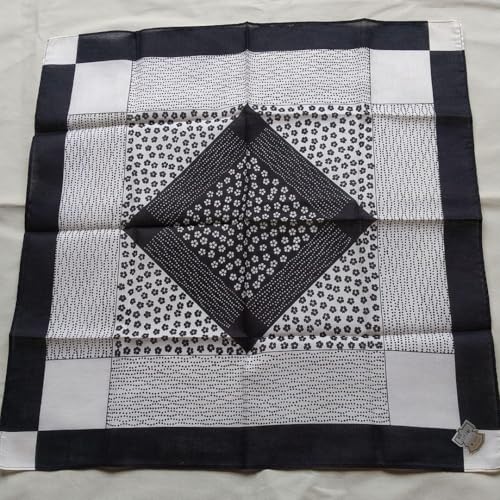
Edo Komon (江戸小紋, “Edo fine-pattern dyeing”) is one of those Japanese crafts that hides in plain sight. From across a room, a length of Edo Komon silk reads as a single, quiet, muted color. Step closer and the surface dissolves into thousands of tiny hand-stencilled dots or geometric marks — a shark-skin gradient, a grid of rice grains, a field of pin-points — each cut from a paper stencil and held in register across the whole cloth. The restraint is the point. It was designed to look like almost nothing, and that was exactly the fashionable thing to be.
The pocket square covered here is made by Tomita Some Kogei (富田染工芸), a Tokyo dyehouse working since 1882 in the Ochiai-Nakai district of Shinjuku, along the Kanda River. The same patterns it stencils onto a small silk kerchief were once reserved for the formal dress of samurai, where the fineness of the repeat signaled rank. Today the technique survives as neckties, card cases, furoshiki, and pocket squares — small objects that carry a four-hundred-year aesthetic into a jacket breast pocket.
This guide is written for international readers deciding whether an Edo Komon silk pocket square is worth sourcing from Japan, how it differs from Kyoto and Kanazawa dyeing traditions, and where to buy it. We cover what the craft actually is, who it suits, the buying paths from outside Japan, and the caveats to check before you spend.
· · ⏱️ Read time: about 12 minutes
- Who this is for — and who should skip it
- Product overview (from published specs)
- Where this comes from — Edo, rank, and a Shinjuku river
- Price snapshot across stores
- What it does well
- Weaknesses and things to verify before buying
- Conclusion — which buyer type are you?
- Other ways to approach this purchase
- 🏆 Editor’s Pick
- ❓ Frequently Asked Questions
Who this is for — and who should skip it
- Prefer understated accessories — a pattern that reads as a solid color until someone looks closely
- Want a genuine traditional-craft piece rather than a printed imitation
- Already appreciate silk and are comfortable with hand-wash or dry-clean-only care
- Like the idea of a small, packable object that carries Edo-period history
- Are building a wardrobe of Japanese textiles and want a Kanto (Tokyo) example alongside Kyoto and Kanazawa pieces
- Want a bold, high-contrast pocket square that stands out from across a room
- Need machine-washable, no-fuss accessories
- Are unwilling to deal with international shipping, customs, or proxy services
- Expect a low, fast-fashion price point — hand stencil-dyeing is labor-intensive
- Require confirmed exact dimensions and colorways before buying (listing data here is thin — see below)
Product overview (from published specs)
A note on data quality before the table: only the Amazon JP Global Store listing reference (ASIN B0GLDFSBDS) is available for this item, and no live price snapshot or full manufacturer spec sheet was retrievable at the time of writing. The fields below combine the listing reference with verified facts about the Edo Komon craft and the Tomita Some Kogei workshop. Where a measurement is not published in the available listing data, it is marked as such rather than estimated.
Edo Komon Silk Pocket Square
江戸小紋 ハンカチ
通常6~7日以内に発送します。 · Sold by maru shop5 · ASIN B0GLDFSBDS
Price and availability as of 2026-09-01 05:22 JST. The Amazon listing at the time of purchase is authoritative. jpmono.com earns a commission on qualifying purchases at no extra cost to you.
| Attribute | Detail |
|---|---|
| Item type | Silk pocket square / kerchief |
| Material | Silk |
| Pattern | Fine all-over komon (小紋) motif, hand stencil-dyed |
| Dyeing method | Ise-Katagami paper stencil + paste resist applied on a single long board (itaba), single aligned pass |
| Maker | Tomita Some Kogei (富田染工芸), Ochiai-Nakai, Shinjuku, Tokyo |
| Founded | 1882 |
| Tradition / designation | Tokyo Some Komon — a designated national traditional craft |
| Dimensions | Not specified in available listing data |
| Colorway | Not specified in available listing data — see the listing for current options |
| Care | Not specified; silk crafts are typically dry-clean or gentle hand-wash — verify on the listing |
| Marketplace | Amazon JP Global Store (ASIN B0GLDFSBDS); ships internationally |
📖 Glossary — key Edo Komon terms
Komon (小紋) — “fine pattern.” A category of small, dense, repeating motifs dyed across an entire cloth.
Edo Komon (江戸小紋) — the Tokyo (formerly Edo) school of komon, defined by patterns so minute the cloth looks like a single solid color from a distance.
Kamishimo (裃) — the formal samurai dress of the Edo period; the garment whose rank-coded patterns drove komon ever finer.
Same-komon (鮫小紋) — “shark-skin” pattern; arcs of tiny dots fanning out like sharkskin, one of the classic Edo Komon motifs (alongside gyōgi and kakuto).
Ise-Katagami (伊勢型紙) — the hand-cut mulberry-paper stencils, made in Ise (Mie Prefecture), through which the resist paste is applied.
Itaba (板場) — the long wooden board on which a full bolt of silk is stretched so the stencil can be stepped along it in one continuous, perfectly aligned run.
Iki (粋) — the Edo townsperson’s aesthetic of understated, unshowy chic; the cultural reason a near-invisible pattern became desirable.
Shokunin (職人) — a craftsperson / artisan who has trained for years in a single discipline.
Where this comes from — Edo, rank, and a Shinjuku river

Edo Komon was born of a paradox in the law. During the Edo period (the Tokugawa shogunate ruled from Edo — present-day Tokyo — beginning in 1603), repeated sumptuary edicts forbade the samurai and townsfolk from flaunting wealth through bold, brightly colored cloth. The response was not to give up decoration but to drive it underground, into the weave. Domains adopted minute repeating motifs for the kamishimo formal dress, and the fineness of the repeat quietly encoded rank: the smaller and more perfectly aligned the pattern, the higher the standing of the wearer.

What began as a rank marker for the warrior class spread, over the eighteenth century, to the merchant townspeople (chōnin) of Edo, where it met a homegrown aesthetic: iki (粋), the Edo ideal of unshowy, knowing chic. A cloth that looked like a plain solid color from a distance — and revealed its craftsmanship only to someone standing close — was the perfect iki object. It signaled taste without announcing it.
“From across a room it reads as a single muted color; only at arm’s length do thousands of hand-cut dots resolve into a pattern. The restraint was the status.”
- 1603 — Tokugawa Ieyasu establishes the shogunate in Edo; samurai formal dress (kamishimo) becomes standardized.
- 17th century — Domains adopt minute repeating komon motifs to mark rank within sumptuary limits.
- Edo period — Same-komon (shark-skin), gyōgi, and kakuto patterns are refined ever finer, demanding ever more precise stencils.
- 18th century — Komon spreads from samurai to Edo’s merchant townsfolk as an expression of iki (understated chic).
- 1882 — Tomita Some Kogei is founded as a Tokyo dyehouse.
- Early 20th century — Tokyo dyers concentrate in the Ochiai-Nakai quarter of Shinjuku, rinsing paste-resist silk in the Kanda River.
- 1976 — Tokyo Some Komon is designated one of Japan’s national traditional crafts.
- 2026 — Tomita Some Kogei still dyes in Shinjuku; the annual Some-no-Komichi dyeing festival animates the old Ochiai-Nakai quarter.
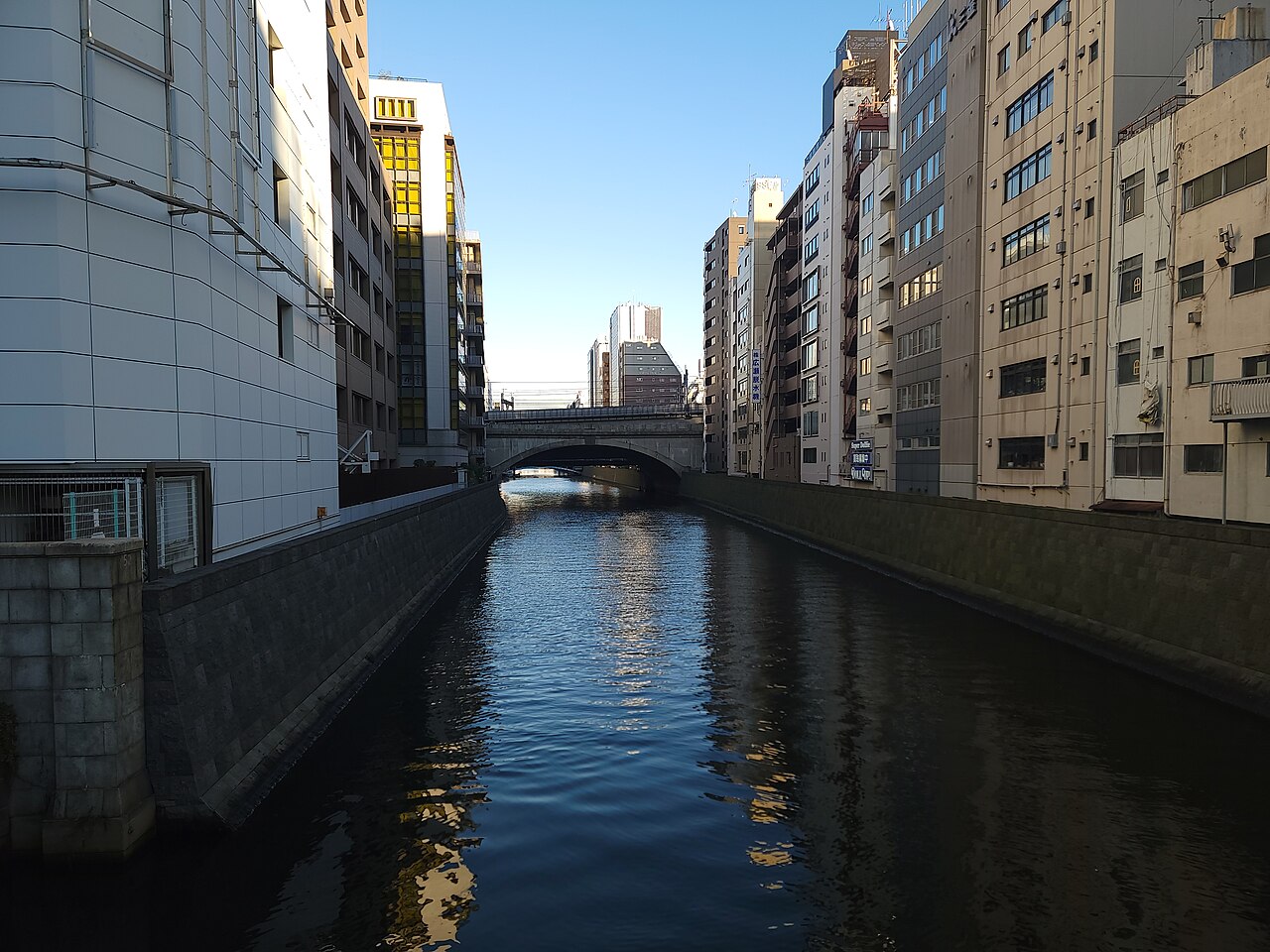
The geography is not incidental. Tokyo’s dyehouses clustered in the Ochiai-Nakai area of Shinjuku precisely because the Kanda River ran clean and cool through it. Stencil-resist dyeing depends on rinsing: after the resist paste is applied through the Ise-Katagami stencil and the dye is brushed across the cloth, the paste must be washed out in flowing water. The river made the district one of Edo’s great dyeing centers, and Tomita Some Kogei has worked there since 1882.
The craft is also genuinely demanding. A single Ise-Katagami stencil is hand-cut from mulberry paper into a lattice so fine it can hold thousands of perforations per panel. To dye a bolt, the silk is stretched along the itaba — a board several meters long — and the stencil is stepped down its length, each placement registering exactly against the last so the repeat never breaks. A single misalignment shows. This is why Edo Komon is dyed, not printed, and why the price reflects hours of a trained shokunin’s attention rather than a machine run.
That tradition is still a working one. The Ochiai-Nakai quarter remains home to active dyers, and each year the neighborhood hosts Some-no-Komichi (染の小道), a dyeing festival that hangs lengths of freshly dyed cloth over the very streets and waterways where the craft grew up. An Edo Komon pocket square is a small piece cut from that living continuity.

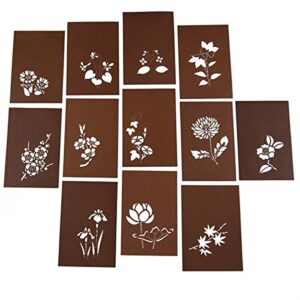
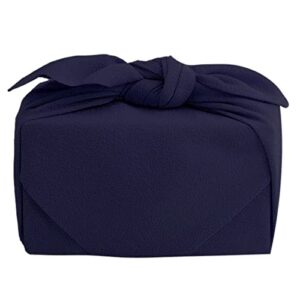
Edo Komon is one node in a wider web of Japanese textile and craft traditions. These related guides on jpmono.com put it in context — the Ise stencils it depends on, the rival Kyoto and Kanazawa dyeing schools, and other Kanto crafts:

Price snapshot across stores
Pricing for this specific item was not retrievable at the time of writing — treat the figures below as guidance and confirm the live price at the listing before buying. JPY (¥) is the authoritative currency for the JP Global Store item; USD figures are approximate estimates at a ¥150/USD baseline as of mid-2026.
| Store | Item / Variant | Price (JPY + USD est.) | Notes |
|---|---|---|---|
| 🇺🇸 Amazon US (search) | Browse Japanese silk pocket squares & komon goods | varies (USD) | Best if you are shopping from the US — Prime shipping, USD pricing, no international customs. Amazon US carries a range of Japanese silk accessories; this exact Tomita piece is sourced from Japan (next row). |
| 🇯🇵 Amazon JP Global Store | Tomita Some Kogei Edo Komon silk pocket square (ASIN B0GLDFSBDS) | Price not retrievable at time of writing — check listing | The sourced listing for the exact item. Ships internationally from Japan to most major destinations. |
| Maker direct | Tomita Some Kogei workshop / showroom (Shinjuku) | Unconfirmed — check maker site | The workshop sells and runs studio experiences; international ordering availability is not confirmed in the available data. |
| Proxy services (Buyee / Tenso) | Forwarding for Japan-only listings | Item price + service fee + forwarding | Useful if you find a Japan-only retailer; adds a handling fee and a second shipping leg. Customs duties may apply over local thresholds. |
What it does well
Weaknesses and things to verify before buying
- Listing data is thin. No live price, exact dimensions, or colorway list was retrievable for ASIN B0GLDFSBDS at the time of writing. Confirm size, color, and price on the listing before ordering.
- Subtlety is not for everyone. If you want a pocket square that pops with color and contrast, the near-invisible komon pattern will read as plain — that is the design intent, not a flaw, but it may disappoint a buyer expecting boldness.
- Silk care. Care instructions were not specified. Silk crafts are generally dry-clean or gentle hand-wash only; assume delicate handling and verify before exposing it to water or detergent.
- International shipping and customs. Buying from Amazon JP Global Store means import handling; orders above your country’s de minimis threshold may incur duties and tax on arrival.
- Price reflects handwork. Hand stencil-dyeing is labor-intensive, so expect a price well above printed-polyester pocket squares. If budget is the priority, this is not the category for you.
- Color rendering on screen. Muted, subtle dye tones are notoriously hard to photograph accurately; the real cloth may differ from the listing image. Where possible, check multiple photos.
Conclusion — which buyer type are you?
Other ways to approach this purchase
🏆 Editor’s Pick
❓ Frequently Asked Questions
Does Amazon JP Global Store ship Edo Komon pocket squares internationally?
What is the difference between Edo Komon and Yuzen dyeing?
How should I care for a silk Edo Komon pocket square?
Why does the pattern look like a solid color from a distance?
Is this hand-dyed or machine-printed?
Can I use it as a pocket square with a Western suit?
jpmono.com is curated by a Japan-based editorial team (working out of Toyama in the Hokuriku region and Nara in Kansai) and is independent. We do not take payment from the makers we feature; income comes from affiliate links. We do not physically test every product — we read maker specs and source listings.
🤖 This article was drafted with AI assistance and edited against the source listing and verified craft references. Specifications, prices, and availability should be confirmed at the retailer before purchase.
Affiliate disclosure: jpmono.com may earn a commission on qualifying purchases made through links on this page, at no additional cost to you.