![Nagasaki Sarasa Cotton Pouch: Dejima’s Calico Heritage [2026]](https://jpmono.com/wp-content/uploads/2026/05/japan-map-regions-and-prefectures-800x1050.png)
For more than two centuries, almost everything foreign that entered Japan came through a single harbor. During the sakoku (鎖国, “closed country”) period, from 1639 to 1854, Nagasaki on the western edge of Kyūshū was the country’s only licensed window to the wider world — the Dutch traded from the fan-shaped artificial island of Dejima, and Chinese merchants worked from the walled Tōjin-yashiki (唐人屋敷, “Chinese residence quarter”). Among the most prized goods that arrived were brilliantly patterned cottons from India and Southeast Asia, the same mordant- and resist-dyed cloths that gave European languages the words “chintz” and “calico.”
Nagasaki’s own dyers studied those imported lengths — the curling foliage, the arabesques, the small foreign figures — and learned to reproduce them with paper stencils and layered pigment and resist dyeing. The result is Nagasaki sarasa (長崎更紗), one of Japan’s regional sarasa lineages alongside Nabeshima and Tenpo sarasa. A small drawstring pouch in this cloth is, in a literal sense, a piece of the city’s role as Japan’s East–West crossroads that you can carry in a pocket.
This guide is written for international readers who want the object and the context behind it: what a Nagasaki sarasa cotton pouch (kinchaku) actually is, how the dyeing tradition came to be, where it sits on the map, and how to buy one from outside Japan. Hand-dyed sarasa pouches vary between workshops, so we flag every place where a spec or price should be confirmed directly with the maker or seller rather than guess.
📅 Published:
🔄 Updated:
⏱️ Read time: ~11 min
- Who this is for — and who should skip it
- Product overview (from published specs)
- Where this comes from — place, era, and the craft tradition
- 📦 Shipping & where to buy from outside Japan
- Buying options
- What it does well
- Weaknesses and things to verify before buying
- Conclusion — which buyer type are you?
- Other ways to approach this purchase
- ❓ Frequently Asked Questions
Who this is for — and who should skip it
- Want a small, useful textile object with a documented historical backstory, not just a souvenir print.
- Are drawn to cross-cultural design — motifs that traveled from India and Java through a single Japanese port.
- Like pouches for coins, accessories, tea utensils, or as gift wrapping with a second life.
- Prefer cotton you can use and wash, over framed or display-only textiles.
- Are comfortable buying from Amazon JP Global Store and waiting for international shipping.
- Need confirmed material and color details before ordering? Information here is limited.
- Expect a hand-painted, one-of-a-kind art piece at a craft-gallery price point.
- Want next-day delivery; cross-border shipping from Japan takes longer.
- Dislike small variations — stencil-dyed cotton shows registration and pigment differences piece to piece.
- Are looking for a large bag or structured case rather than a soft drawstring pouch.
Product overview (from published specs)
The table below lists only what the craft category confirms, and marks every unverified field plainly. Always confirm material, dimensions, and colorway on the seller’s page before buying.
| Attribute | Detail | Source |
|---|---|---|
| Object | Cotton drawstring pouch (kinchaku, 巾着) | Spec |
| Decoration | Nagasaki sarasa — stencil-dyed calico, foreign-trade arabesque & foliage motifs | Spec |
| Material | Cotton (blend varies) | Spec / partial |
| Dimensions | — | — |
| Origin | Nagasaki, Kyūshū, Japan | Spec |
| Price | Not present in fetched data — live pricing unavailable at time of writing | — |
📖 Glossary — key terms in this article
- sarasa (更紗) — the Japanese term for vividly patterned, multi-color dyed cottons of South/Southeast Asian origin, and the domestic textiles made in imitation of them.
- kinchaku (巾着) — a soft drawstring pouch, traditionally used to carry coins, small tools, or tea utensils.
- sakoku (鎖国) — Japan’s “closed country” foreign-relations policy, roughly 1639–1854, under which Nagasaki was the sole licensed trade port.
- Dejima (出島) — the small fan-shaped artificial island in Nagasaki harbor that housed the Dutch trading post.
- Tōjin-yashiki (唐人屋敷) — the walled residential quarter for Chinese merchants in Nagasaki.
- katazome / stencil dyeing (型染め) — a resist-dyeing method using carved paper stencils to apply pattern and color; the core technique behind Nagasaki sarasa.
- chintz / calico — English trade words descended from the same imported Indian printed cottons that inspired sarasa.
Related jpmono guides to other Japanese dyeing, weaving, and Kyūshū craft traditions:
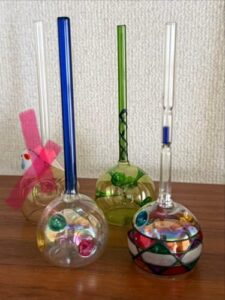 Nagasaki Poppen glass (same prefecture)
Awa indigo cotton tenugui
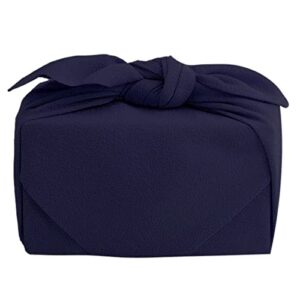 Kyo Yuzen dyed furoshiki
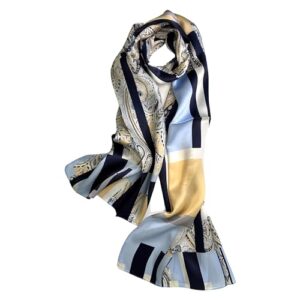
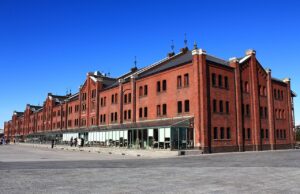 Yokohama port-trade printed silk
 Arimatsu shibori dyeing
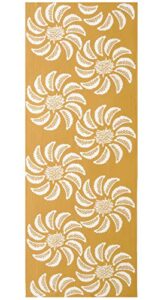 Hamamatsu chusen cotton
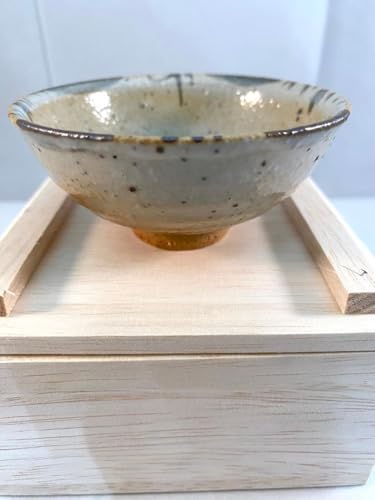 Karatsu ware (neighboring Kyushu)
Indigo-dyed cotton textile
Where this comes from — place, era, and the craft tradition

Nagasaki occupies the deeply indented western coast of Kyūshū, Japan’s southwesternmost main island. Its sheltered, mountain-ringed harbor opens toward the East China Sea and, beyond it, the old sea lanes to Fujian, Java, and the Indian Ocean. That geography is the whole story: a port pointed at the Asian mainland, far enough from the Edo and Kyoto power centers to be managed as a controlled gateway rather than a vulnerability.
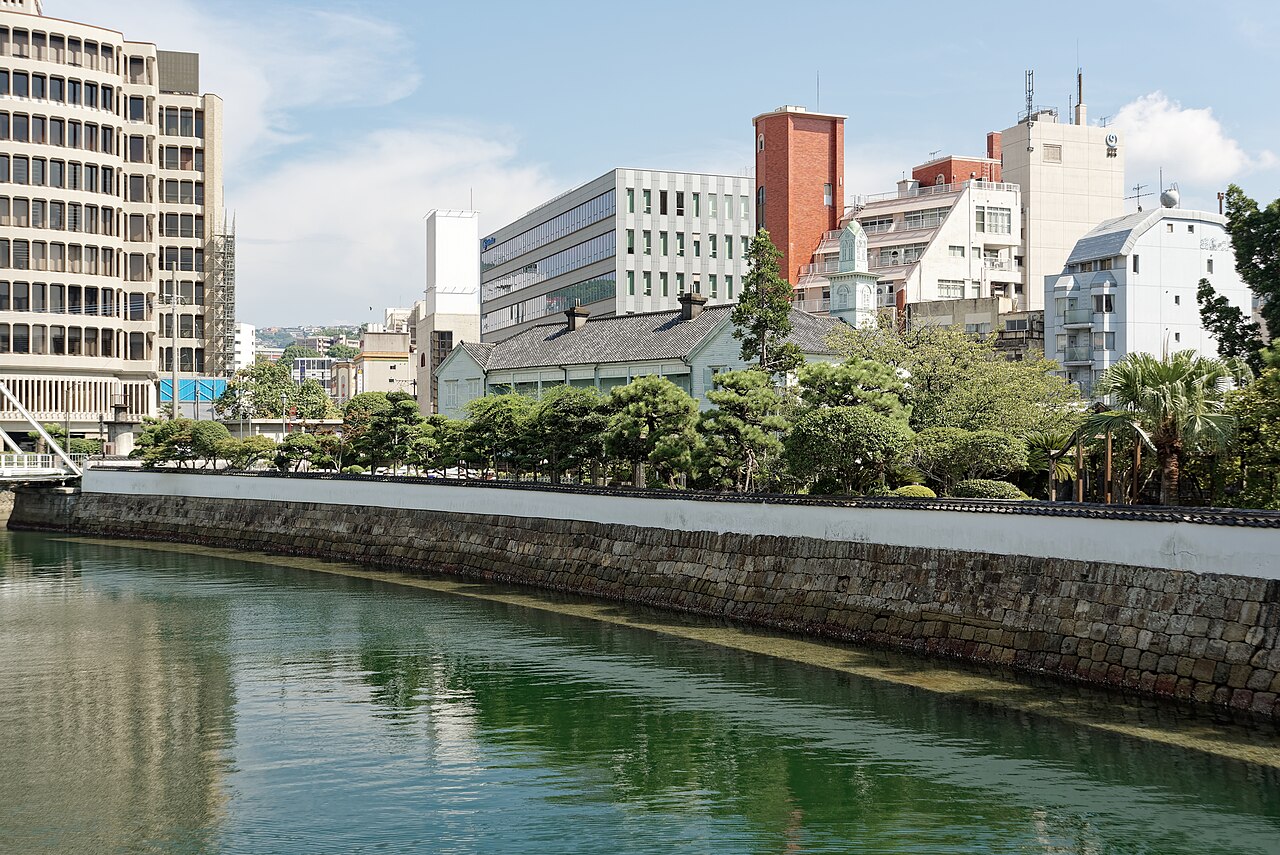
When the Tokugawa shogunate restricted foreign contact under the sakoku policy from 1639, Nagasaki became the single exception. The Dutch East India Company was confined to Dejima, a small fan-shaped artificial island purpose-built in the harbor, while Chinese merchants were housed in the walled Tōjin-yashiki quarter. For more than two hundred years, the goods, books, medicines, and textiles of the outside world flowed into Japan through this one narrow valve.
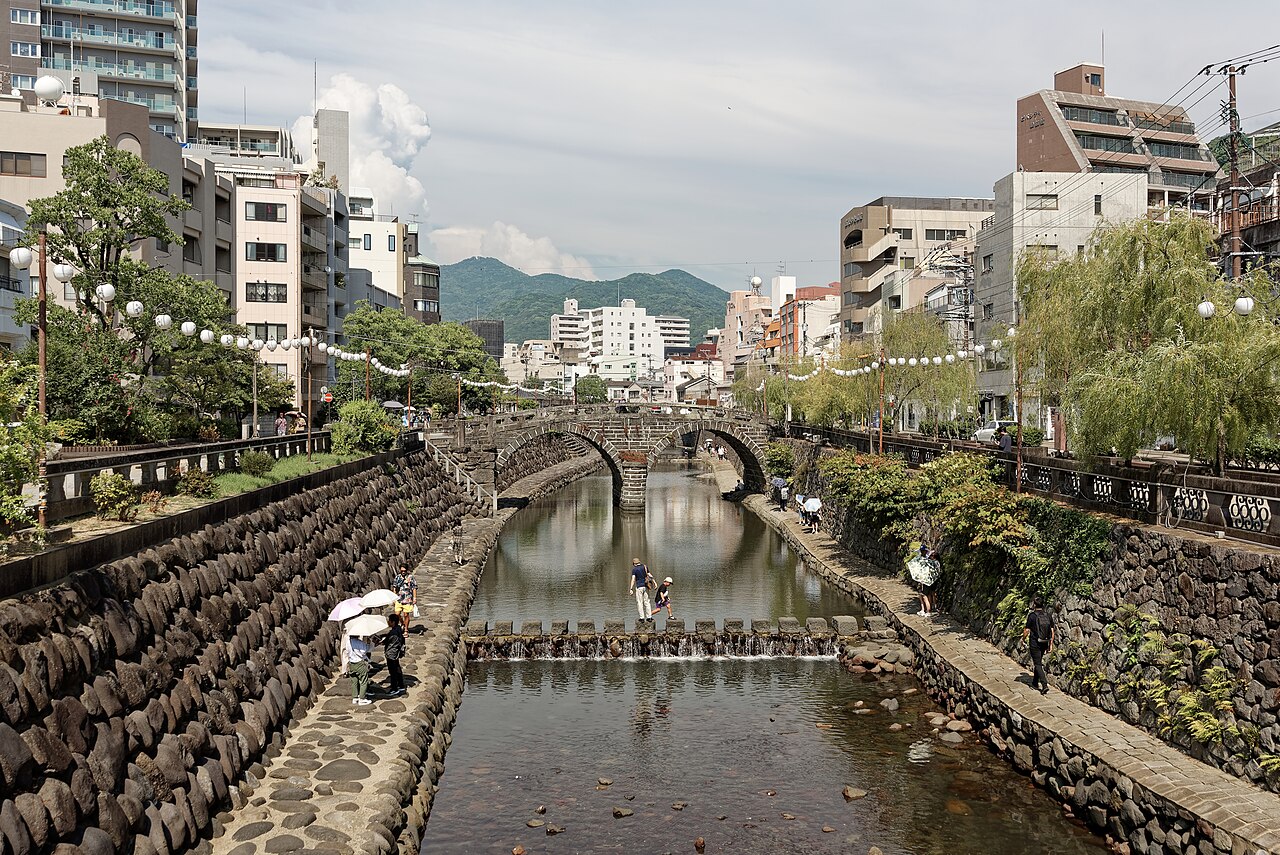
- 1634 — The Megane (Spectacles) Bridge is built under Chinese influence, a marker of the resident Chinese merchant community.
- 1639 — The sakoku edicts take full effect; Nagasaki becomes Japan’s sole licensed foreign-trade port.
- 1641 — Dutch trade is concentrated on the fan-shaped island of Dejima.
- 1689 — The walled Tōjin-yashiki Chinese residence quarter is established.
- 17th–18th c. — Imported Indian and Southeast Asian sarasa are prized; Nagasaki dyers reproduce the motifs with paper stencils and layered dyeing.
- 1854 — The sakoku era ends and Nagasaki’s trade monopoly closes.
- Present day — A small number of artisans keep the Nagasaki sarasa stencil technique alive on cotton goods.
Among the most coveted imports were sarasa — vividly patterned, mordant- and resist-dyed cottons from India and Southeast Asia. These are the same cloths that entered English as “chintz” and “calico,” and they arrived in Nagasaki carrying motifs unlike anything in the domestic textile vocabulary: dense scrolling foliage, arabesques, and small foreign human figures.
Local dyers did not simply admire these lengths. They studied them and worked out how to reproduce the look with their own tools — carved paper stencils and successive applications of pigment and resist. From that effort came Nagasaki sarasa, which the data places as one of Japan’s regional sarasa lineages alongside Nabeshima sarasa and Tenpo sarasa. The cloth is, in effect, a domestic translation of a foreign visual language, made possible only because Nagasaki was the one place that language ever landed.
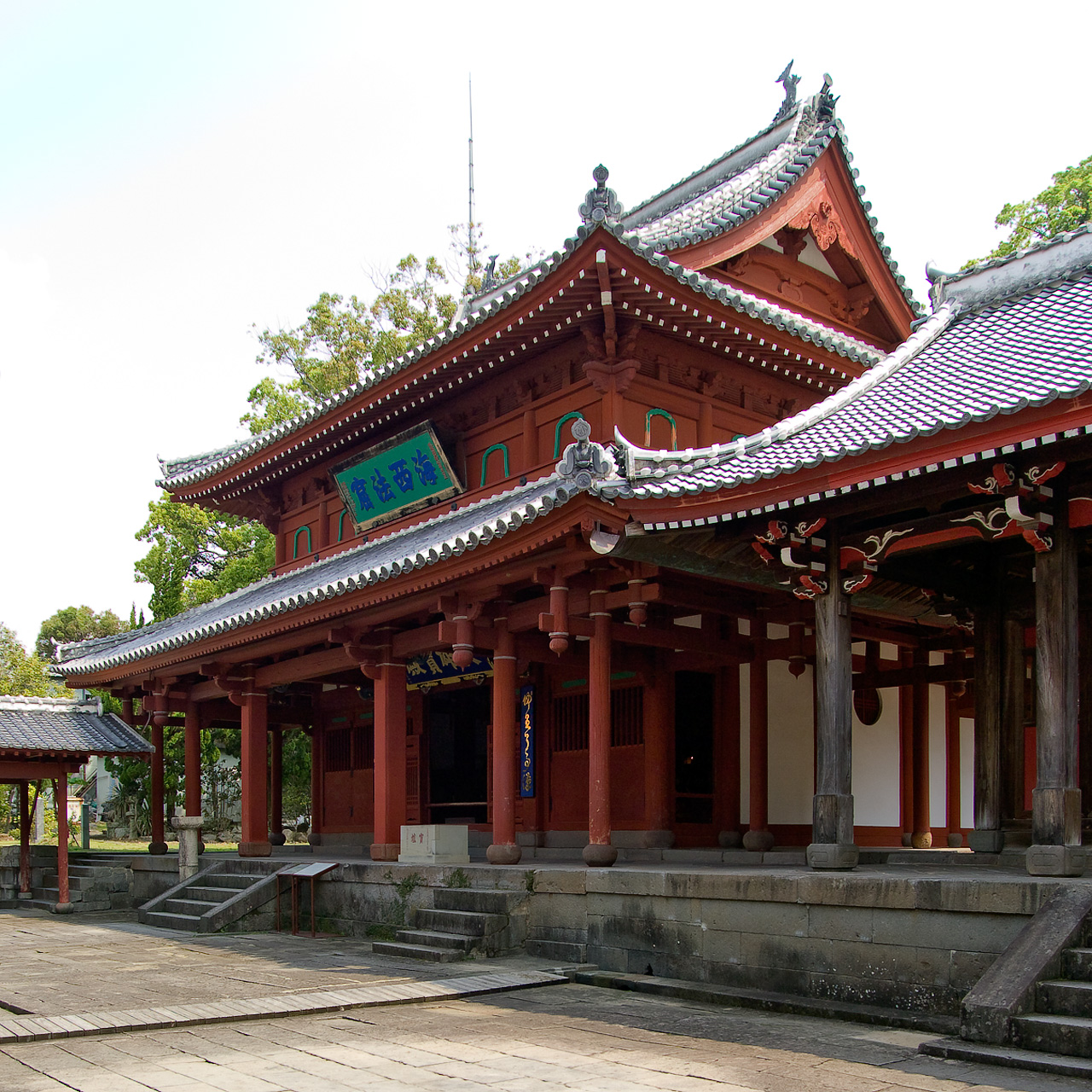
“Nagasaki sarasa is a foreign pattern spoken in a Japanese accent — the one place in a closed country where the outside world was allowed to leave its design on cloth.”
Today only a small number of artisans keep the Nagasaki stencil technique going, applying it to cotton goods like the pouch in this guide. The data is honest about the scale: this is a surviving niche tradition, not a large industry. That is also what makes a finished piece meaningful — it carries a lineage that very nearly thinned out entirely.
📦 Shipping & where to buy from outside Japan
International delivery for a light cotton pouch is often simpler than for bulky goods, but cost and coverage vary by destination. Confirm the delivery terms for your country before ordering.
- Amazon JP Global Store — ships internationally from Japan; estimated shipping for a small textile item is commonly in the $15–$40 range to the US and EU, higher to other regions.
- Customs & duties — a low-value cotton pouch usually falls under most countries’ de-minimis thresholds, but orders combined with other goods can trigger import duty. Check your local threshold.
- Proxy services (Buyee / Tenso) — useful when direct international shipping is unavailable; they receive the parcel in Japan and re-forward it, adding a service fee.
- No voltage concerns — this is a textile, so there are no electrical or certification issues for use abroad.
Buying options
Prices and stock fluctuate, so treat any figures quoted below as starting points and confirm with the seller before purchase. JPY is the standard reference currency for Japanese craft; any USD estimate is just an approximation at a ¥150/USD baseline as of mid-2026.
| Store | Item / Variant | Price (JPY + USD est.) | Notes |
|---|---|---|---|
| 🇺🇸 Amazon.com (US) | Browse Japanese sarasa & stencil-dyed cotton pouches | varies (USD) | Best if you are shopping from the US — Prime shipping, USD pricing, no international customs. Amazon US carries comparable Japanese stencil-dyed and indigo cotton goods; this exact Nagasaki sarasa piece is sourced from Japan (next row). |
| 🇯🇵 Amazon JP Global Store | Nagasaki sarasa cotton pouch | — | Ships internationally from Japan. |
| Maker direct | Nagasaki sarasa workshop goods | Unconfirmed | A small number of artisans keep the technique alive; direct availability varies and may not ship abroad. |
| Proxy services (Buyee / Tenso) | Any Japan-only source forwarded abroad | Item price + service fee | Use when direct international shipping is unavailable. |
What it does well
Weaknesses and things to verify before buying
- Product details are limited. Confirm the current purchase terms before ordering.
- Material details vary. Check the photos and description for the cotton specification before ordering.
- Colorway and pattern variation. Stencil-dyed cotton varies piece to piece in registration and pigment depth; the item received may not match a single sample photo exactly.
- Care requirements. Dyed cotton can be sensitive to harsh washing; assume gentle hand care unless machine washing is explicitly supported.
- Shipping time and cost. Cross-border delivery from Japan takes longer than domestic Amazon, and shipping is added to the item price.
- Limited maker-direct path. Because only a small number of artisans remain, maker-direct purchase or restock is not guaranteed and may not ship internationally.
Conclusion — which buyer type are you?
Other ways to approach this purchase
❓ Frequently Asked Questions
Does Amazon JP Global Store ship a Nagasaki sarasa pouch internationally?
Small cotton pouches are light and compact, so shipping is often toward the lower end of the range for textile goods. Confirm coverage and cost for your country before ordering.
What is the difference between Nagasaki sarasa and other Japanese sarasa?
Nagasaki sarasa is one of Japan’s regional sarasa lineages, alongside Nabeshima sarasa and Tenpo sarasa. The shared root is imported Indian and Southeast Asian dyed cotton; the regional versions differ in their stencil and dyeing approach and in the motifs each tradition favored.
Is the pouch hand-dyed or machine-printed?
Nagasaki sarasa is traditionally produced with carved paper stencils and layered pigment and resist dyeing. Because hand-dyed and printed-reproduction sarasa sit at very different price points, check whether a pouch is stencil-dyed by hand or a printed reproduction before buying.
How should I care for a stencil-dyed cotton pouch?
Treat dyed cotton gently: unless the maker explicitly states that it is machine-washable, assume hand washing in cool water and drying out of direct sun. This reduces the risk of color shift on layered pigment dyeing.
What is a kinchaku and what is it used for?
A kinchaku is a soft drawstring pouch traditionally used to carry coins, small tools, or tea utensils. Today it works equally well for accessories, cosmetics, cables, or as reusable gift wrapping.
How much does it cost?
Nagasaki sarasa pouch pricing varies with technique (stencil-dyed by hand commands a premium over printed reproductions), cotton weight, and whether the pouch is sewn in a Nagasaki workshop or by a regional cooperative. As a rough range, a printed cotton pouch sits well below a fully hand-dyed piece, while a larger or multi-panel sarasa kinchaku climbs further still. Treat any listed figure as the seller’s current quote rather than a fixed market price.
Is sarasa originally a Japanese invention?
No. Sarasa describes vividly patterned dyed cottons that originated in India and Southeast Asia — the same cloths that gave English the words “chintz” and “calico.” Nagasaki dyers reproduced the imported motifs locally, which is how the Japanese regional sarasa traditions, including Nagasaki sarasa, came about.
jpmono.com is curated by a Japan-based editorial team (working out of Toyama in the Hokuriku region and Nara in Kansai) and is independent. We do not take payment from the makers we feature; income comes from affiliate links. Read more about our editorial standards.
This article was prepared with AI assistance and reviewed by the jpmono editorial team using craft references. Specifications and prices reflect the information available at the time of writing and may have changed.
Affiliate disclosure: jpmono.com may earn a commission on qualifying purchases made through links on this page, at no additional cost to you.