![Makabe Uchihamono Hand-Forged Kiridashi Knife: Where to Buy [2026]](https://jpmono.com/wp-content/uploads/2026/05/japan-map-regions-and-prefectures-800x1050.png)
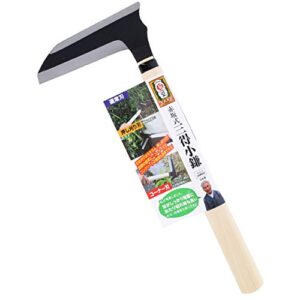
A kiridashi (切り出し) is the simplest blade in the Japanese workshop: a single-bevel marking and carving knife, ground flat on one face, with a wedge of carbon steel set into a plain wooden handle. It is the tool a joiner reaches for to scribe a line, pare a peg, or sharpen a pencil to a chisel point. The example covered in this guide is hand-forged in Makabe (真壁), a former castle town at the eastern foot of Mt. Tsukuba in Ibaraki Prefecture, where blacksmiths have shaped edged hand tools for the farms and workshops of the Kanto plain for generations.
What makes a Makabe kiridashi worth a second look from outside Japan is the lineage behind the craft rather than any single feature. The town’s smiths — known collectively as Makabe no kaji (真壁の鍛冶, “the Makabe blacksmiths”) — built their trade supplying sickles, hoes, and edged tools to rice and produce farmland. The kuro-uchi (黒打ち, “black-forged”) finish and the single-bevel grind found on Makabe kiridashi are signatures of that agrarian tool-making tradition, carried over from field implements into woodworking and craft use.
This article is written from a Japan-based editor’s perspective, working out of Toyama and Nara. It is for woodworkers, leather and paper crafters, and collectors of hand tools who want to understand where this object comes from, how to buy it from outside Japan, and where it sits against other Japanese single-bevel and hand-forged blades. We cover specs, provenance, international shipping paths, and honest caveats — carbon steel is not maintenance-free, and published details for individual knives are thin.
🗓️ Published: June 7, 2026 · 🔄 Last updated: June 7, 2026 · ⏱️ Read time: about 11 minutes
- Who this is for — and who should skip it
- Product overview (from published specs)
- Where this comes from — place, era, and the craft tradition
- Where to buy across stores
- What it does well
- Weaknesses and things to verify before buying
- Conclusion — which buyer type are you?
- Other ways to approach this purchase
- ❓ Frequently Asked Questions
Who this is for — and who should skip it
- Do woodworking, joinery, or carving and want a dedicated marking/paring knife
- Prefer single-bevel (kataba) geometry for precise, controlled cuts along a line
- Already maintain carbon-steel tools and are comfortable with sharpening on whetstones
- Value hand-forged provenance from a named regional smithing tradition
- Want an inexpensive entry point into Japanese hand tools that rewards skill over gadgetry
- Want a maintenance-free blade — carbon steel rusts if left wet
- Single-bevel knives are handed. Left-handed buyers should verify the bevel before ordering.
- Expect a kitchen knife — a kiridashi is a craft/woodworking tool, not for food prep
- Need guaranteed, fast international delivery with a firm price quoted up front
- Are uncomfortable sharpening by hand; this blade arrives expecting upkeep
Product overview (from published specs)
Published details on individual Makabe kiridashi knives vary by maker. Live pricing and exact dimensions often shift between writing dates, and search results do not always return a structured spec sheet. The table below therefore states what is verifiable from the maker tradition and typical kiridashi geometry, and marks the rest plainly rather than guessing.
| Attribute | Detail | Source |
|---|---|---|
| Item type | Kiridashi (marking / carving knife) | Amazon JP Global Store |
| Maker / origin | Makabe Uchihamono — Makabe, Sakuragawa, Ibaraki | Maker tradition (Makabe no kaji) |
| Blade material | Carbon steel (hagane), hand-forged | Maker tradition |
| Grind | Single-bevel (kataba) | Maker tradition |
| Finish | Kuro-uchi (black-forged) | Maker tradition |
| Handle | Wood | Amazon JP Global Store |
| Blade length / weight | Not specified — confirm before buying | — |
| Handedness | Unconfirmed (single-bevel knives are handed — verify right/left) | — |
Spec sheets for hand-forged tools are often incomplete because each piece is made in small batches. Treat rows marked “Unconfirmed” as details to verify in the seller’s current product information rather than as known facts.
📖 Glossary — key terms
- Kiridashi (切り出し) — a single-bevel marking/carving knife used to scribe lines, pare wood, and shape small parts; one of the most basic Japanese hand tools.
- Kuro-uchi (黒打ち, “black-forged”) — a finish that leaves the dark forge scale (oxide skin) on the blade flats; functional and traditional on agrarian and craft tools.
- Kataba (片刃, “single-bevel”) — ground on one face only, leaving the other face flat; gives precise, directional cuts but makes the blade handed (right- or left-hand specific).
- Hagane (鋼) — carbon tool steel; takes a very keen edge and is easy to resharpen, but will rust without care.
- Makabe no kaji (真壁の鍛冶) — “the Makabe blacksmiths,” the town’s hand-forging trade that historically supplied farm and edged hand tools.
- Shokunin (職人) — a skilled craftsperson/artisan working within a trade tradition.
Where this comes from — place, era, and the craft tradition

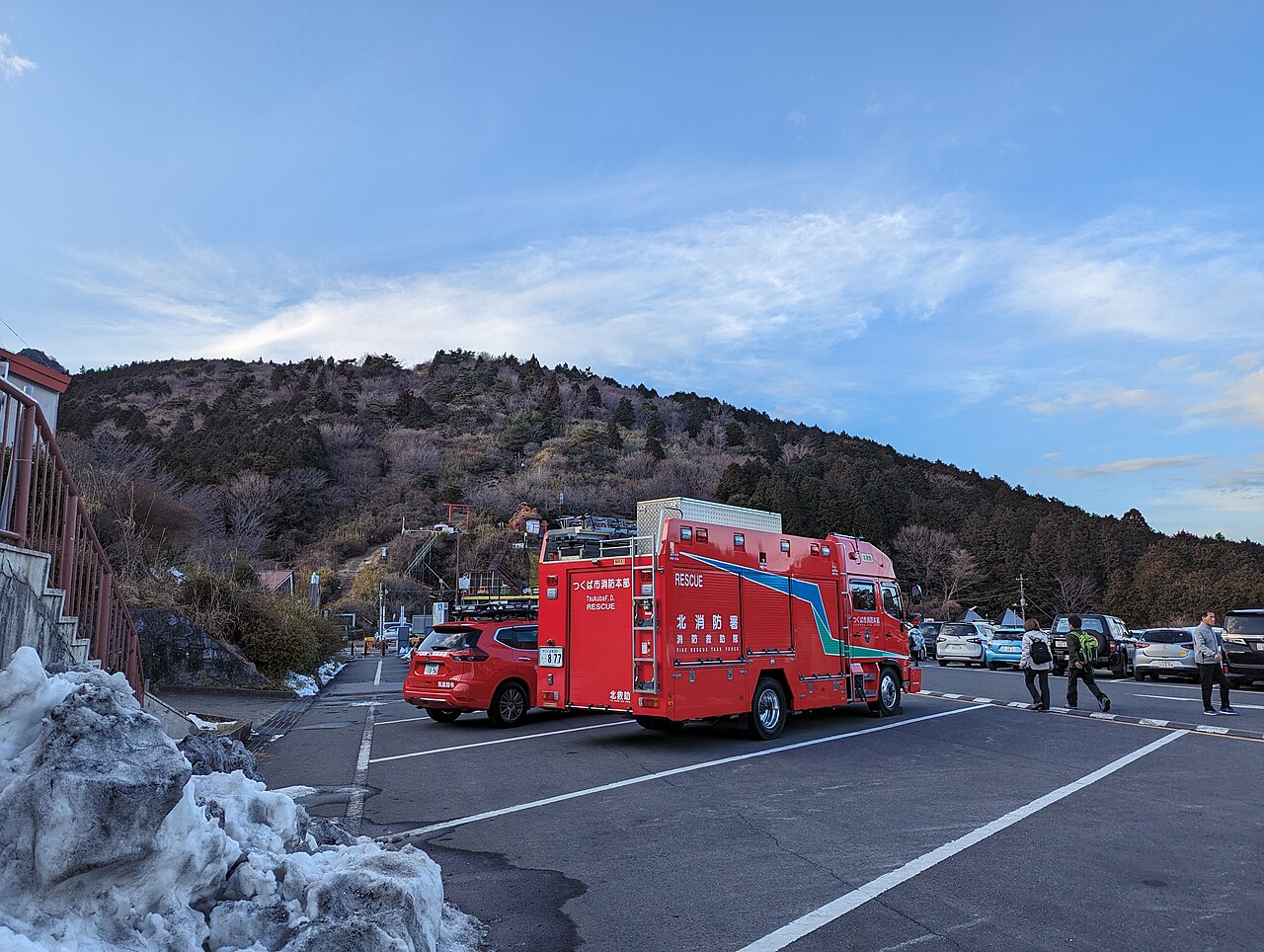
Makabe sits on the northern part of the Kantō plain, at the eastern foot of Mt. Tsukuba — the twin-peaked mountain that dominates the Ibaraki landscape and that Tokyo residents can see on a clear day to the north. The land around it is flat, fertile, rice-growing country. That agricultural setting is the whole reason a hand-forging trade took root here: a plain full of farms is a plain full of demand for sickles, hoes, and edged hand tools, and the smiths who could make and repair them clustered where the work was.
The mountain gave the town a second resource. Mt. Tsukuba’s granite fed a stone-working economy, and Makabe became nationally known for Makabe ishidōrō (真壁石燈籠, “Makabe stone lanterns”) cut from local granite. Stone and steel grew up side by side in the same small town — one shaping garden lanterns, the other shaping the tools that worked the fields.
- Medieval era — Makabe becomes the castle town of the Makabe clan.
- Edo period (1603–1868) — Under domain governance the town’s smiths (Makabe no kaji) forge sickles, hoes, and edged tools for Kantō farmland.
- Edo period — Granite quarrying from Mt. Tsukuba grows the Makabe stone-lantern trade alongside the forges.
- Meiji period onward — The agrarian tool trade adapts toward woodworking and craft blades, including the kiridashi.
- 1995 — Makabe stone lanterns are recognized as a national traditional craft (dentōteki kōgeihin).
- 2005 — Makabe, Iwase, and Yamato merge to form Sakuragawa City.
- Today — Makabe preserves its merchant streetscape and hosts the Makabe Hinamatsuri doll festival.
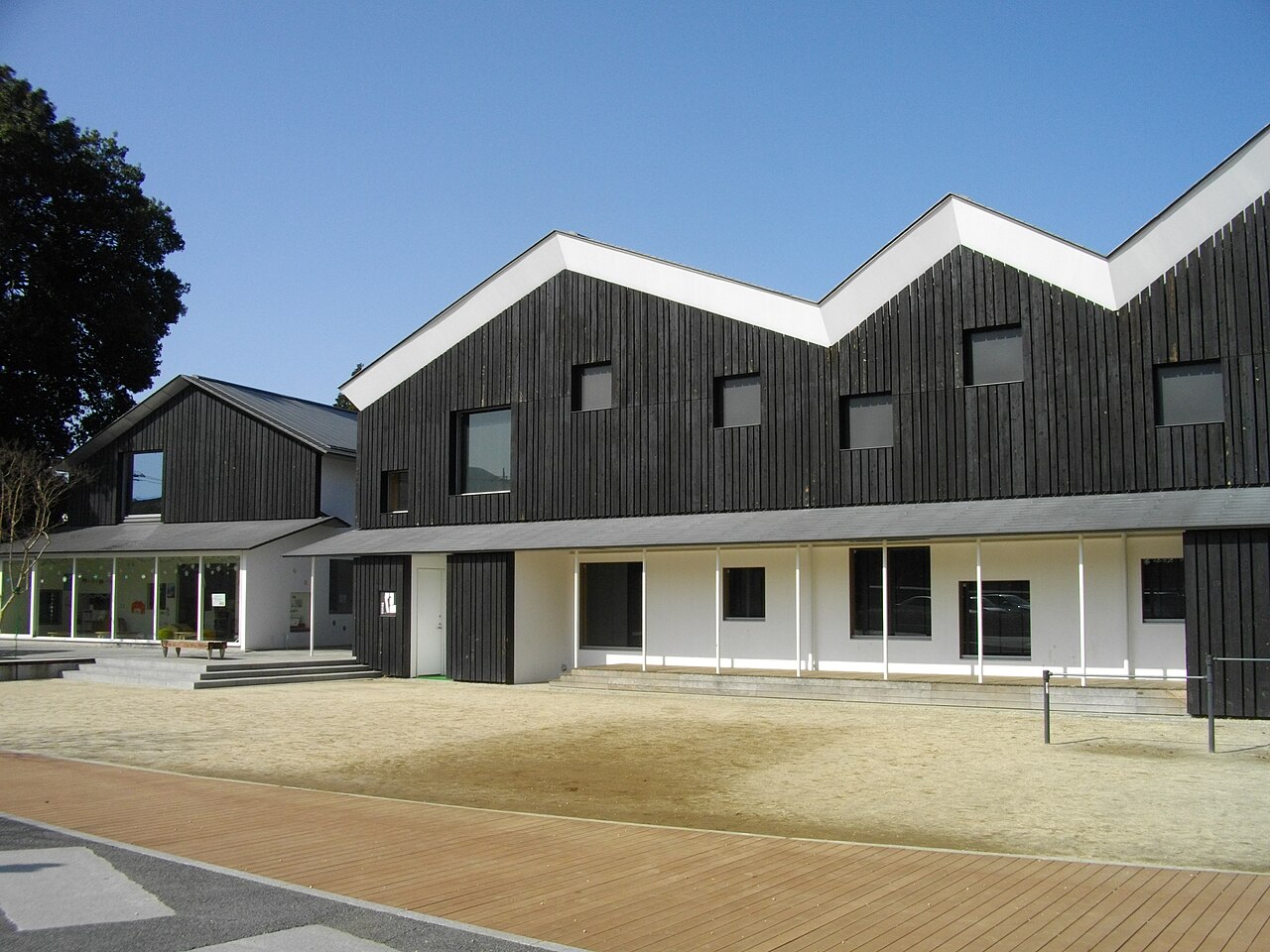
Makabe began as a castle town of the Makabe clan in the medieval period, then settled into its long working life under Edo-period domain governance as a market and craft town. That history is still legible in the streets: rows of merchant houses (machiya) and storehouses survive in the old core, the kind of fabric that only persists where a town stayed economically alive without being flattened and rebuilt. The blacksmith and stone trades grew up inside that fabric, supplying the surrounding villages.
“A kiridashi is a farm-tool tradition pointed at finer work — the same black-forged carbon steel that cut rice, now scribing a line on a tea-box lid.”
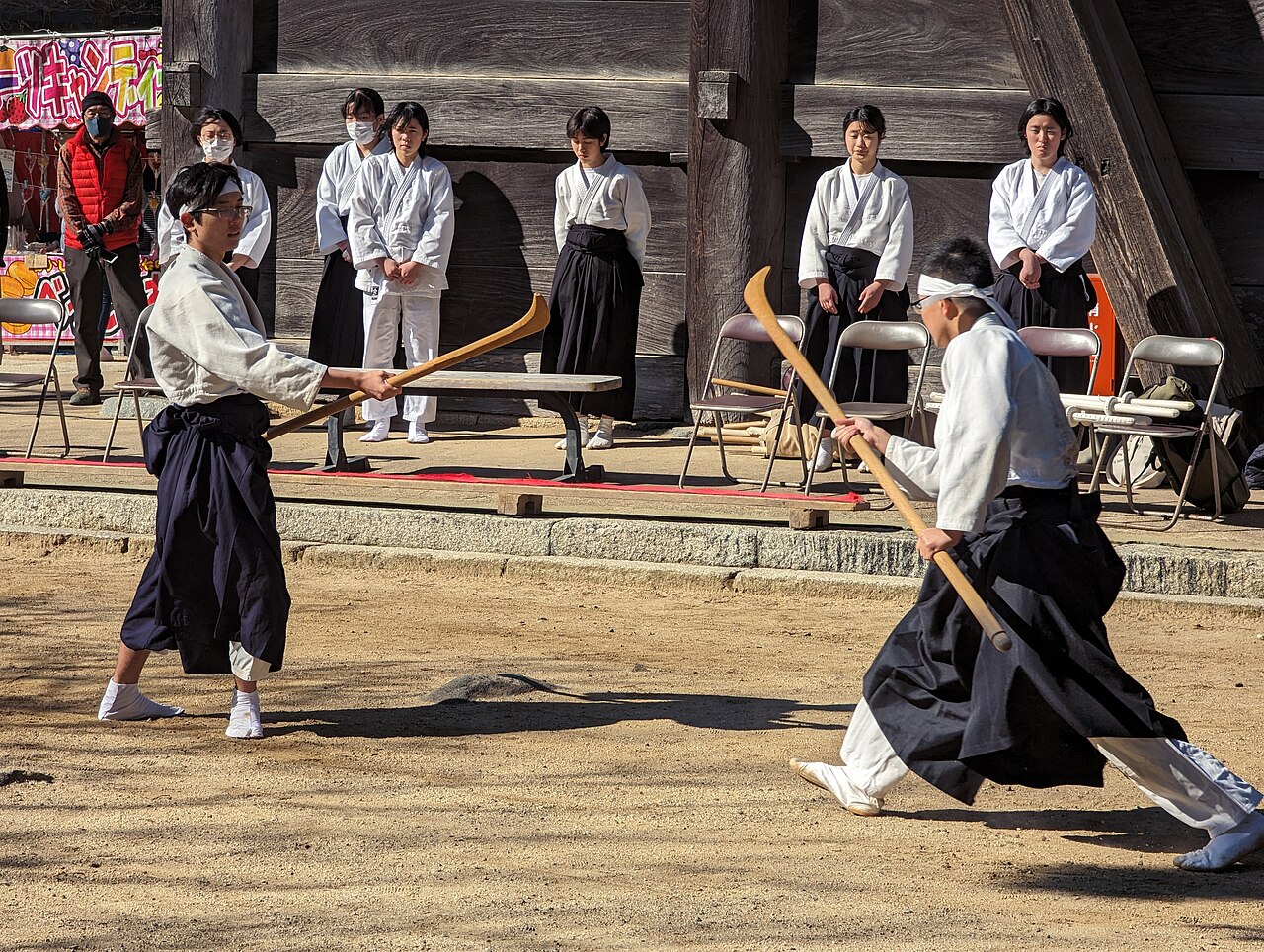
What “still being made here” means for a kiridashi is modest but real. This is not a famous-name kitchen-knife town like Sakai or Echizen; it is a regional smithing tradition that survived by being useful. The continuity case rests on the technique rather than on volume — the single-bevel grind and the black-forged scale are the same practices that produced field tools, applied to a smaller, finer blade. The agrarian trade did not vanish; it narrowed and adapted, and the kiridashi is one of the forms it adapted into.

Related guides on jpmono.com — other Kantō blades, Japanese single-bevel knives, hand-forged tools, and Ibaraki crafts.
Where to buy across stores
Pricing on Makabe kiridashi knives varies by steel, size, and finish. The JPY price is the authoritative figure for the maker or retailer you choose; verify it on the live page before buying. USD figures elsewhere in this guide are approximate estimates at a ¥150/USD baseline.
| Store | Item / Variant | Price (JPY + USD est.) | Notes |
|---|---|---|---|
| 🇺🇸 Amazon US (search) | Browse Japanese carving & woodworking knives | varies (USD) | Best if you are shopping from the US — Prime shipping, USD pricing, no international customs. Amazon US carries Japanese kiridashi and carving knives from various makers for comparison; the exact Makabe piece ships from Japan (next row). |
| 🇯🇵 Amazon JP Global Store | Makabe Uchihamono kiridashi | Check the current price in JPY | This Japan-based store option ships internationally from Japan to most major destinations. |
| Maker direct | Makabe Uchihamono | — | Small regional smiths often have limited or no English ordering; availability varies. Verify directly if you need a specific size or handedness. |
| Proxy services (Buyee / Tenso) | Forwarding from JP retailers | Item price + service fee + shipping | Useful when a seller does not ship to your country directly. Adds a handling fee; customs duties may apply over local thresholds. |
What it does well
Weaknesses and things to verify before buying
- Carbon steel rusts. The blade must be wiped dry and lightly oiled; left wet, it will spot and corrode. This is not a maintenance-free tool.
- Single-bevel knives are handed. This guide does not confirm the bevel direction. Left-handed buyers should verify before ordering.
- Product details are unconfirmed. If fit matters for your work, confirm the knife’s suitability before ordering.
- Pricing is unconfirmed. Confirm the current price and shipping cost before ordering.
- It is a craft tool, not a kitchen knife. A kiridashi is for marking, paring, and carving — not for food prep, and it ships expecting hand-sharpening upkeep.
- The kuro-uchi finish is cosmetic forge scale. The black flats are traditional and functional, but they are not a stainless coating and do not prevent rust on the cutting edge.
Conclusion — which buyer type are you?
Other ways to approach this purchase
❓ Frequently Asked Questions
What is a kiridashi used for?
A kiridashi is a single-bevel marking and carving knife used in woodworking and craft. It scribes layout lines, pares wood and pegs, sharpens pencils to a chisel point, and handles fine detail cuts. It is a craft tool, not a kitchen knife.
Does this knife ship internationally from Japan?
Makabe kiridashi are commonly exported via specialty Japanese tool retailers and the Amazon JP Global Store, which ships to most major international destinations. If a piece does not ship to your country, a proxy service such as Buyee or Tenso can forward it, adding a handling fee and possible customs duties.
How do I care for the carbon-steel blade?
Wipe it dry after use and apply a thin film of camellia or other tool oil before storage. Carbon steel (hagane) will rust if left damp. Resharpen on Japanese whetstones; because it is single-bevel, work the bevel side and only lightly deburr the flat back.
Is it suitable for left-handed users?
Single-bevel knives are handed, so check the bevel direction of an individual knife before ordering. Left-handed buyers should verify that a left-hand version is available, as a right-hand bevel is awkward to use in the left hand.
What does kuro-uchi (black-forged) mean?
Kuro-uchi refers to the dark forge scale left on the blade flats during forging. It is a traditional, functional finish common on agrarian and craft tools. It is cosmetic on the flats and does not make the cutting edge rust-proof.
Where exactly is Makabe?
Makabe is a district of Sakuragawa City in Ibaraki Prefecture, on the northern Kantō plain at the eastern foot of Mt. Tsukuba, roughly 80 km north-northeast of Tokyo. It is a former castle town known for both hand-forged blades and Mt. Tsukuba granite stone lanterns.
Why does the article lead with an Amazon US search link?
Most readers shop from the US or EU, where domestic retailers can offer familiar currency and shipping terms. Comparable Japanese carving knives may be available through local retailers, while Makabe kiridashi pieces are typically sourced from specialty tool dealers or Japanese retailers that ship internationally.
jpmono.com is curated by a Japan-based editorial team (working out of Toyama in the Hokuriku region and Nara in Kansai) and is independent. We do not take payment from the makers we feature; income comes from affiliate links. We do not physically test every product — we read maker specifications and supporting sources.
🤖 This article was produced with AI assistance and reviewed against maker information and craft notes. Specs, pricing, and availability can change after publication; verify current details with the retailer before purchase.
Affiliate disclosure: jpmono.com may earn a commission on qualifying purchases made through links on this page, at no additional cost to you.