![Awa Yusan-bako Tiered Wooden Picnic Box: Tokushima’s Spring Craft [2026]](https://jpmono.com/wp-content/uploads/2026/06/awa-yusan-bako-tiered-picnic-box-where-to-buy-2026-featured.jpg)
The Awa yusan-bako (阿波遊山箱, “Awa hillside-outing box”) is a small three-tier lacquered wooden box that children in old Tokushima once carried into the spring hills. Around the old-calendar Hina-matsuri — early April — families packed the stacked tiers with rolled sushi, sweet kanten jelly, and seasonal treats, and the children walked off to eat lunch on a hillside in the new green. The word yusan means a leisurely excursion into the hills, and for a few generations the painted box was the object that made that day feel like a celebration.
What sets the yusan-bako apart from an ordinary stacked lunch box is the joinery and the lid. The body is built with sashimono joinery — fitted wooden corners rather than nails — and finished with lacquer, while the lid is hand-painted in bright folk colors: flowers, Mt. Bizan, festival scenes. That decorative tradition grew out of the same Awa indigo wealth that funded Tokushima’s craft economy under the Hachisuka clan. The custom nearly disappeared after the war and has been revived since the 2000s as a signature Tokushima keepsake — and, increasingly, as a modern picnic and bento box.
This guide is written for international readers weighing a hand-painted Japanese lacquered box as a keepsake, a gift, or an actual lunch box. We cover what the object is, where it comes from, how it compares to other Shikoku and Kansai craft boxes, where to buy it from outside Japan, and which buyer it genuinely suits. Source data for the specific listing is thin, so we flag price and stock as unconfirmed throughout rather than guessing.
🔄 Updated:
⏱️ Read time: ~10 min

- Who this is for — and who should skip it
- Product overview (from published specs)
- Where this comes from — place, era, and the craft tradition
- 📦 Shipping & where to buy from outside Japan
- Price snapshot across stores
- What it does well
- Weaknesses and things to verify before buying
- Conclusion — which buyer type are you?
- Other ways to approach this purchase
- 🏆 Editor’s Pick
- ❓ Frequently Asked Questions
Who this is for — and who should skip it
- Want a hand-painted Japanese keepsake with a real regional story, not mass-produced décor
- Like the idea of a tiered lacquered box for picnics, Hina-matsuri, or seasonal table display
- Appreciate sashimono joinery and lacquer finishing as craft, and are willing to hand-wash
- Are buying a meaningful gift tied to Tokushima, Shikoku, or Awa indigo culture
- Collect Japanese folk crafts and value a revived, near-extinct tradition
- Need a dishwasher- and microwave-safe everyday lunch box
- Want a low-cost, expendable container — lacquered handcraft is a different price tier
- Expect each box to look identical; hand-painted lids vary piece to piece
- Are unwilling to hand-wash and keep lacquerware out of prolonged soaking or direct sun
- Need confirmed pricing and instant stock — listing data for this item is currently thin
Product overview (from published specs)
Source data for this specific listing is limited. Only an Amazon JP Global Store listing snapshot is referenced, and the search-feed returned no live price or detailed spec sheet at the time of writing, so several fields below are marked unconfirmed rather than guessed. Verify dimensions, weight, and price at the retailer before buying.
Awa Yusan-bako Tiered Wooden Picnic Box
阿波民芸白木遊山箱
通常9~10日以内に発送します。 · Sold by 島山オンラインショップ · ASIN B0FJK68JRM
Price and availability as of 2026-08-31 02:30 JST. The Amazon listing at the time of purchase is authoritative. jpmono.com earns a commission on qualifying purchases at no extra cost to you.
| Attribute | Detail (per listing snapshot) |
|---|---|
| Object | Awa yusan-bako — three-tier lacquered wooden box with hand-painted lid |
| Origin | Tokushima (Awa), Shikoku, Japan |
| Construction | Sashimono (指物) joinery; lacquer finish; painted lid |
| Tiers | Three stacking tiers (jūbako-style) |
| Material | Wood with lacquer; species unconfirmed — check maker site |
| Dimensions / weight | Unconfirmed — check manufacturer / Amazon JP listing |
| ASIN (Amazon JP) | B0FJK68JRM |
Sources: Amazon US search (primary, moonill-20) + Amazon JP Global Store (secondary, moonill-22, sourced listing) + maker direct where available. Spec sheet data was incomplete at the time of writing.
📖 Glossary — key terms
- yusan-bako (遊山箱) — a small tiered lacquered box children carried on a yusan, a leisurely spring excursion into the hills, in old Tokushima.
- sashimono (指物) — Japanese joinery that fits wooden parts together with interlocking joints rather than nails or screws.
- Awa aizome (阿波藍染) — Tokushima’s indigo dyeing; “Awa” is the old province name, and Awa indigo was the domain’s signature export.
- jūbako (重箱) — stacked tiered boxes, the same family of vessel used for New Year’s osechi food.
- kanten (寒天) — agar jelly, a traditional sweet often packed in the spring outing box.
- Hina-matsuri (雛祭り) — the Dolls’ Festival; the old-calendar version fell in early April, the season of the hillside outings.
- urushi (漆) — natural Japanese lacquer, the sap-based finish that seals and protects the wood.
- Mt. Bizan (眉山) — the “eyebrow mountain” overlooking Tokushima city, a recurring motif on painted lids.
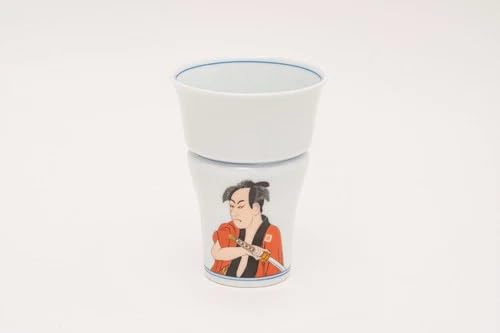 🏺 Otani-yaki Tumbler (Tokushima)
🟦 Buaisou Awa Aizome Tenugui (Tokushima)
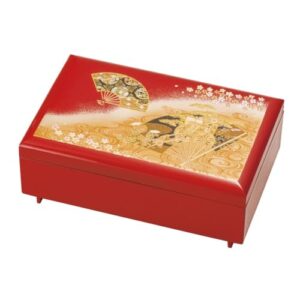 🪵 Kyo Sashimono Paulownia Box
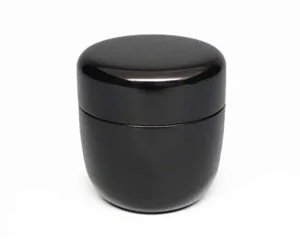 🍵 Sanuki Shikki Kinma Natsume (Kagawa)
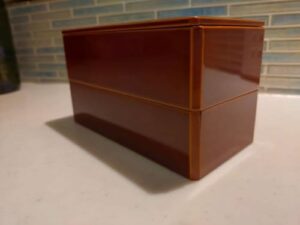 🍱 Ise Shunkei Lacquer Bento Box
 🍶 Odo-yaki Tosa Yunomi (Kochi)
🎐 Iyo Sudare Reed Blind (Ehime)
 🪭 Marugame Uchiwa (Kagawa)
Where this comes from — place, era, and the craft tradition

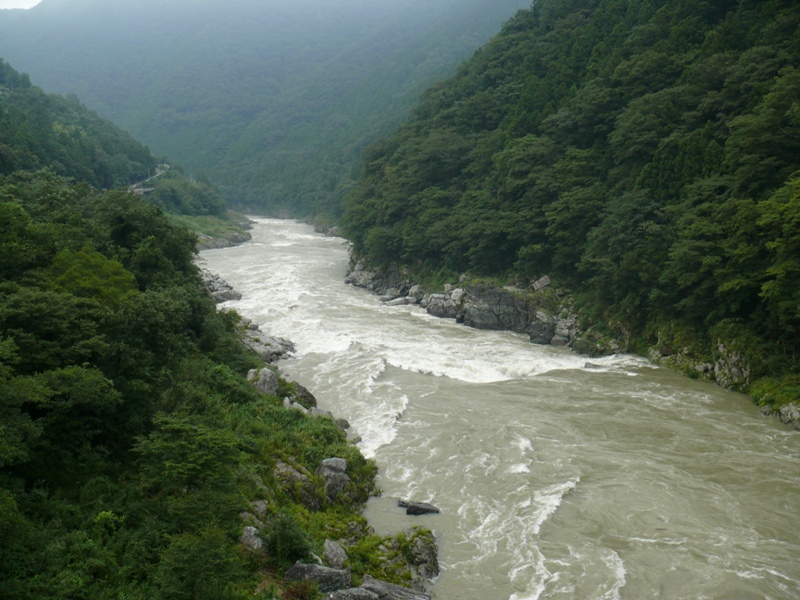
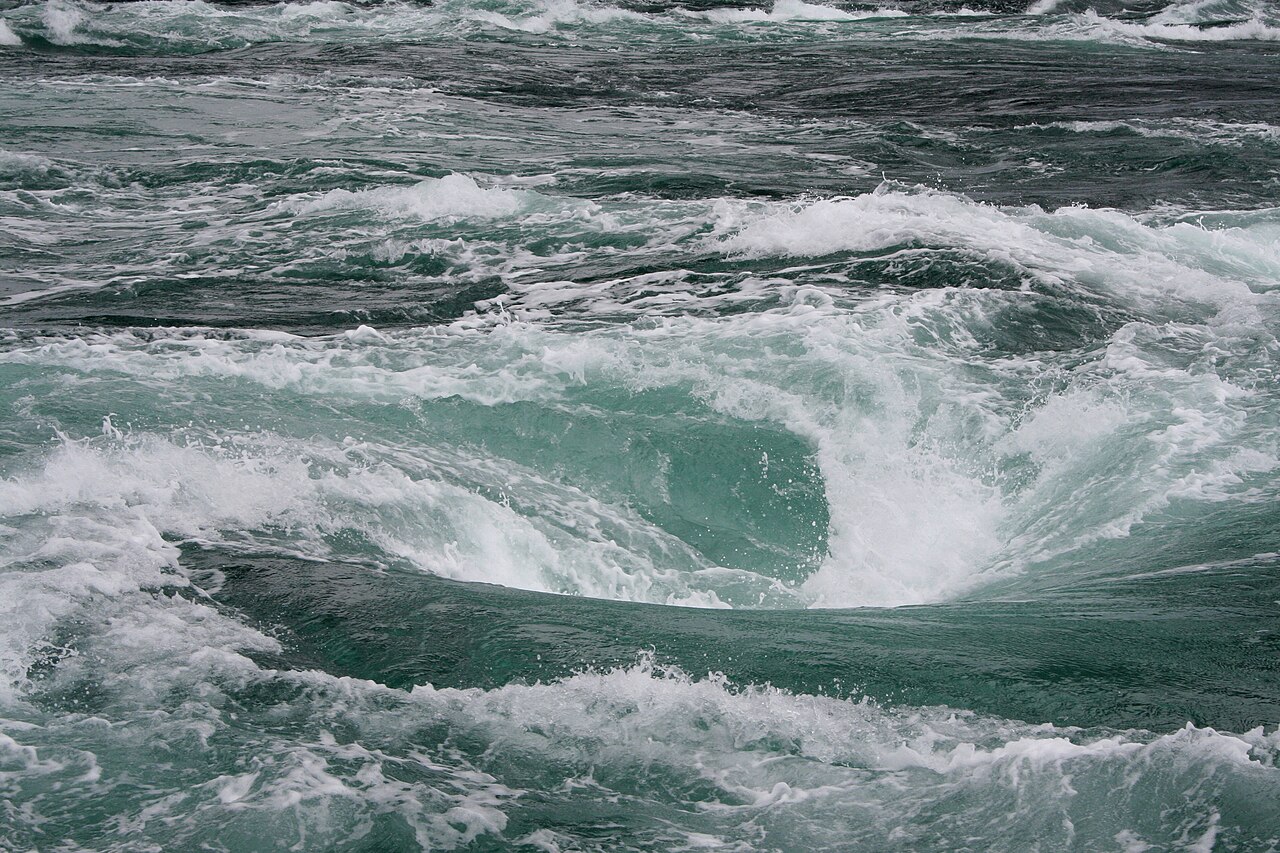
Tokushima sits at the northeastern corner of Shikoku, the smallest of Japan’s four main islands, where the broad Yoshino River — Shikoku’s largest — empties into the sea at the Naruto Strait. The strait separates Shikoku from Awaji Island and the Kansai mainland, and its tidal currents produce the famous Naruto whirlpools. The old province name here is Awa, and the whole region’s identity still runs through that word: Awa indigo, Awa Odori, Awa yusan-bako.
The Yoshino River plain is the reason the craft economy took root. Its seasonal flooding left fertile, well-drained soil ideal for growing ai (the indigo plant), and from the Edo period onward Awa indigo became one of the most valuable agricultural products in Japan. That wealth flowed into the Tokushima castle town.
The castle-town anchor is the Hachisuka clan. After Toyotomi Hideyoshi’s Shikoku campaign, Hachisuka Iemasa was granted Awa Province in 1585 and built Tokushima Castle at the foot of Mt. Bizan the following year. The Hachisuka governed Awa for the entire Edo period, and the domain’s monopoly on indigo turned merchant Tokushima into one of the wealthier provincial economies of its day — money that supported lacquerers, joiners, and painters whose skills later shaped the yusan-bako.
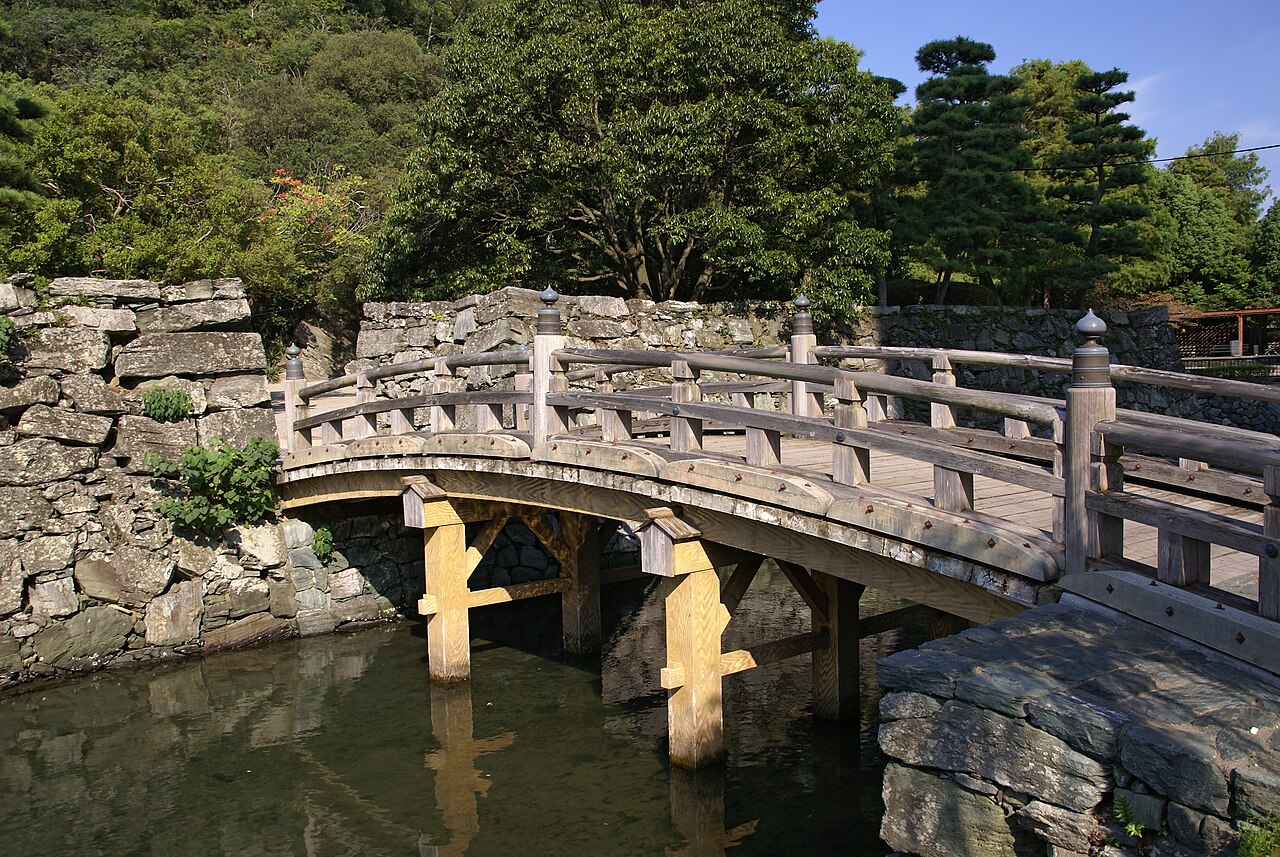
- 1585 — Hachisuka Iemasa is granted Awa Province after Hideyoshi’s Shikoku campaign.
- 1586 — Tokushima Castle is completed at the foot of Mt. Bizan; the castle town takes shape.
- Edo period (1603–1868) — Awa indigo becomes the domain’s signature export, funding a regional craft economy.
- Meiji–Taishō (1868–1926) — The yusan-bako spring-outing custom spreads through farming and coastal villages.
- Early Shōwa — The custom reaches its peak; painted three-tier boxes are a common household keepsake.
- Postwar (after 1945) — Synthetic dyes erode the indigo economy; the custom and the boxes fade.
- 2000s — Tokushima makers revive the yusan-bako as a keepsake and modern picnic / bento box.
- 2026 — Sold as a signature Tokushima craft object to a domestic and international audience.
The custom itself was a children’s rite of spring. Around the old-calendar Hina-matsuri in early April, families packed the three tiers with rolled sushi, kanten jelly, and sweets, and the children carried their own boxes off to a hillside to eat in the new green. The coastal and farming villages near the Naruto strait kept the practice longest.
“For a child in old Awa, the yusan-bako was not a lunch box. It was the one day a year you carried your own small festival up the hill.”
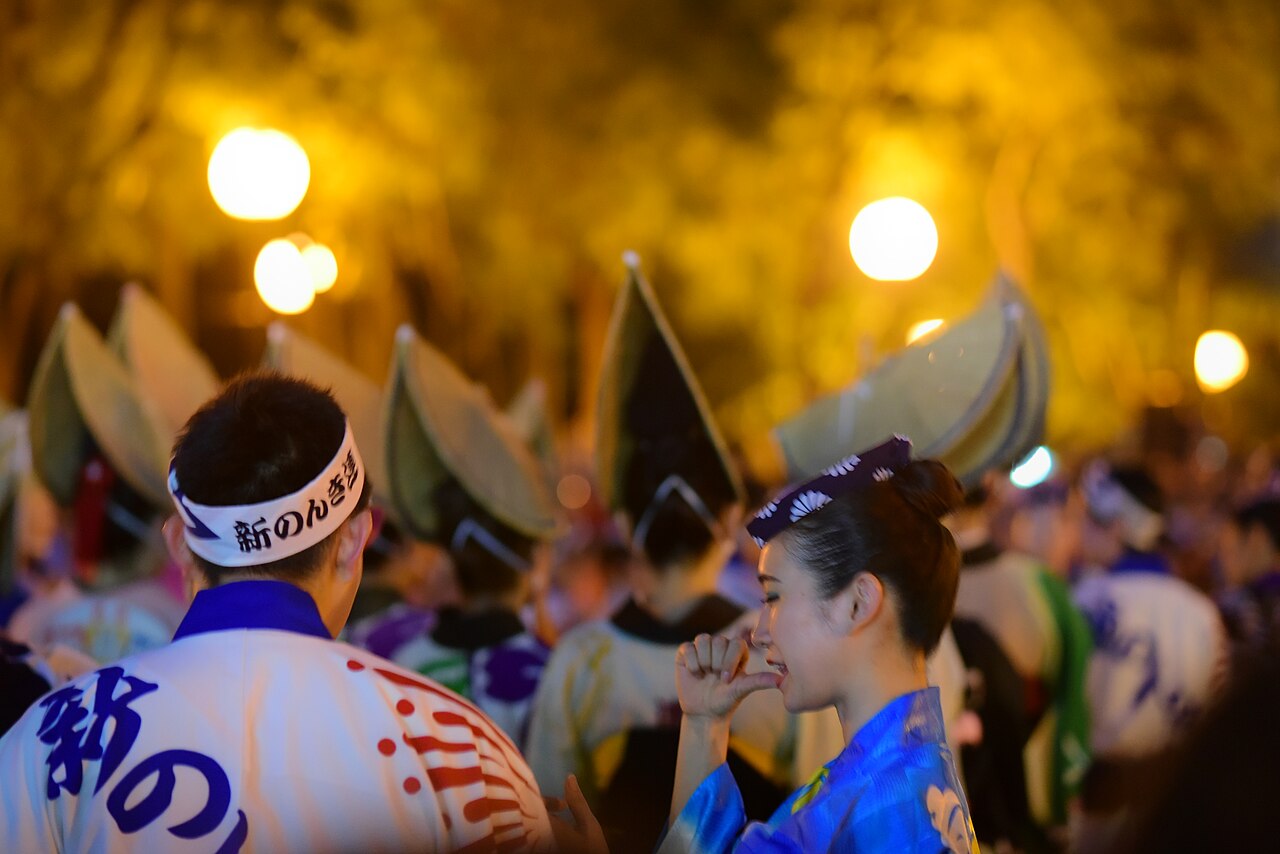
The same vivid folk-color sensibility that decorates the painted lids runs through Tokushima’s wider culture — most visibly in Awa Odori, the city’s enormous summer dance festival. Whether the motif is Mt. Bizan, a spray of flowers, or a festival scene, the lid is meant to read as celebration at a glance, which is why no two are quite alike.
That the object exists at all in 2026 is the continuity story. The custom had nearly vanished by the late twentieth century, kept alive mostly in memory and in a few surviving heirloom boxes. Since the 2000s, Tokushima woodworkers and revival projects have rebuilt it as a deliberate keepsake — the same sashimono joinery, the same painted lid, repurposed as a picnic and bento box for a generation that no longer climbs the spring hills.
📦 Shipping & where to buy from outside Japan
The specific listing covered here is sourced from the Amazon JP Global Store, which ships many household goods internationally to most major destinations. Based on listings, lacquered wooden boxes are generally accepted for international shipping (no batteries, liquids, or restricted materials), though availability can change. International shipping to the US or EU typically runs in the $15–$40 range depending on weight and destination, and orders above your country’s de-minimis threshold may incur customs duties or import VAT.
If the JP Global Store listing is out of stock or does not ship to your country, alternative paths include the maker’s own site (where one exists) and proxy-forwarding services such as Buyee or Tenso, which buy the item on your behalf from a Japanese retailer and re-ship it abroad. Etsy occasionally carries vintage or revival yusan-bako from independent Japanese sellers as well.
Price snapshot across stores
JPY (¥) is the authoritative price; USD figures are approximate estimates at a ¥150/USD baseline as of mid-2026. Listing data for this item was thin at the time of writing — verify live pricing before buying.
| Store | Item / Variant | Price (JPY + USD est.) | Notes |
|---|---|---|---|
| 🇺🇸 Amazon.com (US) | Browse Japanese lacquered bento & picnic boxes | varies (USD) | Best if you’re shopping from the US — Prime shipping, USD pricing, no international customs. Amazon US carries lacquered jūbako and bento boxes from various Japanese makers; the specific Awa yusan-bako ships from Japan (next row). |
| 🇯🇵 Amazon JP Global Store | Awa yusan-bako, three-tier, hand-painted lid (ASIN B0FJK68JRM) | Price unconfirmed — check listing | The sourced listing. Ships internationally from Japan. Live price was unavailable at time of writing. |
| Maker direct | Tokushima revival workshops | Varies | Some Tokushima makers sell direct; may not ship abroad without a proxy. |
| Proxy services (Buyee / Tenso) | Forwarding from JP retailers | Item price + fee + reship | Useful if the Global Store does not ship to your country; adds a service fee. |
What it does well
Weaknesses and things to verify before buying
- Thin listing data. Price, exact dimensions, weight, and wood species were unconfirmed at the time of writing. Verify everything on the live listing before ordering.
- Care requirements. Lacquered wood is hand-wash only — no dishwasher, microwave, prolonged soaking, or direct sun. Not a low-maintenance everyday container.
- Hand-painted variation. Because lids are individually painted, the piece you receive may differ in detail and color from the listing photo. This is inherent to the craft, not a defect.
- Price tier. Handcraft with joinery and lacquer costs more than a molded plastic or bamboo lunch box; budget shoppers will find it expensive.
- International shipping and duties. Cross-border shipping adds cost and time, and orders over your local threshold may attract customs charges. Confirm the Global Store ships to your country.
- Capacity. Yusan-bako are traditionally small — sized for a child’s hillside lunch. Confirm interior dimensions if you expect adult-meal volume.
Conclusion — which buyer type are you?
Other ways to approach this purchase
🏆 Editor’s Pick
❓ Frequently Asked Questions
What exactly is a yusan-bako?
It is a small three-tier lacquered wooden box that children in old Tokushima carried on a yusan — a leisurely spring excursion into the hills — around the old-calendar Hina-matsuri in early April. The tiers held rolled sushi, kanten jelly, and sweets.
Can I use it as an everyday lunch box?
You can use it for picnics and special occasions, but it is lacquered woodcraft: hand-wash only, no dishwasher or microwave, and keep it out of prolonged soaking and direct sun. Treat it like a fine wooden bowl rather than a plastic container.
Will the box look exactly like the photo?
Not necessarily. The lids are painted by hand, so motif details and colors vary from piece to piece. That variation is a feature of the craft, not a defect.
Does it ship outside Japan?
The Amazon JP Global Store ships many household goods internationally, and lacquered wooden boxes are generally eligible. Shipping to the US or EU typically runs about $15–$40, and orders above your local threshold may incur customs duties. If the Global Store does not reach your country, a proxy service like Buyee or Tenso can forward it.
How much does it cost?
Listing data for this specific item was thin at the time of writing, so we are not quoting a price. JPY is the authoritative figure; check the live Amazon JP Global Store listing for current pricing. Handcraft with joinery and lacquer sits well above molded plastic boxes.
Is it a good gift?
Yes — it travels well as a keepsake because of its clear regional story and the one-of-a-kind painted lid. It suits recipients who appreciate Japanese craft, Tokushima or Shikoku ties, or seasonal table objects, and who do not mind hand-washing.
How is it different from a standard jūbako?
A jūbako is the general family of stacked tiered boxes used for foods like New Year’s osechi. The yusan-bako is a specific Tokushima sub-tradition: smaller, child-sized, and defined by the hand-painted folk lid tied to the spring hillside-outing custom.
jpmono.com is curated by a Japan-based editorial team (working out of Toyama in the Hokuriku region and Nara in Kansai) and is independent. We do not take payment from the makers we feature; income comes from affiliate links. We do not physically test every product — we read maker specs and source listings.
🤖 This article was prepared with AI assistance and reviewed against the source listing and the site’s editorial standards. Craft and historical context is drawn from documented regional sources; product specifics are limited to verified listing data.
Affiliate disclosure: jpmono.com may earn a commission on qualifying purchases made through links on this page, at no additional cost to you.