![Tottori Hoki Hand-Forged Kiridashi Knife — Yasutsuna Blade Heritage [2026]](https://jpmono.com/wp-content/uploads/2026/05/japan-map-regions-and-prefectures-800x1050.png)
A kiridashi (切り出し, “cut-out knife”) is one of the simplest tools in the Japanese workshop: a single flat blade ground on one side only, set into a plain handle, used for marking joinery, sharpening pencils, paring bamboo, whittling, and a hundred small cutting jobs that a chisel or a kitchen knife handles badly. The piece covered here is a hand-forged carbon-steel kiridashi from Hoki (伯耆), the western half of present-day Tottori Prefecture on the Sea of Japan coast — a region whose blade tradition is among the oldest documented anywhere in Japan.
What makes Hoki notable is not marketing. It is the recorded homeland of the Heian-period swordsmith Yasutsuna (安綱) and the Ko-Hoki (“Old Hoki”) school — among the earliest signed Japanese swordsmiths known. Yasutsuna forged Dōjigiri (童子切), one of the Tenka-Goken (“Five Swords Under Heaven”) and today a designated National Treasure. The same iron-sand-and-tatara metallurgy that fed that swordsmithing lineage — drawn from the foothills of Mt. Daisen and smelted next door to the Izumo/Yasugi steel country of Shimane — is the deep background to a modern single-bevel craft knife.
This guide is written from a Japan-based editor’s desk for international buyers who cannot simply walk into a hardware store in Yonago. It covers what the Tottori Hōki kiridashi is and is not, how its single-bevel geometry behaves, where the craft comes from, and the practical considerations for buying one outside Japan.
🗓️ Published:
🔄 Updated:
⏱️ Read time: ~11 min
- Who this is for — and who should skip it
- Product overview (from published specs)
- Where to buy Tottori Hoki kiridashi
- What it does well
- Weaknesses and things to verify before buying
- Conclusion — which buyer type are you?
- Other ways to approach this purchase
- 📍 Where this comes from — place, era, and the craft tradition
- 📦 Shipping & where to buy from outside Japan
- ❓ Frequently Asked Questions
Who this is for — and who should skip it
- Do woodworking, joinery, or whittling and want a dedicated marking/paring blade
- Prefer hand-forged carbon steel and accept that it needs drying and oiling
- Want a single-bevel tool that cuts a clean, controllable shoulder line
- Value a regional craft lineage over a mass-produced utility knife
- Are right-handed (this bevel is ground for the right hand — see caveats)
- Want a no-maintenance stainless blade you can leave wet
- Are left-handed and don’t want to re-grind or special-order the bevel
- Expect a kitchen knife — a kiridashi is a workshop/craft tool, not for cooking
- Need a guaranteed live price and instant domestic shipping today
- Are uncomfortable maintaining and sharpening a high-carbon edge
Product overview (from published specs)
The table distinguishes established characteristics of Tottori Hōki hand-forged kiridashi from details that vary by maker. Values that cannot be confirmed are left open rather than guessed.
| Attribute | Detail | Source |
|---|---|---|
| Type | Kiridashi — single-bevel marking / craft / whittling knife | Product details |
| Blade steel | Hand-forged carbon steel (white or blue steel core, per maker tradition) | Maker context |
| Grind | Single bevel (kataba), right-hand orientation | Product details |
| Handle | Full-length oak (kashi), wrapping the tang | Product details |
| Origin | Hoki, western Tottori Prefecture (Chūgoku region) | Maker context |
| Blade length / weight | — | — |
| Store / source | What you get | Notes |
|---|---|---|
| 🇺🇸 Amazon US (search) | Browse Japanese kiridashi & craft knives | Primary path (moonill-20). Comparable hand-forged Japanese blades from multiple makers. |
| Maker direct | Bladesmith workshop | Often Japanese-only checkout; limited international shipping. |
| Proxy services (Buyee / Tenso) | Forwarding from JP-only sellers | Useful when a Japan-only shop will not ship abroad directly; adds a service fee. |
📖 Glossary — key terms
- Kiridashi (切り出し) — a flat single-bevel marking/craft knife used in woodworking and general workshop tasks.
- Kataba (片刃) — “single edge”; a blade ground on one face only, giving a flat reference side. The opposite is ryōba (両刃, double bevel), used on most kitchen knives.
- Satetsu (砂鉄) — iron-sand, the traditional raw ore of Japanese blade steel, collected from riverbeds and hillsides.
- Tatara (たたら) — the traditional clay smelting furnace that converts iron-sand into tamahagane steel over several days.
- Tamahagane (玉鋼) — the high-carbon “jewel steel” produced by the tatara, historically used for swords.
- Ko-Hoki (古伯耆) — the “Old Hoki” swordsmithing school of the Heian period, associated with Yasutsuna.
- Tenka-Goken (天下五剣) — the “Five Swords Under Heaven,” a traditional ranking of five legendary Japanese blades.
- Kashi (樫) — Japanese oak, a dense hardwood commonly used for tool handles.
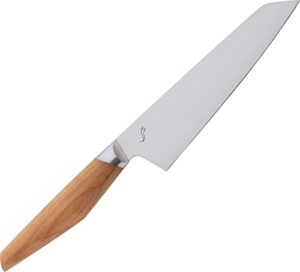
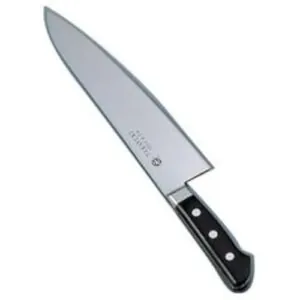
Other hand-forged blades and Chūgoku-region crafts covered on jpmono, for context and cross-shopping.
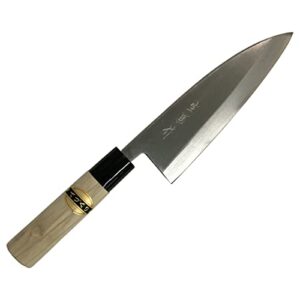
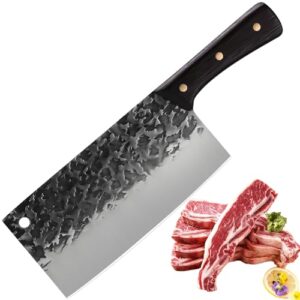
Where to buy Tottori Hoki kiridashi
Prices vary by maker and seller, and any currency conversion is approximate because exchange rates change.
| Store | Item / variant | Price | Notes |
|---|---|---|---|
| 🇺🇸 Amazon US (search) | Browse Japanese kiridashi & craft knives | varies (USD) | Best if you’re shopping from the US — Prime shipping, USD pricing, no international customs. Amazon US carries hand-forged Japanese craft knives from several makers for comparison; the exact Hoki piece is sourced from Japan (next row). |
| 🇯🇵 Amazon JP Global Store | Hoki hand-forged kiridashi | — | Ships internationally from Japan. |
| Maker direct | Bladesmith workshop | Varies | Where the smith sells directly; often Japanese-only checkout and limited overseas shipping. |
| Proxy services (Buyee / Tenso) | Forwarding from JP-only sellers | Item price + fee | Use when a domestic shop will not ship abroad directly; adds a handling/forwarding fee. |
What it does well
The flat reference face of a single bevel rides against a square or straightedge, scoring a clean, repeatable shoulder line for joinery.
Hand-forged carbon steel takes and holds a keen edge and is straightforward to resharpen on a whetstone — the trade-off is rust care.
A full-length oak (kashi) handle adds grip and control for paring and whittling, unlike the bare-spine “naked” kiridashi.
The blade comes from the same regional metallurgy that produced the Ko-Hoki swordsmiths — a verifiable craft heritage, not heritage marketing.
Weaknesses and things to verify before buying
- Right-hand bevel. The grind is oriented for right-handed use. Left-handed users would need a re-grind or a special-order left-hand version — confirm before ordering.
- Carbon steel rusts. It must be wiped dry and lightly oiled after use; it will patina and can corrode if left wet. This is not a leave-it-in-the-sink tool.
- Not a kitchen knife. A kiridashi is a workshop and craft blade for wood, bamboo, and marking — not designed for food preparation.
- Sharpening skill required. Maintaining a single-bevel carbon edge on a whetstone takes some practice; first-time sharpeners should expect a learning curve.
“The Hoki swordsmithing tradition predates the Kamakura shogunate itself — Yasutsuna was working iron-sand steel here before the age of the samurai sword had fully begun.”
Conclusion — which buyer type are you?
You value the documented Ko-Hoki lineage and hand-forging. Buy the sourced JP item directly and maintain it as a heritage tool.
You want a genuine working kiridashi for joinery and whittling. This fits — just budget for whetstone care.
Compare via the Amazon US search first; mass-produced kiridashi cost less if heritage isn’t the point for you.
You want a stainless, no-maintenance, left-handed, or kitchen blade. This is the wrong tool — look elsewhere.
Other ways to approach this purchase
A used carbon kiridashi can be re-ground and resharpened, but inspect for pitting and tang condition before buying secondhand.
If you would not maintain a carbon edge, a stainless utility knife serves the same marking tasks with far less upkeep.
📍 Where this comes from — place, era, and the craft tradition


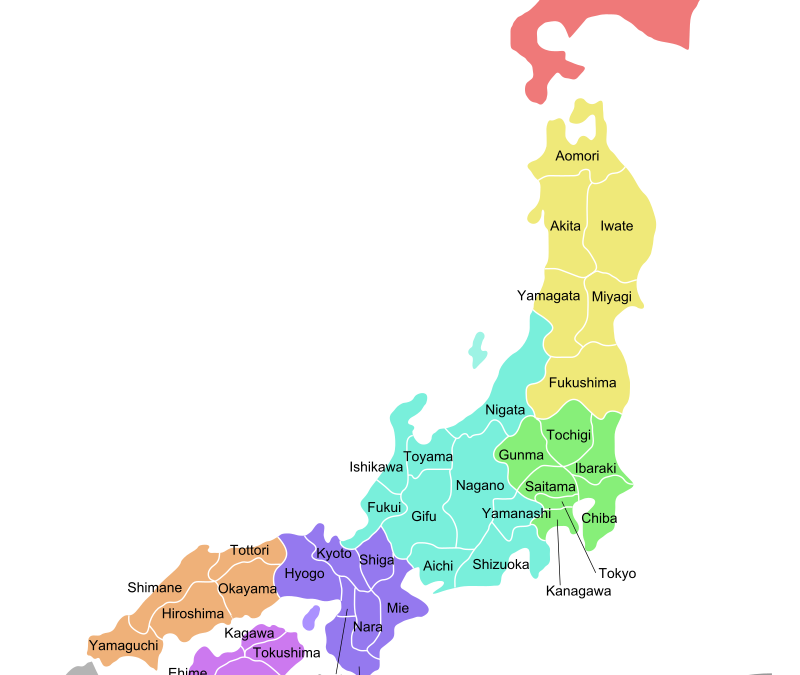
Tottori is Japan’s least-populous prefecture, a thin band of land pinned between the Sea of Japan to the north and the Chūgoku Mountains to the south. Historically it was two provinces: Inaba (因幡) in the east, around the modern city of Tottori, and Hoki (伯耆) in the west, around Yonago and the great volcanic cone of Mt. Daisen. It is the western half — Hoki — that matters for this blade.
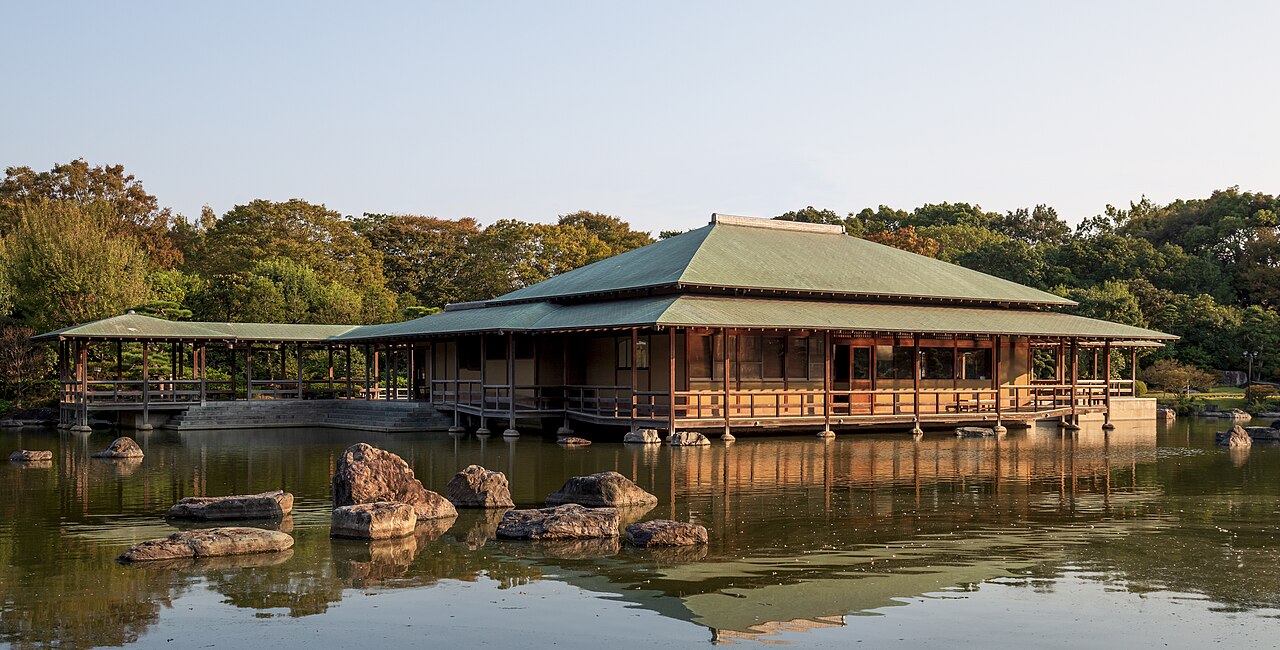
The region’s metallurgy was not an accident of fashion. The foothills of Mt. Daisen and the rivers running off the Chūgoku range carried abundant satetsu (砂鉄, iron-sand), and the surrounding forests supplied the charcoal to fire it. Smelted in tatara (たたら) clay furnaces, that iron-sand became the steel of an entire blade culture — the same Chūgoku tradition that, just over the border in Shimane, still produces the famous Izumo/Yasugi steel used by knife-makers across Japan today.
The historical anchor is Yasutsuna (安綱), a swordsmith active in Hoki during the Heian period (roughly the late 10th century). He is one of the earliest Japanese smiths to sign his blades, and the founder of what later scholars called the Ko-Hoki (“Old Hoki”) school. His most famous work, Dōjigiri Yasutsuna (童子切安綱) — “the demon-slayer,” named for a legend in which it cut down the ogre Shuten-dōji — is counted among the Tenka-Goken, the “Five Swords Under Heaven,” and is today a registered National Treasure of Japan.
- c. 980s — Yasutsuna forges signed blades in Hoki; the Ko-Hoki school takes shape during the Heian period.
- Heian–Kamakura — Dōjigiri Yasutsuna enters legend as a “demon-slayer” and is later ranked among the Tenka-Goken.
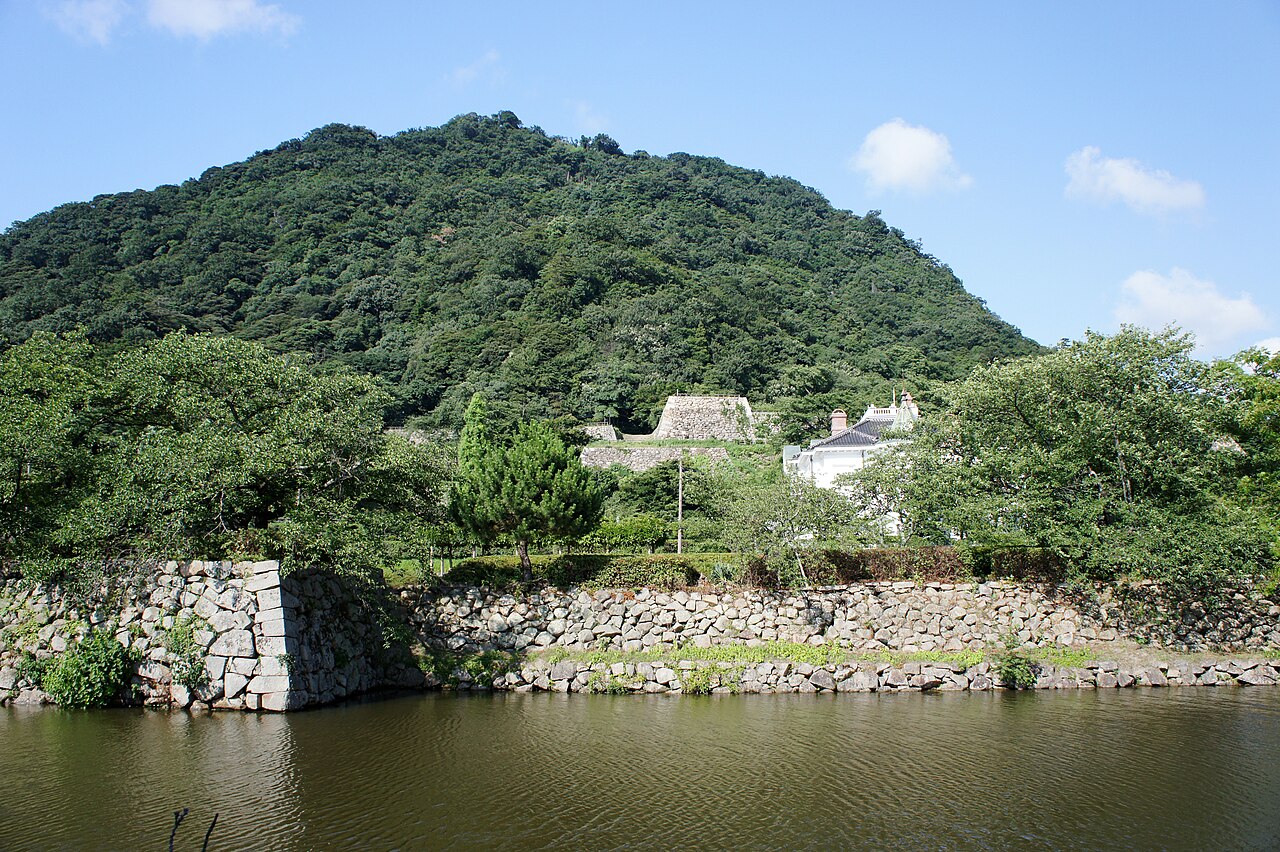
- Edo period — The Ikeda clan governs the Tottori domain from Tottori Castle; tatara iron-making continues across the Chūgoku range.
- Late 19th c. — After the sword ban, regional smiths turn from swords to everyday edged tools — knives, chisels, and kiridashi.
- 20th c. — Neighboring Yasugi (Shimane) becomes the center of Japanese tool-steel production, supplying makers nationwide.
- 2026 — Hand-forged kiridashi from the region carry the single-bevel forging lineage into the modern workshop.
When the wearing of swords was abolished in the Meiji era, blade-smiths across Japan redirected their craft toward everyday edged tools — kitchen knives, chisels, plane irons, and the humble kiridashi. The single-bevel forging knowledge did not disappear; it migrated from the battlefield blade to the workbench. A modern Hoki kiridashi is a direct, if modest, descendant of that shift: the same single-edged geometry and the same carbon-steel forging, scaled down to a tool a woodworker uses every day.
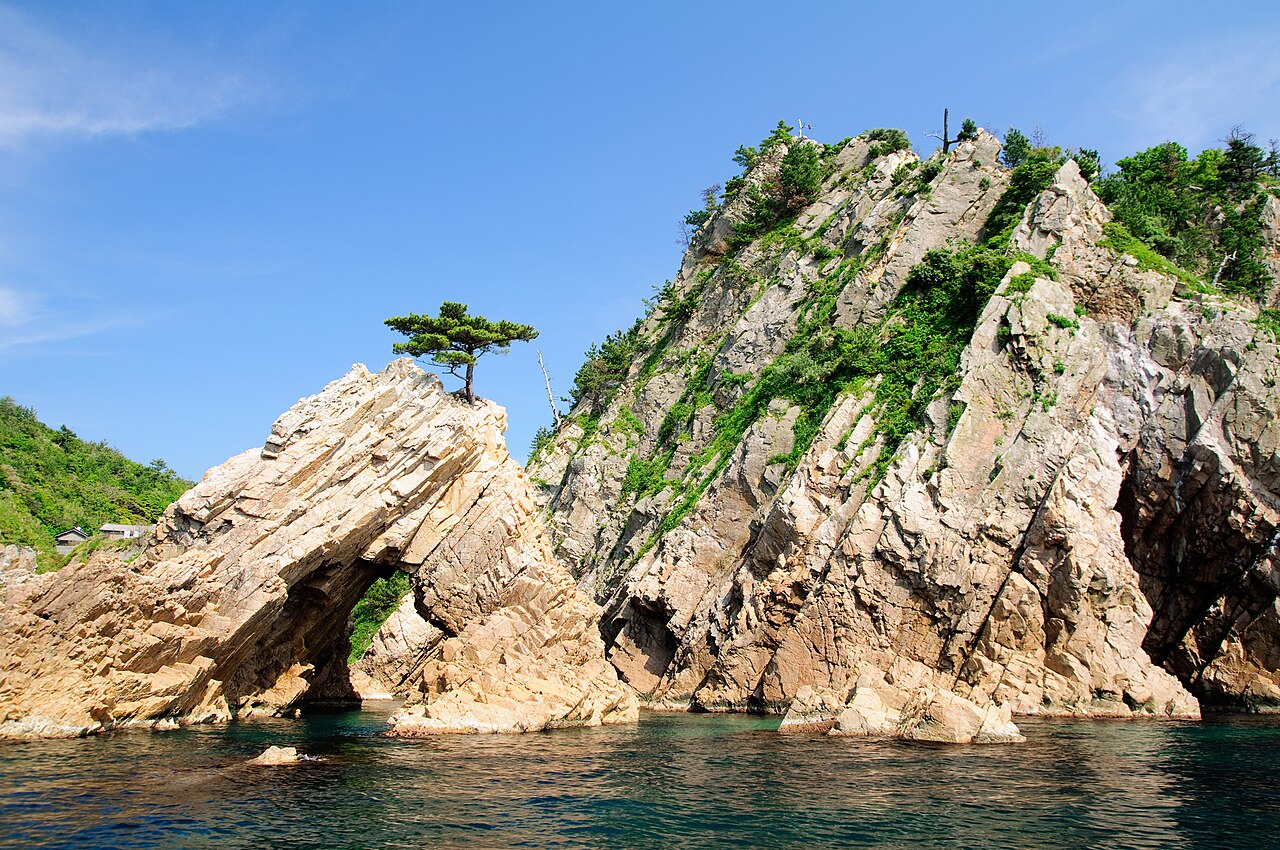
Hoki was never a busy capital. Its coast — the rugged inlets of the Uradome shore, the long sweep of the Tottori dunes — kept it somewhat isolated, and that isolation is part of why a distinct regional blade culture took root and held. The craft is local in the most literal sense: local iron-sand, local charcoal, local hands. That continuity, traceable back to one of the first smiths ever to sign his name to a Japanese blade, is what separates this tool from a generic utility knife on a hardware-store peg.
📦 Shipping & where to buy from outside Japan
Many Tottori-made blades are sold through small workshops that ship within Japan only. When an individual workshop does not ship abroad, a proxy or forwarding service such as Buyee or Tenso can receive the package in Japan and re-ship it to you for a fee. Orders above your local duty threshold may incur customs charges on arrival. Carbon-steel blades are generally shippable, but confirm your destination’s import rules for knives before ordering.
❓ Frequently Asked Questions
What is a kiridashi actually used for?
A kiridashi is a single-bevel marking and craft knife. Woodworkers use it to score joinery lines, pare and chamfer, sharpen pencils, split bamboo, and handle fine whittling. It is a workshop tool, not a kitchen knife.
Is this knife suitable for left-handed users?
No. The bevel is ground for right-handed use. Left-handed users would need a left-hand version or a professional re-grind, so confirm the orientation with the seller before ordering.
How do I care for the carbon-steel blade?
Carbon steel rusts if left wet. Wipe the blade dry after every use and apply a thin film of camellia or mineral oil for storage. It will develop a protective patina over time, which is normal and not damage.
Does Amazon JP ship this internationally?
Hand-forged kiridashi from Tottori are typically found through the Yasutsuna-affiliated workshops in Yonago and through specialty cutlery retailers; international availability varies by seller, with shipping costs and forwarding fees typically adding to the final landed price. When a seller does not ship abroad, a proxy service such as Buyee or Tenso can forward the order for a fee. Check your country’s import rules for knives before purchasing.
How is a kiridashi different from the kitchen knives on this site?
Most kitchen knives are double-bevel (ryōba) blades shaped for food. A kiridashi is single-bevel (kataba) and built for wood and marking work. The Sakai, Echizen, and Kaga knives covered elsewhere on jpmono are cooking tools; this is a craft tool.
Why does Hoki matter for a blade like this?
Hoki (western Tottori) is the recorded homeland of the Heian-period swordsmith Yasutsuna and the Ko-Hoki school — among the earliest signed Japanese smiths. The same iron-sand-and-tatara metallurgy underpins the region’s later everyday blade craft, including kiridashi.
What should I check before buying this kiridashi?
This article was prepared with AI assistance and reviewed against the available source data. Specifications, pricing, and availability should be confirmed at the retailer before purchase.
Affiliate disclosure: jpmono.com may earn a commission on qualifying purchases made through links on this page, at no additional cost to you.