![Tosa Cotton Tote Bag: Kochi’s Hand-Woven Tosa-men Carryall [2026]](https://jpmono.com/wp-content/uploads/2026/05/japan-map-regions-and-prefectures-800x1050.png)
A tote bag is one of those objects most people stop noticing the moment they own one. This one is worth a second look. The Tosa cotton tote — woven in Tosa-men (土佐木綿, “Tosa cotton”), the thick hand-loomed cloth that the old Tosa domain cultivated along the warm Shimanto and Niyodo river basins — is a daily-use carryall made from a textile that earned its reputation by surviving the most humid summers in Japan.
Kochi Prefecture, on the Pacific side of Shikoku, was once Tosa Province. Ruled from Kochi Castle by the Yamauchi lords after 1600, it pushed cotton and paper-mulberry as cash crops, and the cloth those farmers wove — breathable, sturdy, slow to wear out — became a regional staple rather than a luxury. A handful of Kochi weaving studios still work that cloth today, turning it into bags, cushion fabric, and indigo-dyed goods.
This guide is written for international readers deciding whether a hand-woven Japanese cotton tote is worth sourcing from abroad. We cover the textile and its place, practical buying paths, what the bag does well, what to verify before buying, and how it compares to other Shikoku and cotton-weaving crafts. Current availability and prices vary, so confirm details with the seller before buying.
🔄 Updated:
⏱️ Read time: ~9 min
Who this is for — and who should skip it
- Want a daily carryall in a real hand-woven cloth, not printed fast fashion
- Prefer natural, breathable cotton that softens and ages with use
- Like the idea of owning a textile tied to a specific place and history
- Are comfortable with the small irregularities of hand-loomed fabric
- Are buying a gift with a story attached, not just a logo
- Need a waterproof or heavily structured bag — this is soft cotton
- Want guaranteed exact dimensions and color (hand-woven stock varies)
- Expect Prime-style next-day delivery outside Japan
- Are price-sensitive and a printed canvas tote would do the job
- Dislike garments that need gentle, low-heat care
Product overview (from published specs)
The available data for Tosa cotton tote bags varies by piece. Where a value such as weight, exact dimensions, or current price is not confirmed in the data we have on hand, the table says so plainly rather than guessing.
| Attribute | Detail (per available data) |
|---|---|
| Item | Tosa cotton (Tosa-men) hand-woven tote / shoulder bag |
| Material | Hand-woven cotton; natural undyed or indigo-dyed (varies by source) |
| Origin | Kochi Prefecture (old Tosa Province), Shikoku, Japan |
| Dimensions / weight | — |
| Price | — |
| Source | What it provides |
|---|---|
| Amazon US (search), tag moonill-20 | Comparable Japanese hand-woven cotton bags for cross-shopping |
| Maker direct | Kochi weaving studios — stock and color confirmation; niche availability |
| Proxy services (Buyee / Tenso) | Forwarding when a studio source does not ship to your country directly |
📖 Glossary — key terms
- Tosa (土佐) — the old name for the province that is today Kochi Prefecture, on the Pacific coast of Shikoku.
- Tosa-men (土佐木綿, “Tosa cotton”) — thick, durable hand-woven cotton cloth historically cultivated and woven in Tosa, valued for breathability in the humid southern-Shikoku summer.
- Tosa-han (土佐藩) — the Tosa domain, the Edo-period feudal territory ruled by the Yamauchi clan from Kochi Castle.
- Aizome (藍染, “indigo dyeing”) — natural indigo dyeing; some Tosa-men goods are finished in indigo.
- Shokunin (職人) — a skilled craftsperson or artisan working a traditional trade such as hand-weaving.
Related Japanese craft guides on jpmono.com — neighboring Shikoku makers and other cotton-weaving traditions worth weighing against this tote.
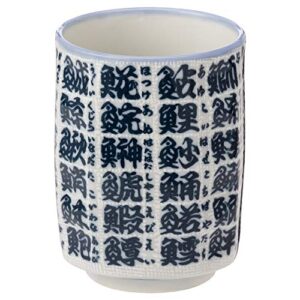 Kochi Tosa pottery
Odo-yaki Tosa sometsuke yunomi
Shikoku indigo textile
Buaisou Awa aizome tenugui
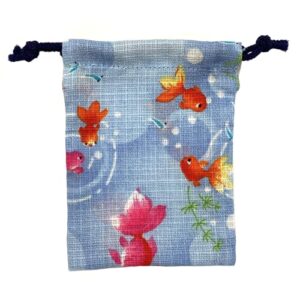 Hand-woven cotton pouch
Yanai-jima kingyo cotton pouch
Ehime woven craft
Iyo sudare bamboo reed blind
 Kagawa Marugame craft
Iono Marugame uchiwa linen tonbo
 Cotton weaving craft
Nabeshima dantsu cotton chair pad
 Enshu cotton textile
Hamamatsu chusen tenugui
Where this comes from

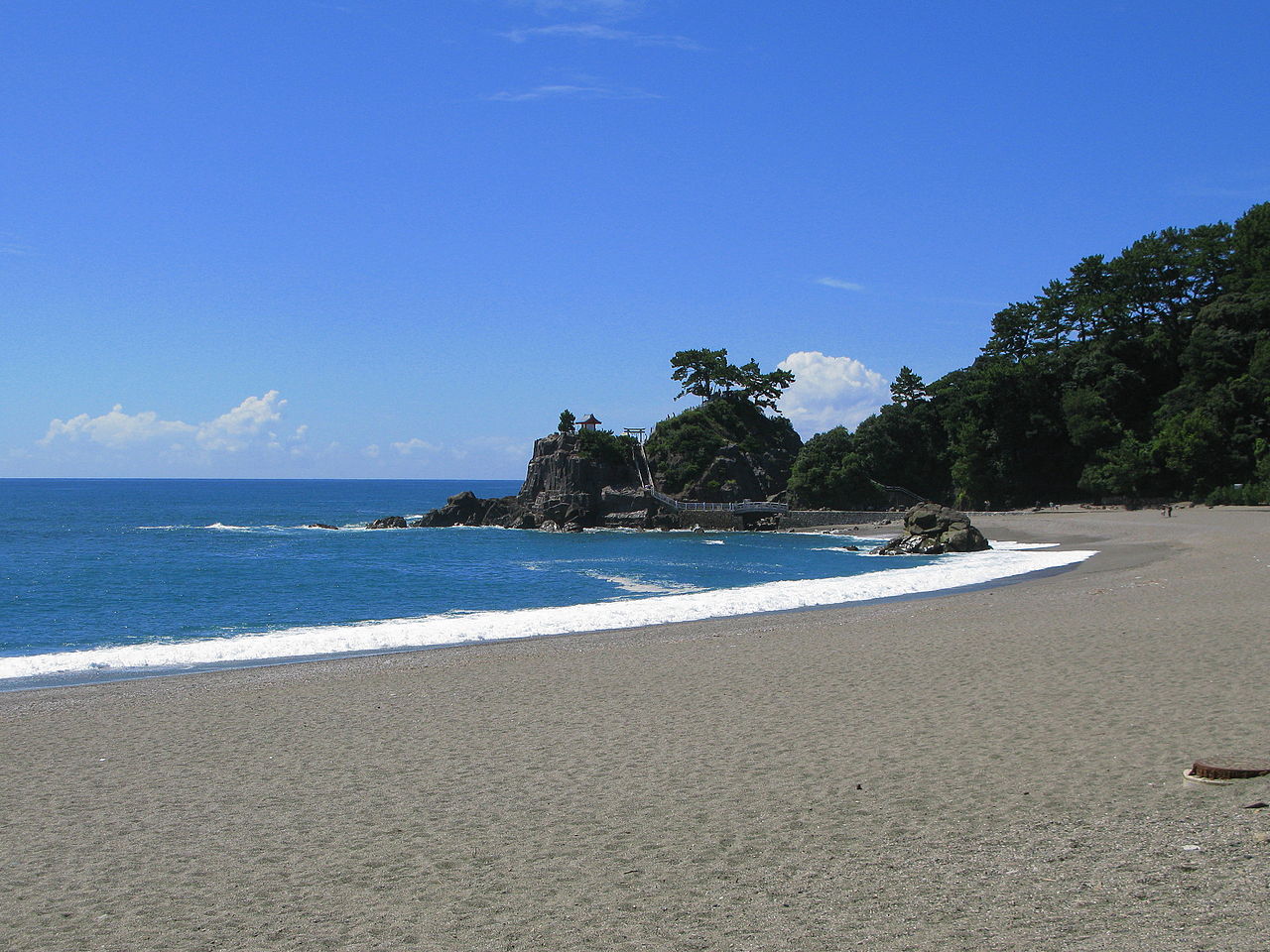
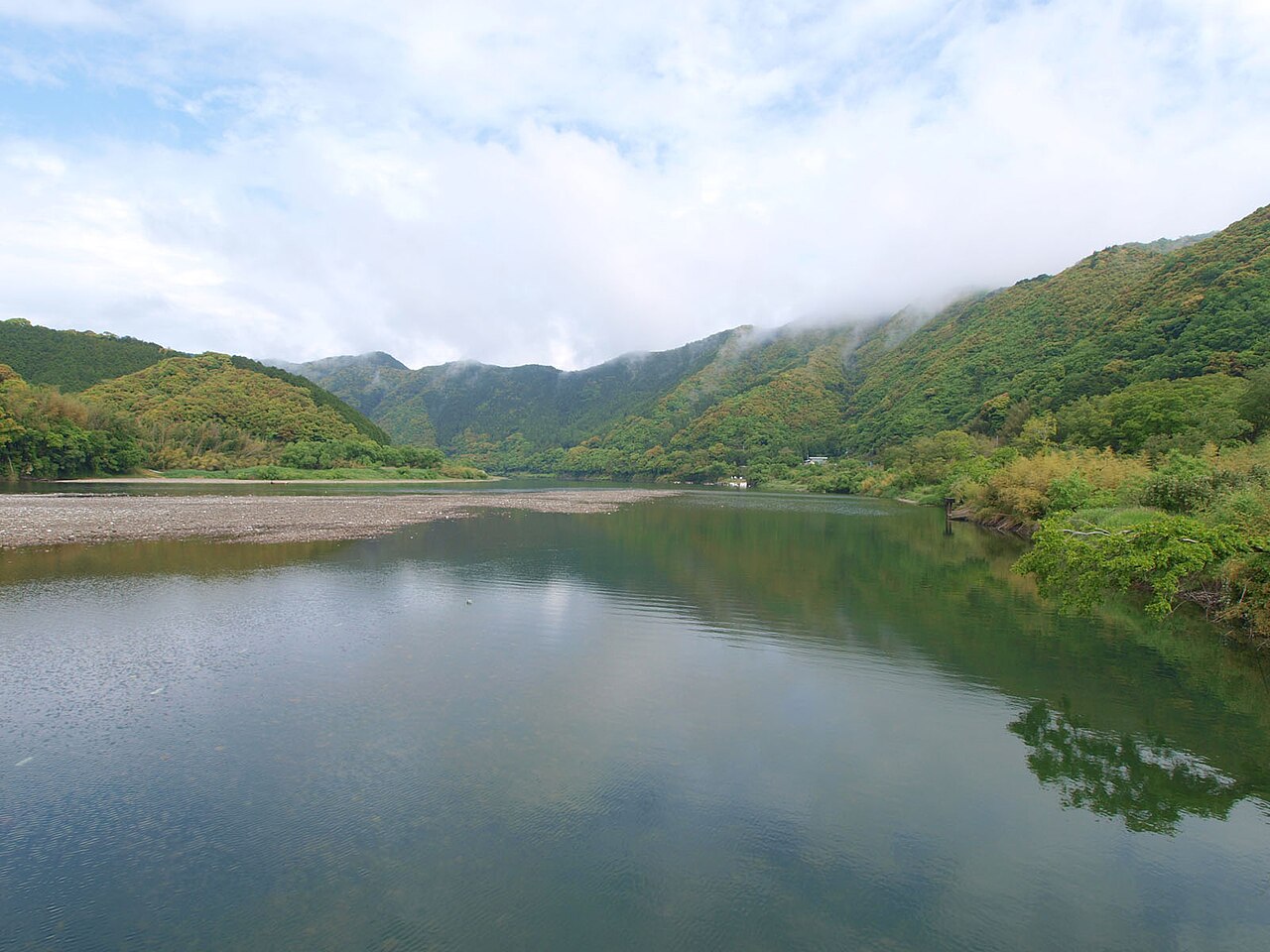
Kochi occupies the entire southern coast of Shikoku, the smallest of Japan’s four main islands. It is one of the country’s wettest and warmest prefectures: the Kuroshio current runs offshore, summers are long and humid, and the mountains that wall off the prefecture from the rest of Shikoku trap heavy rain. That climate is not incidental to the craft — it is the reason Tosa-men cloth exists in the form it does.
The province was historically known as Tosa, one of the four old provinces of Shikoku. Cut off from the inland by mountains and opened to the sea by its harbors, Tosa developed an outward-facing, maritime character that locals still invoke today.
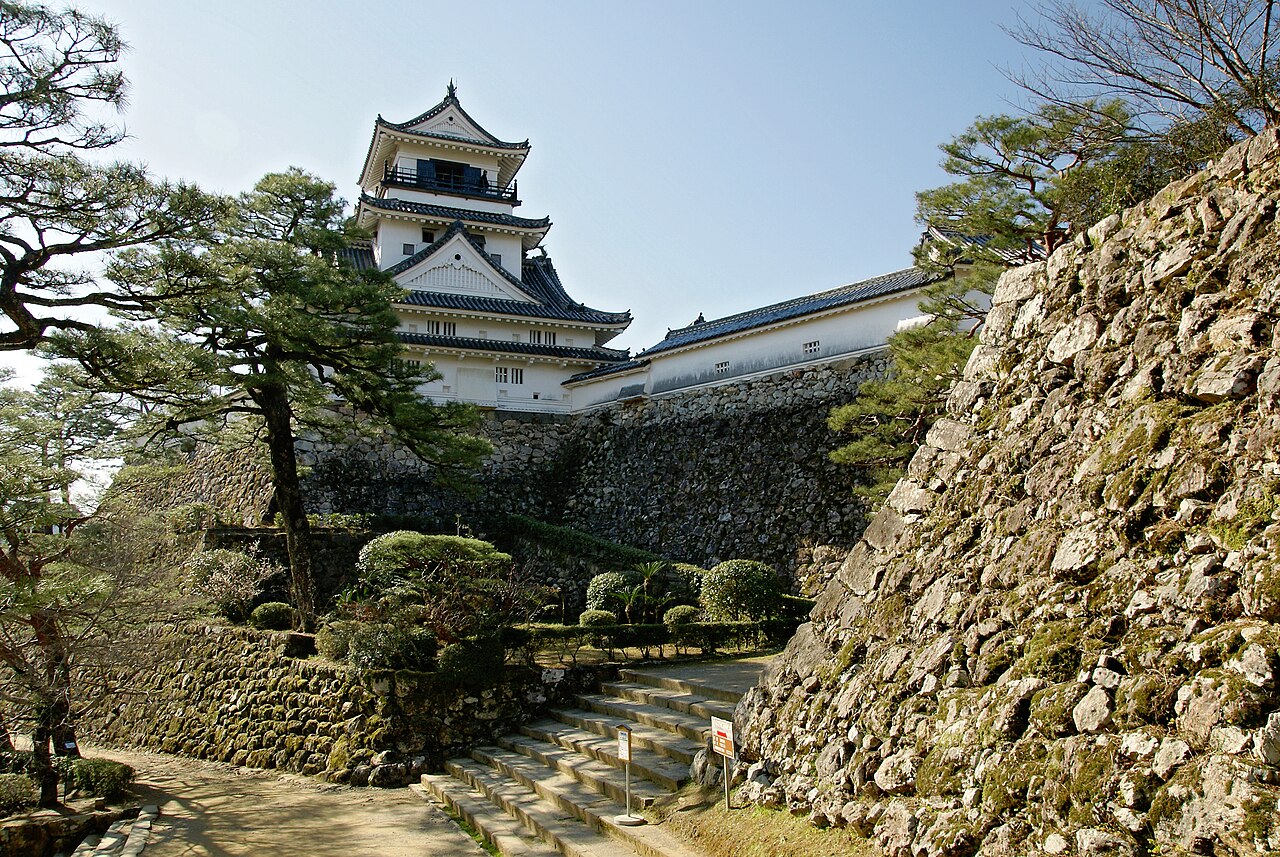
The political turning point came in 1600. After the Battle of Sekigahara, Yamauchi Kazutoyo was granted Tosa Province, and his clan would rule it from Kochi Castle through the entire Edo period. The Yamauchi administration treated agriculture as policy: to raise domain income, Tosa-han promoted cotton (Tosa-men) and paper-mulberry for washi as cash crops, encouraging farmers along the warm river basins to cultivate and weave them.
This is the key to the cloth. Tosa-men was never a court luxury or a temple treasure. It was a working textile — woven thick and durable so it would last through field labor and survive the humidity, and woven loose enough in the hand to breathe in the southern-Shikoku heat. Its value was practical, and that is precisely why it endured as a regional product rather than a one-generation fashion.
- 1600 — After the Battle of Sekigahara, Yamauchi Kazutoyo is granted Tosa Province.
- 1601 — Construction of Kochi Castle begins; the castle town is laid out.
- 17th–19th c. — Tosa-han promotes cotton (Tosa-men) and washi as domain cash crops along the Shimanto and Niyodo basins.
- 1729–1753 — Kochi Castle keep is rebuilt after fire; the surviving Edo-period structures date from this era.
- 1871 — The han system is abolished; Tosa becomes Kochi Prefecture.
- 20th c. — Mechanized textiles displace hand-weaving nationwide; a few Kochi studios keep working Tosa-men.
- 2026 — Surviving Kochi weaving studios still weave Tosa-men into totes, cloth, and indigo-dyed goods.
The continuity case here is more modest than for, say, the centuries-old foundries of Hokuriku, and it should be stated honestly. Tosa-men is not a single famous brand with an unbroken master-apprentice line; it is a regional cloth that survives through a small number of weaving studios in Kochi. Stock is niche, and a piece from a given studio may sell out and not return in the same form. That scarcity is part of why the cloth is worth seeking.
“Tosa-men was never a court luxury. It was woven thick to outlast field labor and loose enough to breathe through a Shikoku summer — value measured in years of use, not in display.”
It is worth distinguishing this cloth from its Shikoku neighbors, because they are often grouped together by outsiders. Awa aizome — the natural indigo of Tokushima, the next province east — is a dyeing tradition. Sanuki bota-ori, from Kagawa to the north, is a different woven cloth with its own raised texture. Tosa-men is a third thing: a Kochi cotton, made up here into a bag rather than a tenugui or a stole. Same island, different provinces, different crafts.
Buying options
Prices vary with the weave, size, and dyeing, so compare current offers rather than relying on a fixed figure. JPY (¥) is the reference currency; any USD figures are approximate estimates at a ¥150/USD baseline.
| Store | Item / Variant | Price (JPY + USD est.) | Notes |
|---|---|---|---|
| 🇺🇸 Amazon.com (US) | Browse Japanese hand-woven cotton bags | varies (USD) | Best if you are shopping from the US — Prime shipping, USD pricing, no international customs. Amazon US carries comparable Japanese cotton bags and pouches; this exact Tosa-men piece is sourced from Japan (next row). |
| 🇯🇵 Amazon JP Global Store | Tosa-men hand-woven tote | — | International shipping from Japan may be available; terms vary by destination. |
| Maker direct | Kochi weaving studio stock | Varies | Niche, small-batch availability; best path to confirm color and current stock. May not ship abroad directly. |
| Proxy services (Buyee / Tenso) | Forwarded JP purchase | Item price + forwarding fee | Useful when a studio source does not ship directly. Adds a service fee and a second shipping leg. |
Prices in USD are approximate and depend on the current exchange rate. The JPY price is the authoritative one for the specific listed item.
What it does well
Weaknesses and things to verify before buying
- Budget guidance is limited. Confirm the current purchase terms before ordering.
- Fit and capacity are unconfirmed. If you need a specific use, confirm the tote’s intended fit before buying.
- Hand-woven stock varies. Color, exact shade of indigo, and weave can differ piece to piece. If you expect a precise match to the photo, treat that as a risk.
- Niche availability. Tosa-men is made by a small number of studios; a source can become unavailable and may not return in the same form. Buy when you find it rather than assuming it will be there later.
- Soft, unstructured cotton. This is not a waterproof or rigid bag. It will not protect contents from rain or hold a fixed shape.
- Gentle care required. Natural cotton and indigo dye prefer cool water and low heat; aggressive washing or drying can shrink or fade the cloth.
- International shipping adds time and cost. Ordering via Amazon JP Global Store or a proxy means longer delivery and possible customs duties above your local threshold.
Conclusion — which buyer type are you?
Other ways to approach this purchase
❓ Frequently Asked Questions
What is Tosa-men cotton?
Tosa-men (土佐木綿) is a thick, durable hand-woven cotton cloth historically cultivated and woven in Tosa — today’s Kochi Prefecture on Shikoku. The Tosa domain promoted it as a cash crop, and it was prized for breathability in the humid southern-Shikoku summer.
Does it ship internationally?
Most Japanese craft retailers ship to major international destinations from Japan. If a maker-direct order does not ship to your country, a proxy service such as Buyee or Tenso can forward it. Expect customs duties above your local threshold.
How is it different from Awa indigo or Sanuki bota-ori?
They are different Shikoku crafts. Awa aizome is the natural indigo dyeing of Tokushima; Sanuki bota-ori is a textured woven cloth from Kagawa. Tosa-men is a Kochi cotton — here made up into a bag rather than a tenugui or stole. Same island, different provinces and traditions.
How should I care for it?
Treat it as natural cotton, and as indigo-dyed cloth if it is dyed: cool water, gentle washing, and low or no heat drying. Aggressive washing can shrink the cloth, and high heat can fade indigo. Follow the maker’s care guidance for the particular fabric.
Why does the price show as “not captured”?
We do not invent prices. Because amounts vary by weave, size, and finish, confirm the current price with the seller before ordering.
Is it a good gift?
Yes, for someone who values useful objects with provenance. It carries a specific place and history — Tosa cotton, the Yamauchi domain, the Shimanto basin — without being fragile or decorative-only. Confirm color and dimensions before gifting, since hand-woven stock varies.
jpmono.com is curated by a Japan-based editorial team (working out of Toyama in the Hokuriku region and Nara in Kansai) and is independent. We do not take payment from the makers we feature; income comes from affiliate links. We do not physically test every product — we read maker’s specifications and textile references.
This article was prepared with AI assistance and reviewed against the available craft notes. Facts about local history and the textile are drawn from the editorial brief; details described here are limited to confirmed characteristics.
Affiliate disclosure: jpmono.com may earn a commission on qualifying purchases made through links on this page, at no additional cost to you.