![Kunitomo Hand-Forged Gyuto Knife: Shiga’s Gunsmith Blade Legacy [2026]](https://jpmono.com/wp-content/uploads/2026/05/japan-map-regions-and-prefectures-800x1050.png)
A gyuto (牛刀, “beef sword”) is the Japanese take on the Western chef’s knife — a long, gently curved, double-bevel blade meant to do almost everything a home cook asks of one knife. The version covered here comes from Kunitomo (国友), a small district near Nagahama on the eastern shore of Lake Biwa in Shiga Prefecture. For most of the Edo period, Kunitomo was not known for kitchen tools at all. It was one of Japan’s two great matchlock-gun forges, rivaling Sakai, and its smiths bored gun barrels for warlords.
That lineage matters more than it sounds. Boring a straight, true gun barrel and laminating a hard cutting edge to a softer iron spine draw on the same discipline: control of heat, control of iron, and a tolerance for tedium. When firearms fell out of everyday use, that precision did not vanish — it migrated into edge tools and kitchen blades across the Omi region. A hand-forged Kunitomo gyuto is the late, domestic chapter of a story that began with weapons.
This guide is written for cooks and collectors deciding whether a regional, gunsmith-descended hand-forged gyuto is worth seeking out over a mainstream Sakai or Seki blade. We cover steel and geometry, who the knife suits and who should skip it, how to buy it from outside Japan, and where it sits among the other Japanese knives we have profiled. Note up front: published data on this knife lineage is thinner than for the major cutlery centres, so pricing and exact spec claims are kept deliberately cautious.
🔄 Updated: June 11, 2026
⏱️ Read time: ~10 min
- Who this is for — and who should skip it
- Product overview (from published specs)
- Buying options
- 📍 Where this comes from — place, era, and the craft tradition
- 📦 Shipping & where to buy from outside Japan
- What it does well
- Weaknesses and things to verify before buying
- Conclusion — which buyer type are you?
- Other ways to approach this purchase
- ❓ Frequently Asked Questions
Who this is for — and who should skip it
- Want one do-everything chef’s knife and cook a Western-leaning home menu
- Like the idea of a small-region, gunsmith-descended forge over a big-brand blade
- Are comfortable hand-washing and drying a knife immediately after use
- Appreciate hand-forged character — slight asymmetries, a visible hamon or kasumi finish
- Already own Japanese single-bevel knives and want a versatile double-bevel partner
- Want a no-maintenance knife you can leave wet or put in a dishwasher
- Need confirmed steel type, hardness, and handling before buying (published information is limited)
- Prefer a stain-proof stainless blade and dislike re-seasoning carbon steel
- Are shopping purely on lowest price — mainstream factory gyutos undercut hand-forged ones
- Want guaranteed local warranty service rather than cross-border returns
Product overview (from published specs)
The values below combine general knowledge of Omi hand-forged gyuto construction with the craft context for this article. Where a number cannot be confirmed, the cell reads “Unconfirmed” rather than offering a guess.
| Attribute | Kunitomo hand-forged gyuto | Source |
|---|---|---|
| Type | Gyuto (double-bevel chef’s knife) | Product title |
| Blade length | ~210 mm (commonly listed); confirm per variant | Craft recommendation |
| Steel | Carbon steel or VG10 (varies by variant — verify before buying) | Recommendation hint |
| Bevel | Double bevel (Western-style, ambidextrous) | Type convention |
| Handle | Unconfirmed — wa (Japanese) or yo (Western) varies by variant | — |
| Weight / hardness (HRC) | — | — |
| Origin | Kunitomo / Nagahama, Shiga Prefecture (Omi region) | Maker heritage |
Specific steel type and hardness can vary by maker, so treat the general figures above as a guide and confirm the details with the seller before purchasing.
📖 Glossary — key terms
- Gyuto (牛刀) — literally “beef sword”; the Japanese chef’s knife, a long double-bevel all-rounder for meat, fish, and vegetables.
- Kunitomo (国友) — a district near Nagahama in Shiga; from 1543 one of Japan’s two leading matchlock-gun forges.
- Teppō (鉄砲) — the matchlock firearm; barrel-boring and fine iron-forging were Kunitomo’s core skills.
- Omi (近江) — the old province name for the Lake Biwa region, now Shiga Prefecture.
- Hamon (刃文) — the visible temper line along a differentially hardened blade.
- Kasumi — a hazy, two-tone finish where soft iron meets hard steel on a laminated blade.
- Wa-handle / Yo-handle — a Japanese (often octagonal, lighter) handle versus a Western riveted handle.
Other Japanese kitchen blades we have profiled — useful for comparing region, steel, and blade type before you commit.
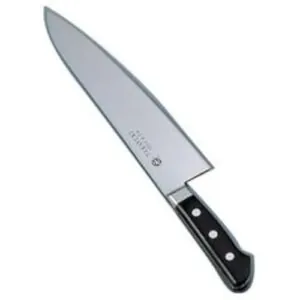 Sakai gyuto
The other great gun-forge city’s chef’s knife
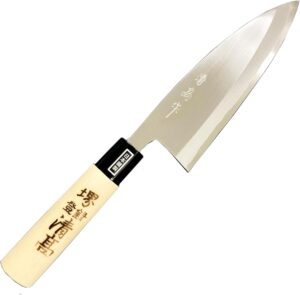 Sakai deba
Single-bevel fish-breaking knife
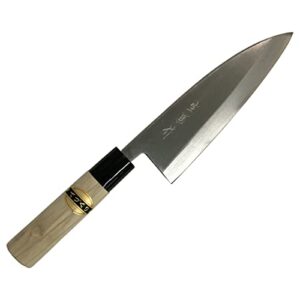 Echizen santoku
Hokuriku hand-forged all-rounder
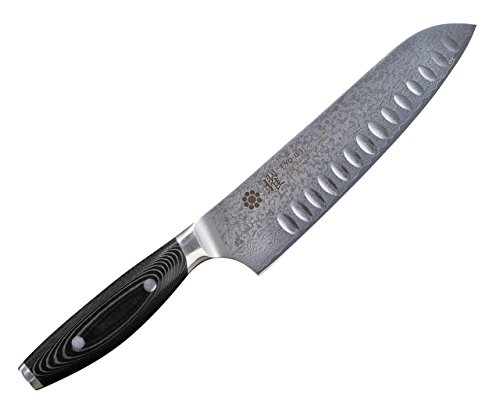 Seki Damascus santoku
Stainless VG10 factory alternative
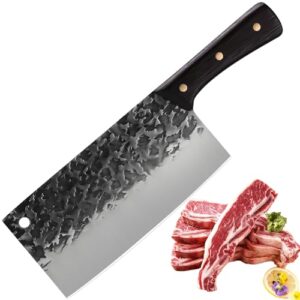 Kaga nakiri
Hand-forged vegetable knife
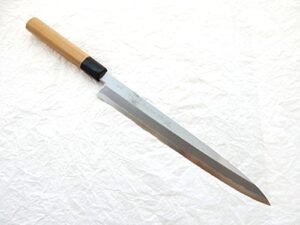 Tsukiji yanagiba
Single-bevel sashimi slicer
Suo sujihiki
Slim double-bevel slicer
Buying options
Prices for individual gyuto vary with steel, grind, handle, and finishing work. USD figures are approximate and depend on the current exchange rate (¥150/USD baseline as of mid-2026); use the current JPY amount quoted by the seller as the reference.
| Store | Item / Variant | Price (JPY + USD est.) | Notes |
|---|---|---|---|
| 🇺🇸 Amazon.com (US) | Browse Japanese chef’s knives (gyuto) | varies (USD) | Best if you are shopping from the US — Prime shipping, USD pricing, no international customs. Amazon US carries hand-forged Japanese gyutos from Shun, Tojiro, Yoshihiro and others, useful for comparing geometry and steel. The exact Kunitomo piece is sourced from Japan (next row). |
| 🇯🇵 Amazon JP Global Store | Kunitomo hand-forged gyuto | — | International shipping from Japan may be available; terms vary by destination. |
| Maker direct | Omi / Nagahama smith workshops | varies | Some Shiga blade workshops sell direct or through regional craft galleries; usually Japanese-language only and rarely ship abroad. |
| Proxy services (Buyee / Tenso) | Japan-based forwarding option | item + forwarding fee | A fallback when a seller will not ship internationally; adds a handling fee plus repackaged forwarding. |
📍 Where this comes from — place, era, and the craft tradition

Kunitomo is a small district near the city of Nagahama, on the eastern shore of Lake Biwa — Japan’s largest freshwater lake — in what is today Shiga Prefecture and was historically the province of Omi (近江). The position is strategic: Omi sits on the corridor between Kyoto and the eastern provinces, and Lake Biwa’s water, the surrounding iron-sand sources, and the highways that crossed the region made it a natural place for metalworking and trade to concentrate. Nagahama itself grew as a castle town under Toyotomi Hideyoshi in the late 1500s.
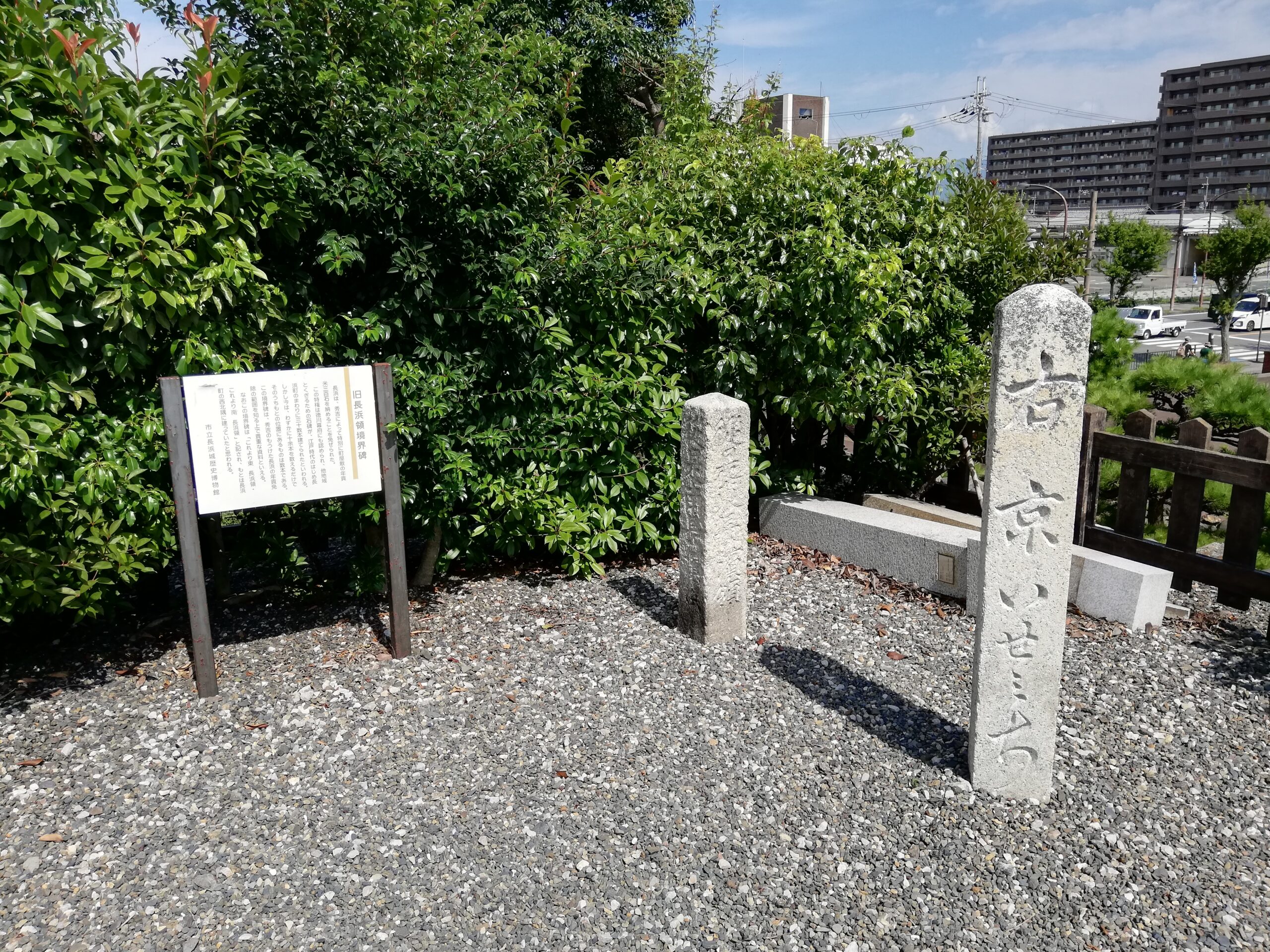
The district’s place in Japanese history was sealed in 1543, when Portuguese traders introduced the matchlock firearm at Tanegashima, an island off the southern tip of Kyushu. The new weapon spread north with extraordinary speed, and Kunitomo became one of the two leading centers of teppō (鉄砲) production — the other being Sakai, near Osaka. Within a generation, Kunitomo’s gunsmiths were turning out matchlocks in volume, and the techniques the work demanded — straightening and boring iron barrels, hammer-welding hard and soft iron, finishing to fine tolerances — became the district’s specialty.
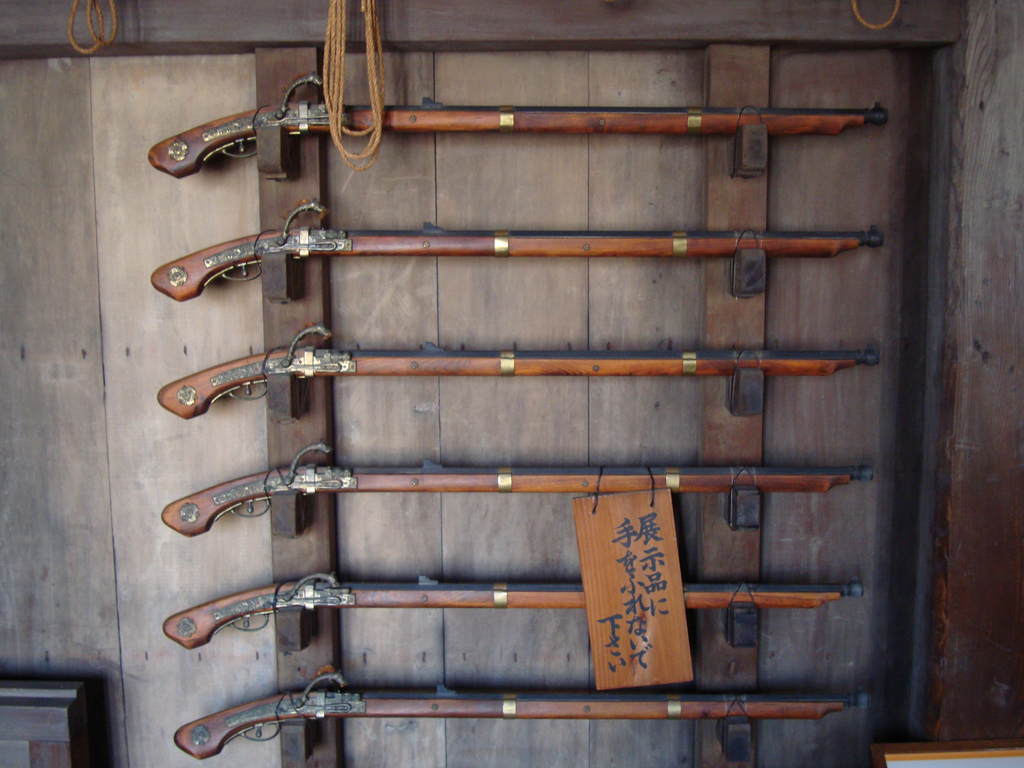
Powerful patrons sustained the forges. Oda Nobunaga, whose decisive use of massed matchlocks at the Battle of Nagashino in 1575 reshaped Japanese warfare, drew on this kind of production, and Kunitomo’s smiths worked under his influence. After the Tokugawa peace settled, the Ii clan — lords of nearby Hikone Castle — continued to patronize the district’s gunsmiths, keeping the skills alive long after large-scale warfare ended.
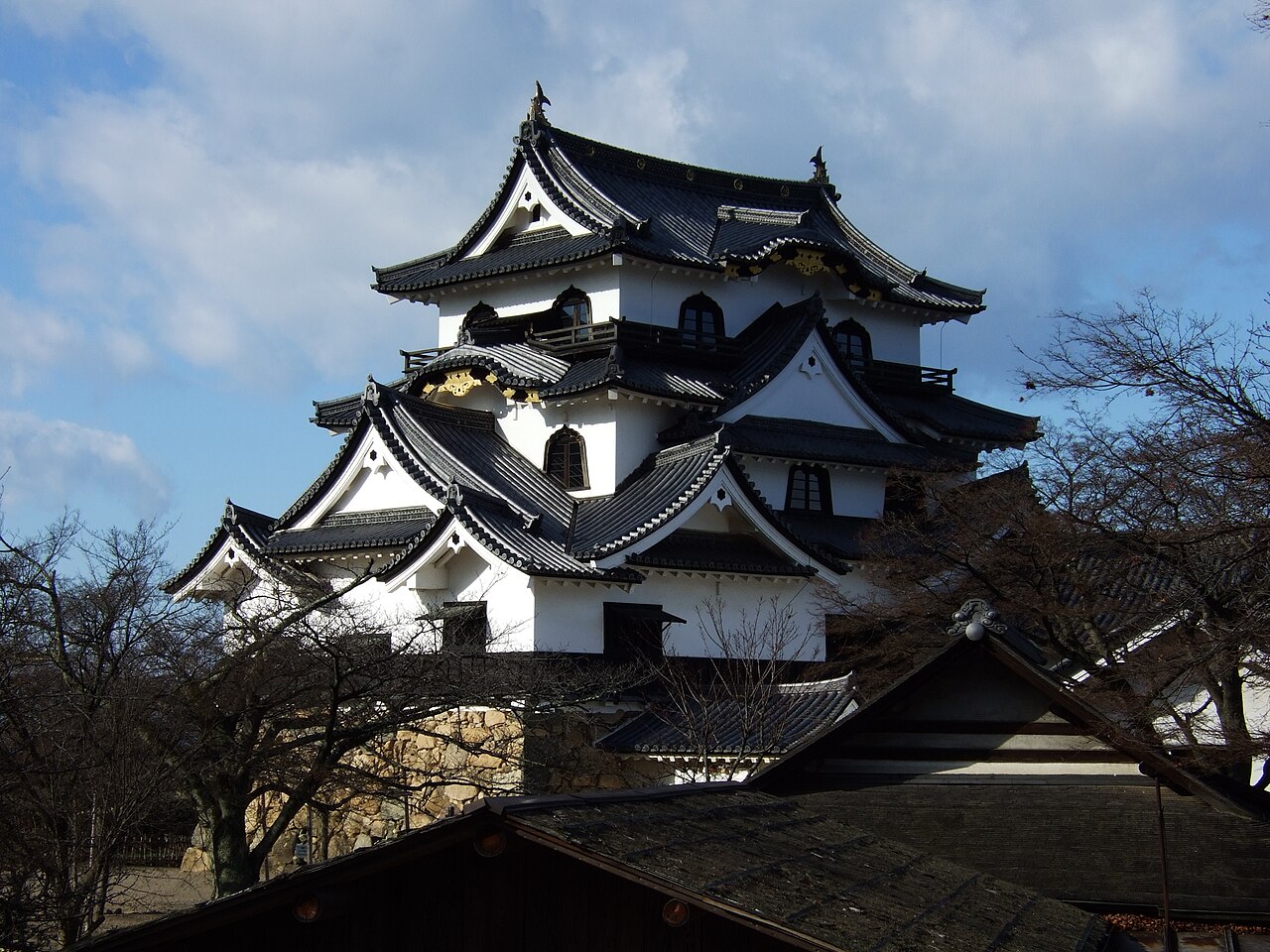
- 1543 — Firearms reach Japan at Tanegashima; the matchlock spreads rapidly.
- c. 1544 — Kunitomo near Nagahama begins matchlock production, rivaling Sakai.
- 1575 — Battle of Nagashino: massed matchlock fire transforms Japanese warfare.
- Late 1500s — Oda Nobunaga’s campaigns drive demand; Kunitomo smiths work under his influence.
- 1600s — The Ii lords of Hikone Castle patronize the district’s gunsmiths through the Edo peace.
- 1876 — Meiji-era sword and firearm reforms push iron-forging skills toward edge tools.
- 20th c. — Precision iron-forging feeds edge-tool and kitchen-blade craft across the Omi region.
- 2026 — Hand-forged gyutos are still produced in the gunsmith tradition’s lineage.
When firearms were no longer everyday tools — through the long Edo peace and then the firearm and sword reforms of the Meiji era after 1876 — the question for any forging district was what to make instead. The answer in many former weapon towns, Kunitomo and Sakai alike, was edge tools and kitchen knives. The skills transferred almost directly: a laminated kitchen blade, with a hard steel cutting edge forge-welded to a softer iron body, is built on the same logic as a composite gun barrel.
“The same control of heat and iron that bored a true gun barrel now sets a true cutting edge — the weapon left, the discipline stayed.”
Demand for cutting tools never left the region, because the food culture around Lake Biwa kept needing them. Omi cuisine is built on the lake’s freshwater fish — funazushi (鮒寿司, fermented crucian carp), ayu (sweetfish), and tiny ko-ayu cooked down in soy and sugar — alongside the rice and vegetables of a fertile basin. A cuisine that breaks down small fish and trims vegetables by hand is a cuisine that keeps blacksmiths in work.
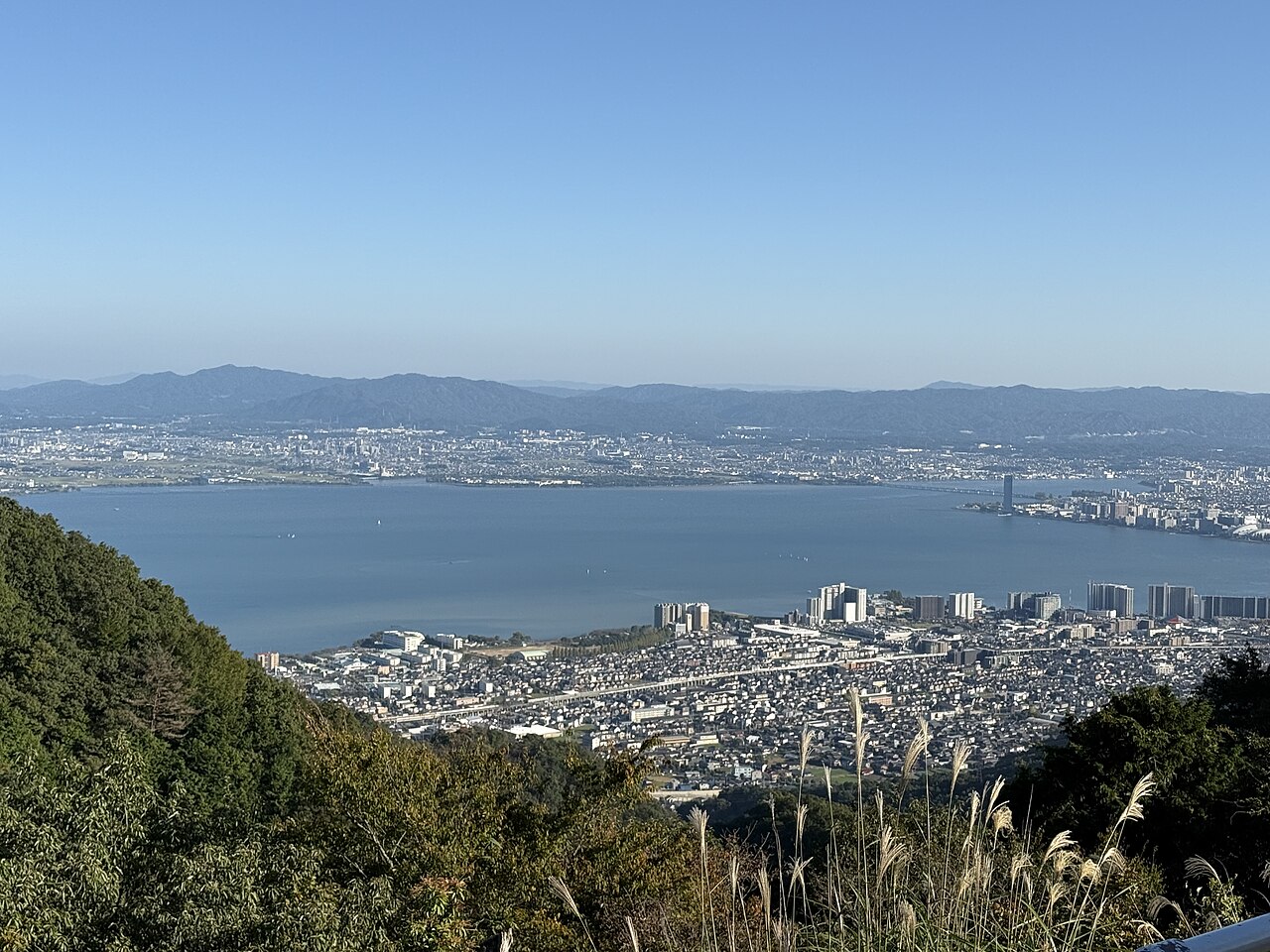
What “still being made here” means for a Kunitomo gyuto is more modest than for, say, Sakai’s vast knife industry: this is a small-region blade, descended from a gunsmith heritage rather than a continuous mass kitchen-knife trade. That is part of its appeal and part of its risk. The heritage is real and documented; the supply is narrow, often limited to one workshop at a time. Treat availability as something to confirm rather than assume.
📦 Shipping & where to buy from outside Japan
Japanese kitchen-knife retailers often ship internationally, although some carriers and countries apply restrictions on blades. Confirm that your destination is served before ordering and allow for any customs requirements.
- Amazon JP Global Store: the most direct path for this exact item; international shipping is typically estimated at roughly $15–$40 to the US and EU, higher to other regions, and is calculated at checkout.
- Amazon US (search): easier if you would rather buy a comparable hand-forged Japanese gyuto domestically with Prime shipping and USD pricing, without cross-border customs.
- Proxy services (Buyee / Tenso): a fallback if a particular seller will not ship to your country — they forward from a Japanese address for an added handling fee.
- Customs: orders above your local de minimis threshold may incur duties and import tax on arrival; budget for this on higher-priced blades.
This is a non-electrical product, so there is no voltage concern. As with all carbon-steel kitchen knives, it is hand-wash only — Japanese dishwasher-safe labeling, where present, should not be assumed to apply to a hand-forged carbon blade.
What it does well
Weaknesses and things to verify before buying
- Published information is limited. Confirm the steel type, hardness, and handling before ordering. General figures in this guide should not replace product-specific confirmation.
- Carbon-steel maintenance. If the blade is carbon steel rather than VG10, it will patina and can rust if left wet. It must be hand-washed and dried immediately, and re-oiled for storage.
- Steel varies by variant. The original recommendation mentions “carbon or VG10,” which behave very differently. Confirm the steel you choose so your care routine matches.
- Narrow supply. Small-region hand-forged blades are often produced in limited runs; availability can change, and replacements may not be identical.
- No confirmed warranty path abroad. Cross-border purchases complicate returns and service. Check the seller’s international return policy before buying.
- Price relative to factory knives. Hand-forged regional blades usually cost more than mass-produced gyutos of comparable sharpness; if value-per-dollar is your priority, a Seki or Sakai factory knife may suit better.
Conclusion — which buyer type are you?
Other ways to approach this purchase
❓ Frequently Asked Questions
What is a gyuto, and how is it different from a santoku?
A gyuto is the Japanese chef’s knife — longer (commonly 210–240 mm) with a curved tip for rocking cuts. A santoku is shorter and flatter, better for straight up-and-down chopping. The gyuto is the more versatile all-rounder for Western-style cooking.
Does Amazon JP ship this knife internationally?
The Amazon JP Global Store ships many kitchen items abroad, and the price and availability of international shipping are calculated at checkout. Some destinations restrict blades, so confirm your country is served before ordering. Proxy services like Buyee or Tenso are a fallback.
Is the blade carbon steel or stainless?
Some gyuto use carbon steel, which takes a keen edge but can patina or rust if left wet; others use VG10, a stainless steel that is more forgiving. Confirm the steel type with the maker or seller so your care routine matches.
How do I care for a hand-forged carbon-steel gyuto?
Hand-wash only, dry immediately, and never leave it wet or in a dishwasher. A carbon blade should be wiped after cutting acidic foods and lightly oiled for storage. A developing patina is normal and helps protect the steel.
Why does this knife come from a former gun-forging town?
Kunitomo near Nagahama was one of Japan’s two great matchlock forges after firearms arrived in 1543. When guns left everyday use, the precise iron-forging and barrel-boring skills migrated into edge tools and kitchen blades across the Omi region — the same discipline, a different product.
How does it compare to a Sakai gyuto?
Sakai is Japan’s largest knife-making city and the other historic gun-forging center, with deep stock and many makers. A Kunitomo gyuto is a smaller-region blade with a narrower supply but the same gunsmith heritage. See our Sakai gyuto guide for the larger-industry alternative.
Is the price shown reliable?
Prices for Kunitomo-line gyuto vary with steel, handle, and finish, so compare current offers rather than relying on a fixed figure. USD figures are approximate at a ¥150/USD baseline.
jpmono.com is curated by a Japan-based editorial team (working out of Toyama in the Hokuriku region and Nara in Kansai) and is independent. We don’t take payment from the makers we feature; income comes from affiliate links. Read more about our editorial standards.
Note: This article was prepared with AI assistance and reviewed against the available craft background. Specs, prices, and availability can change and should be verified with the maker or retailer before purchase.
Affiliate disclosure: jpmono.com may earn a commission on qualifying purchases made through links on this page, at no additional cost to you.