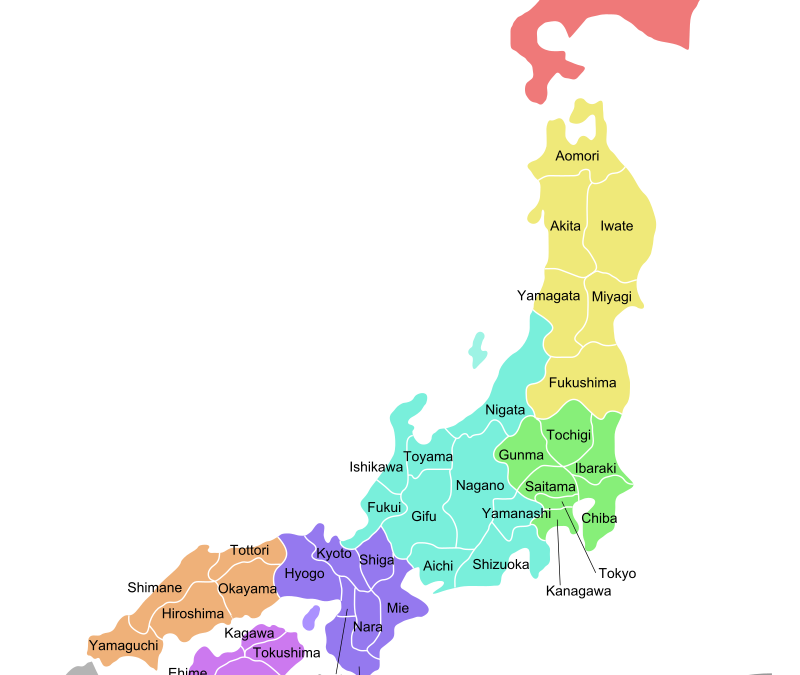
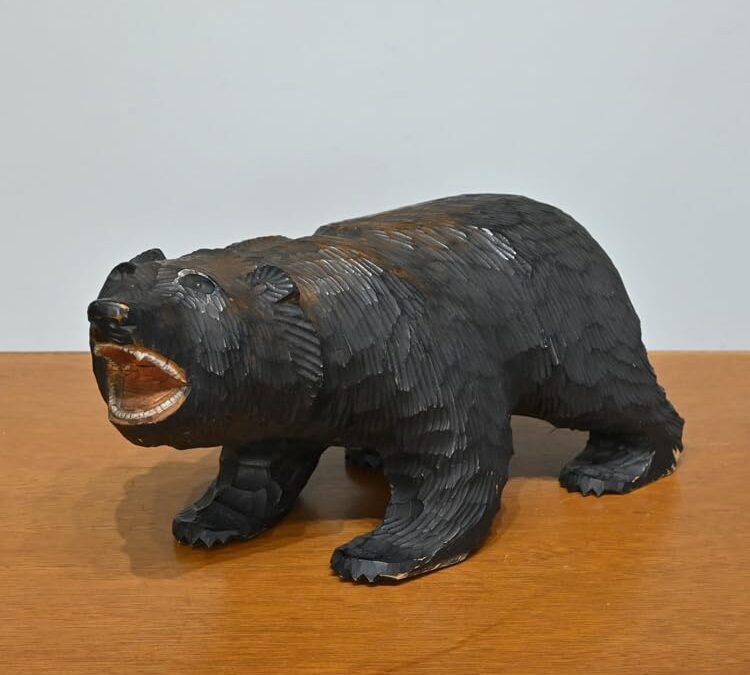
![Nagasaki Hizen Hand-Forged Ajikiri Knife: Where to Buy [2026]](https://jpmono.com/wp-content/uploads/2026/05/japan-map-regions-and-prefectures-800x1050.png)
An ajikiri (鯵切, “horse-mackerel cutter”) is one of the smallest knives in a Japanese kitchen — a compact single-bevel blade, usually 105 to 120 mm, shaped for breaking down aji, sardines, and other small fish that a full-size deba would overwhelm. A hand-forged carbon-steel version in the Hizen smithing lineage of Nagasaki and northern Kyūshū may be finished with a traditional ho (朴, magnolia) wooden handle.
What makes a small fishing-port blade like this interesting to an international reader is the place behind it. Nagasaki was Japan’s only legal window to the outside world during the sakoku (鎖国, “closed country”) centuries, and it remains one of the country’s top fishing prefectures, landing horse mackerel in record numbers at ports such as Matsuura. A knife built specifically for small fish is not a marketing flourish here — it matches the catch.
This guide is written for cooks and collectors shopping from outside Japan. It covers the craft, who the knife suits and who should skip it, comparisons with other Japanese blades we have profiled, where to look across stores, and the honest caveats — including the fact that Nagasaki carries no METI-designated knife brand, so the form is framed as a Hizen-lineage fishing-port edge tool rather than a protected craft.
Updated:
Read time: ~9 min
- Who this is for — and who should skip it
- Product overview (from published specs)
- Where this comes from — place, era, and the craft tradition
- Price information
- What it does well
- Weaknesses and things to verify before buying
- Conclusion — which buyer type are you?
- Other ways to approach this purchase
- ❓ Frequently Asked Questions
Who this is for — and who should skip it
- Break down small whole fish — aji, sardines, mackerel — and want a blade scaled to them
- Already understand single-bevel geometry and right-hand-biased grinds
- Are comfortable maintaining carbon steel (drying, oiling, patina)
- Value a regional, small-workshop edge tool over a mass-market brand
- Want a second, specialized knife alongside a santoku or gyuto
- Want one do-everything knife — an ajikiri is a specialist, not an all-rounder
- Are left-handed (most single-bevel stock is ground for right hands)
- Will not dry the blade after every use — carbon steel rusts if neglected
- Need a dishwasher-safe, stainless, low-maintenance tool
- Require a METI-certified or named-brand pedigree for the purchase
Product overview (from published specs)
Specifications for Hizen-tradition ajikiri knives vary between smiths. The range below describes category-level characteristics; dimensions, steel, maker, and availability should be treated as variables rather than universal standards.
| Attribute | Detail | Source |
|---|---|---|
| Type | Ajikiri — compact single-bevel small-fish knife (small deba family) | Spec |
| Blade length | 105–120 mm (category range) | Spec |
| Steel | Carbon steel, hand-forged | Spec |
| Edge | Single-bevel (kataba), right-hand grind unless stated otherwise | Spec |
| Handle | Magnolia (ho) wood, traditional wa-handle | Spec |
| Tradition / origin | Hizen smithing lineage, Nagasaki / Kyūshū | Spec (editorial frame) |
| Price | — | — |
Ajikiri are small single-bevel carbon-steel blades, but the smith, handedness, steel grade, and dimensions vary. Confirm those details with the seller before buying.
📖 Glossary — key terms (tap to open)
- Ajikiri (鯵切) — literally “horse-mackerel cutter”; a small single-bevel knife for breaking down aji and other small fish.
- Deba (出刃) — a thicker single-bevel fish-and-poultry knife; the ajikiri is essentially a miniature deba.
- Kataba (片刃) — a single-bevel edge, ground on one face only; produces clean, precise cuts but is handedness-specific.
- Ho (朴) — Japanese magnolia wood, the standard lightweight handle material for wa-handled knives.
- Hizen (肥前) — the old province covering today’s Saga and Nagasaki; home to the Tadayoshi sword school under the Nabeshima clan.
- Haitōrei (廃刀令) — the 1876 edict banning the wearing of swords, which pushed many sword smiths into making cutlery and edge tools.
- Shippoku (卓袱) — Nagasaki’s Sino-Japanese banquet cuisine, a legacy of the Chinese settlement, served at a shared round table.
Where this comes from — place, era, and the craft tradition

Nagasaki sits at the far western edge of the Japanese archipelago, on the island of Kyūshū, its city wrapped around one of the country’s deepest and most sheltered natural harbors. The prefecture is almost all coastline and islands — more than 970 of them — which is why it has long been, and remains, one of Japan’s leading fishing regions. Cool offshore currents and a long ria coast keep its ports landing small pelagic fish in volume, horse mackerel (aji) above all.
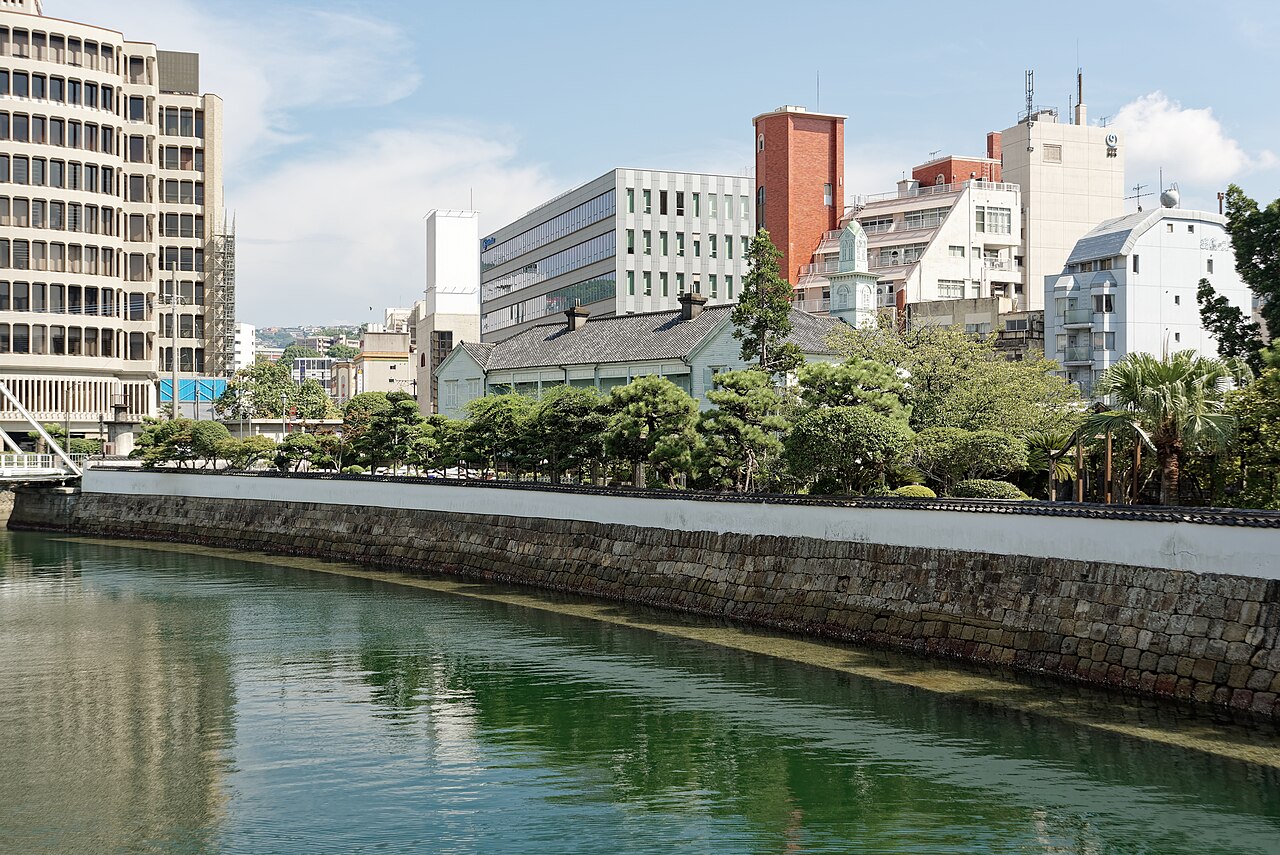
For more than two centuries, this harbor was the single legal opening in an otherwise closed country. From 1641, the Dutch East India Company was confined to the fan-shaped artificial island of Dejima, and a separate Chinese settlement — the Tōjin-yashiki — concentrated Fujian and Zhejiang merchants nearby. Through these two narrow channels flowed nearly all of Japan’s foreign trade, knowledge, and tastes. Nagasaki became, by necessity, the most cosmopolitan food city in the country.
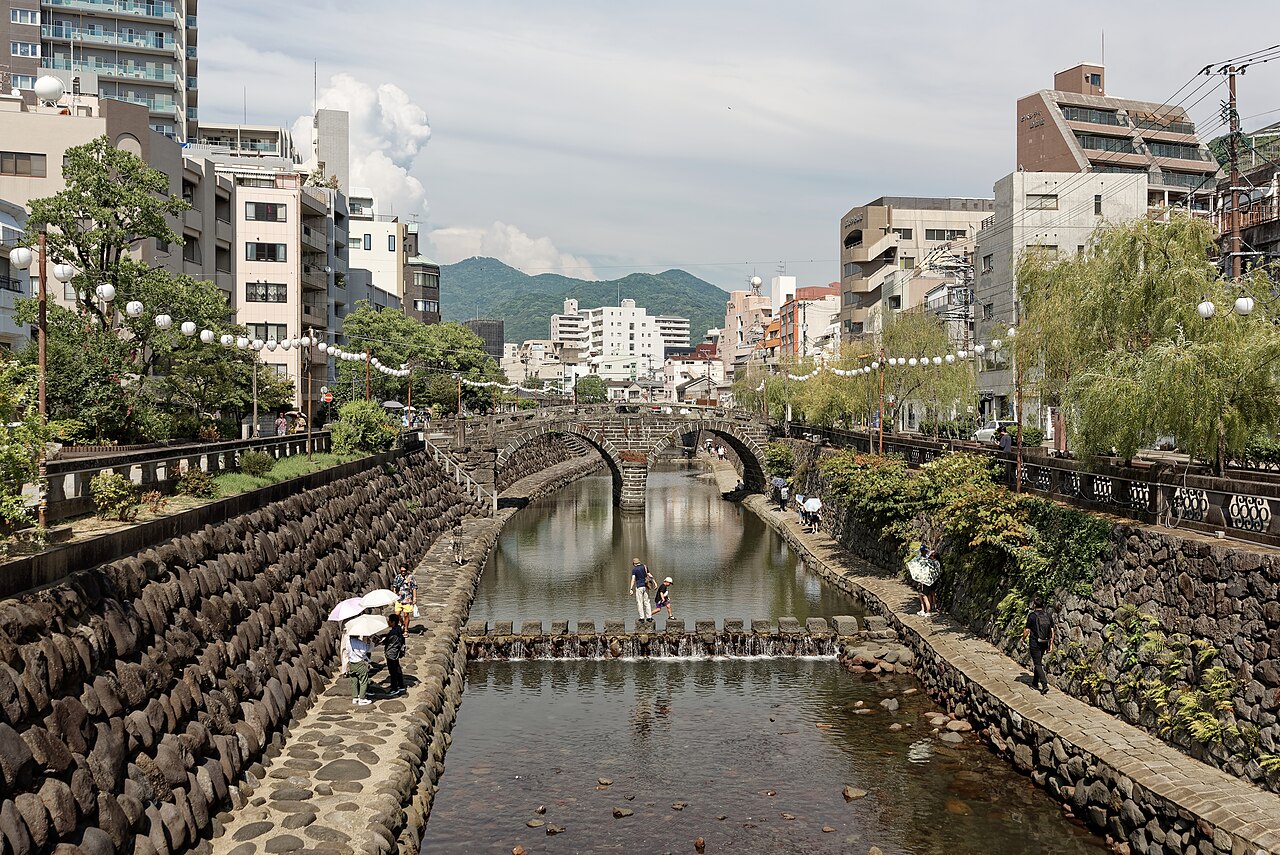
That cross-cultural prosperity left visible marks. The double-arched Megane-bashi (眼鏡橋, “spectacles bridge”) was built in 1634 by a monk of the Chinese settlement, and the city’s Ōbaku Zen temples were endowed by the same merchant community. A port economy this busy — provisioning ships, feeding settlements, supplying temple kitchens — needed steel: knives, tools, and ship fittings. Edge-tool smithing followed the trade.
- 1571 — The port of Nagasaki opens to Portuguese trade, founding the city as a maritime gateway.
- early 1600s — The Hizen Tadayoshi sword school flourishes under the Nabeshima clan in old Hizen province (today’s Saga and Nagasaki).
- 1634 — Megane-bashi built by a Chinese monk; Sofuku-ji and other Ōbaku temples endowed by Fujian merchants.
- 1636 — Dejima is constructed; under sakoku, foreign trade is funneled through this single island.
- 1641 — The Dutch East India Company is moved to Dejima, making Nagasaki Japan’s sole Western window for two centuries.
- 1876 — The haitōrei sword ban pushes regional smiths from blades toward kitchen cutlery and edge tools.
- 2020s — Nagasaki consistently ranks at or near the top of Japan’s horse-mackerel landings, at ports such as Matsuura.
The province name on a Hizen-marked ajikiri — Hizen — points to one of Japan’s most respected sword traditions. The Hizen Tadayoshi school, working under the Nabeshima clan, was famous for its tightly grained konuka-hada steel. Old Hizen spanned both today’s Saga and Nagasaki, and beyond the Nabeshima smiths, Nagasaki’s own Ōmura and Hirado-Matsura domains kept their own forges. When the 1876 haitōrei outlawed the wearing of swords, that accumulated forging skill did not vanish — it migrated into cutlery and farm-and-fishing edge tools. A carbon-steel ajikiri sits squarely in that lineage.
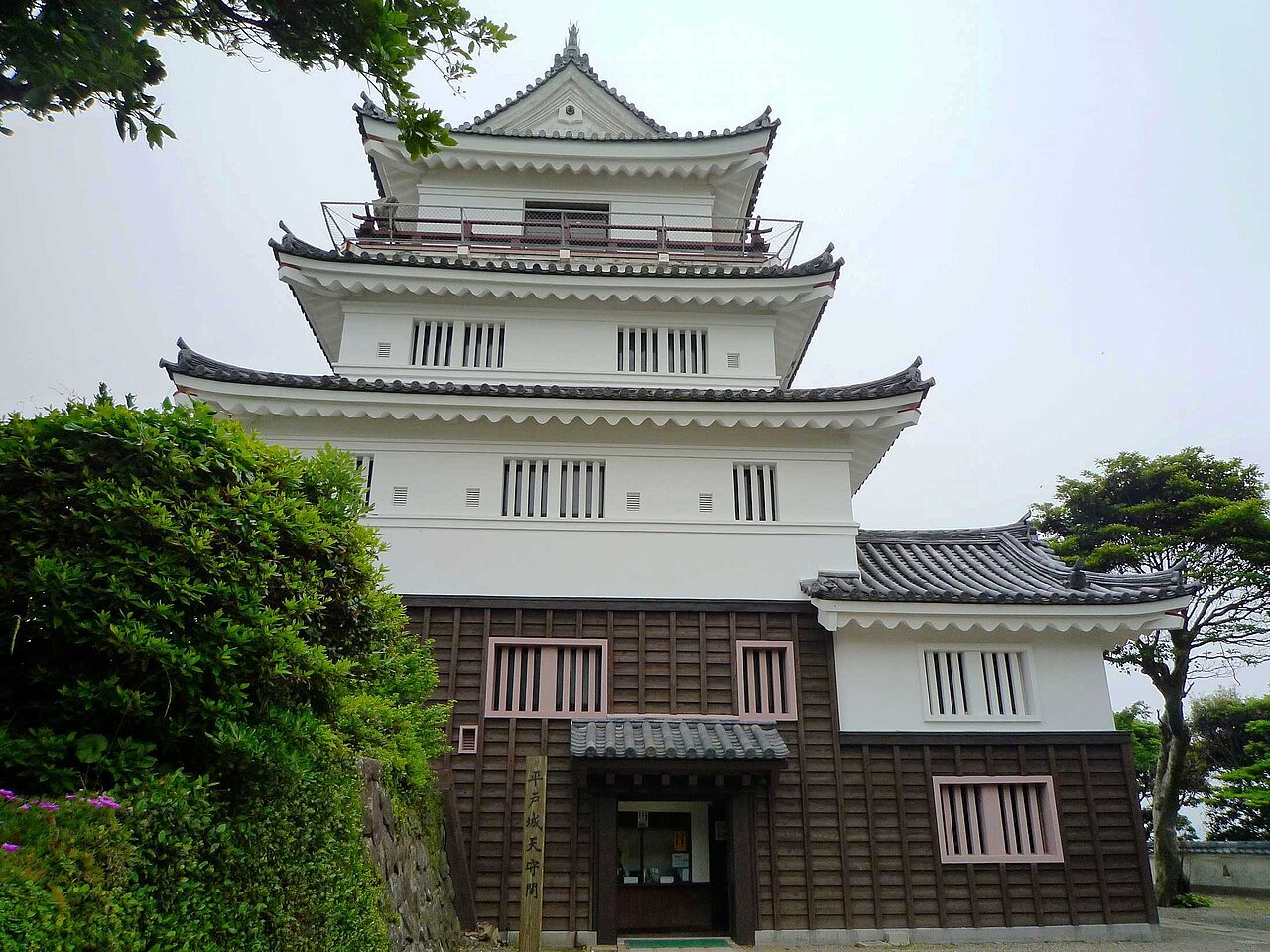
The fishing economy is the other half of the story. Domains like Hirado-Matsura built their wealth on both trade and the catch, and the prefecture’s ports still land aji in quantities that lead the nation. A knife sized and ground specifically for horse mackerel is, in this context, a working tool that matches a working coastline — not a curiosity invented for tourists.
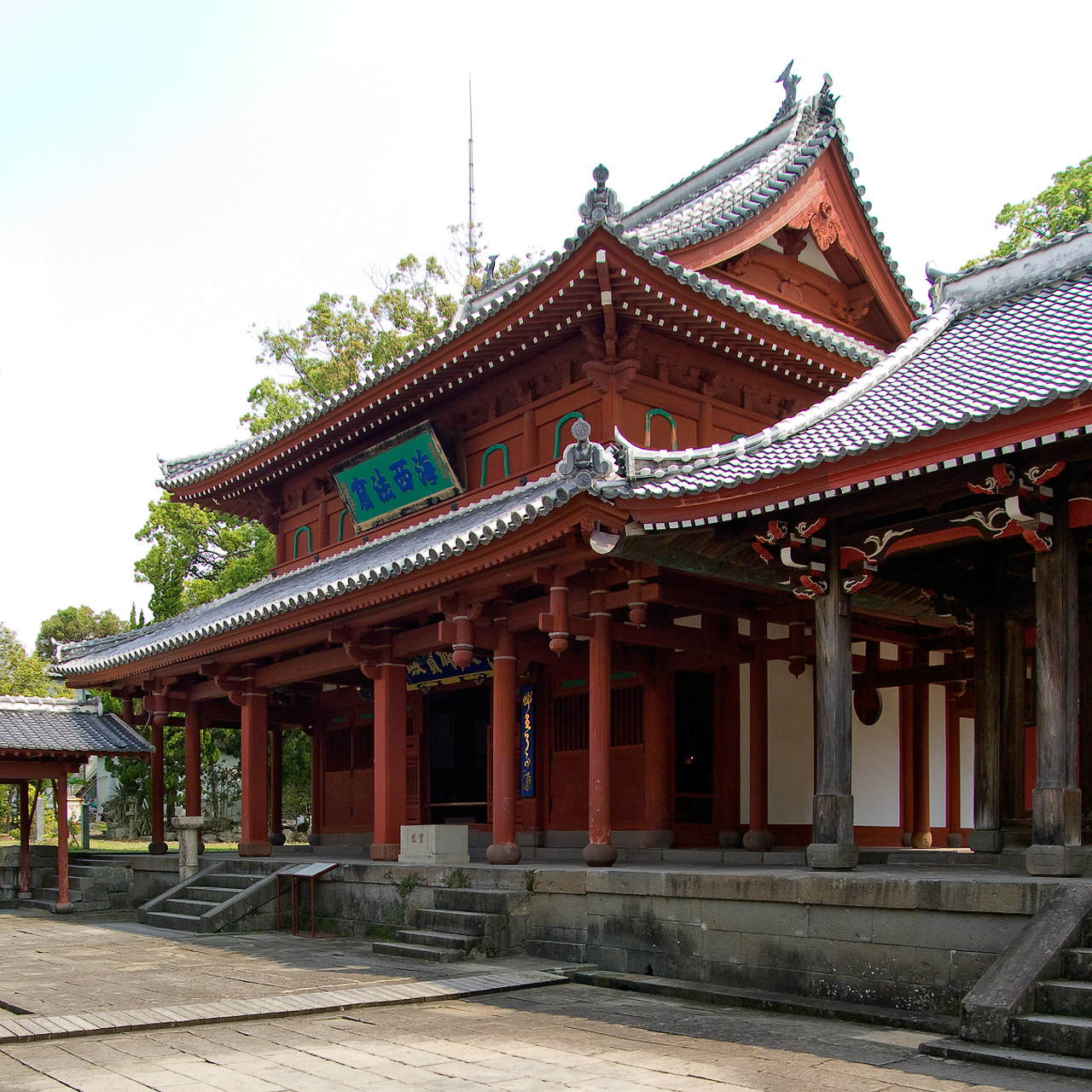
Nagasaki’s kitchens absorbed all of this. Shippoku (卓袱) cuisine — a Sino-Japanese banquet served at a shared round table — grew out of the Chinese settlement, and the city’s everyday cooking leans hard on the day’s small fish. A blade like the ajikiri belongs to that table: precise enough to fillet a palm-sized aji, small enough to live in a drawer beside the larger knives.
“A knife built specifically for small fish is not a marketing flourish in Nagasaki — it matches the catch a closed-country port has been landing for four hundred years.”
Honesty note: Nagasaki has no METI-designated knife brand. This article frames the knife as a Hizen-lineage, fishing-port edge tool drawing on a documented regional smithing history, not as a government-protected craft. Workshop identity can vary among makers.
Related jpmono guides on Japanese blades, Kyūshū crafts, and other Nagasaki objects worth reading alongside this one.
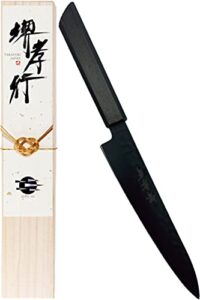 🔪 Oita Bungo Petty Knife
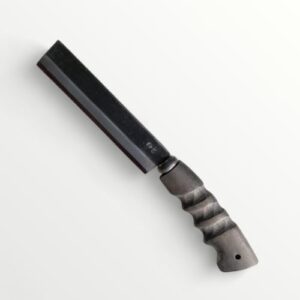 🪓 Miyakonojo Nata Hatchet
 🐟 Sakai Deba Knife
 🍣 Tsukiji Yanagiba
✂️ Hakata Hasami Scissors
 🔔 Nagasaki Poppen Glass
 🪞 Nagasaki Maki-e Mirror
🍳 Okinawa Kitchen Knife
Price information
JPY is the standard currency for Hizen ajikiri knives; USD figures elsewhere are approximate estimates at a ¥150/USD baseline. Pricing varies between smiths, so confirm the current figure at the retailer.
| Store | Item / Variant | Price (JPY + USD est.) | Notes |
|---|---|---|---|
| 🇺🇸 Amazon US (search) | Browse Japanese fish & deba knives | varies (USD) | Best if you are shopping from the US — Prime shipping, USD pricing, no international customs. Amazon US carries hand-forged Japanese fish knives from Tojiro, Yoshihiro, and others — useful for comparing geometry and steel. This exact Hizen-lineage piece is sourced from Japan (next row). |
| 🇯🇵 Amazon JP Global Store | This ajikiri | — | International shipping from Japan may involve customs or duties. |
| Maker direct | Smith / workshop unconfirmed | — | No verified direct-from-smith storefront; maker not confirmed. |
| Proxy services (Buyee / Tenso) | Forwarding from JP domestic shops | item + forwarding fee | Useful if a domestic-only Japanese seller lists the same knife; adds a service fee plus international shipping and possible customs. |
Prices and stock fluctuate. Use the affiliate links above for current figures rather than the numbers shown here. International orders may incur customs duties above your local threshold.
What it does well
Weaknesses and things to verify before buying
- Maker is unconfirmed. Nagasaki has no METI-designated knife brand; the specific smith is not verified.
- Single-purpose tool. An ajikiri excels at small fish and little else. If you want one versatile knife, this is not it.
- Handedness. Single-bevel blades are typically ground for right-handed use. Left-handed buyers must confirm a left-hand grind is available, often at extra cost.
- Carbon-steel maintenance. The blade will rust if left wet. It needs drying after every use and occasional oiling, and it will develop a patina — expected, not a defect.
- Not dishwasher- or induction-relevant. Hand-wash only; this is cutlery, so the usual Japanese-spec appliance labels do not apply, but the no-dishwasher rule is firm.
- International shipping and customs. Amazon JP Global Store ships many knives abroad, but some destinations restrict blade imports — verify your country’s rules and expect possible duties.
Conclusion — which buyer type are you?
Other ways to approach this purchase
❓ Frequently Asked Questions
What is an ajikiri, and how is it different from a deba?
An ajikiri is essentially a miniature deba — a small single-bevel knife, usually 105–120 mm, made for breaking down horse mackerel and other small fish. A standard deba is larger and thicker for bigger fish and light bone work; the ajikiri trades that heft for control on small bodies.
Does Amazon JP ship this knife internationally?
Japanese knives may face destination restrictions, and customs duties can apply above local thresholds. Confirm your country’s rules before ordering.
How do I care for a carbon-steel blade?
Hand-wash and dry the blade immediately after use, and wipe it with a thin film of food-safe oil for storage. Carbon steel develops a grey patina over time, which is normal and helps resist deeper rust. Do not put it in a dishwasher.
Is this a left-handed friendly knife?
Most single-bevel Japanese knives are ground for right-handed use. Left-handed cooks should confirm that a left-hand-ground version is available, which is often a separate order and may cost more.
Is this a METI-designated traditional craft?
No. Nagasaki has no METI-designated knife brand. This article frames the knife as a Hizen-lineage fishing-port edge tool drawing on the region’s documented sword-and-cutlery history, not as a government-protected craft. The smith should be identified separately for each maker.
Would this make a good gift?
For someone who already cooks whole small fish and maintains carbon steel, yes — it is a thoughtful, specialized piece. For a casual cook, a more versatile santoku or petty knife is a safer gift, since an ajikiri does one job.
jpmono.com is curated by a Japan-based editorial team (working out of Toyama in the Hokuriku region and Nara in Kansai) and is independent. We do not take payment from the makers we feature; income comes from affiliate links. We do not physically test every product — we read maker specifications and published craft information.
Affiliate disclosure: jpmono.com may earn a commission on qualifying purchases made through links on this page, at no additional cost to you.