![Saga Hizen Hand-Forged Ajikiri Fish Knife — Where to Buy the Nabeshima Blade [2026]](https://jpmono.com/wp-content/uploads/2026/05/japan-map-regions-and-prefectures-800x1050.png)
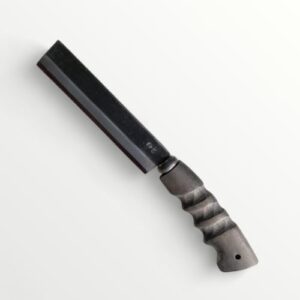
An ajikiri (鯵切り, “horse-mackerel cutter”) is one of the smallest knives in the Japanese kitchen, and one of the most specific. It is a compact single-bevel blade — here roughly 105–120 mm of edge — built to break down the small fish that dominate a coastal diet: horse mackerel, sardines, small sea bream, the squid and shellfish of a working harbor. Pieces in the Saga Hizen ajikiri tradition are forged in Saga, on the island of Kyūshū, in what was once the province of Hizen (肥前).
That province matters. Saga’s castle town was the seat of the Nabeshima domain, home to one of Japan’s most celebrated swordsmith lineages — the Hizen Tadayoshi (肥前忠吉) school, prized across the Edo period for its bright, fine-grained steel. When the wearing of swords was banned in the Meiji era, that forging knowledge did not disappear; in Hizen, as in several other old sword provinces, it flowed into edge tools and kitchen knives. A single-bevel fish knife is a direct descendant of that shift.
This guide is for international readers weighing a hand-forged Japanese fish knife: what an ajikiri is actually for, how the single-bevel geometry behaves, where Saga’s blade tradition comes from, and how to buy from outside Japan. “Hizen Tadayoshi” is a famous sword lineage; here the knife is framed more broadly within Hizen smithing tradition, with maker details varying among workshops.
🔄 Updated: June 12, 2026
⏱️ Read time: ~10 min
- Who this is for — and who should skip it
- Product overview (from published specs)
- Where this comes from — Hizen, the Nabeshima domain, and a sword province’s afterlife
- Price information
- What it does well
- Weaknesses and things to verify before buying
- Conclusion — which buyer type are you?
- Other ways to approach this purchase
- ❓ Frequently Asked Questions
Who this is for — and who should skip it
- Regularly break down small whole fish — aji, iwashi, small sea bream — and want a knife sized for the job
- Already understand single-bevel (片刃, kataba) edges and right-hand-only geometry
- Are comfortable maintaining carbon steel: wipe-dry after use, occasional oiling, no dishwasher
- Value a hand-forged blade rooted in a documented regional smithing tradition over a mass-produced stamped knife
- Want a compact second knife to sit alongside a deba and a santoku
- Want one do-everything knife — a single-bevel ajikiri is a specialist, not a general chef’s knife
- Are left-handed and need to confirm the grind
- Cannot commit to carbon-steel care and would resent surface patina or rust spots
- Expect a signed, authenticated “Hizen Tadayoshi” pedigree — that is a sword lineage, not this kitchen knife
Product overview (from published specs)
The table describes the general characteristics of a hand-forged Hizen-style ajikiri. Dimensions, steel, maker, prices, and availability can vary; incomplete points are left open rather than guessed.
| Attribute | Detail |
|---|---|
| Type | Ajikiri (鯵切り) — small single-bevel fish knife |
| Bevel | Single-bevel (片刃, kataba); right-hand grind unless otherwise stated |
| Blade length | — |
| Steel | Carbon steel — shirogami (白紙, "white paper") or aogami (青紙, "blue paper") |
| Finish | Kurouchi (黒打ち, black forged-scale finish) on the blade flat |
| Origin | Saga Prefecture (old Hizen province), Kyūshū — forged in the Hizen smithing tradition |
| Maker | Workshop not confirmed |
| Handle | Maker not confirmed; typically Japanese wa-handle |
| Price | — |
International buyers may compare Japanese fish knives through US-facing searches, Japanese retail channels, maker-direct shops, and proxy services. Specifications not provided by a maker should be treated as unconfirmed.
📖 Glossary — key terms in this article
- Ajikiri (鯵切り) — literally “horse-mackerel cutter”; a small single-bevel knife for breaking down small whole fish.
- Hizen (肥前) — the old province covering modern Saga and Nagasaki prefectures; a major Edo-period smithing center.
- Nabeshima (鍋島) — the daimyō family that ruled the Saga domain in Hizen through the Edo period.
- Tadayoshi (忠吉) — the founding name of the Hizen Tadayoshi swordsmith school; a celebrated sword lineage, not a kitchen-knife brand.
- Konuka-hada (小糠肌) — the fine, bright “rice-bran” steel grain for which Hizen sword blades are prized.
- Kataba (片刃) — single-bevel; ground on one side only, for cleaner, more precise cuts (usually right-handed).
- Kurouchi (黒打ち) — the dark forge-scale left on the blade flat; rustic, protective, and lower-maintenance than a polished face.
- Shirogami / Aogami (白紙 / 青紙) — “white paper” and “blue paper” carbon steels from Hitachi, named for their wrapper color; high-purity, easy to sharpen.
- Haitōrei (廃刀令) — the 1876 Meiji edict banning the public wearing of swords, which redirected many smiths to tools and cutlery.
Where this comes from — Hizen, the Nabeshima domain, and a sword province’s afterlife

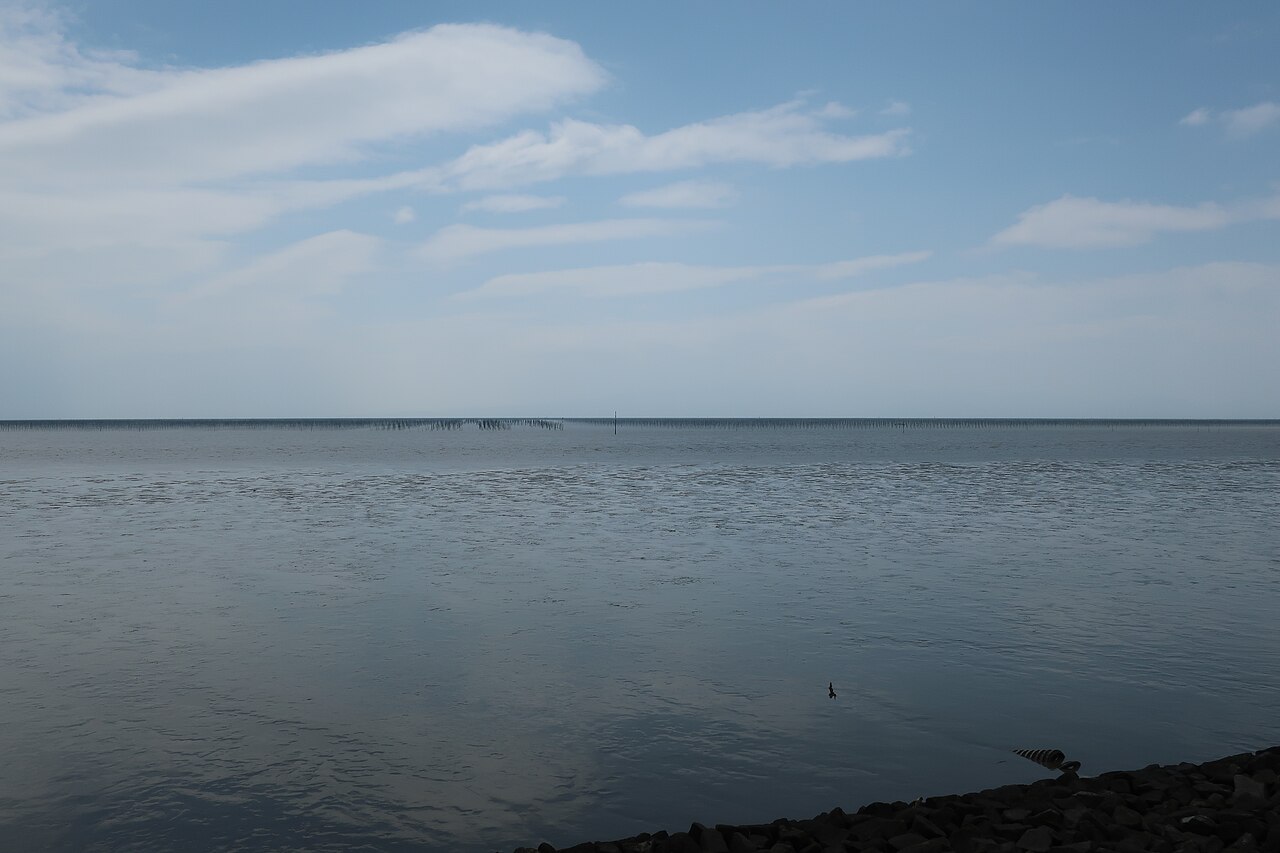
Saga Prefecture occupies the narrow northwest of Kyūshū, Japan’s southwestern main island. It is one of the few prefectures touched by two very different seas: the open, deep Genkai Sea (玄界灘) along its northern coast, and the shallow, tide-swung Ariake Sea (有明海) — Japan’s largest tidal mudflat — to the south. That double coastline gave Saga an unusually fish-heavy everyday diet, and a practical need for small, precise fish knives long before any of them carried a brand name.
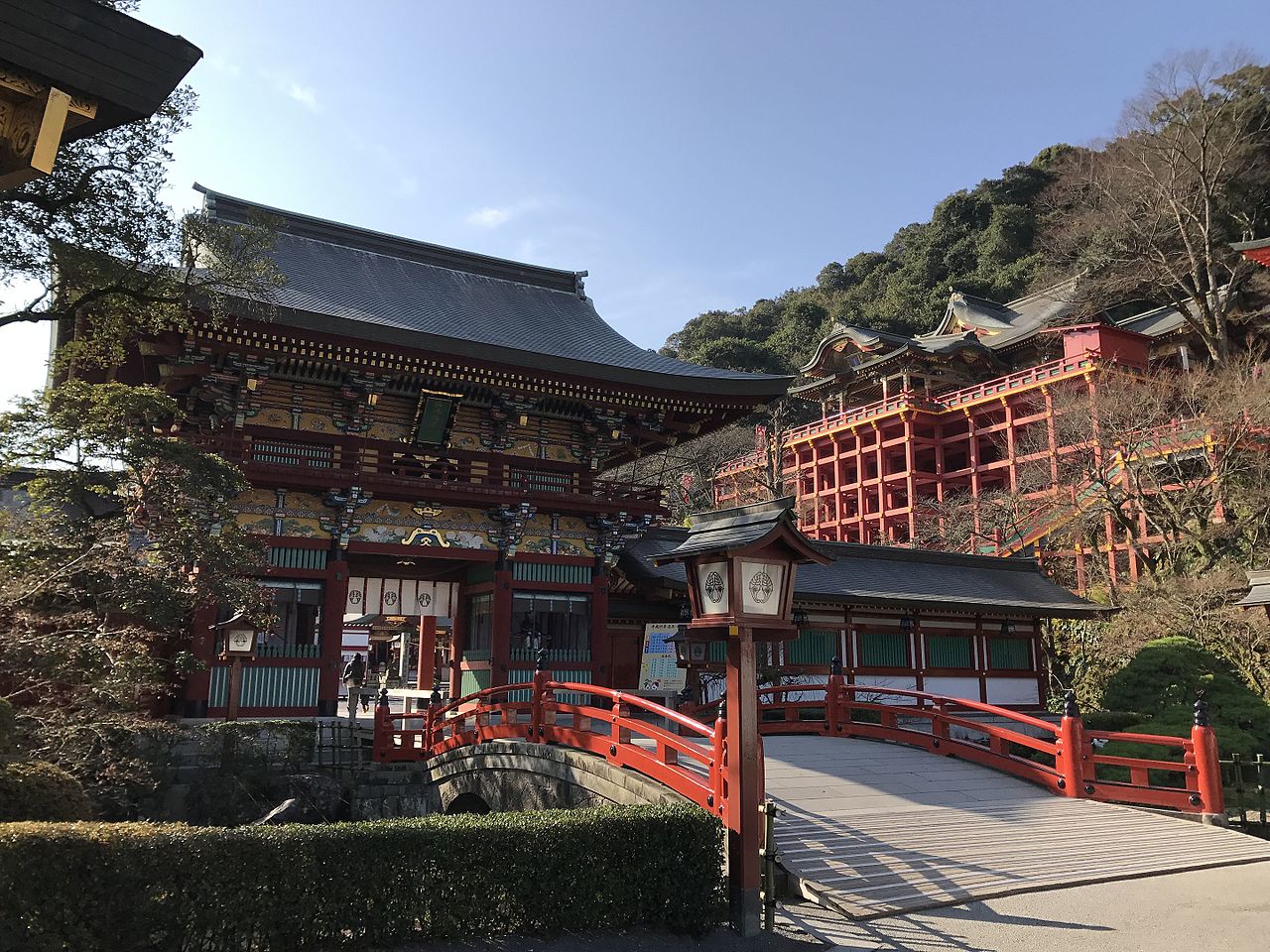
In the Edo period this was the province of Hizen, ruled from the city of Saga by the Nabeshima family. The domain was wealthy — its porcelain (Arita and Imari) and its smithing both reached national reputation — and that wealth underwrote craft. The Nabeshima built and rebuilt Saga Castle as their seat, and patronized shrines such as Yūtoku Inari, one of the three great Inari shrines of Japan.
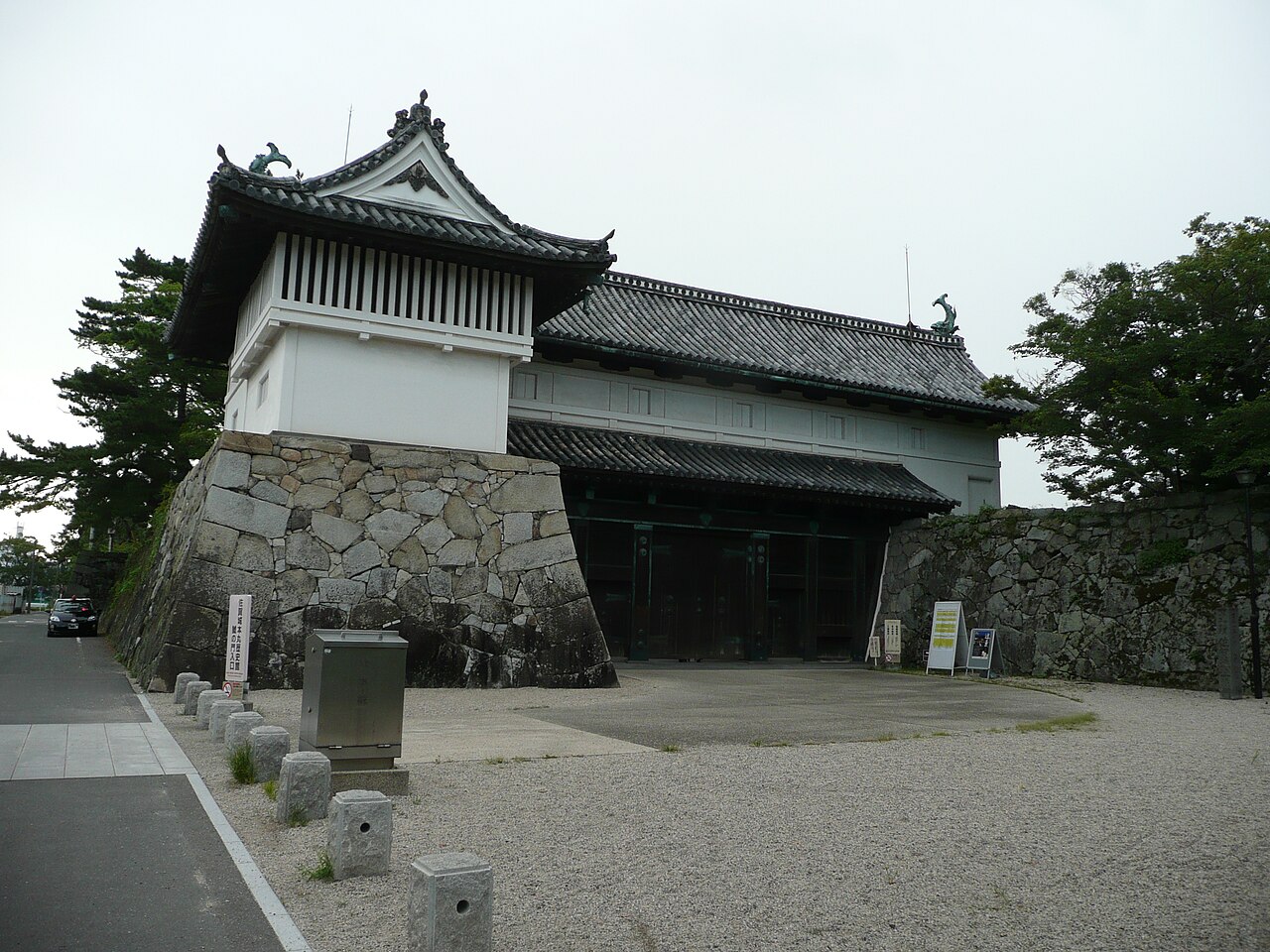
The smithing reputation centered on one lineage above all. Around 1596, a Saga smith took the name Tadayoshi and founded the Hizen Tadayoshi school, which forged for the Nabeshima and ran for roughly five generations through the Edo period. Hizen blades became known for a bright, fine steel grain — the so-called konuka-hada, “rice-bran skin” — and were collected nationally. This is the pedigree the modern Saga fish knife borrows its history from.
- c. 1596 — A Saga smith takes the name Tadayoshi, founding the Hizen Tadayoshi swordsmith school.
- 1607 — The Nabeshima are confirmed as lords of the Saga domain in Hizen; Saga becomes the castle town.
- 17th–18th c. — Five generations of the Tadayoshi line forge for the domain; Hizen steel earns national fame for its konuka-hada grain.
- 1687 — Yūtoku Inari Shrine founded under Nabeshima patronage, a marker of the domain’s craft economy.
- 1876 — The Haitōrei edict bans the wearing of swords; forging skill in Hizen migrates toward edge tools and kitchen knives.
- 20th c. — Saga smiths apply single-bevel forging to fish knives for the Genkai and Ariake coasts.
- Hizen tradition. Small Hizen-tradition workshops still hand-forge ajikiri.
What happened to that skill after 1876 is the interesting part. When the wearing of swords was outlawed, the demand that had supported generations of smiths collapsed almost overnight. In several old sword provinces the answer was the same: turn the forge toward tools people still needed — sickles, plane irons, and kitchen knives. Saga is part of that pattern, alongside Hōki in Tottori (home of the early swordsmith Yasutsuna) and Kunitomo in Shiga (an old gun-and-blade town). The arc is “former sword province → modern hand-forged blade.”
“The same understanding of steel that once went into a Nabeshima sword now goes into a knife small enough to bone a horse mackerel — the demand changed, the craft did not.”
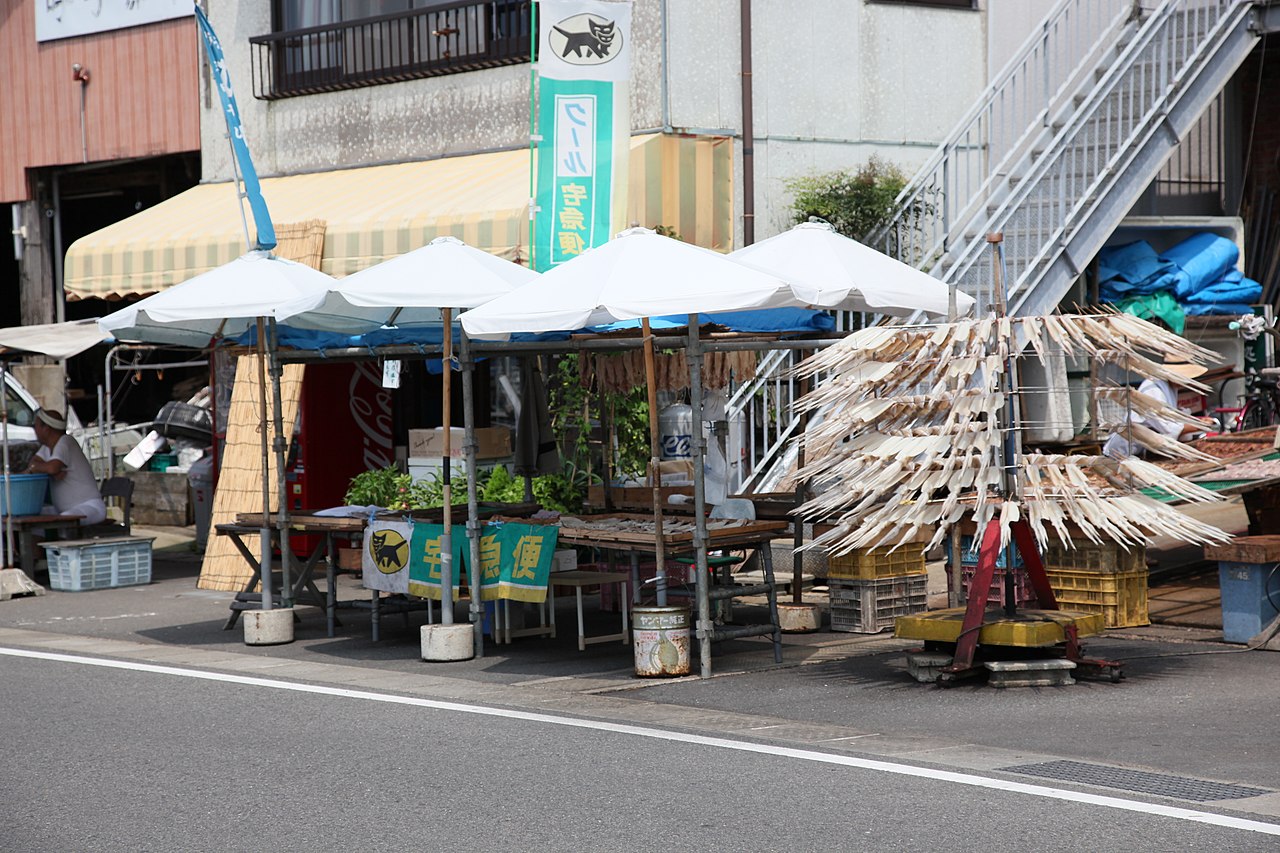
And the fish came ready-made. To the north, the Genkai Sea brings deep-water catch — its squid is so prized that the morning market at Yobuko, in Karatsu, is a destination in its own right. To the south, the Ariake mudflats yield small fish, shellfish, and oddities found almost nowhere else in Japan. A household cooking from both coasts wants a knife that handles small fish quickly and cleanly. That is precisely what an ajikiri is: not a showpiece, but the right size for the everyday catch.
One honest caveat closes this section. A signed, authenticated Hizen Tadayoshi blade is a collector’s sword, not a kitchen knife — and there is no single famous Saga kitchen-knife marque comparable to, say, Sakai’s named workshops. The right way to read this form is as a knife forged in the Hizen smithing tradition: a real regional lineage of steel, carried into a working kitchen tool. The workshop and steel grade can vary and should be identified separately for each maker.
Other Saga (Hizen) crafts and related Japanese blades we have covered — useful for placing this ajikiri in context.
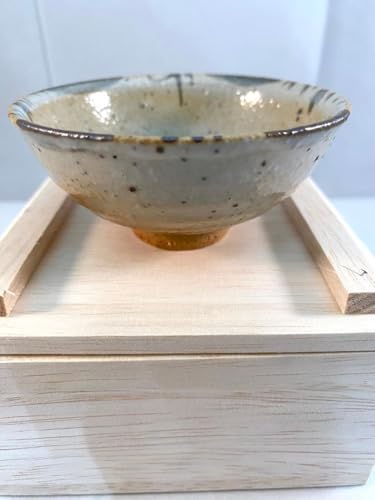 🍶 Karatsu E-Garatsu guinomi (Saga)
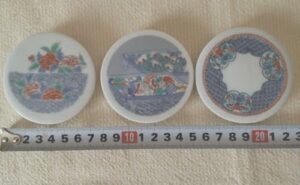 🍽️ Imari Nabeshima plate (Saga)
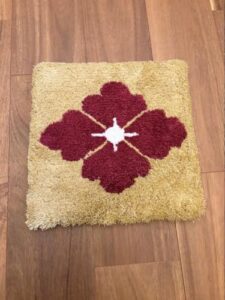 🧶 Nabeshima Dantsu (Saga)
☕ Arita sometsuke mug (Saga)
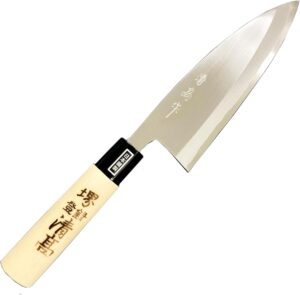 🔪 Sakai deba fish knife
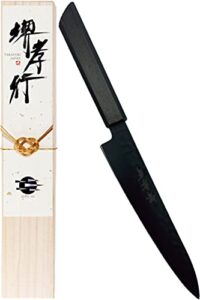 🔪 Bungo petty knife (Kyūshū)
 🪓 Miyakonojō nata (Kyūshū)
✂️ Hakata hand-forged scissors (Kyūshū)
Price information
Prices for hand-forged ajikiri vary with steel, size, finish, and workmanship. USD conversions are approximate and depend on the exchange rate.
| Store | Item / Variant | Price (JPY + USD est.) | Notes |
|---|---|---|---|
| 🇺🇸 Amazon.com (US) | Browse Japanese fish knives | varies (USD) | Best if you’re shopping from the US — Prime shipping, USD pricing, no international customs. Amazon US carries hand-forged Japanese fish knives from several makers for comparing geometry, steel types, and price tiers; this Saga ajikiri is sourced from Japan (next row). |
| 🇯🇵 Amazon JP Global Store | This specific Hizen-tradition ajikiri | — | International shipping from Japan may involve customs or duties. |
| Maker direct | Workshop unconfirmed | — | No verified maker storefront; direct sales depend on the workshop. |
| Proxy services (Buyee / Tenso) | Japan-only domestic stores | Proxy fee and forwarding may apply | Useful only if you find this knife on a Japan-domestic shop that does not ship abroad; adds a service fee and a forwarding leg. |
What it does well
Weaknesses and things to verify before buying
- Specifications are incomplete. Confirm the maker and blade fit before purchase.
- Maker is unconfirmed. There is no single famous Saga kitchen-knife brand; the workshop should not be assumed.
- Not a “Hizen Tadayoshi” sword. Tadayoshi is a celebrated sword lineage. This is a kitchen knife forged in that broader Hizen tradition — do not expect a signed, authenticated pedigree.
- Right-hand-only geometry (likely). Single-bevel knives are typically ground for right-handed use. Left-handed buyers must confirm a left-hand grind is offered, or it will not behave correctly.
- Carbon steel needs care. It will patina and can rust if left wet. Wipe dry after each use, oil occasionally, and never put it in a dishwasher.
- Specialist, not generalist. An ajikiri excels at small fish and little else; it is a poor choice as a household’s only knife.
- International cost stacks up. JP Global Store shipping (~$15–$40) plus possible customs duties can add meaningfully to a modestly priced knife.
Conclusion — which buyer type are you?
Other ways to approach this purchase
❓ Frequently Asked Questions
What is an ajikiri used for?
An ajikiri is a small fish knife for breaking down small whole fish — horse mackerel (aji), sardines, small sea bream — and for light work on squid and shellfish. Its compact blade gives close control around small bones and fins.
Is this a genuine “Hizen Tadayoshi” knife?
No. Hizen Tadayoshi is a celebrated Edo-period sword lineage from Saga. This is a kitchen knife forged in the broader Hizen smithing tradition that the Tadayoshi school made famous. It is not a signed or authenticated Tadayoshi blade, and should not be bought as one. The actual workshop should be identified before purchase.
Is a single-bevel ajikiri right-handed only?
Most single-bevel Japanese knives are ground for right-handed use. Left-handed cooks should request a dedicated left-hand grind; a right-hand knife will not steer or release the cut correctly in the left hand.
How do I care for carbon steel and the kurouchi finish?
Wipe the blade dry immediately after use, hand-wash only, and never use a dishwasher. Carbon steel develops a protective patina and can rust if left wet; a light coat of food-safe oil during storage helps. The kurouchi (black forge-scale) flat is lower-maintenance than a polished face, but the cutting edge still needs drying.
Does Amazon JP Global Store ship this internationally?
Amazon JP Global Store ships many household and kitchen items to most major destinations. Expect roughly $15–$40 shipping to the US or EU, and possible customs duties if your order exceeds local thresholds. Confirm the destination and shipping quote at checkout, as knife shipments can carry extra restrictions.
How is an ajikiri different from a deba?
Both are single-bevel fish knives, but a deba is heavier and longer, built to cut through fish heads and larger bones, while an ajikiri is small and light for quick work on little fish. Many kitchens own both: a deba for bigger fish, an ajikiri for the everyday small catch.
What does it cost?
The price of an ajikiri varies with steel, size, and workmanship. Treat USD as an approximate currency conversion, not a fixed figure.
jpmono.com is curated by a Japan-based editorial team (working out of Toyama in the Hokuriku region and Nara in Kansai) and is independent. We do not take payment from the makers we feature; income comes from affiliate links. We do not physically test every product — we read maker specifications and published craft information.
Affiliate disclosure: jpmono.com may earn a commission on qualifying purchases made through links on this page, at no additional cost to you.