![Izushi-yaki White Porcelain Soba Plate: Hyogo’s Pure Hakuji Dish [2026]](https://jpmono.com/wp-content/uploads/2026/06/izushi-yaki-white-porcelain-soba-plate-where-to-buy-2026-featured.jpg)
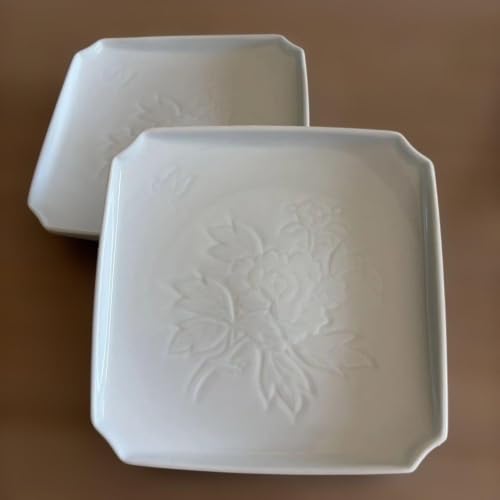
Izushi-yaki (出石焼, “Izushi ware”) is the one Japanese porcelain that is defined not by its painting but by its lack of it. Among Japan’s nationally designated traditional crafts, it is the only pure-white porcelain (hakuji, 白磁) — a translucent, snow-white body decorated with quiet relief carving and openwork rather than the blue-and-white brushwork most people associate with Japanese ceramics. It is fired in Izushi, a small castle town in the Tajima region of northern Hyogo Prefecture, often called the “Little Kyoto of Tajima.”
These small white plates are not an abstract art object. They are bound to a specific local dish — Izushi sara-soba (出石皿そば), in which buckwheat noodles are portioned out across a stack of small white plates, one helping per dish. The form of the plate and the food it carries grew up together, which is part of why Izushi-yaki reads as a working tableware tradition rather than a museum piece.
This guide is written for international readers deciding whether a set of Izushi-yaki hakuji plates belongs on their table. We cover what the ware actually is, the place and history behind it, how it differs from Hyogo’s other flagship kiln (Tamba Tachikui) and from blue-and-white porcelain elsewhere in Japan, the realities of buying it from outside Japan, and which type of buyer it suits. A note up front: for this specific listing only thin marketplace data was available at the time of writing, so we flag price and dimension fields as unconfirmed rather than guessing.
🔄 Last updated: June 15, 2026
⏱️ Read time: about 9 minutes
- Who this is for — and who should skip it
- Product overview (from published specs)
- 📍 Where this comes from — place, era, and the craft tradition
- Price snapshot across stores
- What it does well
- Weaknesses and things to verify before buying
- Conclusion — which buyer type are you?
- Other ways to approach this purchase
- 🏆 Editor’s Pick
- ❓ Frequently Asked Questions
Who this is for — and who should skip it
✅ A good fit if you…
- 🍶 Want small plates for sharing — appetizers, condiments, a few slices of sashimi, or noodles served Izushi-style
- 🤍 Prefer undecorated, snow-white porcelain that lets food provide the color
- 🇯🇵 Are building a Japanese table setting and want a piece with a documented regional craft pedigree
- 🎁 Are buying a quiet, non-flashy gift that works in almost any kitchen
- 🧩 Like collecting small plates (mamezara / kozara) that stack and combine flexibly
⚠️ Probably skip it if you…
- 🎨 Want bold blue-and-white (sometsuke) or colorful overglaze painting — that is Arita/Kutani territory, not Izushi’s white aesthetic
- 🍜 Need large or deep bowls — these are small, shallow plates by design
- 🪨 Prefer rustic, earthy stoneware with visible clay and ash glaze (look at Tamba or Bizen instead)
- 💸 Need a confirmed price before buying — this specific listing had thin pricing data at the time of writing
- 📦 Cannot accept international shipping lead times or possible customs handling on an order from Japan
Product overview (from published specs)
👉 The table scrolls sideways on mobile. Where a value was not present in the fetched data, it is marked “Unconfirmed — check listing” rather than estimated.
Izushi-yaki White Porcelain Soba Plate
伝統工芸 出石焼 白磁 浮き彫りレリーフ 牡丹彫角皿 銘々皿 2枚セット
通常7~8日以内に発送します。 · Sold by STORE楓 · ASIN B0HD1TZ149
Price and availability as of 2026-09-01 05:22 JST. The Amazon listing at the time of purchase is authoritative. jpmono.com earns a commission on qualifying purchases at no extra cost to you.
| Field | Spec | Note |
|---|---|---|
| Craft | Izushi-yaki (出石焼, Izushi ware) | National traditional craft (METI), designated 1980 |
| Material | Pure-white porcelain (hakuji, 白磁) | Only pure-white porcelain among Japan’s designated crafts |
| Item type | Small plate / sara-soba dish (kozara) | Shallow, small-format plate |
| Decoration | Relief carving / openwork; minimal or no painting | Whiteness and carved form carry the design |
| Origin | Izushi, Toyooka, Hyogo Prefecture, Japan | Tajima region, “Little Kyoto of Tajima” |
| Dimensions / weight | Unconfirmed — check listing | Not present in fetched data at time of writing |
| Reference ASIN | B0HD1TZ149 | Amazon JP Global Store listing |
| Price | Unconfirmed — check listing | Only a thin listing snapshot was available; verify current price before buying |
Sources: Amazon US search (primary, tag moonill-20) + Amazon JP Global Store (secondary, tag moonill-22, sourced listing) + maker tradition references. Spec sheets indicate the defining trait of Izushi-yaki is the porcelain body itself, not applied decoration. Dimension and price fields were not present in the fetched data and are intentionally left unconfirmed.
📚 Glossary — key terms for understanding Izushi-yaki
Hakuji (白磁, “white porcelain”): porcelain whose appeal is the pure white, translucent body itself, without painted decoration. Izushi-yaki is the only hakuji among Japan’s nationally designated traditional crafts.
Izushi-yaki (出石焼, “Izushi ware”): porcelain made in Izushi, in the Tajima region of northern Hyogo. Recognized by its snow-white body and carved or openwork (rather than painted) decoration.
Sara-soba (皿そば, “plate soba”): the local way of serving buckwheat noodles in Izushi — small portions spread across a stack of small plates, eaten dish by dish. The dish and the plate developed together.
Tajima (但馬): the northern region of Hyogo Prefecture, historically a distinct province. Izushi was its political and cultural center, earning the nickname “Little Kyoto of Tajima.”
Sometsuke (染付, “underglaze blue”): the blue-and-white brush painting typical of Arita and many other Japanese porcelains — the decorative opposite of Izushi’s undecorated white.
METI designation: recognition as a traditional craft (dentōteki kōgeihin) by Japan’s Ministry of Economy, Trade and Industry. Izushi-yaki received it in 1980.
📍 Where this comes from — place, era, and the craft tradition

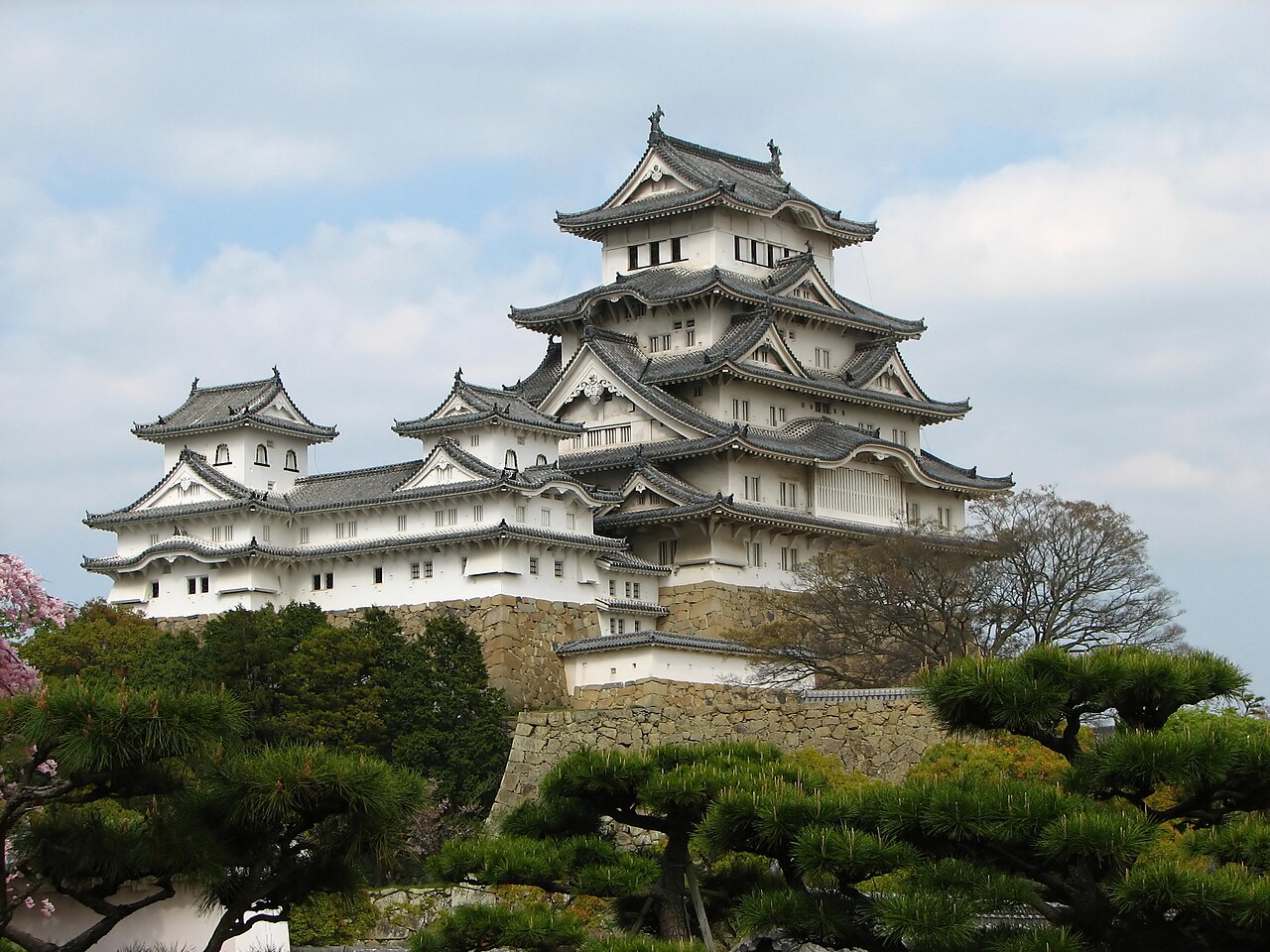
Hyogo Prefecture stretches from the Seto Inland Sea in the south to the Sea of Japan in the north, which means it contains several quite different craft worlds in one administrative unit. Most international travelers know its southern face — Himeji Castle, the port of Kobe, the bullet-train spine of the Kansai region. Izushi sits in the far north of the prefecture, in the old province of Tajima, in a basin ringed by hills and threaded by rivers. That inland, somewhat sheltered position is exactly the kind of place where a domain-supported craft could take root and stay put.
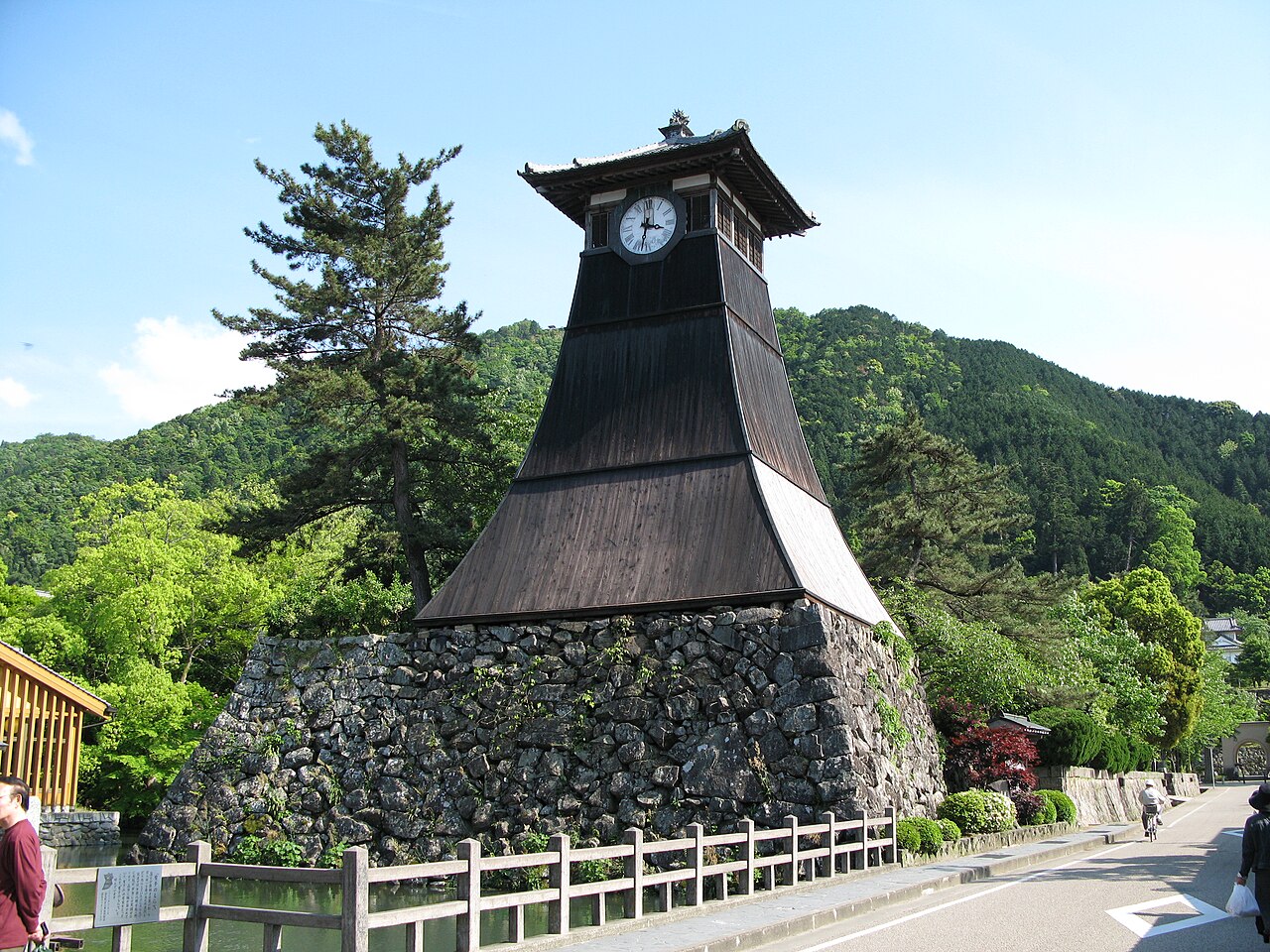
Izushi earned its “Little Kyoto of Tajima” nickname because, like Kyoto, it kept the grid of an old castle town: a clock tower, temple districts, and merchant streets that still organize the modern town. The porcelain industry here did not appear out of nowhere. It began with a raw material.
Around 1784, a deposit of porcelain stone was discovered locally at Kakitani. Porcelain stone — the white, kaolin-rich rock that can be milled into a clay body — is what separates true porcelain regions from stoneware regions, and finding it on the doorstep changed what Izushi could make.
- 15th–16th c. — The Yamana clan governs the Tajima region from Izushi during the Sengoku (Warring States) era.
- Late 16th c. — The Sengoku clan later holds the castle town, consolidating Izushi as Tajima’s center.
- 1784 — Porcelain stone is discovered locally at Kakitani, providing the raw material for true porcelain.
- Late 18th c. — Potters from the Arita/Nabeshima porcelain tradition are invited; Izushi-yaki is established as pure-white porcelain.
- 19th c. — Production matures around the castle town; the local sara-soba dining culture takes shape on stacks of small white plates.
- 1980 — Izushi-yaki is designated a national traditional craft by METI — the only pure-white porcelain so recognized.
- 2026 — Still fired in workshops in Izushi, Toyooka, Hyogo.
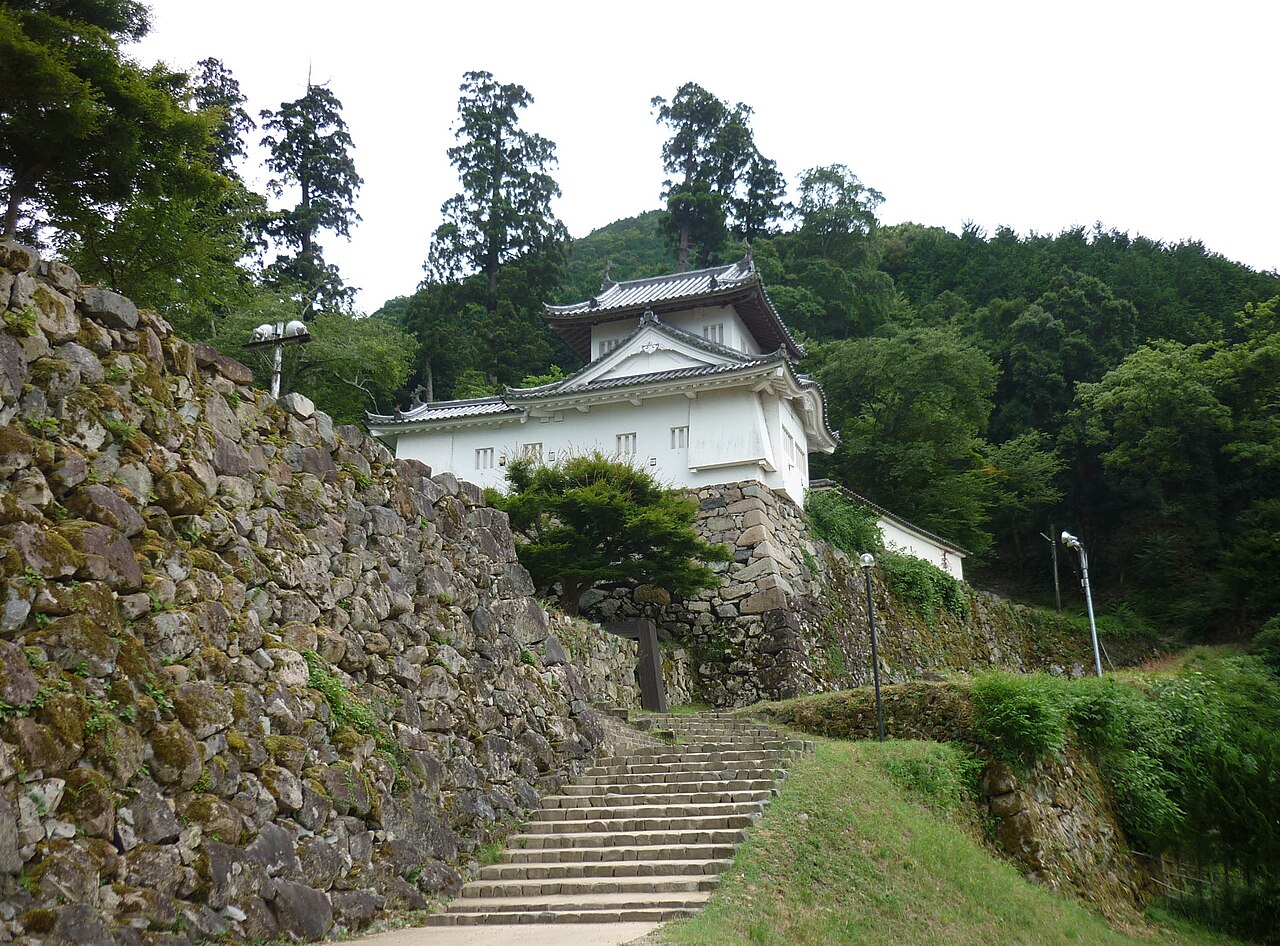
The decisive step came when potters trained in the Arita and Nabeshima tradition — the heartland of Japanese porcelain in Kyushu — were invited to Izushi. They brought the technical knowledge to fire a refined porcelain body, and what emerged in Izushi took a distinctive direction: instead of decorating the white surface with cobalt-blue painting in the Arita manner, Izushi-yaki kept the surface white and let the body, the carving, and the openwork do the work.
“In most Japanese porcelain, white is the canvas. In Izushi-yaki, white is the subject.”
That choice is what makes Izushi-yaki the only pure-white porcelain among Japan’s nationally designated traditional crafts, recognized by METI in 1980. The continuity case here is modest and honest: Izushi is a small town with a small number of workshops, not an industrial porcelain belt. The ware survives because it is tied to something people in Tajima actually do — eat sara-soba.
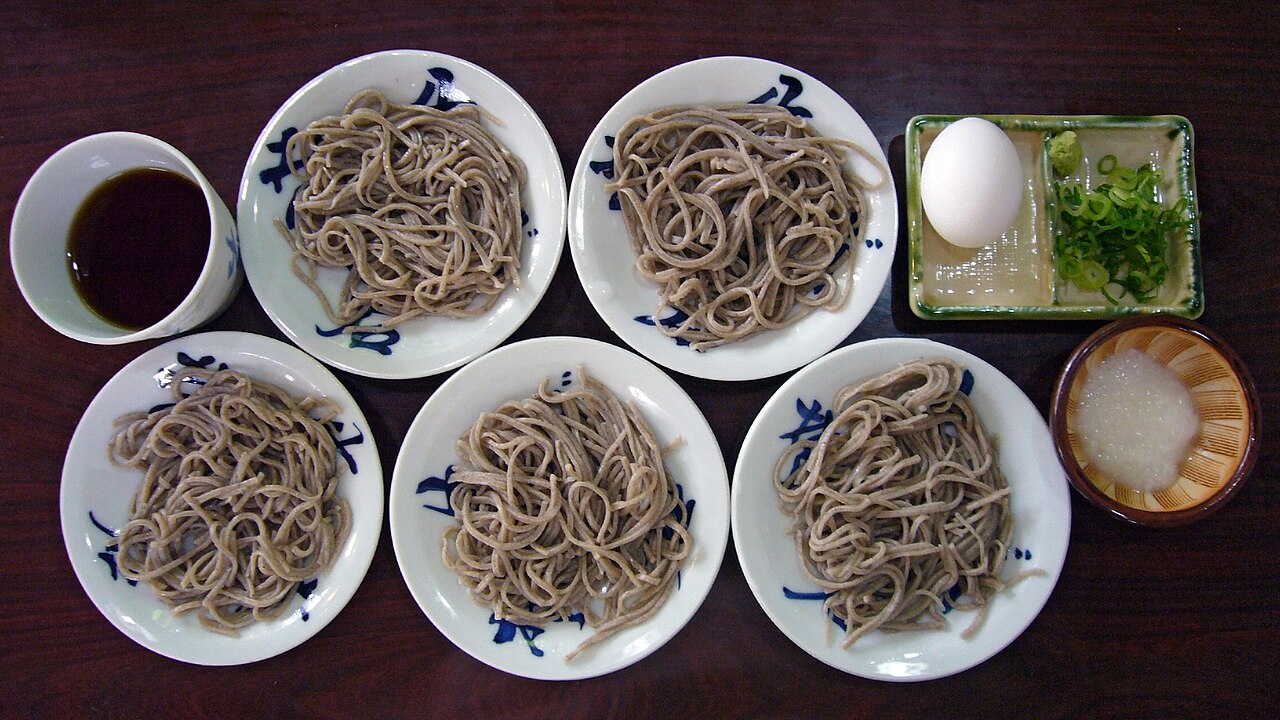
Walk into a sara-soba restaurant in Izushi and the meal arrives as a column of small white plates, each holding a single mouthful’s worth of noodles. You eat one, set it aside, and work down the stack — five plates is a standard serving, and regulars track their count by the height of the empty dishes. The plate is small because the portion is small; the white is plain because the green of the soba and the dark of the dipping sauce are meant to be the color. Buying an Izushi-yaki plate is, in a quiet way, buying into that dining grammar.
📌 How does it compare?
Izushi-yaki sits at the white, undecorated end of the Japanese ceramics spectrum. The articles below put it next to Hyogo’s own Tamba stoneware, the blue-and-white porcelains it deliberately is not, and other regional white and slipware traditions.
 🍶Tamba ware guinomi (same Hyogo)Six Ancient Kilns stoneware — where to buy →
☕Arita sometsuke porcelain mugBlue-and-white porcelain — where to buy →
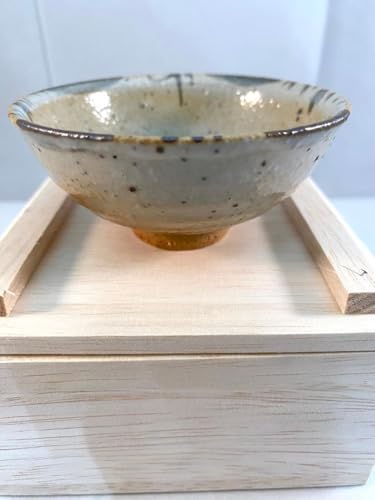 🍵Karatsu ware guinomiTea-ware stoneware — where to buy →
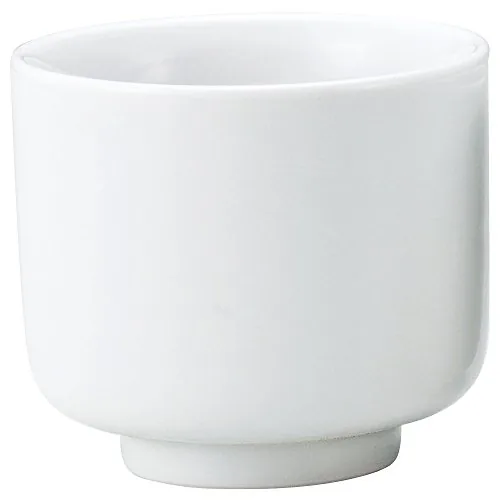 🏺Shiro-Satsuma white wareCrackle-glaze white ware — where to buy →
🍽️Fujina yellow-glaze plateSlipware plate, Shimane — where to buy →
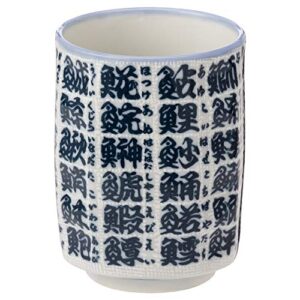 🫖Odo-yaki sometsuke yunomiBlue-and-white tea cup, Kochi — where to buy →
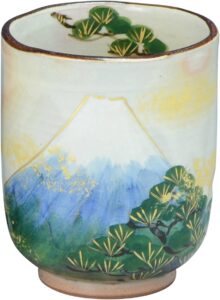 🍵Aito Kyo-yaki yunomiKyoto-style tea cup — where to buy →
Price snapshot across stores
👉 The table scrolls sideways. Prices reflect data at the time of writing (June 15, 2026) and change frequently — always confirm at the retailer. JPY is the authoritative currency for the specific listed item; USD figures, when shown, are approximate at a ¥150/USD baseline.
| Store | Item / Variant | Price | Notes |
|---|---|---|---|
| 🇺🇸 Amazon.com (US) | Browse Japanese white porcelain plates | varies (USD) | Best if you are shopping from the US — Prime shipping, USD pricing, no international customs. Amazon US carries comparable Japanese porcelain and tableware; the specific Izushi-yaki piece ships from Japan (next row). |
| 🇯🇵 Amazon JP Global Store | Izushi-yaki hakuji small plate (ASIN B0HD1TZ149) | Check listing | Ships internationally from Japan. Only a thin listing snapshot was available; live price was unavailable at time of writing. |
| Maker direct | Izushi-yaki kiln / cooperative shops | varies (JPY) | Best selection and full sets, but most Izushi kiln sites are Japanese-language and may not ship abroad directly. |
| Proxy services (Buyee / Tenso) | Forwarding from Japan-only shops | item + fees | Use when an item is listed only on a Japan-only store; adds a service fee plus international forwarding. |
Per the fetched data, no live price was attached to ASIN B0HD1TZ149 at the time of writing. The data suggests checking the JP Global Store listing directly for the current figure before purchasing.
What it does well
🤍 A genuinely distinctive white
As the only pure-white porcelain among Japan’s designated crafts, Izushi-yaki offers a surface most Japanese ceramics do not — translucent, undecorated, carried by the body itself rather than by painting.
🍽️ Versatile small-plate format
Small, shallow plates suit appetizers, condiments, pickles, sweets, and the noodle service they were designed for. White goes with any cuisine, not only Japanese food.
🏅 Documented craft pedigree
A METI-designated traditional craft (1980) with a clear regional origin — Izushi, Toyooka, Hyogo — and a founding story rooted in the Arita/Nabeshima porcelain lineage.
🍲 A real cultural anchor
The plate is tied to an actual living dish — Izushi sara-soba — which gives it meaning beyond decoration and makes it an easy story to tell when gifting.
Weaknesses and things to verify before buying
- Price was unconfirmed at the time of writing. The fetched data for this listing did not include a live price. Check the Amazon JP Global Store listing (ASIN B0HD1TZ149) for the current figure before committing.
- Dimensions and set count were not in the data. “Small plate” covers a range of sizes; confirm the exact diameter and whether the listing is a single plate or a multi-plate set before buying for a specific use.
- Not for fans of bold decoration. If you want blue-and-white sometsuke or colorful overglaze, Izushi’s plain white will read as understated to the point of bare. That is the point of the ware, but it is not for everyone.
- Porcelain is hard but chip-prone at the rim. Like all thin porcelain, edges can chip if knocked. Verify the listing’s care notes; microwave and dishwasher suitability are common for porcelain but were not stated in the fetched data, so confirm rather than assume.
- International shipping adds time and possible duties. Buying from Japan via the Global Store means longer lead times than domestic Amazon, and orders above your country’s de minimis threshold may attract customs charges.
- Small-workshop supply can be intermittent. Izushi is a small production town; specific patterns or carved designs may go out of stock, and exact restocks are not guaranteed.
Conclusion — which buyer type are you?
Rather than forcing one answer, here is how Izushi-yaki maps onto four reader types.
🟡 Premium / collector
If you collect Japanese ceramics and want the one designated pure-white porcelain, Izushi-yaki fills a specific gap. Look for finely carved or openwork pieces directly from Izushi kilns or specialist shops.
🟢 Mainstream / everyday table
If you want versatile white small plates with a real story, the Amazon JP Global Store listing (ASIN B0HD1TZ149) is the straightforward path — just confirm the current price and set count first.
🔵 Budget-minded
If price is the main constraint, compare the JP listing against plain white Japanese porcelain available on Amazon US to see whether shipping from Japan is worth the difference for the carved Izushi detail.
⚪ Skip it
If you want colorful, painted, or rustic stoneware, or you need confirmed dimensions and price before buying and cannot verify them, this is not the right purchase right now.
Our single Editor’s Pick is in the box near the end of this article.
Other ways to approach this purchase
⏳ Wait for a sale
Japanese tableware on the Global Store occasionally drops during seasonal campaigns. If you are not in a hurry, watching the listing for a price change costs nothing.
🔁 Buy direct or second-hand
Izushi kiln shops and Japanese flea-market platforms sometimes list patterns not on Amazon. Porcelain shows wear less than many materials, so gently used pieces can be a value.
🎁 Points & rewards
If you already use Amazon credit-card points or gift balance, applying them here lowers the effective cost of an item whose headline price varies.
🚫 Skip it for now
If you cannot confirm price, size, or shipping to your country, it is reasonable to wait. There is no urgency with a tableware piece that has been made the same way for over two centuries.
🏆 Editor’s Pick
❓ Frequently Asked Questions
What makes Izushi-yaki different from Arita and other Japanese porcelain?
What is Izushi sara-soba, and why are the plates so small?
Is the white color painted on, or is it the body itself?
Can I use these plates in the dishwasher and microwave?
Does Amazon ship Izushi-yaki internationally?
How is Izushi-yaki different from Hyogo’s other famous kiln, Tamba?
jpmono.com is curated by a Japan-based editorial team working out of Toyama (Hokuriku region) and Nara (Kansai region), and is independent. We do not take payment from the makers we feature; income comes from affiliate links. We read maker specs and source listings rather than physically testing every product.
Note on production: this article was drafted with AI assistance and reviewed against the source listing data and maker tradition references before publication. Facts about the place and craft are drawn from the curation brief; price and dimension fields not present in the source data are marked unconfirmed rather than estimated.
Affiliate disclosure: jpmono.com may earn a commission on qualifying purchases made through links on this page, at no additional cost to you.