![Satsuma Tsuge Boxwood Comb: Where to Buy Kagoshima Hair Combs [2026]](https://jpmono.com/wp-content/uploads/2026/06/satsuma-tsuge-boxwood-comb-where-to-buy-2026-featured.jpg)
A Satsuma boxwood comb (薩摩つげ櫛, Satsuma tsuge-gushi) is a hair comb cut from Satsuma honzuge — the dense, slow-grown boxwood of southern Kyushu — and then seasoned in camellia oil for months before it ever reaches a shelf. The wood is the point. Boxwood is one of the hardest, finest-grained timbers in Japan, and the warm, humid climate around Kagoshima grew it especially tight and even, which is why Satsuma has long been treated as a source of premium comb stock.
What makes these combs notable to readers outside Japan is less the look than the behavior. A hardwood comb seasoned in oil is antistatic: it glides through hair and redistributes the hair’s own oils rather than stripping them, the way plastic does on a dry winter morning. Each tooth is cut and finished by hand, and a good one is traditionally treated as a lifelong object — repaired and re-oiled rather than replaced. Kagoshima remains one of Japan’s two principal boxwood-comb centers, alongside Osaka.
This guide is written from a Japan-based editor’s desk (we work out of Toyama in the Hokuriku region and Nara in Kansai) for international buyers. The Editor’s Pick is a Satsuma honzuge hand-cut, fine-tooth comb finished with camellia oil (ASIN B09B6TH7FV). Below we cover what to verify before buying, how the material behaves, where the craft comes from, and the realistic paths to buy one from outside Japan. One caveat up front: only a minimal listing snapshot was available for this item at the time of writing, so we flag pricing and per-listing specs as unconfirmed wherever the data does not support a firm number.
🔄 Last updated: June 15, 2026
⏱️ Read time: about 12 minutes

- Who this is for — and who should skip it
- Product overview (from published specs)
- 📌 How does it compare?
- Price snapshot across stores
- 📦 Shipping & where to buy from outside Japan
- What it does well
- Weaknesses and things to verify before buying
- Where this comes from
- Conclusion — which buyer type are you?
- Other ways to approach this purchase
- 🏆 Editor’s Pick
- ❓ Frequently Asked Questions
Who this is for — and who should skip it
✅ A good fit if you
- 💆 Get static, flyaway hair from plastic combs and want an antistatic alternative
- 🌿 Prefer a comb that distributes the hair’s natural oils rather than stripping them
- 🪵 Value a hand-cut hardwood object meant to be kept and repaired for decades
- 🎁 Want a compact, genuinely Japanese craft gift that ships internationally
- 🧴 Are willing to re-oil the comb occasionally with camellia (tsubaki) oil
⚠️ Probably skip it if you
- 🚿 Want a comb you can leave wet, soak, or run through the dishwasher (wood cannot)
- 💸 Are shopping under roughly $15 — boxwood combs sit well above plastic and most acrylic
- 🧶 Have very thick, tightly coiled, or heavily tangled hair that needs a wide detangling comb
- 🤷 Do not want any upkeep at all (occasional oiling and dry storage are expected)
- 🔬 Need certified specs you can verify today — listing data for this item was thin at writing
Product overview (from published specs)
👉 The table scrolls sideways on mobile. Only a minimal listing snapshot was available for this item at the time of writing; cells that the data does not support are marked “Unconfirmed.”
Satsuma Tsuge Boxwood Comb
薩摩つげ櫛 てつきぐし 椿油セット ギフト 4寸5分 桐箱付き ラッピング 日本製 (てつきぐし椿油セット)
現在在庫切れです。 · ASIN B09B6TH7FV
Price and availability as of 2026-08-31 02:30 JST. The Amazon listing at the time of purchase is authoritative. jpmono.com earns a commission on qualifying purchases at no extra cost to you.
| Item | Satsuma honzuge comb ★this guide | Source / how to verify |
|---|---|---|
| ASIN | B09B6TH7FV | Amazon JP Global Store listing |
| Material | Satsuma honzuge (boxwood) | Maker description / listing title |
| Finish | Camellia-oil seasoned | Maker description |
| Tooth spacing | Fine-tooth | Listing title |
| Origin | Kagoshima, Kyūshū | Maker / craft tradition |
| Dimensions / weight | Unconfirmed — check listing | Not present in fetched data |
| Price | Unconfirmed — check listing | Not captured at time of writing |
Sources: Amazon US search (primary, moonill-20) and Amazon JP Global Store (secondary, moonill-22, the sourced listing), with maker description where available. Because the fetched snapshot was minimal, weight, exact dimensions, and live price should be confirmed on the listing before you buy.
📚 Glossary — key terms for Satsuma boxwood combs
tsuge (柘植, “boxwood”): A dense, fine-grained hardwood long used in Japan for combs, seal stamps, and game pieces. Its hardness lets each tooth be cut thin yet stay rigid.
Satsuma honzuge (薩摩本柘植, “Satsuma true boxwood”): Boxwood grown in the old Satsuma region of southern Kyushu, prized as some of the hardest, finest comb stock in Japan because the warm, humid climate grows it slowly and evenly.
tsubaki abura (椿油, “camellia oil”): Oil pressed from camellia seeds, traditionally used both on hair and to season wooden combs. Finished combs are soaked in it for months to years so the oil works deep into the grain.
chonmage (丁髷, “topknot”): The samurai-era men’s hairstyle. Edo-period topknot grooming, alongside elaborate women’s hairstyles, created the steady comb demand that supported workshops like those in Satsuma.
Satsuma domain / Shimazu clan: The feudal domain covering southern Kyushu, governed for centuries by the Shimazu clan. Domain patronage supported refined regional crafts during the Edo period.
Antistatic: Because oiled hardwood does not build up static charge the way plastic does, the comb tends to smooth hair rather than make it flyaway, and helps spread the hair’s own oils along each strand.
📌 How does it compare?
If you are weighing this comb against other Japanese craft objects — other woods, other Kyushu makers, or a matching dresser-top set — these related jpmono guides are useful next reads.
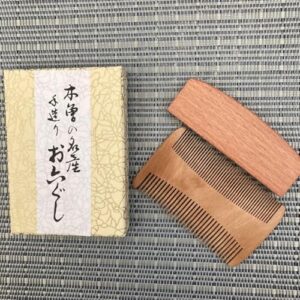 💇Kiso Oroku-gushi Comb (minebari)The other great Japanese comb wood — minebari from Nagano. A direct material comparison to Satsuma boxwood.
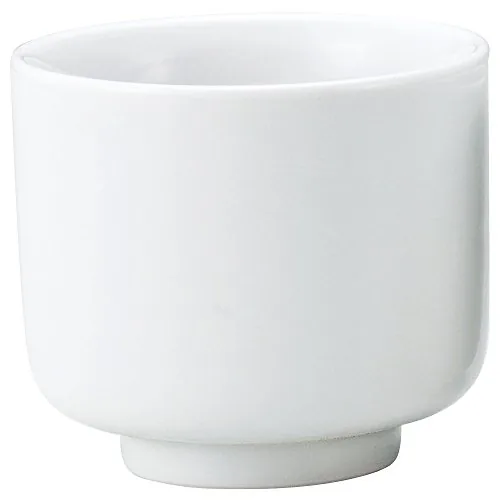 🍶Satsuma Ware Shiro-Satsuma CupAnother craft from the same Satsuma domain and Shimazu patronage — the porcelain side of Kagoshima.
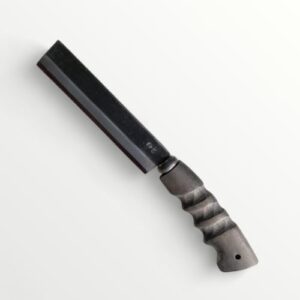 🪓Miyakonojo Nata HatchetA neighboring southern-Kyushu craft (Miyazaki) — bladesmithing rather than woodwork, same regional heritage.
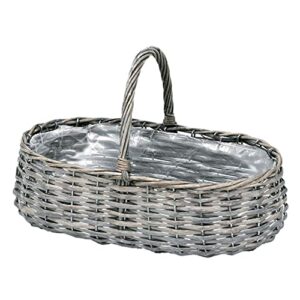 🎍Beppu Bamboo Flower BasketHand-woven Kyushu craft from Oita — a natural-material object in the same heirloom register.
🍚Miyajima Shamoji Rice ScoopAnother hand-finished single-piece wooden object — useful for how Japanese woodware is cared for.
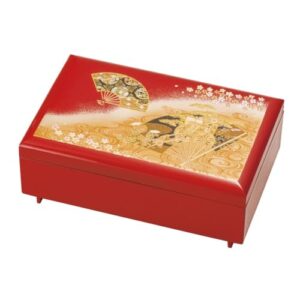 🪵Kyo Sashimono Paulownia BoxA fitted paulownia box makes a natural home for an heirloom comb on a dresser top.
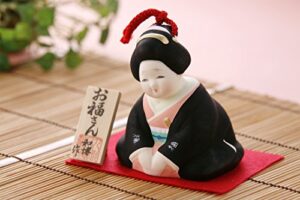 🎎Hakata Ningyo Clay FigurineA Fukuoka (Kyushu) craft in the same gift register — for readers building a Kyushu craft shortlist.
Price snapshot across stores
👉 The table scrolls sideways on mobile. Prices and stock change in real time; confirm on the linked page before buying. Live pricing for this specific item was not captured at the time of writing.
📌 Currency note: For Japanese craft items the JPY (¥) price is authoritative. Any USD figure is an approximate estimate at a ¥150/USD baseline (mid-2026) and moves with the exchange rate. Because this item’s live price was not in the fetched data, we have not printed a converted figure to avoid implying a number we cannot verify.
📦 Shipping & where to buy from outside Japan
A comb is small, light, and non-electrical, so it is one of the easier Japanese craft objects to import — there are no voltage or certification concerns. Orders above your country’s duty-free threshold may attract customs charges on arrival; for a single comb this is usually minor, but verify your local rules before ordering several at once.
What it does well
💆 Antistatic, smoothing pass
Oiled hardwood does not build static the way plastic does. The data suggests the comb glides rather than charges the hair, so it tends to lay strands down instead of lifting them into flyaways — the difference is most obvious in dry winter air.
🧴 Spreads the hair’s own oils
Rather than stripping sebum the way a dry plastic comb can, a camellia-oil-seasoned boxwood comb is traditionally described as distributing the hair’s natural oils from root to tip, which is why it is associated with a smoother finish.
🪵 Dense, hand-cut hardwood
Satsuma boxwood is among the hardest, finest-grained comb stock in Japan. Each tooth is cut and finished by hand, so a good comb feels rigid and even — not the flexing, seam-lined feel of molded plastic.
⏳ Built to be kept, not replaced
These combs are traditionally treated as lifelong objects: re-oiled periodically and repaired rather than thrown away. The data describes them as heirloom-grade, which reframes the price as a decades-long cost rather than a one-season purchase.
Weaknesses and things to verify before buying
- It cannot get wet or hot — wood warps and cracks. Do not soak it, leave it in water, run it through a dishwasher, or use it on soaking-wet hair or near heat. Wipe and air-dry; store dry.
- It needs occasional oiling — to stay smooth and resist cracking, the comb is periodically re-seasoned with camellia (tsubaki) oil. If you want zero maintenance, this is the wrong object.
- Fine-tooth means fine-tooth — this listing is described as a fine-tooth comb, which suits straight-to-wavy and finer hair. Very thick, tightly coiled, or heavily tangled hair is better served by a wide-tooth detangler.
- Exact specs were not in the fetched data — dimensions, weight, and the live price were not captured at the time of writing. Confirm size and price on the listing so you do not order a comb that is too small or too large for your use.
- “Satsuma boxwood” is a quality claim worth checking — boxwood combs vary widely. Look for a clear maker or workshop attribution and a stated camellia-oil finish rather than an unbranded “wood comb,” and treat the origin as something to confirm from the seller.
- Price sits well above plastic — if your budget is under roughly $15, a hardwood seasoned comb is not the category to shop; an acrylic or plastic comb will do the basic job for less.
Where this comes from

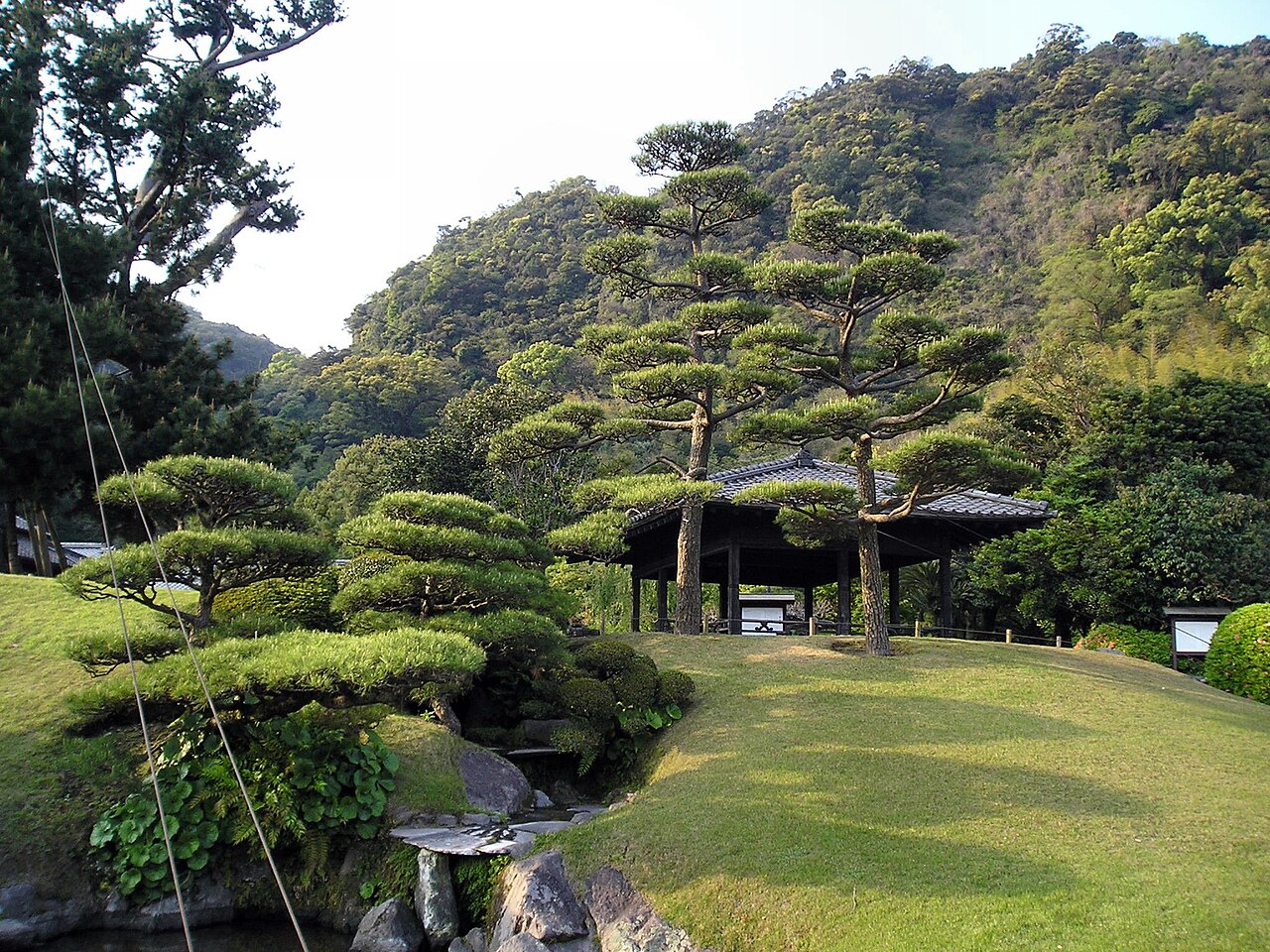
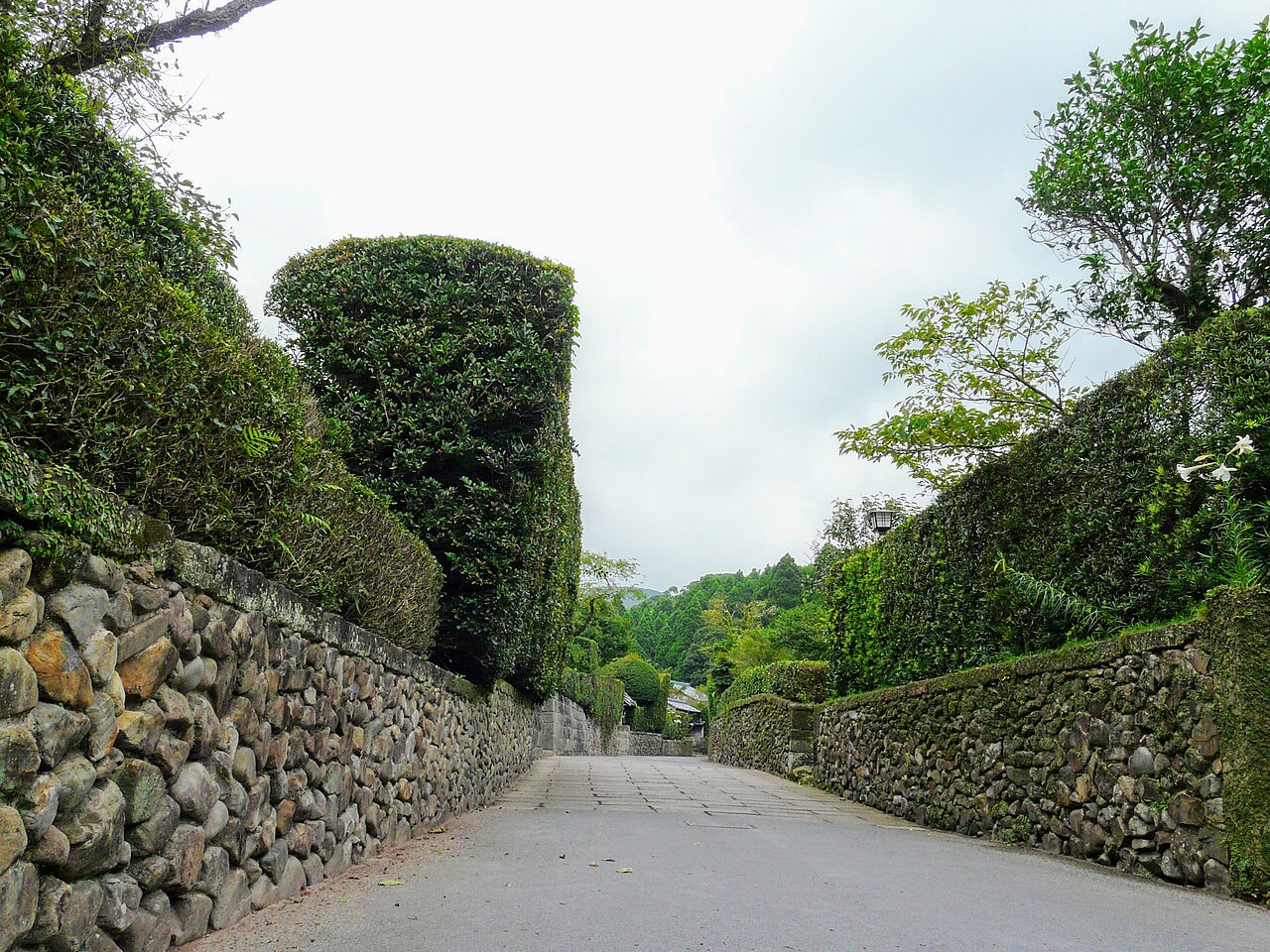
Kagoshima sits at the southern end of Kyushu, Japan’s third-largest main island, on a bay dominated by the active volcano Sakurajima. This is the old land of Satsuma — for centuries the domain of the Shimazu clan, one of the great warrior houses of the south. The climate is the starting point for the comb: warm and humid, southern-maritime, and it grew the local boxwood slowly and densely. That slow, even growth is exactly what makes Satsuma honzuge prized as some of the hardest and finest comb stock in Japan.

Under the Satsuma domain, the Shimazu clan patronized refined regional crafts through the Edo period, the long era of peace from 1603 to 1868 when castle towns across Japan developed specialized artisan trades. Combs had a steady market in that era: chonmage topknot grooming among samurai, and elaborate women’s hairstyles, both demanded finely made combs. Kagoshima’s comb-makers answered with hand-cut work — each tooth shaped by hand — and then a step that distinguishes the craft: the finished comb was seasoned in camellia oil for months, sometimes years, before sale.
- Medieval period — The Shimazu clan becomes the ruling house of Satsuma in southern Kyushu.
- 1603 — The Edo period begins; Satsuma is one of Japan’s largest domains under Shimazu rule.
- Edo period — The warm, humid climate grows dense Satsuma honzuge boxwood, prized as the finest comb wood in Japan.
- Edo period — Samurai chonmage grooming and elaborate women’s hairstyles sustain steady demand for hand-cut combs.
- 1871 — The Meiji-era Cropped Hair Edict (danpatsurei) ends the topknot; comb-making shifts toward long-hair grooming.
- 2026 — Kagoshima remains one of Japan’s two principal boxwood-comb centers, alongside Osaka.
“The wood is grown slowly by the climate, cut tooth by tooth by hand, and then fed camellia oil for months before it is ever sold — a comb that takes longer to finish than most products take to design.”
What does “still being made here” mean today? Kagoshima remains one of only two principal centers of Japanese boxwood-comb making, the other being Osaka. The materials and the method — dense local boxwood, hand-cut teeth, a long camellia-oil seasoning — are continuous with the Edo-period craft, and a comb made this way is still treated as something to keep: re-oiled, repaired, and handed on rather than discarded. That continuity, more than any single founding date, is what you are buying into.

Conclusion — which buyer type are you?
Premium / heirloom buyer
You want the real thing — Satsuma boxwood, hand-cut, camellia-oil finished, kept for decades. → The Editor’s Pick (B09B6TH7FV) is the match; confirm size on the listing.
Mainstream “fix the static” buyer ★most readers
You mainly want an antistatic, hair-friendly daily comb and like that it lasts. → A fine-tooth Satsuma boxwood comb suits straight-to-wavy hair well.
Budget buyer
You want most of the benefit for less. → Browse Japanese boxwood combs on Amazon US for entry-tier options, or compare minebari combs first.
Skip it
You want zero upkeep, a comb you can soak or run through a dishwasher, or have very thick coiled hair. → A wide-tooth plastic or acrylic comb is the realistic choice.
※ The Editor’s Pick with buy links is in the next-to-last section below.
Other ways to approach this purchase
Wait for a sale
Craft items discount less aggressively than electronics, but Amazon JP Global Store listings do move during seasonal events. If you are not in a hurry, watch the listing and buy on a dip.
Repair instead of replace
Because boxwood combs are heirloom-grade, the “refurbished” path here is upkeep: re-oil a dull comb with camellia oil and it often recovers, which is cheaper than buying new.
Points & rewards
If you already use Amazon points or a cashback card, a small craft purchase is a low-risk way to spend them. The comb’s modest size also keeps international shipping affordable.
Skip it
If the upkeep or the keep-it-dry rule does not fit your routine, it is honest to skip. A boxwood comb rewards a little care; without it, a plastic comb serves you better.
🏆 Editor’s Pick
❓ Frequently Asked Questions
Does Amazon JP Global Store ship a Satsuma boxwood comb internationally?
How do I care for a boxwood comb?
Why is a boxwood comb antistatic?
How is Satsuma boxwood different from a minebari (Kiso Oroku) comb?
Is it a good gift?
Why is the price not listed in this article?
jpmono.com is curated by a Japan-based editorial team (working out of Toyama in the Hokuriku region and Nara in Kansai) and is independent. We do not take payment from the makers we feature; income comes from affiliate links. We do not physically test every product — we read maker specs and source listings — and we flag thin data plainly. Read more about our editorial standards.
🤖 This article was drafted with AI assistance and edited against the source listing and curated references by the jpmono editorial team. Specifications, pricing, and availability can change after publication; the linked retailer pages hold the authoritative current data.
Affiliate disclosure: jpmono.com may earn a commission on qualifying purchases made through links on this page, at no additional cost to you.