![Matsushiro-yaki Katakuchi Sake Pourer: Nagano Blue-Green Glaze Pottery [2026]](https://jpmono.com/wp-content/uploads/2026/05/japan-map-regions-and-prefectures-800x1050.png)
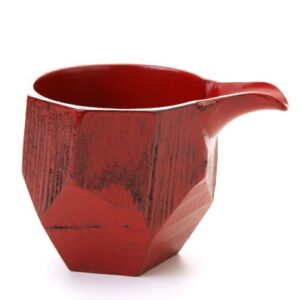
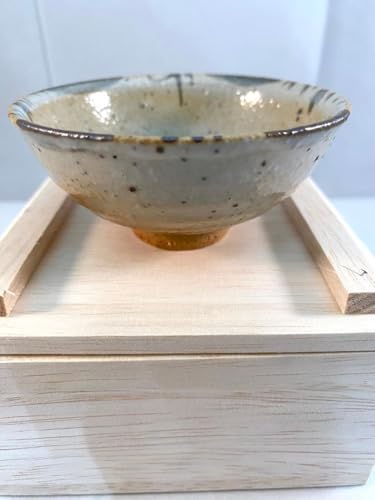
A katakuchi (片口, “single-spout pourer”) is one of the quietest objects on a Japanese table, and one of the most useful. It is a small open bowl with a single lip pulled out for pouring, and at a meal it does the work of a decanter: chilled sake goes into it from the bottle, and from its spout into each cup. The piece covered here is a katakuchi in Matsushiro-yaki (松代焼, “Matsushiro ware”), the domain pottery of Matsushiro — the castle town in Nagano that the Sanada clan governed after Sanada Nobuyuki was transferred there from Ueda in 1622.
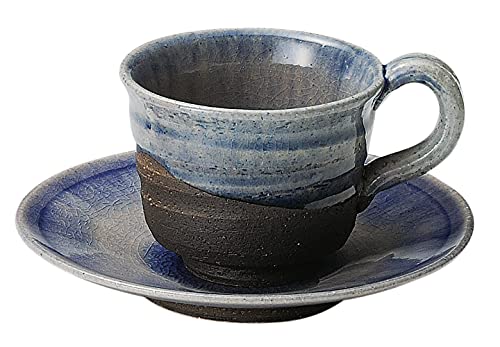
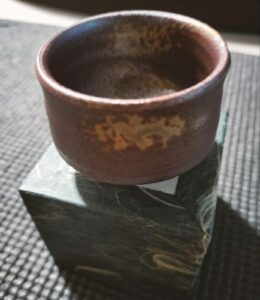
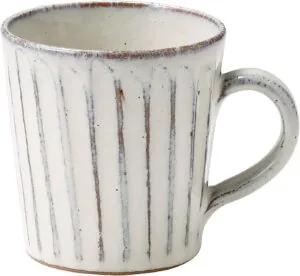
What sets Matsushiro-yaki apart is the glaze. Its signature is a blue-green nagashi-gake (流し掛け, “poured” or “dripped” glaze) derived from ash and copper, which pools and runs over a dark stoneware body into namako-like greens and blues. On a katakuchi, that runny, pooling glaze is shown off well — it gathers at the foot and around the spout, so no two pieces read quite the same. The form sits naturally inside Shinshū’s sake-and-soba culture: Nagano’s cold climate and pure water made it a noted sake-brewing region, and a katakuchi is the traditional vessel for serving chilled sake at the table.
This article is written for readers outside Japan deciding whether a niche, domain-tradition pottery piece is worth the import effort. We cover what the form is for, where it comes from, how it compares with lacquer and other regional sake vessels we have reviewed, where to buy it, and — honestly — who should skip it. Today only a small number of workshops keep Matsushiro-yaki alive, which makes this a JP-centric purchase rather than a mass US-distributed line.
🔄 Updated:
⏱️ Read time: ~12 min
- Who this is for — and who should skip it
- Product overview (from published specs)
- Where this comes from — place, era, and the craft tradition
- Buying options compared
- What it does well
- Weaknesses and things to verify before buying
- Conclusion — which buyer type are you?
- Other ways to approach this purchase
- ❓ Frequently Asked Questions
Who this is for — and who should skip it
- Serve chilled sake or cold soba dipping broth and want a traditional table pourer rather than a tokkuri flask
- Like reduction-fired, copper-ash glazes where pooling and color variation are the point, not a defect
- Collect regional Japanese pottery and want a piece tied to a specific domain (Sanada-era Matsushiro)
- Prefer a quiet, dark stoneware aesthetic over bright porcelain
- Are comfortable importing from Japan and checking product details before buying
- Want a fast, US-stocked, Prime-shipped item — Matsushiro-yaki is niche and JP-sourced
- Expect every piece to look identical to the photo — the glaze varies by firing
- Need precise published dimensions and weight before buying (data here is thin)
- Prefer dishwasher-safe, fully uniform glazed porcelain
- Are buying purely on lowest price — a domain-tradition stoneware piece carries a craft premium
Product overview (from published specs)
The table below summarizes the established characteristics of the Matsushiro-yaki katakuchi form and marks details that are not established here rather than guessing.
| Attribute | Detail | Source |
|---|---|---|
| Craft | Matsushiro-yaki (Matsushiro ware), Nagano domain pottery | Maker tradition / data notes |
| Form | Katakuchi — single-spout open pourer for serving | Data notes |
| Body | Dark stoneware | Maker tradition |
| Glaze | Blue-green nagashi-gake (poured/dripped) ash-and-copper glaze, pooling into namako-like greens and blues | Maker tradition / data notes |
| Dimensions | Varies by piece | Not in fetched data |
| Weight | Varies by piece | Not in fetched data |
| Origin | Matsushiro, Nagano (Nagano city), Chūbu region | Data notes |
📖 Glossary — key terms in this article
- katakuchi (片口) — a bowl with one pulled-out lip, used as a pourer for sake, broth, or dressings.
- nagashi-gake (流し掛け) — a “poured” or “dripped” glaze application; glaze is ladled over the body and allowed to run, leaving streaks and pools.
- namako (海鼠) — literally “sea cucumber”; a term for milky blue-green glaze effects produced by ash and reduction firing.
- -yaki (焼) — “ware” / “fired”; the suffix for a pottery tradition named after its place (Matsushiro-yaki, Bizen-yaki, Hagi-yaki).
- Shinshū (信州) — the historical name for the Nagano region; widely used for its sake, soba, and apples.
- guinomi (ぐい呑み) — a small sake cup, larger than an ochoko; the cup a katakuchi pours into.
- Sanada (真田) — the warrior clan that governed Matsushiro from 1622; their patronage frames the domain kiln.
Related jpmono guides — other Nagano crafts, other katakuchi pourers, and other regional sake vessels worth weighing against this one.
Where this comes from — place, era, and the craft tradition

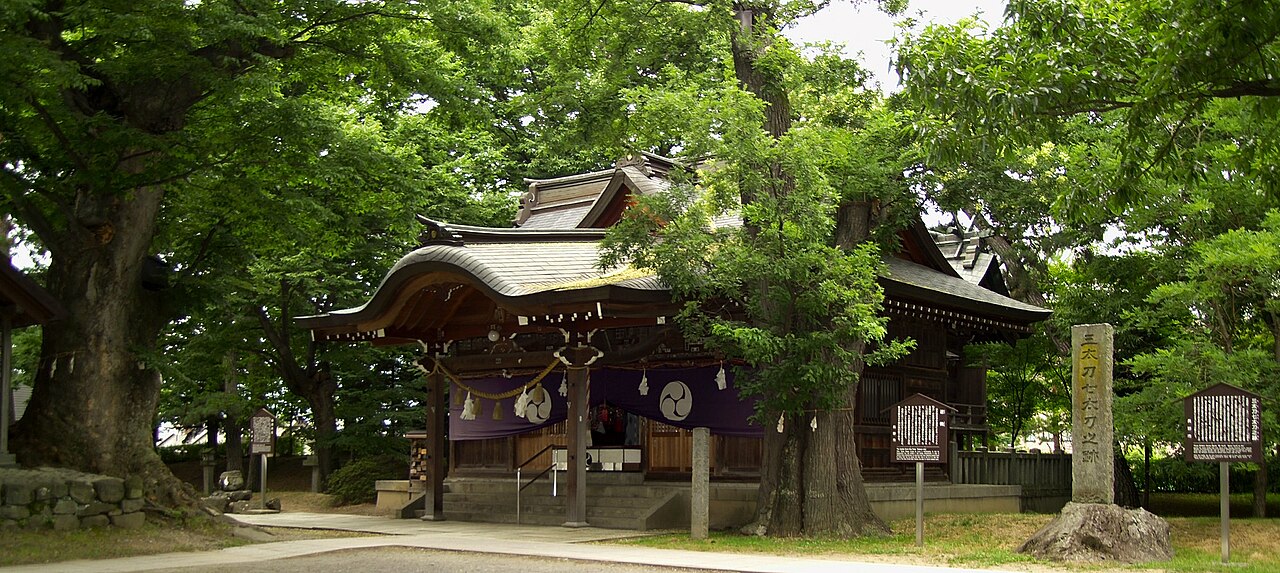
Matsushiro sits in the Shinshū highlands of central Japan, a district at the southern edge of present-day Nagano city, where the Chikuma River runs through a basin ringed by mountains. This is high, cold country — Nagano is one of the most mountainous prefectures in Japan — and that climate matters to the craft. Cold winters and clean snowmelt water made the region a noted sake-brewing area, and the same basin around Matsushiro is famous well beyond its pottery for its warring-states history.
A few kilometers north lies the plain of Kawanakajima, where the armies of Uesugi Kenshin and Takeda Shingen fought a series of battles between roughly 1553 and 1564 — among the most storied clashes of the Sengoku period. The land changed hands more than once before the Tokugawa peace settled it, and that is the backdrop against which the Sanada arrived.
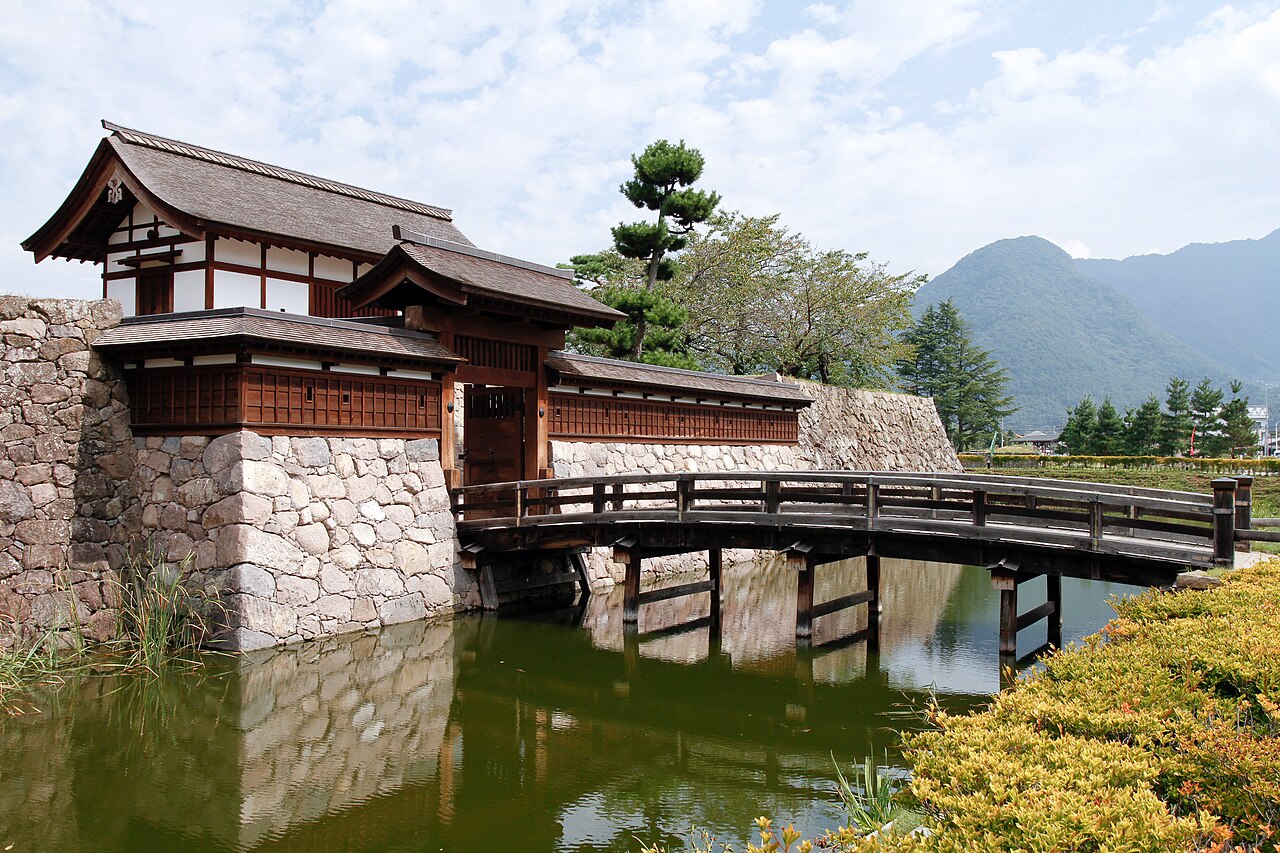
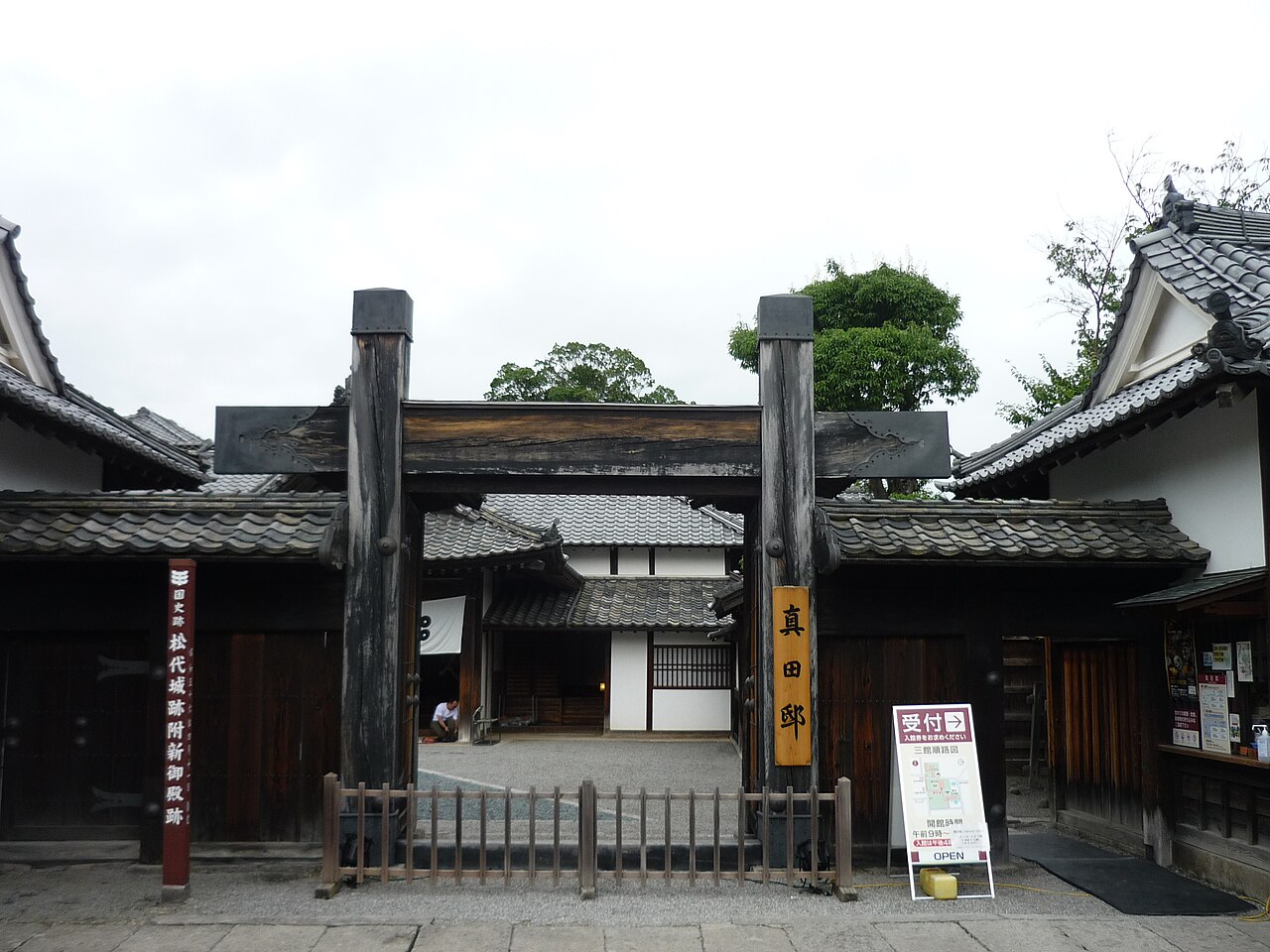
In 1622, Sanada Nobuyuki was transferred from Ueda to Matsushiro, and the Sanada clan would govern the Matsushiro domain from this castle for the rest of the Edo period. Matsushiro-yaki is the domain pottery of that castle town — its tradition tied to the domain’s patronage. The kiln’s signature, the blue-green nagashi-gake glaze of ash and copper, belongs to this lineage of locally fired stoneware made for daily and ceremonial use under the domain’s wing.
- 644 (traditional) — Zenkō-ji, the great pilgrimage temple of nearby Nagano, is founded by tradition; it anchors the region’s later craft-and-merchant economy.
- c. 1553–1564 — The Battles of Kawanakajima are fought on the plain just north of Matsushiro between Uesugi Kenshin and Takeda Shingen.
- 1600 — Sanada Nobuyuki aligns with the Tokugawa side at the close of the Sengoku wars, preserving his branch of the family.
- 1622 — Sanada Nobuyuki is transferred from Ueda to Matsushiro; the Sanada govern the domain for the rest of the Edo period, and Matsushiro-yaki develops under domain patronage.
- 1868 — The Meiji Restoration ends the domain system; domain-supported kilns across Japan lose their patrons and many contract sharply.
- 2026 — Only a small number of workshops keep Matsushiro-yaki alive, making it a niche, collector-facing ware rather than a mass-distributed line.
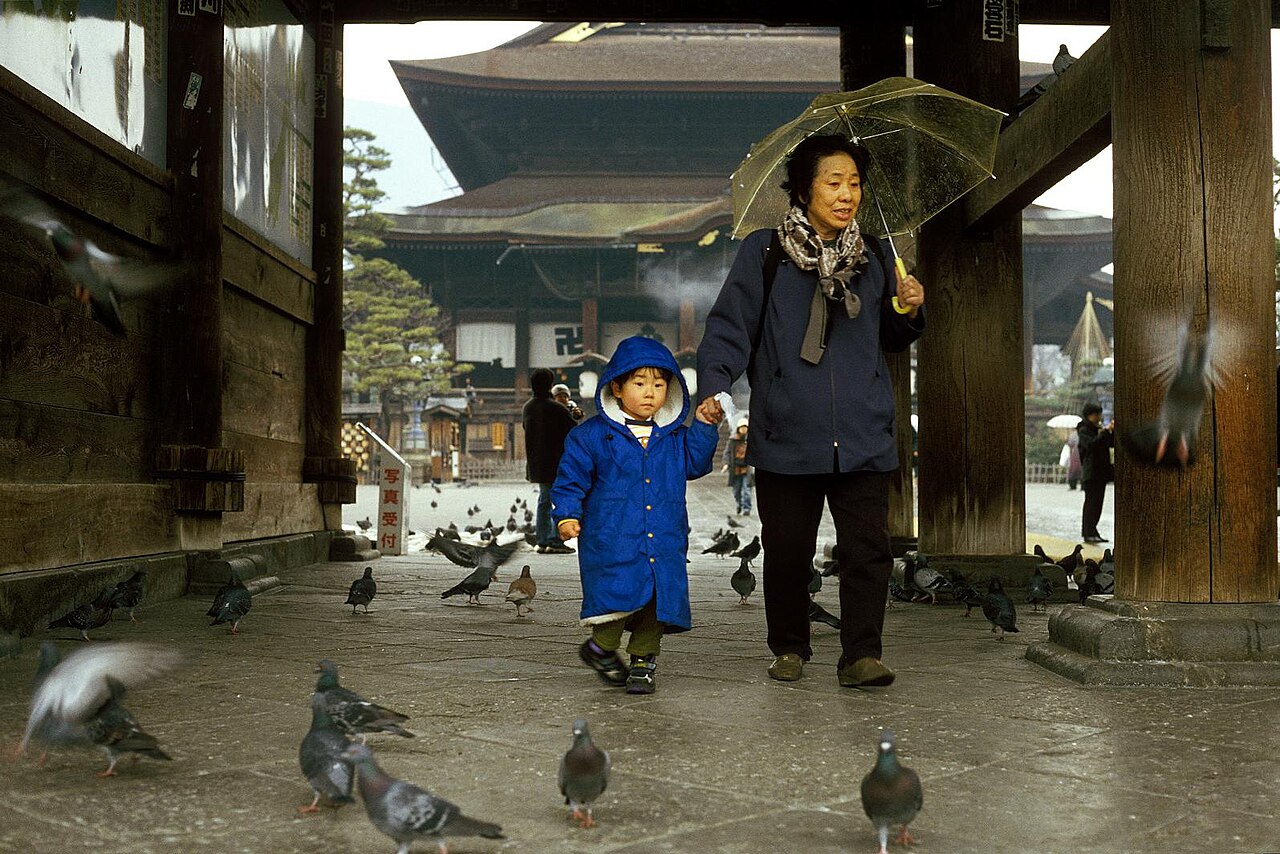
To the north, in central Nagano, stands Zenkō-ji — a pilgrimage temple founded by tradition in the 7th century, which for centuries drew travelers and trade through the basin and supported a dense local economy of merchants and craftspeople. That pilgrimage traffic is part of why a small domain town could sustain its own ware: there was a market for everyday pottery as well as the demand of the samurai household.
“The glaze is the record of the firing — copper and ash, poured and let run, freeze into greens and blues that no two pieces share.”
What “still being made here” means for Matsushiro-yaki is more modest than for a large designated industry. This is not a hundred-workshop district; today only a handful of workshops keep the tradition going. That scarcity is the honest reason a katakuchi like this one is a JP-centric import rather than something you will find Prime-shipped in the United States — and, for a certain kind of buyer, it is also the appeal. A piece from a small surviving domain kiln carries a specificity that mass tableware does not.
Buying options compared
JPY is the standard currency for this guide. USD figures, where shown, are approximate at a ¥150/USD baseline as of mid-2026. The guide does not quote a current price for a particular piece, so amounts may change over time.
| Store | Item / Variant | Price (JPY + USD est.) | Notes |
|---|---|---|---|
| 🇺🇸 Amazon US (search) | Browse Japanese katakuchi & sake pourers | varies (USD) | Best if you are shopping from the US — Prime shipping, USD pricing, no customs. Amazon US carries Japanese sake sets and katakuchi from various makers for comparison; the exact Matsushiro-yaki piece ships from Japan (next row). |
| 🇯🇵 Amazon JP Global Store | Matsushiro-yaki katakuchi | Check current availability | Ships internationally from Japan to most major destinations. |
| Maker direct | Matsushiro-yaki workshop pieces | Unconfirmed — check maker site | A few surviving workshops; availability varies and seller information is often in Japanese. |
| Proxy services (Buyee / Tenso) | Japan-based stores with overseas forwarding | Item price + forwarding fee + shipping | Useful when a piece is only sold on a Japan-only store; adds a service fee and a consolidation step. |
Prices and stock fluctuate; USD figures are approximate and depend on the current exchange rate. Always verify the current figure at the retailer before purchasing.
What it does well
Weaknesses and things to verify before buying
- Piece-to-piece variation. The nagashi-gake glaze varies by firing; the item you receive will not match the catalog photo exactly. This is intended in the tradition but disappoints buyers expecting uniformity.
- Niche supply. With only a small number of workshops still active, stock can be intermittent.
- Care and durability. Glazed stoneware can craze or chip; treat it as hand-wash unless care guidance says otherwise.
- Import friction. As a JP-sourced item it travels via Amazon JP Global Store or a proxy; factor in international shipping time, possible customs duties, and the lack of US-local returns.
Conclusion — which buyer type are you?
Other ways to approach this purchase
❓ Frequently Asked Questions
What is a katakuchi used for?
A katakuchi is a single-spout pouring bowl. At the table it serves chilled sake from the bottle into individual cups, and it also works for cold soba dipping broth, dressings, and sauces.
Does Amazon JP Global Store ship this internationally?
Amazon JP Global Store ships many household items internationally to most major destinations. Confirm shipping eligibility, cost, and estimated delivery at checkout, since coverage varies by item and country.
Why does the glaze look different from the photo?
Matsushiro-yaki’s nagashi-gake glaze is poured and allowed to run, so its greens and blues pool differently in each firing. Variation from the catalog image is expected and is part of the tradition, not a defect.
How should I care for it?
Treat glazed stoneware as hand-wash and avoid thermal shock. Do not assume dishwasher or microwave safety unless care guidance for the piece confirms it.
How is this different from a lacquer katakuchi?
Stoneware like Matsushiro-yaki is heavier, cool to the touch, and holds a chill — good for cold sake. A lacquer katakuchi, such as Tosa-shikki, is lighter and warmer in the hand and insulating rather than chilling. The choice depends on whether you prioritize a cool surface or warmth and lightness.
Is it a good gift?
Yes, for someone who enjoys sake and appreciates regional craft. Its specific Sanada-domain origin and individual glaze give it a story, which suits a milestone or housewarming gift more than a generic set does.
jpmono.com is curated by a Japan-based editorial team (working out of Toyama in the Hokuriku region and Nara in Kansai) and is independent. We do not take payment from the makers we feature; income comes from affiliate links. We read maker specifications and craft references rather than physically testing every product.
Affiliate disclosure: jpmono.com may earn a commission on qualifying purchases made through links on this page, at no additional cost to you.