![Kasama-yaki Oval Plate: Ibaraki Kanto Stoneware, Where to Buy [2026]](https://jpmono.com/wp-content/uploads/2026/06/kasama-yaki-oval-serving-plate-where-to-buy-2026-featured.jpg)
Kasama-yaki (笠間焼, “Kasama ware”) is the oldest pottery tradition in the Kantō plain — the broad lowland that surrounds Tokyo. It was born in the 1770s in the castle town of Kasama, in what is now Ibaraki Prefecture, when a farmer named Kuno Hanbei opened a kiln with technical help from potters of distant Shigaraki, under the patronage of the local Kasama domain. The iron-rich clay underfoot gave the ware its defining character: sturdy, slightly dark in the body, and well suited to the everyday jars, bottles, and kitchen vessels it once shipped down to nearby Edo.
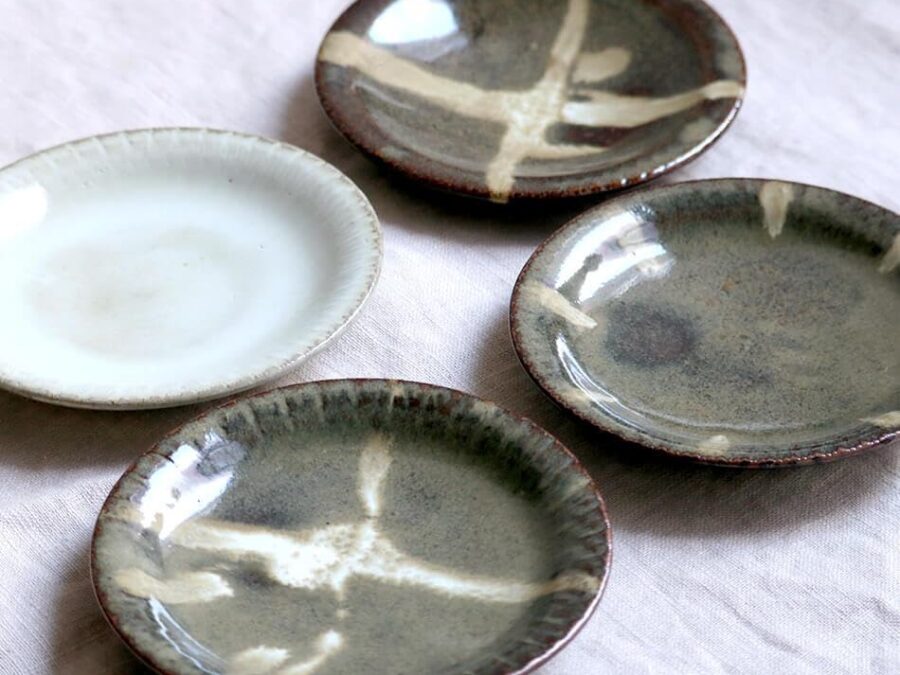
The oval serving plate covered here carries that lineage onto a contemporary Western table. It is hand-glazed iron-glaze stoneware, made in Kasama, and shaped for the food most households actually plate at home — a grilled fish, a tumble of roasted vegetables, a wedge of cake, or a small spread of cheese. Unlike many Japanese ceramic towns, Kasama never settled on a single signature look; after World War II it became a magnet for independent studio potters, which is precisely why a “Kasama” plate reads less like a museum piece and more like a working object.
This guide is written for readers shopping from outside Japan who want to understand what they are buying before they commit. We cover where Kasama-yaki comes from, what the listing does and does not confirm, how it compares to neighboring Japanese ceramics, where to buy it (Amazon US search first, Amazon JP Global Store second), and who should pass on it. A note on data: at the time of writing, only a sparse Amazon JP listing snapshot was available for this item — no live price, weight, or exact dimensions were returned in the fetched data. Where a spec is unverified, this article says so plainly rather than guessing.
🔄 Updated:
⏱️ Read time: ~10 min

- Who this is for — and who should skip it
- Product overview (from published specs)
- Where this comes from — place, era, and the craft tradition
- What it does well
- Weaknesses and things to verify before buying
- Conclusion — which buyer type are you?
- Other ways to approach this purchase
- Price snapshot across stores
- 🏆 Editor’s Pick
- ❓ Frequently Asked Questions
Who this is for — and who should skip it
- Want one versatile oval plate that handles fish, sides, dessert, and small spreads
- Like the dark, iron-toned, slightly rustic look of Kantō stoneware
- Prefer hand-glazed pieces where minor color variation is expected, not a defect
- Are building a mixed table of studio ceramics rather than a matched factory set
- Appreciate buying from a documented National Traditional Craft tradition
- Need a guaranteed exact size or weight — the listing snapshot did not confirm dimensions
- Want a flawless, perfectly uniform machine-made finish
- Require confirmed dishwasher- or microwave-safe certification before buying
- Are price-sensitive and unwilling to absorb international shipping and possible customs
- Prefer bright white porcelain — iron-glaze stoneware reads darker and earthier
Product overview (from published specs)
The table below reflects what could be confirmed from the available sources at the time of writing. Only a sparse Amazon JP listing snapshot was available; live pricing and exact measurements were not returned in the fetched data, and those cells are marked accordingly. Specs were not invented to fill gaps.
Kasama-yaki Oval Plate
オーバル皿 笠間焼 陶器 プレート 楕円皿 2枚
通常6~7日以内に発送します。 · Sold by 扇屋-OHGIYA- · ASIN B0H1N742MR
Price and availability as of 2026-08-31 02:30 JST. The Amazon listing at the time of purchase is authoritative. jpmono.com earns a commission on qualifying purchases at no extra cost to you.
| Attribute | Detail | Source |
|---|---|---|
| Item | Kasama-yaki oval serving plate | Listing title |
| Craft / type | Kasama-yaki (Kasama ware), iron-glaze stoneware | Listing + maker tradition |
| Material | Iron-rich stoneware clay, hand-glazed | Tradition / data notes |
| Origin | Kasama, Ibaraki Prefecture, Kantō region, Japan | Data notes |
| Dimensions | Unconfirmed — check listing before buying | Not in fetched data |
| Weight | Unconfirmed — check manufacturer / listing | Not in fetched data |
| Item ID (ASIN) | B0H1N742MR | Amazon JP Global Store |
| Designation | National Traditional Craft (METI), as a Kasama-yaki product | Data notes |
Store labels used throughout this guide: Amazon US (search) (primary, tag moonill-20) → Amazon JP Global Store (secondary, sourced listing, tag moonill-22) → Maker direct → Proxy services (Buyee / Tenso) where relevant.
📖 Glossary — key terms in this article
- Kasama-yaki (笠間焼) — “Kasama ware,” the stoneware tradition of Kasama city, Ibaraki; the oldest pottery of the Kantō region.
- Stoneware — high-fired, dense, non-porous clay ceramic; tougher and darker-bodied than porcelain, more durable than low-fired earthenware.
- Iron glaze — a glaze colored by iron oxide, producing earthy browns, ambers, and near-blacks; characteristic of iron-rich Kantō clays.
- Kantō (関東) — the lowland plain region around Tokyo; Ibaraki sits on its northeastern edge.
- Fudai han (譜代藩) — a “hereditary” feudal domain whose lord was a long-standing Tokugawa retainer; the Kasama domain was one.
- An’ei era (安永) — the Japanese era 1772–1781, the conventional dating window for Kasama-yaki’s founding.
- METI — Japan’s Ministry of Economy, Trade and Industry, which designates “National Traditional Crafts.”
- Inari (稲荷) — the Shintō deity of rice, harvest, and prosperity; Kasama Inari is one of Japan’s three great Inari shrines.
Related jpmono guides to neighboring Japanese ceramics and Kantō-area crafts — useful for comparing clay bodies, glaze families, and price tiers.
Same prefecture — Ibaraki kozo paper
Mashiko Kaki-Glaze Rice Bowl
Kasama’s twin pottery town next door
Fujina Slipware Plate
Another folk-craft serving plate
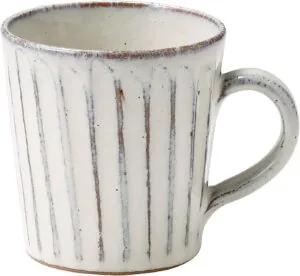 Shigaraki Hechimon Mug
The tradition that seeded Kasama
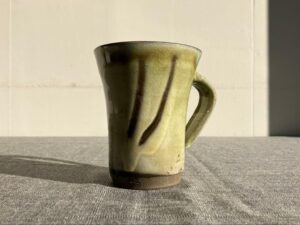 Onta-yaki Mug
Folk-kiln stoneware, compared
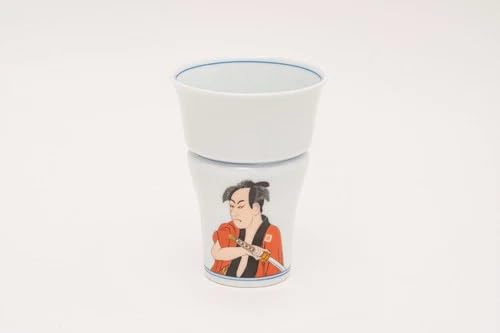 Otani-yaki Tumbler
Large-form stoneware drinkware
 Chichibu Meisen Stole
Another Kantō-region craft
Where this comes from — place, era, and the craft tradition

Kasama sits in central Ibaraki Prefecture, on the northeastern shoulder of the Kantō plain — the wide lowland that spreads out from Tokyo Bay. It is a castle town in the literal sense: a former seat of the Kasama domain, a fudai han whose lord was a hereditary Tokugawa retainer, and a place organized for centuries around its shrine and its kilns. Iron-bearing clay in the surrounding hills gave local potters a raw material that fired dense and dark, and the town’s position within reach of Edo (old Tokyo) gave them a market for the jars, bottles, and kitchen vessels that early Kasama-yaki specialized in.
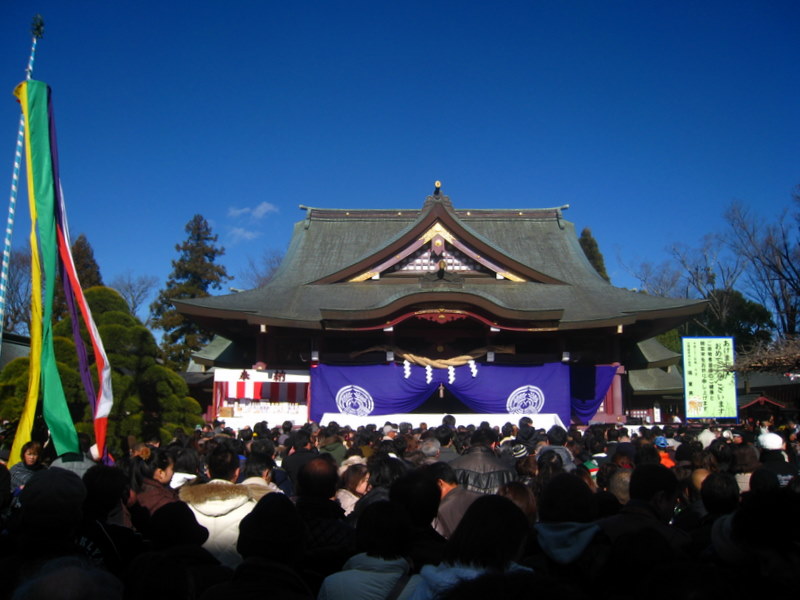
The conventional founding date falls in the 1770s, in the An’ei era. By tradition, a Kasama farmer, Kuno Hanbei, opened the first kiln with technical help from potters of Shigaraki — the famous stoneware town near Kyoto, hundreds of kilometers to the west. The Kasama domain backed the new industry, and over the following decades Kasama grew into the workhorse pottery of the Kantō region, sending sturdy utilitarian ware down to the enormous consumer market of Edo.
“Kasama-yaki is the oldest pottery of the Kantō plain — the everyday stoneware that supplied Edo’s kitchens long before it became a destination for studio potters.”
-
1770s (An’ei era) — Kuno Hanbei opens the first Kasama kiln with technical help from Shigaraki potters, under Kasama domain patronage. -
Late Edo period — Production grows; Kasama ships everyday jars, bottles, and kitchenware to nearby Edo. -
Meiji–Taishō era — Kasama remains a center of tough, iron-bodied utilitarian stoneware for daily use. -
Post-1945 — Kasama becomes a magnet for independent studio potters; the town adopts no single house style. -
Late 20th century — Kasama-yaki is designated a National Traditional Craft by Japan’s METI. -
Today — Kasama and neighboring Mashiko form a twin pottery cluster on the Kantō plain.
Kasama did not develop the way many Japanese ceramic towns did. Places like Arita or Bizen are defined by a single recognizable look; Kasama, by contrast, is defined by its variety. After World War II, the town’s open, low-barrier kiln culture drew independent studio potters who came to make their own work rather than reproduce a fixed regional style. That is why two Kasama plates from two makers can look almost unrelated — and why the tradition feels alive rather than frozen.
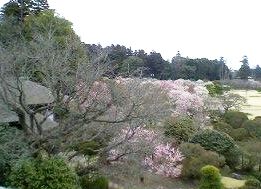
The wider region carried real cultural weight. Kasama, a hereditary Tokugawa domain, sat in the orbit of the powerful Mito domain — one of the three senior branches of the Tokugawa house — whose seat at Mito is home to Kairakuen, counted among Japan’s three great landscape gardens. This was not a remote backwater; it was a culturally invested corner of the Tokugawa world, and that patronage context helps explain why a farmer’s kiln could grow into a recognized regional industry.
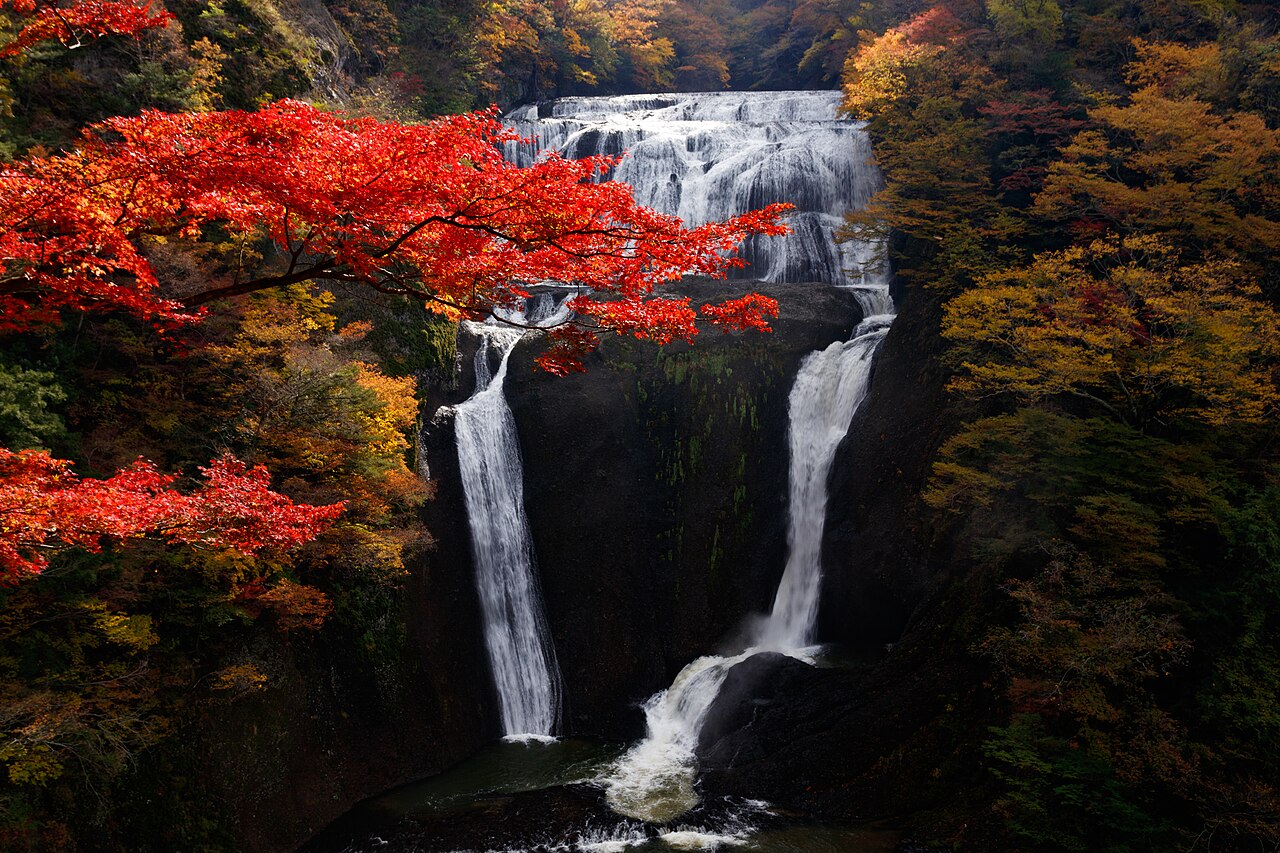
Ibaraki is a water-rich, agricultural prefecture, and its rural craft economy grew out of that landscape — clay from the hills, fuel from the forests, and a steady local demand for the practical vessels of farm and kitchen life. Kasama-yaki belongs to that world: it was never primarily a luxury ware, but a sturdy, useful stoneware that happened to be made with enough care and clay quality to outlast its era and earn national recognition.
What it does well
Weaknesses and things to verify before buying
- Dimensions are unconfirmed. The fetched listing snapshot did not return exact length, width, or depth. If size matters for your table or storage, confirm it on the live listing before ordering.
- Weight is unconfirmed. Stoneware plates can be substantial; the data did not state a weight. Check the listing if heft is a concern.
- Price was not available. No live price was returned at the time of writing — only an Amazon JP listing snapshot. Verify the current JPY price (and your USD equivalent at checkout) before committing.
- Care labels need checking. Dishwasher-, microwave-, and oven-safety were not confirmed in the data. Hand-glazed stoneware is often dishwasher-tolerant but not guaranteed; treat unconfirmed care claims cautiously.
- Hand-glazed variation is inherent. Color, tone, and minor surface differences between pieces are expected in iron-glaze stoneware and should not be mistaken for defects. Buyers wanting perfect uniformity should look at porcelain instead.
- International shipping and customs add cost and time. Buying from Amazon JP Global Store means cross-border shipping and the possibility of import duties depending on your country’s thresholds.
Conclusion — which buyer type are you?
Other ways to approach this purchase
Price snapshot across stores
JPY (¥) is the authoritative price for the specific listed item; USD figures are approximate estimates at a ¥150/USD baseline (mid-2026). At the time of writing, no live price was returned in the fetched data — verify current pricing at the retailer before buying.
| Store | Item / variant | Price (JPY + USD est.) | Notes |
|---|---|---|---|
| 🇺🇸 Amazon.com (US) | Browse Japanese stoneware serving plates | varies (USD) | Best if you are shopping from the US — Prime shipping, USD pricing, no international customs. Amazon US carries comparable Japanese stoneware and serving plates for comparison; this exact Kasama piece is sourced from Japan (next row). |
| 🇯🇵 Amazon JP Global Store | Kasama-yaki oval serving plate (ASIN B0H1N742MR) | Price not confirmed in fetched data — verify on listing | The sourced listing for the specific item in this guide. Ships internationally from Japan to most major destinations. |
| Maker direct | Individual Kasama potter / pottery association | Varies by artist | Best for a specific maker’s hand; international shipping support varies by studio. |
| Proxy services (Buyee / Tenso) | Forwarding of a Japan-domestic purchase | Item price + handling + forwarding | Useful when a piece is not on the Global Store; adds handling fees and a second shipping leg. |
🏆 Editor’s Pick
❓ Frequently Asked Questions
What is Kasama-yaki, exactly?
Kasama-yaki is the stoneware tradition of Kasama city in Ibaraki Prefecture — the oldest pottery of Japan’s Kantō region. It began in the 1770s with technical help from Shigaraki potters under the patronage of the Kasama domain, and is designated a National Traditional Craft by Japan’s METI.
Does this plate ship internationally?
The listing is sourced from Amazon JP Global Store, which ships to most major international destinations. Expect cross-border shipping costs and the possibility of import duties depending on your country’s thresholds. Readers in the US can also browse comparable Japanese stoneware on Amazon US for domestic Prime shipping.
Is it dishwasher- and microwave-safe?
Care certifications were not confirmed in the available data. Hand-glazed stoneware is often dishwasher-tolerant, but this is not guaranteed for this piece. Verify the care labeling on the live listing before assuming machine washing or microwaving is safe.
Why do two Kasama plates look so different?
Kasama never settled on one signature style. After World War II it became a home for independent studio potters, so individual makers’ work varies widely in glaze, color, and form. Variation is a feature of the tradition, not a defect.
How is Kasama-yaki related to Mashiko ware?
Kasama (Ibaraki) and Mashiko (Tochigi) are neighboring pottery towns that form a twin ceramic cluster on the Kantō plain. They share clay and folk-craft roots; many collectors consider their styles complementary. See our Mashiko kaki-glaze rice bowl guide linked above for a direct comparison.
What are the exact dimensions and weight?
The fetched listing snapshot did not return confirmed dimensions or weight. If size or heft matters for your table, storage, or handling, check the current Amazon JP listing directly before ordering. This guide does not estimate measurements that the data did not provide.
jpmono.com is curated by a Japan-based editorial team (working out of Toyama in the Hokuriku region and Nara in Kansai) and is independent. We do not take payment from the makers we feature; income comes from affiliate links. Read more about our editorial standards.
This article was researched and drafted with AI assistance and reviewed against the available source data before publication. Where the source data was thin — notably live pricing and exact dimensions for this listing — the article states the limitation rather than estimating.
Affiliate disclosure: jpmono.com may earn a commission on qualifying purchases made through links on this page, at no additional cost to you.