![Aizu Hongo-yaki Nishin-bachi Baking Dish: Where to Buy [2026]](https://jpmono.com/wp-content/uploads/2026/07/aizu-hongo-yaki-nishin-bachi-where-to-buy-2026-featured.jpg)
- What it is: a rectangular amber-glazed stoneware dish, roughly 20–24 cm long, built for pickling and oven work
- Made in: the Hongo district of Aizumisato, Fukushima Prefecture — Tōhoku’s oldest pottery town, with kilns firing since 1593
- Price band: mid-range for hand-thrown Japanese stoneware; check the live listing, as this piece is sourced from Amazon Japan
- Best for: cooks who want one vessel that pickles, bakes, marinates, and serves without changing dishes
- Skip if: you want a light, stackable, dishwasher-indifferent everyday plate — this is heavy, deep, and awkward in a rack
- Shipping: ships internationally from Amazon Japan — jump to our pick ↓
In the Aizu basin, herring arrives dried. The nearest sea is a mountain range away, so for centuries the fish came inland as migaki-nishin (身欠きにしん) — split, boned, and dried hard enough to survive the pass — and the only way to make it edible again was to soak it for days in vinegar and soy with sanshō leaves. That process needed a specific container: straight-sided, deep enough to submerge a stacked layer of fish, narrow enough to keep the liquid over them, and glazed tightly enough that acid could sit in it for a week without touching the clay.
That container is the nishin-bachi (にしん鉢), and it is the signature form of Aizu Hongo-yaki (会津本郷焼), the oldest ceramic production district in the Tōhoku region. Its usual dress is ameyu (飴釉) — literally “candy glaze,” an iron glaze that fires to a deep amber-brown somewhere between maple syrup and dark toffee. The combination is unusually specific: a regional cuisine and a regional vessel that were designed around each other and then stayed together for three hundred years.
This guide is written for readers outside Japan who are weighing a rectangular Japanese stoneware dish for real kitchen use rather than display. We cover what the form actually does well, what the sparse listing data can and cannot confirm, how the amber glaze behaves in an oven and a refrigerator, how to buy it from the US, Canada, the UK, or Australia, and where it sits against the other Tōhoku ceramics we have covered.
🔄 Last updated: July 20, 2026
⏱️ Read time: about 14 minutes

ℹ️ Live pricing and some dimensional specs were not in our snapshot — the linked listing is authoritative; unconfirmed attributes are marked below.
- Who this is for — and who should skip it
- Product overview (from published specs)
- 📍 Where this comes from — place, era, and the craft tradition
- 📌 How does it compare?
- 📦 Shipping & where to buy from outside Japan
- Price snapshot across stores
- What it does well
- Weaknesses and things to verify before buying
- Conclusion — which buyer type are you?
- Other ways to approach this purchase
- 🏆 Editor’s Pick
- ❓ Frequently Asked Questions
Who this is for — and who should skip it
- Ferment, pickle, or brine at home and want a non-reactive vessel that tolerates vinegar and salt for days
- Want one dish that goes oven → table → refrigerator without transferring food
- Prefer dark, warm-toned glazes that hide staining from soy, miso, and turmeric
- Value a documented regional tradition over a generic “Japanese-style” import
- Cook for two to four people — the rectangular footprint suits small gratins, roasted vegetables, and marinated fish
- Need lightweight, stackable dishes for a small kitchen — stoneware of this depth is heavy and does not nest
- Run everything through a dishwasher and will not hand-wash
- Expect exact dimensions and weight before ordering; the listing snapshot did not confirm them
- Want a matched dinner set — this is a single functional vessel, not a service
- Need it delivered quickly; it ships from Japan, not from a domestic warehouse
Product overview (from published specs)
Aizu Hongo-yaki covers both stoneware (tōki) and porcelain (jiki), and individual kilns in the district specialize differently. The nishin-bachi belongs firmly to the stoneware side, and the ameyu glaze is the district’s most recognizable surface. Based on the listing and the maker context, the table below separates what is confirmed from what is not.
Aizu Hongo-yaki Nishin-bachi Baking Dish
会津本郷焼 鰊鉢 にしん鉢 ニシン鉢 角鉢 飴釉 東北民窯 民芸 入れ物
通常6~7日以内に発送します。 · Sold by いろとりどりショップ · ASIN B0GSXLGZ98
Price and availability as of 2026-08-31 02:30 JST. The Amazon listing at the time of purchase is authoritative. jpmono.com earns a commission on qualifying purchases at no extra cost to you.
| Attribute | Detail | Source |
|---|---|---|
| Craft tradition | Aizu Hongo-yaki (会津本郷焼) — Tōhoku’s oldest ceramic production district | Regional record |
| Origin | Hongo district, Aizumisato, Fukushima Prefecture, Tōhoku | Regional record |
| Kilns associated | Munakata Gama (宗像窯), Ryūmon-yaki (流紋焼), among roughly a dozen surviving workshops | Regional record |
| Body | Glazed stoneware (tōki) | Listing |
| Glaze | Ameyu (飴釉) iron amber glaze — the district’s signature surface | Listing |
| Form | Rectangular deep dish (nishin-bachi), approximately 20–24 cm on the long side | Listing (approximate) |
| Oven use | Described as oven-safe | Listing |
| Exact weight / capacity | Unconfirmed — check the live listing | — |
| Live price | Not captured in our snapshot — see the listing | — |
Two things are worth saying plainly. Only a listing snapshot was available for this piece, so live pricing may have shifted since the writing date. And because these are thrown and glazed by hand, dimensions in the 20–24 cm band should be read as a range, not a tolerance.
📖 Glossary — terms used in this article
- Aizu Hongo-yaki (会津本郷焼) — the pottery of the Hongo district in Aizumisato, Fukushima; the oldest ceramic production area in the Tōhoku region.
- Ameyu (飴釉) — “candy glaze.” An iron-bearing glaze that fires to a translucent amber-brown. The color comes from iron content and kiln atmosphere, not from a pigment.
- Nishin-bachi (にしん鉢) — literally “herring bowl.” A rectangular, straight-sided vessel developed for pickling dried herring.
- Migaki-nishin (身欠きにしん) — herring split, boned, and dried hard for inland transport; the raw material of the Aizu dish.
- Nishin no sanshō-zuke (にしんの山椒漬け) — the Aizu regional dish of dried herring layered with sanshō (Japanese pepper) leaves and steeped in vinegar and soy.
- Tōki (陶器) — stoneware; an opaque, slightly porous clay body fired at lower temperatures than porcelain. Distinct from jiki (磁器), porcelain.
- Kamamoto (窯元) — a kiln, in the sense of the workshop and family that runs it.
- Sanshō (山椒) — Japanese pepper. The leaf, not the berry, is what goes into the herring pickle.
📍 Where this comes from — place, era, and the craft tradition

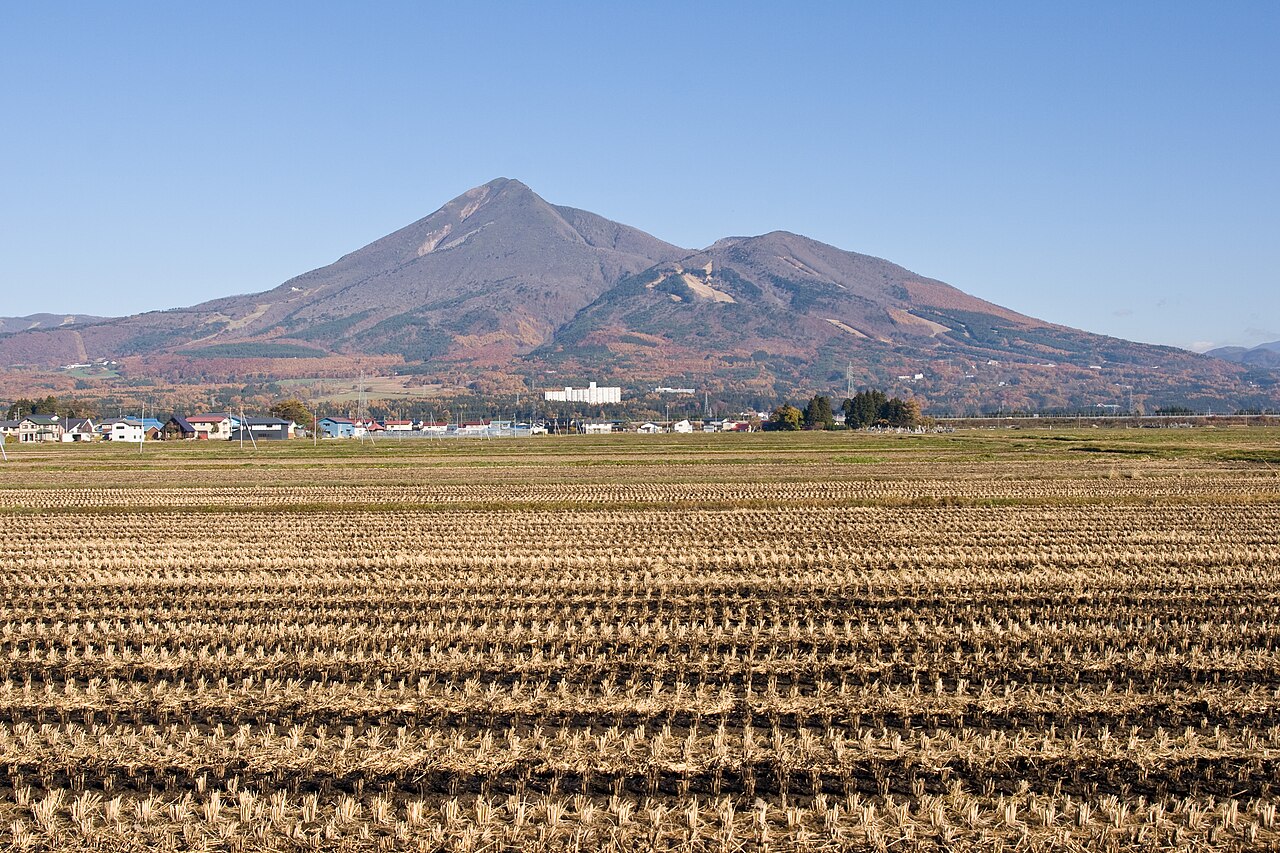
Aizu is a basin, not a coastline. Western Fukushima sits inland behind mountain walls, with the Bandai volcanic massif to the northeast and passes in every direction that historically closed under snow. That geography did two things at once: it gave the district good clay and abundant firewood, and it made Aizu a place where nothing perishable arrived fresh. Both facts run directly into the object in this article.
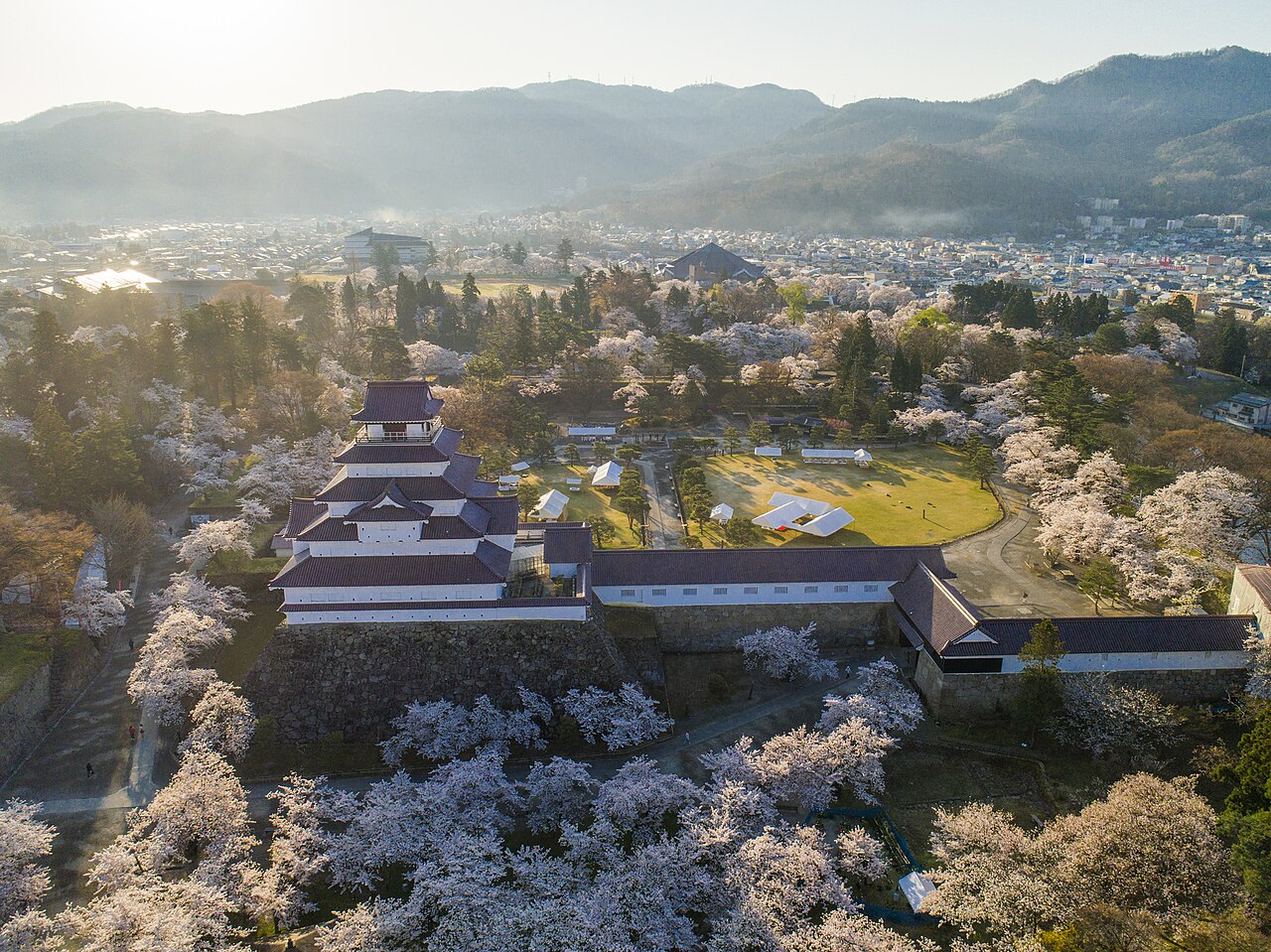
The founding date is unusually precise for a Japanese folk kiln. In 1593, the daimyō Gamō Ujisato had roof tiles fired locally for Tsuruga Castle — the start of organized ceramic production in the Hongo district. Tile-making is not the same as tableware, but it establishes the kilns, the clay sources, and the labor.
The second date is the one that matters for kitchenware. In 1645, Hoshina Masayuki — the Aizu domain lord, and a half-brother of the third Tokugawa shōgun — brought in a potter named Mizuno Genzaemon from Seto, the great ceramic district of what is now Aichi Prefecture. Seto technique arriving in Aizu is what turned a tile operation into a producer of everyday household ceramics, and the domain then promoted the industry deliberately as a local product.
“Aizu Hongo-yaki has been fired continuously since 1593 — it predates the founding of Edo-period Kutani, Imari’s export boom, and every porcelain town Europe would later imitate.”
- 1593 — Gamō Ujisato has roof tiles fired in the Hongo district for Tsuruga Castle; ceramic production begins.
- 1645 — Hoshina Masayuki invites the Seto potter Mizuno Genzaemon; the district shifts to everyday household ceramics.
- Edo period — The Aizu domain promotes the kilns as a local industry; the amber ameyu glaze becomes the district’s signature.
- 1868 — The Boshin War devastates Aizu; the kiln district is nearly wiped out and has to be rebuilt.
- 1954 — A great fire sweeps the district — the second near-total loss in under a century. It is rebuilt again.
- Today — Roughly a dozen kilns remain in the Hongo district of Aizumisato, including Munakata Gama and Ryūmon-yaki.
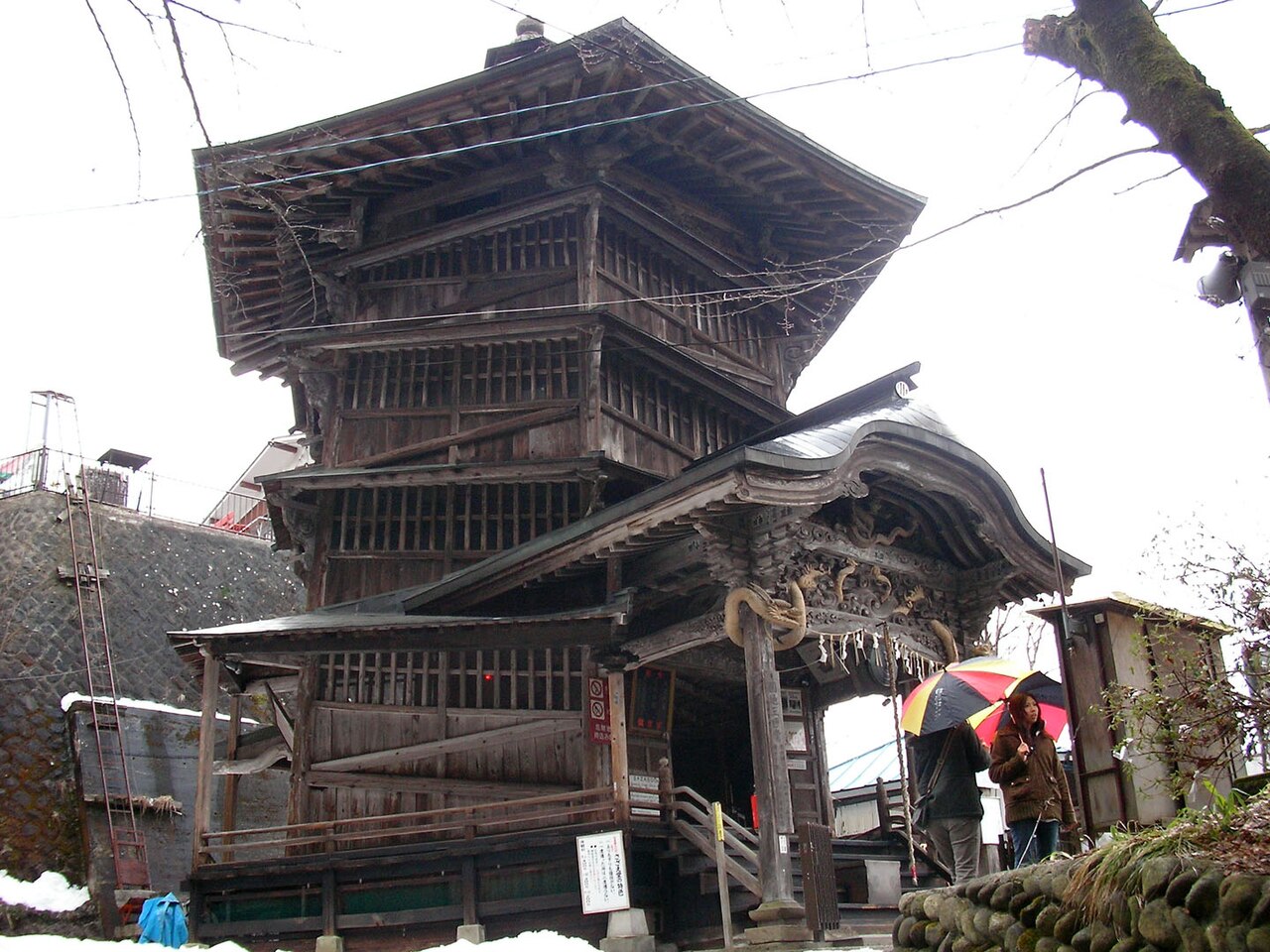
What “still being made here” means in Aizu is therefore not a smooth continuity story. The district was flattened twice — once by the Boshin War of 1868, when Aizu was on the losing side of the conflict that ended Tokugawa rule, and again by fire in 1954. Both times the kilns came back, which is a different and in some ways stronger claim than “unbroken since 1593.” The survivors are a working group of about a dozen workshops, not a museum.
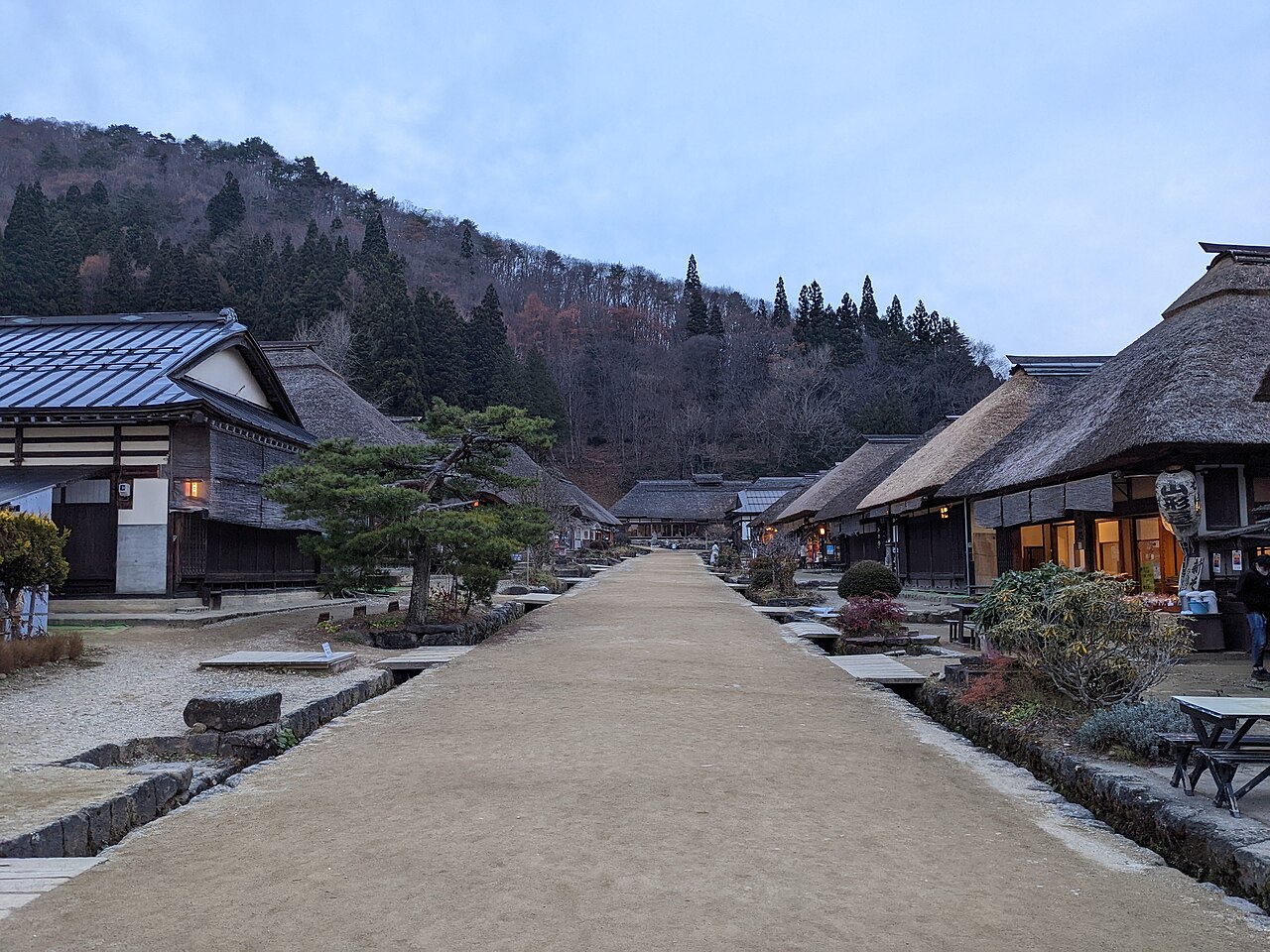
The culinary half of the story is what makes this dish specific rather than generic. Herring came south from Hokkaidō as migaki-nishin, dried to a board-like hardness, and traveled the inland highways into a basin with no fish of its own. Aizu cooks rehydrated it by layering it with sanshō leaves and steeping it in vinegar and soy — the dish called nishin no sanshō-zuke. It is still an Aizu household staple, and it is eaten straight out of the vessel it was pickled in.
So the rectangle is not a design choice. A round bowl wastes brine around a flat, straight fish; a shallow plate cannot keep the fish submerged. The nishin-bachi is a shape derived from a fish, a mountain range, and a winter.
📌 How does it compare?
The Tōhoku region produced several distinct ceramic and lacquer traditions within a few hundred kilometers of one another. If you are deciding between them, these guides cover the neighbors.
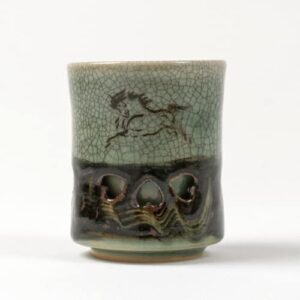 🍵 Obori Soma-yaki Yunomi — Fukushima’s other kiln, double-walled
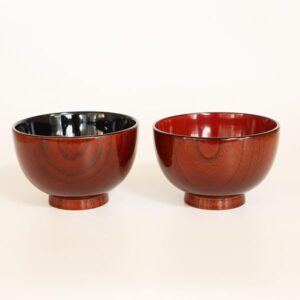 🥣 Naruko Shikki Soup Bowl — lacquer, not clay, from Miyagi
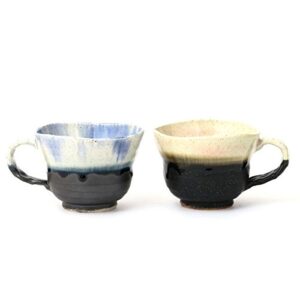 🥃 Tsutsumi-yaki Namako Tumbler — Sendai stoneware, blue glaze
 🫖 Shiraiwa-yaki Yunomi — Akita’s revived kiln
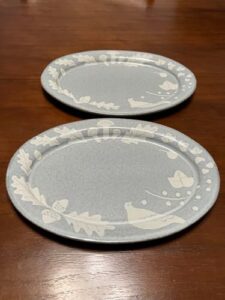 🍽️ Kasama-yaki Oval Plate — the serving-dish alternative
 🎎 Akita Yatsuhashi Clay Doll — Tōhoku clay, non-functional
🔩 Sendai Tansu Iron Trivet — what to set a hot dish on
🫖 Kobushi-yaki Teapot — from where the herring came
📦 Shipping & where to buy from outside Japan
Amazon Japan’s Global Store ships to 65+ countries, including Canada, the UK, and Australia. Our readership is not only American, and the shipping math is broadly similar across those markets: expect roughly $15–$40 for a single ceramic item of this size and weight, with the exact figure depending on destination and whether the seller uses expedited or standard international service. We keep separate country guides for Canada, the UK, and Australia.
Customs is the variable to plan for. Most destinations apply duty or VAT above a local threshold, and Amazon’s Import Fees Deposit estimates this at checkout — you generally are not surprised at the door. Buyers in the UK and the EU should assume VAT applies at the point of sale.
If the listing goes out of stock, proxy services such as Buyee and Tenso can forward from Japanese domestic retailers, and some Aizu kilns sell directly. Proxies add a service fee and a consolidation step, so they make more sense for multi-item orders than for a single dish.
Price snapshot across stores
| Store | Item / Variant | Price | Notes |
|---|---|---|---|
| 🇺🇸 Amazon.com (US) | Browse Japanese stoneware baking & serving dishes | varies (USD) | Best if you are shopping from the US — Prime shipping, USD pricing, no international customs. Amazon US carries Japanese stoneware gratin dishes, donabe, and glazed serving vessels, useful for comparing depth and glaze tone. The Aizu Hongo-yaki piece itself ships from Japan (next row). |
| 🇯🇵 Amazon JP Global Store | Aizu Hongo-yaki ameyu nishin-bachi, approx. 20–24 cm | See live listing — not captured in our snapshot | Ships internationally from Japan to 65+ countries — including Canada, the UK, and Australia — with import fees estimated at checkout. This is the sourced listing for the exact piece. |
| Maker direct | Kiln-specific stock (Munakata Gama, Ryūmon-yaki, others) | Unconfirmed — check kiln site | Roughly a dozen kilns operate in the Hongo district. Most sell domestically in Japanese; international shipping is not guaranteed. |
| Proxy services (Buyee / Tenso) | Japanese domestic listings, forwarded | Item price + service fee + forwarding | Worth it mainly for multi-item orders or when the Global Store listing is unavailable. Fragile-item packing is the buyer’s responsibility to request. |
Prices in USD, where shown elsewhere in this article, are approximate and depend on the current exchange rate (a ¥150/USD baseline as of mid-2026). JPY is the authoritative currency for the listed item. Prices and stock fluctuate; the linked listing is the current source of truth.
What it does well
- 🍽️ Dishwasher: hand-wash recommended — glazed stoneware of this weight chips against racks and other dishes
- ♨️ Oven: described as oven-safe in the listing; avoid direct flame and sudden temperature swings, which crack stoneware
- 🧴 Daily care: wash and dry thoroughly before storing; a stoneware body left damp in a cupboard can hold odor from a previous pickle
- 🥒 Pickling use: the glaze is what makes acid and salt safe to hold for days — inspect for glaze crazing or chips before a long steep
Weaknesses and things to verify before buying
- Dimensions are a range, not a spec. The 20–24 cm figure covers hand-thrown variation. If the dish has to fit a specific toaster oven or refrigerator shelf, confirm the exact size on the listing before ordering.
- Weight and capacity were not in our snapshot. Stoneware this deep is heavy when full. If you plan to lift it out of an oven one-handed, check the weight first.
- Live pricing was unavailable at time of writing. Only the listing snapshot was accessible, so any price you see now is the accurate one.
- Hand-wash only, realistically. Glazed stoneware survives dishwashers inconsistently, and the edges of a rectangular vessel are the first thing to chip.
- Not a matched set. This is a single functional vessel. If you want coordinated tableware, the ameyu glaze will not match anything else you own.
- Thermal shock is a real failure mode. Refrigerator to hot oven, or hot dish onto a cold wet counter, cracks stoneware. This is the most common way these dishes die.
- Shipping from Japan takes time and adds fragility risk. Ceramics travel well when packed properly, but a damaged-arrival return across an international border is genuinely inconvenient.
- The kiln attribution may vary. The Hongo district has roughly a dozen active workshops. If a specific kiln matters to you, verify it on the listing rather than assuming.
Conclusion — which buyer type are you?
Other ways to approach this purchase
🏆 Editor’s Pick
❓ Frequently Asked Questions
Does Amazon Japan ship this outside Japan?
Yes. Amazon Japan’s Global Store ships to 65+ countries, including Canada, the UK, and Australia, and estimates import fees at checkout for most destinations. Expect roughly $15–$40 in shipping for a single ceramic item of this size, depending on destination and service level.
What is a nishin-bachi actually for?
It was developed to pickle migaki-nishin — dried herring — with sanshō leaves in vinegar and soy, the Aizu regional dish nishin no sanshō-zuke. The rectangular, straight-sided form keeps flat fish submerged in a small volume of liquid. It works the same way for cucumbers, daikon, and other flat pickled vegetables.
Can I use it in the oven?
The listing describes it as oven-safe. As with all stoneware, avoid direct flame and sudden temperature changes — moving it from refrigerator to hot oven, or setting a hot dish on a cold wet surface, is the most common cause of cracking.
Is it dishwasher safe?
Hand-washing is the safer choice. Glazed stoneware of this weight and depth chips against dishwasher racks and adjacent dishes, and the corners of a rectangular vessel are the most exposed points.
What does “ameyu” mean, and will the color vary?
Ameyu (飴釉) means “candy glaze” — an iron glaze that fires to a translucent amber-brown. Because the color comes from iron content and kiln atmosphere rather than a pigment, tone varies from piece to piece and even across a single vessel. That variation is characteristic of the glaze, not a defect.
How old is Aizu Hongo-yaki?
Ceramic production in the Hongo district began in 1593, when Gamō Ujisato had roof tiles fired for Tsuruga Castle. It became a household-ceramics district in 1645, when the Aizu lord Hoshina Masayuki brought the Seto potter Mizuno Genzaemon to the area. It is the oldest ceramic production district in the Tōhoku region.
How does it compare to other Tōhoku pottery?
Obori Soma-yaki, also from Fukushima, is known for double-walled vessels and a running-horse motif; Tsutsumi-yaki in Sendai and Shiraiwa-yaki in Akita are both associated with namako blue glaze. Aizu Hongo-yaki is distinguished by the amber ameyu glaze and by functional forms tied to preserved-food cuisine.
jpmono.com is a Japan-based curation site, with editorial centers in Toyama (Hokuriku region) and Nara (Kansai region), introducing Japanese household objects to international readers. We focus on items with verifiable craft heritage and clear international shipping paths. We do not physically test every product — we read maker’s specs and source listings — and affiliate links support the editorial work. We do not take payment from the makers we feature.
🤖 This article was drafted with AI assistance and reviewed by a human editor before publication. Product facts are drawn from source listings and regional records; where data was unavailable, that is stated rather than filled in.
Affiliate disclosure: jpmono.com may earn a commission on qualifying purchases made through links on this page, at no additional cost to you.