![Shodai-yaki Katakuchi Sake Pourer: Where to Buy Kumamoto Ware [2026]](https://jpmono.com/wp-content/uploads/2026/07/shodai-yaki-nagashi-gusuri-katakuchi-where-to-buy-2026-featured.jpg)
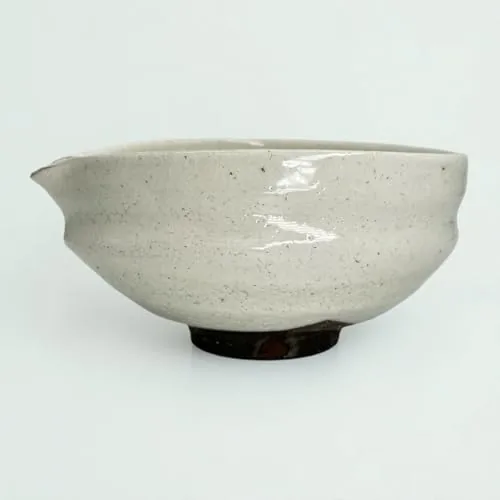
- What it is: a katakuchi — a lipped stoneware pourer for serving sake — in Shodai-yaki, with white straw-ash glaze poured over a dark iron-rich body.
- Made in: the Arao and Nankan area of northern Kumamoto Prefecture, Kyūshū — a kiln tradition begun in 1632 and designated a National Traditional Craft in 2003.
- Price band: mid-range for hand-thrown Japanese sake vessels; live pricing was not in our snapshot, so the linked listing is authoritative.
- Best for: readers who already own sake cups and want a serving vessel with visible, unrepeatable glaze movement.
- Skip if: you want a matched, uniform set — poured glaze makes every piece different by design.
- Shipping: ships internationally from Amazon Japan — jump to our pick ↓
In 1632 a feudal lord changed provinces and took his potters with him. Hosokawa Tadatoshi was transferred from Kokura in Buzen to Kumamoto, and among the people who moved south with the household were two Agano-kiln potters, Genshichi and Hachizaemon. They opened kilns on the slopes of Mt. Shodai, in the Arao and Nankan district of northern Higo — and the ware that came out of them is still called Shodai-yaki (小代焼, “Shodai ware”) nearly four centuries later.
What makes it recognizable at a glance is a single decision made at the glazing stage. The local clay is iron-rich and fires to a dark chocolate-to-black body. Over that dark ground, the potter pours a white or bluish straw-ash glaze from the rim and lets gravity finish the design. The technique is called nagashi-gusuri (流し薬, “poured” or “flowing” glaze), and because the glaze is released rather than applied, no two pieces run the same way.
This guide looks at the Shodai-yaki katakuchi (片口, “single spout”) — a lipped pourer used to serve sake — from an international buyer’s perspective: what the form is actually for, how the dark-body-plus-poured-glaze construction behaves in daily use, what to verify before ordering, and how it compares to the other Japanese sake vessels and Kyūshū kilns already covered on this site. Our editorial base is in Toyama and Nara, not Kumamoto; the historical material below is drawn from documented kiln history rather than from a site visit.
🔄 Last updated: July 21, 2026
⏱️ Read time: about 12 minutes

ℹ️ Live pricing and some dimensional specs were not in our snapshot — the linked listing is authoritative; unconfirmed attributes are marked “—” below.
- Who this is for — and who should skip it
- Product overview (from published specs)
- 📍 Where this comes from — place, era, and the craft tradition
- 📌 How does it compare?
- 📦 Shipping & where to buy from outside Japan
- Price snapshot across stores
- What it does well
- Weaknesses and things to verify before buying
- Conclusion — which buyer type are you?
- Other ways to approach this purchase
- 🏆 Editor’s Pick
- ❓ Frequently Asked Questions
Who this is for — and who should skip it
- Already own guinomi or ochoko cups and are missing the serving vessel that goes between bottle and cup.
- Prefer glaze movement and asymmetry to printed or uniform decoration.
- Want a Kyūshū kiln that is not Arita, Karatsu, or Satsuma — Shodai-yaki is comparatively little-covered in English.
- Are buying a gift where the object’s own story does some of the work.
- Accept hand-thrown variance as the point rather than a defect.
- Need pieces that match each other exactly — poured glaze cannot be replicated piece to piece.
- Want dishwasher-and-forget tableware for heavy daily rotation.
- Are buying primarily for warm sake service and expect the vessel to hold heat like metal.
- Need a confirmed exact capacity before ordering and cannot check the live listing.
- Prefer bright polychrome porcelain — Shodai-yaki’s register is dark, matte, and restrained.
Product overview (from published specs)
Shodai-yaki Katakuchi Sake Pourer
茶道具 熊本肥後 小代焼片口深鉢 菓子器 変形皿 在銘小代2代 近重治太郎作 健軍窯 国指定伝統工芸品 小岱焼 七事式 茶懐石
通常6~7日以内に発送します。 · Sold by あおぞらshop · ASIN B0GBY23YYK
Price and availability as of 2026-08-31 02:30 JST. The Amazon listing at the time of purchase is authoritative. jpmono.com earns a commission on qualifying purchases at no extra cost to you.
| Attribute | Value | Source |
|---|---|---|
| Ware | Shodai-yaki (小代焼), Kumamoto stoneware | Kiln tradition record |
| Form | Katakuchi — single-spouted pourer for sake service | Amazon JP Global Store listing |
| Body | Iron-rich local clay, firing dark chocolate to black | Kiln tradition record |
| Glaze | White-to-bluish straw-ash glaze, poured from the rim (nagashi-gusuri) | Kiln tradition record |
| Stated capacity | Approximately 200–300 ml per the listing description | Amazon JP Global Store listing |
| Dimensions / weight | — (not in our snapshot; verify on the live listing) | Unconfirmed |
| Origin | Arao / Nankan area, Kumamoto Prefecture, Kyūshū | Kiln tradition record |
| Designation | National Traditional Craft, designated 2003 | Designation record |
| Price | — (live pricing unavailable at time of writing) | Unconfirmed |
Two attributes on that table do most of the work. The first is the clay: because it carries iron, the fired body arrives dark before any decoration happens, which means the white glaze is working against a ground rather than on a blank. The second is the pour. A dipped or brushed glaze is placed; a poured glaze is released, and the potter’s control ends partway down the wall.
“The potter decides where the glaze starts. Gravity decides where it stops. That division of labor is the entire aesthetic of Shodai-yaki.”
📖 Glossary — Japanese terms used in this article
- Shodai-yaki (小代焼) — “Shodai ware,” the stoneware tradition begun on Mt. Shodai in northern Kumamoto in 1632.
- katakuchi (片口) — literally “single mouth”; a bowl with one pouring lip, used to decant and serve sake.
- nagashi-gusuri (流し薬) — “flowing glaze”; glaze poured from the rim and allowed to run down the body.
- Higo (肥後) — the pre-modern province corresponding to today’s Kumamoto Prefecture.
- Agano-yaki (上野焼) — the Fukuoka kiln tradition whose potters founded Shodai-yaki after the 1632 transfer.
- guinomi / ochoko — the small cups a katakuchi pours into; guinomi are the larger of the two.
- tokkuri (徳利) — the narrow-necked sake flask; the katakuchi’s open-bowl alternative.
📍 Where this comes from — place, era, and the craft tradition

Kumamoto sits in the center-west of Kyūshū, facing the shallow, tide-swept Ariake Sea. The kilns that still fire Shodai-yaki cluster in the north of the prefecture, around Arao and Nankan, close enough to the coast that the sea is part of the local geography rather than a day trip from it.
The prefecture’s defining feature, though, is inland and volcanic. Mount Aso holds one of the world’s larger active calderas, and Kumamoto’s soils carry both its ash and the iron-bearing sediments that accumulate along the Ariake coast. That combination supplies the two raw materials this ware is built from — the iron-rich body clay, and the ash for the glaze.
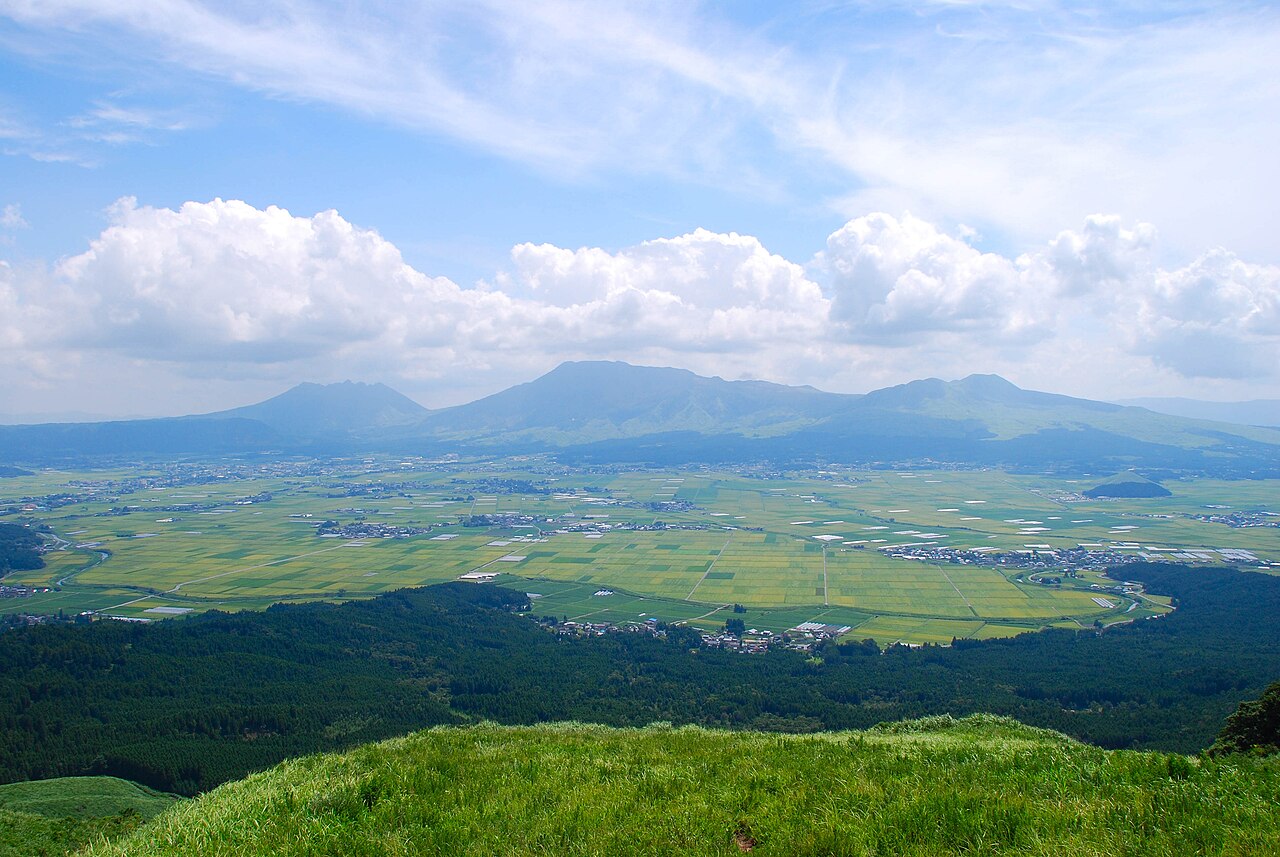
Shodai-yaki is unusually literal about being made of its own landscape.
The human history starts with an administrative decision. In 1632, Hosokawa Tadatoshi was transferred from Kokura, in Buzen province, to Kumamoto — and the move brought Agano-kiln potters Genshichi and Hachizaemon into Higo with him. They established kilns on the slopes of Mt. Shodai, which gave the ware its name. Kumamoto Castle, the seat the Hosokawa took over in that same transfer, is the visible monument to the political event that created this pottery tradition.
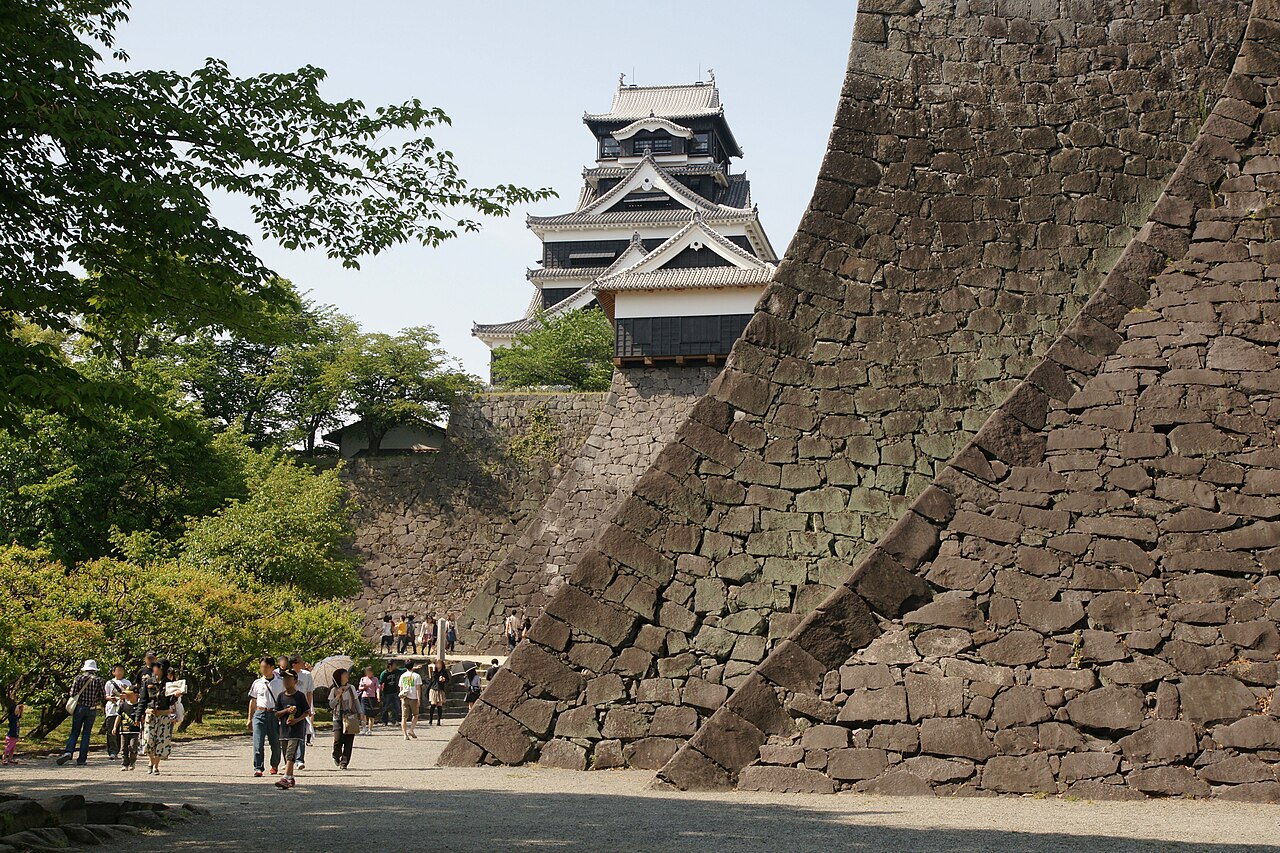
- Before 1632 — Genshichi and Hachizaemon work at the Agano kilns in Buzen province.
- 1632 — Hosokawa Tadatoshi is transferred from Kokura to Kumamoto and brings both potters with him.
- 1632 — The first kilns open on the slopes of Mt. Shodai, in the Arao and Nankan area of northern Higo.
- Edo period — Operating as a domain kiln under the Hosokawa, Shodai-yaki supplies both everyday Higo tableware and formal tea utensils.
- 2003 — Shodai-yaki is designated a National Traditional Craft.
- 2026 — Fewer than a dozen kilns remain in operation, most within sight of the Ariake Sea.
Because it operated as a domain kiln under the Hosokawa rather than as a purely commercial pottery, Shodai-yaki was answering two demands at once. One was the daily tableware of Higo — bowls, jars, pourers, the working ceramics of a province. The other was the formal tea utensil, made to the standards of a daimyo household. That dual character survives: the same kilns that make a katakuchi for a weeknight bottle of sake also make chawan for tea practice.
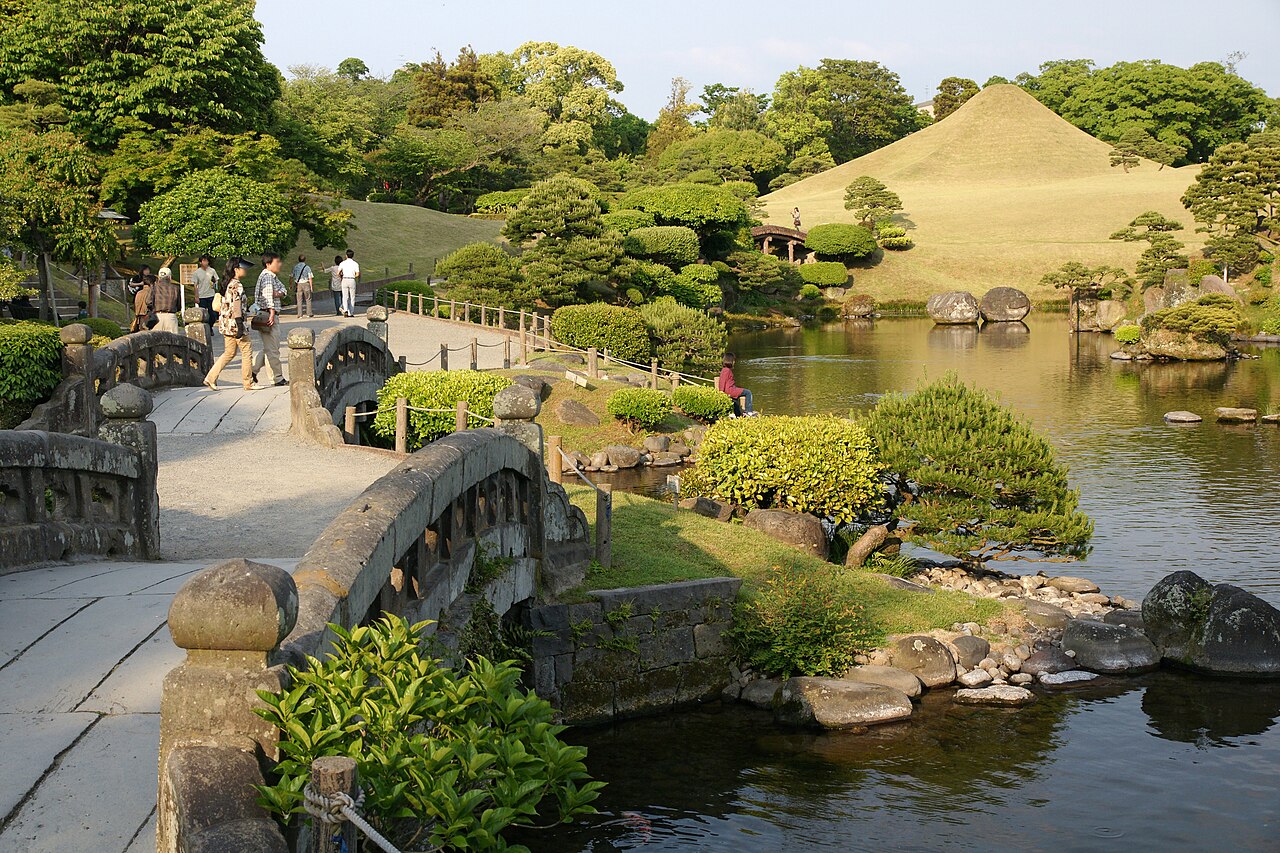
The continuity picture in 2026 is honest rather than triumphant. Fewer than a dozen kilns still work in the tradition, most of them clustered in the north of the prefecture within sight of the Ariake Sea. Designation as a National Traditional Craft in 2003 was recognition of a practice that had already run for roughly 370 years — and, as with most designated crafts, an acknowledgment that continuation is not guaranteed.
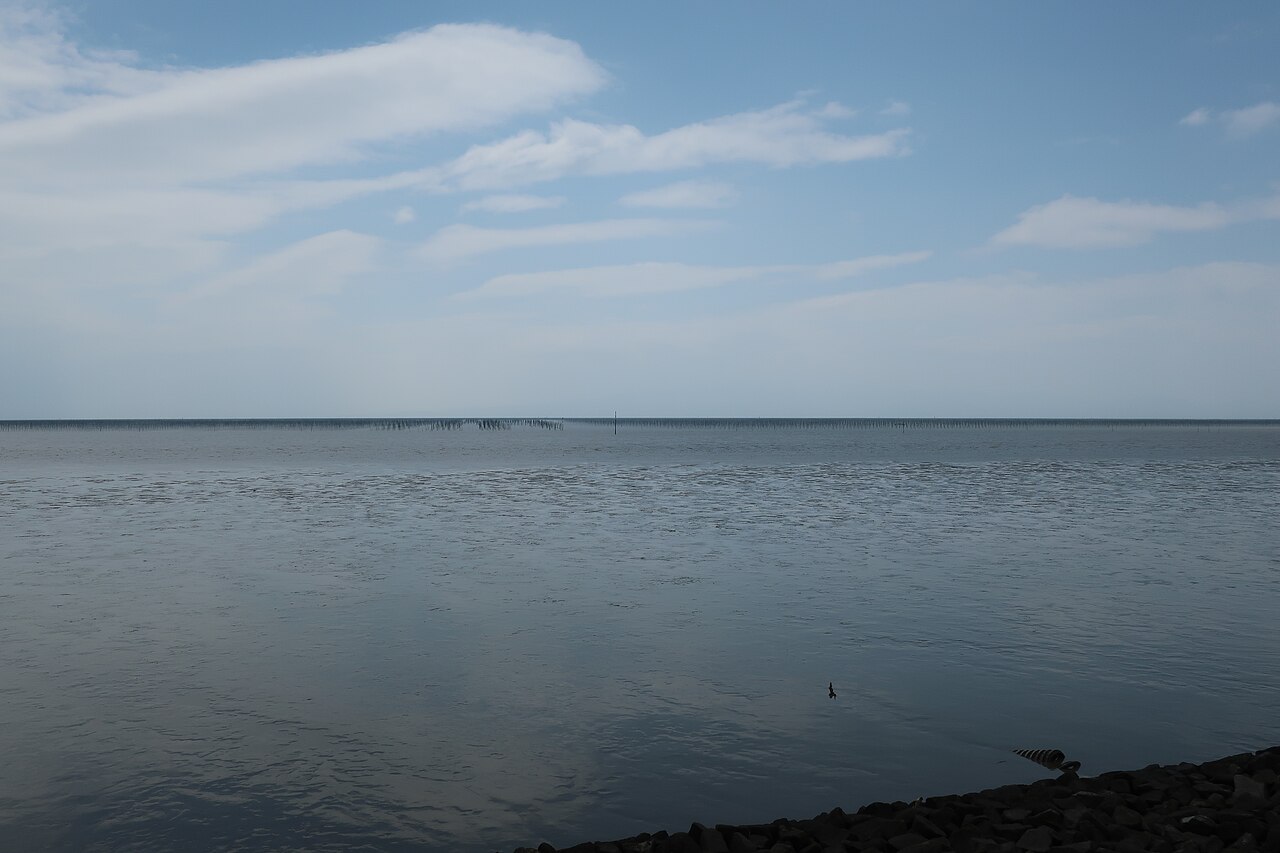
For a sake vessel, that dual daily-and-formal lineage is the practical selling point. A katakuchi from a kiln that never made only decorative objects tends to pour like something meant to be used.
📌 How does it compare?
Other Japanese sake vessels and regional kilns covered on this site — useful for placing Shodai-yaki against its Kyūshū neighbors and against the other forms in a sake service.
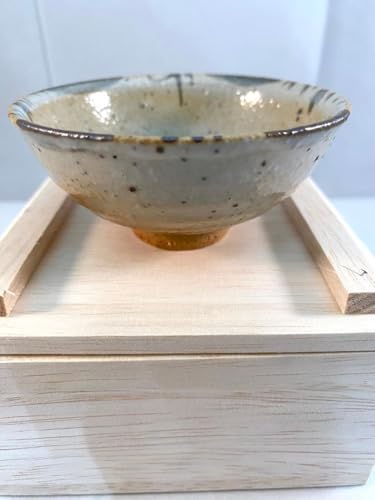 🍶 Karatsu E-Garatsu Guinomi
 ☕ Onta-yaki Mug (Oita)
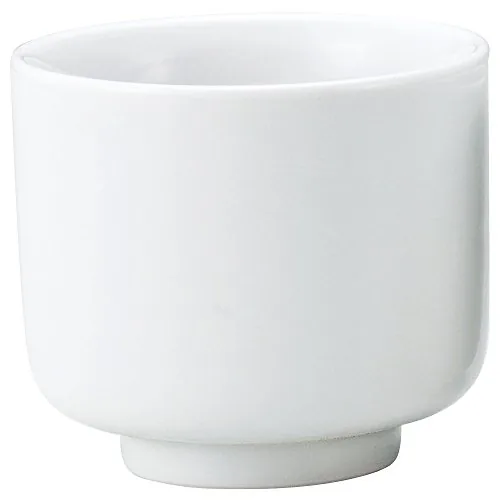 🏺 Shiro-Satsuma Sake Cup
🍽️ Fujina-yaki Slipware Plate
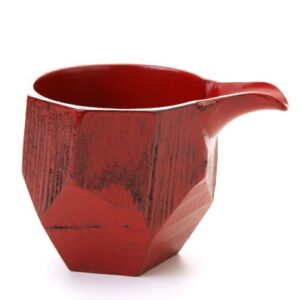 🥢 Tosa Lacquer Katakuchi
🍶 Iga-yaki Tokkuri
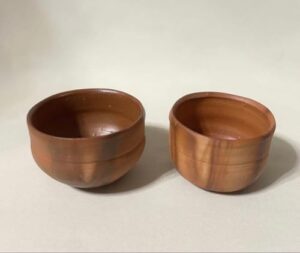 🔥 Bizen Hidasuki Guinomi
🔵 Arita Sometsuke Mug
📦 Shipping & where to buy from outside Japan
The specific piece covered here is sourced from the Amazon JP Global Store, which ships to 65+ countries — including Canada, the UK, and Australia — with import fees estimated and usually collected at checkout. Shipping on a single small ceramic item typically lands in the $15–$40 range to North America, Europe, and Oceania, though the figure moves with weight, carrier, and destination.
Readers in specific markets can consult our country guides: Canada, the UK, and Australia. Customs thresholds differ by country; orders above the local de minimis value attract duty and local sales tax regardless of the seller.
Proxy services such as Buyee and Tenso remain the fallback when a particular kiln’s piece is not on the Global Store, since they can forward from Japanese domestic shops that do not ship abroad. They add a service fee and a consolidation step, and the buyer carries more of the packing risk on ceramics.
- 🍽️ Dishwasher: hand-wash recommended — this is hand-thrown stoneware with a poured ash glaze, not industrial tableware.
- ♨️ Microwave: not recommended; an open pourer has no reason to go in one, and thermal shock is the main failure mode for stoneware.
- 🧴 Daily care: rinse and dry fully after use. Stoneware bodies hold moisture; leaving sake residue in an unglazed foot ring is what causes odor.
- 🌡️ Temperature: fill with cool or room-temperature sake as a default. Avoid pouring boiling water into a cold vessel.
- 🔧 Repairs: no maker re-coating service is documented in our sources; chipped stoneware is typically handled by kintsugi repair rather than by the kiln.
Price snapshot across stores
| Store | Item / Variant | Price | Notes |
|---|---|---|---|
| 🇺🇸 Amazon.com (US) | Browse Japanese sake pourers & stoneware sake sets | varies (USD) | Best if you are shopping from the US — Prime shipping, USD pricing, no international customs step. Amazon US carries Japanese katakuchi, tokkuri, and guinomi from several makers, useful for comparing form and price tier. This Kumamoto kiln’s piece ships from Japan (next row). |
| 🇯🇵 Amazon JP Global Store | Shodai-yaki nagashi-gusuri katakuchi (ASIN B0GBY23YYK) | — (see live listing) | Ships internationally from Japan to 65+ countries — including Canada, the UK, and Australia — with import fees estimated at checkout. This is the sourced listing for the exact piece covered here. |
| Maker direct | Kiln-shop pieces, Arao / Nankan | — | With fewer than a dozen kilns active, direct availability is limited and most kiln sites are Japanese-language and domestic-shipping only. |
| Proxy services (Buyee / Tenso) | Japanese domestic listings | — plus service fee | Useful for kiln pieces absent from the Global Store; adds a forwarding fee and a consolidation step, and packing quality on ceramics varies by seller. |
Live pricing was unavailable at time of writing, so no figure is stated above. JPY is the authoritative currency for the Japanese listing; any USD figures elsewhere on this site are approximate estimates at a ¥150/USD baseline and depend on the current exchange rate. Prices and stock fluctuate — check the linked listing for current data.
What it does well
Weaknesses and things to verify before buying
- The photo is not the piece. With poured glaze, the listing image shows one outcome of the technique. The item that arrives will carry a different run pattern. If you need the exact configuration shown, this ware is the wrong choice.
- Capacity is stated loosely. The listing describes roughly 200–300 ml, which is a wide band for a serving vessel. Confirm the figure on the live listing if you are matching it to a specific bottle size or cup count.
- Dimensions and weight were not in our snapshot. Neither height, diameter, nor weight is confirmed in the data we retrieved. Check the listing before assuming it fits a particular tray or shelf.
- Live pricing was unavailable at time of writing. We have deliberately published no figure rather than an estimated one. The linked listing is the only authoritative price.
- Stoneware is a thermal-shock risk. An open pourer moving straight from cold storage to hot liquid is the classic way to crack this class of object. Warm it gradually or serve cool.
- Hand-wash only in practice. Hand-thrown ash-glazed stoneware is not intended for dishwasher cycles, which is a real constraint if you want high-rotation daily tableware.
- Supply is thin. Fewer than a dozen kilns remain in the tradition, so availability of any particular form is intermittent and restocks are not predictable.
- Ceramics ship at their own risk. International shipping on a single unpadded ceramic item is the main failure point; keep the packaging until you have inspected the piece.
Conclusion — which buyer type are you?
Other ways to approach this purchase
🏆 Editor’s Pick
❓ Frequently Asked Questions
Will my piece look exactly like the photo?
No. Shodai-yaki’s nagashi-gusuri glaze is poured from the rim and allowed to run, so the pattern is determined partly by gravity and cannot be repeated between pieces. The photo shows the technique and the color relationship, not the exact surface you will receive.
Does the Amazon JP Global Store ship outside the United States?
Yes. The Global Store ships to 65+ countries, including Canada, the UK, and Australia, and estimates import fees at checkout. Shipping on a single small ceramic item typically runs $15–$40 depending on destination and carrier.
Can I use a katakuchi for warm sake?
It works, but the open bowl loses heat faster than a narrow-necked tokkuri, which is the traditional vessel for warmed sake. Avoid pouring very hot liquid into a cold stoneware vessel — thermal shock is the main cause of cracking in this class of object.
Is Shodai-yaki dishwasher safe?
Hand-washing is recommended. This is hand-thrown stoneware with an ash glaze rather than industrial tableware, and the porous foot ring should be dried fully after washing to prevent odor.
What makes Shodai-yaki different from Karatsu or Satsuma ware?
All three are Kyūshū traditions, but they diverge on body and surface. Shodai-yaki uses a dark, iron-rich Kumamoto clay with a white or bluish straw-ash glaze poured over it. Karatsu and Satsuma are separate kilns with their own clays and decorative vocabularies — see our guides to each for direct comparison.
How old is the Shodai-yaki tradition?
It dates to 1632, when Hosokawa Tadatoshi was transferred from Kokura to Kumamoto and brought Agano-kiln potters Genshichi and Hachizaemon with him. They opened kilns on Mt. Shodai in northern Higo. The ware was designated a National Traditional Craft in 2003.
How many Shodai kilns are still operating?
Fewer than a dozen as of 2026, most of them clustered in the Arao and Nankan area of northern Kumamoto within sight of the Ariake Sea. Availability of any particular form is therefore intermittent.
jpmono.com is curated by a Japan-based editorial team (working out of Toyama in the Hokuriku region and Nara in Kansai) and is independent. We do not take payment from the makers we feature; income comes from affiliate links. We do not physically test every product — we read maker specifications and source listings.
This article was drafted with AI assistance and reviewed by a human editor. Factual claims about kiln history, materials, and designations are drawn from documented sources; product attributes are drawn from the retailer listing at the time of writing.
Affiliate disclosure: jpmono.com may earn a commission on qualifying purchases made through links on this page, at no additional cost to you.