![Hida Shunkei-nuri Lacquer Bud Vase (Hanaire): Where to Buy [2026]](https://jpmono.com/wp-content/uploads/2026/07/hida-shunkei-nuri-lacquer-bud-vase-where-to-buy-2026-featured.jpg)
- What it is: a small turned-wood flower vase (hanaire) sealed in translucent amber lacquer that leaves the wood grain visible.
- Made in: Takayama, Gifu — Hida Shunkei-nuri, a lacquer tradition dated locally to 1606.
- Price band: mid-range for hand-finished Japanese lacquer (see the live listing — pricing was not in our snapshot).
- Best for: buyers who want a single-stem vase that shows the wood, not a painted surface.
- Skip if: you want a dishwasher-safe, everyday container or a bold opaque color.
- Shipping: ships internationally from Amazon Japan — jump to our pick ↓
Hold a Hida Shunkei vase to the light and you can still read the wood underneath. The cypress or horse-chestnut body is stained and then sealed under layers of clear lacquer, so the grain that a black or vermilion finish would bury stays on full display — the whole point of the style is that you are looking through the lacquer, not at it.
That transparent amber finish is the signature of Shunkei-nuri (春慶塗, “Shunkei lacquerware”), the craft of Takayama in the Hida highlands of northern Gifu. Local tradition dates it to 1606, when a carpenter and a lacquerer presented a clear-coated tray to the ruling Kanamori family; the honeyed tone recalled the prized Shunkei tea ware of Kyoto, and the name stuck. A hanaire — a single-flower vase for tea and everyday display — is one of the quieter objects the tradition produces, and one of the easier ones to live with.
This guide is written for an international reader deciding whether to buy one from outside Japan. Based on the Amazon listing and maker background, it covers what the piece is, how the finish behaves, how to care for it, what to verify before buying, and the two purchase paths — an Amazon US search and the Amazon Japan Global Store where this specific item is sourced.
📅 Published:
🔄 Updated:
⏱️ Read time: ~9 min

ℹ️ Live pricing and some specs were not in our snapshot — the linked listing is authoritative; unconfirmed attributes are marked below.
- Who this is for — and who should skip it
- Product overview (from published specs)
- Key terms, briefly
- 📌 How does it compare?
- Where this comes from — Takayama in the Hida highlands
- Price snapshot across stores
- What it does well
- Weaknesses and things to verify before buying
- Conclusion — which buyer type are you?
- Other ways to approach this purchase
- 🏆 Editor’s Pick
- ❓ Frequently Asked Questions
Who this is for — and who should skip it
- Want a single-stem vase that shows off real wood grain rather than a painted surface.
- Like the warm, honey-amber look of transparent urushi over opaque black or red.
- Display seasonal cuttings, dried grasses, or a single tea-ceremony flower.
- Value a hand-finished object from a named regional tradition (Takayama, Gifu).
- Are comfortable with gentle hand-care instead of dishwasher convenience.
- Need a watertight vase for large fresh arrangements with lots of standing water.
- Want a dishwasher- and microwave-safe, hard-wearing everyday container.
- Prefer a bold, uniform color; the amber tone and grain vary piece to piece.
- Are shopping strictly on lowest price rather than craft provenance.
- Need same-day domestic US shipping and cannot wait on an import.
Product overview (from published specs)
The table below draws on the Amazon listing snapshot, the Amazon Japan Global Store sourced listing, and general Hida Shunkei-nuri maker background. Where our snapshot did not capture a value, it is marked Unconfirmed — check the live listing rather than guessed.
Hida Shunkei-nuri Lacquer Bud Vase (Hanaire)
飛騨春慶塗 春慶花器 木製漆器 水指花生 花入れ 花器うるし塗フラワーベース
通常6~7日以内に発送します。 · Sold by Sunny Shop33 · ASIN B0GLK5ZJ5W
Price and availability as of 2026-09-01 05:22 JST. The Amazon listing at the time of purchase is authoritative. jpmono.com earns a commission on qualifying purchases at no extra cost to you.
| Attribute | Detail | Source |
|---|---|---|
| Object | Bud vase / single-flower vase (hanaire) | Amazon US (search) / listing |
| Craft | Hida Shunkei-nuri — translucent amber urushi over turned wood | Amazon JP Global Store / maker direct |
| Body material | Turned hinoki (cypress) or tochi (horse chestnut), grain visible | Maker direct (tradition) |
| Finish | Clear (transparent) urushi over a yellow- or red-stained base | Maker direct (tradition) |
| Origin | Takayama, Gifu Prefecture (Hida region, Chūbu) | Maker direct |
| Dimensions / weight | Unconfirmed — check the live listing | — |
| Price | Unconfirmed in our snapshot — see live listing (JPY authoritative) | — |
Key terms, briefly
📖 Glossary — Japanese craft terms used here
- Shunkei-nuri (春慶塗) — “Shunkei lacquerware”; a finish defined by transparent amber urushi that leaves the wood grain visible, named after the honeyed tone of a Kyoto tea ware.
- Urushi (漆) — natural lacquer, the refined sap of the lacquer tree, brushed on in thin layers and hardened by humidity rather than by drying.
- Hanaire (花入) — a flower container, especially the single-stem vase used in the tea ceremony and for simple seasonal display.
- Hinoki (檜) — Japanese cypress; a pale, straight-grained softwood valued for its fragrance and workability.
- Tochi (栃) — horse chestnut; a wood often chosen for turned ware because of its figured grain.
- Hida no Takumi (飛騨の匠) — “the artisans of Hida”; skilled carpenters the region supplied to the imperial capital as far back as the Nara period.
- Tenryō (天領) — land governed directly by the shogunate; Hida’s status as tenryō protected its timber and concentrated woodcraft here.
📌 How does it compare?
Where this comes from — Takayama in the Hida highlands

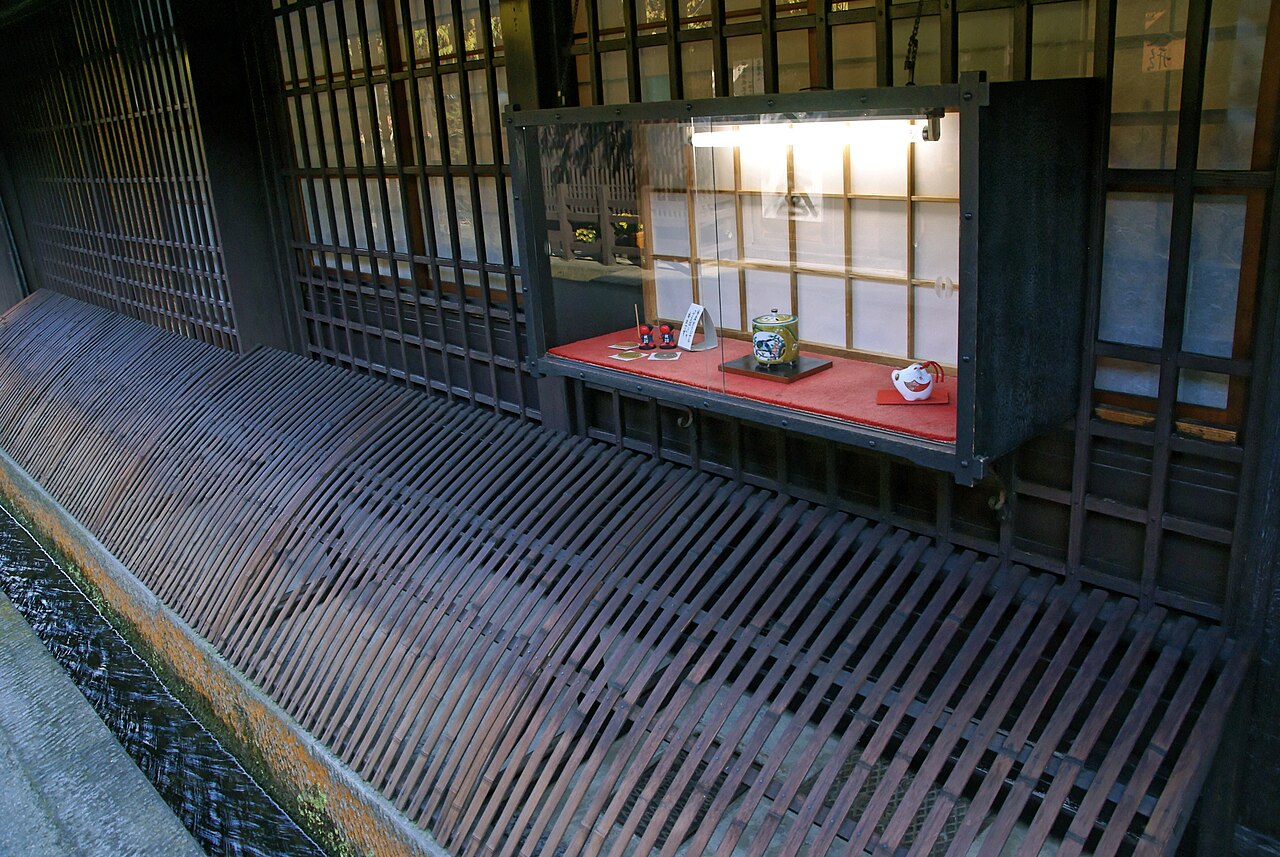
Takayama sits high in the Hida region of northern Gifu, in the mountainous middle of Honshū. It is a former castle town, and its old center — the Sanmachi merchant quarter — has been kept largely intact, so the lacquer and woodware shops still line the same lattice-fronted streets they traded from in the Edo period. The setting matters: this is a forested, timber-rich country, and the crafts that took root here are the ones that turn wood into finished objects.
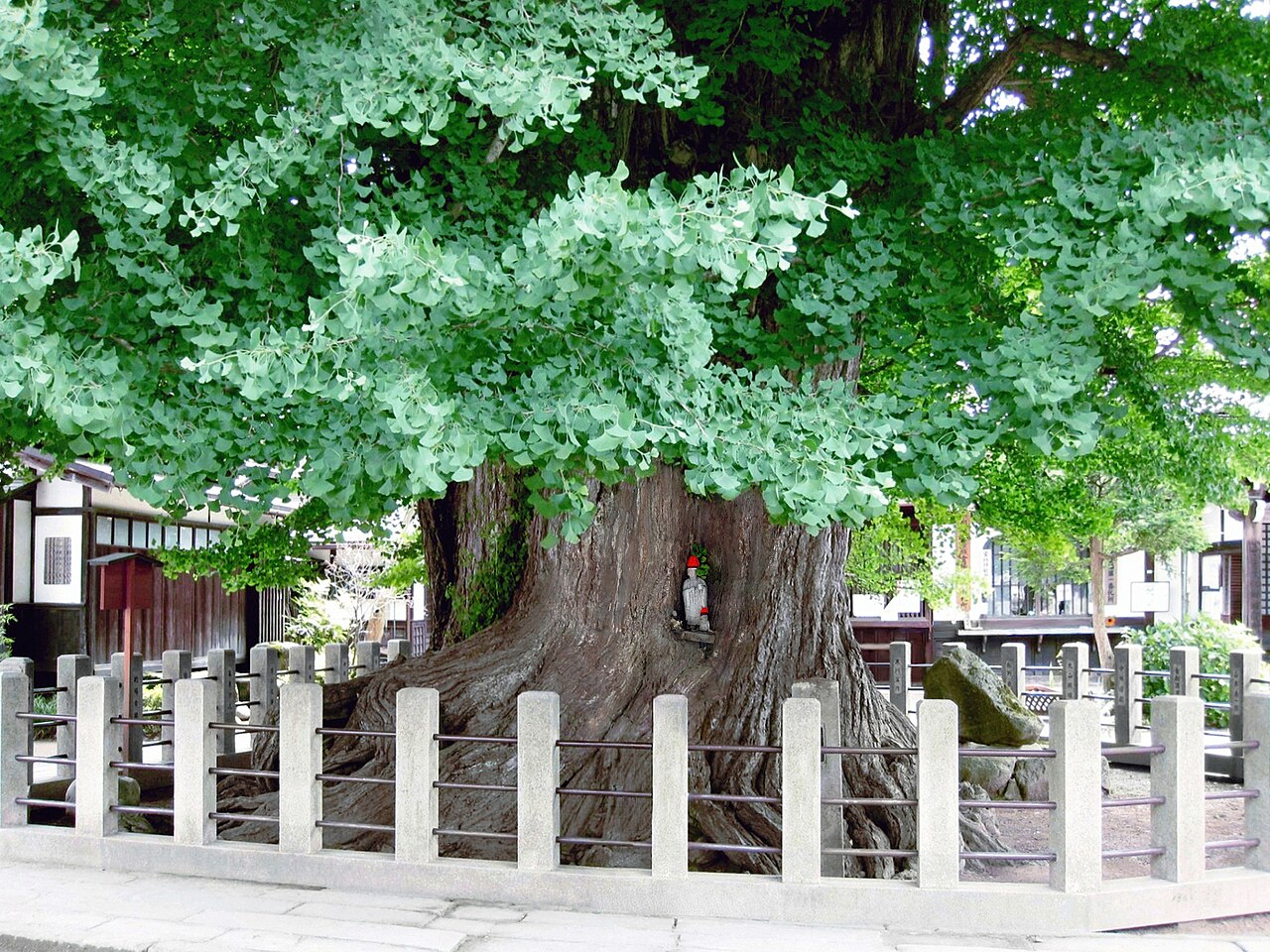
The skill base runs deep. Hida’s carpenters — the Hida no Takumi, “the artisans of Hida” — were skilled enough that, from the Nara period onward, the region supplied their labor to the imperial capital in place of ordinary taxes. Centuries of that woodworking tradition is the soil Shunkei lacquer grew in: you need a mature culture of turning and joinery before a transparent finish that shows off the wood makes any sense as a craft.
“An opaque finish hides the wood. Shunkei-nuri does the opposite — it is lacquer applied so you keep looking at the tree it came from.”
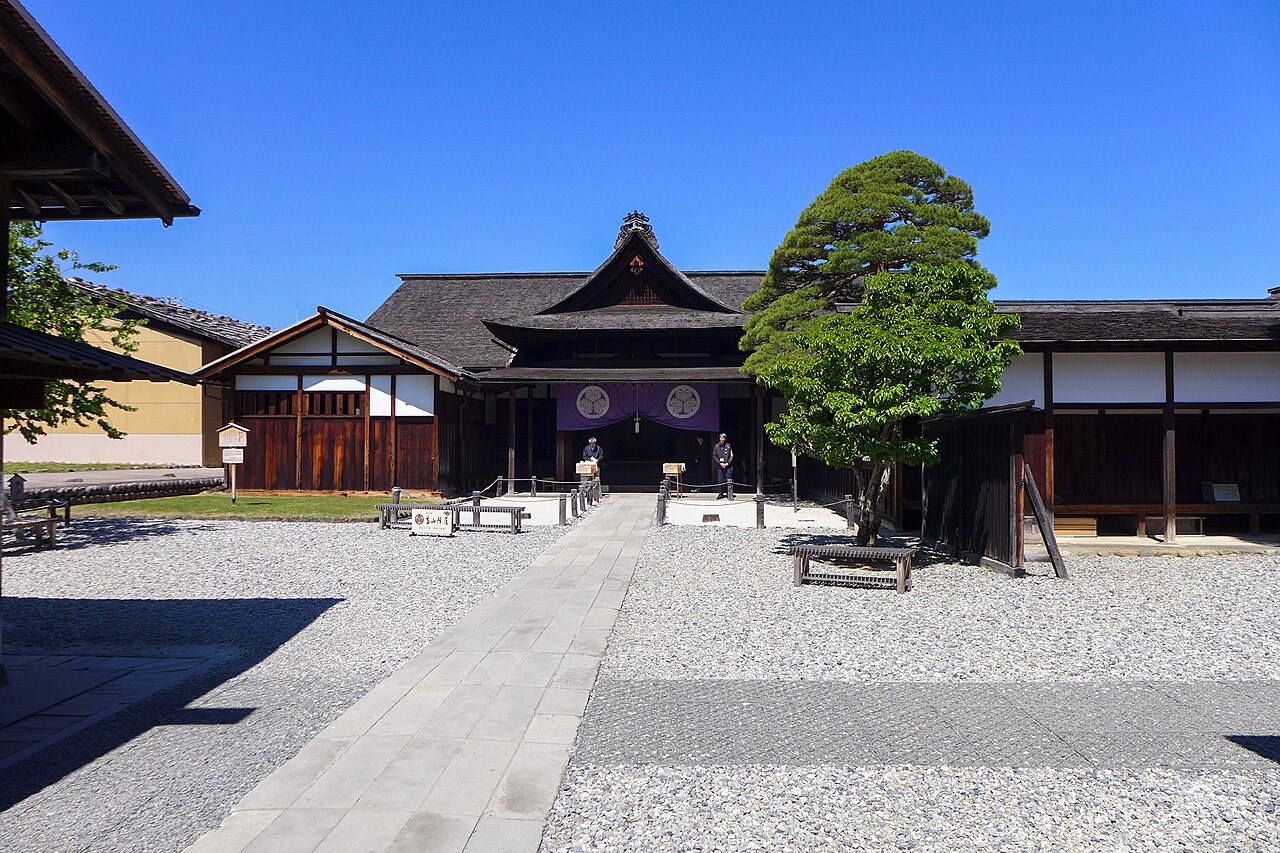
There is a governance reason the craft concentrated here, too. Hida was tenryō — land held directly by the shogunate rather than by a local lord — and its forests were a protected resource administered from the Takayama Jinya. Steady access to good timber, plus a resident population of expert woodworkers, is exactly the combination a lacquer industry needs.
The origin story the tradition tells is specific. Around 1606, a Takayama carpenter, Takahashi Kihei, and a lacquerer, Narita San’emon, presented a clear-lacquered tray to the ruling Kanamori family. Its amber glow recalled the celebrated Shunkei tea ware of Kyoto, and the name transferred to the new local style. Whatever the exact details, the point is that Shunkei-nuri has been a named Takayama craft for roughly four centuries.
- 710–794 — Nara period: the Hida no Takumi carpenters are sent to build and maintain the imperial capital.
- c. 1606 — Carpenter Takahashi Kihei and lacquerer Narita San’emon present a clear-lacquered tray to the Kanamori daimyo; Shunkei-nuri is born.
- Late 17th c. — Hida becomes tenryō, governed directly by the shogunate; its protected forests are administered from the Takayama Jinya.
- 18th–19th c. — Takayama’s Sanmachi merchant quarter grows as a trading hub for lacquer and woodware.
- Spring & autumn (annual) — The Takayama Matsuri floats display the region’s lacquer and joinery mastery.
- Today — Takayama workshops still finish Shunkei ware by hand, and the Sanmachi shops still sell it.
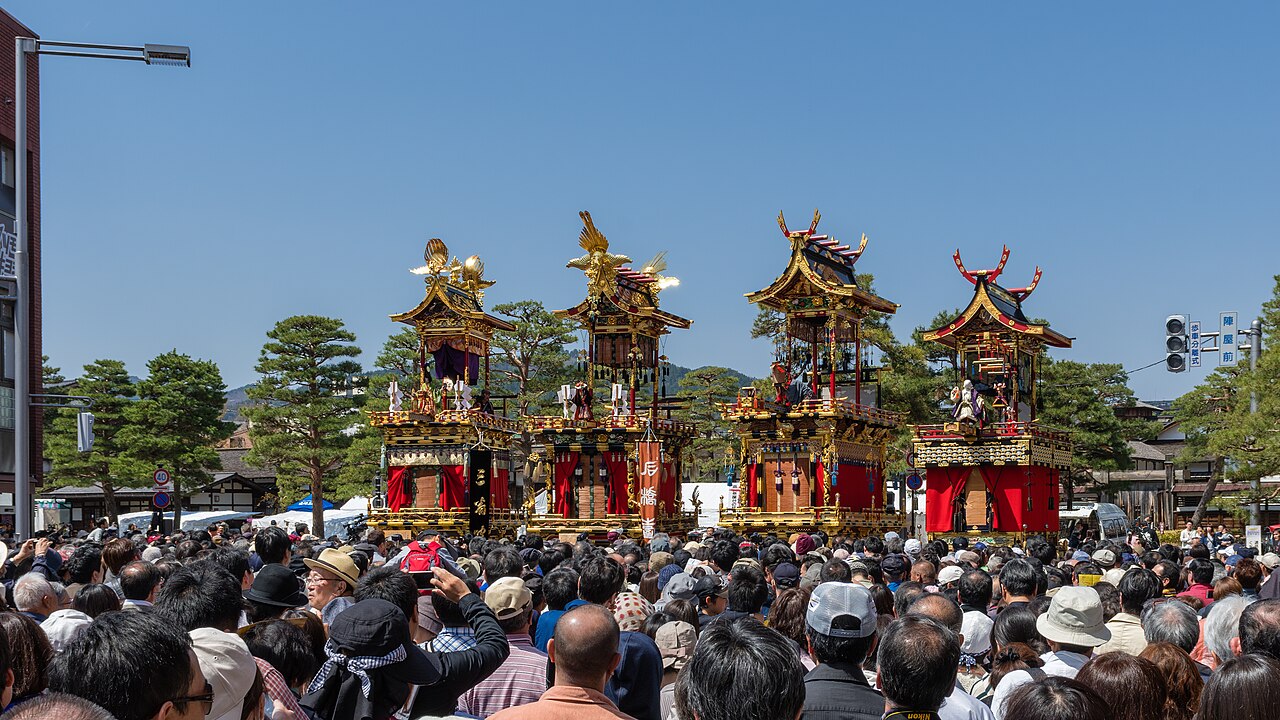
Today the craft survives as a living local industry rather than a museum piece. The twice-yearly Takayama Matsuri — the spring and autumn festivals whose ornate floats are themselves a showcase of lacquer and joinery — keep the town’s craft economy in the public eye, and the Sanmachi shops keep selling to visitors and locals alike.
Price snapshot across stores
Live pricing was not captured in our snapshot, so the figures below point you to the authoritative sources rather than quoting a number we cannot verify. The JPY price on the Amazon Japan listing is the authoritative one for this specific item.
| Store | Item / Variant | Price | Notes |
|---|---|---|---|
| 🇺🇸 Amazon.com (US) | Browse Japanese lacquer flower vases | varies (USD) | Best if you’re shopping from the US — Prime shipping, USD pricing, no international customs. Amazon US carries Japanese lacquer and wood vases from various makers; this exact Hida Shunkei piece is sourced from Japan (next row). |
| 🇯🇵 Amazon JP Global Store | This specific Hida Shunkei-nuri hanaire | See live listing (JPY authoritative) | Ships internationally from Japan to 65+ countries — including Canada, the UK and Australia — with import fees estimated at checkout. |
| Maker direct / Takayama shops | Hida Shunkei-nuri hanaire | Varies | Sanmachi lacquer shops and Shunkei workshops sell direct; most do not ship abroad, so a proxy may be needed. |
| Proxy services (Buyee / Tenso) | Any Japan-only listing | Item + forwarding fee | Useful when a maker or Japanese marketplace does not ship internationally; adds a handling and re-forwarding cost. |
Prices in USD are approximate and depend on the current exchange rate (a ¥150/USD baseline as of mid-2026). Prices and stock fluctuate — verify at the retailer before buying.
- 🍽️ Dishwasher: no — hand-wash gently; urushi does not tolerate dishwasher heat or detergents.
- ♨️ Microwave: no — never microwave lacquered wood.
- 🧴 Daily care: wipe with a soft, barely damp cloth and dry immediately; keep out of prolonged direct sun, which can dull the amber tone. For fresh flowers, use a small water tube or liner rather than filling the wood body.
- 🔧 Repairs: traditional lacquer can be re-coated; ask the Takayama maker or a lacquer restorer about re-finishing rather than discarding a worn piece.
What it does well
Weaknesses and things to verify before buying
- Not watertight for heavy use. A lacquered wood vase is best with a single stem and minimal water, or with an inner liner/tube; do not treat it like a glass vase full of standing water.
- Care is hand-only. No dishwasher, no microwave, no soaking. If you want low-maintenance, this is the wrong object.
- Appearance varies piece to piece. Grain, stain depth, and amber tone differ between individual vases; the photo is representative, not exact.
- Snapshot data is thin. Our capture did not include confirmed dimensions, weight, or a live price — check the current listing for those before ordering.
- Sunlight and dryness matter. Prolonged direct sun and very dry heating can affect the finish and the wood over time; place it accordingly.
- Import timing. Shipping from Japan takes longer than domestic US delivery, and customs/import fees may apply depending on your country’s thresholds.
Conclusion — which buyer type are you?
Other ways to approach this purchase
🏆 Editor’s Pick
❓ Frequently Asked Questions
What is Hida Shunkei-nuri?
It is the lacquerware of Takayama in the Hida region of northern Gifu, defined by a transparent amber urushi finish over turned wood. Local tradition dates it to about 1606. Unlike opaque black or vermilion lacquer, it is applied so the wood grain stays visible.
Why is the wood grain visible through the lacquer?
Because the finish is deliberately clear. The hinoki (cypress) or tochi (horse chestnut) body is stained yellow or red, then sealed under layers of transparent urushi, so you look through the lacquer to the grain rather than at a painted coat.
Can I use it with fresh flowers and water?
Yes, but sparingly. A lacquered wood vase is best with a single stem and minimal water, ideally using a small inner tube or liner. Do not leave it full of standing water like a glass vase, and dry it after use.
Does Amazon Japan ship this vase internationally?
The Amazon Japan Global Store ships many household items to 65+ countries, including Canada, the UK and Australia, with import fees estimated at checkout. Confirm your destination is eligible on the listing before ordering.
How do I care for Shunkei lacquer?
Wipe it with a soft, barely damp cloth and dry it immediately. Do not put it in the dishwasher or microwave, and keep it out of prolonged direct sunlight, which can dull the amber tone. Traditional lacquer can often be re-coated by a maker if it wears.
Is it dishwasher or microwave safe?
No. Lacquered wood should never go in a dishwasher or microwave; the heat and detergents damage the urushi finish. Hand-care only.
How is Hida Shunkei different from Ise Shunkei?
Both use the same transparent-amber Shunkei technique, but they are made in different places — Hida Shunkei in Takayama, Gifu, and Ise Shunkei in Mie. They are regional siblings of one finish rather than the same product; see our Ise Shunkei bento box guide for that side.
jpmono.com is curated by a Japan-based editorial team (working out of Toyama in the Hokuriku region and Nara in Kansai) and is independent. We do not take payment from the makers we feature; income comes from affiliate links. Read more about our editorial standards.
This article was drafted with AI assistance from published product listings and maker background, then edited by our team. We do not physically test every item; specs may change after publication.
Affiliate disclosure: jpmono.com may earn a commission on qualifying purchases made through links on this page, at no additional cost to you.