![Maeda Seika Habutae Mochi (羽二重餅, individually wrapped box) — Fukui’s Silk-Weaving Capital Rendered as a Soft Rice Confection [2026 Guide for International Readers]](https://jpmono.com/wp-content/uploads/2026/09/maeda-seika-habutae-mochi-where-to-buy-2026-featured.jpg)
- What it is: habutae mochi (羽二重餅) — soft, matte-white squares of glutinous rice flour, sugar, and starch syrup, individually wrapped, with no filling of any kind
- Made in: Fukui City, Fukui Prefecture (the former Echizen province) — named after habutae, the plain-weave silk that made Meiji-era Fukui a national export center
- Price band: ordinary Japanese boxed-souvenir territory, not a luxury confection — check the live listing, as pack counts differ widely
- Best for: readers who want a genuinely soft Japanese rice sweet that survives international shipping without refrigeration
- Skip if: your shipping lane is slow — this is a semi-moist sweet with a materially shorter best-by window than yokan or senbei
- Shipping: ships internationally from Amazon Japan at ambient temperature — jump to our pick ↓
Fukui spent the Meiji era weaving silk for the rest of the world. Its signature cloth was habutae (羽二重), a plain weave so smooth and so evenly pale that it became one of Japan’s flagship exports, moving out through the port of Tsuruga while the old Echizen castle-town economy rebuilt itself around looms. Late in that same century, a Fukui confectioner borrowed the fabric’s name for a sweet designed to imitate it.
The imitation is purely a matter of surface and touch. Mochi rice flour, sugar, and starch syrup are steamed and kneaded into a thin sheet, dusted with starch, and cut into squares: matte white, faintly translucent at the edges, with no filling, no cream, and no chocolate anywhere in the idea. What the confection is trying to reproduce is not a flavor but a hand — the specific slackness of good silk, translated into something that gives way against the roof of the mouth.
This guide looks at the boxed, individually wrapped version made by Maeda Seika (マエダセイカ) of Fukui City, which is the one international readers are most likely to actually encounter on Amazon Japan. We cover what it is made from, how long it realistically keeps, why it ships at room temperature when the fresh wagashi it resembles cannot, and the specific shipping decisions that determine whether it arrives in good condition or arrives stale.
🔄 Last updated:
⏱️ Read time: about 13 minutes
🗾 Fukui City, Fukui Prefecture

ℹ️ Live pricing and the exact pack count were not in our snapshot — the linked listing is authoritative, and unconfirmed attributes are marked as such below. Ingredient panels can change; confirm the printed panel before buying if you have an allergy or dietary restriction.
- Who this is for — and who should skip it
- Product overview (from published specs)
- Which finish should you choose?
- 📍 Where this comes from — place, era, and the craft tradition
- 📌 How does it compare?
- 🧼 Care & everyday use
- 📦 Shipping & where to buy from outside Japan
- Price snapshot across stores
- What it does well
- Weaknesses and things to verify before buying
- Conclusion — which buyer type are you?
- Other ways to approach this purchase
- 🏆 Editor’s Pick
- ❓ Frequently Asked Questions
Who this is for — and who should skip it
- Want a genuinely soft Japanese rice sweet that does not require refrigeration or a cold chain
- Are buying a gift and need individually wrapped pieces that can be shared or handed out one at a time
- Avoid dairy and chocolate, and want a confection with a short, plant-based ingredient list (confirm the panel on the listing)
- Are shipping to a destination that AmazonGlobal reaches in days rather than weeks
- Drink Japanese green tea and want a low-intensity sweet that does not fight the cup
- Are on a slow or unpredictable shipping lane — yokan or senbei are the better long-haul choices
- Want a strongly flavored sweet; this one is deliberately quiet, and texture is the entire proposition
- Are building a pantry stock — the best-by window is weeks, not the many months a dry confection gives you
- Expect a filling. There is none. Buyers anticipating a daifuku-style center are routinely surprised
- Dislike sticky, yielding textures — this is the most yielding end of the wagashi spectrum
“The confection is named after a fabric, and it is judged the way a fabric is judged: by how it behaves under pressure, not by what it tastes like.”
Product overview (from published specs)
The table below consolidates what is stated on the sourced Amazon Japan listing and in the maker’s published product description. Where a value is not confirmed in our snapshot, it is marked rather than estimated.
| Attribute | Value | Source |
|---|---|---|
| Product | Habutae mochi (羽二重餅), individually wrapped squares in a gift box | Amazon JP Global Store (sourced listing) |
| Maker | Maeda Seika (マエダセイカ), Fukui City, Fukui Prefecture | Maker direct |
| Confection family | Gyuhi (求肥) — the soft, sugar-stabilized branch of the mochi family | Maker direct |
| Core ingredients | Glutinous rice flour (餅粉), sugar, starch syrup (水飴); dusted with starch. Confirm the full panel on the live listing | Amazon JP Global Store (sourced listing) |
| Contains dairy / chocolate | No, in the standard version — verify the printed panel | Amazon JP Global Store (sourced listing) |
| Storage | Ambient (room temperature). Not refrigerated, not frozen | Maker direct |
| Best-by window | Approximately a few weeks to about a month from production, depending on pack — read the date shown on the listing | Maker direct; varies by pack |
| Pack count | Commonly around ten pieces in the standard box; larger boxes exist — unconfirmed in our snapshot, check the listing | Unconfirmed — check listing |
| Net weight / box dimensions | Unconfirmed — check manufacturer site or listing | — |
| Price | Not captured in our snapshot — see the live listing (JPY is the authoritative currency) | Amazon JP Global Store (live) |
The data suggests a single organizing fact about this confection: it is one of the very few soft rice sweets engineered for ambient distribution rather than for a refrigerated case.
📖 Glossary — the Japanese terms used in this guide
- habutae (羽二重) — a plain-weave silk, historically Fukui’s signature textile and a leading Meiji-era export. Smooth, even, and matte rather than glossy.
- habutae mochi (羽二重餅) — the confection named after that cloth, made to read as the same smooth, even, matte-white surface.
- gyuhi (求肥) — the branch of mochi confectionery in which rice flour is cooked with sugar and starch syrup. The sugar is what keeps the sheet soft at room temperature.
- mochiko (餅粉) — glutinous rice flour, the base material here.
- mizuame (水飴) — starch syrup, a thick clear sweetener that holds moisture in the sheet.
- han-nama-gashi (半生菓子) — “semi-moist confection,” the shelf-life category this belongs to: wetter than a dry higashi, drier than fresh wagashi, ambient-stored, and shorter-dated than yokan.
- wagashi (和菓子) — Japanese traditional confectionery as a whole category.
- Echizen (越前) — the historical province that covers most of modern Fukui Prefecture; still used as a regional and craft prefix (Echizen washi, Echizen lacquerware, Echizen cutlery).
- meika (銘菓) — a “signature confection” associated with a specific place; the category of sweet Japanese travelers buy as a regional gift.
Which finish should you choose?
This piece is listed in 2 sizes. The photos below are the actual size options on the listing right now — pick the one you want and confirm it on the product page before ordering, since hand-finished wares vary slightly piece to piece.
![Maeda Seika Habutae Mochi (羽二重餅, individually wrapped box) — Fukui's Silk-Weaving Capital Rendered as a Soft Rice Confection [2026 Guide for International Readers] — 15個入り×1箱 finish](https://m.media-amazon.com/images/I/51i00NUjiIL._SL500_.jpg)
📍 Where this comes from — place, era, and the craft tradition

Fukui Prefecture occupies the southwestern end of the Hokuriku coast, where the Sea of Japan curves back toward Kyoto. The prefecture is narrow and mountain-backed: a coastal strip, a river plain around Fukui City, and then high ground that separates it from Gifu and Shiga. Winter arrives off the sea as heavy, wet snow, which historically pushed the region toward indoor industries — paper, lacquer, blades, and looms — that could be worked in the months when nothing could be worked outdoors.
What is now Fukui was the province of Echizen, and the prefix survives on almost every craft the region is known for: Echizen washi paper, Echizen lacquerware, Echizen cutlery. Fukui City itself grew as a castle town under the Matsudaira house from the early 1600s, and Eihei-ji — the head temple of Sōtō Zen, established in the Echizen mountains in the 13th century — sits in the same prefecture, about 15 km from the city center. The pattern across all of it is consistent: this is a place that has repeatedly converted material skill into an export industry.
-
13th century — Eihei-ji is established in the Echizen mountains as the head temple of Sōtō Zen, anchoring the province’s long institutional history. -
Early 1600s — Fukui takes shape as a Matsudaira castle town; the domain economy organizes around the river plain and the crafts of the surrounding valleys. -
Meiji era (1868–1912) — Raw and woven silk becomes a leading national export, and Fukui and the wider Echizen area emerge as the center of Japan’s habutae silk industry. -
Same period — Tsuruga, on Wakasa Bay, serves as the region’s export gateway; habutae leaves Fukui by the ton while the old castle-town economy reinvents itself around looms. -
Late Meiji (commonly cited as 1897) — Creation of habutae mochi is traditionally credited to the Fukui shop Kinbaidō (錦梅堂). Treat the attribution and the year as received tradition rather than a settled fact. -
1970s — Echizen lacquerware, Echizen washi, and Echizen cutlery are designated traditional crafts under Japan’s national craft-protection framework. -
2024 — The Hokuriku Shinkansen extension reaches Fukui and Tsuruga, putting the prefecture on the direct high-speed network and raising demand for its regional confections. -
2026 — Maeda Seika’s boxed, individually wrapped habutae mochi is the version most consistently stocked on amazon.co.jp and the one most reachable from outside Japan.
The silk is the part that matters for understanding the sweet. Habutae is a plain weave — the simplest possible over-under structure — which means it has nowhere to hide. Its quality is read entirely through evenness of surface and how it falls, and in the Meiji period that evenness made it one of the export goods on which the national trade balance partly rested. Fukui’s looms were producing a material judged on nothing but its hand.
“A prefecture that exported paper, lacquer, blades, and silk eventually exported the metaphor as well — a confection whose entire ambition is to be mistaken for cloth.”
When a local confectioner produced a pale, matte, faintly yielding sheet of gyuhi and called it habutae mochi, the reference would have been immediately legible to anyone in Fukui. The naming was not decorative. It was a claim about the standard the sweet was being held to, made in a town where everyone knew exactly what a well-made bolt of habutae looked like.
Attribution for the original is generally given to Kinbaidō, a long-established Fukui shop, in the late Meiji period. That attribution, and the year usually cited alongside it, circulate widely in Japanese confectionery writing but should be treated as received tradition rather than documented record — if it matters to you, check the shop’s own account. Kinbaidō’s version is still made and still sought out in Fukui, though it circulates in small volumes and is difficult to obtain from abroad.
Maeda Seika occupies the other end of that spectrum. It is the highest-volume producer of habutae mochi, the maker whose boxes fill the souvenir shelves at Fukui Station, and — decisively for anyone reading this from outside Japan — the one with reliable stock on amazon.co.jp. Variations exist within the line, including versions that fold walnut or other elements into the sheet, but the plain original remains the reference version and the one to start with.
The confection also fits a specific slot in the Japanese year and the Japanese social calendar: meika, the regional signature sweet, bought at the station on the way home and distributed one wrapped piece at a time around an office or a family. The individual wrapping is not packaging excess. It is the entire social function of the format.
📌 How does it compare?
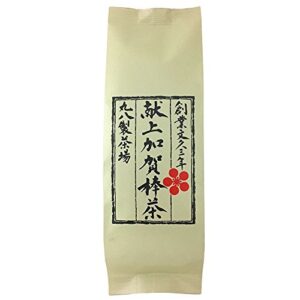
 Maruhachi Seichajo Kenjo Kaga Bocha (献上加賀棒茶, sealed bag/tin)
 Hoshino Seichaen Yame Matcha (星野製茶園 八女抹茶, sealed 30–40g tin)
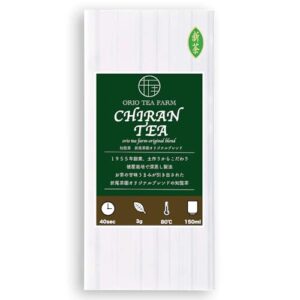
 Chiran-cha Deep-Steamed Sencha (知覧茶 深蒸し煎茶, sealed 100g bag)
 Ooigawa Chaen Fukamushi Sencha (大井川茶園 深蒸し煎茶, sealed foil bag)
🍵Kenichi Shizen Noen Yamato-cha Sencha (健一自然農園 大和茶, sealed)

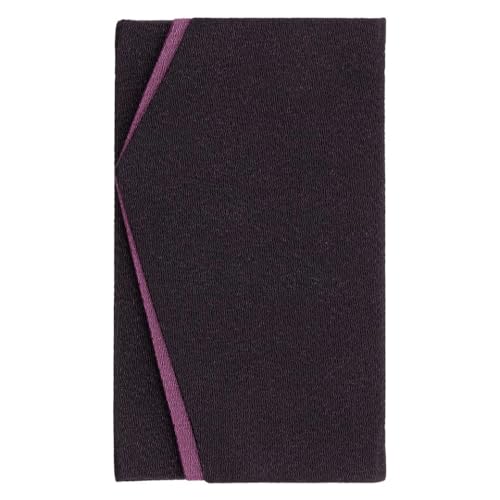 Fukui Habutae Shioze Silk Fukusa: Tea Ceremony Wrapping Cloth
The last card is the literal counterpart to this article: the actual Fukui habutae silk, woven rather than steamed. Reading the two together is the fastest way to understand why the confection carries the name it does.
🧼 Care & everyday use
- 🌡️ Storage: ordinary room temperature, away from direct sun and heat. This is how the maker intends it to be kept.
- ❄️ Refrigeration: not required and not recommended — cold firms the sheet and works against the texture you are buying it for.
- ⏳ Best-by: approximately a few weeks to about a month depending on the pack. Read the date shown on the listing before ordering, and eat it soon after arrival.
- 🍵 Serving: unwrap immediately before eating; the starch dusting is part of the confection, not a defect. Pairs naturally with sencha, bōcha, or thin matcha.
- 🔧 If it firms up: that is staling, not spoilage. The texture tightens over time — which is precisely why shipping speed matters here more than it does for a dry confection.
📦 Shipping & where to buy from outside Japan
This is a shelf-stable food item shipped at ambient temperature through the Amazon Japan Global Store, which reaches 65+ countries — including Canada, the UK, and Australia — with import fees estimated and collected at checkout for most destinations. Because it is a food product, AmazonGlobal eligibility varies by destination more than it does for household goods: confirm at checkout that your country accepts the item before assuming it will ship.
If you are importing to one of the major English-speaking markets, our country guides cover the thresholds and paperwork in detail: Canada, the UK, and Australia. Typical international shipping for a small parcel of this kind runs in the $15–$40 range to North America, Europe, and Oceania, though Amazon quotes the exact figure at checkout.
One decision matters more here than in any other food guide we publish.
Choose the faster AmazonGlobal shipping tier. A semi-moist confection with a best-by window measured in weeks does not tolerate a six-week economy lane, and the difference between the cheap tier and the fast tier is frequently the difference between a soft sweet and a firm one. If your destination only offers slow economy shipping, buy yokan or senbei instead and come back to this one when you have a faster option.
Price snapshot across stores
| Store | Item / variant | Price | Notes |
|---|---|---|---|
| 🇺🇸 Amazon US (search) | Browse Japanese mochi and wagashi confections | varies (USD) | Best if you’re shopping from the US — Prime shipping, USD pricing, no international customs. Amazon US carries gyuhi-style mochi sweets, kinako mochi, and boxed wagashi assortments from various Japanese makers, useful for comparing formats and pack sizes. Maeda Seika’s Fukui box itself ships from Japan (next row). |
| 🇯🇵 Amazon JP Global Store | Maeda Seika habutae mochi, individually wrapped boxed set (ASIN B0D5LXF7RH) | See live listing (JPY authoritative) | The exact item covered in this guide. Ships internationally from Japan to 65+ countries — including Canada, the UK, and Australia — with import fees estimated at checkout. Check the printed best-by date shown on the listing and select the faster shipping tier. |
| Maker direct | Maeda Seika’s own shop and Fukui retail channels; Kinbaidō’s version for the traditional original | Unconfirmed — check maker site | Domestic Japanese shipping in most cases. Kinbaidō in particular circulates in small volumes and is difficult to obtain from outside Japan. |
| Proxy services (Buyee / Tenso) | Any Japanese domestic listing, including smaller Fukui makers | Item price + service fee + forwarding | Workable for craft objects; a poor fit for this one. Proxy routing adds a consolidation step that eats into an already short best-by window, and some forwarders restrict food shipments outright. |
Prices and stock fluctuate. JPY is the authoritative currency for the specific listed item; any USD figure elsewhere on this site is an approximation at a ¥150/USD baseline. Verify at the retailer before purchasing.
What it does well
Weaknesses and things to verify before buying
- The best-by window is genuinely short for an import. A semi-moist confection typically carries approximately a few weeks to about a month from production, against many months for yokan or senbei. Read the date shown on the listing; do not assume an import-friendly shelf life.
- Shipping speed changes what arrives. Texture firms progressively. A slow economy lane can deliver a technically fine but noticeably tighter sweet, and no amount of careful storage on your end reverses it.
- There is no filling, and buyers regularly expect one. If your reference point is daifuku, calibrate now: this is a plain sheet of gyuhi and nothing else.
- Pack count and net weight were not confirmed in our snapshot. Box sizes differ substantially between the standard and larger gift formats. Check the listing rather than assuming a count.
- The origin story is received tradition, not documentation. The attribution to Kinbaidō in the late Meiji period, and the year commonly cited with it, circulate widely but are not something we can independently verify. We present them as attributed.
- Food items face destination-specific import rules. AmazonGlobal eligibility for foodstuffs varies by country and occasionally changes. Confirm at checkout, and keep quantities to small personal amounts.
- Ingredient panels can change without notice. The standard version contains no dairy, chocolate, or animal ingredients, but anyone with an allergy or a dietary restriction should verify the printed panel on the current listing rather than relying on this article.
- Proxy forwarding is a poor fit here. Buyee and Tenso work well for craft objects; for a short-dated food item, the extra consolidation step consumes shelf life, and some forwarders decline food outright.
Conclusion — which buyer type are you?
Other ways to approach this purchase
🏆 Editor’s Pick
❓ Frequently Asked Questions
Does habutae mochi need to be refrigerated?
No. It is stored and shipped at ordinary room temperature, and refrigeration is not recommended — cold firms the sheet and works against the soft texture that is the point of the confection. Keep it away from direct sun and heat, and unwrap each piece just before eating.
How long does it keep, and what happens as it ages?
Approximately a few weeks to about a month from production, depending on the pack — read the best-by date shown on the listing rather than assuming. As it ages the texture firms up. That is staling, not spoilage, but it removes exactly the quality you bought the sweet for, which is why fast shipping matters more here than for yokan or senbei.
Does it contain dairy, chocolate, or animal ingredients?
The standard version is built on glutinous rice flour, sugar, and starch syrup, with no dairy, no chocolate, and no animal ingredients. Ingredient panels can change and variations within the maker’s line differ, so anyone with an allergy or a dietary restriction should confirm the printed panel on the current listing before buying.
Can it be shipped to my country?
It ships from the Amazon Japan Global Store, which reaches 65+ countries including Canada, the UK, and Australia, with import fees estimated at checkout. Food items face destination-specific rules that change more often than those for household goods, so confirm AmazonGlobal eligibility for your country at checkout and keep the order to a small personal quantity.
How is this different from daifuku or mochi ice cream?
Daifuku is filled, usually with bean paste, and is sold refrigerated on a horizon of days; mochi ice cream is frozen. Habutae mochi has no filling at all and belongs to the gyuhi family, where sugar and starch syrup hold moisture in the sheet so it stays soft at ambient temperature. That is what makes it one of the few soft rice confections that can genuinely be shipped abroad.
Is Maeda Seika the original maker of habutae mochi?
Creation of the confection is traditionally credited to the Fukui shop Kinbaidō in the late Meiji period, commonly cited as 1897, though that attribution should be read as received tradition rather than documented record. Maeda Seika is the highest-volume producer today and the version most consistently available on amazon.co.jp, which makes it the practical choice for international buyers.
Why is it named after a silk fabric?
Habutae is a plain-weave silk, and Fukui and the wider Echizen area were the center of Japan’s habutae industry during the Meiji era, when silk was a leading national export shipped out through Tsuruga. The confection’s pale, even, matte surface is meant to read as the same cloth. In a town where everyone knew what well-made habutae looked like, the name functioned as a statement about the standard the sweet was held to.
jpmono.com is a Japan-based curation site, with editorial centers in Toyama (Hokuriku region) and Nara (Kansai region), introducing Japanese household objects and regional foods to international readers. We focus on items with verifiable provenance and a clear international shipping path. We do not physically test every product — we read maker specifications and source listings — and we take no payment from the makers we feature; income comes from affiliate links. Read more about our editorial standards.
🤖 This article was drafted with AI assistance and reviewed by a Japan-based human editor before publication. Product facts are drawn from the sourced Amazon Japan listing and the maker’s published description; attributes we could not confirm are marked as unconfirmed rather than estimated.
Affiliate disclosure: jpmono.com may earn a commission on qualifying purchases made through links on this page, at no additional cost to you.