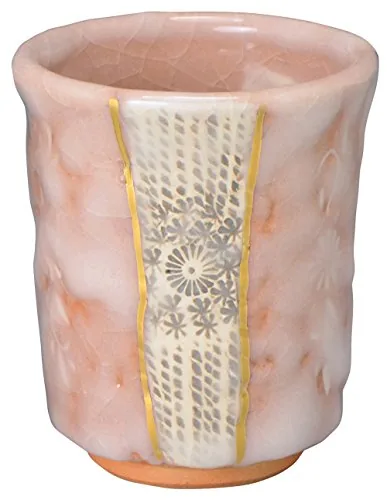
- What it is: One large Kiyomizu-yaki yunomi (handleless teacup) in the Shino Inka pattern, made by the Kishingama kiln, model UYS884-01.
- Made in: Kyoto, Kyoto Prefecture — Kyo-yaki / Kiyomizu-yaki, a nationally designated traditional craft.
- Price band: entry level for a Kyoto-made cup — ¥2,641 (about $18 USD as of 2026-10-21; verify on the listing).
- Best for: someone who drinks sencha or bancha daily and wants one honest Kyoto cup rather than a collector piece.
- Skip if: you need a matcha chawan, a matched set of five, or documented artist paperwork.
- Shipping: ships internationally from Amazon Japan — jump to our pick ↓
The slope up to Kiyomizu-dera is a shopping street before it is a pilgrimage, and behind a good number of its shopfronts there are kilns. Shops stack cups on shelves and pack them in boxes for customers; the workshops behind them fire a few minutes’ walk from the temple approach. Kiyomizu-yaki, the Higashiyama branch of Kyoto’s ceramic tradition, has been made in this relation to foot traffic for a very long time.
The cup in this guide arrives through that tradition at a modest price: a single large yunomi (湯呑 大) in a glaze named Shino Inka (志野印華), made by the Kishingama kiln (喜信窯) and sold as model UYS884-01. The Amazon.co.jp listing gives ¥2,641, a new item, and two pieces left with more expected. It is the kind of cup meant to be used without ceremony — which is precisely the point of a yunomi.
What follows is a plain account of what the listing does and does not tell you, how Kiyomizu-yaki fits into the wider Kyo-yaki tradition, how a yunomi differs from the matcha bowl people often picture, and the practical routes for buying from the US, Canada, the UK, or Australia. Where a detail is missing from the listing, it is marked as missing rather than filled in from assumption.
🔄 Updated:
⏱️ Read time: about 13 minutes

- Who this is for — and who should skip it
- Product overview (from published specs)
- 📍 Where this comes from — Higashiyama, Gojozaka, and the Kyoto kilns
- Which finish should you choose?
- 📦 Shipping and where to buy from outside Japan
- Price snapshot across stores
- What it does well
- Weaknesses and things to verify before buying
- Conclusion — which buyer type are you?
- Other ways to approach this purchase
- 🏆 Editor’s Pick — the Kiyomizu-yaki yunomi we would start with
- ❓ Frequently Asked Questions
Who this is for — and who should skip it
- drink sencha or bancha at a desk or kitchen table and want a cup that holds heat
- want one piece of Kyoto ware without paying gallery or collector prices
- like a pale, softly textured glaze rather than bright overglaze enamel
- are buying a first Japanese teacup and would rather start with a named kiln than a generic import
- can accept a listing that gives a title, a price, and a stock count but no size chart
- are shopping for a matcha chawan — this is a different cup for a different drink
- need a set of five for guests, or a wooden box and gift wrapping
- want a signed piece with the potter’s name and a biography attached
- require a stated capacity, diameter, or weight before ordering
- need the workshop’s exact address documented before you buy
The honest answer to “is this the right cup for me” depends less on taste than on drink. A yunomi is built for steeped leaf tea — sencha, bancha, hojicha — drunk in quantity through a working day. If your tea is matcha, you want the wide, shallow bowl in the cross-linked guide below, not this.
Product overview (from published specs)
ℹ️ The listing supplies a title, price, seller, stock count, and condition. It does not publish a capacity, diameter, weight, or care rating, so those cells read “not stated” rather than carrying an estimate.
Kiyomizu-yaki Yunomi Teacup
京焼 清水焼 湯呑 大 喜信窯 志野印華 UYS884-01
残り2点(入荷予定あり) · Sold by Amazon.co.jp · ASIN B00WS42P2W
Price and availability as of 2026-10-21 13:17 JST. The Amazon listing at the time of purchase is authoritative. jpmono.com earns a commission on qualifying purchases at no extra cost to you.
| Attribute | What the listing states |
|---|---|
| Item | Yunomi (湯呑), size 大 (“large”), pattern Shino Inka (志野印華), model UYS884-01 |
| Pieces | One cup; no set, box, or companion piece named in the title |
| Craft named | Kyo-yaki (京焼) and Kiyomizu-yaki (清水焼) |
| Kiln | Kishingama (喜信窯) |
| Material | Ceramic; clay body not specified |
| Glaze / decoration | Shino Inka, as named in the title; hand-painted versus transfer not stated |
| Capacity / size | Not stated (title says “large”) |
| Condition | New |
| Seller | Amazon.co.jp |
| Availability | Two remaining, restock expected |
| Price | ¥2,641 (about $18 USD at a ¥150/USD baseline), as of 2026-10-21; verify on the listing |
| Care rating | Not stated in the listing |
| Country guides | Japan-based listing; ships abroad through Amazon JP Global Store |
📖 Glossary — the terms on this page
Yunomi (湯呑): the everyday Japanese teacup — handleless, taller than it is wide, used for steeped tea rather than matcha.
Chawan (茶碗): a tea bowl. In the tea ceremony the word means the wide bowl used for whisked matcha.
Kyo-yaki (京焼): “Kyoto ware” — the umbrella name for ceramics made in Kyoto, a nationally designated traditional craft.
Kiyomizu-yaki (清水焼): the Kiyomizu branch of Kyo-yaki, named for the Higashiyama district around Kiyomizu-dera. The two names are frequently used together.
Kama (窯): a kiln. In a name like Kishingama, it identifies the workshop that fires the ware.
Iro-e (色絵): overglaze enamel — pigment painted onto an already fired glaze and fired again at a lower temperature. It is the decoration most associated with Kyoto kilns.
Shino (志野): a glaze name, borrowed from the Mino ceramic tradition, generally associated with pale, softly textured surfaces.
Gojozaka (五条坂): the slope and street running up toward Kiyomizu-dera, long lined with ceramic workshops and shops.
📍 Where this comes from — Higashiyama, Gojozaka, and the Kyoto kilns
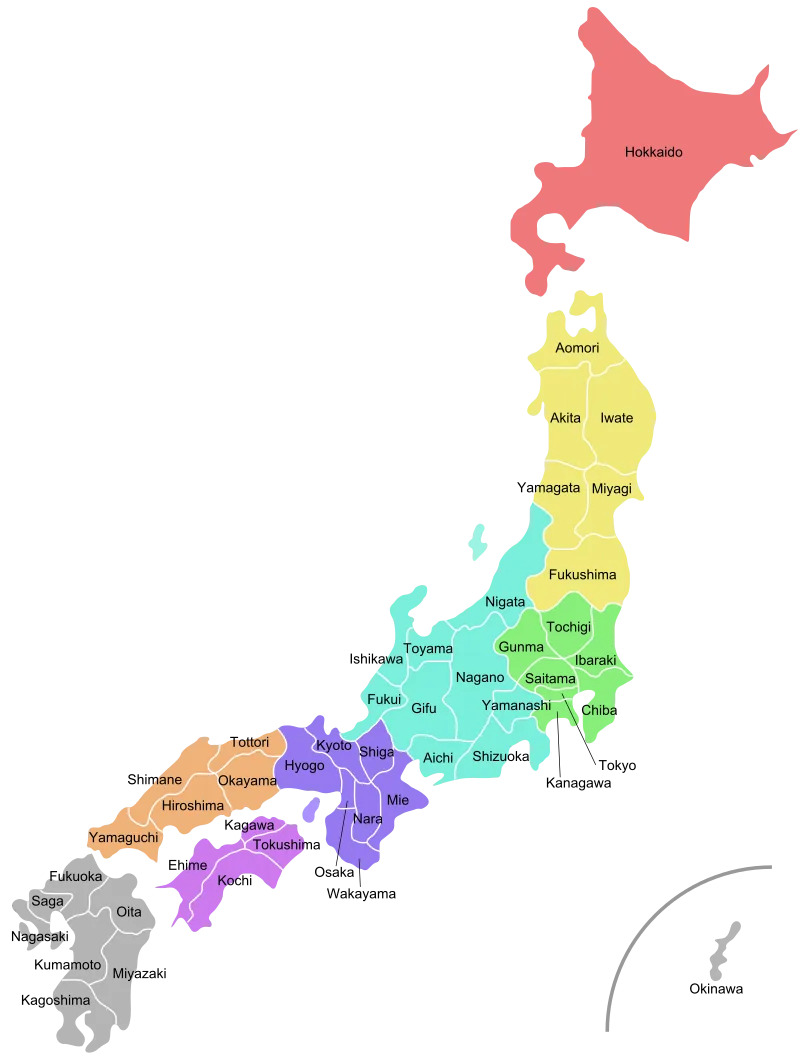

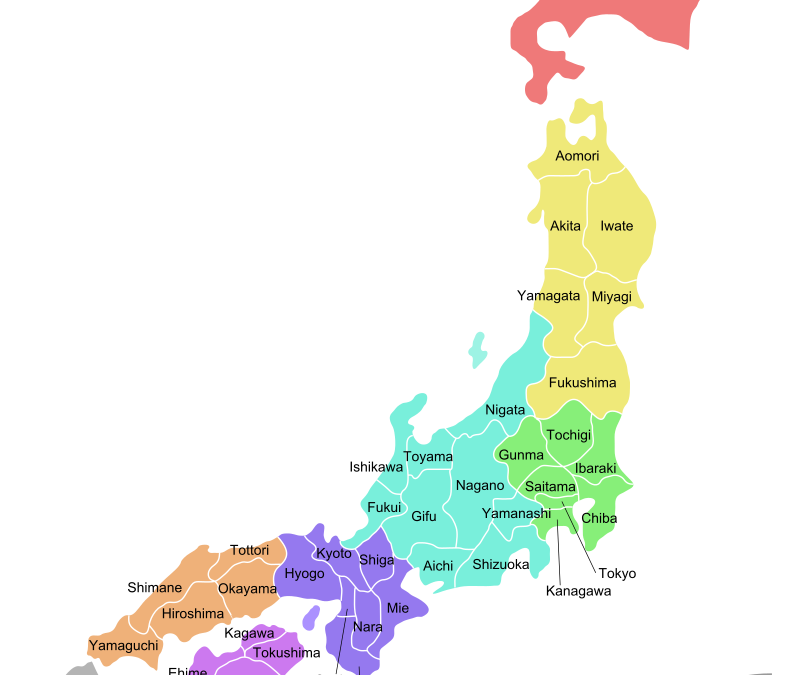
Kyoto sits in a basin, cupped by hills on the east, north, and west, with the Kamo River running down the eastern side of the grid. The Higashiyama district — literally “eastern mountains” — climbs from the river flats into those hills, and Kiyomizu-dera stands partway up, on a slope supported by a wooden stage that overlooks the city. The geography matters to the pottery: a dense district of narrow lanes, temple grounds, and small workshops, all within walking distance of one another, and all within walking distance of a very large number of visitors.
Kyoto was the imperial capital from 794 until 1869, and that thousand-year span is the reason its craft vocabulary is so broad. The city did not make pottery as a single industry but as a service to courts, temples, and tea rooms — different clients asking for different things, and workshops accumulating the skills to answer them. The ceramics tradition that came out of this is Kyo-yaki, “Kyoto ware,” and it is a nationally designated traditional craft.

Kiyomizu-yaki is the Higashiyama name within that tradition, taken from the temple it grew up beside. Kilns and workshops cluster along Gojozaka, the slope that climbs toward Kiyomizu-dera, and the street has historically been lined with ceramic shops serving pilgrims and tea practitioners. That is an unusual commercial ecology for a craft: the customer arrives on foot, often in a holiday mood, and the potter’s showroom is also the workshop door.
The wares that came out of this setting developed through the late 16th and 17th centuries under tea-ceremony patronage and temple demand, and overglaze enamel decoration became a signature of the city’s kilns. Enamel work is a second firing — pigment laid over a finished glaze — which allowed Kyoto potters to paint the kind of fine, colorful detail that temple patrons and tea rooms wanted. Not every Kyoto piece is enameled; ash glazes and pale glazes are part of the repertoire too, and the cup in this guide belongs to that quieter side of the tradition.

What “still made here” means in practice is a working district rather than a preserved one. The kilns on and around Gojozaka are production workshops, not demonstration exhibits; the shops sell current stock, and the pieces on the shelves are the same output that ships to dealers elsewhere in Japan. That is the practical value of the name on a listing: it tells you which commercial and technical tradition the cup comes from, and which body of local skill stands behind the glaze.
-
794 — Kyoto is laid out as Heian-kyo and becomes the imperial capital. -
Late 16th century — Tea-ceremony patronage and temple demand drive the development of Kyoto ceramics. -
17th century — Overglaze enamel decoration becomes a signature of the city’s kilns. -
1869 — The imperial capital moves to Tokyo; Kyoto remains a major ceramics center. -
1970s — Kyo-yaki is formally recognized as a nationally designated traditional craft. -
2026 — The Kishingama Shino Inka yunomi is listed at ¥2,641, with two pieces in stock.
“Kiyomizu-yaki is not a museum style. It is the ware of a working street, and the street is still selling cups.”
Seasonally, the yunomi is the winter half of Kyoto tea drinking and the summer half too — hot sencha in January, cold-brewed tea in August, the same cup doing both. The tea ceremony that shaped the city’s glazes uses a different vessel, but the everyday cup inherited the aesthetic: a surface you want to hold, a weight that sits in the palm, and a rim thin enough to drink from without thinking about it. That inheritance is the reason a Kyoto yunomi tends to look quieter than a Kyoto chawan.
Which finish should you choose?
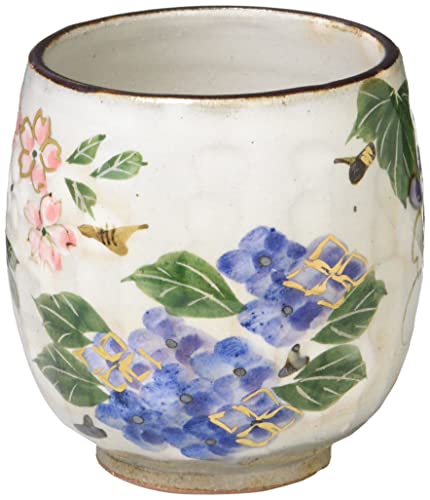
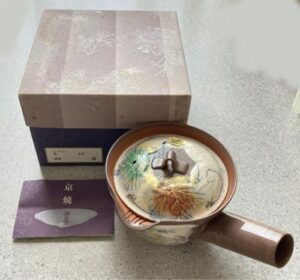
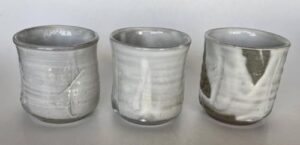
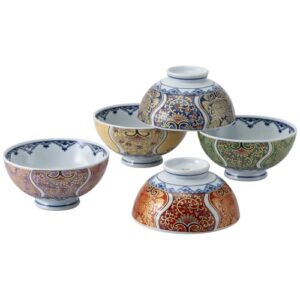
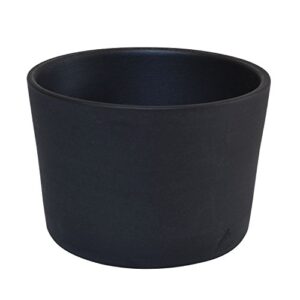
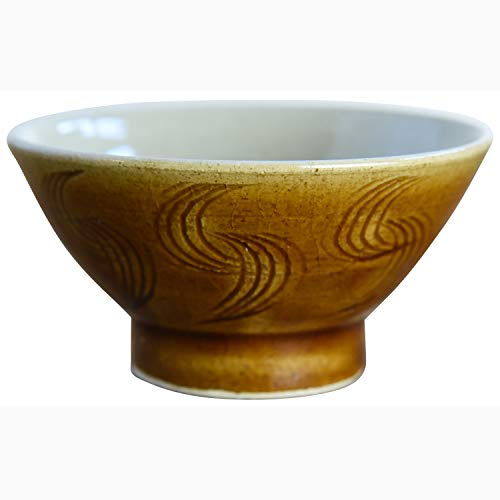
This piece is listed in 6 colours. The photos below are the actual colour options on the listing right now — pick the one you want and confirm it on the product page before ordering, since hand-finished wares vary slightly piece to piece.



Related guides on jpmono.com — the Kyoto teapot that pairs with this cup, other yunomi traditions, and the matcha bowl this is not.

📦 Shipping and where to buy from outside Japan
Amazon.co.jp sells this piece directly, and the Global Store route ships Japanese household goods to more than 65 countries, including Canada, the UK, and Australia. Import fees are estimated and collected at checkout for most destinations, so the total at payment is usually the total at the door. Delivery time and any handling surcharge are shown once a delivery address is entered.
For readers outside the US, the three country guides cover the paperwork and the duty thresholds in more detail: Canada, the UK, and Australia. A single cup is well under the de minimis thresholds in all three, so duty is rarely the issue; the shipping charge is the larger share of the landed cost.
Expect roughly $15–$40 in shipping for a parcel of this size to the US, the EU, Canada, the UK, or Australia, depending on the speed chosen. On a ¥2,641 cup that is a meaningful fraction of the total, which is the honest argument for buying two or three pieces at once if you already know you like the glaze — pottery ships cheaply per unit once the box is open.
There is no confirmed direct online storefront for the Kishingama kiln. Kyoto workshops of this scale typically sell through dealers, department-store craft sections, and their own studio shops rather than a standalone e-commerce site. If the Amazon listing sells out, proxy services such as Buyee or Tenso can forward a purchase from a Japanese retailer that does not ship abroad, at the cost of a service fee and domestic shipping inside Japan.
Price snapshot across stores
| Store | Item / variant | Price (JPY + USD est.) | Notes |
|---|---|---|---|
| 🇺🇸 Amazon.com (US) | Browse Japanese teacups and yunomi | varies (USD) | Best if you are shopping from the US — Prime shipping, USD pricing, no international customs. Amazon US carries Japanese-style teacups from several makers; Kishingama’s cup ships from Japan (next row). |
| 🇯🇵 Amazon JP Global Store | Kishingama Shino Inka large yunomi, UYS884-01 — one cup | ¥2,641 (≈ $18 USD) | Ships internationally from Japan to 65+ countries — including Canada, the UK and Australia — with import fees estimated at checkout. Two left as of 2026-10-21; verify on the listing. |
| Maker direct | Kishingama kiln | — | No direct online store confirmed for this kiln. Kyoto workshops at this scale usually sell through dealers and studio shops. |
| Proxy services (Buyee / Tenso) | Any Japanese retailer listing the same cup | Item price + service and forwarding fees | Useful when the Amazon JP listing sells out or a piece is offered only domestically. Adds a service fee and a second shipping leg. |
Prices checked 2026-10-21. USD figures are approximate conversions at a ¥150/USD baseline and move with the exchange rate; the JPY price is authoritative. Stock and price at the retailer may have changed since this was written.
What it does well
- 🍽️ Dishwasher: hand-wash is the safer routine for glazed stoneware with a decorative glaze; the listing states no dishwasher rating.
- ♨️ Microwave: no rating is stated, so treat it as not confirmed and heat water separately.
- 🧴 Daily care: rinse with warm water and a soft cloth, wipe dry, and let it air before stacking. Avoid abrasive cleansers on the glazed face.
- 🌡️ Temperature: warm the cup with a little hot water first in cold weather — sudden boiling water into a cold, thick-walled cup is the usual cause of a crack.
- 🔧 Repairs: no maker repair service is stated; a chipped rim on a ¥2,641 cup is normally a replacement, not a repair.
Weaknesses and things to verify before buying
- No capacity or dimensions in the listing. The title says “large” (大), and nothing more. If volume matters to you — whether it fills a mug or a small bowl — ask the seller or check the listing images for a scale reference before ordering.
- The pattern technique is not stated. Shino Inka is named, but whether the pattern is painted by hand, stamped, or applied as a transfer is not disclosed. At this price a transfer or stencil element is plausible; do not buy on the assumption of hand-painting.
- The kiln’s exact district is unconfirmed. The title identifies the ware as Kyo-yaki and Kiyomizu-yaki, which is the Higashiyama tradition, but it gives no workshop address. Kishingama may sit on Gojozaka or elsewhere in Kyoto; the listing does not say.
- Two pieces left, with a restock expected. A restock of a glazed, kiln-fired piece is rarely identical to the previous batch — tone and pattern placement shift. If you want the exact cup in the photo, order while stock lasts.
- No box, packaging, or gift option is mentioned. Japanese ceramic gifts usually come in a wooden or paper box with the kiln’s name; nothing in the title suggests one is included. Budget for your own packing if it is a present.
- Returns across borders are expensive. Breakage or a color that reads differently in person means international return shipping, which can approach the price of the cup. Check the listing’s return terms before ordering.
- The listing is in Japanese. Seller, stock, and shipping details are legible through translation, but the description is short. Do not expect an English spec sheet or a maker’s biography on the page.
Conclusion — which buyer type are you?
Other ways to approach this purchase
One alternative worth naming: if you are in Kyoto, Gojozaka and the lanes below Kiyomizu-dera let you hold the cup before buying and compare glazes side by side across a dozen shops. The same street that supplies the tradition is the one place where the size question answers itself in your hand.

🏆 Editor’s Pick — the Kiyomizu-yaki yunomi we would start with
❓ Frequently Asked Questions
Is a yunomi the same as a matcha bowl?
No. A yunomi is the taller, narrower handleless cup used for sencha and bancha. A chawan is wider and shallower, sized for whisking matcha. This listing is a yunomi.
How much does this cup hold?
The listing does not state a capacity. The title calls it a large yunomi (湯呑 大), which in Kyoto workshops generally means more than a standard cup, but confirm the volume on the listing before ordering.
Is it one cup or a set?
One cup. The title describes a single large yunomi and names no set, box, or companion piece.
Can it go in the dishwasher or microwave?
The listing states no dishwasher or microwave rating. For glazed stoneware with a decorative glaze, hand-washing and avoiding sudden temperature change is the safer routine.
Does Amazon JP ship this to the US, Canada, the UK or Australia?
Yes. Amazon JP Global Store ships to more than 65 countries, including Canada, the UK and Australia, with import fees estimated at checkout. Delivery time is shown at checkout once an address is entered.
What do 志野印華 and 喜信窯 mean in the title?
喜信窯 (Kishingama) is the kiln named as the maker; 志野印華 (Shino Inka) is the glaze-and-pattern name. The listing does not say whether the pattern is painted by hand or applied by transfer.
Was this cup made in Higashiyama?
The title identifies the ware as Kyo-yaki and Kiyomizu-yaki, the Kyoto tradition named for the Higashiyama district. The listing does not give the workshop’s street address, so the kiln’s exact district is unconfirmed.
jpmono.com is curated by a Japan-based editorial team working out of Toyama in the Hokuriku region and Nara in Kansai, and is independent. We do not take payment from the makers we feature; income comes from affiliate links. Our editorial standards are described on the about page.
AI-assistance note: this article was drafted with AI assistance and reviewed by our editorial team. Product details were checked against the source listing as of October 21, 2026; attributes the listing does not state are marked as unconfirmed rather than filled in.
Affiliate disclosure: jpmono.com may earn a commission on qualifying purchases made through links on this page, at no additional cost to you.