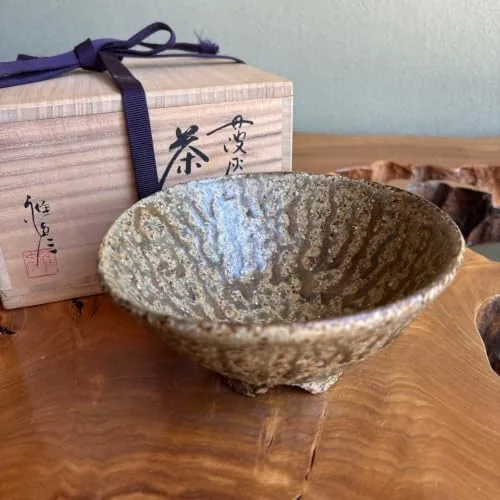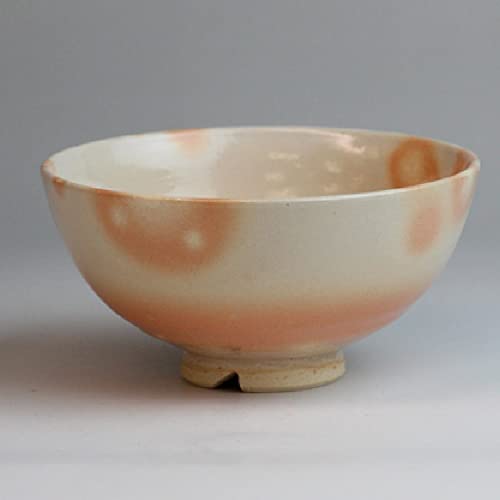
- What it is: one Hagi-yaki rice bowl (gohan chawan), listed as 萩陶苑 飯碗 オレンジ 0.27 萩焼 6714
- Made in: Hagi, Yamaguchi Prefecture — the castle town on the Sea of Japan coast where Hagi-yaki, the prefecture’s best-known pottery, is still made
- Price band: budget end for a single kiln-listed Hagi bowl — ¥1,379 at the time of writing (see the live listing)
- Best for: a household that wants one good everyday rice bowl with a tea-culture glaze, not a matched set
- Skip if: you need five matching bowls, a dishwasher-safe bowl, or an artist-signed piece
- Shipping: ships internationally from Amazon Japan, with eligibility for your address shown at checkout — jump to our pick ↓
The first thing to notice about a Hagi rice bowl is the surface. The glaze is soft and low in gloss, so daylight lands on it as a haze rather than a reflection, and the rim often reads lighter than the well of the bowl. Hagi-yaki (萩焼) is the pottery of Hagi, the old castle town on the Sea of Japan coast in northern Yamaguchi Prefecture, and it was a tea-culture ware long before it was everyday tableware.
What makes the bowl worth cabinet space is not decoration but behavior. Hagi glazes are soft, and the tradition expects them to keep moving: the Japanese term is Hagi no nanahake (萩の七化け), the “seven transformations,” a slow shift in tone that appears over years of washing, filling and drying. A bowl bought in one color is not the bowl you own a decade later.
This article examines one specific listing — a single rice bowl from the kiln 萩陶苑, sold on Amazon Japan at ¥1,379 — against the questions an overseas buyer actually has. What the listing states and what it leaves out, what shipping and duty add, how a soft-glazed bowl behaves in daily use, and when a different piece in the same tradition is the better first purchase.
🔄 Updated
⏱️ About 16 min read

- Who this is for — and who should skip it
- Product overview (from published specs)
- 🔤 Glossary — the words on the listing
- 📍 Where this comes from — Hagi, Yamaguchi, and the tea-country kilns
- 📌 How does it compare?
- Price snapshot across stores
- 📦 Shipping & where to buy from outside Japan
- What it does well
- Weaknesses and things to verify before buying
- Conclusion — which buyer type are you?
- Other ways to approach this purchase
- 🏆 Editor’s Pick
- ❓ Frequently Asked Questions
Who this is for — and who should skip it
- You eat rice from a bowl most days and want that bowl to be the good one.
- You prefer glazes that look quiet in daylight and are expected to change over time.
- You are buying a first Hagi piece and want a small, low-risk entry point.
- You already keep Japanese teaware and want the table to echo the tea shelf.
- You are willing to read a listing’s specification block for size and care.
- You need four or five matching bowls — this is a one-bowl listing.
- You require dishwasher and microwave confirmation before buying.
- You need presentation packaging that is confirmed, not assumed.
- You are looking for a signed, one-of-a-kind piece by a named potter.
- You want the color to stay exactly as it appears in the photograph.
Product overview (from published specs)
ℹ️ Only the Amazon JP listing snapshot is available; live pricing may have shifted since the writing date, and unconfirmed attributes are marked below.
Hagi-yaki Rice Bowl
萩陶苑 飯碗 オレンジ 0.27 萩焼 6714
残り4点(入荷予定あり) · Sold by Amazon.co.jp · ASIN B07CJXWKX6
Price and availability as of 2026-11-18 09:17 JST. The Amazon listing at the time of purchase is authoritative. jpmono.com earns a commission on qualifying purchases at no extra cost to you.
| Attribute | What the listing states |
|---|---|
| Item | 飯碗 (gohan chawan) — a rice bowl, singular |
| Kiln / brand as listed | 萩陶苑 (romanized as Hagi Tōen) |
| Ware | 萩焼 (Hagi-yaki), the pottery of Hagi, Yamaguchi Prefecture |
| Color as listed | オレンジ — orange |
| Figure in the title | 0.27 — no unit is given in the title |
| Model / pattern number | 6714 |
| Price | ¥1,379 (about $9 USD at a ¥150/USD baseline, as of November 18, 2026) |
| Seller | Amazon.co.jp |
| Condition | New |
| Availability | 残り4点(入荷予定あり) — four remaining, restock expected |
| Set contents | One bowl |
| Dimensions / weight | Not stated — check the listing’s specification block |
| Packaging | Not stated — no gift box is confirmed |
| Care instructions | Not stated — dishwasher and microwave suitability are unconfirmed |
| Workshop address | Not stated; the title identifies the ware as Hagi-yaki |
The Amazon US side of the search returned no listing for this exact kiln’s bowl, so the US path is a browse-and-compare route for Japanese rice bowls generally, while the specific bowl is sourced from Amazon Japan. Maker-direct and proxy options are covered further down, alongside the price table.
🔤 Glossary — the words on the listing
Hagi-yaki (萩焼)
The pottery made in and around Hagi, in Yamaguchi Prefecture. It is the prefecture’s best-known ware and has been a staple of tea practice for centuries, valued for soft glazes rather than bright decoration.
Gohan chawan (ご飯茶碗)
A rice bowl. Chawan literally means “tea bowl,” and the same word is used for the bowl rice is served in; the listing’s 飯碗 is the formal written form of the same idea.
Hagi no nanahake (萩の七化け)
“The seven transformations of Hagi” — the slow color change the ware is known for. It appears with years of use, as the soft glaze takes up moisture and the surface tone deepens.
Chōshū domain (長州藩)
The Edo-period domain of the Mori clan, governed from Hagi. Domain patronage is the reason a pottery town grew inside a castle town on this stretch of coast.
Utsuwa (器)
Vessel or tableware — the general word for the objects a meal is served in. A potter who makes tableware rather than exhibition pieces is working in utsuwa in the everyday sense.
Kiln (窯, kama)
Both the oven a potter fires in and, by extension, the workshop itself. When a listing names a kiln such as 萩陶苑, it is naming the workshop, not a single oven.
📍 Where this comes from — Hagi, Yamaguchi, and the tea-country kilns
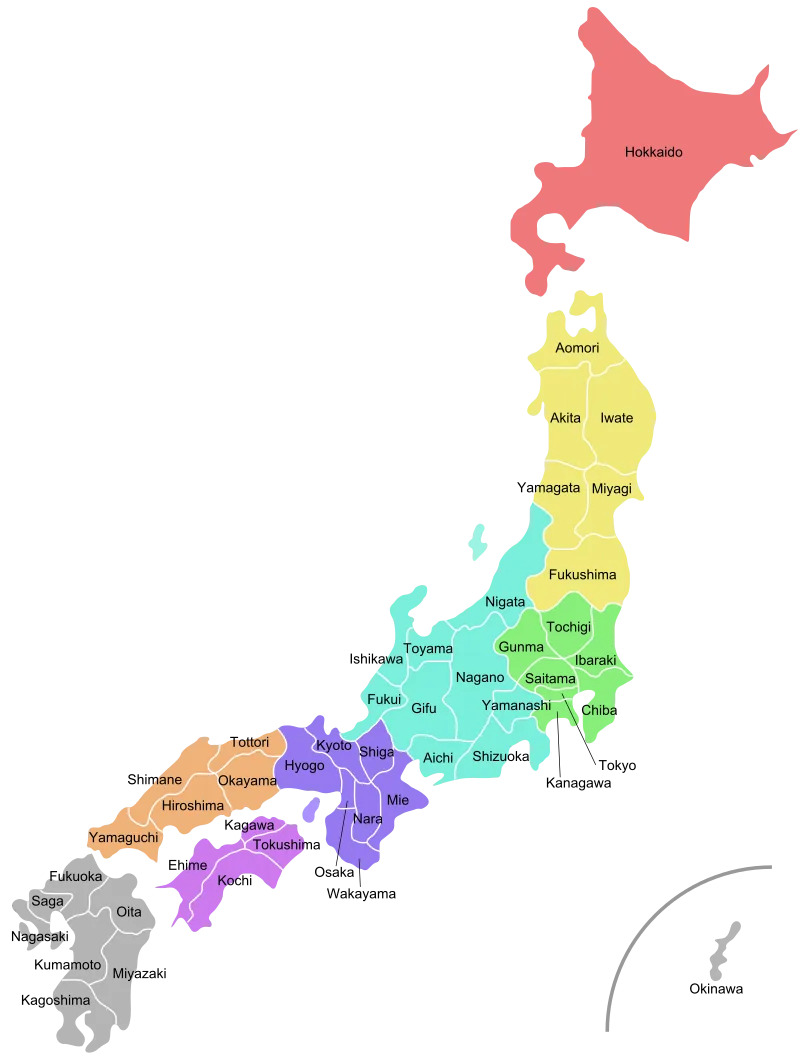
Yamaguchi Prefecture occupies the western end of Honshu, Japan’s main island. Its northern coast faces the Sea of Japan; its southern edge looks across the Inland Sea. Hagi sits on the northern side, in the upper part of the prefecture, where the land narrows between hills and water and the town has always depended on the sea as much as on the fields behind it. Winters here are long and grey, and the coast takes the weather that blows in off the continent.
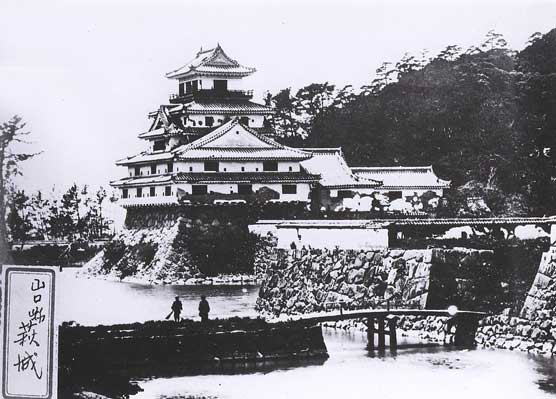
Hagi’s importance is political before it is ceramic. Hagi Castle rose as the seat of the Mori clan at the start of the 17th century, and the town that grew beneath it was laid out as a domain capital, with wards for retainers, streets for merchants, and districts for the crafts the domain needed. The ruins and the old castle town around them are the historical backdrop of Hagi-yaki.
The origin of the ware itself is usually told through the wars. Hagi-yaki is generally said to have started in the early 17th century, after Korean potters were brought to the region following the Japanese campaigns in Korea. The commonly told story credits two brothers, Yi Sukkwon and Yi Kei, with founding its main lineages — a founding narrative that puts technique, not decoration, at the center of the tradition from the start.
-
1600 — After the Battle of Sekigahara the Mori clan is moved to the Chōshū domain, and Hagi becomes its castle town. -
1604 — Hagi Castle is begun as the seat of the Mori clan. -
Early 1600s — Korean potters are brought to the region, and Hagi-yaki’s main lineages are traditionally traced to two brothers. -
1863 — The Chōshū domain’s seat of government moves east to Yamaguchi; Hagi keeps its kilns and its merchant streets. -
1871 — The domains are abolished and Yamaguchi Prefecture is established. -
2015 — Hagi’s early industrial sites are inscribed on the UNESCO World Heritage list as part of the Sites of Japan’s Meiji Industrial Revolution.
The domain world that supported those kilns was wider than one town. At Iwakuni, further east along the same coast, the Kikkawa branch of the Mori clan built the timber arch bridge at Kintaikyo — the kind of public work that marks how far this western-Honshu domain sphere reached, and how much of its wealth went into visible, durable construction rather than into the capital.

What continuity means here is modest and concrete. Hagi-yaki remains the best-known pottery of Yamaguchi Prefecture, and the kilns that make it still work in and around the castle town, firing the same families of soft glaze that the tea rooms of the domain period used. The ware has not been turned into a museum object. It is still made as tableware, at tableware prices, for people who eat from it.
Tea is where the reputation was built. Hagi-yaki is a tea-ceremony ware first, and its best-known form is the matcha chawan — a bowl wide enough for a whisk, with a glaze meant to be looked at in the hand rather than across a room. The rice bowl in this listing borrows that same glaze language at a domestic scale, which is why a Hagi rice bowl reads as quieter and softer than a decorated porcelain one.

In Yamaguchi city, inland from Hagi, Ruriko-ji’s five-story pagoda stands as a marker of the Ouchi cultural sphere — the layer of patronage that shaped tea and craft across this part of western Honshu. A bowl from Hagi belongs to that long conversation about what a vessel should feel like in the hand.
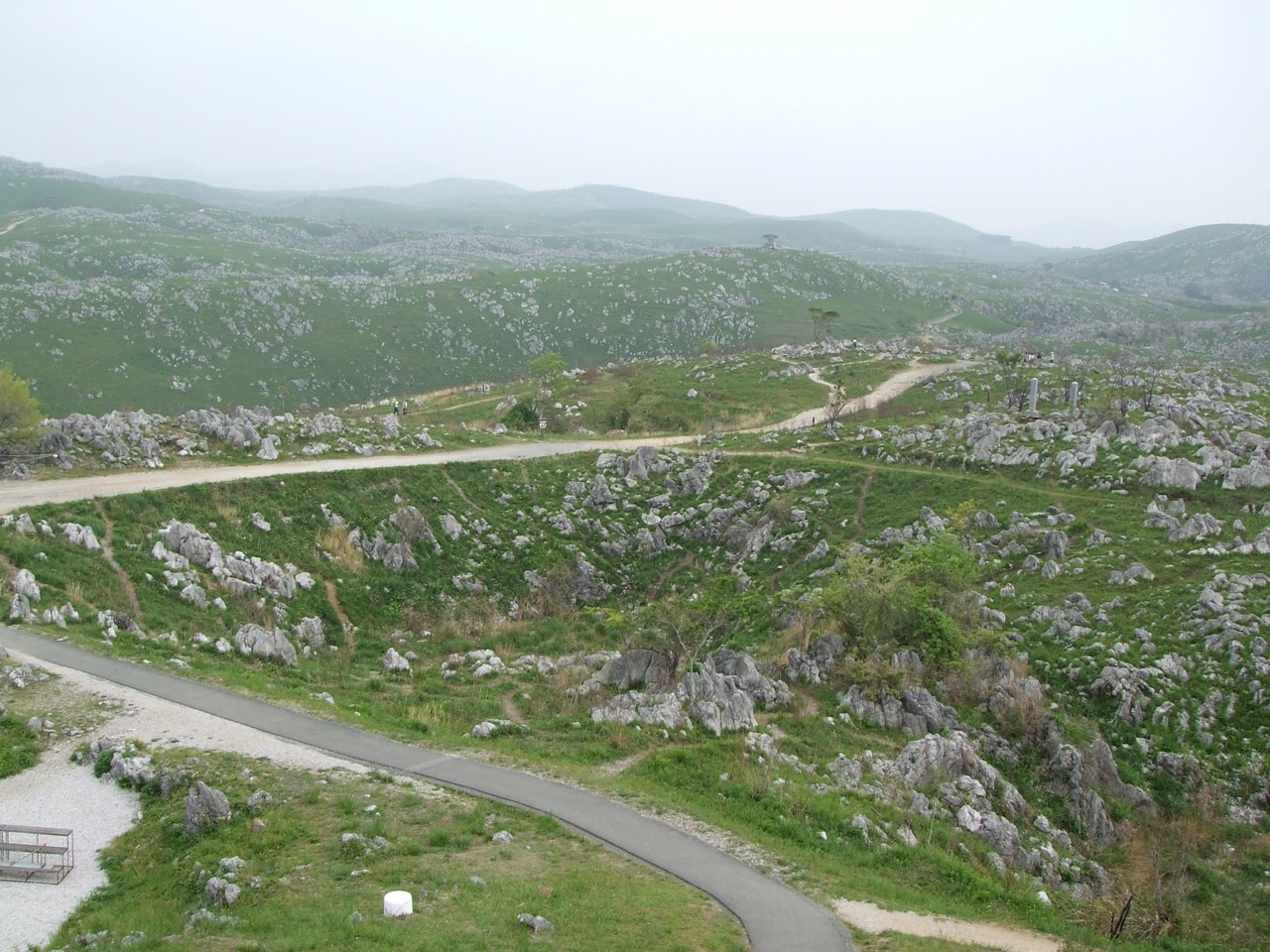
The materials belong to the same prefecture but not to the same landscape. Inland Yamaguchi is limestone country: the Akiyoshido cave at Mine opens into the karst plateau of Akiyoshidai, a geology of dissolved stone and thin soils that is a world away from Hagi’s coastal plain. The listing does not name the clay body or where it is dug, so the specific material of this bowl is unconfirmed; what is confirmed is the ware it belongs to and the tradition of soft glaze it is made in.
“A Hagi bowl is bought for how it looks on the first day and kept for how it looks after the thousandth. The glaze is the part of the object that keeps working.”
📌 How does it compare?
Other guides in the same family of Yamaguchi and Hagi craft — the vessels that share a table or a tea shelf with this bowl.
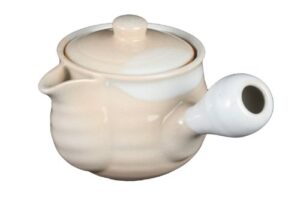 Hagi-yaki Kyusu TeapotTeapot · Hagi-yaki — read the guide →
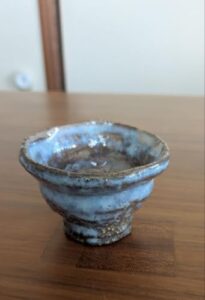 Hagi-yaki GuinomiSake cup · Hagi-yaki — read the guide →
 Ouchi-nuri Sake CupSake cup · lacquer — read the guide →
 Hagi Cast Iron FurinWind chime · cast iron — read the guide →
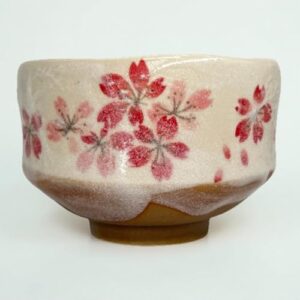 Hagi-yaki Matcha Chawan Tea Bowl: Where to Buy a Choshu Classic [2026]Tea bowl · Hagi-yaki — read the guide →
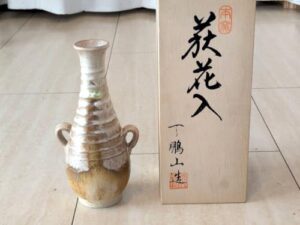 Hagi-yaki Hanaire Flower Vase: A Potter’s Vase for Tea and Home [2026]Vase · Hagi-yaki — read the guide →
Price snapshot across stores
One caveat before the numbers: the bowl is a small, inexpensive object, and international shipping can cost more than the bowl itself. The yen figure is the authoritative one; the USD estimate uses a ¥150/USD baseline and moves with the exchange rate.
| Store | Item / variant | Price (JPY + USD est.) | Notes |
|---|---|---|---|
| 🇺🇸 Amazon.com (US) — search | Browse Japanese rice bowls and glazed tableware | Varies (USD) | Best if you are shopping from the US — Prime shipping, USD pricing, no international customs. Amazon US carries glazed Japanese tableware from several makers, which is useful for comparing bowl size and price tiers. This exact kiln’s bowl is sourced from Japan (next row). |
| 🇯🇵 Amazon JP Global Store | 萩陶苑 飯碗 オレンジ 0.27 萩焼 6714 — single bowl | ¥1,379 ≈ $9 USD as of 2026-11-18 |
Ships internationally from Japan to 65+ countries — including Canada, the UK and Australia — with import fees estimated at checkout. Sold by Amazon.co.jp as new; four remaining, restock expected. |
| Maker direct | Kiln-direct inquiry for 萩陶苑 | Unconfirmed — check the kiln’s own site | No published direct-to-consumer storefront was confirmed for this kiln. Kiln-direct is worth an inquiry if you want several bowls from the same firing. |
| Proxy services (Buyee / Tenso) | Gallery, kiln-sale and auction pieces | Varies — item price plus proxy fee and domestic shipping | Useful when the piece you want is not on Amazon — a single gallery bowl, a second, or an older Hagi piece. Budget the consolidation fee and the international leg separately. |
📦 Shipping & where to buy from outside Japan
Amazon JP Global Store is the shortest route for this bowl. The program ships household ceramics internationally to more than 65 countries, and Amazon estimates import fees at checkout for most destinations, so the landed cost is usually visible before you pay. Whether this particular bowl can leave Japan for your address is shown on the listing itself; ceramics are generally shippable, but the eligibility line on the page is the authority.
Shipping is the cost that changes the arithmetic. For a single bowl in this price range, expect roughly $15–$40 to the US, the EU, Canada, the UK or Australia depending on the service level, which means freight can exceed the ¥1,379 price. Consolidating several pieces into one order spreads that cost. Buying one bowl at a time does not.
Customs is the other variable. Duties and taxes apply above local thresholds, and the threshold differs by country: Canada, the UK and Australia each treat low-value parcels differently. Amazon’s estimated import fees usually cover this at checkout, but a proxy shipment may arrive with a separate bill, so check the destination rules before choosing a route. Proxy services such as Buyee and Tenso also let you buy from Japanese galleries and kiln shops that do not ship abroad directly, which is the practical alternative when the exact piece you want is not on a marketplace.
What it does well
A rice bowl is in the hand twice a day, so a good glaze is seen far more often than a display piece’s. The return on a modest spend is unusually high.
Hagi’s defining trait is a soft, low-gloss surface. Under a kitchen light it reads as color rather than reflection, which is why the ware sits easily next to plain wood and linen.
Hagi no nanahake is the tradition’s promise that the surface changes with use. It gives the bowl a life after purchase that most tableware does not have.
At ¥1,379 the bowl is an inexpensive way to own work from an identified Hagi kiln before committing to a larger vase or tea bowl from the same tradition.
Weaknesses and things to verify before buying
- It is one bowl, not a set. A household of four needs four orders, and the listing shows four units remaining. If you want a matched table, this is the wrong product shape.
- Packaging is not stated. No gift box or presentation carton is confirmed. For a housewarming or wedding gift, confirm with the seller before ordering.
- Care is not stated. Dishwasher and microwave suitability are unconfirmed. Soft Hagi glazes are usually hand-washed and dried; treat that as the default until the listing or the kiln says otherwise.
- Weight and dimensions are missing. The title’s “0.27” carries no unit, so capacity and diameter have to be read off the listing’s specification block rather than inferred.
- Production method and decoration are not described. The listing does not say whether the bowl is hand-thrown or molded, or whether any surface pattern is brushed by hand or applied by transfer.
- The color will not stay still. The seller’s “orange” is the color as sold. Between firing variation and nanahake, the bowl you receive and the bowl you own in five years are not the same tone.
- Shipping can outweigh the price. On a ¥1,379 bowl, freight and any duty can easily exceed the item. Compare the landed cost, not the sticker price.
Before you order, open the listing and check three things in the specification block: the actual diameter and capacity, the care line, and the shipping eligibility for your address. Those three decide whether this bowl suits your table.
Conclusion — which buyer type are you?
This listing does not state a potter’s name or a signature, so it is not the collector’s route. Look at a hanaire or a matcha chawan guide in the same tradition, or inquire at the kiln directly.
This is the fit. A single bowl at ¥1,379 lets you live with Hagi glaze before buying more of it, and it slots into an existing mixed set without replacing anything.
The bowl is already at the low end of kiln-made Hagi. Buy one, not four, and put the saved freight toward a second piece later — or toward a consolidated order.
A matched set of five, a dishwasher-safe bowl, confirmed gift packaging, or a signed piece — all four point away from this listing and toward a kiln or a gallery.
Other ways to approach this purchase
Stock is listed as four remaining with more expected. If the bowl sells out, a restock is usually the cheapest wait in this category — no second-hand premium, no proxy fee.
Pottery is not refurbished the way electronics are, but kilns and galleries do sell seconds and end-of-line pieces at lower prices. Glaze variation, not damage, is the usual reason for the discount.
Amazon’s Japanese and US sites both run points and coupon programs that change by season. On a low-priced bowl, a points promotion can be worth more, proportionally, than a discount on a larger item.
If what you actually want is the tea shelf, a kyusu or a chawan carries the Hagi glaze story further than a rice bowl does, and it is the form the tradition was built around.
🏆 Editor’s Pick
❓ Frequently Asked Questions
Is this a single bowl or a set?
The listing title describes one rice bowl (飯碗), not a set. If you need four or five matching bowls, each is a separate purchase, and the listing showed four units remaining with restock expected at the time of writing.
How much is it in US dollars?
The listed price is ¥1,379, which is about $9 USD at a ¥150/USD baseline as of November 18, 2026. The yen price is the authoritative one, and international shipping is charged on top.
Does it ship outside Japan?
Amazon JP Global Store ships household ceramics to more than 65 countries, including Canada, the UK and Australia. The listing shows whether this particular bowl is eligible for your address, and import fees are usually estimated at checkout.
Can it go in the dishwasher or microwave?
The listing does not state dishwasher or microwave suitability. Hagi glazes are soft, so hand-washing and drying is the cautious default until the kiln or the seller confirms otherwise.
Will the color change after I start using it?
Hagi ware is known for Hagi no nanahake, the gradual color change that appears with years of use. The listing’s orange is the color as sold; the surface is expected to keep shifting over time.
Is it gift-boxed?
The listing does not state packaging or a gift box. If you need presentation packaging, confirm with the seller before ordering.
What does the figure 0.27 in the title mean?
The title gives 0.27 without a unit. It may refer to capacity in liters, roughly 270 ml, or to another measured dimension, but the title does not say; read the listing’s specification block before buying.
jpmono.com is curated by a Japan-based editorial team working out of Toyama in the Hokuriku region and Nara in Kansai, and is independent. We do not take payment from the makers we feature; income comes from affiliate links. The editorial centers are set where Japanese craft has run continuously — Hokuriku for metalcasting, glass and washi, Kansai for traditions reaching back well over a thousand years. We read maker specifications and source listings rather than physically testing every product, and we mark what a listing does not state.
AI-assistance note: this article was drafted with AI assistance and edited against the source listing and published craft records. Prices, stock, and listing details were checked at the date shown above; specifications the listing does not state are marked as unconfirmed rather than filled in.
Affiliate disclosure: jpmono.com may earn a commission on qualifying purchases made through links on this page, at no additional cost to you.