![Aizu E-rosoku Hand-Painted Japanese Candle: Where to Buy & History [2026]](https://jpmono.com/wp-content/uploads/2026/05/japan-map-regions-and-prefectures-800x1050.png)
Aizu e-rosoku (会津絵ろうそく, “Aizu picture candles”) are hand-painted Japanese candles from Aizuwakamatsu, a castle town deep in the mountains of Fukushima Prefecture. Each candle is built from plant wax pressed from the berries of the sumac and haze trees, then painted by hand with seasonal blossoms — peony, chrysanthemum, wisteria — in bright vermilion and gold. They are decorative objects with a working purpose: candles that carry flowers.
The craft exists because of the snow. Aizu winters are long and severe, and for centuries no fresh flowers could be cut to place before a household Buddhist altar. So local artisans painted the flowers onto the candle instead, offering them as hana-rosoku (花ろうそく, “flower candles”). The technique grew directly out of the Aizu domain’s promotion of lacquer- and wax-tree cultivation, which makes the candle a close cousin of the region’s famous lacquerware.
This guide is for international readers considering an Aizu e-rosoku set as a gift, a home object, or an introduction to a lesser-known Japanese craft. It explains the craft, ways to buy from outside Japan, comparisons to other Tōhoku crafts we have reviewed, and who should skip it. This is a niche decorative item rather than a mass-market candle.
🔄 Last updated: June 24, 2026
⏱️ Read time: ~9 min
- Who this is for — and who should skip it
- Product overview (from published specs)
- 📍 Where this comes from — place, era, and the craft tradition
- 📦 Shipping & where to buy from outside Japan
- Buying options compared
- What it does well
- Weaknesses and things to verify before buying
- Conclusion — which buyer type are you?
- Other ways to approach this purchase
- ❓ Frequently Asked Questions
Who this is for — and who should skip it
- Want a small, giftable piece of a living Japanese regional craft
- Appreciate hand-painted decorative objects over uniform factory output
- Are drawn to plant-wax candles and the lacquer-craft heritage behind them
- Like seasonal motifs (peony, chrysanthemum) and the idea of “flowers that do not wilt”
- Are comfortable buying a Japan-sourced item that ships internationally
- Just want inexpensive everyday candles for routine burning
- Need scented or long-burn candles — these are decorative/ceremonial
- Expect identical, machine-perfect decoration on every piece
- Are not willing to pay a premium over commodity paraffin candles
- Want guaranteed fast domestic (non-Japan) shipping with no customs steps
Product overview (from published specs)
Information on hand-painted craft candles is limited. The table below states only what can be supported by the documented craft tradition; details not established are marked as unconfirmed rather than guessed.
| Attribute | Detail (craft) |
|---|---|
| Craft | Aizu e-rosoku (会津絵ろうそく) — hand-painted Japanese candle |
| Origin | Aizuwakamatsu, Fukushima Prefecture, Tōhoku region |
| Material | Plant wax (mokurō, 木蝋) from sumac / haze berries |
| Decoration | Hand-painted seasonal blossoms (peony, chrysanthemum, wisteria) in vermilion and gold |
| Traditional use | Hana-rosoku (“flower candles”) for Buddhist altars in flowerless winters; gift and display use today |
| Set contents / size | Varies by maker |
| Burn time | Confirm with the maker |
The craft description follows documented history and maker information. Current prices may change over time.
📖 Glossary — key terms
- E-rosoku (絵ろうそく, “picture candle”) — a candle hand-painted with decorative motifs, rather than left plain white.
- Hana-rosoku (花ろうそく, “flower candle”) — an e-rosoku painted with flowers, traditionally offered at altars when fresh flowers were unavailable.
- Mokurō (木蝋, “tree wax”) — a plant wax pressed from the berries of the sumac / haze tree (a relative of the lacquer tree), the traditional candle material.
- Urushi (漆) — Japanese lacquer, tapped from the lacquer tree. Aizu’s promotion of these trees seeded both its lacquerware and its candle-wax industries.
- Butsudan (仏壇) — a household Buddhist altar, the traditional setting where hana-rosoku are lit.
- Shokunin (職人) — a skilled craftsperson; the painters of e-rosoku train for years to apply the flowers freehand.
📍 Where this comes from — place, era, and the craft tradition

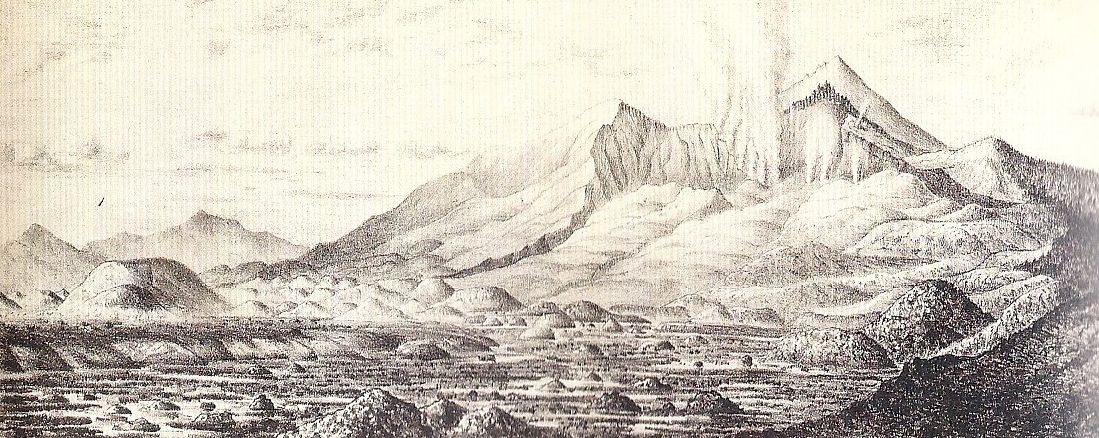
Aizu is the western, mountain-locked third of Fukushima Prefecture, a basin sheltered by the Ōu range and dominated by the volcanic cone of Mount Bandai. The city of Aizuwakamatsu sits at its center, built around Tsuruga Castle. Cut off from the coast by mountains, the region developed an inward, self-reliant material culture — and an economy that leaned on what its forests could yield. Among those yields were the lacquer tree and its relatives, the sumac and haze trees whose berries press into wax.
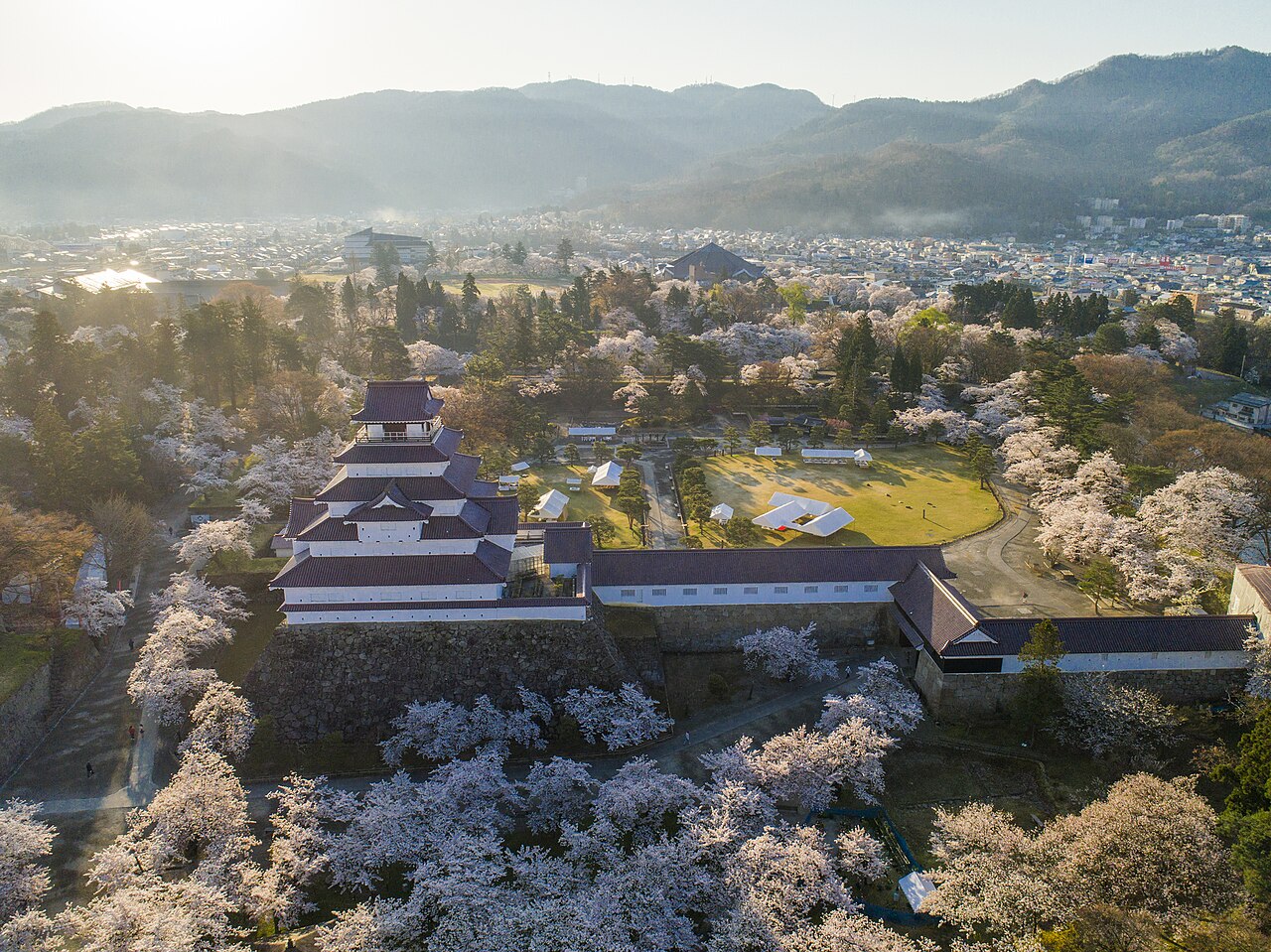
The decisive moment came in 1590, when the warlord Gamō Ujisato was enfeoffed in Aizu. He actively promoted the cultivation of lacquer and wax trees, intending to build local industry around them. Lacquer sap became Aizu lacquerware; the berry wax became candles. Because both trades grew from the same domain policy and the same forests, Aizu’s painted candles and Aizu lacquerware are, in a real sense, siblings — and the painting skill moves easily between them.
- 1590 — Gamō Ujisato is enfeoffed in Aizu and promotes lacquer- and wax-tree cultivation, seeding both lacquerware and candle wax.
- 17th century (early Edo) — Sumac / haze berry wax (mokurō) candle-making becomes an Aizu-domain promoted industry alongside lacquerware.
- Edo period — Hand-painted hana-rosoku emerge so altars can hold “flowers” through the long, snowbound winter.
- 19th century — Vermilion-and-gold peony and chrysanthemum painting becomes the recognized Aizu signature.
- Meiji era onward — Industrial paraffin candles spread nationwide; e-rosoku survive as a ceremonial and decorative craft.
- 2026 — E-rosoku remain a living Aizu craft, tied to the region’s lacquer heritage.
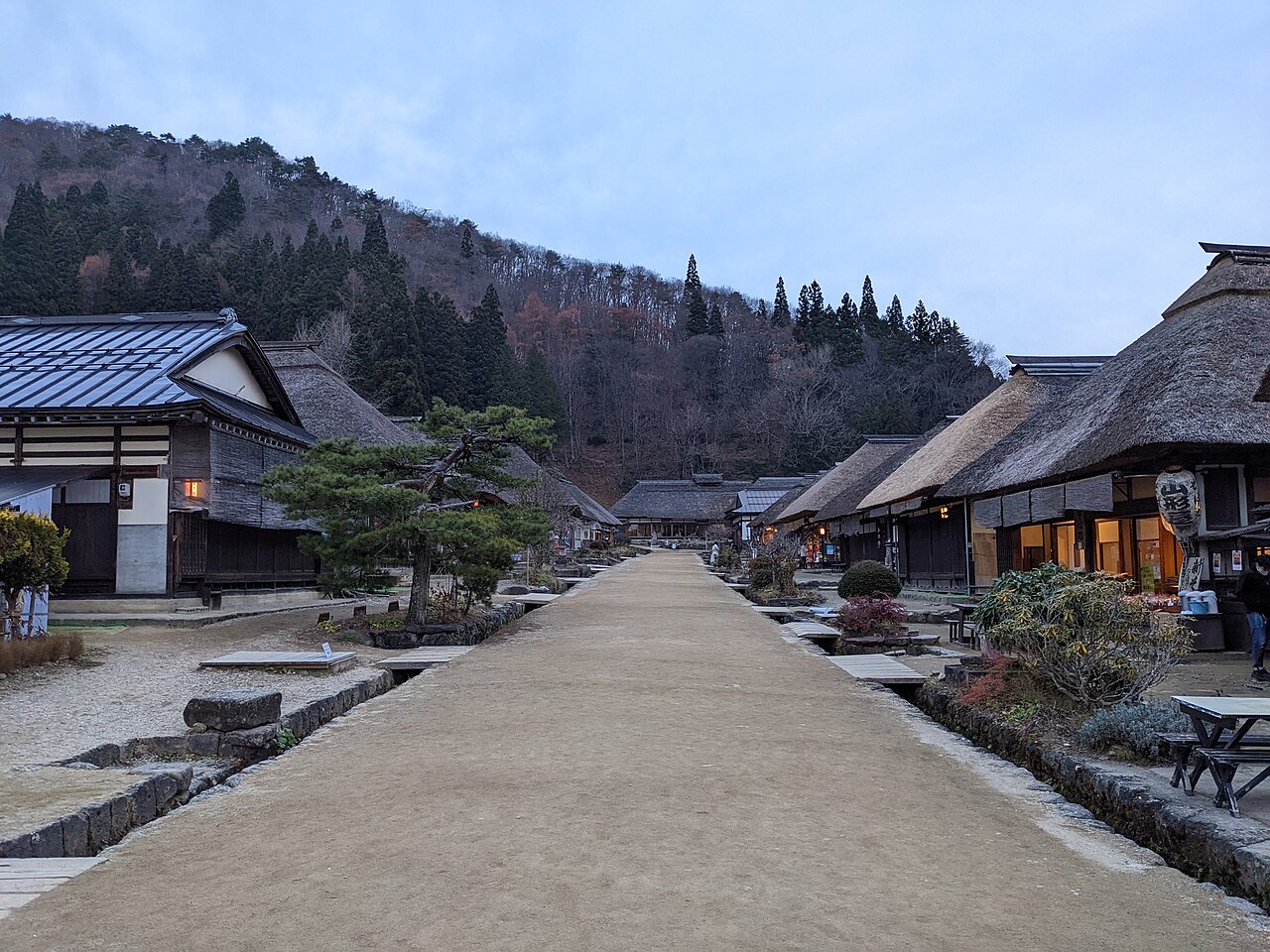
The cultural logic is straightforward once you stand in an Aizu winter. Snow covers the basin for months, and cutting fresh flowers for the household butsudan is simply not possible. The practical answer — traditionally understood as the origin of the painted flowers — was to put the flowers on the candle. A peony in vermilion, a chrysanthemum edged in gold: the offering of a blossom, rendered so it cannot wilt.
“When the snow makes flowers impossible, the candle becomes the flower — a blossom painted so it never has to wilt.”
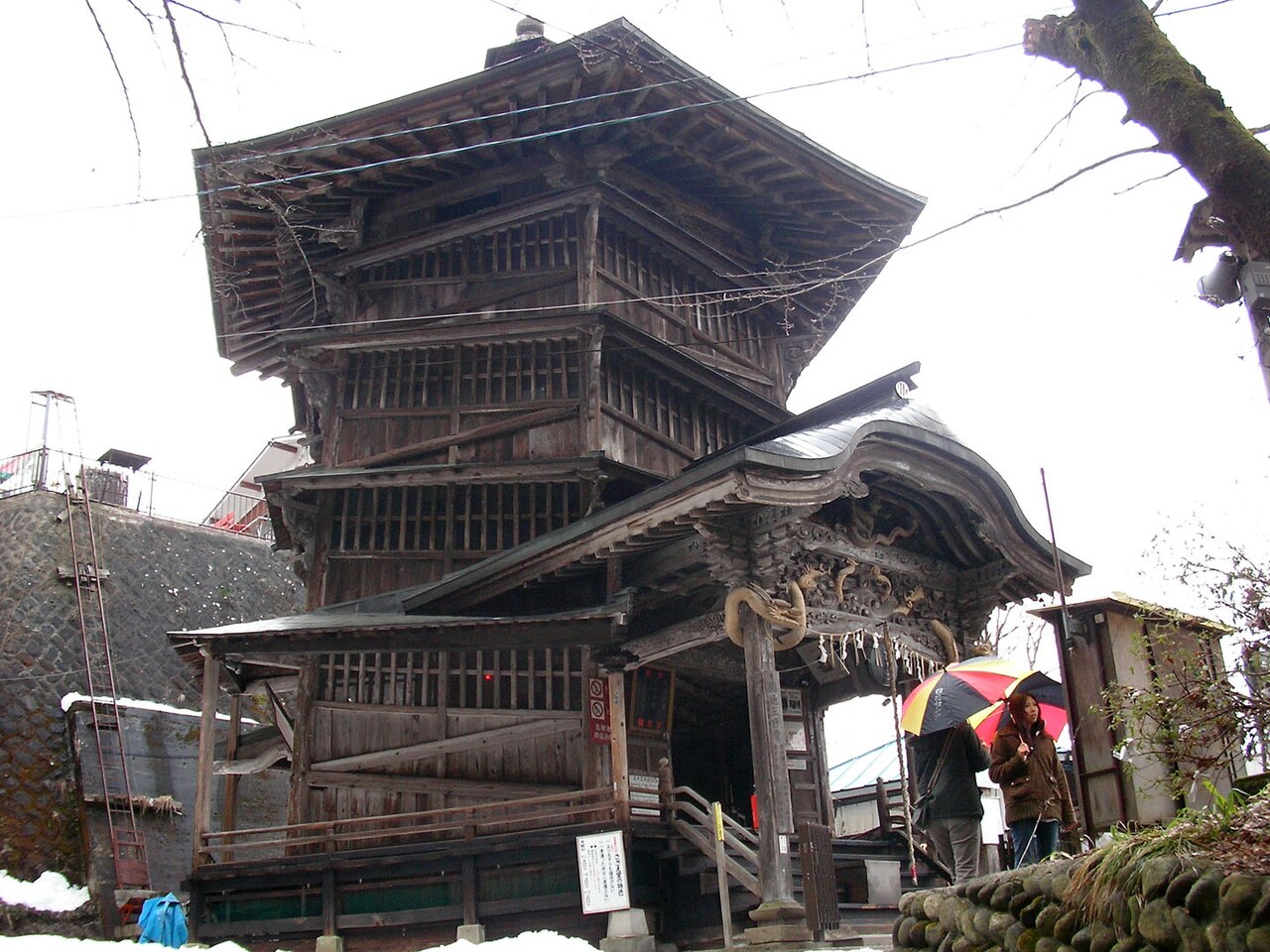
That devotional context still anchors the craft. Aizuwakamatsu’s Buddhist landmarks — the Sazaedo hall among them — speak to an Edo-era religious life in which the family altar was a daily fixture, and the hana-rosoku belonged to it. Today the candles are bought as much for display and as gifts as for the altar, but the form has not changed: a white plant-wax candle, painted freehand, season by season.
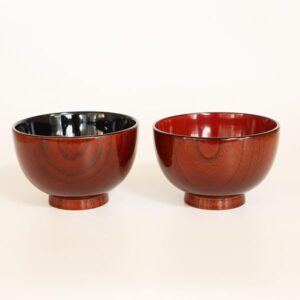
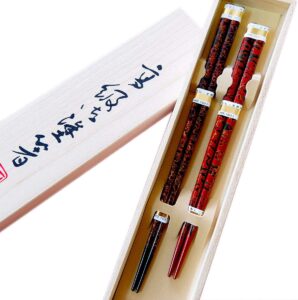
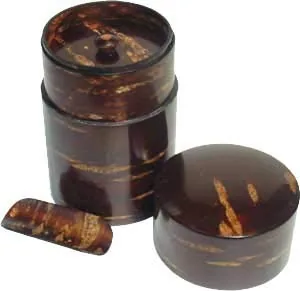
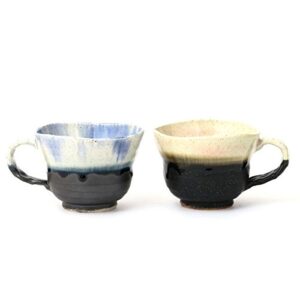
Aizu e-rosoku sit within a wider Tōhoku and Japanese craft family — particularly the lacquer tradition it grew alongside. If you are weighing a craft gift, these related jpmono guides are worth a look.

📦 Shipping & where to buy from outside Japan
Plant-wax candles are generally shippable, but some carriers restrict wax or flammable-classed goods on certain routes. Confirm shipping to your country at checkout; international shipping for a small parcel commonly varies by route, and customs duties may apply above your local de-minimis threshold.
If the JP retailer will not ship to your country, a proxy-forwarding service such as Buyee or Tenso can receive the parcel in Japan and re-ship it onward. Prices and availability shift; verify with the current retailer before buying.
Buying options compared
| Store | Item / Variant | Price (JPY + USD est.) | Notes |
|---|---|---|---|
| 🇺🇸 Amazon.com (US) | Browse Japanese hand-painted & e-rosoku candles | varies (USD) | Best if you are shopping from the US — Prime shipping, USD pricing, no international customs. Amazon US carries Japanese candles and altar goods from various makers for comparison; the Aizu e-rosoku set is sourced from Japan (next row). |
| 🇯🇵 Amazon JP Global Store | Aizu e-rosoku set | Check current availability | Ships internationally from Japan. This guide focuses on Aizu e-rosoku hand-painted candles. |
| Maker direct | Aizuwakamatsu candle workshops | Unconfirmed — check workshop site | Some Aizu workshops sell directly; international shipping support varies by workshop. |
| Proxy services (Buyee / Tenso) | Forwarding for Japan-only orders | Item price + service fee + reshipping | Useful if a seller will not ship to your country directly. Adds handling fees and time. |
JPY (¥) is the authoritative price; USD figures elsewhere are approximate at a ¥150/USD baseline as of mid-2026. Prices and stock fluctuate — verify at the affiliate link before purchasing.
What it does well
Weaknesses and things to verify before buying
- Decorative first, not a burn workhorse. These are made to be seen; burn time is short relative to bulk paraffin candles and is not documented in the data.
- Hand-painting means variation. If you expect machine-identical decoration, the natural differences between pieces may disappoint.
- International shipping and customs. Wax goods can face carrier restrictions on some routes; duties may apply above your local threshold.
- Premium over commodity candles. You are paying for handwork and heritage, not lumens-per-yen — that trade-off is the whole point, but it is a trade-off.
Conclusion — which buyer type are you?
Other ways to approach this purchase
❓ Frequently Asked Questions
What is an Aizu e-rosoku?
It is a hand-painted Japanese candle from Aizuwakamatsu, Fukushima, made from plant wax and decorated with seasonal flowers such as peony and chrysanthemum in vermilion and gold. The painted-flower form is known as hana-rosoku, a “flower candle.”
Why are flowers painted on the candle?
Aizu winters are deep in snow, and fresh flowers for a household Buddhist altar were traditionally impossible to obtain. Artisans painted the flowers onto white candles instead, so an altar could still be offered a blossom through the winter.
What are the candles made of?
Traditionally, plant wax (mokurō) pressed from the berries of the sumac and haze trees — relatives of the lacquer tree the Aizu domain promoted from 1590 onward. This links the candle craft directly to Aizu lacquerware.
Can I have it shipped outside Japan?
Wax items can face carrier restrictions on some routes, so confirm shipping to your country at checkout; a proxy service such as Buyee or Tenso is a fallback for Japan-only shops.
How much does it cost?
No current price is quoted here. JPY is the standard currency; USD figures, if shown, are approximate at a ¥150/USD baseline.
Are the candles meant to be burned or displayed?
Both. They serve their traditional role as altar candles and also work as decorative objects unlit. Because they are decorative and hand-painted, they are not intended as bulk everyday burning candles.
How does it relate to Aizu lacquerware?
Both grew from the same domain policy: Gamō Ujisato’s 1590 promotion of lacquer and wax trees. Lacquer sap became Aizu lacquerware; berry wax became candles. The painting skill carries over, making the two crafts close relatives.
jpmono.com is curated by a Japan-based editorial team (working out of Toyama in the Hokuriku region and Nara in Kansai) and is independent. We do not take payment from the makers we feature; income comes from affiliate links. We do not physically test every product — we read maker specifications and craft references.
Affiliate disclosure: jpmono.com may earn a commission on qualifying purchases made through links on this page, at no additional cost to you.