![Edo Furin Hand-Blown Glass Wind Chime: Tokyo’s Summer Sound, Where to Buy [2026]](https://jpmono.com/wp-content/uploads/2026/06/edo-furin-hand-blown-glass-wind-chime-where-to-buy-2026-featured.jpg)
An Edo Furin (江戸風鈴, “Edo wind chime”) is a small hand-blown glass bell, hung at a window or eave to ring on the summer breeze. It is one of Tokyo’s most recognizable seasonal objects, and the piece covered here is made by Shinohara Furin Honpo, the best-known workshop carrying the lineage today out of Edogawa, in the low-lying eastern wards of the city. Each chime is blown freehand without a mold, painted on the inside of the glass, and finished with a deliberately rough sounding rim.
What makes it notable internationally is not decoration but method. The free-blowing technique called chuubuki (宙吹き) means no two pieces are exactly the same size or pitch, and the painting done from the inside means the colors never rub away with handling. Most striking of all, the sounding rim is left jagged on purpose — and that single imperfection is what gives the chime its clear, rolling tone instead of a dull clink.
This guide is written for international readers deciding whether an Edo Furin is worth buying, and how to get one shipped from Japan. We cover what the craft actually is, where it comes from, where you can buy it, the honest weaknesses, and which type of buyer it suits. Because the items are sourced from a Japanese listing, we lead with an Amazon US search path for convenience and give the specific Amazon JP Global Store listing as the secondary, exact-item path.
🗓️ Published: June 3, 2026 · ♻️ Last updated: June 3, 2026 · ⏱️ Read time: about 10 minutes

- Who this is for — and who should skip it
- Product overview (from published specs)
- Where this comes from — Tokyo’s eastern river wards
- 📌 How does it compare?
- Price snapshot across stores
- What it does well
- Weaknesses and things to verify before buying
- Conclusion — which buyer type are you?
- Other ways to approach this purchase
- 🏆 Editor’s Pick
- ❓ Frequently Asked Questions
Who this is for — and who should skip it
- Want a genuinely hand-blown object where each piece is a little different
- Care about the sound of a wind chime, not just the look
- Like the idea of a living Tokyo craft you can trace to a named workshop
- Are buying a meaningful summer gift with a clear cultural story
- Are comfortable ordering a fragile item shipped from Japan
- Want a durable, year-round décor object rather than a seasonal one
- Live where a constant chiming sound would disturb neighbors
- Need to pick an exact color and pitch — these vary unit to unit
- Want the cheapest possible wind chime, regardless of how it is made
- Cannot accommodate the breakage risk of thin blown glass in transit
Product overview (from published specs)
The available data for this specific listing is thin: it confirms the maker, material, and method, but does not include standardized dimensions, weight, or a captured price. Where a value was not present in the source data, it is marked plainly below rather than guessed at. Only the Amazon JP listing snapshot is available; live pricing may have shifted since the writing date.
Edo Furin Hand-Blown Glass Wind Chime
篠原風鈴 江戸風鈴 三色あじさい【日本産 手作り】
残り8点 ご注文はお早めに · Sold by ちん里う本店 明治4年創業 · ASIN B00HO5JMIA
Price and availability as of 2026-08-31 02:30 JST. The Amazon listing at the time of purchase is authoritative. jpmono.com earns a commission on qualifying purchases at no extra cost to you.
| Attribute | Detail | Source |
|---|---|---|
| Item | Edo Furin hand-blown glass wind chime | Listing |
| Maker | Shinohara Furin Honpo (篠原風鈴本舗) | Maker direct / data notes |
| Origin | Edogawa, Tokyo (eastern wards) | Data notes |
| Material | Hand-blown soda glass | Data notes |
| Forming method | Chuubuki (free-blowing, no mold) — each piece unique | Data notes |
| Decoration | Painted on the inside of the glass (colors do not wear off) | Data notes |
| Sounding rim | Narikuchi left rough/jagged on purpose for tone | Data notes |
| Dimensions / weight | Not listed in available data — verify on the listing | — |
| Price | Not captured at time of writing — check live listing | — |
📖 Glossary — key terms
- Furin / fuurin (風鈴) — a wind chime; literally “wind bell.” A staple of the Japanese summer.
- Edo Furin (江戸風鈴) — the Tokyo-style glass wind chime descended from Edo-period glassmaking.
- Chuubuki (宙吹き) — free-blowing glass in the air without a mold, so each piece varies in size and pitch.
- Narikuchi (鳴り口) — the “sounding rim,” the cut edge of the bell. On Edo Furin it is left rough to produce the tone.
- Shitamachi (下町) — the “low city,” the historically working-class riverside districts of eastern Tokyo.
- Tanzaku (短冊) — the paper strip hung below the chime that catches the breeze and makes the clapper swing.
Where this comes from — Tokyo’s eastern river wards

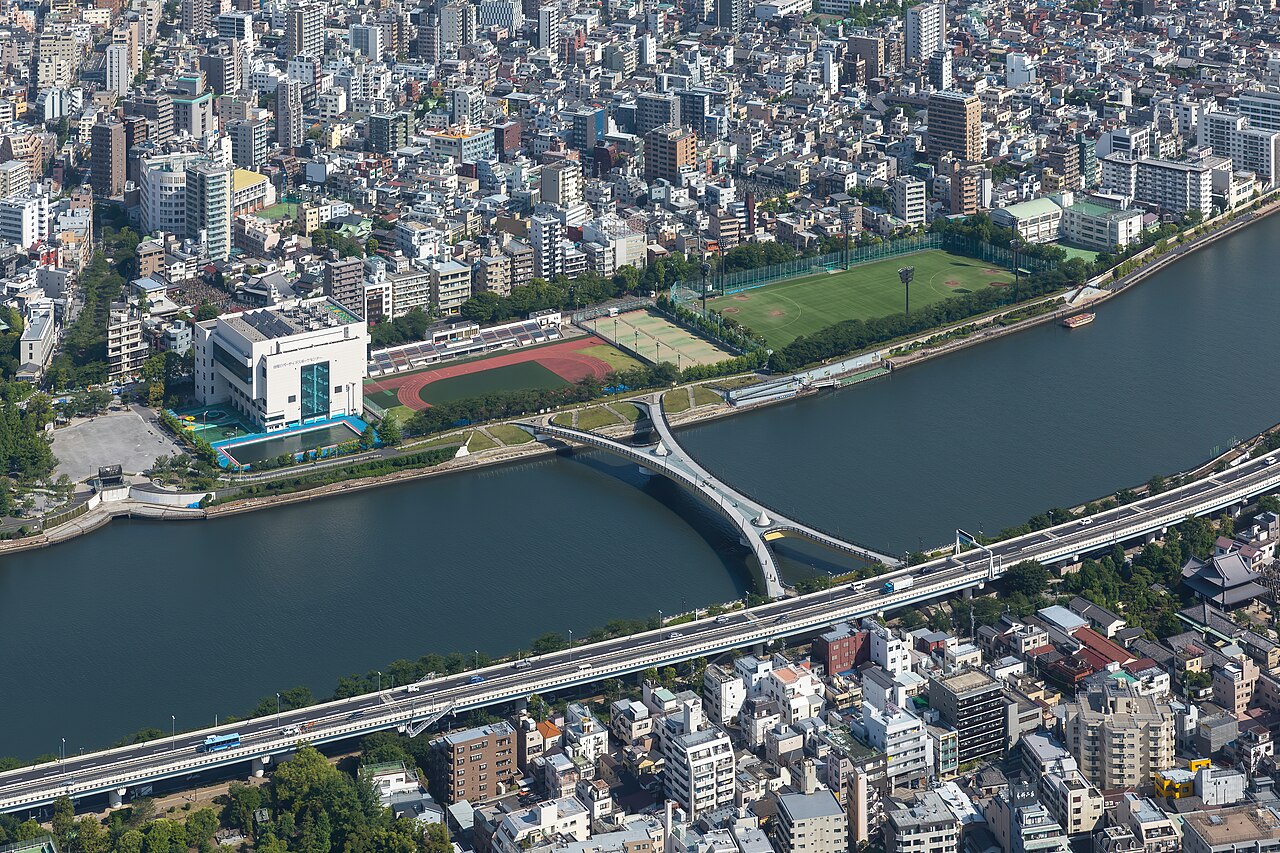
Tokyo was known as Edo until 1868, and for most of the Edo period (1603–1868) it was already one of the largest cities on earth. The craft trades clustered in the flat, water-laced eastern districts — the shitamachi — where the Sumida and Edogawa rivers gave artisans water, transport, and a dense market of townspeople. Edo Furin belongs to that world: a craft of the low city rather than the aristocratic west.
Glassmaking itself was an import. Techniques carried in through the port of Nagasaki worked their way up to Edo during the Kyōhō era (享保, 1716–1736), and from that imported knowledge a local glass trade grew. The wind chime became one of its most democratic products — cheap enough to sell on the street, made in summer, and hawked door to door by peddlers who carried whole racks of ringing glass through the neighborhoods.
“The rim is left rough on purpose — and that single imperfection is what gives the chime its clear, rolling voice instead of a flat clink.”
- 1603 — Edo becomes the seat of the Tokugawa shogunate and swells into one of the world’s largest cities.
- 1716–1736 (Kyōhō era) — Glassmaking techniques imported through Nagasaki reach Edo, seeding a local glass trade.
- Edo period — Glass furin become a summer fixture, peddled door to door through the city’s streets.
- 1868 — Edo is renamed Tokyo and becomes the modern capital; the shitamachi crafts carry on.
- 20th century — Workshops concentrate in the eastern river wards along the Sumida and Edogawa.
- 2026 — Shinohara Furin Honpo in Edogawa continues hand-blowing (chuubuki) each chime by mouth.

What “still being made here” means in practice is that the defining steps remain handwork. A glassblower gathers molten glass on the end of a pipe and shapes the bell in the air — no mold, which is why two chimes are never quite identical in size or pitch. The painting is applied to the inside surface, so the design is protected by the glass itself and will not scratch off with years of handling.
Shinohara Furin Honpo in Edogawa is the workshop most associated with carrying this lineage today. The chime arrives the way it has for generations: a blown glass bell, an inside-painted motif, a clapper, and a paper strip (tanzaku) that catches the wind. Hung at a window in July, it is doing exactly what its Edo ancestors did on the summer streets.
The cultural role is seasonal and specific. The furin is a sound of high summer, traditionally believed to make the heat feel more bearable — a cue that a breeze is moving even when the air feels still. It is hung from late spring through the hottest months, then taken down and stored once autumn arrives. That seasonality is part of buying one honestly: it is an object that does its job for a few months a year, not a permanent fixture.
📌 How does it compare?
If you are weighing the Edo Furin against other Japanese glass and wind-chime crafts we have covered, these guides are the closest neighbors:
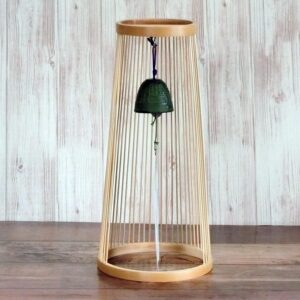 Bamboo wind chime sibling →Suruga take-sensuji fūrin
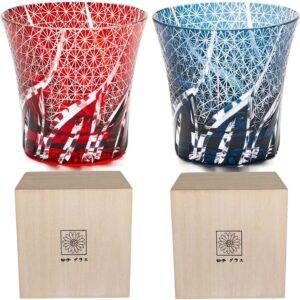 Tokyo cut glass →Edo Kiriko rocks glass
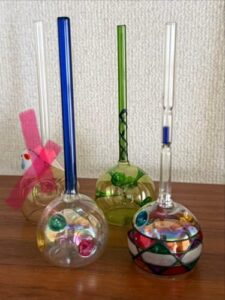 Thin-blown poppen glass →Nagasaki poppen bidoro
 Tsugaru blown glass →Tsugaru bidoro tumbler
 Otaru hand-blown glass →Otaru glass tumbler
 Ryukyu blown glass →Genka Genkichi cobalt tumbler
 Another Tokyo craft →Tsukiji yanagiba knife
Price snapshot across stores
Prices and stock fluctuate; the figures below are starting points, not quotes. JPY is the authoritative price for the specific listed item, and USD figures are approximate (about ¥150/USD as of mid-2026). No live price was captured for this listing at the time of writing — verify on the retailer page before buying.
| Store | Item / variant | Price | Notes |
|---|---|---|---|
| 🇺🇸 Amazon.com (US) | Browse Japanese glass wind chimes | varies (USD) | Best if you are shopping from the US — Prime shipping, USD pricing, no international customs. Amazon US carries Japanese glass and cast-iron wind chimes from several makers; the exact Shinohara piece ships from Japan (next row). |
| 🇯🇵 Amazon JP Global Store | Shinohara Furin Honpo Edo Furin (this guide’s item) | check listing | The exact sourced item. Ships internationally from Japan to most major destinations; fragile-glass packaging matters here. |
| Maker direct | Shinohara Furin Honpo workshop | varies | Widest selection of painted designs, but the maker’s own site may be Japan-only for shipping; confirm before ordering. |
| Proxy services (Buyee / Tenso) | Forwarding from Japan-only shops/auctions | item + fees | Useful when a design is only sold domestically. Adds a service fee and a forwarding leg — extra handling for fragile glass. |
What it does well
Weaknesses and things to verify before buying
- Fragile soda glass. Thin blown glass breaks easily; international shipping raises the breakage risk, so packaging quality matters. Confirm the seller’s protective packing.
- No standardized dimensions or weight in the available listing data — verify the exact size on the product page if scale matters to you.
- Pricing was not captured at the time of writing. Treat the price snapshot as a starting point and check the live listing.
- It is a seasonal object. The furin is meant for summer; you will store it for much of the year, so factor in safe off-season storage.
- Sound is subjective. A chime that one person finds soothing can disturb a close neighbor or a quiet apartment building — consider where you will hang it.
- You cannot pick an exact piece. Because each is free-blown and hand-painted, the precise color, pattern, and pitch will vary from the photo unit to unit.
Conclusion — which buyer type are you?
Other ways to approach this purchase
🏆 Editor’s Pick
❓ Frequently Asked Questions
Is an Edo Furin actually made of glass?
Yes. An Edo Furin is a hand-blown soda-glass bell. The glass is gathered and shaped in the air by mouth using the chuubuki (free-blowing) method, with no mold involved.
Why does the rim look rough or unfinished?
The rough sounding rim (narikuchi) is intentional. The jagged edge is what makes the clapper produce the clear, rolling tone associated with Edo Furin; a smoothed rim would give a duller sound.
Will the painted design wear off over time?
It should not. The design is painted on the inside surface of the glass, so the glass itself protects the color from scratching and handling wear.
Does Amazon JP ship an Edo Furin internationally?
Many items ship worldwide through the Amazon JP Global Store to most major destinations, but availability varies by listing and destination. Because this is fragile blown glass, confirm both international shipping and protective packaging on the specific listing before ordering.
How is it different from a cast-iron or bamboo wind chime?
It is a question of material and tone. A glass Edo Furin gives a bright, rolling ring; a Nanbu cast-iron chime gives a longer metallic resonance; and a bamboo Suruga fūrin gives a softer, drier sound. Each is a distinct craft tradition — see the cross-links above.
Is every Edo Furin identical?
No. Because each bell is free-blown without a mold and hand-painted, individual pieces differ slightly in size, pattern, and pitch. The unit you receive will not be an exact match to the photo.
How should I care for and store it?
Treat it as fragile glass. Hang it where it will not knock against a hard surface, and at the end of the summer season wrap it and store it padded, since it is a seasonal object rather than a year-round fixture.
jpmono.com is curated by a Japan-based editorial team (working out of Toyama in the Hokuriku region and Nara in Kansai) and is independent. We do not take payment from the makers we feature; income comes from affiliate links. We do not physically test every product — we read maker specs and source listings.
This article was prepared with AI assistance and reviewed against the source listing data. Specifications, availability, and prices may change after publication; always confirm details on the retailer’s page before buying.
Affiliate disclosure: jpmono.com may earn a commission on qualifying purchases made through links on this page, at no additional cost to you.