![Ryokujuan Shimizu Konpeito (緑寿庵清水 金平糖, sealed small gift jar) — Kyoto’s only specialty maker grows each spiky sugar crystal by hand over about two weeks [2026 Guide for International Readers]](https://jpmono.com/wp-content/uploads/2026/07/ryokujuan-shimizu-konpeito-where-to-buy-2026-featured.jpg)
- What it is: Hand-grown konpeito (金平糖) — tiny spiky sugar-crystal candy from Kyoto’s only konpeito specialist, in a sealed small gift jar.
- Made in: Yoshida district, Sakyo-ku, Kyoto — by Ryokujuan Shimizu (緑寿庵清水), founded in 1847.
- Price band: Premium for a small confection — a specialty artisan gift, not commodity candy (see live listing).
- Best for: Someone who wants a light, shelf-stable, plant-based Japanese sweet that survives long-haul travel as a gift.
- Skip if: You want soft, chewable candy or a large everyday snack bag — this is a hard, slow-eating crystal in a small jar.
- Shipping: ships internationally from Amazon Japan — jump to our pick ↓
ℹ️ Live pricing was not in our snapshot at the time of writing — the linked Amazon listing is authoritative, and unconfirmed attributes (jar weight, exact flavor of the current stock) are marked below.
Each spiky crystal starts as a single speck the size of a poppy seed. It is dropped into a large heated copper pan, tilted on its axis and turning slowly, and then — a ladle at a time, over roughly two weeks — a sugar syrup is poured on so the seed thickens layer by layer and grows its distinctive horns. Nothing molds the shape. The horns emerge on their own from the way the syrup crystallizes as the pan turns.
That candy is konpeito (金平糖), and the maker is Ryokujuan Shimizu (緑寿庵清水), a confectioner founded in 1847 in the Yoshida district of Kyoto, a short walk from what is now Kyoto University. It is widely described as the only shop in Japan devoted solely to konpeito — one product, made one slow way, for well over a century and a half. The finished sweets come in seasonal and fruit varieties and are sold in small jars, boxes, and gift tins rather than by the loose scoop.
This guide is written for international readers deciding whether a jar of Ryokujuan Shimizu konpeito is worth ordering from Japan. Konpeito happens to be close to an ideal souvenir sweet — it is essentially crystallized sugar with natural flavoring, so it is plant-based, keeps at room temperature for a very long time, and does not melt in transit the way chocolate does. Below we cover what the maker actually produces, how to read the sealed-jar listings, where the craft comes from, and how to confirm international shipping at checkout.
🗓️ Published:
🔄 Updated:
⏱️ Read time: ~9 min

- Who this is for — and who should skip it
- Product overview (from published specs)
- Price snapshot across stores
- 📦 Shipping & where to buy from outside Japan
- What it does well
- Weaknesses and things to verify before buying
- Conclusion — which buyer type are you?
- Other ways to approach this purchase
- Where this comes from — place, era, and the craft tradition
- 🏆 Editor’s Pick
- ❓ Frequently Asked Questions
Who this is for — and who should skip it
- Want a shelf-stable, room-temperature sweet you can carry home or mail abroad without a cold chain.
- Are buying a plant-based gift (no dairy, no meat — sugar plus natural flavoring and coloring).
- Value the maker’s story and single-craft focus over the lowest possible price.
- Like a small, slow-eating candy you savor a few pieces at a time.
- Want a Kyoto-specific present that reads as considered rather than generic.
- Want soft, chewy, or chocolate-type candy — konpeito is hard crystallized sugar.
- Need a large everyday snack volume; these come in small jars and tins.
- Are price-sensitive and would rather buy commodity konpeito by the bag.
- Are shopping for a specific seasonal flavor that may be out of stock.
- Need guaranteed nut/allergen-free processing — always verify the listing’s own labeling.
Product overview (from published specs)
The table below draws on the maker’s own description and the sourced Amazon Japan listing. Where a physical attribute (exact jar weight, current flavor of in-stock jars) was not confirmed in our snapshot, it is marked rather than guessed.
Ryokujuan Shimizu Konpeito (緑寿庵清水 金平糖, sealed small gift jar)
金平糖専門店 緑寿庵清水 金平糖3個入り 詰め合わせ フルーツ こんぺいとう
残り7点 ご注文はお早めに · Sold by 株式会社ウィステリアジャパン · ASIN B014UAP9YM
Price and availability as of 2026-08-31 02:30 JST. The Amazon listing at the time of purchase is authoritative. jpmono.com earns a commission on qualifying purchases at no extra cost to you.
| Attribute | Detail | Source |
|---|---|---|
| Item | Konpeito (金平糖) — spiky crystallized-sugar candy, sealed small gift jar / tin | Amazon JP Global Store; maker direct |
| Maker | Ryokujuan Shimizu (緑寿庵清水), founded 1847 (Koka 4); widely cited as Japan’s only konpeito specialist | Maker direct |
| Origin | Yoshida, Sakyo-ku, Kyoto (Kansai) | Maker direct |
| Ingredients | Sugar plus natural flavorings/colorings (fruit, ramune, sake, etc.) — plant-based, no dairy or meat | Maker direct |
| Physical form | Hard, dry crystallized-sugar candy; does not melt at room temperature | Maker direct |
| Shelf stability | Very long shelf life at room temperature; jars carry a printed best-by date | Maker direct |
| Jar weight / net grams | Unconfirmed — check listing | — |
| Price | Not in snapshot — see live listing (premium band for a small confection) | — |
- 🌡️ Store: room temperature, away from humidity and direct sun; keep the jar sealed.
- 🗓️ Shelf life: very long — crystallized sugar is stable; a best-by date is printed on the jar.
- ✈️ Travel: does not melt in transit the way chocolate does; the sealed jar protects the fragile horns.
- 🍵 Serving: a few pieces at a time — traditionally eaten slowly, or served alongside tea.
📖 Glossary — key terms
- konpeito (金平糖) — small, star- or horn-shaped crystallized-sugar candy; the name descends from the Portuguese confeito.
- confeito — the Portuguese sugar confection introduced to Japan by 16th-century traders, ancestor of konpeito.
- dora (銅鑼) — the large, heated, tilted copper pan in which the crystals are tumbled and grown over roughly two weeks.
- wagashi (和菓子) — traditional Japanese confectionery, of which konpeito is one long-standing example.
- Koka 4 — the Japanese era year corresponding to 1847, when Ryokujuan Shimizu was founded.
- ramune — a nostalgic Japanese soda flavor sometimes used as a konpeito flavoring.
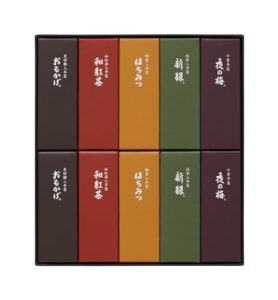

Toraya Small Yokan (Ko-gata Yōkan, 10-Bar Assorted Box) — Ja
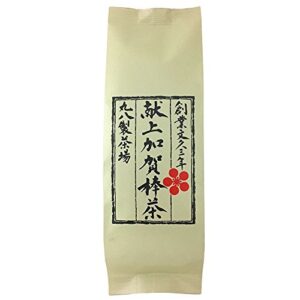

Maruhachi Seichajo Kenjo Kaga Bocha (献上加賀棒茶, sealed bag/tin)

Hoshino Seichaen Yame Matcha (星野製茶園 八女抹茶, sealed 30–40g tin)
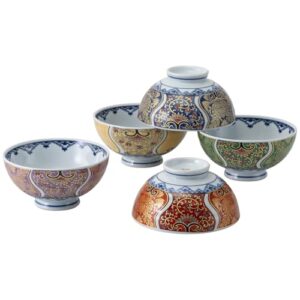

Kyo-yaki Kiyomizu Matcha Chawan: Kyoto Tea Ceremony Bowl Gui

Kiyomizu-yaki Kyusu Teapot — Where to Buy This Kyoto Sencha

Kameda Kaki no Tane (亀田の柿の種, 6-bag box) — Niigata’s rice-cou
Price snapshot across stores
USD figures shown alongside JPY are approximate (¥150/USD baseline as of mid-2026); the JPY price on the specific listing is the authoritative one. Live pricing was not captured in our snapshot, so check the listing before ordering.
| Store | Item / Variant | Price | Notes |
|---|---|---|---|
| 🇺🇸 Amazon.com (US) | Browse Japanese konpeito & wagashi | varies (USD) | Best if you’re shopping from the US — Prime shipping, USD pricing, no international customs. Amazon US carries Japanese konpeito and wagashi from various makers; the exact Ryokujuan Shimizu jar is sourced from Japan (next row). |
| 🇯🇵 Amazon JP Global Store | Ryokujuan Shimizu konpeito, sealed small jar (ASIN B014UAP9YM) | See listing (JPY authoritative) | Ships internationally from Japan to 65+ countries — including Canada, the UK and Australia — with import fees estimated at checkout. This is the sourced listing for the specific jar. |
| Maker direct | Ryokujuan Shimizu seasonal & fruit varieties, jars and gift tins | Varies | The maker’s own catalog carries the widest selection; international shipping and language support vary — confirm before ordering. |
| Proxy services (Buyee / Tenso) | Any Japan-only listing forwarded abroad | Item + forwarding fee | Useful if a specific seasonal flavor is only sold on a Japan-domestic page; adds a forwarding fee and a consolidation step. Confirm food-import rules for your country. |
📦 Shipping & where to buy from outside Japan
Konpeito is one of the easier Japanese foods to ship. It is dry, hard, crystallized sugar with a very long shelf life and a printed best-by date — a shelf-stable item kept at room temperature, intended in small personal quantities, that does not melt in transit the way chocolate does.
The specific sealed jar in this guide is sourced from the Amazon JP Global Store, which ships to 65+ countries including Canada, the UK and Australia. Whether a given food item is eligible for your destination is confirmed at checkout, so add the jar to your cart and check the AmazonGlobal International Shipping eligibility and any import fees for your address before paying. For destination-specific import notes, see our country guides for Canada, the UK, and Australia.
Rough shipping cost runs about $15–$40 to the US and EU, and similar to Canada, the UK, and Australia, depending on weight and speed. Amazon estimates and often collects import fees at checkout for most destinations, so there are usually no surprises on delivery. If a particular seasonal flavor is only listed on a Japan-domestic page, a proxy forwarder such as Buyee or Tenso can bring it out, at the cost of an added forwarding fee.
What it does well
“Nothing molds the shape. Over about two weeks in a turning copper pan, the horns grow on their own — which is why no two konpeito are quite identical.”
Weaknesses and things to verify before buying
- Price per gram is high. This is a specialty artisan confection, not commodity candy — you are paying for the maker and the slow process, not volume.
- Small quantities. Jars and tins are personal-sized; if you want a large everyday snack supply, this is not it.
- Texture is hard. Konpeito is a slow, crunchy, dissolve-in-the-mouth candy — not for anyone expecting soft or chewy sweets.
- Flavor availability shifts. Seasonal and fruit varieties rotate; the exact flavor of in-stock jars was not confirmed in our snapshot, so check the listing.
- Allergen processing. If you need certified nut- or allergen-free handling, verify the listing’s own labeling rather than assuming.
- Price and stock move. Live pricing was not in our snapshot — treat the linked Amazon listing as authoritative and confirm before ordering.
Conclusion — which buyer type are you?
Other ways to approach this purchase
Where this comes from — place, era, and the craft tradition

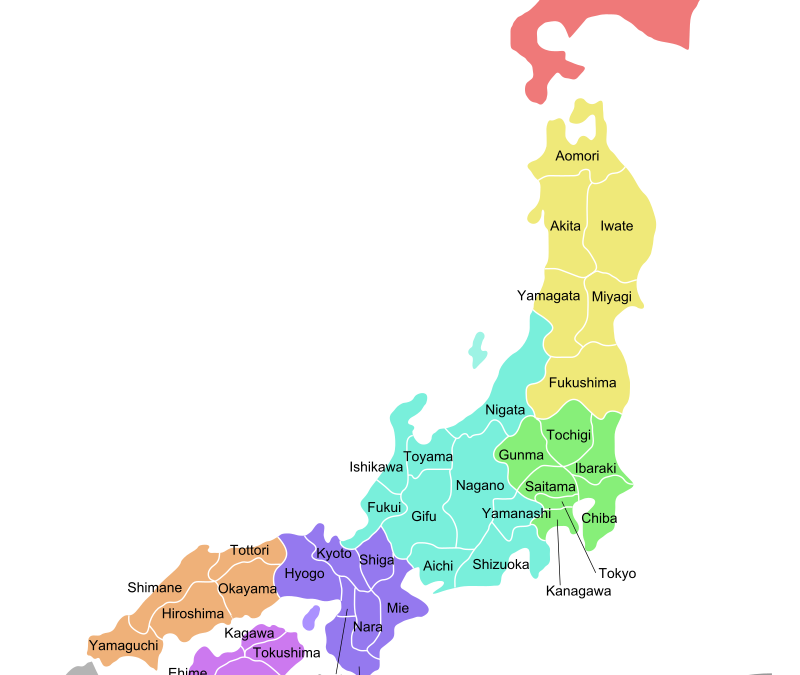
Kyoto sits in the Kansai region of west-central Japan, in a basin ringed by hills, roughly 370 km west of Tokyo and about 40 km northeast of Osaka. Ryokujuan Shimizu is in the Yoshida area of Sakyo-ku, the city’s eastern ward, close to Kyoto University and within walking reach of the Higashiyama temple district. This is the historical heartland of Japanese confectionery: for centuries the imperial court, the great temples, and the tea ceremony all concentrated demand for refined sweets in one city, and the makers who served them stayed.
Kyoto was Japan’s imperial capital from 794 until 1869 — well over a thousand years. That continuity is the reason so many single-craft workshops survive here: a maker who does one thing exceptionally well could find enough patrons, generation after generation, to keep doing only that. Konpeito itself is older in Japan than Ryokujuan Shimizu: it arrived with Portuguese traders in the 16th century as confeito, a sugar confection, at a time when refined sugar was a rare luxury.
-
794–1869 — Kyoto serves as Japan’s imperial capital, concentrating wagashi and tea-ceremony confectionery in one city. -
16th century — Portuguese traders introduce confeito; the name is adapted in Japanese as konpeito (金平糖). -
1847 (Koka 4) — Ryokujuan Shimizu is founded in the Yoshida district of Sakyo-ku, Kyoto. -
Edo to modern era — The shop becomes widely described as the only konpeito specialist in Japan, refining flavors and the two-week growing process. -
Today (2026) — Each batch is still grown by hand for about two weeks in a heated, angled copper pan.
The making itself is where the shop’s single-craft focus shows. A batch begins with a core the size of a poppy or rice grain, placed in the dora — a large, heated copper pan tilted on an angle and kept slowly turning. Syrup is ladled on a little at a time, and over roughly two weeks the sugar crystallizes outward, growing the candy’s characteristic horns. Temperature and the timing of each pour are adjusted by feel, batch by batch. There is no mold and no shortcut; the shape is a product of the process.
For an international reader, that difference is the practical case for konpeito. It is one of the few Japanese sweets that survives a suitcase in July, keeps for a long time on a shelf at home, and can be given to a plant-based recipient without a second thought — while still carrying a genuine Kyoto craft story rather than a generic souvenir one.
🏆 Editor’s Pick
❓ Frequently Asked Questions
What exactly is konpeito?
Konpeito (金平糖) is a small, hard, star- or horn-shaped crystallized-sugar candy. It descends from the Portuguese confeito, introduced to Japan by traders in the 16th century. Each piece is grown outward from a tiny core over roughly two weeks in a turning copper pan.
Does Ryokujuan Shimizu konpeito ship outside Japan?
The sealed jar is sourced from the Amazon Japan Global Store, which ships to 65+ countries including Canada, the UK, and Australia. Because it is a food item, confirm eligibility for your specific destination at checkout; Amazon estimates any import fees there.
Is konpeito plant-based or vegan?
Konpeito is essentially sugar plus natural flavorings and colorings, with no dairy or meat, so it is plant-based. If you need certified allergen handling, verify the specific listing’s own labeling rather than assuming.
How long does it keep, and does it melt?
It is hard, dry crystallized sugar with a very long shelf life, kept at room temperature, and it does not melt in transit the way chocolate does. Jars carry a printed best-by date; store sealed, away from humidity and direct sun.
Why is it pricier than supermarket konpeito?
Ryokujuan Shimizu is a specialist making konpeito one slow way — a batch is grown by hand over about two weeks. You are paying for the named maker, the craft, and the gift packaging rather than for volume; commodity konpeito by the bag costs less.
Should I choose a sealed jar or a loose bulk bag as a gift?
For gifting and shipping, the sealed jar or gift tin is the better choice: it protects the fragile horns, is clearly labeled with a best-by date, and travels as a tidy personal-sized present. A bulk bag saves money but skips that protection and presentation.
jpmono.com is curated by a Japan-based editorial team (working out of Toyama in the Hokuriku region and Nara in Kansai) and is independent. We do not take payment from the makers we feature; income comes from affiliate links. We do not physically test every product — we read maker specs and source listings.
This article was drafted with AI assistance and reviewed against the source listing and maker information before publication. Facts about pricing and stock change over time — always confirm on the live listing.
Affiliate disclosure: jpmono.com may earn a commission on qualifying purchases made through links on this page, at no additional cost to you.