![Hagi-yaki Sake Flask: A Buyer’s Guide to Yamaguchi Tokkuri [2026]](https://jpmono.com/wp-content/uploads/2026/10/hagi-yaki-tokkuri-sake-flask-where-to-buy-2026-featured.jpg)
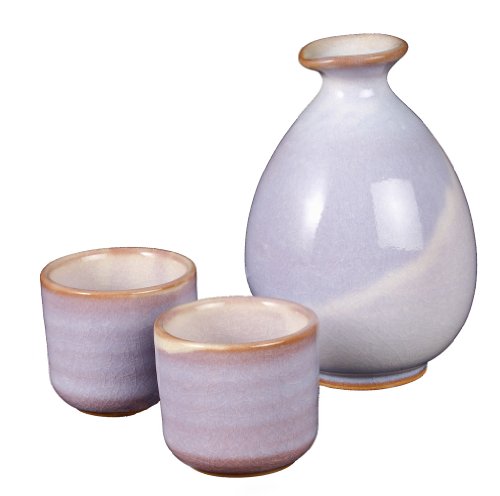
- What it is: A Hagi-yaki sake flask (tokkuri) from Yamaguchi — soft warm glaze, made for serving warm sake.
- Made in: Hagi, Yamaguchi — castle town of the Mōri (later Chōshū) domain; pottery tradition founded in the early 17th century by the commonly told account.
- Price band: Featured listing at ¥3,175 (≈ $21 USD) as of 2026-10-03; verify on the listing.
- Best for: Warm-sake drinkers who want a flask that seasons and deepens in tone with use.
- Skip if: You want a large carafe or confirmed dishwasher-safe specs — ASKUL lists model 15205 as a set with a 300 ml tokkuri; care details are unconfirmed.
- Shipping: Shipping eligibility for this item is unconfirmed — jump to our pick ↓
Pour hot sake into a Hagi-yaki tokkuri and the pale cream glaze seems to hold the warmth a moment longer than the cup in your other hand. The clay body is soft-fired and slightly porous, the glaze thin and full of fine crazing, and the foot often left unglazed so the raw clay shows. It is a quiet object with a long memory.
Hagi-yaki (萩焼) is the pottery of Hagi, a castle town on the Sea of Japan coast in northern Yamaguchi Prefecture. Its signature is restraint: cream, pale pink, and light yellow glazes that deepen and stain gently over years of use, a change tradition calls the “seven transformations.” The tokkuri — the small flask used to serve warm sake — is one of the most common Hagi-yaki forms, and for many buyers it is the natural first piece.
This guide is for international buyers choosing a Hagi-yaki tokkuri from outside Japan. It covers what the featured Amazon JP listing actually states, how the craft and the town fit together, what this kind of flask does well and where it falls short, and how to get one shipped to the US, Canada, the UK, or Australia. Prices and stock shift quickly; always verify at the retailer before purchasing.
📅 Published: 🔄 Updated: ⏱️ Read time: about 9 minutes
- Who this is for — and who should skip it
- Product overview (from published specs)
- 📍 Where this comes from — Hagi, Yamaguchi and the Hagi-yaki tradition
- 📌 How does it compare?
- 📦 Shipping & where to buy from outside Japan
- Price snapshot across stores
- What it does well
- Weaknesses and things to verify before buying
- Conclusion — which buyer type are you?
- Other ways to approach this purchase
- 🏆 Editor’s Pick — the Hagi sake vessel we’d start with
- ❓ Frequently Asked Questions
Who this is for — and who should skip it
- You drink warm sake (kanzake) and want a flask shaped for it.
- You like glazes that change — cream and pale pink tones that season with use.
- You want an affordable entry into a 400-year pottery tradition.
- You want one tokkuri with two matching guinomi cups in a set.
- You are comfortable verifying details on the Japanese listing page.
- ASKUL lists model 15205 as one approx. 300 ml tokkuri and two approx. 70 ml guinomi; Amazon does not confirm whether its offer matches those contents.
- You need confirmed dishwasher or microwave safety — it is not stated.
- You want a large party-size carafe rather than a small table flask.
- You expect a signed work by a named kiln — no maker is stated in the snapshot.
- You want to confirm the Amazon order includes matching guinomi; ASKUL lists model 15205 as a flask-and-cup set, but Amazon offer contents are unconfirmed.
Product overview (from published specs)
ℹ️ Only the Amazon JP listing snapshot is available; live pricing may have shifted since the writing date — the linked listing is authoritative and unconfirmed attributes are marked below.
Hagi-yaki Sake Flask
萩むらさきお預け酒器 15205
残り1点(入荷予定あり) · Sold by Amazon.co.jp · ASIN B00IAGQL2C
Price and availability as of 2026-10-03 00:10 JST. The Amazon listing at the time of purchase is authoritative. jpmono.com earns a commission on qualifying purchases at no extra cost to you.
| Store | Item / Variant | Price | Notes |
|---|---|---|---|
| 🇺🇸 Amazon US (search) | Browse Japanese sake flasks and tokkuri | varies (USD) | Best if you are shopping from the US — Prime shipping, USD pricing, no international customs. The exact featured vessel is sourced from Japan (next row). |
| 🇯🇵 Amazon JP Global Store | 萩むらさきお預け酒器 15205 (New, sold by Amazon.co.jp) | ¥3,175 (≈ $21 USD) as of 2026-10-03; verify on the listing | Availability, international shipping eligibility to Canada, the UK, and Australia, and any import fees are unconfirmed; verify them on Amazon before ordering. |
| Maker direct | Unconfirmed — check manufacturer site | — | The snapshot names no kiln or maker site; no maker-direct path is confirmed for this listing. |
| Proxy services (Buyee / Tenso) | Second-hand and vintage Hagi-yaki tokkuri | varies + fees | A route to older or kiln-signed pieces from Japanese auction and flea-market sites; allow for service fees and slower delivery. |
📖 Glossary — Japanese terms in this guide
Hagi-yaki (萩焼): The pottery tradition of Hagi in Yamaguchi Prefecture, known for soft, warm glazes in cream, pale pink, and light yellow.
Tokkuri (徳利): A small sake flask, typically for one to two servings, used to pour — and often to warm — sake.
Shichi henge / seven transformations (七変化): The traditional saying that Hagi-yaki changes character seven times as the fine crazing in the glaze stains with use.
Jōkamachi (城下町): A castle town — the merchant and samurai districts built around a feudal lord’s castle, as in Hagi.
Chōshū domain (長州藩): The later name of the Mōri domain seated at Hagi, in what is now Yamaguchi Prefecture.
Crazing (kannyū, 貫入): The network of fine cracks in a glaze that lets tea or sake seep in and slowly tint the surface.
📍 Where this comes from — Hagi, Yamaguchi and the Hagi-yaki tradition

Hagi sits on the Sea of Japan coast in the northern part of Yamaguchi Prefecture, at the western end of Honshu. It grew as the castle town of the Mōri family, whose domain — later called Chōshū — was seated here. The town plan still reads as a jōkamachi: samurai quarters, merchant streets, and kiln sites layered within walking distance of the castle ruins.

The commonly told story is that Hagi-yaki began in the early 17th century, when the Mōri clan brought Korean potters to their new castle town in the wake of the Korean campaigns of the late 16th century. Domain patronage gave the kilns shelter and status, and the ware’s soft, muted glazes became the favored tea and sake vessels of the samurai class the Mōri headed.
-
Late 16th century — the Korean campaigns; the commonly told story is that Korean potters came to western Japan in their wake. -
Early 17th century — Hagi-yaki is founded in the Mōri castle town of Hagi (commonly told account). -
Edo period — Hagi remains the seat of the Mōri (later Chōshū) domain; kilns work continuously in the castle town. -
Present day — Hagi stands on the Sea of Japan coast in northern Yamaguchi; the tokkuri remains a standard form for serving warm sake. -
October 3, 2026 — the featured listing snapshot for this guide: a Hagi sake vessel at ¥3,175 on Amazon JP, sold by Amazon.co.jp.
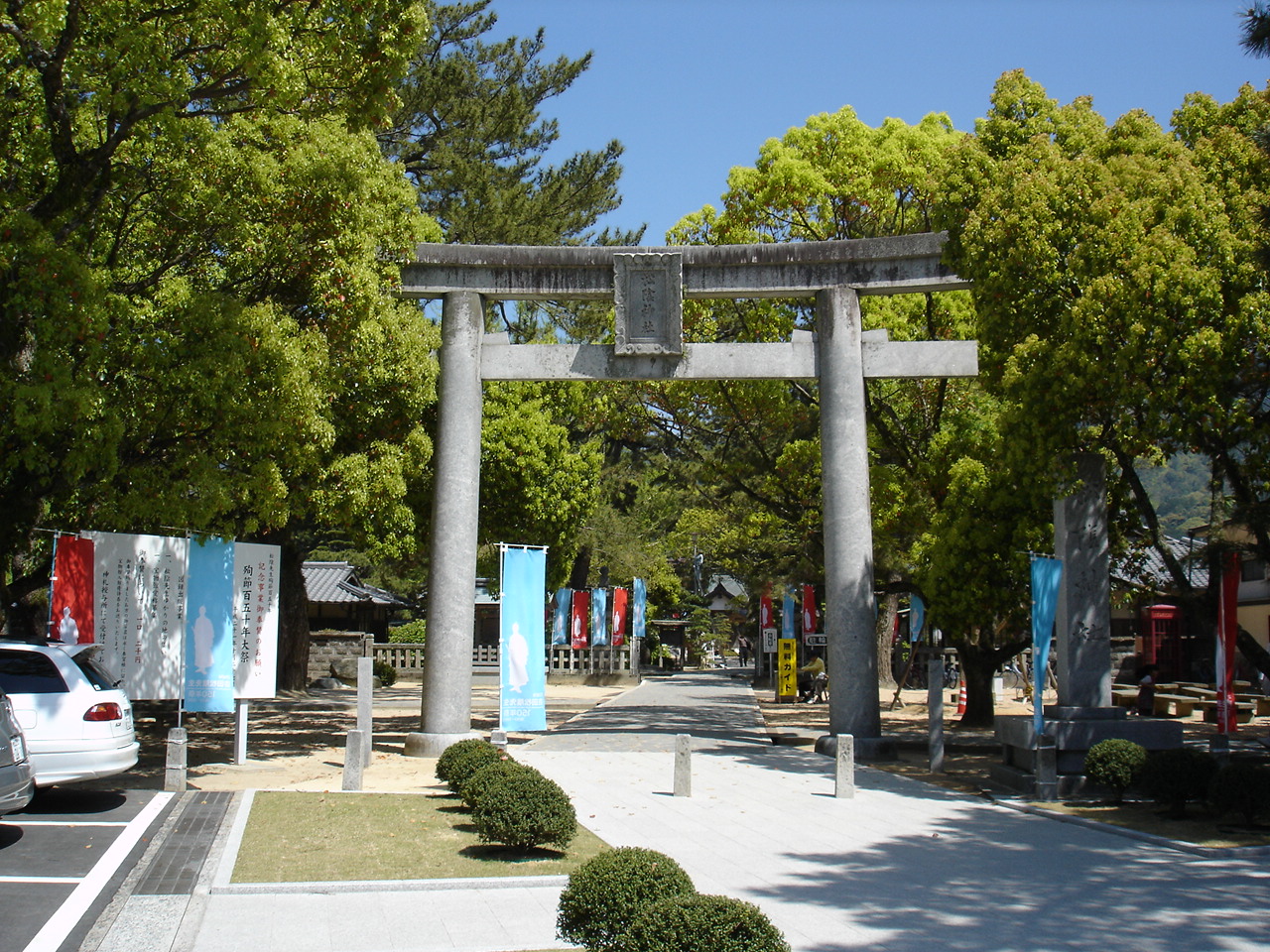
What “still being made here” means is continuity rather than scale. Hagi’s preserved samurai quarter and merchant houses recall a craft that never left town: the clay body often left exposed at the foot of a bowl or flask, the thin glaze pooling pale pink or light yellow at the shoulder. Per the available data, the ware is said to undergo its seven transformations as sake or tea stains the fine crazing over years — a slow change collectors describe as the point of owning the piece, not a flaw in it.

The Mōri domain’s late-Edo openness to outside technique — visible in surviving Western-style industrial sites — echoes the older story of the craft itself, which began with potters from across the sea. A Hagi tokkuri pairs naturally with the foodways of the Sea of Japan coast and with autumn and winter drinking, when warm sake is at its best.

“A tokkuri is not a decanter with a Japanese name — it is a small thermal tool tuned for warm sake.”
📌 How does it compare?
 Hagi-yaki Matcha Chawan →
 Hagi Cast Iron Furin →
Hagi Glass Uchi-Kannyu Tumbler →
 Ouchi-nuri Vermilion Lacquer Sake Cup →
Karatsu Ware E-Garatsu Guinomi →
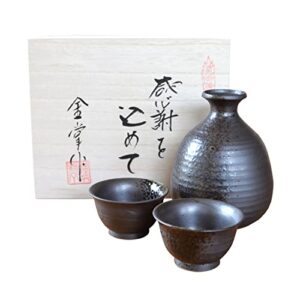 Arita Ware Sometsuke Sake Set →
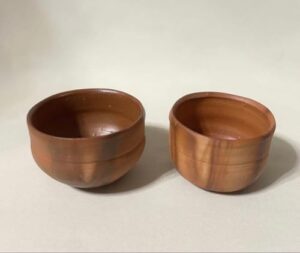 Bizen-yaki Hidasuki Guinomi →
📦 Shipping & where to buy from outside Japan
The featured vessel is listed by Amazon.co.jp under the Amazon JP Global Store, but international shipping eligibility for this item is unconfirmed. For country-specific customs and delivery information, see our guides for Canada, the UK and Australia.
Shipping charges and international delivery eligibility for this item are unconfirmed; check Amazon’s listing and checkout for available destinations, shipping fees, and any import charges. Pottery is non-electrical, so no voltage adapter or certification issues apply; the main packing concern is breakage, so check the listing’s damage-replacement terms.
Price snapshot across stores
| Store | Item variant | Price (JPY + USD est.) | Notes |
|---|---|---|---|
| 🇺🇸 Amazon US (search) | Browse Japanese sake flasks | varies (USD) | Best if you are shopping from the US — Prime shipping, USD pricing, no international customs. |
| 🇯🇵 Amazon JP Global Store | 萩むらさきお預け酒器 15205 | ¥3,175 (≈ $21 USD) as of 2026-10-03; verify on the listing | New condition and Amazon.co.jp as seller were shown in the snapshot; current availability, international shipping eligibility, and import fees are unconfirmed. |
| Maker direct | Unconfirmed — check manufacturer site | — | No kiln or maker site is named in the snapshot. |
| Proxy services (Buyee / Tenso) | Second-hand Hagi-yaki tokkuri | varies + fees | For vintage or kiln-signed pieces unavailable on Amazon; add service and shipping fees. |
Prices in USD are approximate (¥150/USD baseline as of mid-2026) and depend on the current exchange rate. The JPY price is authoritative for the specific listed item.
What it does well
Weaknesses and things to verify before buying
- Capacity and dimensions: ASKUL lists model 15205 as a 300 ml tokkuri about 8 × 12 cm; verify the Amazon offer matches this model before ordering.
- No kiln or maker is named. The snapshot confirms neither the kiln nor any signature, so collectors seeking a specific maker should look elsewhere.
- Set contents: ASKUL lists model 15205 as one approx. 300 ml tokkuri and two approx. 70 ml guinomi in a gift box; verify the Amazon offer matches this set.
- Care specs are unstated. Neither dishwasher nor microwave safety is confirmed — hand-washing is the safer default for unglazed-foot pottery.
- Only 1 left at snapshot. Per the Amazon listing as of October 3, 2026, stock showed one remaining with restock expected — the listing may sell out or change price.
- Glaze tone will vary. Hagi-yaki coloring differs piece to piece and deepens with use; buyers wanting an exact, unchanging white should consider porcelain instead.
Conclusion — which buyer type are you?
Other ways to approach this purchase
🏆 Editor’s Pick — the Hagi sake vessel we’d start with
Per the Amazon listing as of October 3, 2026: new condition, sold by Amazon.co.jp, priced at ¥3,175 (≈ $21 USD) with one piece remaining and restock expected. The listing title identifies it as a Hagi (“萩”) sake vessel under product code 15205; the snapshot does not confirm kiln or glaze composition; ASKUL lists model 15205 as one approx. 300 ml tokkuri and two approx. 70 ml guinomi in a gift box.
- Honest Hagi form: a sake vessel presented as being from Hagi — the castle town whose kilns define the tradition.
- Low-risk entry: ¥3,175 as of 2026-10-03 — an approachable price for a first piece of a 400-year ware.
- Shipping to verify: the snapshot lists Amazon.co.jp as seller; shipping eligibility for this item is unconfirmed.
Price as of 2026-10-03; verify on the listing. USD figure is approximate.
❓ Frequently Asked Questions
How much does the featured Hagi sake vessel cost?
Per the Amazon listing as of October 3, 2026, the featured vessel (萩むらさきお預け酒器 15205) is priced at ¥3,175 (about $21 USD at current rates) — verify on the listing, as prices and stock may have changed.
Does Amazon Japan ship this flask to my country?
Whether the featured vessel ships to your country is unconfirmed; check the listing after selecting your destination and confirm any import fees at checkout.
What size is the featured flask?
ASKUL lists model 15205 as one approx. 300 ml tokkuri (about 8 × 12 cm) and two approx. 70 ml guinomi (about 5.5 × 5 cm each); confirm the Amazon offer matches this model.
Is it dishwasher- or microwave-safe?
Neither is confirmed in the listing snapshot — hand-washing is the safer default for pottery with an unglazed foot, and you should verify care instructions with the seller.
Why do people say Hagi-yaki changes with use?
Hagi-yaki uses a soft body and thin glaze with fine crazing, so sake and tea gradually tint the surface — tradition describes this slow seasoning as the ware’s signature charm, and many buyers choose it for exactly that reason.
Does it come with matching cups?
ASKUL lists product code 15205 as one approx. 300 ml flask and two approx. 70 ml guinomi; confirm the Amazon seller’s package contents before ordering.
jpmono.com is curated by a Japan-based editorial team (working out of Toyama in the Hokuriku region and Nara in Kansai) and is independent. We don’t take payment from the makers we feature; income comes from affiliate links. Read more about our editorial standards.
This article was produced with AI assistance and reviewed by a Japan-based editor. Product facts reflect the Amazon JP listing snapshot of October 3, 2026.
Affiliate disclosure: jpmono.com may earn a commission on qualifying purchases made through links on this page, at no additional cost to you.