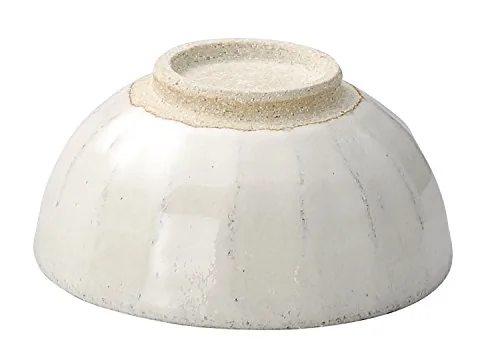
![Hita Sugi Fuki-Urushi Cedar Tray: Tenryo Woodcraft of Oita [2026]](https://jpmono.com/wp-content/uploads/2026/05/japan-map-regions-and-prefectures-800x1050.png)
A fuki-urushi (拭き漆, “wiped lacquer”) serving tray made from Hita-sugi (日田杉) cedar is one of those Japanese objects that hides its craftsmanship rather than advertising it. There is no inlay, no painted decoration, no high-gloss black shell. Instead, raw urushi lacquer is brushed onto the wood and then wiped almost entirely off, coat after coat, until the liquid has sunk into the grain and hardened there. What you see on the surface is the cedar itself — its straight, ruler-like growth lines — now sealed, water-resistant, and slightly warmed in tone.
The wood comes from Hita, a river town in the mountainous interior of Oita Prefecture, on the island of Kyushu. Hita is not a lacquer brand the way Wajima or Aizu are; it is a forestry and woodworking town. During the Edo period it was tenryō (天領) — land governed directly by the Tokugawa shogunate rather than a local lord — and that status, plus centuries of cedar logging on the surrounding slopes, built up a deep regional economy of geta (wooden clogs), joinery, and turned-and-planed wooden goods. A wiped-lacquer cedar tray sits squarely inside that tradition: local timber, a finish chosen to honor the timber, sold today through Amazon.
This guide is written for international readers comparing a Hita-sugi fuki-urushi tray against other Japanese wooden and lacquered trays — and for anyone who wants to understand what they are actually buying before they spend on it. It covers what fuki-urushi is and is not, how Hita’s woodworking heritage relates to (and differs from) Japan’s famous lacquer centers, where to buy from outside Japan, and the specific caveats that matter for this category. A note up front, in keeping with our standards: “Hita lacquerware” is not an established, METI-designated trade name. We frame this honestly below as Hita cedar woodwork finished in urushi, and flag which details should be checked before purchase.
🔄 Updated:
⏱️ Read time: ~11 min
- Who this is for — and who should skip it
- Product overview (from published specs)
- Where this comes from — place, era, and the craft tradition
- Price information
- What it does well
- Weaknesses and things to verify before buying
- Conclusion — which buyer type are you?
- Other ways to approach this purchase
- ❓ Frequently Asked Questions
Who this is for — and who should skip it
- Prefer visible natural wood grain over painted or high-gloss lacquer
- Want a daily-use tea or serving tray rather than a display piece
- Appreciate provenance — local Hita cedar finished by a regional workshop
- Are comparing wiped-lacquer (matte, grain-forward) trays specifically
- Are comfortable with hand-wash care and a little long-term patina
- Want decorative maki-e or mother-of-pearl (raden) ornamentation
- Need a dishwasher- and microwave-safe tray for heavy daily abuse
- Expect a mirror-black, glassy lacquer shell
- Specifications. Confirm that the tray suits your intended use.
- Are unwilling to hand-wash and keep it out of prolonged direct sun
Product overview (from published specs)
Important caveat first, stated plainly: the spec data for Hita sugi cedar items in the Hita craft tradition varies between workshops. Where a value is not confirmed in the source, we mark it “Unconfirmed — check with the seller” rather than guess. Do not treat the table below as a substitute for the live retailer’s page.
| Attribute | Detail | Source |
|---|---|---|
| Item | Hita-sugi cedar serving / tea tray | Amazon JP Global Store |
| Material | Hita-sugi (Japanese cedar / sugi) from Oita | Maker direct / category norm |
| Finish | Fuki-urushi (wiped natural lacquer), matte, grain-forward | Maker direct / category norm |
| Origin | Hita, Oita Prefecture, Kyushu | Maker direct |
| Dimensions | Not confirmed | Not in source data |
| Weight | Not confirmed | Not in source data |
| Care | Hand wash; avoid dishwasher, microwave, prolonged sun | Lacquer category norm |
📖 Glossary — key terms
- Fuki-urushi (拭き漆) — “wiped lacquer.” Urushi is brushed onto bare wood and then wiped off, repeatedly. The lacquer cures inside the grain rather than as a thick surface coat, producing a matte, durable, grain-revealing finish. Also called suri-urushi.
- Urushi (漆) — natural lacquer, the refined sap of the lacquer tree (Toxicodendron vernicifluum). It hardens by polymerization in humidity, not by drying, and is food-safe once cured.
- Hita-sugi (日田杉) — cedar (sugi) grown in the Hita region of Oita. Prized in Japanese forestry for straight, even grain.
- Tenryō (天領) — land in the Edo period administered directly by the Tokugawa shogunate rather than by a feudal lord. Hita was a tenryō town.
- Maki-e / raden — decorative lacquer techniques (sprinkled gold powder / inlaid mother-of-pearl). Fuki-urushi is the opposite philosophy: no applied ornament.
- Sugi vs hardwood — sugi is a softwood, lighter and warmer to the touch than the hardwoods used for many turned bowls; the trade-off is that it dents more easily.
Related Japanese craft guides on jpmono.com — other Oita makers, and other approaches to wooden and lacquered tableware.
Where this comes from — place, era, and the craft tradition

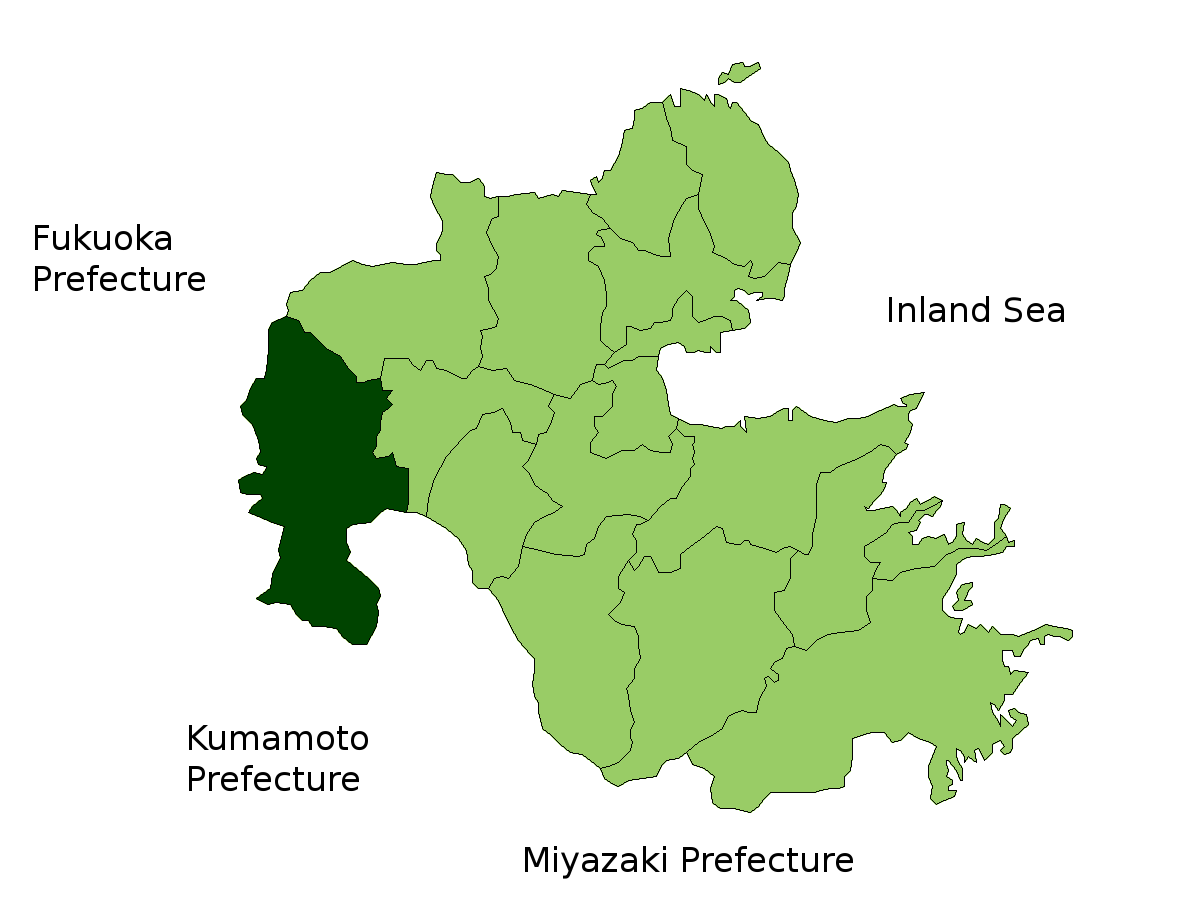
Oita Prefecture occupies the northeastern corner of Kyushu, Japan’s third-largest and southwesternmost main island. Most people who know Oita at all know it for hot springs — Beppu and Yufuin are among the most famous onsen towns in the country. But Hita sits inland, away from the coast, in a basin where three rivers meet to form the Mikuma River. It is mountain country, and the mountains are planted thick with sugi cedar. That single geographic fact — a logging basin with river transport downstream — is the root of everything Hita makes.
In the Edo period (1603–1868), Hita held an unusual administrative status. Rather than belonging to a daimyō’s domain, it was tenryō — territory governed directly by the Tokugawa shogunate through an appointed intendant (daikan). The shogunate placed a regional administrative office here, and Hita became a hub for collecting and moving tax rice, timber, and money across northern Kyushu. Local merchant houses known as kakeya grew wealthy financing the shogunate’s regional operations. That wealth is still legible in the town’s preserved streetscape.
- Early 1600s — Hita placed under direct shogunal (tenryō) administration; a daikan intendant’s office is established.
- Edo period — The Mameda-machi merchant district flourishes; kakeya houses finance shogunal operations across Kyushu.
- 1817 — The Confucian scholar Hirose Tansō opens the Kangien (咸宜園) private academy in Hita, drawing students from across Japan.
- Edo–Meiji — Hita-sugi forestry feeds a deep woodworking economy: geta clogs, joinery, and turned and planed wooden goods.
- 1868–1871 — The Meiji Restoration dissolves the tenryō system; Hita briefly serves as a prefectural seat before consolidation into Oita.
- 20th c.–today — Hita remains a center of cedar woodcraft; wooden trays and tableware are finished in natural urushi for daily use.
Hita’s intellectual standing matched its commercial one. In 1817 the scholar Hirose Tansō founded the Kangien academy here, which over its life enrolled thousands of students from across the country and became one of the largest private schools of the Edo period. A trading town with money, river logistics, and a famous school is exactly the kind of place where skilled trades concentrate — and in Hita the dominant trade was always wood.
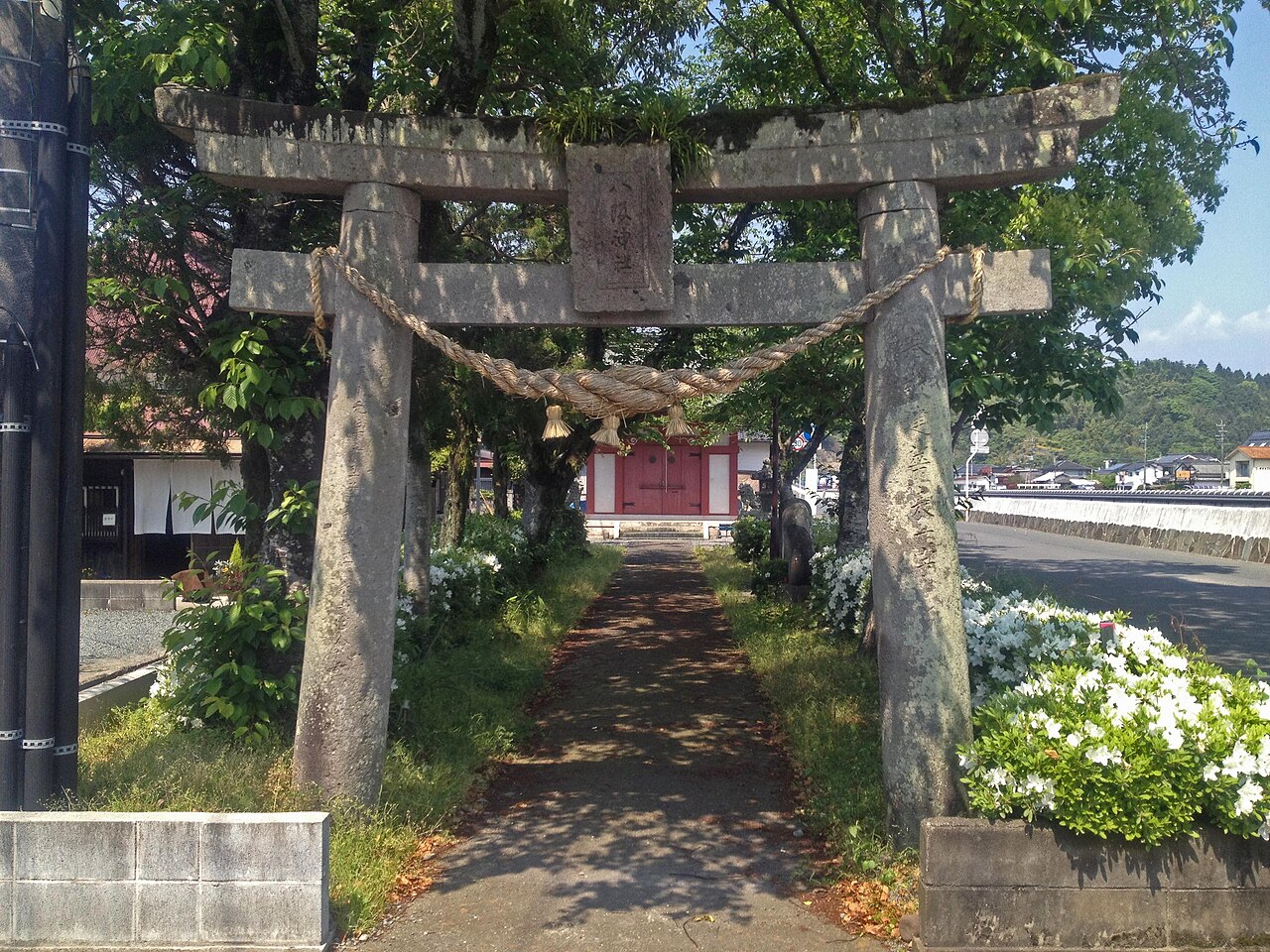
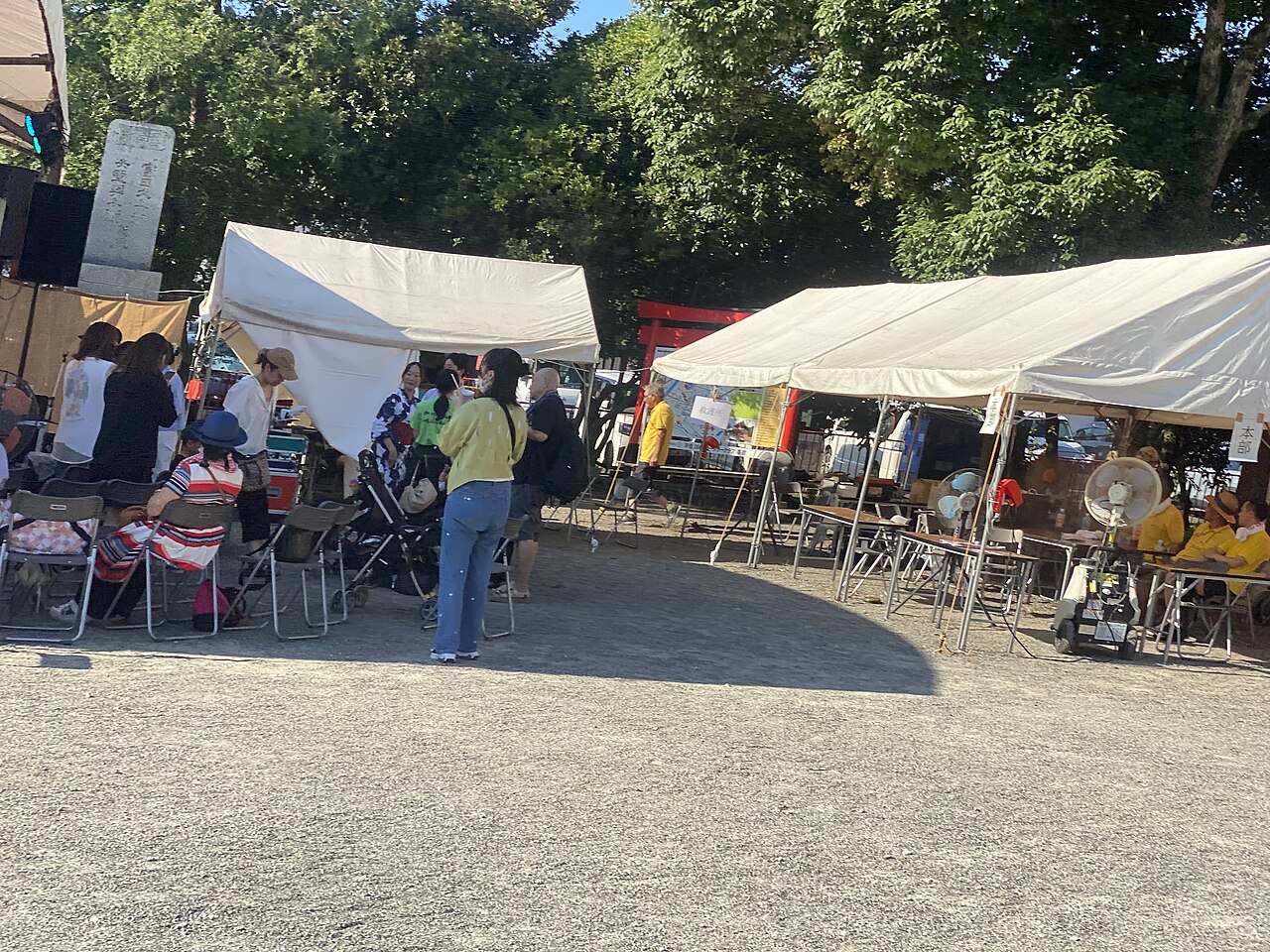
Oita’s wider history also supports a tradition of fine woodwork and lacquered ritual fittings. The province is home to Usa Jingū, the head shrine of all Hachiman shrines in Japan, and to the Kunisaki Peninsula’s old Buddhist halls — a temple-and-shrine economy that for centuries generated demand for carved, joined, and lacquered offering ware.
Here is the honest framing, and it matters. Oita is not one of Japan’s METI-designated flagship lacquer regions — that title belongs to places like Wajima (Ishikawa), Aizu (Fukushima), and Kyoto. Oita’s nationally recognized crafts are Onta-yaki pottery, Beppu bamboo basketry, and Bungo bladesmithing. So a “Hita lacquerware” brand, in the formal sense, does not exist. What exists is a long and verifiable woodworking economy built on Hita-sugi cedar, and fuki-urushi is simply the most sympathetic finish for that wood — a way to make a cedar tray water-resistant and food-safe while letting the grain stay visible.
“Wiped lacquer does not cover the cedar. It disappears into it — and the wood you bought is the wood you keep looking at.”
Price information
Live retail pricing for Hita sugi fuki-urushi cedar trays varies between workshops, so the table below shows the purchase paths rather than a single figure — always confirm the current price at the retailer before buying. USD figures elsewhere on the page are approximate at a ¥150/USD baseline (mid-2026); the JPY price on the retailer’s page is the authoritative one.
| Store | Item / Variant | Price (JPY + USD est.) | Notes |
|---|---|---|---|
| 🇺🇸 Amazon US (search) | Browse Japanese cedar & lacquer trays | varies (USD) | Best if you are shopping from the US — Prime shipping, USD pricing, no international customs. Amazon US carries Japanese wooden and lacquered trays from various makers, useful for comparing finishes and price tiers; this exact Hita-sugi piece is sourced from Japan (next row). |
| 🇯🇵 Amazon JP Global Store | Hita-sugi fuki-urushi cedar tray | — | International shipping from Japan may involve customs or duties. |
| Maker direct | Hita cedar workshop (if identified) | Unconfirmed | Some Hita woodworkers sell through their own sites or regional craft shops; the workshop behind the tray may vary. |
| Proxy services (Buyee / Tenso) | Forwarding from JP retailers | Item price + forwarding fee | An option if a domestic-only JP shop carries it. Adds a forwarding fee and a second shipping leg; factor in customs at your destination. |
What it does well
Weaknesses and things to verify before buying
- “Hita lacquerware” is not a formal trade name. This is Hita cedar woodwork finished in urushi, not a METI-designated lacquer brand. If you specifically want a designated lacquerware region, look at Wajima, Aizu, or Kyoto instead.
- Softwood dents. Sugi is lighter and softer than hardwood; a dropped utensil or hard knock can leave a mark more easily than on a maple or zelkova tray.
- Not dishwasher- or microwave-safe. Like all urushi ware, it must be hand-washed with mild detergent and dried; heat and prolonged soaking damage the finish.
- Urushi sensitivity (rare). Fully cured urushi is inert, but a small number of people are sensitive to incompletely cured lacquer. New pieces occasionally have a faint lacquer smell that fades; air them out before use.
- Keep out of prolonged direct sun. Extended UV exposure can dull or alter the finish over time.
- Workshop verification. Confirm the specific maker or workshop before committing; small-batch craft availability changes frequently.
Conclusion — which buyer type are you?
Other ways to approach this purchase
❓ Frequently Asked Questions
What is fuki-urushi, and how is it different from regular lacquerware?
Fuki-urushi (“wiped lacquer”) means urushi is brushed onto bare wood and then wiped almost entirely off, repeatedly. The lacquer hardens inside the grain rather than as a thick surface shell, so the wood stays visible and matte. Conventional lacquerware builds up opaque colored coats that hide the wood entirely.
Is “Hita lacquerware” a recognized traditional craft?
Not as a formal trade name. Oita’s nationally designated crafts are Onta-yaki pottery, Beppu bamboo, and Bungo blades. Hita is a cedar woodworking town, and urushi is used here as a finish for that woodwork. We frame the craft as Hita cedar woodwork finished in urushi rather than a designated lacquer brand.
Can I put it in the dishwasher or microwave?
No. Like all urushi ware, hand-wash with mild detergent and dry promptly. Avoid dishwashers, microwaves, prolonged soaking, and extended direct sunlight, all of which can damage the lacquer and the softwood.
Does it ship internationally from Japan?
Hita sugi cedar trays in this style are typically stocked by the Amazon JP Global Store, which delivers to most major destinations. Confirm availability, the delivery estimate, and any customs duties on the retailer’s page before ordering. A proxy service such as Buyee or Tenso is a fallback if a domestic-only shop carries the piece.
How does it compare to a Nara raden or Ise Shunkei tray?
They are different philosophies. Nara raden uses mother-of-pearl inlay for ornament; Ise Shunkei uses translucent amber lacquer over decorative wood; Tosa kodai-nuri deliberately roughens the texture. Hita fuki-urushi is the plainest of the group — no applied decoration, just the cedar grain sealed in lacquer.
Why does the price not show on this page?
Prices for Hita cedar trays finished in urushi vary with size, wood, finish, and workmanship. Currency conversions are approximate and should be used only for comparison.
Is cedar a good material for a tray?
Cedar (sugi) is light, warm to the touch, and prized in Japanese forestry for straight, even grain — which fuki-urushi shows off well. The trade-off is that, as a softwood, it dents more easily than hardwood, so it rewards gentle handling.
jpmono.com is curated by a Japan-based editorial team (working out of Toyama in the Hokuriku region and Nara in Kansai) and is independent. We do not take payment from the makers we feature; income comes from affiliate links. We do not physically test every product — we read maker specifications and published craft information — and we flag thin details plainly.
Affiliate disclosure: jpmono.com may earn a commission on qualifying purchases made through links on this page, at no additional cost to you.