![Toraya Small Yokan (Ko-gata Yōkan, 10-Bar Assorted Box) — Japan’s 500-Year Imperial Confectioner, From Kyoto to Your Door [2026 Guide for International Readers]](https://jpmono.com/wp-content/uploads/2026/06/toraya-small-yokan-where-to-buy-2026-featured-2.jpg)
Toraya (虎屋) is, by most accounts, the oldest continuously operating confectioner in Japan. The house traces its founding to Kyoto in the early 1500s, and for roughly five centuries it held the role of goyō-gashi-ho (御用菓子司) — official confectioner to the Japanese Imperial Court. Its best-known product is also one of the most travel-friendly traditional Japanese sweets ever made: yokan (羊羹), a firm jelly of red-azuki-bean paste, sugar, and agar.
The item this guide covers is the ko-gata yōkan (小形羊羹) — “small yokan” — sold as a 10-bar assorted box. Each bar weighs about 50 grams, is individually sealed, keeps for roughly a year unopened, and needs no refrigeration. Because yokan is shelf-stable, plant-based, and commercially sealed, it crosses borders far more easily than fresh wagashi, which is precisely why a Kyoto court sweet five hundred years old can arrive intact at a doorstep in Chicago, Berlin, or Sydney.
This guide is written from a Japan-based editor’s perspective, working out of Toyama and Nara. It covers where Toraya sits in the history of Japanese confectionery, what makes yokan structurally different from Western sweets, the flavors typically found in the 10-bar box, and — the part international readers actually need — how to order it through Amazon for delivery abroad. We do not invent prices; the fetched data snapshot for this listing returned no live pricing, so figures must be confirmed on the listing itself.
🔄 Last updated: June 28, 2026
⏱️ Read time: ~10 min

- Who this is for — and who should skip it
- Product overview (from published specs)
- Where this comes from — place, era, and the craft tradition
- Which finish should you choose?
- 📌 How does it compare?
- Price snapshot across stores
- What it does well
- Weaknesses and things to verify before buying
- Conclusion — which buyer type are you?
- Other ways to approach this purchase
- 🏆 Editor’s Pick
- ❓ Frequently Asked Questions
Who this is for — and who should skip it
- Want a first, authoritative introduction to yokan from Japan’s most historically significant wagashi house
- Need a Japanese sweet that ships well — sealed, shelf-stable, no cold chain required
- Are buying a gift and want individually wrapped, year-keeping bars rather than a perishable assortment
- Drink matcha or sencha and want the classic accompaniment
- Prefer a plant-based confection (no dairy, gelatin, or meat in the base recipe)
- Want fresh, refrigerated wagashi (nama-gashi) — yokan is a dense, keeping sweet, not a delicate seasonal one
- Dislike beany or only-lightly-sweet flavors; yokan is firm and concentrated
- Need it tomorrow at supermarket prices — international shipping adds time and cost
- Have an azuki/legume sensitivity, or require certified allergen labeling you cannot verify on the listing
- Live somewhere that restricts food imports (confirm eligibility at checkout before ordering)
Product overview (from published specs)
The table below summarizes what can be stated from the listing and the verified background facts. Where the fetched data is silent, the cell says so plainly rather than guessing.
Toraya Small Yokan (Ko-gata Yōkan, 10-Bar Assorted Box)
とらや 小形羊羹 10本入
在庫あり。 · Sold by 株式会社 虎屋 · ASIN B016U23NLY
Price and availability as of 2026-08-31 02:30 JST. The Amazon listing at the time of purchase is authoritative. jpmono.com earns a commission on qualifying purchases at no extra cost to you.
| Attribute | Detail |
|---|---|
| Product | Toraya small yokan (小形羊羹), 10-bar assorted box |
| Maker | Toraya (虎屋 / 株式会社虎屋) — founded in Kyoto, early 1500s; head office now Akasaka, Tokyo |
| Type | Neri-yokan (練り羊羹) — dense boiled azuki jelly |
| Bar size | About 50 g per bar, individually wrapped |
| Count | 10 bars, assorted flavors |
| Flavors (typical) | Yoru no Ume (夜の梅, classic azuki), Omokage (おもかげ, brown sugar / kuro-zato), and a lighter or seasonal flavor such as Hamaomoi or matcha — confirm the exact assortment on the live listing |
| Base ingredients | Azuki bean paste (an), sugar, agar (kanten); plant-based. Check the listing for full ingredients and allergen statements. |
| Shelf life | About 1 year unopened, stored at room temperature; carries a best-by date |
| Storage | Room temperature; no refrigeration required unopened |
| ASIN | B016U23NLY (Amazon JP Global Store) |
| Price | Not available in the fetched data snapshot — verify current price on the live listing (varies by box size and season) |
Source basis: Amazon US search (primary, moonill-20) and Amazon JP Global Store (secondary, moonill-22, sourced listing), plus Toraya’s published background. Only the Amazon JP listing snapshot is referenced here; live pricing was unavailable at the time of writing and may have shifted since.
📖 Glossary — key terms
- Yokan (羊羹) — a firm jelly made from bean paste, sugar, and agar; one of the defining forms of Japanese confectionery.
- Wagashi (和菓子) — traditional Japanese confectionery, distinct from Western (yōgashi) sweets in ingredients and aesthetics.
- Neri-yokan (練り羊羹) — the dense, boiled-and-set type of yokan (as opposed to the softer mizu-yokan).
- An / anko (餡) — sweetened bean paste, the heart of most wagashi.
- Azuki (小豆) — the red bean used for the classic yokan paste.
- Kanten (寒天) — agar, a plant-derived gelling agent (from seaweed); it is what sets yokan, and why the sweet contains no animal gelatin.
- Kuro-zato (黒砂糖) — unrefined brown/black cane sugar, the base of the Omokage flavor.
- Goyō-gashi-ho (御用菓子司) — “purveyor of confectionery by imperial appointment”; the role Toraya held for centuries.
- Matcha (抹茶) — stone-ground green tea powder; yokan is its classic accompaniment.
Where this comes from — place, era, and the craft tradition

Kyoto was the imperial capital of Japan from 794 until 1869 — for over a thousand years, the seat of the court and, with it, the center of refined craft. Court patronage concentrated specialists in one place over generations: textile weavers, lacquerers, tea masters, and the confectioners who supplied the rituals and seasons of aristocratic life. Wagashi did not develop as everyday candy. It developed as an art tied to the tea ceremony, the calendar, and the court.
Toraya was founded in Kyoto in the early 1500s, in the late Muromachi period, and became goyō-gashi-ho — confectioner to the Imperial Court — a role it held for roughly five centuries. That continuity is the single most important fact about the company. It was already an old, established house when Tokugawa Ieyasu unified the country; it was already centuries old when the modern era began.
- 794 — Kyoto (Heian-kyō) becomes Japan’s imperial capital, concentrating court craft for centuries.
- Early 1500s — Toraya is founded in Kyoto (late Muromachi period).
- 16th century onward — Toraya serves as confectioner to the Imperial Court (goyō-gashi-ho).
- Edo period — Neri-yokan, the dense agar-set form, matures into the classic style sold today.
- 1869 — With the Meiji Restoration the capital function moves to Tokyo; Toraya opens in Tokyo while keeping its Kyoto roots.
- Present — Head office in Akasaka, Tokyo; the small-yokan bar format keeps about a year unopened and ships worldwide.
Yokan itself has a longer, stranger history than the smooth bar suggests. The word is written with characters meaning “sheep” and “broth” — a memory of a Chinese gelatin soup. In Japan, where Buddhist dietary practice discouraged meat, the dish was reimagined with bean paste, and once agar-setting techniques spread, the firm neri-yokan we recognize today took shape. By the Edo period it had become a signature of high-grade confectionery.
“A confection that outlasted shoguns: Toraya was already centuries old when Tokyo became the capital — and the small yokan in this box descends, in an unbroken line, from sweets made for the Kyoto court.”
What “still being made” means here is not a revival or a re-creation. It is a single house, operating without interruption from the early 1500s to today, that moved with the court to Tokyo but never abandoned Kyoto. The small yokan is the everyday, sealed-bar expression of that lineage — engineered for shelf life and travel, but built on the same azuki-sugar-agar foundation the court would have recognized.
Culturally, yokan belongs to the tea table. It is the standard accompaniment to matcha and sencha: a small slice of dense sweetness to balance the tea’s bitterness. That pairing is the natural bridge from this confection to Japanese tea-ware, and it is where the cross-links below come in.
Which finish should you choose?
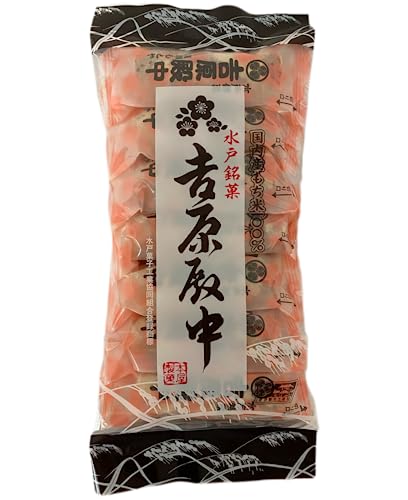
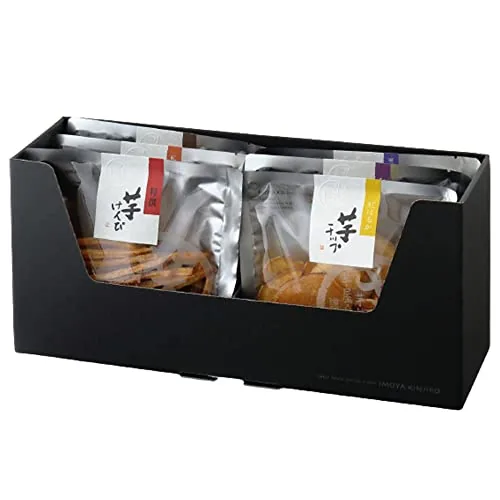
This piece is listed in 4 options. The photos below are the actual フレーバー名 options on the listing right now — pick the one you want and confirm it on the product page before ordering, since hand-finished wares vary slightly piece to piece.
![Toraya Small Yokan (Ko-gata Yōkan, 10-Bar Assorted Box) — Japan's 500-Year Imperial Confectioner, From Kyoto to Your Door [2026 Guide for International Readers] — 夜の梅, おもかげ, 新緑, はちみつ, 紅茶 finish](https://m.media-amazon.com/images/I/419sADvDc6L._SL500_.jpg)
![Toraya Small Yokan (Ko-gata Yōkan, 10-Bar Assorted Box) — Japan's 500-Year Imperial Confectioner, From Kyoto to Your Door [2026 Guide for International Readers] — 夜の梅, おもかげ, 新緑, はちみつ, 紅茶 finish](https://m.media-amazon.com/images/I/41w0qaSYw-L._SL500_.jpg)
![Toraya Small Yokan (Ko-gata Yōkan, 10-Bar Assorted Box) — Japan's 500-Year Imperial Confectioner, From Kyoto to Your Door [2026 Guide for International Readers] — 夜の梅, おもかげ, 新緑, はちみつ, 紅茶 finish](https://m.media-amazon.com/images/I/31tzd4Esf1L._SL500_.jpg)
📌 How does it compare?
Yokan lives on the tea table. If you are assembling a Japanese tea setting around it, these related jpmono guides cover the ware it pairs with:
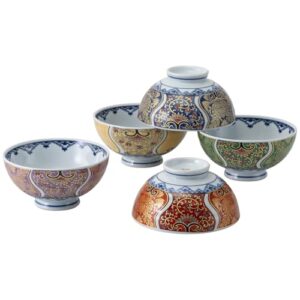
🍵 Kyo-yaki Kiyomizu Matcha Chawan
The Kyoto tea bowl to whisk your matcha in — the natural partner to a slice of yokan.
🫙 Ohi-yaki Amber-Glaze Matcha Chawan
A Kyoto chazutsu to keep the loose-leaf tea you serve alongside yokan fresh.
🪭 Kyo-sensu Kyoto Silk Folding Fan
Another Kyoto craft house tradition — a refined gift to pair with a yokan box.
Price snapshot across stores
Prices and availability fluctuate; the live listing is always authoritative. JPY is the authoritative currency for the sourced item, and USD figures (where shown) are approximate at a ¥150/USD baseline as of mid-2026.
| Store | Item / Variant | Price | Notes |
|---|---|---|---|
| 🇺🇸 Amazon.com (US) | Browse Japanese yokan & wagashi | varies (USD) | Best if you are shopping from the US — Prime shipping, USD pricing, no international customs. Amazon US carries assorted Japanese yokan and wagashi from various makers; Toraya’s specific small-yokan box is sourced from Japan (next row). |
| 🇯🇵 Amazon JP Global Store | Toraya small yokan (小形羊羹), 10-bar assorted box (ASIN B016U23NLY) | Check live listing (JPY) | The sourced listing for the exact item in this guide. Ships internationally from Japan; look for AmazonGlobal eligibility for your country at checkout. |
| Maker direct (Toraya) | Toraya official online shop / boutiques | Check maker site (JPY) | Toraya operates its own retail and online channels; international shipping policies vary by season and destination. Useful for full assortment and gift packaging. |
| Proxy services (Buyee / Tenso) | Forwarding from Japanese retailers | Item price + forwarding fee | A fallback if a given seller does not ship to your country directly. Note that food forwarding has destination-specific restrictions; confirm before ordering. |
What it does well
Weaknesses and things to verify before buying
- No price in the data snapshot. The fetched data returned no live pricing. Yokan from a premium house is not cheap, and a small box plus international shipping adds up — confirm the total at checkout before committing.
- It is a food import. Some countries restrict or scrutinize food parcels. Order small personal quantities, and verify your destination’s eligibility and any customs rules at Amazon checkout.
- Best-by date matters. “About a year” is from manufacture, not from delivery. Check the printed date on arrival, especially if you intend to gift or store it.
- Flavor assortment can vary. The 10-bar box typically pairs Yoru no Ume (azuki) and Omokage (brown sugar) with a lighter or seasonal flavor, but the exact mix changes — read the current listing rather than assuming a fixed lineup.
- Taste is an acquired one. Yokan is firm and concentrated, with a pronounced bean character. Readers expecting a light, fluffy Western dessert may find it dense and unfamiliar.
- Allergen verification is on you. While the base recipe is plant-based, processing and individual flavors should be checked against the listing’s ingredient statement if you have sensitivities.
Conclusion — which buyer type are you?
Other ways to approach this purchase
🏆 Editor’s Pick
❓ Frequently Asked Questions
Does Toraya small yokan need refrigeration?
No. The bars are sealed and shelf-stable at room temperature, keeping for about a year unopened. Once a bar is opened, eat it within a reasonable time as you would any opened food.
Can I ship it internationally?
Yes, generally. Order through the Amazon JP Global Store and look for “AmazonGlobal International Shipping” eligibility for your country. It is a food item with a best-by date, intended in small personal quantities; customs and eligibility are confirmed at Amazon checkout.
Is yokan plant-based or vegan?
The base recipe — azuki bean paste, sugar, and agar (kanten) — contains no dairy, gelatin, or meat. Agar is seaweed-derived, so it sets without animal gelatin. Always verify the full ingredient and allergen statement on the listing for your specific needs.
What flavors are in the 10-bar box?
The assortment typically includes Yoru no Ume (夜の梅, classic azuki with whole beans), Omokage (おもかげ, brown sugar / kuro-zato), and a lighter or seasonal flavor such as Hamaomoi or matcha. The exact mix can change, so confirm the current assortment on the listing.
How big is each bar?
Each small-yokan bar is about 50 grams and individually wrapped — a single-serving size that you can slice or eat whole.
How do you eat yokan?
Yokan is traditionally sliced and served with matcha or sencha; its dense sweetness balances the tea’s bitterness. The small bars can also be eaten on their own as a portable snack.
Will customs be a problem for a food order?
Small personal quantities of sealed, shelf-stable food are generally accepted, but some countries restrict food imports. Eligibility and any customs charges are confirmed at Amazon checkout for your destination — check there before ordering.
jpmono.com is curated by a Japan-based editorial team (working out of Toyama in the Hokuriku region and Nara in Kansai) and is independent. We do not take payment from the makers we feature; income comes from affiliate links. We read maker specs and source listings rather than physically testing every product.
This article was prepared with AI assistance and reviewed against the source listing and verified background facts. Where live data was unavailable (notably current pricing), the text says so rather than estimating.
Affiliate disclosure: jpmono.com may earn a commission on qualifying purchases made through links on this page, at no additional cost to you.