![Kawajiri Uchihamono Gyuto: Kumamoto Hand-Forged Chef Knife [2026]](https://jpmono.com/wp-content/uploads/2026/05/japan-map-regions-and-prefectures-800x1050.png)
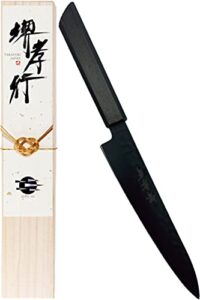
A gyuto (牛刀, “beef knife”) is the Japanese take on the Western chef’s knife — a long, gently curved, double-bevel blade meant to do most of the work in a kitchen. This one is not a factory-stamped stainless piece. It is a Kawajiri uchihamono (川尻打刃物, “Kawajiri forged blade”), hand-forged in the old river-port district of Kawajiri at the southern edge of Kumamoto City, on the island of Kyūshū. The maker laminates a hard carbon-steel core to softer iron cheeks — a construction called warikomi or awase — the same lamination logic that has defined Japanese edged tools for centuries.
What makes it notable to an international reader is not novelty but continuity. Kawajiri was a working blacksmith town long before it was a knife-collector’s keyword. Its smiths forged sickles and farm tools for the rice country around the Midori River, then kitchen knives, and the trade earned a formal name — “Higo Kawajiri no hamono” (肥後川尻の刃物) — that Kumamoto Prefecture now recognizes as a traditional craft. Buying one is buying into a castle-town lineage that runs back to Katō Kiyomasa and the Hosokawa lords.
This guide is for an international home cook or knife enthusiast considering a carbon-steel Japanese chef’s knife. It covers the craft’s origin, the construction and maintenance of carbon steel, how the blade compares with other Japanese knives, and practical considerations for obtaining one outside Japan. Gaps are flagged rather than filled with guesses.
🔄 Updated:
⏱️ Read time: ~11 min
- Who this is for — and who should skip it
- Product overview (from published specs)
- Where this comes from — place, era, and the craft tradition
- Buying options across stores
- What it does well
- Weaknesses and things to verify before buying
- Conclusion — which buyer type are you?
- Other ways to approach this purchase
- ❓ Frequently Asked Questions
Who this is for — and who should skip it
- Want a hand-forged, single-maker chef’s knife rather than a mass-produced one
- Already sharpen your own knives, or are willing to learn on a whetstone
- Value carbon steel’s keen edge and easy resharpening over stainless convenience
- Are drawn to items with a documented regional craft lineage
- Cook a broad range of tasks and want one versatile blade to reach for
- Want a dishwasher-safe, wipe-and-forget stainless knife
- Will not hand-dry the blade after every use (carbon steel rusts)
- Need certified availability and instant Prime delivery in your country
- Prefer a Western-brand knife with a warranty desk and retail support
- Are shopping strictly on price and need a confirmed figure before ordering
Product overview (from published specs)
Hand-forged carbon-steel gyuto are typically built on warikomi/awase lamination — a hard cutting core forge-welded between softer iron cheeks. Individual blades vary in exact length, handle wood, and price, so the table marks unconfirmed fields rather than inventing numbers.
| Attribute | Detail (per product information) |
|---|---|
| Type | Gyuto (牛刀) — Japanese chef’s knife, double-bevel |
| Steel / construction | Carbon-steel core, warikomi/awase lamination (hard edge welded to softer iron) |
| Origin | Kawajiri, Kumamoto City, Kumamoto Prefecture, Kyūshū |
| Craft tradition | Kawajiri uchihamono — recognized Kumamoto Prefecture traditional craft |
| Bevel | Double-bevel (gyuto standard; usable right- or left-handed) |
| Blade length | Unconfirmed — check the manufacturer or product page before buying |
| Handle | Unconfirmed — Japanese wa-handles are commonly wood |
Sources: Amazon US search (primary, tag moonill-20) + Amazon JP Global Store (secondary, tag moonill-22) + maker background per data_notes. Live pricing may have shifted since the writing date; confirm at the retailer before purchase.
📖 Glossary — key terms
- Gyuto (牛刀) — literally “beef knife”; the Japanese-made Western-style chef’s knife, curved for rock-chopping.
- Uchihamono (打刃物) — “forged blade”; a knife made by hammer-forging steel rather than stamping it from sheet.
- Warikomi / awase (割込み・合わせ) — lamination that sandwiches a hard carbon-steel cutting core between layers of softer iron, giving a keen edge with a tougher, less brittle body.
- Kaji (鍛冶) — a blacksmith or the smithing trade.
- Kama (鎌) — a hand sickle; historically the everyday product that built Kawajiri’s forging trade.
- Higo (肥後) — the old provincial name for present-day Kumamoto.
- Hamono (刃物) — bladeware; cutting tools as a category.
Related jpmono guides to other Japanese blades — several from the same Kyūshū forging belt, plus mainland reference points for santoku, yanagiba, and deba shapes.
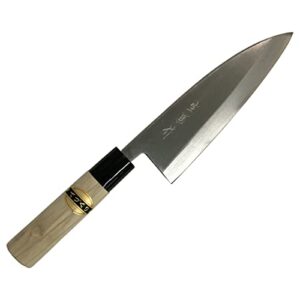
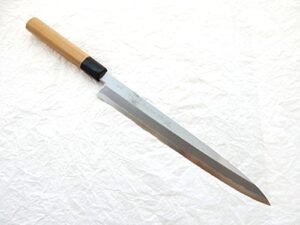
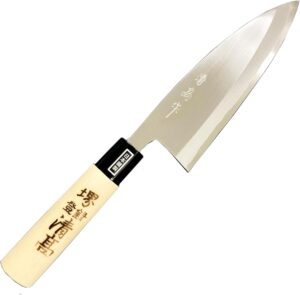
Where this comes from — place, era, and the craft tradition

Kawajiri (川尻) sits at the southern edge of present-day Kumamoto City, where the Midori River empties toward the Ariake Sea. Kumamoto — the province historically called Higo (肥後) — occupies the western center of Kyūshū, Japan’s southernmost of the four main islands. The river mouth is the whole point: from medieval times, Kawajiri was a working river port and merchant town, a place where goods moved between the rice plains inland and the sea. Ports concentrate people, trade, and demand for tools, and that is the soil a blacksmith trade grows in.
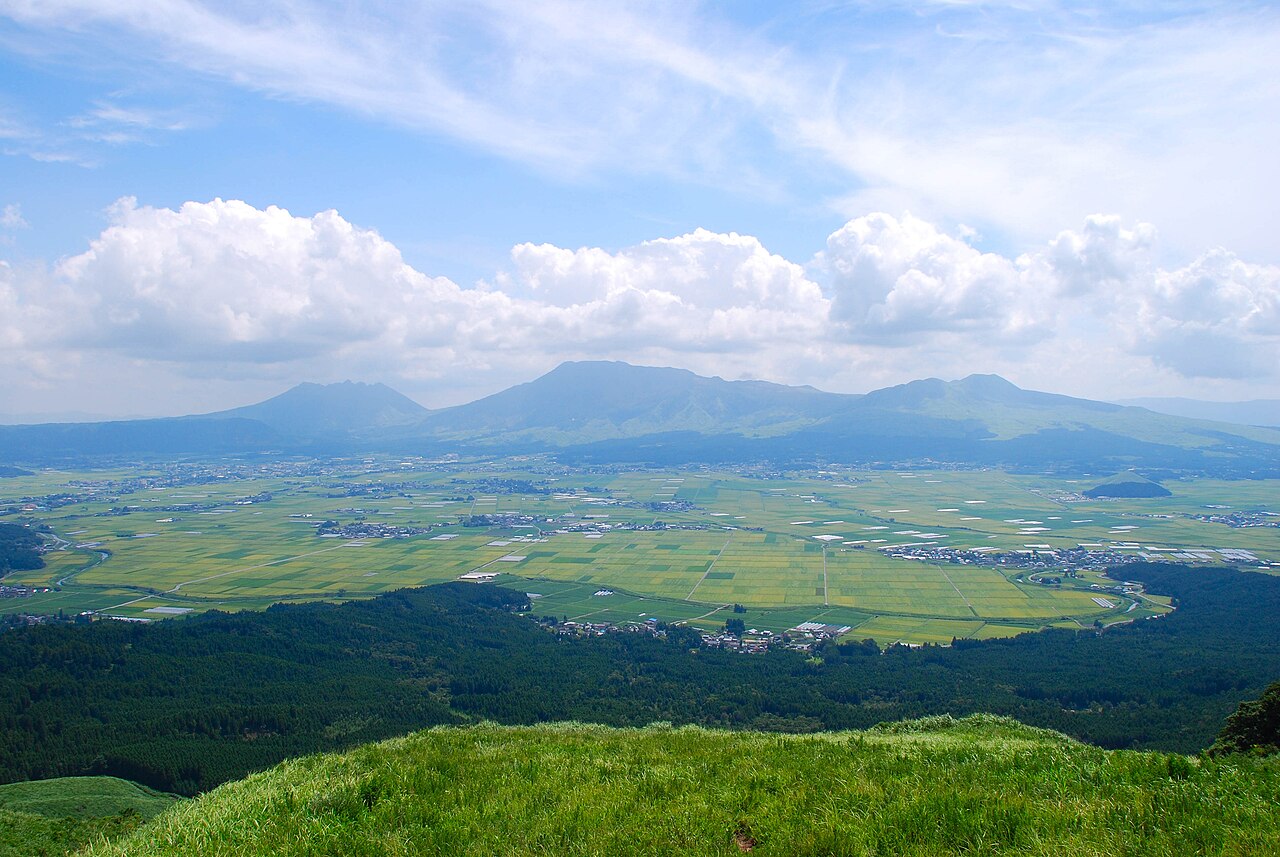
The historical anchor is a castle-town story. In the late 16th century, Katō Kiyomasa — the warlord-engineer who would become lord of Higo — developed Kawajiri as a supply port for his growing castle town. Kiyomasa is the same figure who built Kumamoto Castle, one of Japan’s great fortifications. A supply port needs sickles, farm tools, ship fittings, and kitchen blades, so smiths (kaji) settled and worked.
- Medieval era — Kawajiri established as a river port and merchant town at the mouth of the Midori River.
- Late 1500s — Katō Kiyomasa develops Kawajiri as a supply port for his Higo castle town.
- Early 1600s — Kumamoto Castle built by Katō Kiyomasa; the castle town’s demand supports local trades.
- 1632 — The Hosokawa clan enters Higo and keeps Kawajiri prosperous as a river-port commercial hub.
- Edo period — Blacksmiths cluster in Kawajiri, forging sickles (kama), farm tools, and kitchen knives; “Higo Kawajiri no hamono” becomes a recognized name.
- Modern era — Kawajiri uchihamono designated a Kumamoto Prefecture traditional craft.
- 2026 — Warikomi carbon-steel blades, including gyuto, still hand-forged in the district.
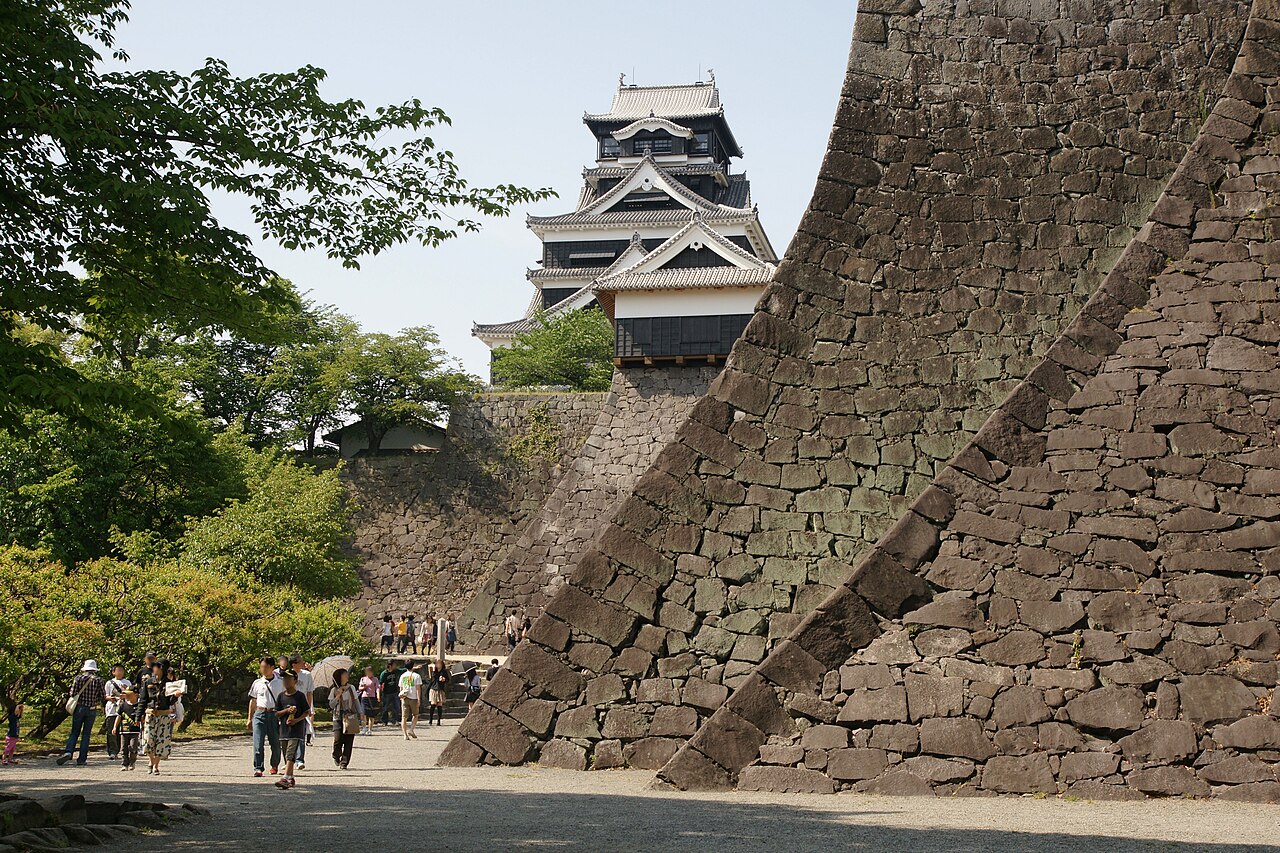
The lineage did not stop with Kiyomasa. After 1632, the Hosokawa clan took over Higo and kept Kawajiri prosperous as a river-port commercial hub through the long Edo peace. Under that steady demand, the blacksmiths’ output shifted with the times — from sickles and farm implements toward kitchen knives — and the trade earned its formal name, “Higo Kawajiri no hamono,” which Kumamoto Prefecture now recognizes as a traditional craft.
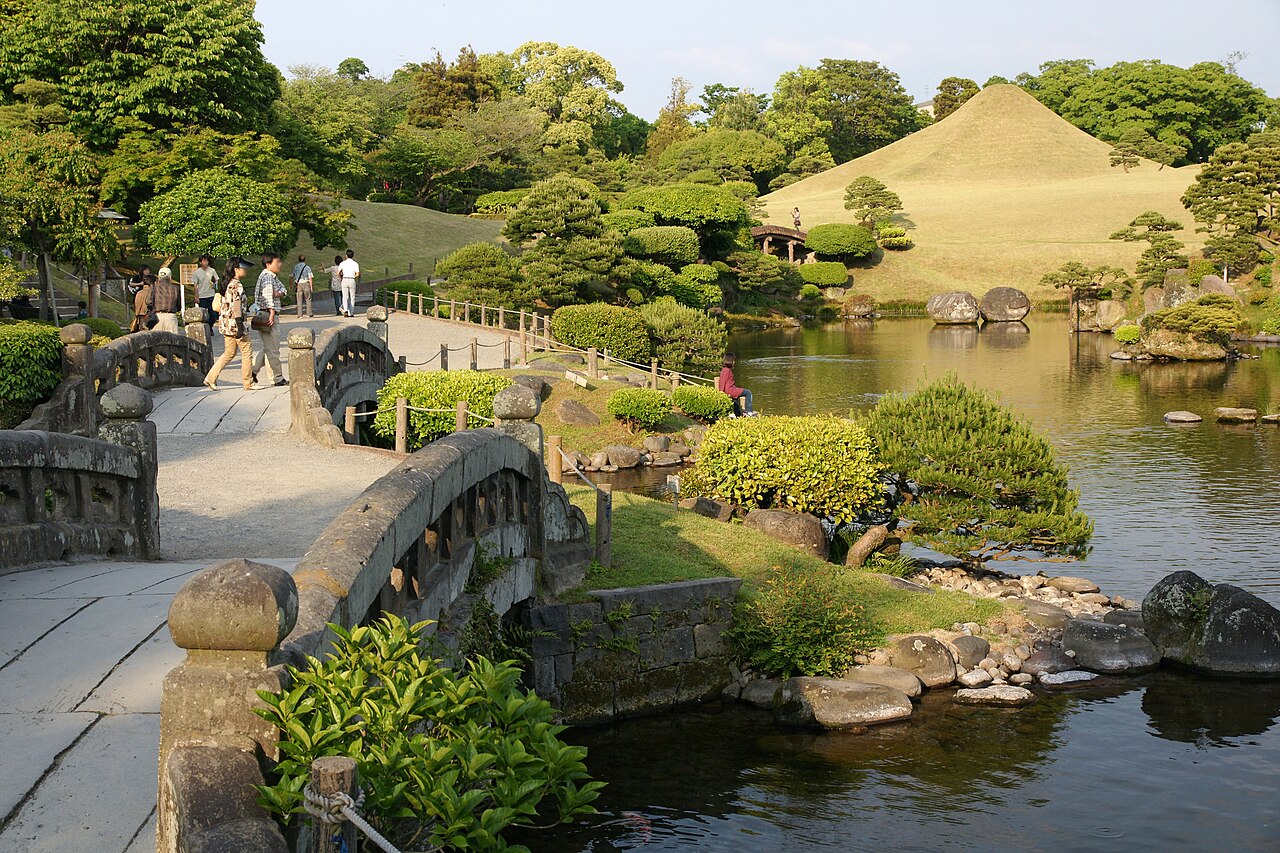
“The same Katō-Kiyomasa-to-Hosokawa castle-town lineage that gave Higo its damascene metalwork also gave it a river-port forge — one province, one heritage, expressed in inlay and in steel.”
That shared lineage is worth naming. Kawajiri uchihamono comes out of the same Higo-domain heritage — Katō Kiyomasa to the Hosokawa lords — as Higo zōgan (肥後象嵌, “Higo damascene”), the region’s inlaid metalwork tradition. Two crafts, one castle-town history: a smith’s line and an inlayer’s line, both patronized by the same domain. The warikomi construction on this gyuto — a hard carbon-steel edge laminated to softer iron — is the working expression of that smithing side, unchanged in principle from the blades those Edo-period kaji hammered out for the port.
Buying options across stores
USD figures are approximate (¥150/USD baseline as of mid-2026), and exchange rates and retailer prices may change.
| Store | Item / Variant | Price (JPY + USD est.) | Notes |
|---|---|---|---|
| 🇺🇸 Amazon.com (US) | Browse Japanese chef’s knives | varies (USD) | Best if you’re shopping from the US — Prime shipping, USD pricing, no international customs. Amazon US carries hand-forged Japanese gyuto and santoku from makers such as Tojiro, Yoshihiro, and Shun for comparison; this exact Kawajiri piece is sourced from Japan (next row). |
| Amazon JP Global Store | Kawajiri Uchihamono warikomi carbon-steel gyuto | Purchase terms are unconfirmed — check current product details | The product page for the item. Ships internationally from Japan to most major destinations via Amazon JP Global Store. |
| Maker direct | Kawajiri workshop / Kumamoto craft outlets | Varies (JPY) | Individual Kawajiri smiths sell locally; most do not ship internationally directly. Useful reference for authenticity, not usually a purchase path from abroad. |
| Proxy services (Buyee / Tenso) | Any JP-only purchase forwarded abroad | Item price + forwarding fee | Use if the Global Store will not ship to your country. Adds a service fee and a consolidation step; customs duties may apply above local thresholds. |
What it does well
Carbon-steel cores take and hold a very fine edge, and resharpen quickly on a whetstone — the trade-off that experienced cooks accept in exchange for maintenance.
Warikomi/awase construction wraps the hard, brittle core in softer iron, so the blade resists chipping better than a monosteel of the same hardness.
A gyuto handles meat, vegetables, and general prep — a single all-purpose blade for cooks who do not want a rack of specialized knives.
Hand-forged within a Kumamoto-recognized traditional craft, with a castle-town history that runs back to Katō Kiyomasa and the Hosokawa domain.
Weaknesses and things to verify before buying
- Carbon steel rusts. This blade must be hand-washed and dried immediately after every use, and lightly oiled for storage. It is not a wipe-and-forget stainless knife.
- It will patina. Carbon steel discolors to a gray-blue over time; this is normal and protective, but buyers expecting a permanently bright blade should look at stainless instead.
- Not dishwasher-safe. Dishwashers will rust the steel and can loosen a wooden handle. Treat it as a hand-wash-only tool.
- Sharpening is on you. Getting the best from carbon steel means whetstone sharpening. If you rely on pull-through sharpeners or expect to send it out, factor that in.
- Specs are unconfirmed. Blade length, handle material, and exact steel grade were not provided; confirm these with the seller before ordering.
- Purchase terms were not confirmed. Check the Amazon JP Global Store product page for current terms and shipping information.
- No Western-brand support desk. This is a single-maker craft item, not a warrantied consumer brand. Returns and support run through the marketplace, not a manufacturer hotline.
Conclusion — which buyer type are you?
You want a hand-forged, single-maker carbon knife with real regional lineage and you already sharpen. This is squarely for you — buy the sourced piece.
You cook daily and are open to carbon maintenance. Workable — but read the care caveats first, and consider a stainless-clad gyuto if drying-every-time is unrealistic.
With international shipping added, the total cost can vary by destination and retailer. Consider the full delivered cost rather than the craft price alone.
You want dishwasher-safe, warrantied, locally-stocked stainless. A carbon Kawajiri gyuto is the wrong tool for your habits — choose a Western stainless chef’s knife instead.
Other ways to approach this purchase
Retail prices may fluctuate and promotions may appear from time to time. If budget matters, compare the total cost with the exchange rate before deciding.
Kawajiri smiths also forge santoku, petty, and other shapes. If a gyuto is not your primary need, a santoku from the same tradition may fit your cooking better.
If you buy through Amazon regularly, marketplace points and card rewards can offset international shipping. Check what your account already accrues.
If carbon-steel maintenance does not fit your kitchen, there is no shame in passing. A knife you will not dry and oil is a knife that will rust.
❓ Frequently Asked Questions
Does the Kawajiri gyuto ship internationally?
Hand-forged Kawajiri Uchihamono gyuto are typically available through the Amazon JP Global Store or specialized Japanese knife retailers, which ship to most major destinations from Japan. If the Global Store will not ship to your country, a proxy service such as Buyee or Tenso can forward a domestic order for a fee. Customs duties may apply above your local threshold.
Is carbon steel hard to maintain?
It needs a routine, not expertise. Hand-wash and dry the blade immediately after use, and wipe it with a little food-safe oil before storage. Carbon steel also develops a protective gray patina over time, which is normal. Do not put it in a dishwasher.
What is warikomi construction?
Warikomi (also called awase) laminates a hard carbon-steel cutting core between softer iron cheeks. The hard core takes a keen, long-lasting edge; the soft outer layers add toughness so the blade resists chipping and is easier to forge and sharpen.
How is a gyuto different from a santoku?
A gyuto is longer with a curved tip that suits rock-chopping and slicing larger items, closer to a Western chef’s knife. A santoku is shorter and flatter, favoring an up-and-down cutting motion. Cooks who want one all-purpose blade for meat and vegetables often prefer the gyuto’s reach.
What is Kawajiri, and how is it linked to Kumamoto’s other crafts?
Kawajiri is a former river-port district at the southern edge of Kumamoto City. Its blacksmith trade grew under Katō Kiyomasa and the Hosokawa domain — the same Higo-domain heritage behind Higo zōgan damascene metalwork. The forged blades are recognized as a Kumamoto Prefecture traditional craft under the name “Higo Kawajiri no hamono.”
Why does the price show as unconfirmed?
Prices for hand-forged Kawajiri gyuto vary by maker and retailer. JPY is the currency used for figures here; any USD estimate uses a ¥150/USD baseline and moves with the exchange rate.
Is it suitable as a gift?
It can be, for a recipient who already cooks with and cares for carbon-steel knives. For someone who wants low-maintenance convenience, a stainless knife is a safer gift. In some traditions a gifted blade is paired with a small coin so it is symbolically “bought,” not given.
jpmono.com is curated by a Japan-based editorial team (working out of Toyama in the Hokuriku region and Nara in Kansai) and is independent. We do not take payment from the makers we feature; income comes from affiliate links.
This article was drafted with AI assistance and reviewed against the available craft and product information. Specifications and pricing are presented with the limitations noted in the article.
Affiliate disclosure: jpmono.com may earn a commission on qualifying purchases made through links on this page, at no additional cost to you.