![Yumachi-gama Fujina-yaki Egg Baker: Bernard Leach Mingei Pottery of Izumo [2026]](https://jpmono.com/wp-content/uploads/2026/05/japan-map-regions-and-prefectures-800x1050.png)
In the hot-spring hamlet of Tamayu, just south of Matsue Castle on the Sea of Japan coast, a small kiln called Yumachi-gama (湯町窯, “Yumachi kiln”) has been throwing thick, honey-colored stoneware since 1922. Its most recognized piece is not a vase or a tea bowl but something far more domestic: an egg baker, a lidded little dish the size of your palm, glazed in a warm yellow that the Cornish potter Bernard Leach helped shape into its current form.
That last detail is what makes this object unusual. Yumachi-gama works in the Fujina-yaki (布志名焼) tradition of ancient Izumo, and during the mid-20th-century mingei (民藝, “folk-craft”) movement, Leach, Hamada Shōji, and Kawai Kanjirō all visited the kiln. Leach personally advised on the egg baker’s proportions and on the warm yellow ki-yū glaze derived from local Kimachi feldspar. Few Japanese folk forms can claim a Western master’s hand in their design, and fewer still remain in daily production a century on.
This guide is written from a Japan-based editor’s desk for international readers who want to understand what they are buying before they buy it: what an egg baker is, why this one carries Leach’s fingerprint, where Izumo sits on the map and in Japanese history, and the realistic paths to getting one shipped outside Japan. We compare it to its mingei siblings, lay out the store options, and are candid about the gaps in the available data.
🔄 Last updated: May 31, 2026
⏱️ Read time: ~9 min
- Who this is for — and who should skip it
- Product overview (from published specs)
- Where this comes from — place, era, and the craft tradition
- 📌 How does it compare?
- 📦 Shipping & where to buy from outside Japan
- Buying options
- What it does well
- Weaknesses and things to verify before buying
- Conclusion — which buyer type are you?
- Other ways to approach this purchase
- ❓ Frequently Asked Questions
Who this is for — and who should skip it
- Want a daily-use object with a genuine, documented craft story rather than mass-market tableware
- Like the idea of a single baked or steamed egg as a small kitchen ritual
- Are drawn to mingei folk-craft and the Leach–Hamada–Yanagi lineage
- Appreciate warm, earthy stoneware glazes over crisp white porcelain
- Are comfortable buying a hand-thrown piece where each example varies slightly
- Need confirmed microwave, oven, and dishwasher ratings before purchase (the available data does not state them)
- Want a precise, repeatable factory product with no hand-made variation
- Are shopping purely on price and want the cheapest egg cooker available
- Need guaranteed fast domestic-US delivery (this ships from Japan)
- Dislike the warm yellow palette and prefer cool, modern minimalism

Product overview (from published specs)
Fujina-yaki egg bakers from Yumachi-gama belong to a stoneware tradition shaped by the kiln’s craft practice. The table below focuses on the form, materials, and intended cooking use; details that vary by piece are marked for confirmation rather than guessed.
| Attribute | Detail (per maker tradition) |
|---|---|
| Object | Egg baker (エッグベーカー) — lidded individual baking dish |
| Maker / kiln | Yumachi-gama (湯町窯), founded 1922 |
| Tradition | Fujina-yaki (布志名焼), Izumo mingei folk pottery |
| Material | Hand-thrown stoneware, thick-walled |
| Glaze | Warm yellow ki-yū (黄釉) from local Kimachi feldspar; sea-cucumber blue (namako, 海鼠) accents on some pieces |
| Design influence | Form advised by Bernard Leach during the mingei movement |
| Origin | Tamayu hot-spring district, Matsue, Shimane Prefecture |
| Dimensions / weight | — |
| Microwave / oven / dishwasher | — |
📖 Glossary — key terms
- Mingei (民藝, “folk craft”) — the movement named by Yanagi Sōetsu in the 1920s that celebrated beauty in ordinary, handmade, anonymous everyday objects.
- Fujina-yaki (布志名焼) — the pottery tradition of the Matsue/Izumo area in Shimane; Yumachi-gama is one of its working kilns.
- Ki-yū (黄釉, “yellow glaze”) — the warm honey-yellow glaze that is Yumachi-gama’s signature, derived from local Kimachi feldspar.
- Namako (海鼠, “sea cucumber”) — a milky blue-and-violet glaze named for the sea creature, used as an accent on Izumo stoneware.
- Egg baker (エッグベーカー) — a small lidded ceramic dish for cooking a single egg in the oven, toaster oven, or over gentle heat; a Western-derived form adapted into Japanese folk pottery.
- Slipware — earthenware decorated with liquid clay; Bernard Leach championed the technique and brought its sensibility to Japanese folk kilns.

Where this comes from — place, era, and the craft tradition

Tamayu sits at the southern edge of Matsue, the castle town on the narrow waist of land between Lake Shinji and the Sea of Japan. This is the old province of Izumo — one of the most mythologically dense corners of Japan. Izumo Taisha, a few kilometers west, is among the country’s oldest and most important Shintō shrines, and the region is the setting of the Kuni-yuzuri (“transfer of the land”) myth recorded in the earliest Japanese chronicles. The clay, water, and feldspar that feed the kilns here are local; the warm yellow glaze comes from Kimachi stone quarried nearby.
Matsue itself was the seat of the Matsudaira lords. In the late 18th century its daimyo Matsudaira Harusato — known by his tea name Fumai-kō — was such an influential tea master that he helped make Matsue one of Japan’s three great tea-culture cities, alongside Kyoto and Kanazawa. That deep local appetite for tea, sweets, and the vessels that serve them seeded centuries of demand for fine and folk ceramics in the area.
“A Cornish potter, a tea-master’s castle town, and a single baked egg — the egg baker is what happens when three traditions meet over one small dish.”
Yumachi-gama was founded in 1922. Within a decade the national mingei movement, led by the philosopher-critic Yanagi Sōetsu, was redefining how Japan valued its everyday handmade objects. The movement’s central figures came to Shimane: Hamada Shōji and Kawai Kanjirō, two of the most important potters of the century, and the English potter Bernard Leach, who had trained in Japan and bridged the British and Japanese studio-pottery worlds. Leach’s encounter with Yumachi-gama is the origin of the egg baker as it exists today — he advised its form, and the kiln paired it with the warm Kimachi-derived yellow glaze that became its signature.
- 8th century — Izumo chronicled in early records; Izumo Taisha already among Japan’s oldest shrines (Kuni-yuzuri myth)
- 1638 — The Matsudaira lords take Matsue Castle; the castle town and its craft demand grow
- late 18th century — Daimyo Matsudaira Harusato (Fumai-kō) makes Matsue one of Japan’s three great tea-culture cities
- 1922 — Yumachi-gama founded in the Tamayu hot-spring district of Matsue
- 1920s–30s — Yanagi Sōetsu names and launches the mingei (folk-craft) movement
- 1930s–50s — Bernard Leach, Hamada Shōji, and Kawai Kanjirō visit; Leach advises the egg baker and yellow ki-yū glaze
- 2026 — The egg baker is still hand-thrown and glazed at the same Tamayu kiln
More than a century after its founding, Yumachi-gama still throws and glazes by hand in Tamayu, and the egg baker remains its best-known piece. What makes it genuinely uncommon is the combination: a Western master’s design sensibility, a local feldspar glaze, and a folk-craft pedigree, all in the only stoneware tableware tradition the Izumo region produces.

📌 How does it compare?
If you are weighing this against other Japanese folk and stoneware pieces, here are related jpmono guides — mingei kilns, six-ancient-kiln stoneware, and everyday cups and cookpots:
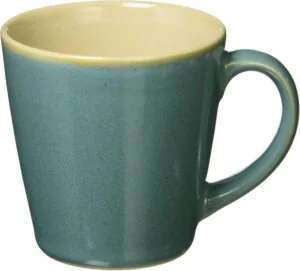 Mashiko mingei sibling →Tsukamoto Mashiko-yaki celadon mug
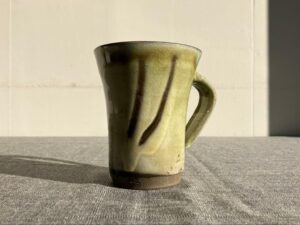 Onta-yaki mingei mug →Yanase Asao Onta-yaki mug
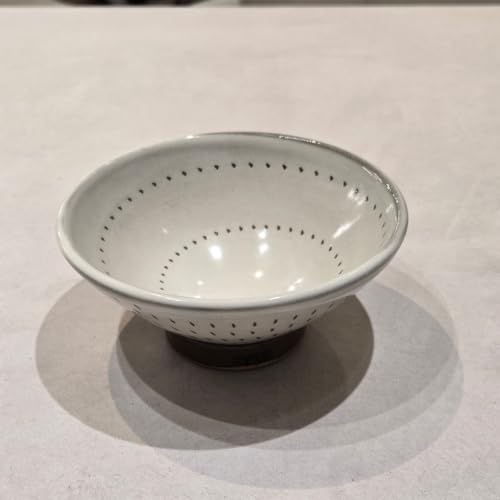 Koishiwara tobikanna bowl →Koishiwara-yaki rice bowl
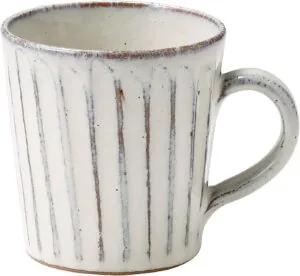 Shigaraki stoneware mug →Marui Shigaraki Hechimon mug
Tamba-yaki yunomi →Tamba Tachikui-yaki yunomi
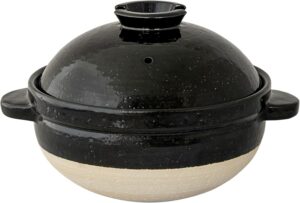 Iga donabe cookpot →Nagatani-en Kamado-san donabe
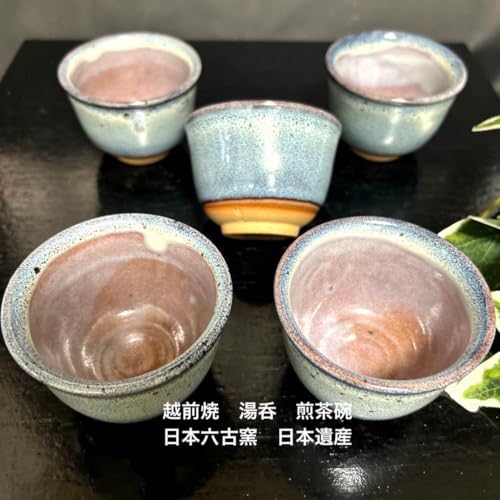 Echizen-yaki yunomi →Echizen-yaki yunomi
📦 Shipping & where to buy from outside Japan
Shipping a Fujina-yaki egg baker from Japan internationally generally goes through Amazon JP Global Store for ceramics that list there, through a proxy service (Buyee, Tenso) for purchases from the Yumachi-gama kiln website, or through a forwarding service from an Izumo-based craft cooperative. Based on typical Global Store handling, international shipping to the US, EU, and Australia is in the rough range of $15–$40 with longer transit and higher cost to other regions. Whether a given piece is currently export-eligible can change, so confirm the “ships to your country” line on the chosen channel before ordering.
If the Global Store does not show your destination, a proxy/forwarding service such as Buyee or Tenso can receive a domestic-Japan order and re-ship it to you. Orders above your country’s import threshold may incur customs duties and local tax on arrival — budget for that separately. This is a non-electrical ceramic item, so there are no voltage or certification concerns.
Buying options
| Store | Item / variant | Price (JPY + USD est.) | Notes |
|---|---|---|---|
| 🇺🇸 Amazon US (search) | Browse Japanese mingei pottery & egg bakers | varies (USD) | Best if you are shopping from the US — Prime shipping, USD pricing, no international customs. Amazon US carries comparable Japanese stoneware and folk-pottery tableware; this exact Yumachi-gama piece ships from Japan (next row). |
| 🇯🇵 Amazon JP Global Store | Yumachi-gama yellow egg baker with lid | — | International shipping from Japan may be available. |
| Maker direct | Yumachi-gama / Fujina-yaki kiln | — | The kiln sells domestically; English ordering and direct international shipping are not assured. Best reached via a proxy service. |
| Proxy services (Buyee / Tenso) | Other Japanese kiln pieces | item price + forwarding fee | Useful when the Global Store does not ship to your country, or for the coffee dripper / yunomi variants. |
Any USD amounts are approximate conversions based on a ¥150/USD reference rate; exchange rates and craft-market prices vary.
What it does well
Weaknesses and things to verify before buying
- Size and capacity vary. Confirm whether the shape suits one egg or two before ordering.
- No confirmed heat/care ratings. Microwave, oven, direct-flame, and dishwasher suitability are unconfirmed in the data. Stoneware egg bakers are generally oven/toaster-oven friendly, but treat that as “verify,” not “assured.”
- Confirm the current total before ordering. Allow for any shipping surcharge.
- Hand-made variation. Each piece differs slightly in glaze pooling, color, and form. That is intrinsic to mingei, but it means the photo is not a pixel-exact preview.
- Ships from Japan. International delivery is slower and adds shipping cost (roughly $15–$40), plus possible customs duty above your country’s threshold.
- Finish may vary. Check the glaze and surface treatment before ordering.
Conclusion — which buyer type are you?
Other ways to approach this purchase
❓ Frequently Asked Questions
What is an egg baker and how do you use it?
An egg baker is a small lidded ceramic dish for cooking a single egg. You crack an egg into it, cover with the lid, and heat it gently — in an oven, toaster oven, or over low heat — for a soft-set egg served in the dish. The thick stoneware walls hold and even out the heat.
Did Bernard Leach really design this?
Per the kiln’s history, the English potter Bernard Leach visited Yumachi-gama during the mid-20th-century mingei movement, alongside Hamada Shōji and Kawai Kanjirō, and personally advised the egg baker’s form and the warm yellow ki-yū glaze. It is fair to describe it as a Leach-advised folk form rather than a piece he made himself.
Does Amazon ship the Yumachi-gama egg baker internationally?
Fujina-yaki egg bakers from Yumachi-gama generally reach international buyers through Amazon JP Global Store for ceramics that list there, or through a proxy service like Buyee or Tenso for purchases from the kiln website, typically for around $15–$40 to the US, EU, and Australia. Export eligibility can change per piece, so confirm the “ships to your country” line on the chosen channel before ordering.
Is it microwave, oven, or dishwasher safe?
Stoneware egg bakers are generally used in an oven or toaster oven. Because microwave, oven, direct-flame, and dishwasher suitability varies by glaze and construction, follow the care guidance for the craft piece before use.
How is Fujina-yaki different from mingei pottery like Mashiko or Onta?
All belong to the broad mingei folk-craft family, but they are different regional traditions. Fujina-yaki is the stoneware tradition of the Izumo area in Shimane, known for its yellow Kimachi-feldspar glaze and the Leach-advised egg baker. Mashiko (Tochigi) and Onta (Ōita) are separate kilns with their own clays, glazes, and forms — see the linked guides above to compare.
How much does it cost?
Affiliate disclosure: jpmono.com may earn a commission on qualifying purchases made through links on this page, at no additional cost to you.