![Kikyoya Kikyo Shingen Bo Kuromitsu-Kinako Karinto Sticks (桔梗信玄棒, individually wrapped box) — Yamanashi’s Kofu-Basin Fried Take on the Shingen Mochi Flavor [2026 Guide for International Readers]](https://jpmono.com/wp-content/uploads/2026/09/kikyoya-shingen-bo-karinto-where-to-buy-2026-featured.jpg)
- What it is: fried wheat-dough sticks (karinto) coated in kuromitsu black-sugar syrup and kinako roasted soybean flour, each stick sealed in its own wrapper inside a box.
- Made in: Ichinomiya, Fuefuki City, Yamanashi — in the Kofu basin, by Kikyoya (桔梗屋), a confectioner working in the prefecture since 1889.
- Price band: everyday regional-souvenir confectionery, not a luxury gift box — check the live listing for the current figure and box count.
- Best for: readers who want the famous Shingen Mochi kinako-and-black-sugar flavor in a form that actually survives an international shipping route.
- Skip if: you specifically want soft fresh mochi, or you avoid wheat or soy — both are present in this product.
- Shipping: shelf-stable at room temperature and sold through Amazon Japan’s Global Store — jump to our pick ↓
Yamanashi’s best-known sweet arrives tied up like a tiny laundry bundle: three lumps of soft mochi buried in roasted soybean flour, knotted inside a square of printed plastic, with a thumb-sized pitcher of black-sugar syrup rattling beside them. That is Kikyo Shingen Mochi (桔梗信玄餅), launched by Kikyoya in 1968, and it is one of the few regional confections in Japan that people outside its home prefecture can identify on sight. It is also a fresh confection with a short life, which makes it almost impossible to send abroad intact.
Kikyo Shingen Bo (桔梗信玄棒) is what happens when a confectioner takes the same flavor architecture and rebuilds it in a format that travels. Instead of pounded rice, strips of wheat dough are fried until they snap; instead of syrup poured from a pitcher at the table, the kuromitsu is worked onto the surface and then dusted with kinako. The taste is recognizably the same idea — the mineral, slightly caramel-edged sweetness of black sugar against the dry toast of soybean flour — but the product is dry, sealed stick by stick, and dated in months rather than days.
Kikyoya has operated in this corner of Yamanashi since 1889, and the Shingen in the name nods to Takeda Shingen (1521–1573), the lord of Kai Province whose castle town sat in the same basin. This guide is written for a reader ordering from outside Japan: what the box actually contains, how the fried version differs from the fresh original, why shelf life is the whole reason we recommend this one, and what to verify on the live listing before you commit.
🔄 Last updated: September 13, 2026
⏱️ Read time: about 11 minutes
🗾 Yamanashi, Chūbu

ℹ️ Live pricing and the exact piece count were not in our snapshot — the linked listing is authoritative, and unconfirmed attributes are marked as such below.
- Who this is for — and who should skip it
- Product overview (from published specs)
- 📍 Where this comes from — place, era, and the craft tradition
- 📌 How does it compare?
- 📦 Shipping & where to buy from outside Japan
- Price snapshot across stores
- What it does well
- Weaknesses and things to verify before buying
- Conclusion — which buyer type are you?
- Other ways to approach this purchase
- 🏆 Editor’s Pick
- ❓ Frequently Asked Questions
Who this is for — and who should skip it
- Want the Shingen Mochi flavor profile — kinako and black sugar — in something that can be shipped internationally without arriving as a paste.
- Prefer crisp, brittle sweets over soft and chewy ones; this is karinto, and the first thing it does is snap.
- Are buying for an office, a classroom, or a household where individually wrapped pieces matter more than presentation as a single dessert.
- Need a plant-based-leaning snack built from wheat flour, sugar, oil, soybean flour, and black sugar, with no dairy or meat in the build.
- Are assembling a Japanese regional-sweets order and want something from Yamanashi rather than the usual Kyoto and Tokyo names.
- Actually want the fresh mochi original. This is a different texture entirely, and no amount of shelf life substitutes for it.
- Avoid wheat or soy. Both are structural to the product, not trace contaminants.
- Dislike fried confectionery — karinto is a fried dough sweet, and the oil is part of the flavor.
- Need a firm allergen or dietary certification. Read the Japanese ingredient panel on the listing yourself rather than relying on any summary, including ours.
- Are shipping to a destination whose customs rules restrict food imports; that is decided at checkout and at the border, not by the seller.
Product overview (from published specs)
The table below separates what is documented about the product line from what has to be read off whichever box is currently listed. Piece counts and best-by dates move with the production run and the gift-size variant, so we deliberately do not print numbers for them.
| Attribute | Detail | Source |
|---|---|---|
| Product | Kikyo Shingen Bo (桔梗信玄棒), kuromitsu-kinako karinto sticks | Maker line |
| Maker | Kikyoya (桔梗屋), founded 1889 (Meiji 22) | Maker direct |
| Origin | Ichinomiya, Fuefuki City, Yamanashi Prefecture — Kofu basin | Maker direct |
| Confection type | Karinto — fried wheat dough, coated after frying | Maker line |
| Coating | Kuromitsu (black-sugar syrup) plus kinako (roasted soybean flour) | Maker line |
| Core ingredients | Wheat flour, sugar, vegetable oil, soybean flour, black sugar / kuromitsu. Wheat and soy are present. Read the on-listing panel for the authoritative statement. | Maker line + listing panel |
| Packaging | Individually wrapped sticks (個包装) inside a paper box | Maker line |
| Piece count | Varies by box — around ten pieces at the small end, more in gift sizes. Unconfirmed — read the exact count on the live listing. | Listing |
| Storage | Room temperature; no refrigeration required | Maker line |
| Best-by | Measured in months from production, not days. Check the date printed on the current listing before ordering. | Listing |
| Reference ASIN | B06XCW4DXX (Amazon JP Global Store) | Sourced listing |
| Price | Not captured in our snapshot — see the live listing. We do not print a figure we cannot verify. | Listing |
“Dryness is not a compromise here. It is the entire reason a Yamanashi sweet can reach a kitchen in Manchester or Melbourne still tasting the way its maker intended.”
📖 Glossary — the Japanese terms used in this guide
- karinto (かりんとう) — a class of Japanese fried-dough confection. Wheat dough is cut, fried, and then coated in a sugar glaze. Brittle rather than chewy.
- kuromitsu (黒蜜) — “black honey.” A syrup made from unrefined or partly refined black sugar. Compared with refined white sugar it carries a mineral, faintly bitter, caramel-edged depth rather than a flat sweetness.
- kinako (きな粉) — roasted soybean flour. Dry, pale tan, and powdery, with a toasted nutty aroma. Traditionally paired with black-sugar syrup.
- mochi (餅) — glutinous rice pounded into a soft elastic mass. The basis of the original Shingen Mochi, and absent from the karinto version.
- kobukuro / kobōsō (個包装) — “individual wrapping.” Each piece sealed separately inside the outer box; standard practice for Japanese gift confectionery and the reason a box can be opened gradually.
- abekawa mochi (安倍川餅) — a kinako-and-sugar mochi from the wider Kai and Suruga corridor; the regional lineage that the kinako-plus-black-syrup pairing belongs to.
- Kai Province (甲斐国) — the pre-modern province corresponding to present-day Yamanashi Prefecture.
- meigashi / omiyage-gashi — regional souvenir confectionery, bought where it is made and carried home as a gift. Shingen Mochi is one of the most recognized examples in Japan.
📍 Where this comes from — place, era, and the craft tradition

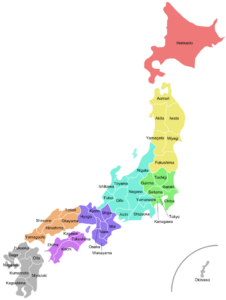
Yamanashi is one of the few Japanese prefectures with no coastline. The Kofu basin sits at its center: a ringed intermontane basin, flat in the middle and walled by mountains on every side, which is an unusual shape for a populated Japanese landscape. Most of the country’s craft and food industries grew up on rivers running to the sea. This one grew up inside a bowl.
That geography matters for a sweet. A basin floor with mountain walls produces a wide temperature swing between day and night and between seasons, which is the same condition that made the area fruit country — Fuefuki City, where Kikyoya is headquartered, sits in the heart of it. It also meant that for most of pre-modern history, anything made here had to leave by road over a pass, not by ship. Confectionery designed in such a place tends to be built to survive the journey.
-
1521 — Takeda Shingen is born; he will govern Kai Province from a castle town on the floor of the Kofu basin. -
1573 — Shingen dies. His name stays attached to the region far longer than his clan’s rule does. -
Edo period — The kinako-and-black-syrup pairing is established across the wider Kai and Suruga corridor; abekawa mochi is its best-known expression. -
1889 (Meiji 22) — Kikyoya (桔梗屋) is founded in Yamanashi. -
1968 (Showa 43) — Kikyo Shingen Mochi launches: kinako-dusted mochi with a pitcher of kuromitsu, knotted in a printed plastic furoshiki sheet. -
Later — Kikyo Shingen Bo appears as the karinto derivative of that flavor: fried, coated, individually wrapped, shelf-stable. The launch year is not documented in our sources. -
2026 — Kikyoya still operates from Ichinomiya, Fuefuki City, with the Shingen line as its signature.
The Shingen name deserves an honest footnote, because international readers meet it constantly in Yamanashi and are rarely told what it is. Takeda Shingen was a real and consequential sixteenth-century lord, and the Kofu basin really was the seat of his power. But the link between him and this particular sweet runs through a popular story — that cut mochi served as field rations for his troops — and that story is brand lore and regional storytelling, not documented military history.
Presenting it as anything firmer would be dishonest. Presenting it as nothing at all would miss the point, though, because the naming is itself a piece of modern regional identity: a Meiji-era confectioner reaching back four centuries to attach a sweet to the one figure everyone associates with the basin. That is how Japanese regional confectionery has worked for a long time.
What is documented is the continuity of the maker. Kikyoya has been a Yamanashi confectioner since 1889, and the company is still headquartered in Ichinomiya, Fuefuki City — the same basin, well over a century on.
The Shingen Bo also sits inside a real culinary lineage rather than a marketing one. Kinako against a dark, unrefined sugar syrup is a pairing the Kai and Suruga corridor has used for generations; abekawa mochi is the version most Japanese people would name first. Kikyoya’s two products are two format decisions applied to that inherited pairing — one soft and immediate, one dry and portable.
The eating experience follows from that. The stick breaks with an audible snap, the fried wheat interior is dense rather than airy, and then the kinako arrives as a dry powder that coats the mouth a beat behind the sweetness. It is a two-stage texture, and the powder is messy — this is a sweet that leaves fingerprints on a keyboard.
- 🌡️ Storage: room temperature, away from direct sun and humidity. No refrigeration is required, and chilling is not recommended for a fried, coated confection.
- 📦 Opened box: the individual wrappers are the point — reseal the outer box and take pieces as needed rather than decanting the whole box into a jar.
- 📅 Best-by: dated in months from production rather than days. Read the printed date on the listing and factor in your shipping transit time.
- 🍵 Serving: a dry, sweet, powdery confection pairs conventionally with unsweetened Japanese green tea — sencha, bancha, or a roasted twig tea — which cuts the coating.
- 🧻 Practical note: the kinako dust travels. Eat over a plate or keep the wrapper cupped under the stick.
📌 How does it compare?
A dry, sweet, powdery confection is usually served against something unsweetened. These are our guides to Japanese teas and to another individually wrapped, shelf-stable regional sweet that ships on the same logic.
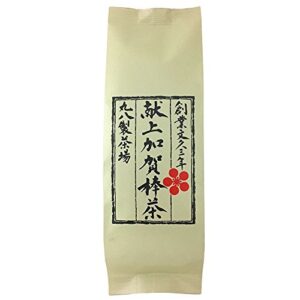
 Maruhachi Seichajo Kenjo Kaga Bocha (献上加賀棒茶, sealed bag/tin)
 Hoshino Seichaen Yame Matcha (星野製茶園 八女抹茶, sealed 30–40g tin)
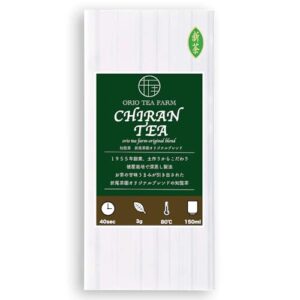
 Chiran-cha Deep-Steamed Sencha (知覧茶 深蒸し煎茶, sealed 100g bag)
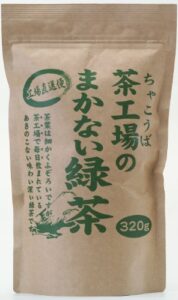
 Ooigawa Chaen Fukamushi Sencha (大井川茶園 深蒸し煎茶, sealed foil bag)
🍵Kenichi Shizen Noen Yamato-cha Sencha (健一自然農園 大和茶, sealed)
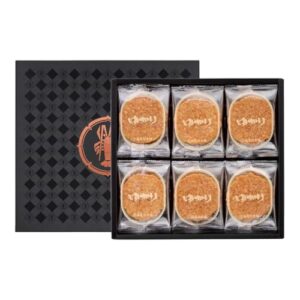
 Bankaku Sohonpo Yukari Ebi Senbei (坂角総本舗 ゆかり, individually sealed)
📦 Shipping & where to buy from outside Japan
This is a shelf-stable food item kept at room temperature with a printed best-by date, which is the profile that moves best through Amazon Japan’s Global Store. It is sold through amazon.co.jp, and AmazonGlobal International Shipping eligibility is confirmed at checkout for your specific destination — that check is per-country and per-item, so do it before you plan around the order.
Amazon Japan ships to 65+ countries, including Canada, the UK, and Australia, with import fees estimated and usually collected at checkout rather than billed later by the carrier. Shipping costs for a small confectionery box typically land in the $15–$40 range to North America, Europe, and Oceania, which is the honest catch with this category: the shipping can approach or exceed the value of the box itself unless you consolidate it with other items in one order.
- Confirm your country appears in the AmazonGlobal eligibility list at checkout — food is the category most often restricted.
- Order in small personal quantities. Commercial-looking volumes of food invite customs questions in most destinations.
- Read the ingredient panel on the listing. Wheat and soy are present; national labeling rules differ from Japan’s.
- Check the printed best-by date against your expected transit time, which can run one to three weeks depending on service level.
- Countries with strict biosecurity regimes — Australia and New Zealand in particular — apply their own rules to imported food regardless of what the seller ships.
Price snapshot across stores
| Store | Item / Variant | Price | Notes |
|---|---|---|---|
| 🇺🇸 Amazon.com (US) — search | Browse Japanese karinto, kinako, and black-sugar sweets | varies (USD) | Best if you are shopping from the US — Prime shipping, USD pricing, no international customs step. Amazon US carries Japanese karinto, kinako-coated snacks, and mochi-flavored confectionery from several importers, useful for comparing formats and price tiers. Kikyoya’s own box is sourced from Japan (next row). |
| 🇯🇵 Amazon JP Global Store | Kikyo Shingen Bo (桔梗信玄棒), individually wrapped box — ASIN B06XCW4DXX | See live listing (JPY). Not captured in our snapshot; we do not print unverified figures. | Ships internationally from Japan to 65+ countries — including Canada, the UK, and Australia — with import fees estimated at checkout. This is where the exact item in this guide is sourced. Confirm the box count, the 個包装 individual wrapping, and the best-by date on the page. |
| Maker direct (Kikyoya) | Full Shingen line, including seasonal flavors and gift-box sizes | Domestic JPY pricing | The widest selection and the clearest product information, but Japanese-language ordering and, in most cases, domestic-only delivery. Practical mainly if you have a forwarding address in Japan. |
| Proxy services (Buyee / Tenso) | Any Japanese retailer’s listing, forwarded abroad | Item price + service fee + international shipping | The fallback when AmazonGlobal will not ship food to your country. Note that a forwarder adds a warehouse dwell step, which eats into the best-by window on a dated food product — verify that the service accepts foodstuffs for your destination first. |
Prices and stock fluctuate. JPY is the authoritative currency for the sourced listing; any USD figure elsewhere in this article would be an approximation at a ¥150/USD baseline, and no verified JPY price for this item was available at the time of writing. Follow the links above for current data.
What it does well
Weaknesses and things to verify before buying
- It is not the famous one. If your reference point is the mochi in the knotted plastic wrapper, this will read as a different product wearing the same flavor. Manage that expectation before you order, especially if it is a gift for someone who has had the original.
- The piece count is not fixed. Box sizes range from around ten pieces up to gift formats. Read the count on the listing you are actually buying — do not assume from a photo or from this article.
- Wheat and soy are structural. Both are core to the product, not incidental. Anyone avoiding either should stop here, and anyone buying for someone else should read the on-listing Japanese ingredient panel rather than trusting a summary.
- The best-by date is the whole calculation. Months is not forever. Check the printed date against your shipping transit time, which can run one to three weeks, and against how fast a box of individually wrapped sweets will actually get eaten.
- Shipping economics are unflattering for a single box. International shipping on a small confectionery item can approach the value of the item. Consolidating several products into one order is the only way to make the math reasonable.
- Fried and coated means fragile in a different way. Brittle sticks can arrive broken inside their wrappers. The flavor survives; the presentation may not, which is worth knowing if this is a formal gift.
- Food import rules are yours to check. AmazonGlobal eligibility, national labeling requirements, and biosecurity rules — Australia and New Zealand especially — are decided at checkout and at your border, not by the seller.
- No verified price was available for this guide. Our snapshot returned no live pricing, so every figure has to come from the listing. Treat any price you see quoted elsewhere with the same caution.
Conclusion — which buyer type are you?
Other ways to approach this purchase
🏆 Editor’s Pick
❓ Frequently Asked Questions
Is Kikyo Shingen Bo the same thing as Kikyo Shingen Mochi?
No. They share a maker and a flavor idea but not a format. Shingen Mochi, launched in 1968, is soft pounded-rice mochi dusted with kinako and served with a small pitcher of kuromitsu — a fresh confection with a short life. Shingen Bo is karinto: wheat dough fried until brittle, then coated with the same kuromitsu and kinako. Dry instead of soft, and dated in months instead of days.
Why recommend the fried version instead of the famous mochi one?
Shelf life, and nothing else. The fresh mochi is the more celebrated product, but it is short-dated and does not survive an international shipping route in the condition its maker intended. The karinto version is shelf-stable at room temperature with a best-by measured in months, which is the profile that actually arrives intact. If you can buy the mochi in Japan, buy the mochi in Japan.
How many sticks come in a box?
It varies by box. Counts start at around ten pieces and run higher in gift sizes, so the only reliable number is the one printed on the listing you are buying. We deliberately do not state a count here, because a figure quoted from memory would be wrong as soon as the seller switches box size.
What is in it, and does it contain allergens?
The build is simple: wheat flour, sugar, vegetable oil, kinako soybean flour, and black sugar or kuromitsu, with no dairy or meat. That means wheat and soy are both present and structural. Don’t rely on this summary for a dietary decision — read the Japanese ingredient panel shown on the listing, which is the authoritative statement for the specific box you are ordering.
Can it be shipped to my country?
Usually, but confirm it at checkout. The item is shelf-stable and sold through Amazon Japan’s Global Store, which serves 65+ countries including Canada, the UK, and Australia, with import fees estimated at checkout. Food is the category most often restricted per-destination, so run the eligibility check for your address before planning around the order, and keep quantities to a small personal amount.
What does it taste like?
The stick snaps rather than yields, and the fried wheat interior is dense instead of airy. The sweetness comes from kuromitsu, which — because black sugar keeps its molasses fraction — reads as caramel-edged and faintly mineral rather than flatly sweet. The kinako arrives a beat later as a dry, toasted powder. It is also messy; eat it over a plate.
Is the connection to Takeda Shingen historically documented?
Treat it as brand lore. Takeda Shingen (1521–1573) was a real lord of Kai Province, and the Kofu basin genuinely was the seat of his power — but the link to this sweet runs through a popular story that cut mochi served as field rations for his troops. That is regional storytelling rather than documented military history, and the naming itself dates to the modern product, not the sixteenth century.
jpmono.com is curated by a Japan-based editorial team (working out of Toyama in the Hokuriku region and Nara in Kansai) and is independent. We do not take payment from the makers we feature; income comes from affiliate links. We do not physically test every product — we read makers’ specifications and source listings, and we say plainly when a fact is unconfirmed.
✍️ This article was prepared with AI assistance and reviewed by a human editor before publication. Product facts are drawn from the maker’s published information and the source listing; unverified attributes are marked as unconfirmed rather than filled in.
Affiliate disclosure: jpmono.com may earn a commission on qualifying purchases made through links on this page, at no additional cost to you.