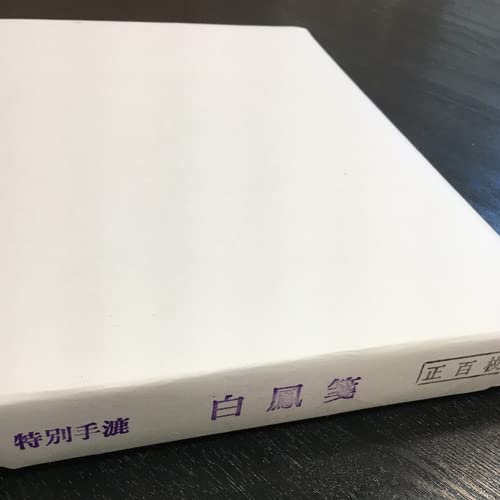
- What it is: a 100-sheet lot of hand-pulled Koshu gasenshi art paper, made in the Nishijima papermaking district and listed in the half-size format.
- Made in: Nishijima, Yamanashi Prefecture — the old Kai Province, in the Fuji River basin, where kozo papermaking depends on clean, cold river water.
- Price band: upper-mid for handmade paper — ¥14,800 for 100 sheets (≈ $99 USD as of October 22, 2026), about ¥148 a sheet.
- Best for: calligraphers and ink painters who already work on half-size sheets and want one bulk lot rather than ten small packs.
- Skip if: you need the fiber blend and exact dimensions documented before you commit to 100 sheets.
- Shipping: ships internationally from Amazon Japan — jump to our pick ↓
A sheet of Nishijima paper begins as water. The Fuji River system drains the mountains of western Yamanashi, and the papermakers of the Nishijima district have built their work around that supply: kozo fiber, a vat, a bamboo screen, and a pair of hands that lift the pulp and let it settle evenly across the mesh.
The sheet this guide follows is a working paper rather than a display piece. It is 白鳳箋 (Hakuhōsen), a Koshu gasenshi art paper in the half-size (hansetsu) format, sold as a 100-sheet lot for ¥14,800 (≈ $99 USD as of October 22, 2026). That is the paper that sits on a calligrapher’s desk, gets cut down for a study, and disappears sheet by sheet.
What follows is written for readers outside Japan: what the listing actually states, what it leaves unstated, how four purchase routes compare on price, and which buyer profile each route suits. Prices in USD are approximate and depend on the current exchange rate.
🔄 Updated
⏱️ ≈9 min read

- Who this is for — and who should skip it
- Product overview (from published specs)
- 📍 Where this comes from — Nishijima, Kai Province, and the water
- Price snapshot across stores
- What it does well
- Weaknesses and things to verify before buying
- Conclusion — which buyer type are you?
- Other ways to approach this purchase
- 🏆 Editor’s Pick
- 📦 Shipping & where to buy from outside Japan
- ❓ Frequently Asked Questions
Who this is for — and who should skip it
- already write or paint on half-size sheets and know the format suits your work.
- want one bulk lot to sit in a studio, a classroom, or a shared workshop.
- are assembling a Japanese stationery set and want paper from the same prefecture as your inkstone or seal.
- value paper with visible fiber and a slightly irregular pull over machine-perfect edges.
- are comfortable verifying sheet size and fiber content with the seller before ordering.
- need the identical sheet reorderable on a schedule — production here is small-scale and stock moves.
- require a published fiber blend, weight in grams per square meter, or exact dimensions before buying.
- are printing on a machine-fed press that needs uniform sheet thickness and exact registration.
- want to test one sheet before committing to a hundred.
- are buying on price alone — this is roughly ¥148 a sheet before international shipping.
Product overview (from published specs)
ℹ️ Only the Amazon JP listing snapshot was available for this article; live pricing and stock may have shifted since October 22, 2026, and unconfirmed attributes are marked below.
Nishijima Washi
手漉き和紙で有名な山梨県西嶋産甲州画仙紙。 白鳳箋(半切)【100枚入】
残り1点 ご注文はお早めに · Sold by 毛筆のことなら 筆庵 · ASIN B0D8KTD982
Price and availability as of 2026-10-22 09:17 JST. The Amazon listing at the time of purchase is authoritative. jpmono.com earns a commission on qualifying purchases at no extra cost to you.
| Item | Detail as listed |
|---|---|
| Product name | 白鳳箋 (Hakuhōsen), 甲州画仙紙 — Koshu gasenshi |
| Sheet format | 半切 (hansetsu) — the half-size sheet used for calligraphy; dimensions in centimeters are not stated in the listing |
| Quantity | 100 sheets per lot — the only quantity offered in this listing |
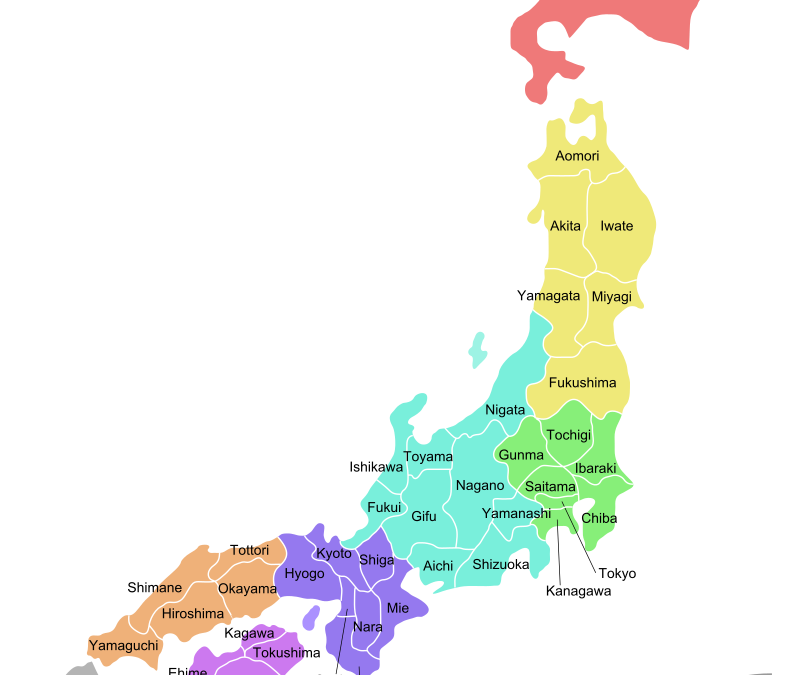
| Origin | Nishijima district, Yamanashi Prefecture — the old Kai Province, in the Fuji River basin |
| Making method | 手漉き — hand-pulled washi, as stated in the listing title |
| Fiber content | Not stated — unconfirmed |
| Weight (g/m²) | Not stated — unconfirmed |
| Workshop / maker | Not named in the listing; the sheet is identified by district rather than by a mill |
| Seller | 毛筆のことなら 筆庵 (Fudean) — a shop specialising in writing brushes |
| Condition | New |
| Price | ¥14,800 for 100 sheets (≈ $99 USD), about ¥148 a sheet — as of 2026-10-22; verify on the listing |
| Availability | 残り1点 — one lot remaining at the time of the snapshot |
📖 Glossary — the paper terms in this guide
washi (和紙) — Japanese paper made from plant fiber, most often kozo, mitsumata, or gampi. The long fibers are what let a thin sheet hold together.
kozo (楮) — paper mulberry. Its bast fibers are long and strong, and they are the backbone of most hand-pulled Japanese paper.
gasenshi (画仙紙) — a category of art paper made for ink painting and calligraphy, usually produced in large sheets and sold by the ream or the hundred.
hansetsu (半切) — “half cut,” a sheet half the size of a full one; it is a standard format for calligraphy and for mounting works vertically.
nagashi-zuki (流し漉き) — the flowing method of sheet forming, in which pulp is rocked across the screen so the fibers interlock in many directions.
Kai Province (甲斐国) — the pre-modern name for Yamanashi. Kōshū (甲州) is the other provincial name, and it is the one local goods still use — hence Koshu gasenshi and Koshu Inden.
📍 Where this comes from — Nishijima, Kai Province, and the water
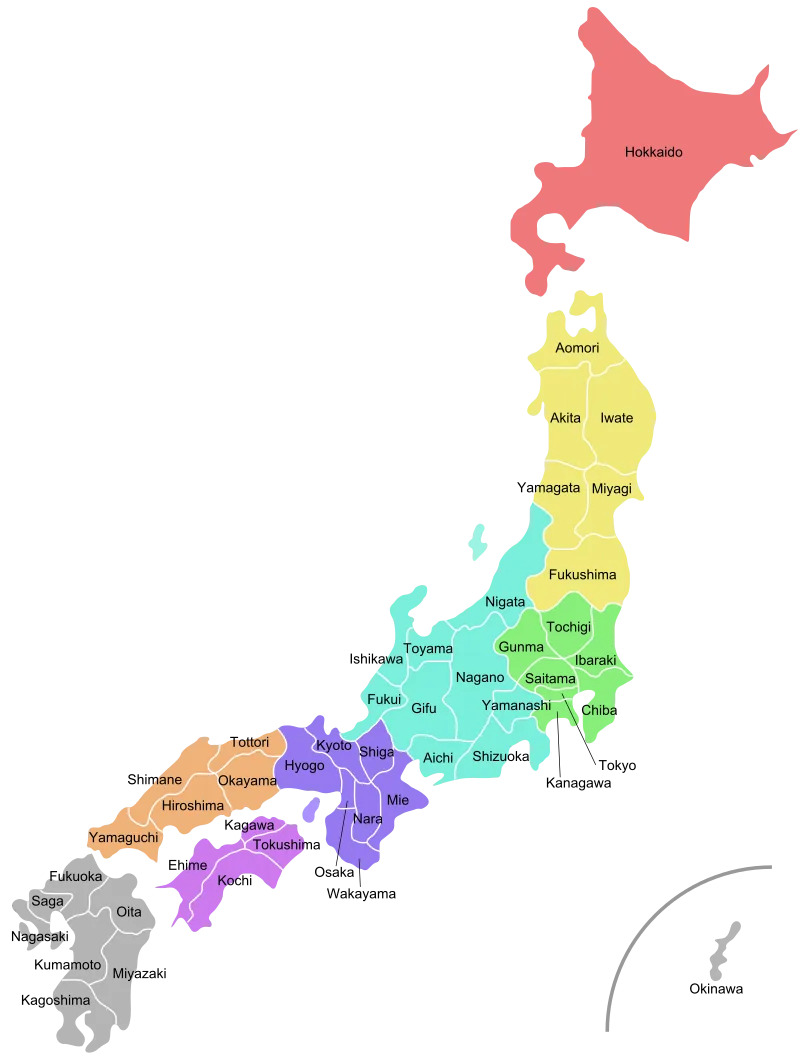
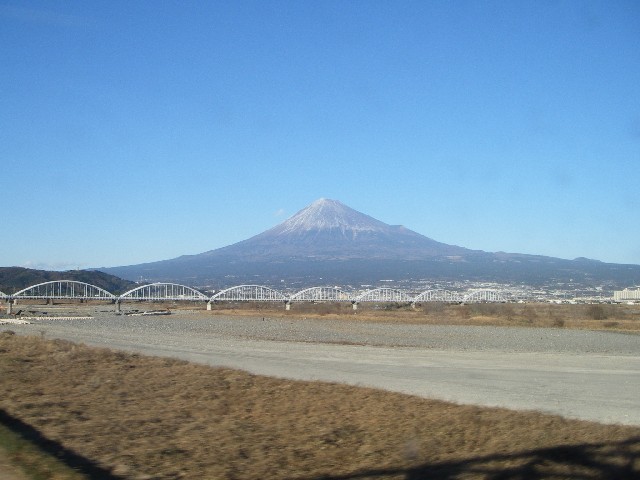
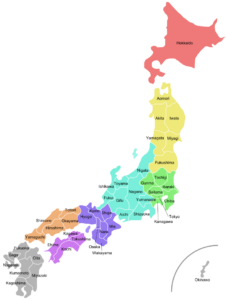
Yamanashi sits in the Chūbu region, west of Tokyo and without a coastline. Mountains take up most of the prefecture, and the valleys between them carry the water that makes paper possible. The Fuji River system runs through the western part of the prefecture on its way south, gathering snowmelt and rain from the surrounding ranges.
That water is not scenery. In kozo papermaking it is a working material: it carries the fiber, it dilutes the pulp to the right consistency, and it rinses the finished sheets. The Nishijima district grew up as a papermaking place inside that river basin, and the local account of the craft begins with the quality of the water rather than with a famous workshop.
Yamanashi was Kai Province until the modern era, and its political center was Kofu. In the Sengoku period the Takeda clan held the province and Kofu grew as their castle town, the seat from which the province was governed and supplied. That domain history still frames local craft identity: paper, inkstone, and seal are presented as products of one province with one continuous story.
-
16th century — the Takeda clan held Kai, and Kofu developed as its castle town. -
1603–1868 — in the Edo period the Koshu Kaido carried the province’s goods, paper among them, toward Edo. -
1871 — under the Meiji prefectoral system the old Kai Province is reorganized as Yamanashi Prefecture. -
20th century — Nishijima’s sheets moved through specialist paper shops rather than mass retail, a pattern that holds today. -
2026 — hand-pulled sheets from the district are still sold in hundred-sheet lots like the one in this guide.

What “still being made here” means in practice is modest and specific. Production is small-scale: paper is pulled by hand, in runs that a workshop can manage, and the stock that reaches buyers is whatever that workshop has finished. Sheet sizes vary from workshop to workshop, and a size that exists this year is not guaranteed to exist next year.
The distribution follows the same logic. Nishijima paper is usually sold through specialist paper and stationery shops rather than general retail, and a shop’s listing is often the only place a given sheet appears. That is why a 100-sheet lot like this one can read as both ordinary and hard to replace: ordinary in the studio, hard to source once it is gone.

Around the paper, Yamanashi keeps a small cluster of related stationery crafts. Amehata inkstones and Koshu seal carving belong to the same prefectural story, and they pair naturally with local sheets: the stone grinds the ink, the knife cuts the seal, and the paper receives both. For a buyer assembling a desk rather than a single object, that is the useful frame.
“In this valley the water is not scenery. It is the first material, and the sheet is only as good as the river that carried the fiber.”

The Koshu Kaido is the reason the province’s paper had somewhere to go. The road ran from Kai down to Edo, and paper traveled it the way any fragile, light, valuable goods did: in bundles, protected from rain, sold on arrival to dealers who knew what they were handling. The corridor is a road today rather than a trade route, but the direction of the trade has not really changed.
Other Japanese paper, ink, and stationery objects we have written about — useful if you are building a desk rather than buying one sheet.
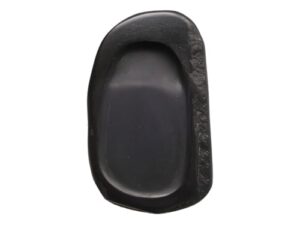 Amehata inkstoneThe stone that grinds the ink this paper is made to receive.
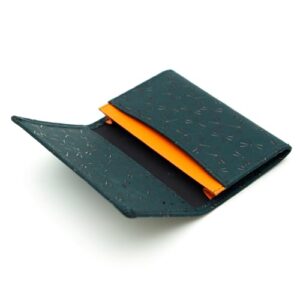 Koshu Inden card caseThe province’s lacquered-leather tradition, in a form you can carry.
 Koshu seal carving knifeFor the name seal that finishes a calligraphy sheet.Uchiyama-gami washiA snow-bleached sheet from a different regional tradition, worth comparing.
 Mino washi origami paperA lighter, smaller-format way to work with Japanese paper.
Price snapshot across stores
| Store | Item / variant | Price | Notes |
|---|---|---|---|
| 🇺🇸 Amazon.com (US) | Browse Japanese washi paper and calligraphy paper | varies (USD) | The easier route if you are shopping from the US: USD pricing, Prime shipping where available, no import paperwork. Stock in Japanese paper varies by seller; this specific Nishijima lot ships from Japan (next row). |
| 🇯🇵 Amazon JP Global Store | 白鳳箋 (Hakuhōsen), 半切, 100 sheets — the lot in this guide | ¥14,800 (≈ $99 USD) | Ships internationally from Japan to 65+ countries — including Canada, the UK and Australia — with import fees estimated at checkout. Snapshot 2026-10-22; one lot left. |
| Maker direct | Workshop sales, sheet sizes vary | Unconfirmed — check with the workshop | Production is small-scale and usually reaches buyers through specialist paper shops. No workshop is named on this listing, so there is no direct order page to point to. |
| Proxy services (Buyee / Tenso) | Any Japanese paper shop that declines overseas orders | Item price + proxy fee + international shipping | The route for a specific sheet size you have found at a domestic shop. Consolidating several paper orders in one parcel is where the fee makes sense. |
Read the table as four routes rather than four prices. The Japan listing answers “what does this exact lot cost” — ¥14,800, one lot left. The US search answers “what is available to me this week with local shipping.” The proxy route answers “how do I reach a shop that will not post abroad.” For a 100-sheet lot of hand-pulled paper, the shipping weight is the variable that decides the total, not the sticker price.
What it does well
- ✍️ Everyday use: calligraphy, art work, and wrapping — the three uses the district’s paper is known for.
- ✂️ Cutting: cut down a sheet with a sharp blade against a straight edge; tearing a hand-pulled sheet leaves a ragged edge that will not square up.
- 🌂 Storage: keep unused sheets flat and dry, away from damp and direct sun, so the paper stays flat for the next session.
- 📦 Replacing it: buy through the same shop if the sheet works for you, since stock and sheet sizes shift from workshop to workshop.
Weaknesses and things to verify before buying
- A hundred sheets or nothing. This listing offers a single lot. If you want to test the surface first, you will have to find a smaller pack somewhere else.
- Three specs are missing. Fiber proportions, paper weight, and centimeter dimensions are not in the listing. Ask the seller before ordering if any of those decide the purchase for you.
- No named workshop. The sheet is identified by district, not by a mill, so you cannot check a specific maker’s reputation or buy the same sheet direct.
- Stock is genuinely thin. One lot remained at the snapshot, and small-scale production means restocking is not on a predictable schedule.
- The real cost is per sheet plus freight. ¥148 a sheet is in line with hand-pulled paper; freight on a paper parcel is a separate cost, and import fees may be added at checkout.
- Machine work will fight the paper. Hand-pulled sheets vary in thickness and edge, which is a virtue in brushwork and a problem for tight-registration printing or die cutting.
- What are the exact dimensions of one half-size sheet, in centimeters?
- What is the fiber blend, and is the sheet sized for ink wash?
- Can you confirm the sheets ship flat, and how many lots remain?
Conclusion — which buyer type are you?
Other ways to approach this purchase
🏆 Editor’s Pick
📦 Shipping & where to buy from outside Japan
Amazon Japan’s Global Store ships this kind of stationery internationally to 65+ countries, including Canada, the UK, and Australia. Shipping on a paper parcel typically falls in the $15–40 range depending on destination and speed, and the checkout estimates import fees for most destinations.
- Route: Amazon JP Global Store, international shipping to 65+ countries.
- Markets named: Canada, the UK, and Australia all fall inside the standard destination list.
- Freight: roughly $15–40 depending on destination and speed.
- Import fees: estimated at checkout for most destinations; the local duty threshold still applies.
- If it will not ship: a proxy service such as Buyee or Tenso forwards the parcel for a fee.
Paper is light but bulky, so the parcel is usually charged on volume rather than weight. Two practical consequences: consolidating a paper order with an inkstone or a seal rarely adds much freight, and a single lot of paper is one of the least efficient parcels to ship, because you pay for volume rather than weight. If you are ordering from Canada, the UK, or Australia, check the local threshold for duties before checkout rather than after the parcel lands.
Where Amazon Japan will not ship, or where the specific size you want sits in a domestic-only shop, proxy services such as Buyee or Tenso will buy on your behalf and forward the parcel. That adds a fee and a second shipping leg, so it makes sense for a sheet you cannot get any other way. The alternative is a specialist paper shop abroad that already imports Japanese washi in small quantities — worth searching before you pay for a proxy.
❓ Frequently Asked Questions
Is this paper suitable for calligraphy and ink painting?
The listing describes it as Koshu gasenshi, a hand-pulled art paper, and the district’s paper is used for calligraphy, art work, and wrapping. For heavy ink washes, test a single sheet first, because the listing does not state the sizing or the fiber blend.
How many sheets are in the lot, and what size are they?
The lot is 100 sheets in the hansetsu (half-size) format, the standard half sheet used for calligraphy. The listing does not give dimensions in centimeters, so confirm the exact measurements with the seller before ordering.
Is the paper 100% kozo?
The listing does not state the fiber blend, so a 100% kozo content is unconfirmed. The district is known for kozo papermaking, but this particular sheet is described only as hand-pulled washi and Koshu gasenshi.
Who sells it, and does it ship outside Japan?
It is sold on Amazon Japan by the brush shop 筆庵 (Fudean) and ships internationally to 65+ countries, including Canada, the UK, and Australia, with import fees estimated at checkout.
What does the paper cost?
The listing shows ¥14,800 for 100 sheets, about $99 USD at roughly ¥150 to the dollar, as of October 22, 2026. Prices and stock change, so check the live listing.
Can I buy fewer than 100 sheets?
This listing is a single 100-sheet lot. Smaller packs sometimes appear through specialist paper shops in Japan, but availability varies by workshop and is not guaranteed.
How should I store unused sheets?
Keep unused sheets flat, dry, and out of direct sun, and cut them with a sharp blade against a straight edge rather than tearing them.
jpmono.com is curated by a Japan-based editorial team working out of Toyama in the Hokuriku region and Nara in Kansai, and is independent. We do not take payment from the makers we feature; income comes from affiliate links. We read maker specifications and source listings rather than testing every object by hand.
This article was prepared with AI-assisted drafting and edited by our editorial team; specifications, prices, and availability were checked against the retail listing at the time of writing.
Affiliate disclosure: jpmono.com may earn a commission on qualifying purchases made through links on this page, at no additional cost to you.