![Kishu Hand-Forged Deba Knife: Wakayama’s Kii Peninsula Fish Blade [2026]](https://jpmono.com/wp-content/uploads/2026/05/japan-map-regions-and-prefectures-800x1050.png)
A deba (出刃包丁, “deba-bocho”) is the heavy, single-bevel Japanese knife built for one job above all others: breaking down a whole fish. Its thick spine and triangular profile let the cook drive through a head, snap a backbone, and lift clean fillets where a thin santoku or a long, delicate yanagiba would bind or chip. The version this guide is built around is a deba in the Kishu tradition of Wakayama Prefecture — the old Kii Province on the Pacific edge of Kansai.
Wakayama is not a marquee blade name in the way Sakai or Echizen are, and we treat that honestly throughout. What gives a Kishu deba real footing is the place itself: the Saiga (Saika) gunsmith corps of medieval Kii were among Japan’s finest ironworkers, the Negoro-ji temple complex sustained a metalworking economy before Hideyoshi razed it in 1585, and the Kuroshio fishing ports of the Kii coast — Katsuura, today Japan’s leading fresh-tuna landing port, and the historic whaling town of Taiji — gave a heavy fish-breaking blade genuine local demand.
This guide is written for an international reader weighing whether a Kishu-tradition deba is worth importing and how to choose one. We cover how a single-bevel carbon deba behaves, the care it demands, the regional buying paths, and the attributes that matter before you commit.
📅 Published: June 13, 2026
🔄 Updated: June 13, 2026
⏱️ Read time: ~10 min
- Who this is for — and who should skip it
- Product overview (from published specs)
- Where to buy
- What it does well
- Weaknesses and things to verify before buying
- Conclusion — which buyer type are you?
- Other ways to approach this purchase
- 📍 Where this comes from — Kishu iron, the Kii coast, and the deba
- ❓ Frequently Asked Questions
Who this is for — and who should skip it
- Buy or catch whole fish and want to fillet, behead, and break them down yourself
- Understand a deba is a single-purpose blade and already own a knife for vegetables and meat
- Are willing to hand-wash, dry, and lightly oil a carbon-steel blade after each use
- Want a knife rooted in a real regional ironworking lineage rather than a generic import
- Are comfortable maintaining a single-bevel edge on a whetstone, or willing to learn
- Mostly cook fillets or pre-cut fish and never break down a whole one
- Want a single do-everything knife — a deba is poor at slicing vegetables and bread
- Need it dishwasher-safe or rust-free with no maintenance (carbon steel will patina and can rust)
- Are left-handed and need a left-ground bevel — most single-bevel deba are right-handed
- Want a guaranteed exact specification sheet up front — the available details are limited.
Product overview (from published specs)
| Attribute | Detail | Source |
|---|---|---|
| Blade type | Single-bevel (片刃, kataba) — ground on one face for fish work | Category norm |
| Steel | Carbon steel (traditionally shirogami / aogami) — some deba in this size are stainless | Spec hint / verify |
| Handle | Traditionally ho (magnolia) wood with a buffalo-horn collar | Category norm / verify |
| Blade length | ≈ 165 mm — a mid-size deba for small to medium fish | Spec hint |
| Weight | — | — |
| Smith / workshop | Unconfirmed | — |
| Origin | Wakayama Prefecture (former Kii Province), Kansai, Japan | Spec data_notes |
| Price | — | — |
Kishu deba is best read as a regionally grounded craft category rather than a registered METI brand. Steel type, handle, smith, dimensions, and price vary by maker, so confirm those details with the workshop or specialist knife seller. Single-bevel carbon deba require more care than stainless ones.
📖 Glossary — key terms
- deba (出刃包丁) — a thick, heavy single-bevel knife for breaking down whole fish; the spine takes the impact a thin knife cannot.
- kataba (片刃) — “single-bevel”; ground on one face only, the traditional grind for deba and yanagiba, usually right-handed.
- shirogami / aogami (白紙 / 青紙) — “white” and “blue” paper steels, high-carbon blade steels prized for keen edges; they patina and can rust without care.
- ho (朴) — Japanese magnolia, the light, water-tolerant wood used for most wa-handle knives.
- Kishu (紀州) — the historical name for Kii Province, today’s Wakayama Prefecture.
- Saiga / Saika (雑賀) — the medieval gunsmith and mercenary corps of Kii, renowned ironworkers before 1585.
- gosanke (御三家) — the three senior branches of the Tokugawa house; the Kii branch was one of them.
- Kuroshio (黒潮) — the warm “Black Current” that runs past the Kii coast and feeds its rich fisheries.
Related jpmono guides for cross-shopping — other Kishu/Wakayama craft from the same province, and the deba’s neighbours in the Japanese knife rack (other fish knives, slicers, and all-rounders).
 🛁Kishu Hinoki Bath BucketSame province, Kii cypress →
 🧣Kishu Nel Cotton MufflerWakayama textile craft →
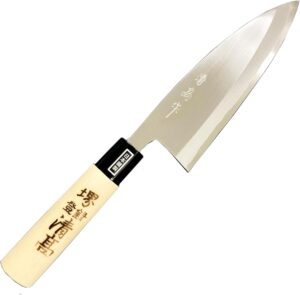 🐟Sakai Deba KnifeThe marquee deba region →
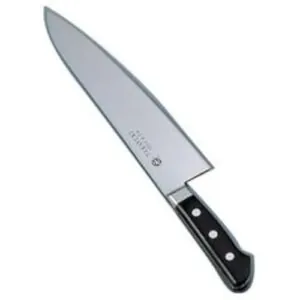 🔪Sakai Takayuki GyutoDouble-bevel chef’s knife →
 🎣Saga Hizen AjikiriSmall fish knife, forged lineage →
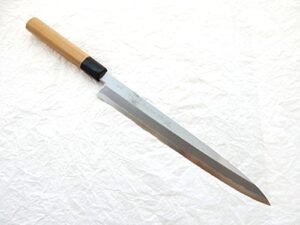 🍣Tsukiji YanagibaThe deba’s slicing partner →
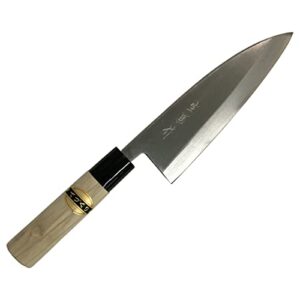 🥬Echizen SantokuForged all-rounder →
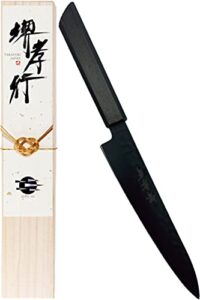 🔧Bungo Petty KnifeSmall hand-forged utility →
Where to buy
Prices for hand-forged deba vary with steel, forging, size, and maker. Compare the current yen price and the full delivered cost before purchasing; any USD conversion is only an exchange-rate estimate.
| Store | Item / Variant | Price (JPY + USD est.) | Notes |
|---|---|---|---|
| 🇺🇸 Amazon.com (US) | Browse Japanese deba & fish knives | varies (USD) | Best if you are shopping from the US — Prime shipping, USD pricing, no international customs. Amazon US carries Japanese deba and single-bevel fish knives from various makers, useful for comparing geometry, steel, and price tiers. The specific Kishu-tradition piece is sourced from Japan (next row). |
| 🇯🇵 Amazon JP Global Store | Single-bevel deba, ~165 mm | — | Where this specific item is sourced; ships internationally from Japan to most major destinations. |
| Maker direct | Wakayama / Kishu blade workshops | Varies | Some Kii blade smiths sell direct but often ship within Japan only; a proxy may be needed. |
| Proxy services (Buyee / Tenso) | Any JP-only option | Item price + forwarding fee | Useful when a workshop or marketplace will not ship abroad; adds a handling fee and consolidated forwarding. Note that some couriers restrict bladed items — confirm before ordering. |
What it does well
Weaknesses and things to verify before buying
- Confirm the steel. The category is traditionally carbon (shirogami/aogami), but deba in this size are also sold in stainless. The steel was not specified; check before buying.
- Carbon needs care. If it is carbon steel, it will patina and can rust. Wash and dry it immediately, keep it off the dishwasher, and wipe a light food-safe oil on the blade for storage.
- Single-purpose tool. A deba is heavy and short for its job. It is poor at slicing vegetables, bread, or boneless proteins; you will still want a santoku or gyuto for everyday cooking.
- Handedness. Most single-bevel deba are ground for right-handed use. Left-handed cooks should confirm a left-ground option exists before ordering.
- Smith and provenance unconfirmed. “Kishu deba” is an editorial regional category, not a registered brand; verify the specific maker, workshop, and that the piece is genuinely Wakayama-made before buying.
- Price and stock were not retrievable. No live price was in the dataset, and hand-forged blade stock fluctuates — verify the current figure and availability before committing.
- Shipping a blade abroad. Amazon JP Global Store ships knives to most destinations, but some couriers and countries restrict bladed items; check your local rules and the checkout total.
“Kishu’s iron skill was born from gunsmiths and temple foundries, not sword legends — when the muskets fell silent, that knowledge turned to the fishing dock and the cutting board.”
Conclusion — which buyer type are you?
Other ways to approach this purchase
📍 Where this comes from — Kishu iron, the Kii coast, and the deba

Wakayama Prefecture occupies the southern half of the Kii Peninsula, the broad headland that hangs below Osaka and Nara into the Pacific. Its interior is steep and forested, its coast cut into deep inlets and natural harbors, and offshore runs the Kuroshio — the warm “Black Current” that drives one of Japan’s richest fisheries. Geography pointed the region at two things early: ironwork in the hills, and the sea at its feet.
The ironworking story does not begin with swords. It begins with guns and temples.
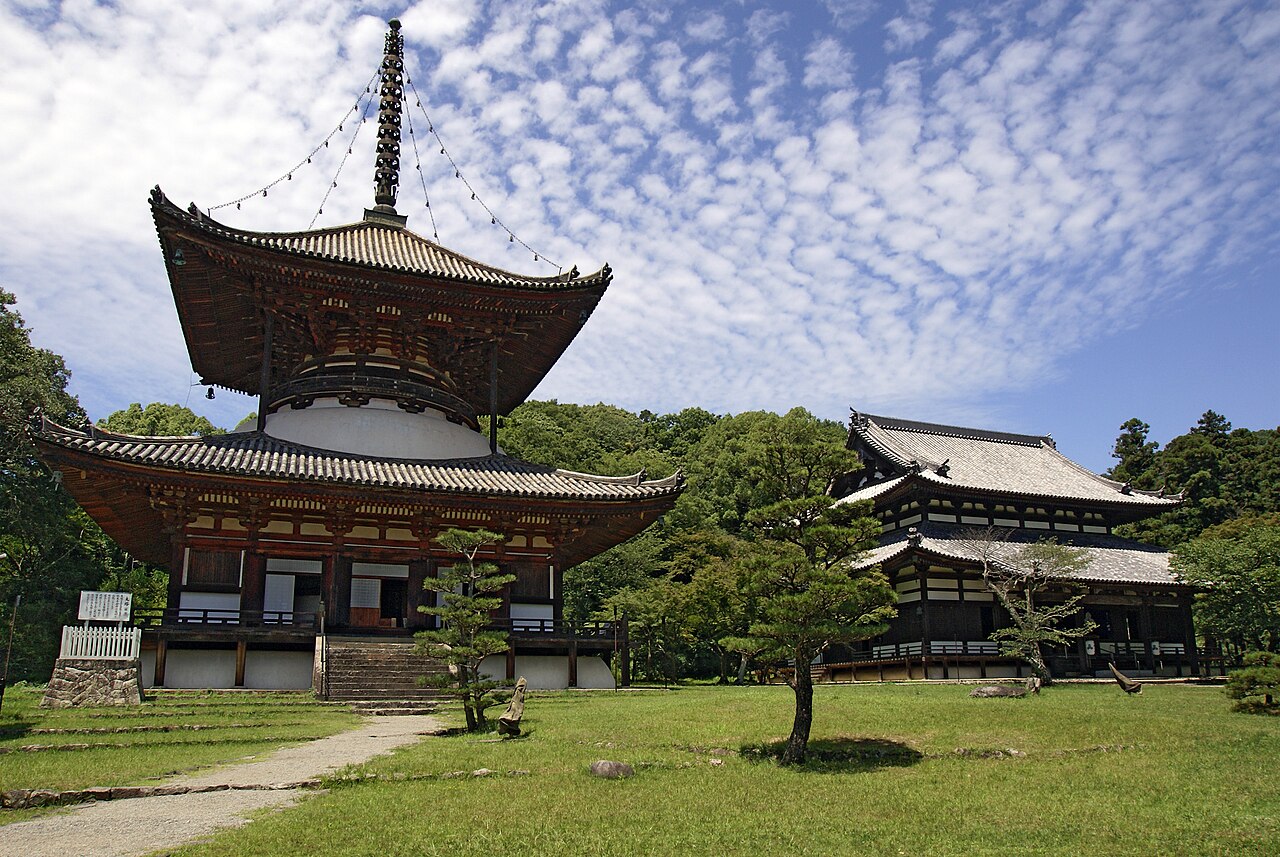
In the sixteenth century, the Saiga (Saika) corps of Kii were among the most accomplished ironworkers and gunsmiths in Japan, and the great temple complex of Negoro-ji sustained a metalworking economy around them. That concentration of skill ended abruptly in 1585, when Toyotomi Hideyoshi razed Negoro-ji and broke the Saiga league. The temples and the mercenaries were gone, but the metalworking knowledge did not evaporate — it diffused into the everyday trades of the region.
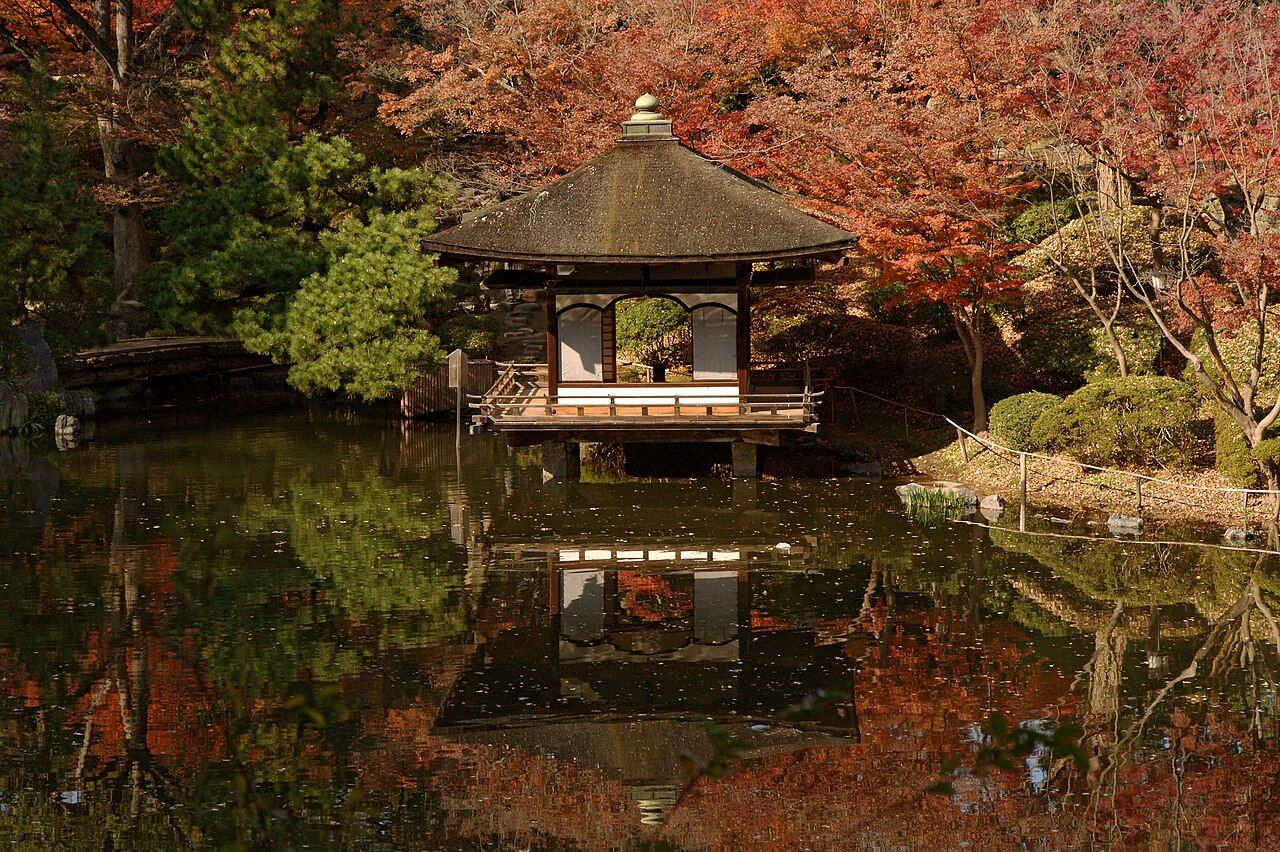
From 1619, Wakayama was governed by the Kishu Tokugawa, one of the three senior gosanke branches of the ruling house. A domain of that rank ran a deep economy of castle-town craftsmen, and the inherited ironworking skill fed steadily into the making of everyday edge tools — the unglamorous but constant demand for blades that a working province generates.
“A deba earns its keep where whole fish come ashore by the boatload — and on the Kuroshio coast of Kii, they always did.”
- 8th–12th c. — During the Heian era the Kumano pilgrimage coast flourishes; the Kii Peninsula’s harbors and Kuroshio fishing villages are long established.
- 16th c. — The Saiga (Saika) gunsmith corps and the Negoro-ji temple economy make Kii one of Japan’s foremost centers of firearm and fine ironwork.
- 1585 — Toyotomi Hideyoshi razes Negoro-ji and subdues the Saiga league; the region’s ironworking skill disperses into everyday trades.
- 1619 — The Kishu Tokugawa, one of the three gosanke branches, settle Wakayama Castle; the domain economy absorbs local edge-tool making.
- Edo period — Inherited ironworking skill feeds steady demand for everyday blades across the castle town and fishing ports of Kii.
- Edo–modern — Katsuura (Nachikatsuura) grows into Japan’s leading fresh-tuna landing port and Taiji into a historic whaling town, giving heavy single-bevel fish knives real local purpose.
- 2026 — Kishu-tradition deba and other Japanese fish knives reach international buyers; the deba remains the standard whole-fish blade.
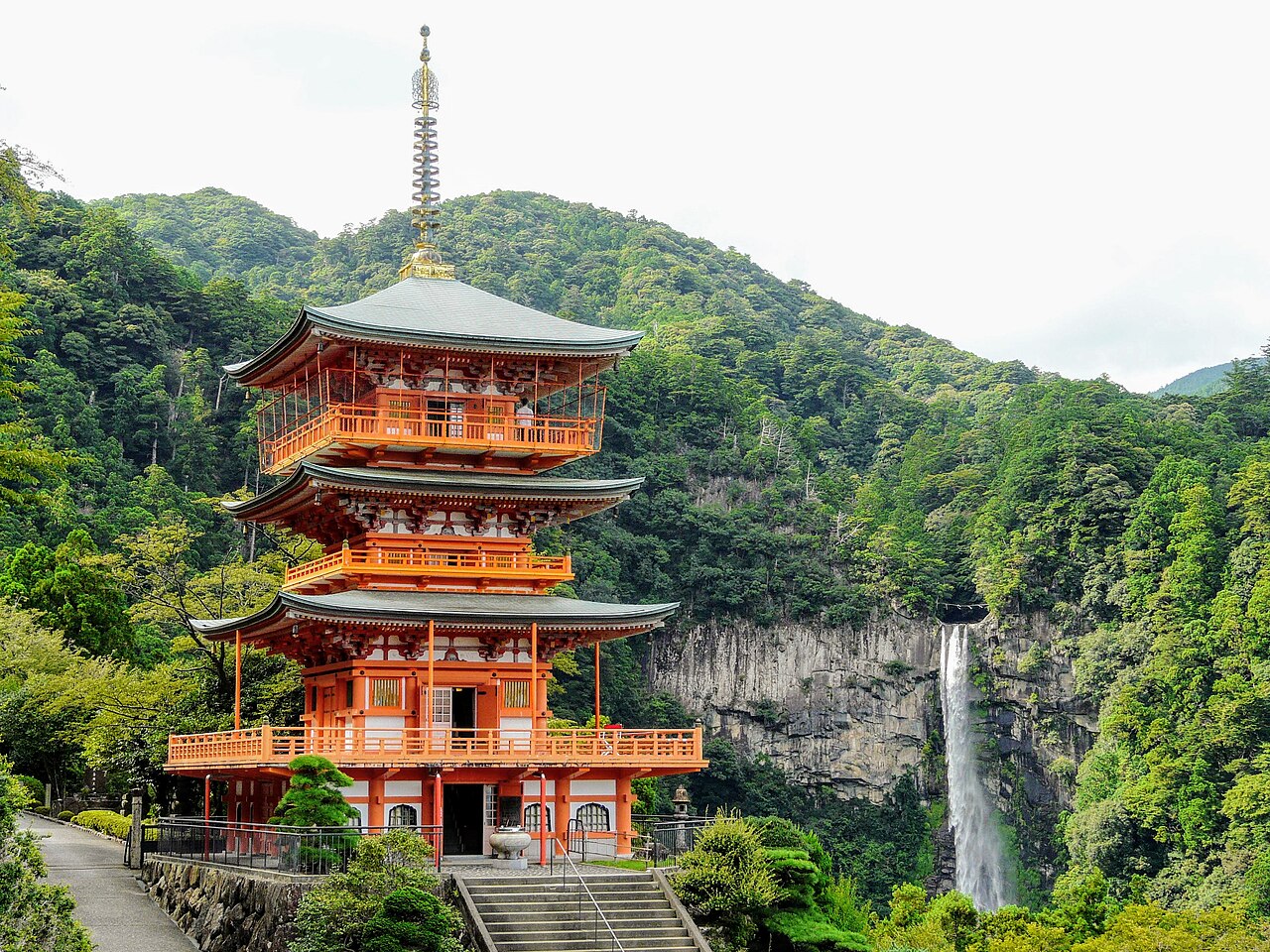
The blade’s relevance is the sea. The Kii coast faces the Kuroshio, and its ports have landed fish at scale for centuries. Where whole tuna, bonito, and large coastal fish come ashore by the boatload, the kitchens and processing sheds behind the docks need a tool that can take a head off and part a backbone all day — and that tool is the deba. The demand was not invented for tourists; it followed the fish.
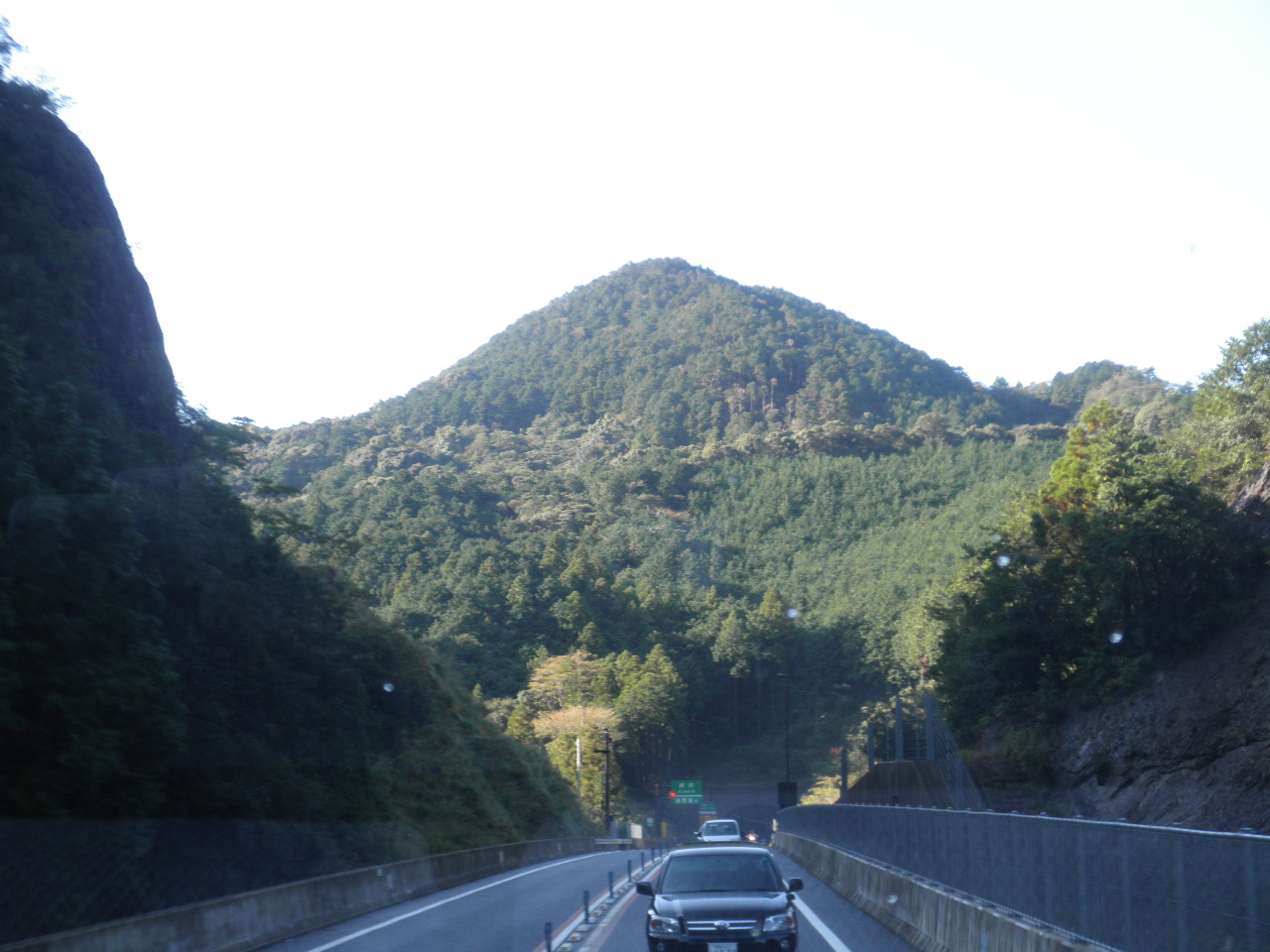
That is the honest case for a Kishu deba: a region whose ironworking pedigree runs through gunsmiths and temple foundries rather than famous swordsmiths, meeting a coast that gave fish knives a daily job. It is a regionally grounded craft category tied to Kii’s ironworking lineage and fishing coast, so ask the maker or specialist seller about the smith, steel, and provenance.
❓ Frequently Asked Questions
What is a deba used for, and do I really need one?
A deba is built to break down whole fish — beheading, splitting, and lifting fillets — using a thick, heavy single-bevel blade. If you mostly cook fillets or never handle whole fish, you do not need one; a santoku or gyuto covers everyday cooking. It earns its place only if you process whole fish regularly.
Is this deba carbon steel or stainless?
The Kishu deba category is traditionally carbon steel (shirogami or aogami), but deba in this size are also produced in stainless. Confirm the exact steel with the workshop or retailer before buying — it determines both performance and how much care the knife needs.
How do I care for a carbon-steel deba?
Hand-wash it right after use, dry it immediately, and wipe a thin film of food-safe oil on the blade before storing. Keep it out of the dishwasher and do not leave it wet. A carbon blade will develop a grey patina over time, which is normal; active rust means it was left damp.
Does Amazon JP ship a knife like this internationally?
Japanese kitchen knives are commonly obtained from specialist makers and retailers in Japan. Some couriers and countries restrict bladed items, and customs duties vary, so check the shipping options and total for your country.
Is a “Kishu deba” a registered brand?
No. Wakayama is not a top-tier branded knife region like Sakai or Echizen, so Kishu deba is best read as a regionally grounded craft category tied to Kii’s ironworking lineage and fishing coast, not a registered METI brand. Ask the smith or workshop about the maker and steel rather than assuming a guaranteed mark.
How much does it cost?
Hand-forged blade prices and availability vary with the smith, steel, and size. Compare several specialist sellers and include shipping, customs, and care supplies in your budget.
Can a left-handed cook use this deba?
Most single-bevel deba are ground for right-handed use, which makes them awkward and less accurate in the left hand. Left-handed cooks should confirm that a left-ground version is offered before ordering, rather than assuming the standard blade will work.
jpmono.com is curated by a Japan-based editorial team (working out of Toyama in the Hokuriku region and Nara in Kansai) and is independent. We do not take payment from the makers we feature; income comes from affiliate links. Read more about our editorial standards.
Editorial note: this article was prepared with AI assistance and reviewed against public craft references. Specifications, pricing, and availability vary by maker and were not independently lab-tested.
Affiliate disclosure: jpmono.com may earn a commission on qualifying purchases made through links on this page, at no additional cost to you.