![Kurume Kasuri Indigo Cotton Tote Bag: Where to Buy the Chikugo Weave [2026]](https://jpmono.com/wp-content/uploads/2026/07/kurume-kasuri-indigo-cotton-tote-bag-where-to-buy-2026-featured.jpg)
A Kurume Kasuri tote is, at heart, a piece of working cloth given a handle. The fabric is kurume-gasuri (久留米絣, “Kurume ikat”) — an indigo-dyed cotton woven on the Chikugo plain in southern Fukuoka Prefecture since around 1800. What makes it ikat rather than ordinary printed cotton is that the pattern is dyed into the threads before weaving: bundles of yarn are tightly tied off, dipped in indigo, then untied, so the resist-tied sections stay pale and the faint blue-and-white flecks emerge only as the cloth comes off the loom.
Internationally, Kurume Kasuri matters because it is one of Japan’s three great kasuri traditions, alongside Iyo kasuri of Ehime and Bingo kasuri of Hiroshima. It carries an Important Intangible Cultural Property designation from 1957 for its most traditional form — hand-tied resist, natural indigo, and a throw-shuttle handloom — and it remains a nationally designated traditional craft. A tote made from this cloth is a way to own the weave without committing to a full kimono bolt.
This guide is written for the international reader deciding whether to buy one, and from where. We cover what the cloth is, how a kasuri tote compares to other Japanese indigo-cotton goods, the honest weaknesses of buying hand-dyed textiles at a distance, and the two realistic purchase paths — Amazon US for browsing comparable Japanese textiles, and Amazon JP Global Store for the specific sourced listing.
🔄 Updated:
⏱️ Read time: ~11 min

- Who this is for — and who should skip it
- Product overview (from published specs)
- 📍 Where this comes from — place, era, and the craft tradition
- 📦 Shipping & where to buy from outside Japan
- What it does well
- Weaknesses and things to verify before buying
- Conclusion — which buyer type are you?
- Other ways to approach this purchase
- 🏆 Editor’s Pick
- ❓ Frequently Asked Questions
Who this is for — and who should skip it
- Want a durable everyday carry that reads as quiet, not branded
- Appreciate indigo cotton that fades and softens with use
- Are drawn to genuine regional craft with a documented tradition
- Prefer a small, affordable entry into kasuri over a full kimono
- Are comfortable with slight irregularities that mark hand work
- Need a structured, reinforced bag for heavy daily loads
- Expect machine-print uniformity in the pattern
- Want guaranteed color-fastness with no indigo transfer risk
- Require confirmed dimensions and capacity before buying
- Are not comfortable buying textiles shipped from Japan
Product overview (from published specs)
The fetched data for this listing was thin, so the table below marks any figure not confirmed in the source as “Unconfirmed — check listing.” The craft attributes (indigo cotton, hand-tied kasuri, Chikugo origin) come from the recommendation data and the established definition of Kurume Kasuri; the retail specifics come from — or are absent from — the Amazon JP listing snapshot.
Kurume Kasuri Indigo Cotton Tote Bag
久留米絣 久留米絣 トートバッグ KURUME柄 KURUME-KASURI
在庫あり。 · Sold by 買援隊 · ASIN B0B6WFP8VN
Price and availability as of 2026-08-31 02:30 JST. The Amazon listing at the time of purchase is authoritative. jpmono.com earns a commission on qualifying purchases at no extra cost to you.
| Attribute | Amazon US (search) | Amazon JP Global Store | Maker direct / notes |
|---|---|---|---|
| Material | Comparable Japanese indigo cottons vary | Indigo-dyed cotton (kasuri weave) | Traditionally 100% cotton, natural or reactive indigo |
| Technique | — | Kasuri (resist-tied ikat) | Hand-tied resist for the most traditional grade |
| Origin | Japan (various) | Chikugo plain, Kurume, Fukuoka | Designated traditional craft region |
| Dimensions | Varies by listing | Unconfirmed — check listing | Tote sizes differ by maker |
| Item ID / ASIN | Search result | B0B6WFP8VN | Sourced listing |
| Price | Varies (USD) | Unconfirmed — check listing | No live price in data snapshot |
| Ships internationally | US domestic (Prime) | Yes, via Global Store | Proxy (Buyee / Tenso) as fallback |
📖 Glossary — key terms
Kasuri (絣) — the Japanese word for ikat: cloth whose pattern is dyed into the yarn before weaving, using resist-ties, so the design appears with soft, feathered edges rather than sharp printed lines.
Kurume-gasuri (久留米絣) — kasuri from the Kurume area of Fukuoka; the leading “g” is a pronunciation shift when “kasuri” follows a place name.
Aizome (藍染, “indigo dyeing”) — dyeing with indigo, historically from the fermented leaves of the Persicaria tinctoria plant; the deep blue deepens with repeated dips.
Chikugo (筑後) — the plain and old district in southern Fukuoka drained by the Chikugo River, the heartland of Kurume Kasuri.
Jūyō Mukei Bunkazai (重要無形文化財) — “Important Intangible Cultural Property,” a national designation protecting a craft technique; Kurume Kasuri’s hand-tied form received it in 1957.
Other Japanese indigo, kasuri, and regional-textile guides on jpmono.com worth reading alongside this one.
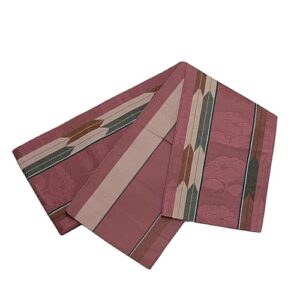 🧵 Hakata-ori Kenjo Obi
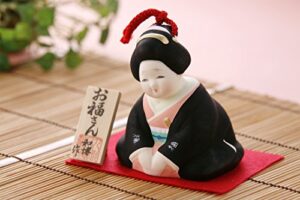 🎎 Hakata Ningyo Figurine
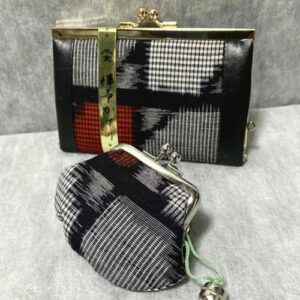 👛 Iyo-Gasuri Gamaguchi
🍽️ Yumihama-gasuri Runner
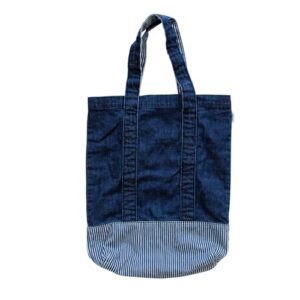 👖 Kojima Denim Tote
🟦 Awa Aizome Indigo Tenugui
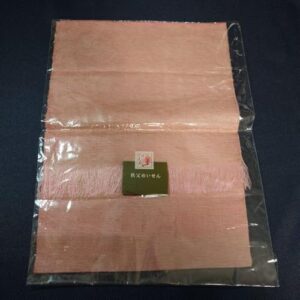 🧣 Chichibu Meisen Scarf
📍 Where this comes from — place, era, and the craft tradition

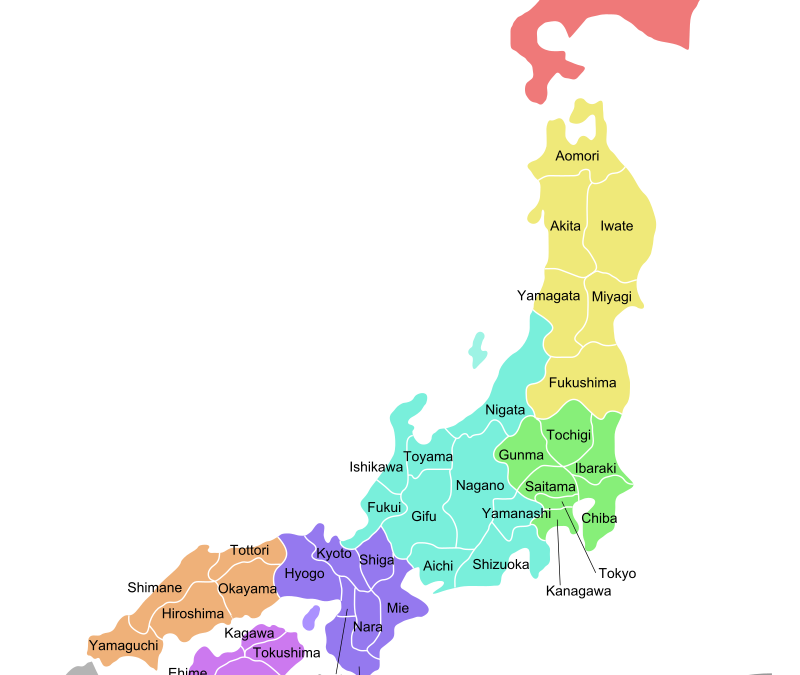
Kurume is a river city in the south of Fukuoka Prefecture, on the island of Kyūshū at the far southwestern end of the Japanese archipelago. It sits on the Chikugo plain, the broad, flat lowland drained by the Chikugo River — the largest river in Kyūshū — as it runs down toward the shallow, tidal Ariake Sea. Flat alluvial ground, a warm and humid climate, and abundant soft river water are exactly the conditions cotton cultivation and indigo dyeing need, and that combination is why a cotton-and-indigo weaving industry took root here rather than somewhere colder or drier.

The origin story of the weave is unusually specific for a folk craft. Tradition credits a teenage girl named Inoue Den with devising the resist-tie technique around 1800, after she noticed pale white flecks in a worn, faded old garment and worked out that the effect could be produced deliberately by binding the threads before dyeing. Whether the account is exact in every detail is a folk-traditional claim rather than a documented one, but the early-1800s starting point and the resist-tie principle are the accepted foundation of the craft.
- c. 1800 — Inoue Den is traditionally credited with devising the Kurume resist-tie kasuri technique.
- Edo period — The weave spreads as durable everyday cotton wear under the Arima clan’s Kurume domain.
- 1889 — Shōjirō Ishibashi, later the founder of Bridgestone, is born in Kurume.
- 1957 — The hand-tied, natural-indigo, throw-shuttle handloom form is named an Important Intangible Cultural Property.
- 20th century — Kurume Kasuri is recognized as one of Japan’s three great kasuri weaves, with Iyo and Bingo.
- Present — A designated traditional craft, still woven on the Chikugo plain and made up into garments and goods such as this tote.
The craft grew up under the Kurume domain, ruled through most of the Edo period by the Arima clan from their seat at Kurume Castle. As a hard-wearing, indigo-fast cotton, kasuri suited exactly the kind of durable everyday clothing a farming-and-market region needed, and it spread as a household industry — spun, tied, dyed, and woven in and around ordinary homes rather than in a single central factory. That domestic, distributed character is part of why so many hands still know the technique today.
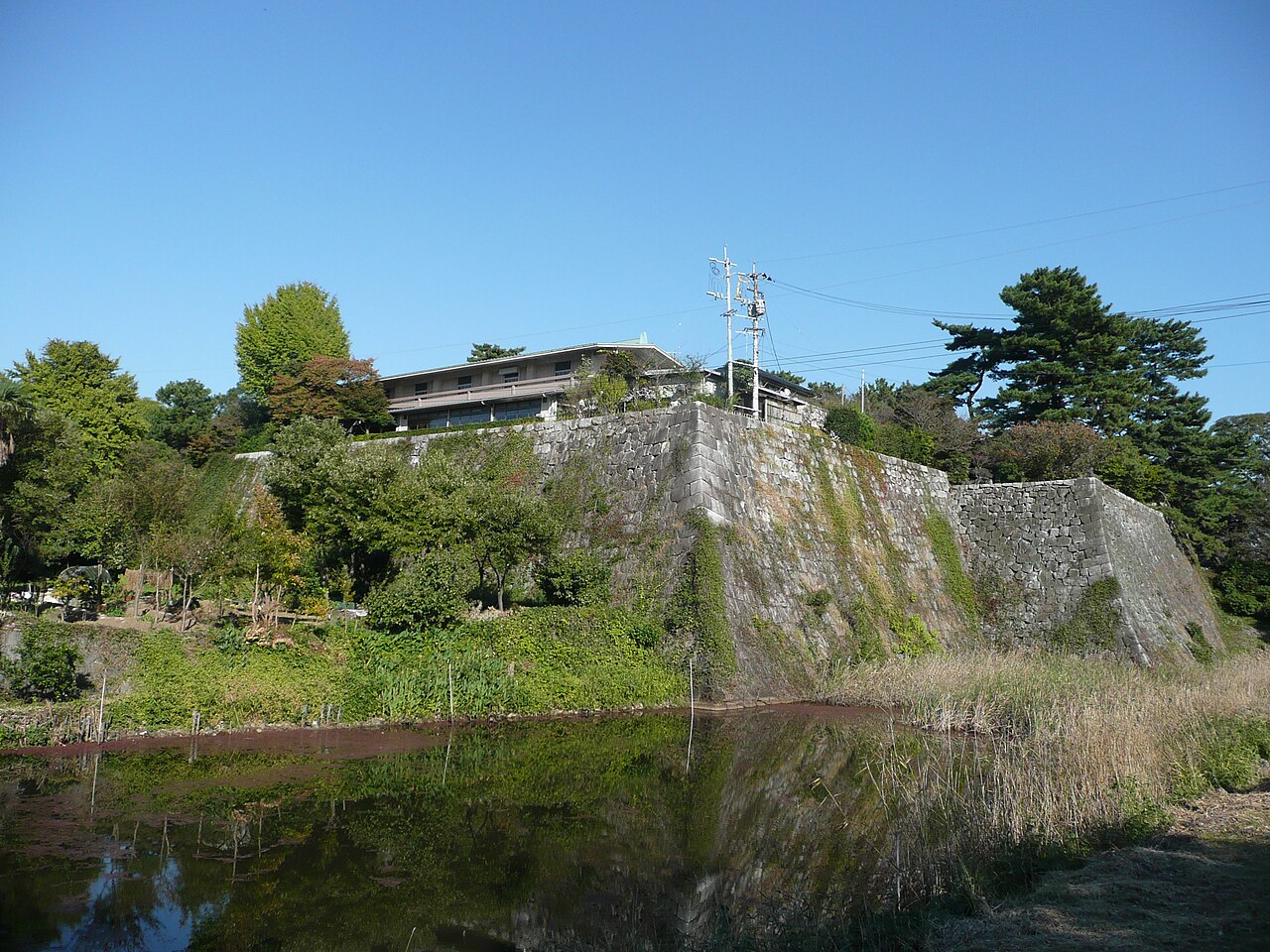
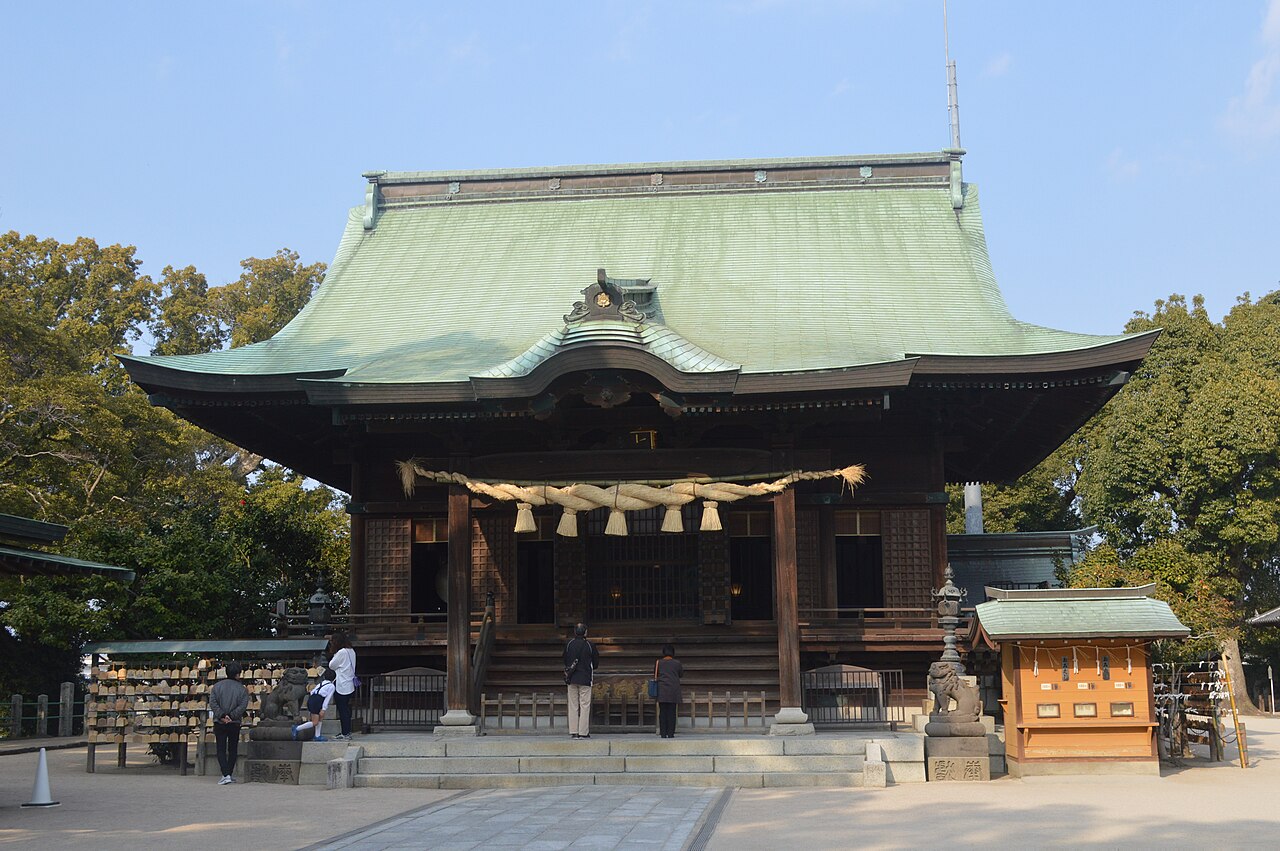
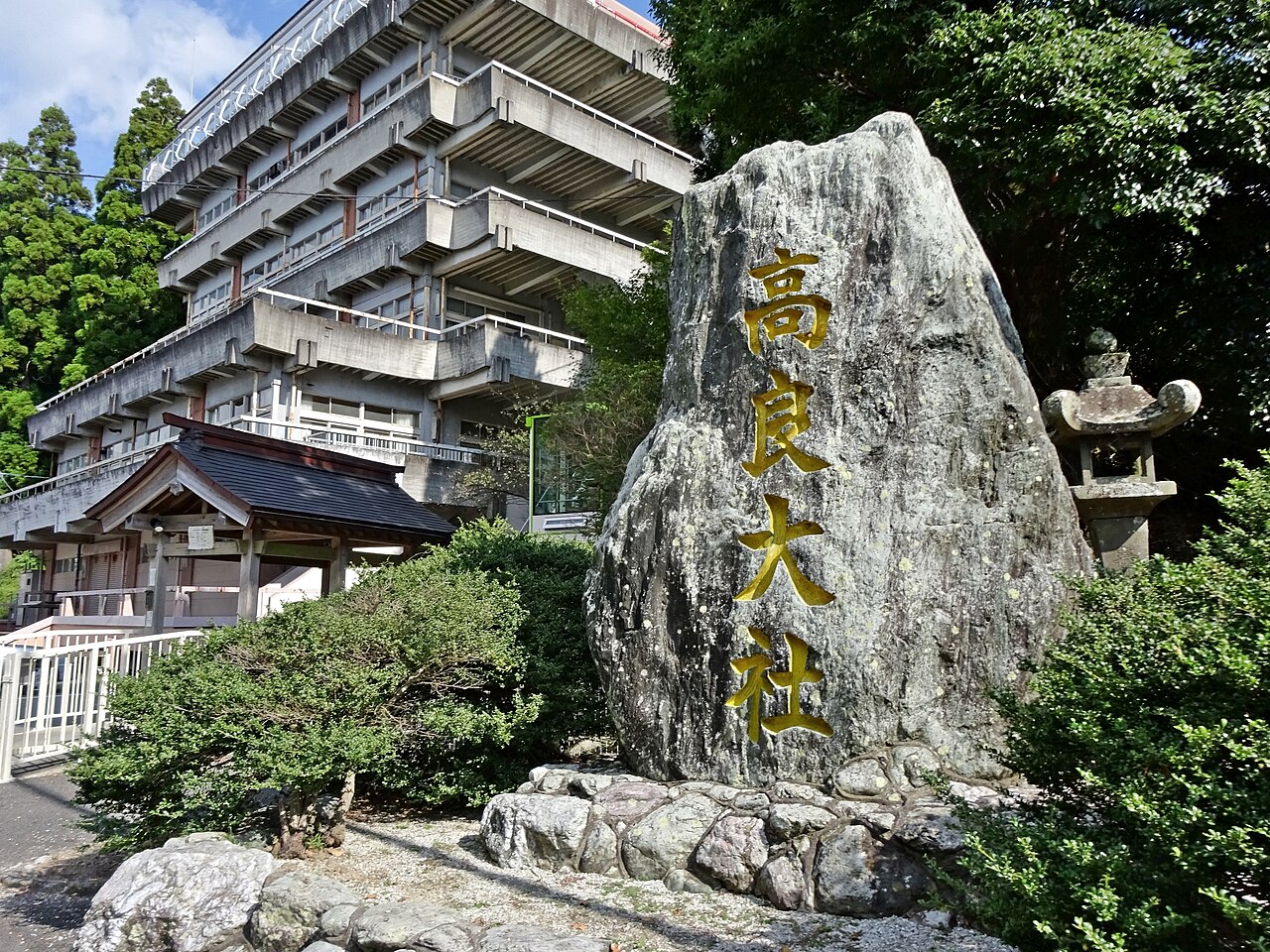
Kurume is also a city with civic anchors that place the weave in its setting. The head sanctuary of Suitengu — the shrine network dedicated to water and safe childbirth — stands in Kurume, tying the cloth to the town’s spiritual center. Above the plain rises Mt. Kora, crowned by Kora Taisha, the great shrine long regarded as the guardian of the Chikugo district. And in a modern footnote, Kurume produced Shōjirō Ishibashi, the founder of Bridgestone, whose surname literally means “stone bridge” — a reminder that this was a place of makers and industry, not only of farms.
“The pattern is not printed onto the cloth — it is tied into the thread before a single row is woven, so the blue arrives already shaped.”
What “still being made here” means, then, is a living regional practice rather than a revival. The most traditional grade — hand-tied resist, natural indigo, throw-shuttle handloom — is the one the 1957 cultural-property designation protects; a broader tier of Kurume Kasuri is made with the same fundamental kasuri principle and modern efficiencies for everyday goods like this tote. Both draw on the same Chikugo lineage of indigo cotton that Inoue Den’s generation started.
📦 Shipping & where to buy from outside Japan
Because the specific tote is sourced from an Amazon JP listing, the most direct international path is Amazon JP Global Store, which ships many household and textile items to most major destinations. Based on typical Global Store handling, expect international shipping in the range of roughly $15–$40 to the US and EU, with higher rates to other regions, plus the possibility of customs duties if your order value crosses your country’s import threshold.
| Store | Item / Variant | Price (JPY + USD est.) | Notes |
|---|---|---|---|
| 🇺🇸 Amazon.com (US) | Browse Japanese indigo cotton & kasuri bags | varies (USD) | Best if you’re shopping from the US — Prime shipping, USD pricing, no international customs. Amazon US carries Japanese indigo cotton totes and pouches from various makers; the exact Kurume Kasuri piece here ships from Japan (next row). |
| 🇯🇵 Amazon JP Global Store | Kurume Kasuri indigo cotton tote (ASIN B0B6WFP8VN) | Unconfirmed — check listing | Ships internationally from Japan. This is the sourced listing for the exact item covered here; no live price was in the data snapshot. |
| Maker direct | Chikugo Kurume Kasuri workshops | Varies | Several Kurume weaving houses sell online; international shipping varies by workshop. Good for the most traditional hand-tied grades. |
| Proxy services (Buyee / Tenso) | Any JP listing not shipping to your country | Item price + proxy fee + forwarding | Fallback path when a listing does not ship to you directly; adds a service fee on top of shipping. |
Prices in USD are approximate and depend on the current exchange rate (¥150/USD baseline as of mid-2026). The JPY price is the authoritative one for the specific listed item. Only a limited Amazon JP listing snapshot was available at the time of writing; live pricing may have shifted since July 3, 2026.
What it does well
Weaknesses and things to verify before buying
- Dimensions unconfirmed. The data snapshot did not include size or capacity. Verify the tote’s height, width, and handle drop on the listing before assuming it fits a laptop or A4 documents.
- No live price. No current price was returned; check the listing directly, and remember the JPY figure is authoritative with USD only an estimate.
- Grade is not specified. “Kurume Kasuri” spans the hand-tied cultural-property grade and broader everyday production. If you specifically want hand-tied, natural-indigo cloth, confirm the grade with the seller or buy from a maker who states it.
- Indigo transfer risk. Indigo-dyed cotton can rub off onto light-colored clothing, especially when new or damp. Treat it as you would raw denim until you know how it behaves.
- Hand-work irregularity. Feathered, slightly uneven pattern edges are inherent to kasuri, not defects — but if you expect print-perfect uniformity, this will disappoint.
- Structure and lining. A cloth tote is soft by nature; whether it has a lining, inner pocket, or reinforced base is unconfirmed in the data. Check if you need structure for heavier loads.
- Care. Natural indigo cotton generally prefers gentle, cold hand-washing away from strong detergents and direct sun. Confirm the care instructions on the listing.
Conclusion — which buyer type are you?
Other ways to approach this purchase
🏆 Editor’s Pick
❓ Frequently Asked Questions
Does Amazon JP Global Store ship this tote internationally?
What is kasuri, and how is it different from printed cotton?
Will the indigo rub off on my clothes?
How do I know if it is the hand-tied traditional grade?
What are the tote’s dimensions and capacity?
Is this a good gift?
jpmono.com is curated by a Japan-based editorial team (working out of Toyama in the Hokuriku region and Nara in Kansai) and is independent. We do not take payment from the makers we feature; income comes from affiliate links. We do not physically test every product — we read maker’s specs and source listings.
🤖 This article was drafted with AI assistance and edited against the source listing data available on July 3, 2026. Facts about the craft and region are drawn from the provided data notes; retail specifics not present in the data are marked “Unconfirmed — check listing.”
Affiliate disclosure: jpmono.com may earn a commission on qualifying purchases made through links on this page, at no additional cost to you.