![Kurume Kasuri Monpe Trousers: Indigo Cotton Ikat from Fukuoka [2026]](https://jpmono.com/wp-content/uploads/2026/07/kurume-kasuri-indigo-monpe-trousers-where-to-buy-2026-featured.jpg)
- What it is: Loose monpe trousers cut from Kurume Kasuri — hand-dyed indigo cotton ikat from Fukuoka.
- Made in: Kurume / Chikugo, Fukuoka Prefecture, Kyushu — a weave named an Important Intangible Cultural Property in 1957.
- Price band: mid-range for artisan indigo cotton; monpe sit well below kimono-grade kasuri — see the live listing.
- Best for: readers who want an everyday, unisex garment with a real craft lineage rather than a printed “kasuri look.”
- Skip if: you need precise Western sizing charts or a crease-free, wash-and-forget fabric.
- Shipping: ships internationally from Amazon Japan — jump to our pick ↓
Around 1800, in the Chikugo castle town of Kurume, a girl said to be about twelve noticed that the faded white flecks in a worn indigo cloth were not damage but a pattern waiting to be controlled. Tradition credits Inoue Den with reverse-engineering those flecks into a deliberate resist-dyeing method — binding the threads before they ever met the dye vat, so the white would fall exactly where she wanted it. That method became Kurume Kasuri (久留米絣, “Kurume ikat”).
Two centuries later, the same weave turns up as something surprisingly wearable: monpe (もんぺ), the loose farm-work trousers that were once the everyday bottom half of rural Fukuoka. Kurume Kasuri grew up alongside Iyo-gasuri and Bingo-gasuri as one of Japan’s “three great kasuri,” and in 1957 its most traditional form — hand-tied threads, natural indigo, hand-throw looms — was designated an Important Intangible Cultural Property. Monpe are the humble end of that tradition, and they are the part most likely to fit into a non-Japanese wardrobe.
This guide is written for readers outside Japan who want the real thing rather than a printed imitation: what Kurume Kasuri actually is, where it comes from, how the Unagi no Nedoko MONPE project revived these trousers for modern wear, and where — and how — to buy a Fukuoka-made pair internationally. The data snapshot behind this article is thin on live pricing, so we flag what is confirmed and what you should verify at the listing.
🔄 Updated: July 18, 2026
⏱️ Read time: ~9 min

- Who this is for — and who should skip it
- Product overview (from published specs)
- Where this comes from — place, era, and the craft tradition
- Which finish should you choose?
- 📦 Shipping & where to buy from outside Japan
- Price snapshot across stores
- What it does well
- Weaknesses and things to verify before buying
- Conclusion — which buyer type are you?
- Other ways to approach this purchase
- 🏆 Editor’s Pick
- ❓ Frequently Asked Questions
Who this is for — and who should skip it
- Want a genuinely woven indigo ikat, not a mill-printed “kasuri look.”
- Prefer relaxed, unisex trousers with a drawstring or elastic-easy waist.
- Like natural-indigo cotton that softens and fades gently with wear.
- Value a documented craft lineage and are buying a heritage textile deliberately.
- Are comfortable buying from Japan and reading a Japanese size chart.
- You need a tailored, structured trouser with a precise Western size.
- You want a bleed-proof, wash-and-forget synthetic fabric.
- You dislike any indigo color transfer during the first few washes.
- You expect crease-resistance — this is soft, honest cotton.
- Budget is the only axis and a printed lookalike would satisfy you.
Product overview (from published specs)
ℹ️ Live pricing and some fabric specs were not in our snapshot — the linked listing is authoritative, and unconfirmed attributes are marked below.
Kurume Kasuri Monpe Trousers
[うなぎの寝床] 久留米絣 MONPE バンブーストライプ もんぺ ユニセックス ホワイト (S)
残り3点 ご注文はお早めに · Sold by J-pia(ジェイピア) · ASIN B0DX6WWQQQ
Price and availability as of 2026-08-31 02:30 JST. The Amazon listing at the time of purchase is authoritative. jpmono.com earns a commission on qualifying purchases at no extra cost to you.
| Attribute | Detail | Source |
|---|---|---|
| Product | MONPE trousers (Unagi no Nedoko), Kurume Kasuri indigo cotton | Listing / maker |
| Craft | Kurume Kasuri (久留米絣) — cotton ikat / kasuri weave | Tradition |
| Material | Indigo-dyed (aizome) cotton — exact weight/blend unconfirmed; check listing | Listing (partial) |
| Origin | Kurume / Chikugo, Fukuoka Prefecture, Kyushu | Data notes |
| Fit | Loose, easy, unisex monpe cut | Maker concept |
| Size chart | Unconfirmed — check manufacturer / listing sizing | — |
| Heritage status | Important Intangible Cultural Property (1957) for hand-tied thread, natural indigo, hand-throw loom pieces | Data notes |
| ASIN | B0DX6WWQQQ | Amazon JP Global Store |
| Price | Not in snapshot — see live listing (¥, JPY authoritative) | — |
General guidance for hand-dyed indigo cotton — confirm the maker’s exact wash label before first use:
- 🌊 Indigo transfer: natural aizome can crock and bleed at first — wash cold, separately, for the first several washes.
- 🧺 Washing: gentle machine or hand wash in cold water; avoid bleach and prolonged direct sun to slow fading.
- 🧵 Wear: cotton kasuri softens and the indigo lightens gently over time — the gradual fade is part of the material, not a defect.
- ♨️ Pressing: a warm iron restores the crease; expect natural cotton wrinkling with everyday wear.
📖 Glossary — key terms
- Kasuri (絣) — Japanese ikat: threads are resist-bound and dyed before weaving, so the blurred-edged pattern appears in the cloth itself rather than being printed on top.
- Ikat — the international textile term for this resist-dye-then-weave technique; kasuri is Japan’s version.
- Monpe (もんぺ) — loose, easy trousers that were the everyday farm-work garment of rural Japan, now revived as casual modern wear.
- Aizome (藍染) — indigo dyeing; natural indigo gives the deep blue and the characteristic early color transfer.
- Chikugo (筑後) — the historical province of southern Fukuoka, around Kurume, where this weave developed.
- Important Intangible Cultural Property (重要無形文化財) — a Japanese national designation protecting a technique; Kurume Kasuri’s traditional form received it in 1957.
- Unagi no Nedoko — a Yame/Kurume-based project that revived monpe as everyday wear and is the maker behind this listing.
Where this comes from — place, era, and the craft tradition

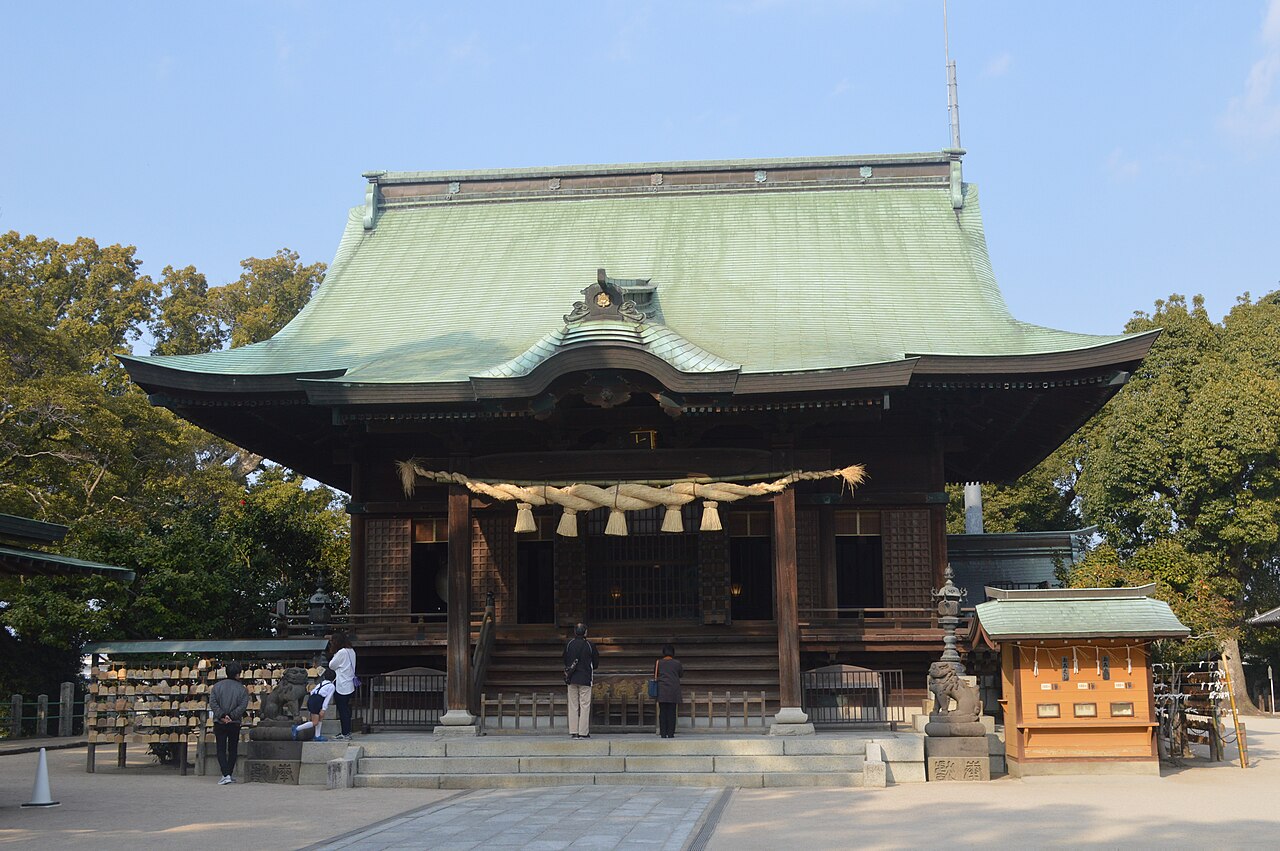
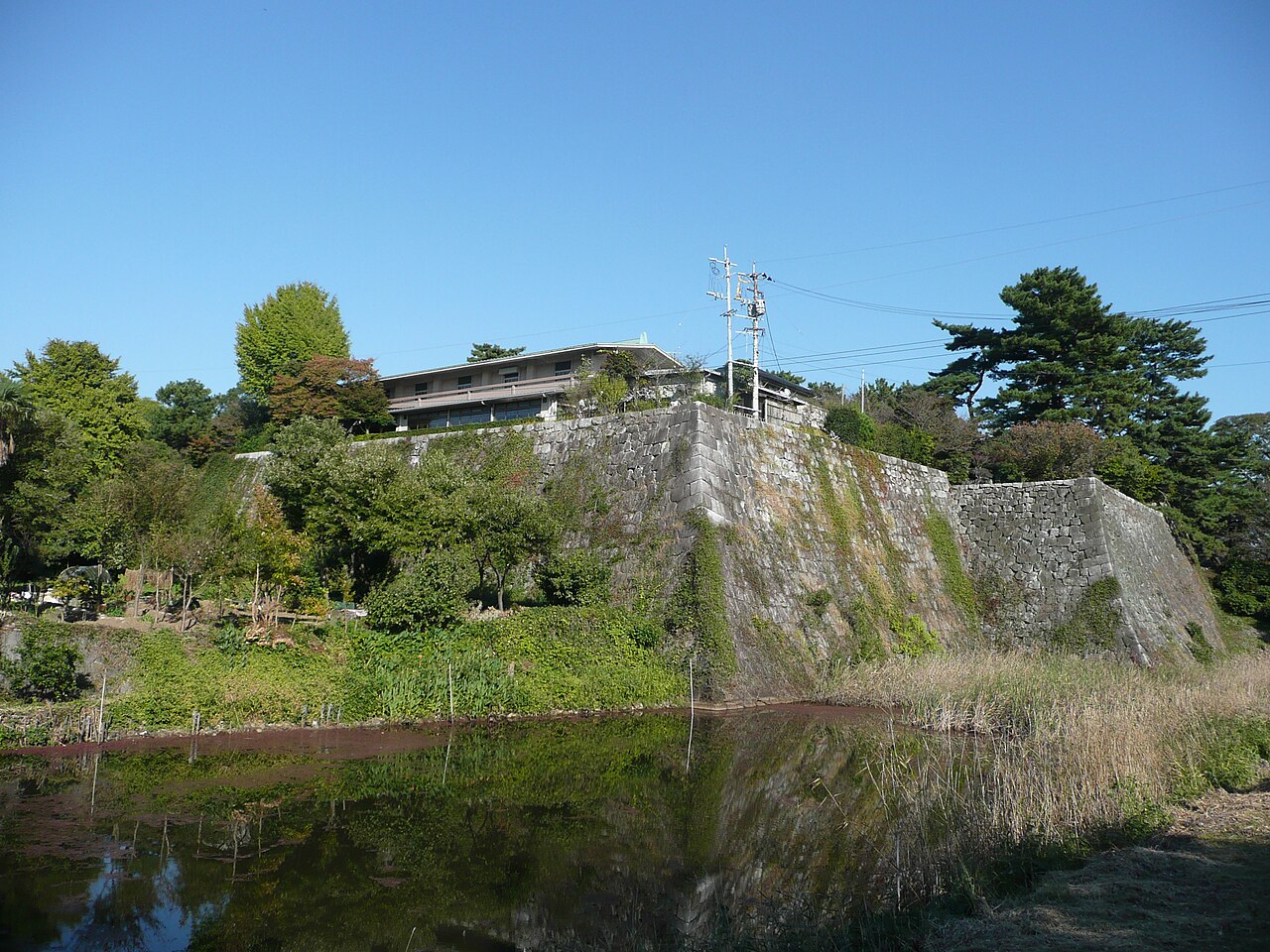
Kurume sits on the broad Chikugo plain in the south of Fukuoka Prefecture, on the northern edge of Kyushu, Japan’s third-largest island. This is warm, low-lying country threaded by the Chikugo River, the longest river in Kyushu, whose floodplain gave the region two things a dye industry needs: soft water and land flat and fertile enough to grow cotton at scale. Kurume was the castle town of the Arima clan, and its artisan households — weavers, dyers, thread-tiers — clustered into the kind of concentrated craft economy a domain center makes possible.
The founding story is unusually specific for a folk craft. Tradition holds that around 1800, a Kurume girl named Inoue Den — said to be about twelve — studied the pale, worn flecks in a much-used indigo cloth and worked out that they could be produced on purpose. By binding bundles of thread so the dye could not reach them, then weaving the pre-patterned threads, she turned an accident of wear into a controllable design system. Whatever the exact biography, the technique she is credited with became Kurume Kasuri, and it spread quickly through the Chikugo weaving households.
-
1621 — The Arima clan is installed at Kurume; the Chikugo castle town and its artisan economy take shape. -
c. 1800 — Inoue Den, a girl said to be about twelve, reverse-engineers faded flecks into a deliberate resist-dye method. -
1800s — Kurume Kasuri joins Iyo-gasuri and Bingo-gasuri as one of Japan’s “three great kasuri.” -
1957 — The traditional form (hand-tied thread, natural indigo, hand-throw loom) is designated an Important Intangible Cultural Property. -
2010s — The Unagi no Nedoko MONPE project in Yame/Kurume revives monpe as everyday unisex wear.
By the nineteenth century, Kurume Kasuri had earned its place beside Iyo-gasuri from Ehime and Bingo-gasuri from Hiroshima as one of Japan’s “three great kasuri.” Its status was formalized in 1957, when the state named the most traditional way of making it — hand-tied resist threads, natural indigo dyeing, and weaving on a hand-throw loom — an Important Intangible Cultural Property. That designation protects a technique, not a single object, which is why the same weave can appear in a formal bolt of cloth and in a pair of work trousers.
“The pattern is dyed into the thread before a single row is woven — in kasuri, the design is a decision made in the dye vat, not printed on the finished cloth.”

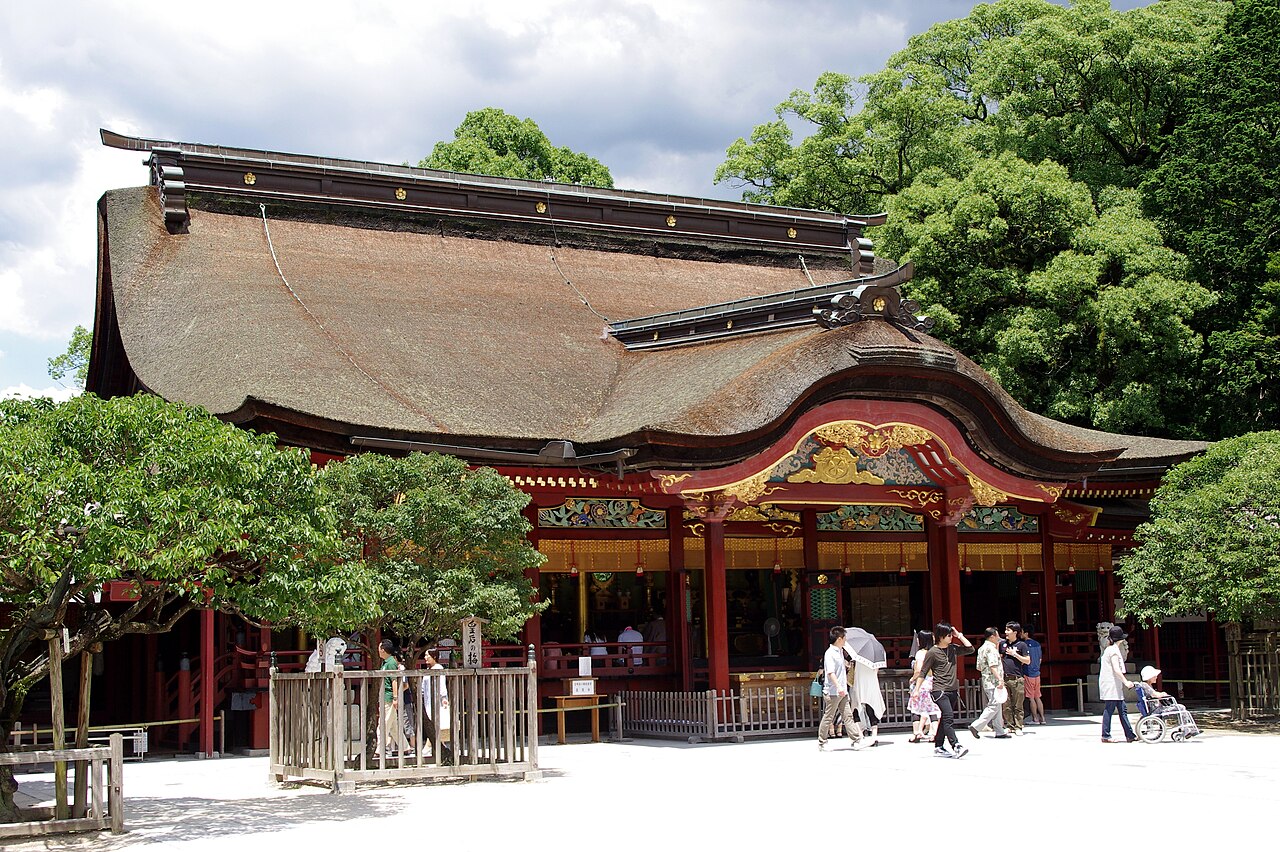
Kurume lies within the wider cultural orbit of Fukuoka and old Chikuzen–Chikugo Kyushu, whose administrative and religious heart for centuries was Dazaifu, to the north. That regional depth matters for a garment like this: monpe were never couture. They were the practical everyday trousers of farming households, and their revival — most visibly through the Unagi no Nedoko MONPE project in Yame and Kurume — is less an invention than a re-framing of ordinary work-wear as something you might now choose to wear in a city. What “still being made here” means, in this case, is a living local supply of hand-woven indigo cotton being cut into a shape people actually want to put on.
Which finish should you choose?
This piece is listed in 3 sizes. The photos below are the actual size options on the listing right now — pick the one you want and confirm it on the product page before ordering, since hand-finished wares vary slightly piece to piece.
Other Japanese textiles, indigo work, and regional crafts we’ve covered — useful for placing Kurume Kasuri monpe in context:
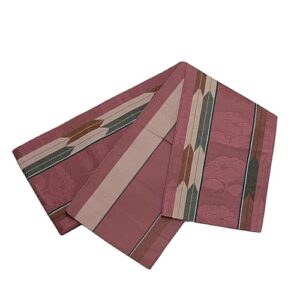 Hakata-ori silk obi →
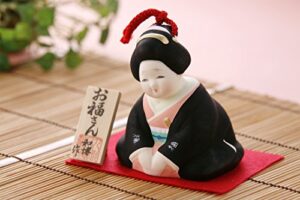 Hakata Ningyo figurine →
Hakata hand-forged scissors →
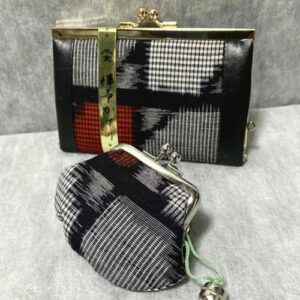 Iyo-Gasuri coin purse →
Yumihama-gasuri table runner →
Awa Aizome indigo tenugui →
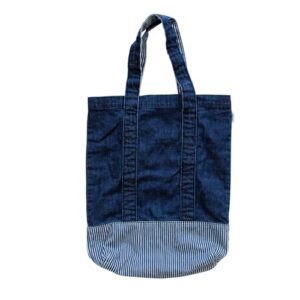 Kojima selvedge denim →
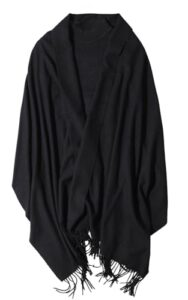 Kishu Nel cotton muffler →
📦 Shipping & where to buy from outside Japan
The specific pair in this guide is sourced from the Amazon Japan Global Store, which ships to 65+ countries — including Canada, the UK, and Australia — with import fees estimated at checkout for most destinations. Our readership is not only American, so the country guides below cover the most common English-speaking destinations: Canada, the UK, and Australia.
Expect international shipping in the rough range of $15–$40 to the US, EU, Canada, the UK, and Australia, depending on weight and speed. If you would rather shop in your local currency, Amazon US carries a wide selection of comparable Japanese indigo and cotton apparel, though this exact Fukuoka-made pair ships from Japan. Proxy services such as Buyee or Tenso are an alternative path if the maker’s own listing is out of stock on the Global Store. Duties above your local threshold are typically estimated and collected by Amazon at checkout, so the price you approve is close to the price you pay.
Price snapshot across stores
| Store | Item / variant | Price | Notes |
|---|---|---|---|
| 🇺🇸 Amazon.com (US) | Browse Japanese indigo cotton apparel & monpe | varies (USD) | Best if you’re shopping from the US — Prime shipping, USD pricing, no international customs. Amazon US carries comparable Japanese indigo and cotton apparel; this exact Kurume-made pair ships from Japan (next row). |
| 🇯🇵 Amazon JP Global Store | Unagi no Nedoko MONPE, Kurume Kasuri (ASIN B0DX6WWQQQ) | See live listing (¥, JPY) | Ships internationally from Japan to 65+ countries — including Canada, the UK and Australia — with import fees estimated at checkout. The sourced listing for this exact pair. |
| Maker direct | Unagi no Nedoko MONPE line (Yame/Kurume) | Varies — check maker site | Widest choice of Kurume Kasuri patterns and sizes; overseas shipping terms vary by season. |
| Proxy services (Buyee / Tenso) | Forwarding from JP shops that don’t ship abroad | Item price + forwarding fee | A fallback if the Global Store listing is unavailable; adds a handling fee and a second shipping leg. |
JPY (¥) is the authoritative price; any USD figures are approximate and depend on the current exchange rate (≈ ¥150/USD baseline, mid-2026). Prices in USD are approximate and change with the exchange rate.
What it does well
Weaknesses and things to verify before buying
- Sizing is Japanese and unconfirmed in our data. The monpe cut is loose, but check the maker’s measurement chart against your own waist and inseam before ordering — do not assume a Western size label.
- Indigo can transfer at first. Natural aizome may crock or bleed onto lighter garments and pale furniture until the excess dye washes out; plan to wash it separately early on.
- Exact fabric weight and blend were not in our snapshot. Weight, thread count, and any lining are best confirmed on the live listing rather than assumed from this article.
- Live pricing wasn’t captured. The price band is qualitative here; verify the current figure at the listing, since availability and cost on the Global Store shift.
- It wrinkles like honest cotton. This is soft woven cotton, not a crease-resistant synthetic — expect natural wrinkling and occasional pressing.
- Pattern placement varies. Because kasuri is woven from pre-dyed thread, the exact motif alignment can differ slightly piece to piece; that variation is inherent to the technique.
Conclusion — which buyer type are you?
Other ways to approach this purchase
🏆 Editor’s Pick
❓ Frequently Asked Questions
What exactly is Kurume Kasuri?
Kurume Kasuri is an indigo-dyed cotton ikat from Kurume in southern Fukuoka. The threads are resist-bound and dyed before weaving, so the blurred-edge pattern is woven into the cloth rather than printed on it. Its traditional form was named an Important Intangible Cultural Property in 1957.
What are monpe, and are they unisex?
Monpe are loose, easy trousers that were the everyday farm-work garment of rural Japan. The modern revival, led by the Unagi no Nedoko MONPE project in Yame and Kurume, presents them as a relaxed, unisex casual trouser rather than work-wear.
Will the indigo bleed or fade?
Natural indigo cotton can transfer color at first and fades gently over time. Wash it cold and separately for the first several washes, and treat the slow lightening as part of the material rather than a defect. Always follow the maker’s own care label.
Can I buy it from outside Japan?
Yes. The pair in this guide is sourced from the Amazon Japan Global Store, which ships to 65+ countries including Canada, the UK, and Australia, with import fees estimated at checkout. Amazon US is an alternative for comparable Japanese indigo apparel in USD.
How much does it cost?
Our data snapshot did not include a live price, so we don’t quote a figure. Monpe generally sit well below kimono-grade kasuri, but the current price should be checked at the listing, where JPY is the authoritative figure.
How is it different from a printed “kasuri look” garment?
Genuine Kurume Kasuri is woven from pre-dyed thread, so the pattern appears on both faces with soft feathered edges. A printed lookalike has the motif applied after weaving, usually with a blank reverse and crisp edges. This guide covers the woven tradition.
jpmono.com is curated by a Japan-based editorial team (working out of Toyama in the Hokuriku region and Nara in Kansai) and is independent. We don’t take payment from the makers we feature; income comes from affiliate links. Read more about our editorial standards.
🤖 This article was drafted with AI assistance and reviewed against the source listing and documented craft history before publication. Specifications and pricing should be confirmed at the retailer.
Affiliate disclosure: jpmono.com may earn a commission on qualifying purchases made through links on this page, at no additional cost to you.