![Kutani Ware Gosai Overglaze Coffee Cup & Saucer: Where to Buy [2026]](https://jpmono.com/wp-content/uploads/2026/07/kutani-yaki-gosai-coffee-cup-saucer-where-to-buy-2026-featured.jpg)
- What it is: a Kutani-yaki (Kutani ware) porcelain coffee cup and saucer, hand-painted in the five-color gosai overglaze palette.
- Made in: Ishikawa Prefecture (Kanazawa / Komatsu area), Chūbu — a Kaga-domain porcelain tradition dating to about 1655.
- Price band: mid-range collectible porcelain, priced above mass-market ceramics (see the live listing for the current figure).
- Best for: coffee drinkers who want a decorative, gift-grade cup rather than a plain white mug.
- Skip if: you want a large, dishwasher-and-microwave-carefree everyday mug you never think about.
- Shipping: ships internationally from Amazon Japan — jump to our pick ↓
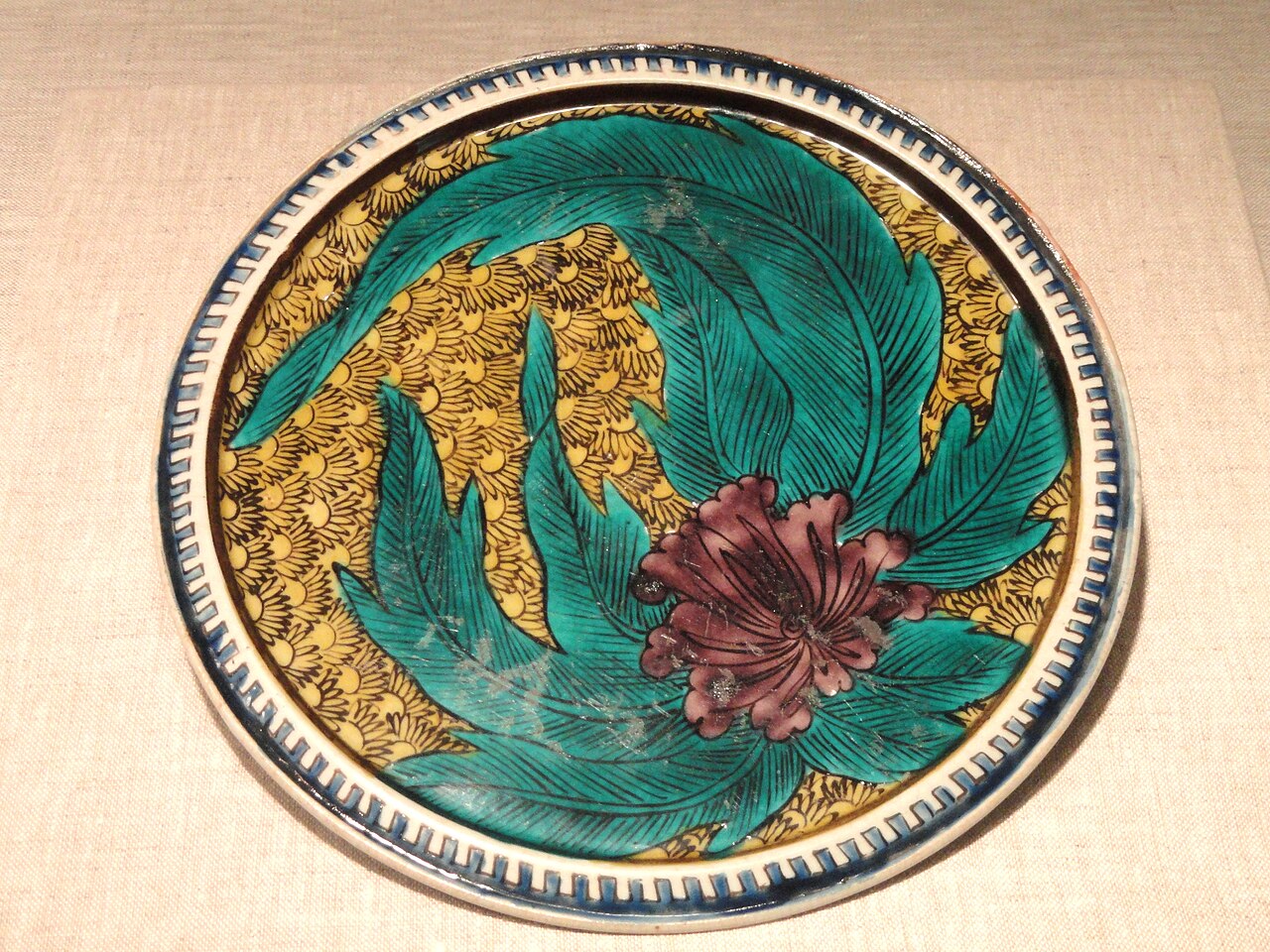
The palette on this cup has five fixed colors, and they have barely changed in three and a half centuries: aka red, ki yellow, midori green, kon deep blue, and murasaki purple. That set of five is called gosai (五彩, “five colors”), and it is the signature of Kutani ware — a porcelain that has been painted in Ishikawa Prefecture, on the Sea of Japan side of central Japan, since around 1655. What is unusual here is the shape underneath the color. Instead of a sake cup or a tea bowl, the gosai enamel is laid over a Western-style coffee cup and saucer.
That is the whole idea of this piece: a 360-year Kaga porcelain-painting tradition applied to the object most of us actually reach for every morning. The Kaga domain that funded Kutani ware was one of the richest in feudal Japan — the “Kaga Hyakumangoku,” a million-koku domain — and that wealth built a courtly taste for gold, color, and decorative craft that still defines Kanazawa today. A pour-over or an espresso in one of these cups is a small, daily version of that taste.
This guide is written for an international reader deciding whether a Kutani-yaki coffee cup and saucer is worth ordering from Japan. It covers what the object is, where and how it is made, how it compares to plainer Japanese porcelain, the realistic care and shipping picture, and — honestly — who should not buy it. Our product data snapshot for this specific listing was thin, so verified pricing and some specs are marked as such rather than guessed.
📅 Published:
🔄 Last updated:
⏱️ Read time: ~9 min

ℹ️ Live pricing and some specs weren’t in our snapshot — the linked listing is authoritative; unconfirmed attributes are marked below.
- Who this is for — and who should skip it
- Product overview (from published specs)
- Where this comes from — place, era, and the craft tradition
- Price snapshot across stores
- What it does well
- Weaknesses and things to verify before buying
- Conclusion — which buyer type are you?
- Other ways to approach this purchase
- 🏆 Editor’s Pick
- ❓ Frequently Asked Questions
Who this is for — and who should skip it
- Want a decorative, conversation-piece cup for coffee or tea rather than a plain mug.
- Appreciate hand-painted overglaze enamel and are buying a gift with visible craft heritage.
- Like the idea of a traditional Japanese porcelain in a familiar Western cup-and-saucer format.
- Are building a small collection of regional Japanese ceramics (Kutani, Arita, Kyō-yaki).
- Are comfortable hand-washing a cup to protect its enamel and any gold accents.
- Need a large-capacity mug for 350 ml-plus servings; cup-and-saucer sets run small.
- Want something you can throw in the dishwasher and microwave without a second thought.
- Are shopping purely on price against mass-market ceramic mugs.
- Dislike ornate, multi-color decoration and prefer plain white or single-glaze cups.
- Need it fast — cross-border shipping from Japan takes longer than domestic Prime.
Product overview (from published specs)
The listing for this item is a specific Amazon Japan Global Store product (ASIN B0DX16HMMX). Because the fetched snapshot did not include a live price or a full spec sheet, the table below states only what is verifiable and marks the rest as unconfirmed. Do not treat blank cells as zero — check the live listing.
Kutani Ware Gosai Overglaze Coffee Cup & Saucer
仲田錦玉 九谷焼 花型 コーヒーカップ&ソーサー 白金盛 (プラチナ盛) 葡萄 青粒 JAPAN KUTANI
通常4~5日以内に発送します。 · Sold by 九谷陶芸 北山堂 · ASIN B0DX16HMMX
Price and availability as of 2026-09-01 05:22 JST. The Amazon listing at the time of purchase is authoritative. jpmono.com earns a commission on qualifying purchases at no extra cost to you.
| Attribute | Detail | Source |
|---|---|---|
| Craft | Kutani-yaki (九谷焼, Kutani ware) porcelain, gosai overglaze enamel | Maker tradition |
| Form | Coffee cup + saucer (Western tableware format) | Listing title |
| Material | Porcelain (jiki) | Craft tradition |
| Decoration | Hand-painted five-color palette (red, yellow, green, deep blue, purple) | Craft tradition |
| Origin | Ishikawa Prefecture (Kanazawa / Komatsu area), Japan | Craft tradition |
| Capacity / dimensions | Unconfirmed — check manufacturer / listing | — |
| Price | Unconfirmed in snapshot — see live listing (authoritative) | — |
Sources: Amazon US search (primary, moonill-20) + Amazon JP Global Store (secondary, moonill-22, sourced listing) + maker tradition. Live pricing and stock fluctuate; the affiliate link is the current source of truth.
📖 Glossary — key Kutani-ware terms
- Kutani-yaki (九谷焼, “Kutani ware”) — overglaze-painted porcelain from Ishikawa, named for the village of Kutani where the first kilns opened.
- Gosai (五彩, “five colors”) — the signature palette of red, yellow, green, deep blue, and purple applied as thick overglaze enamel.
- Ko-Kutani (古九谷, “old Kutani”) — the prized earliest wares from the mid-1600s, before production lapsed.
- Saikō-Kutani (再興九谷, “revived Kutani”) — the early-1800s revival around Kanazawa and Komatsu that continues today.
- Uwa-e / overglaze — enamel painted on top of the fired glaze and fixed in a lower-temperature firing, giving Kutani its raised, vivid color.
- Kaga Hyakumangoku (加賀百万石) — the “million-koku” Kaga domain of the Maeda clan, whose wealth funded the region’s decorative crafts.
Where this comes from — place, era, and the craft tradition

Ishikawa Prefecture sits on the Hokuriku coast of central Japan, facing the Sea of Japan. Kutani ware takes its name from the village of Kutani, where the first kilns were lit; today the painting workshops cluster around Kanazawa, the prefectural capital, and Komatsu to its south. The region’s cold, snow-heavy winters and its long isolation behind the mountains from the old capital region gave it a strong, self-contained craft culture — one that the domain’s rulers deliberately cultivated.
That cultivation is the key to understanding Kutani. The Maeda clan ruled the Kaga domain, one of the wealthiest in feudal Japan, and their million-koku income funded a courtly appetite for gold, color, and decorative craft.
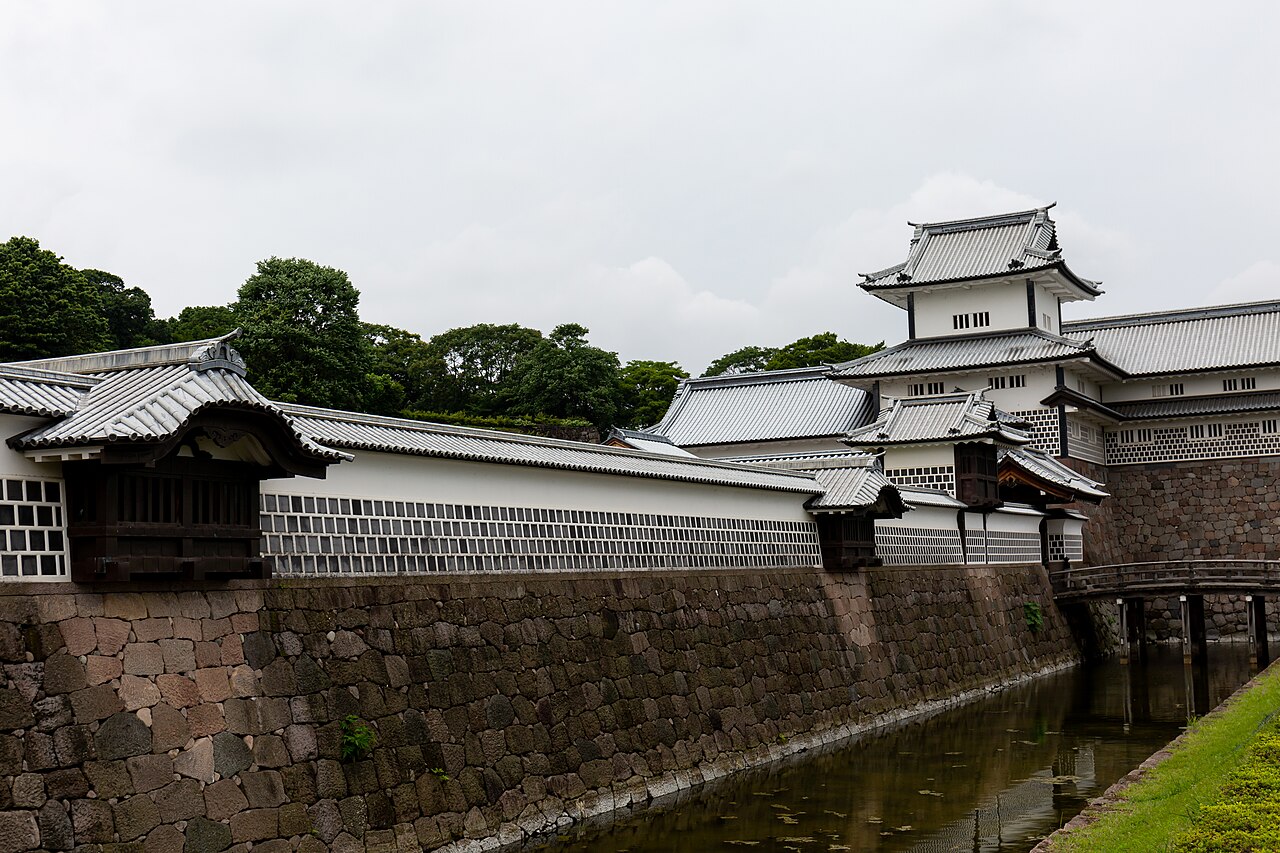
Kutani ware itself began around 1655, when the Daishoji domain — a branch house of the Kaga Maeda clan — opened kilns at Kutani village after kaolin, the raw material for porcelain, was found nearby. Those earliest wares are the celebrated ko-Kutani (“old Kutani”), prized by collectors to this day. Production then lapsed for a period. It was revived in the early 1800s as saikō-Kutani (“revived Kutani”), this time centered on Kanazawa and Komatsu, and it has thrived there ever since.
- c. 1655 — The Daishoji domain, a Kaga Maeda branch house, opens kilns at Kutani village after kaolin is found nearby.
- Late 1600s — The vivid ko-Kutani wares are produced; surviving plates from this era sit in museums today.
- Early 1700s — Production lapses, and the Kutani kilns fall quiet for roughly a century.
- Early 1800s — Revival as saikō-Kutani around Kanazawa and Komatsu, the form that continues today.
- Today — Kutani painting thrives in Ishikawa; the gosai palette now appears on Western forms like this coffee cup and saucer.
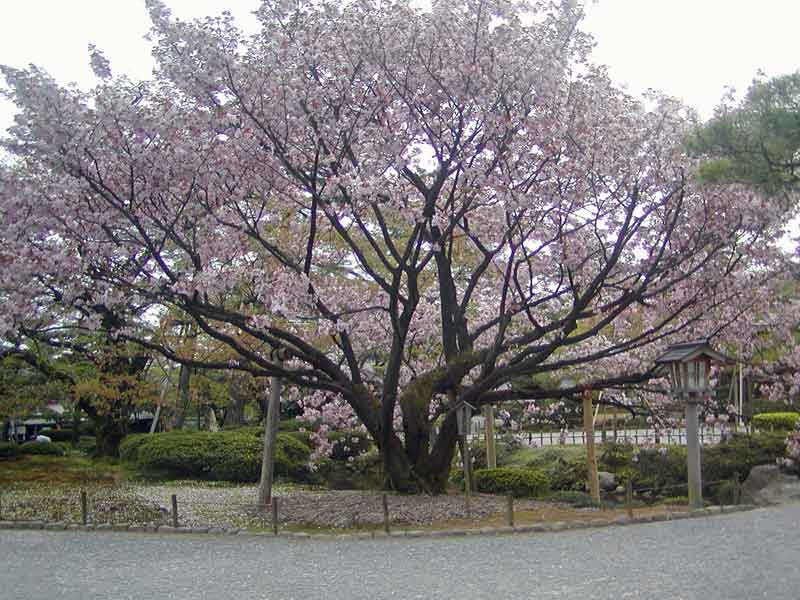
The wealth behind all of this shows up in Kanazawa’s gardens and gold. Kenrokuen, one of Japan’s three great gardens, was built by the Maeda lords, and the same decorative aesthetic that shaped it also shaped Kutani ware’s love of color.
“The five colors of gosai have stayed fixed for three and a half centuries — what changes is the object they are painted onto, and today that object is a coffee cup.”
None of this is heritage marketing. Kutani is still a living, working craft in Ishikawa, and Kanazawa remains a city where hand-painted porcelain and gold leaf are part of daily commerce rather than museum display.
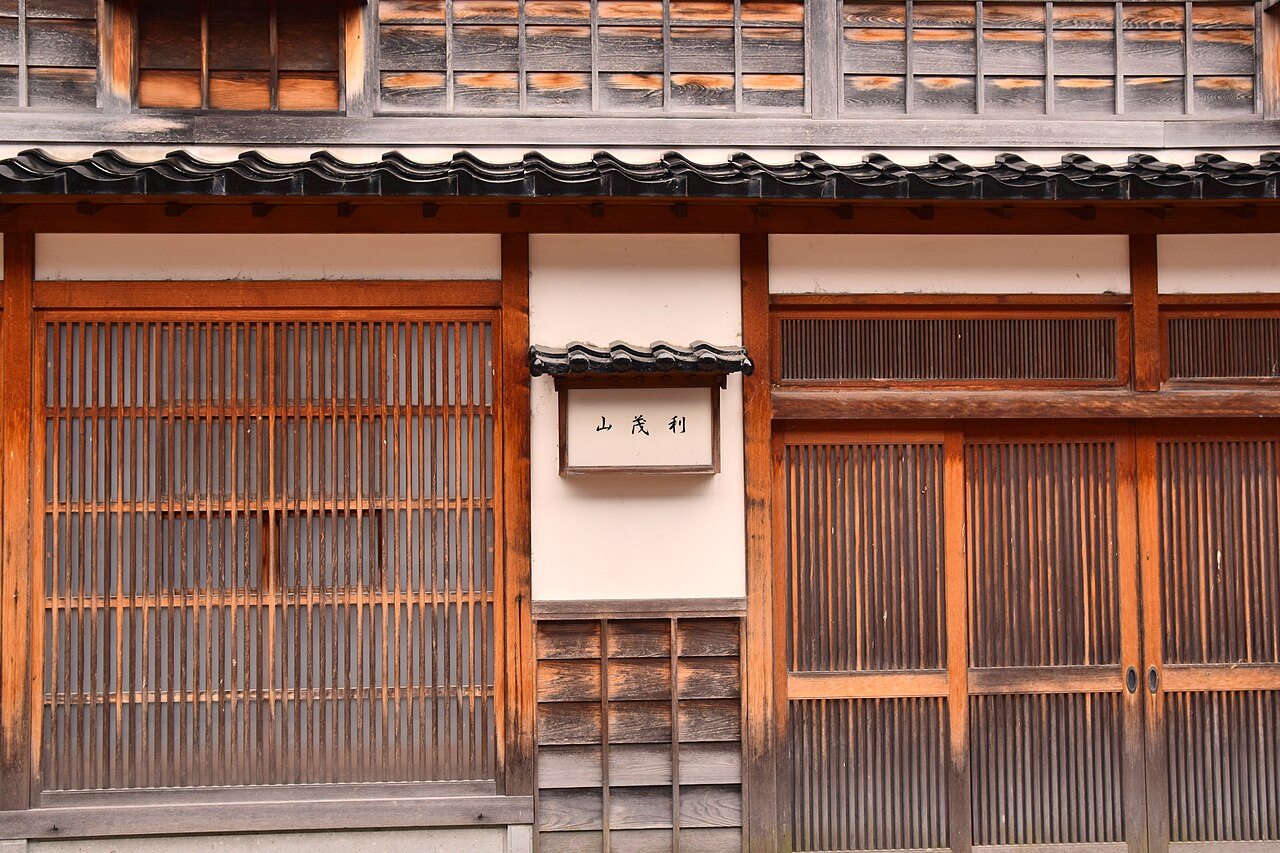
What sets Kutani apart from Japan’s blue-and-white porcelains is precisely that overglaze enamel — the gosai palette painted on top of the fired glaze and fixed in a second, lower firing, so the color reads as thick and vivid rather than as a wash beneath the surface.
Other Japanese craft cups, bowls, and regional ceramics we’ve covered — useful for weighing material, region, and use against this Kutani cup.
 Ohi-yaki matcha chawan (Ishikawa)
Kanazawa Haku gold-leaf sakazuki
Gohara Lacquerware mulberry bowl
 Yamanaka woodturned tea caddy
Arita sometsuke porcelain mug
 Takaoka Shikki raden box (Toyama)
 Otani-yaki tumbler
 Shiro-Satsuma overglaze sake cup
- 🍽️ Dishwasher: hand-wash recommended — overglaze enamel and any gold accents wear faster under repeated dishwasher cycles (general guidance for enamel-decorated porcelain).
- ♨️ Microwave: avoid if the piece carries metallic (gold/silver) decoration; confirm on the listing before use.
- 🧴 Daily care: wash gently by hand, avoid abrasive scrubbers, and dry with a soft cloth to protect the painted surface.
Price snapshot across stores
| Store | Item / Variant | Price (JPY + USD est.) | Notes |
|---|---|---|---|
| 🇺🇸 Amazon.com (US) | Browse Japanese Kutani-ware cups & porcelain | varies (USD) | Best if you’re shopping from the US — Prime shipping, USD pricing, no international customs. Amazon US carries Japanese Kutani and overglaze porcelain from various sellers; this guide’s exact listing is sourced from Japan (next row). |
| 🇯🇵 Amazon JP Global Store | This Kutani gosai coffee cup & saucer (ASIN B0DX16HMMX) | See live listing — price not in snapshot | Ships internationally from Japan. This is the sourced listing for the exact item covered here. |
| Maker direct | Kutani kiln / gallery pieces | Varies by kiln | Kanazawa and Komatsu kilns and galleries sell directly; most do not ship abroad without a forwarder. |
| Proxy services (Buyee / Tenso) | Any Japan-only listing | Item price + forwarding fee | Use when a piece is listed only on Japan-domestic stores; adds a service fee and a consolidation step. |
Prices in USD are approximate and depend on the current exchange rate (¥150/USD baseline as of mid-2026). JPY is the authoritative price for the specific listed item. Prices and stock fluctuate — verify at the retailer before buying.
What it does well
Weaknesses and things to verify before buying
- Price and specs were not in our snapshot. Capacity, exact dimensions, and the current price are unconfirmed here — treat the live listing as authoritative.
- Care is not carefree. Overglaze enamel and any gold accents favor hand-washing; this is not a dishwasher-and-forget mug.
- Capacity runs small. Cup-and-saucer sets are sized for coffee or tea, not for a 400 ml American-style fill.
- Cross-border shipping and customs. Delivery from Japan is slower than domestic Prime, and orders above your country’s threshold may attract duties.
- Decoration is a matter of taste. The dense, multi-color gosai style is deliberately ornate; if you prefer plain porcelain, it will feel busy.
- Handling risk in transit. Porcelain with a saucer is fragile; confirm packaging and the seller’s breakage policy before ordering.
Conclusion — which buyer type are you?
Other ways to approach this purchase
🏆 Editor’s Pick
This is the piece to start with: a genuine hand-painted Kutani overglaze cup in the everyday form you already use. Three reasons it earns the pick:
- Authentic gosai overglaze — the real Ishikawa tradition, not a printed lookalike.
- Western cup-and-saucer format slots straight into coffee and tea routines.
- Listed on Amazon JP Global Store, so international buyers can order it directly.
❓ Frequently Asked Questions
Does this Kutani coffee cup ship outside Japan?
Yes. It is listed on the Amazon JP Global Store, which ships internationally to most major destinations. Delivery is slower than domestic Prime, and orders above your country’s duty threshold may incur customs charges.
Is it dishwasher and microwave safe?
Hand-washing is the safer choice for overglaze enamel and any gold or metallic accents, which wear under repeated dishwasher cycles. Avoid the microwave if the piece has metallic decoration. Confirm the specific listing’s guidance before use.
What is “gosai” and why does it matter?
Gosai (五彩, “five colors”) is Kutani ware’s signature palette — red, yellow, green, deep blue, and purple — applied as thick overglaze enamel on top of the fired glaze. It is what distinguishes Kutani from Japan’s blue-and-white porcelains.
Where exactly is Kutani ware made?
In Ishikawa Prefecture on the Sea of Japan coast. Kilns first opened at Kutani village around 1655; today the painting workshops cluster around Kanazawa and Komatsu, the old Kaga-domain heartland.
How is this different from Arita porcelain?
Both are porcelain, but Kutani is defined by its bold five-color overglaze enamel, often covering the whole surface. Arita (sometsuke) is best known for blue-and-white underglaze painting. They are different decorative traditions from different regions.
Is it a good gift?
Yes, for coffee, tea, and ceramics lovers. It is a recognizable regional craft with a clear heritage story, and the familiar cup-and-saucer form makes it easy to use rather than display-only.
Why does the price show as “check live listing”?
Our data snapshot for this listing did not include a live price. Rather than guess, we point you to the Amazon JP Global Store listing, which is the authoritative source for the current JPY price and stock.
jpmono.com is curated by a Japan-based editorial team (working out of Toyama in the Hokuriku region and Nara in Kansai) and is independent. We don’t take payment from the makers we feature; income comes from affiliate links. We don’t physically test every product — we read maker specs and source listings. Read more about our editorial standards.
🤖 This article was produced with AI assistance and reviewed against the source listing and cited references before publication. Facts about pricing and specs that were not present in our data snapshot are marked as unconfirmed.
Affiliate disclosure: jpmono.com may earn a commission on qualifying purchases made through links on this page, at no additional cost to you.