![Nagatani-en Kamado-san Iga Donabe Rice Cooker (3-Gō, ACT-01, ¥16,500 / ≈$110 USD) — 1,300 Years of Iga Clay, From Sen no Rikyū’s Tea Ware to Your Stovetop [2026 Guide for International Readers]](https://jpmono.com/wp-content/uploads/2026/05/nagatanien-kamadosan-iga-donabe-rice-cooker-where-to-buy-2026-featured-18-1400x1013.jpg)
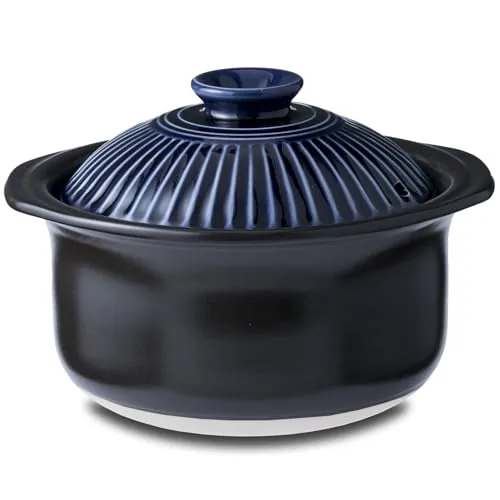
The Kamado-san (かまどさん) is a clay rice-cooking donabe made by Nagatani-en (長谷園), a Mie-prefecture pottery house founded in 1832 in the village of Marubashira, in the old province of Iga. The clay it is fired from is the same Iga clay that, in the late 16th century, supplied the tea master Sen no Rikyū with the rough, fire-resistant tea vessels he favored — and that, in the 7th and 8th centuries, fired some of the earliest stoneware in this corner of central Japan. The cooker itself is recent (early 2000s). The material and the kiln tradition behind it are not.
The Kamado-san 3-gō (model ACT-01) is the household-standard size: a ⌀24 × h16 cm pot that cooks three cups of Japanese rice and serves roughly three to six people. It sits directly on a gas flame, uses a two-lid pressure-kettle design, and reaches the consistent results normally associated with traditional wood-fired kamado stoves — without skilled flame management from the cook. Per the maker, cumulative sales of the line have passed one million units; it has been awarded a Good Design Long-Life Design Award.
This guide is written for an international reader thinking about buying a Japanese donabe from outside Japan. It walks through where Iga sits on the map of Japan and why the clay matters, the kiln tradition behind Nagatani-en, how the 3-gō compares with the smaller 1-gō and 2-gō siblings, where to buy it (Amazon JP Global Store, maker direct, proxy services), and the practical caveats — most importantly, the fact that this is a direct-flame product not compatible with induction (IH) ranges.
🔄 Last updated: May 12, 2026
⏱ Read time: ~14 min

- Who this is for — and who should skip it
- Product overview (from published specs)
- 📍 Where this comes from — place, era, and the craft tradition
- 📦 Shipping & where to buy from outside Japan
- Price snapshot across stores
- What it does well
- Weaknesses and things to verify before buying
- Conclusion — which buyer type are you?
- Other ways to approach this purchase
- 🏆 Editor’s Pick
- ❓ Frequently Asked Questions
- 📌 Related Japanese Crafts
Who this is for — and who should skip it
- Cook on a gas range (or an open flame setup like a camping stove)
- Care about the texture difference between gas-flame rice and electric-cooker rice
- Want a piece of Iga ware with daily, non-decorative use
- Cook for 3–6 people regularly and want a single primary pot
- Are comfortable hand-washing and air-drying a clay pot after each use
- Cook on an induction (IH) stovetop — the clay base has no metal layer and will not heat
- Want a dishwasher-safe rice cooker
- Cook for one person only (the 1-gō is more appropriate; the 3-gō is over-sized)
- Need a hands-off appliance with a timer and a “keep warm” function
- Cannot accommodate ~$40–$90 USD international shipping for a 4 kg fragile-clay item
Product overview (from published specs)
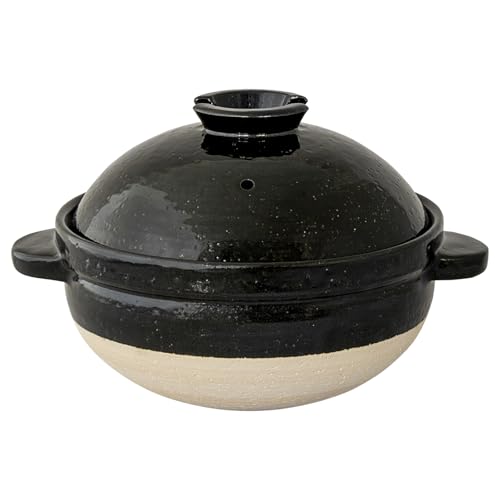
Nagatani-en Kamado-san Iga Donabe Rice Cooker (3-Gō, ACT-01)
長谷園 かまどさん 三合炊き 24cm 1.5L (3~6人用) レシピ付 土鍋 炊飯 ごはん 伊賀焼 日本製 ACT-01
現在在庫切れです。 · ASIN B0BCTWQ9LJ
Price and availability as of 2026-08-31 02:30 JST. The Amazon listing at the time of purchase is authoritative. jpmono.com earns a commission on qualifying purchases at no extra cost to you.
| Field | Detail (per Amazon JP listing, May 2026) |
|---|---|
| Product | Nagatani-en Kamado-san 3-gō donabe rice cooker, model ACT-01 |
| Maker | Nagatani-en / 長谷園 (formally Nagatani Seitou Co.), founded 1832 |
| Made in | Marubashira (丸柱), Iga City, Mie Prefecture, Japan |
| Material | Iga coarse clay (伊賀粗土) with high-far-infrared glaze |
| Dimensions | ⌀ 24 cm × h 16 cm (handle up) |
| Capacity | 3 gō (≈ 540 g uncooked → ≈ 1.5 kg cooked rice, serves 3–6) |
| Weight | Approximately 4.0 kg |
| Heat source | Direct flame only (gas / open flame). Not compatible with IH induction. |
| Price (JPY) | ¥16,500 (≈ $110 USD at ¥150/USD, May 2026) |
| Loyalty points | 166 Amazon points (≈ 1%) |
| International shipping | Available via Amazon JP Global Store to many destinations; confirm at checkout. |
Source: Amazon JP listing snapshot, May 2026. Live pricing may have shifted since the writing date — verify at the affiliate link before buying.
📖 Glossary — Japanese craft terms used in this article
Donabe (土鍋) — literally “earth pot.” A general term for Japanese cooking pots made of fired clay. Designed to sit on direct flame.
Iga ware (伊賀焼) — pottery fired in the Iga basin of western Mie Prefecture, using local lake-bed clay with exceptional thermal-shock resistance. METI Traditional Craft Product designation: 1982.
Gō (合) — a traditional Japanese unit of volume, ≈ 180 ml. One gō of uncooked rice yields roughly one full rice bowl cooked.
Kamado (かまど / 竈) — the wood-fired clay stove that fed Japanese kitchens before the gas era. “Kamado-cooked rice” is the historical gold standard for rice texture in Japan.
Wabi-cha (侘び茶) — the rustic-aesthetic tea ceremony codified by Sen no Rikyū in the late 16th century; prized rough, fire-marked, asymmetric utensils.
Mimitsuki (耳付き) — “ear-attached.” Twin lugs on the rim or shoulder of a vessel — a signature Iga ware design feature, originally functional, later decorative.
Noborigama (登り窯) — climbing kiln, built up a slope so chambers feed heat to one another. Nagatani-en’s Meiji-era noborigama is preserved as a cultural asset.
Shokunin (職人) — craftsperson / artisan; a person whose work is defined by mastery of a single trade.
📍 Where this comes from — place, era, and the craft tradition

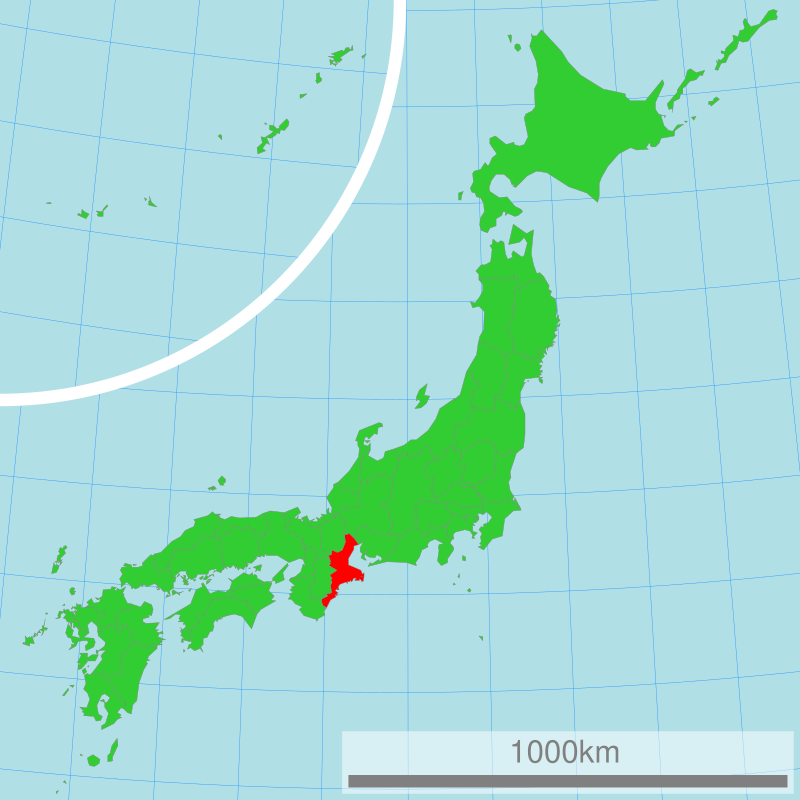
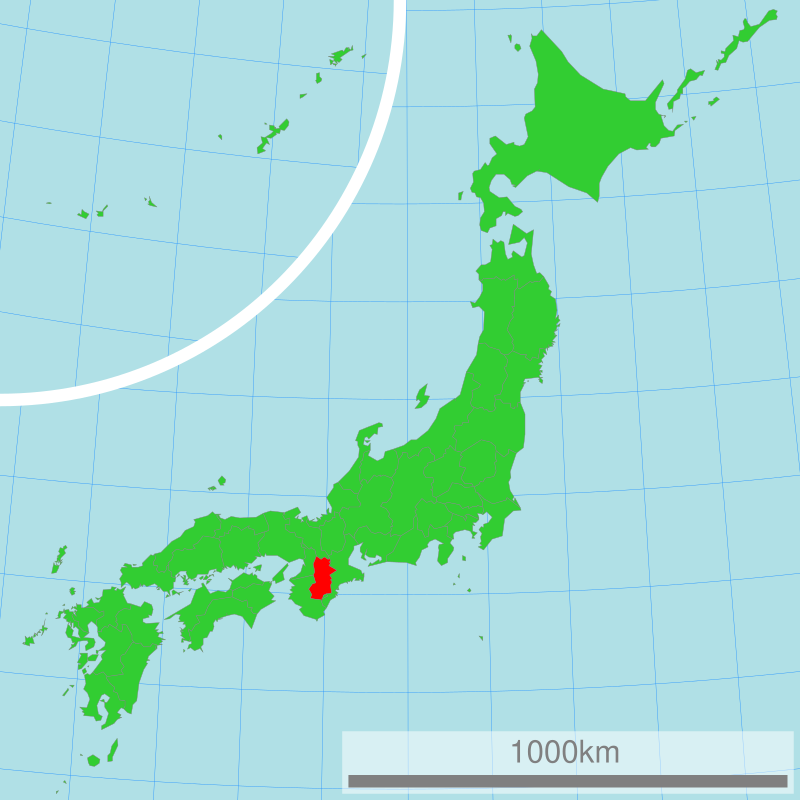
The region on the map — a basin ringed by mountains
Iga is a basin in the western part of Mie Prefecture, in the Kansai region (also called Kinki) of central Japan. The basin sits between two ranges — the Suzuka mountains to the east, separating Iga from the Ise coast and the Pacific, and the Yamato Highlands to the west, separating Iga from Nara. That isolation is the reason for two of Iga’s three famous things: the secret training grounds of Iga-ryū ninjutsu, and an independent kiln tradition that did not merge into any of the larger surrounding pottery districts. The third Iga export is the haiku poet Matsuo Bashō, born in this basin in 1644.
Geologically, what makes Iga matter for pottery is the lake-bed clay. Roughly four million years ago a freshwater lake — the proto-Biwa, sometimes called Lake Kobiwako — covered much of Iga and what is now southern Shiga. The lake retreated and left a thick deposit of fine-grained, fossil-rich, fire-resistant clay. The high silica content and the fossil-fragment temper give the clay exceptional resistance to thermal shock: it can be heated directly over an open flame without cracking. Almost no other Japanese pottery clay can do this. It is the geological accident that produced Iga ware as we know it, and the same accident is why the Kamado-san is a clay pot that you put on a gas burner without an intermediate plate.
The historical anchor — 1,300 years of firing
The earliest stoneware production in Iga is generally dated to the late 7th and 8th centuries CE — the late Asuka and Nara periods. Nara served as Japan’s imperial capital from 710 to 794, and the kilns of Iga, along with those of the neighboring Sue ware districts, supplied the court and the great Buddhist temples of Nara with everyday vessels. Iga Province itself was administratively separated from Ise Province around 680 CE under the Ritsuryō system, with its provincial capital in what is now central Iga City.
The kilns have been firing here, on and off, for roughly thirteen centuries.
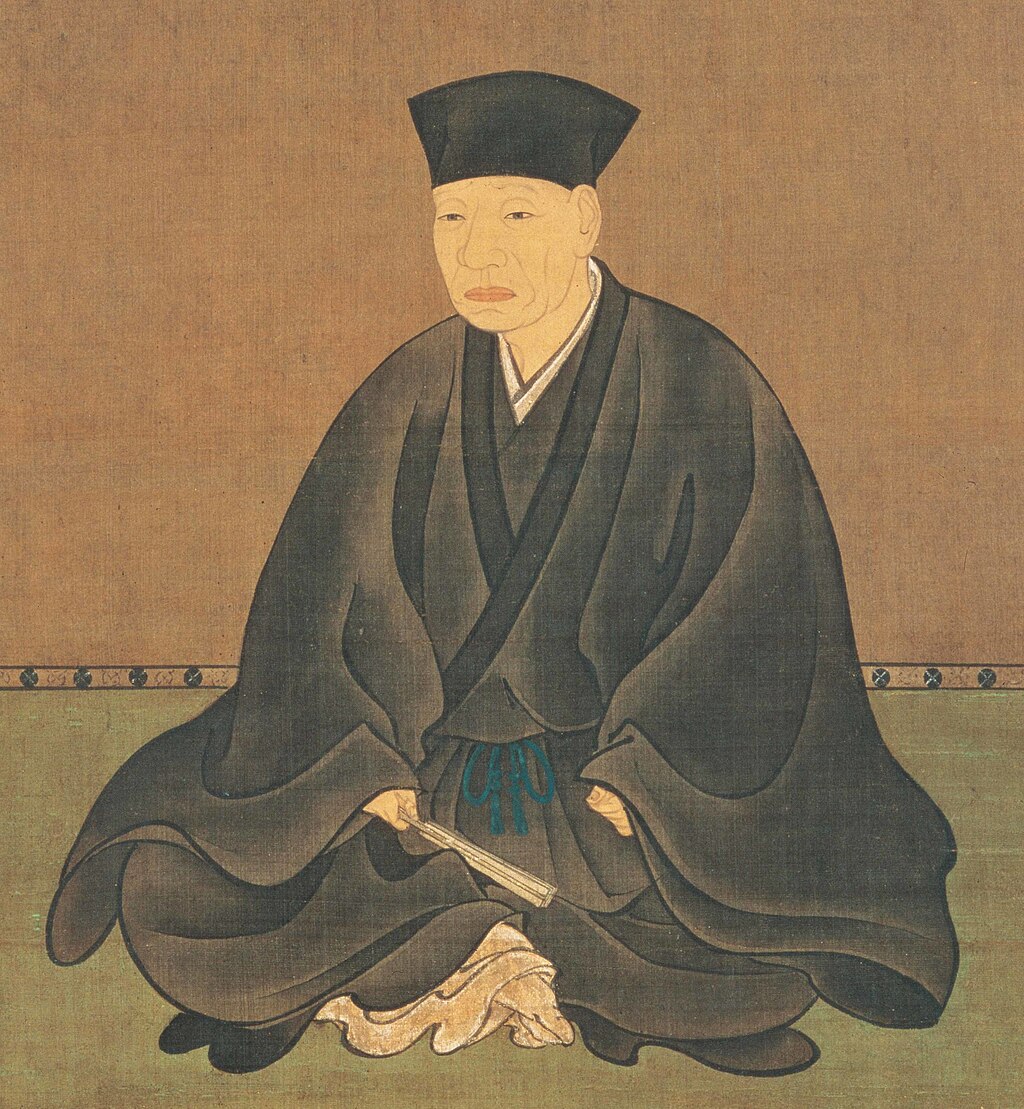
From the Heian period (794–1185) through the Muromachi era (1336–1573), Iga’s kilns produced primarily utilitarian wares — storage jars, water vessels, everyday tableware. The tradition was continuous but not famous. What made Iga famous was the late Sengoku and early Momoyama period, roughly 1570 to 1615, and the rise of wabi-cha — the rustic-aesthetic tea ceremony codified by Sen no Rikyū (1522–1591), advisor to both Oda Nobunaga and Toyotomi Hideyoshi. Rikyū preferred tea utensils that showed fire marks, asymmetric warping, exposed coarse clay, and the visible marks of human hands. Those are exactly the qualities Iga’s fire-resistant clay produced naturally when fired hot enough to vitrify.
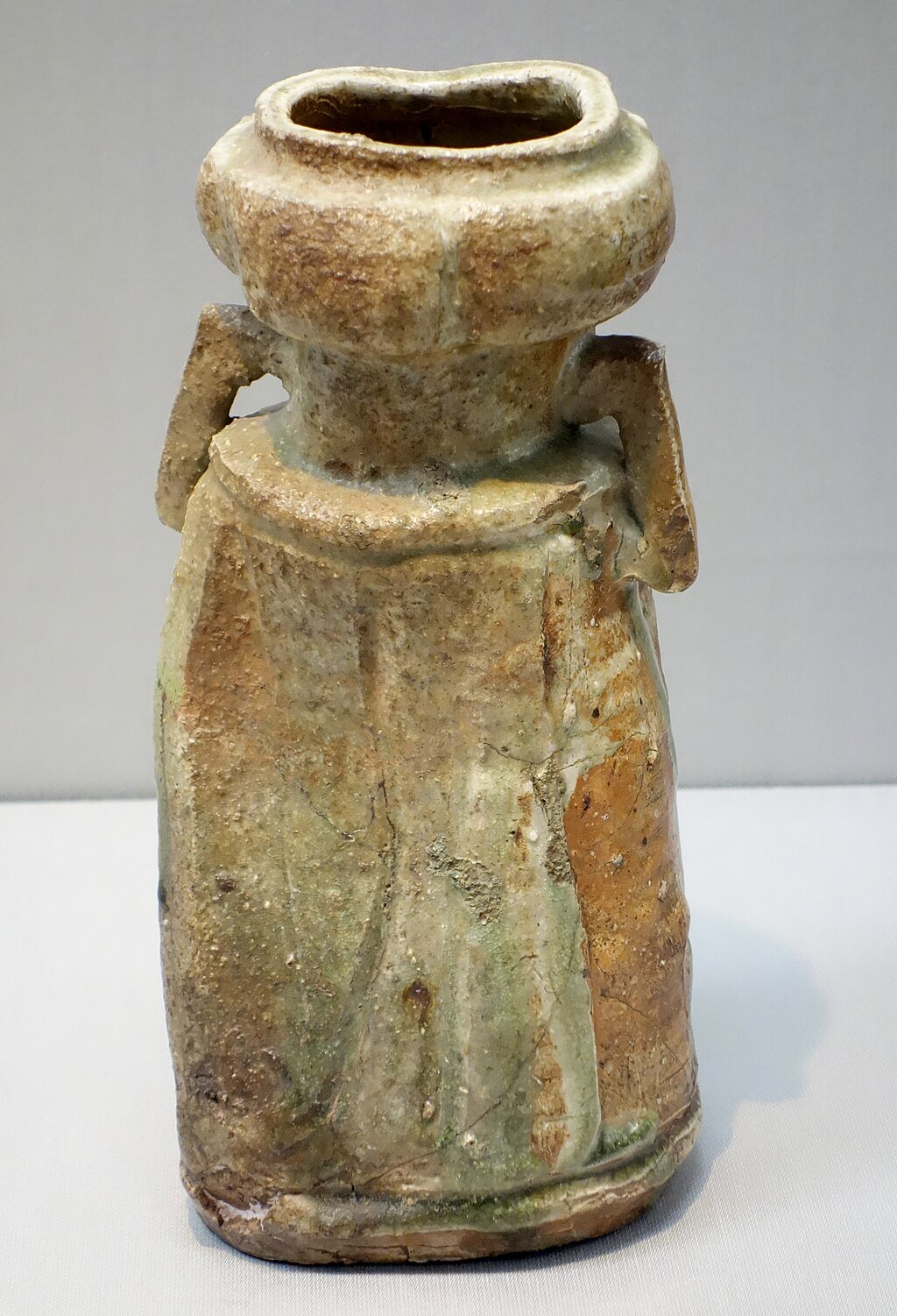
The signature mimitsuki hanaike (耳付き花生, “ear-lugged flower vase”) and the heavy Iga water jars, with their characteristic crackle and natural ash-glaze drips, became some of the most prized objects in tea-ceremony culture. Surviving Momoyama-period Iga pieces are today among the most valuable items in the history of Japanese ceramics. The Kamado-san is, of course, a modern production pot — but the design vocabulary that the maker draws on (matte clay surface, unglazed foot, twin handles read as functional mimitsuki) is the visual language codified during this Momoyama peak.
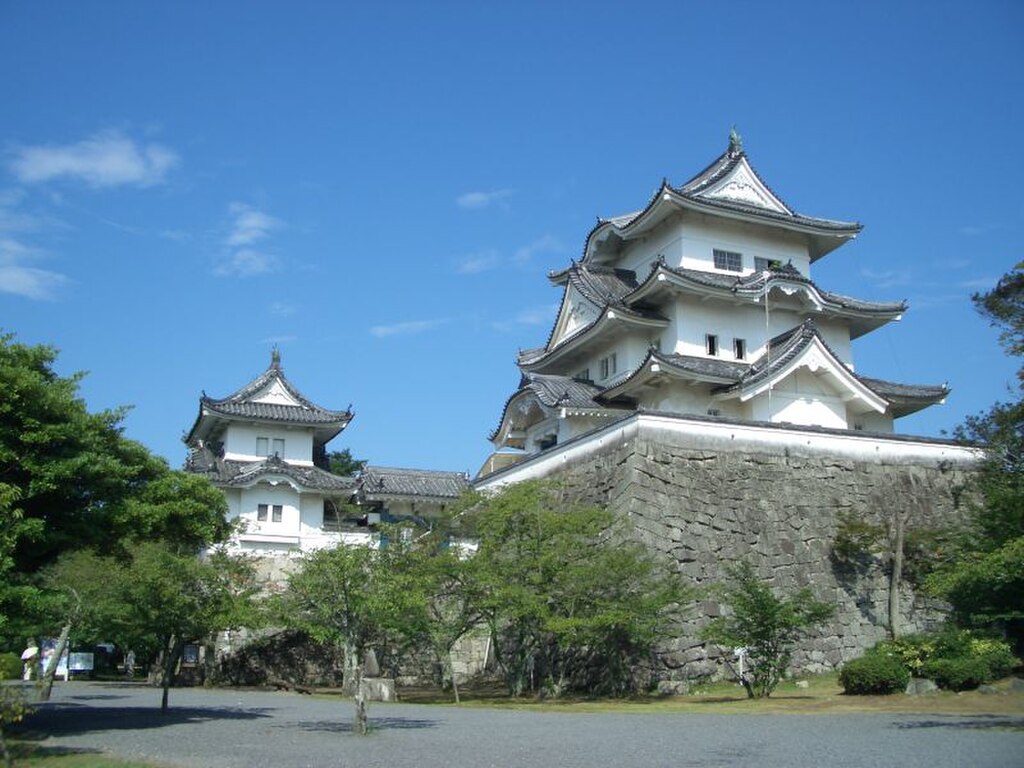
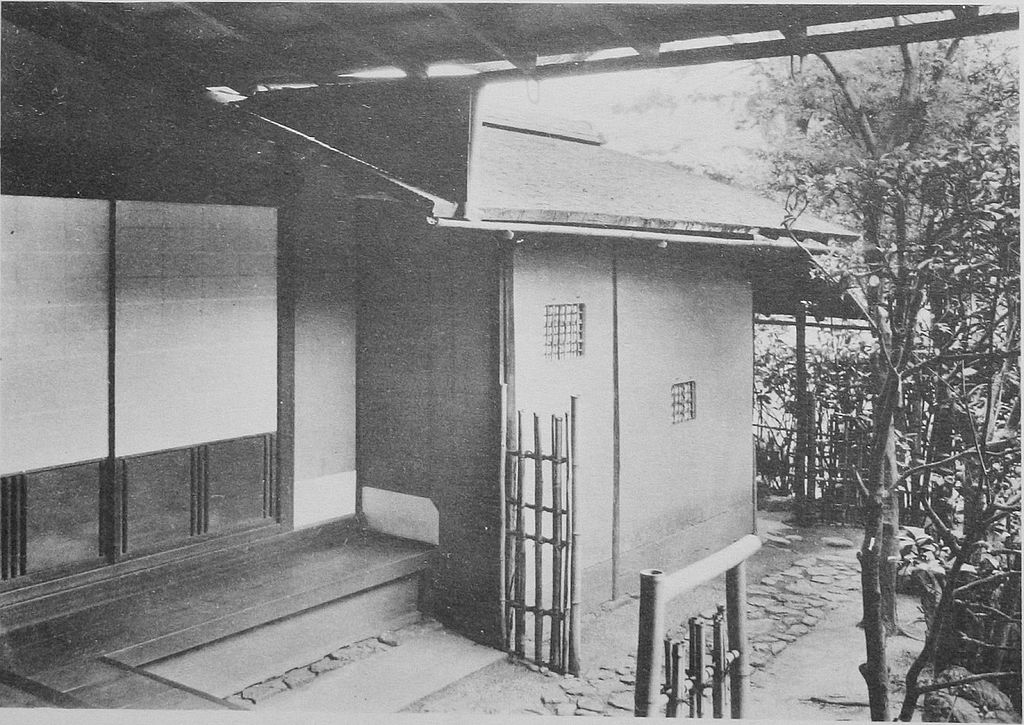
In the Keichō era (1596–1615), three successive lords formalized the Iga kilns: Tsutsui Sadatsugu (1562–1615), then Tōdō Takatora (1556–1630), then Tōdō Takatsugu (1602–1676). Tōdō Takatora is the better known of the three — a Tokugawa-allied castle-builder who reconstructed Iga Ueno Castle in 1611, the same year Lord Toshinaga Maeda was importing foundry artisans into Takaoka in faraway Toyama. The two events bracket the early-Edo formalization of regional craft. Iga Ueno Castle is preserved and stands about 8 km from the Nagatani-en kiln in Marubashira.
-
≈ 680 CE — Iga Province administratively separated from Ise Province under the Ritsuryō system. -
710–794 — Nara period; Iga kilns supply the imperial court and the great Buddhist temples of Nara with everyday stoneware. -
1522–1591 — Lifetime of Sen no Rikyū. Wabi-cha codified; Iga ware adopted as serious tea ware. -
1596–1615 — Keichō era. Tsutsui Sadatsugu, then Tōdō Takatora, then Tōdō Takatsugu formalize the Iga kilns. -
1611 — Tōdō Takatora reconstructs Iga Ueno Castle, ≈ 8 km from Marubashira. -
1832 (Tenpō 3) — The Nagatani family founds Nagatani-en in Marubashira village. -
Early Meiji — Multi-chamber climbing kilns (noborigama) installed on the property; now designated cultural assets. -
1982 — Iga ware designated a METI Traditional Craft Product (伝統的工芸品). -
Early 2000s — Nagatani-en releases the Kamado-san; later receives the Good Design Long-Life Design Award. -
Mid-2020s — Approximately 50 active kilns remain in Marubashira and the surrounding Iga basin; Nagatani-en in its 8th–9th generation.
“Still being made here” — Nagatani-en and Marubashira
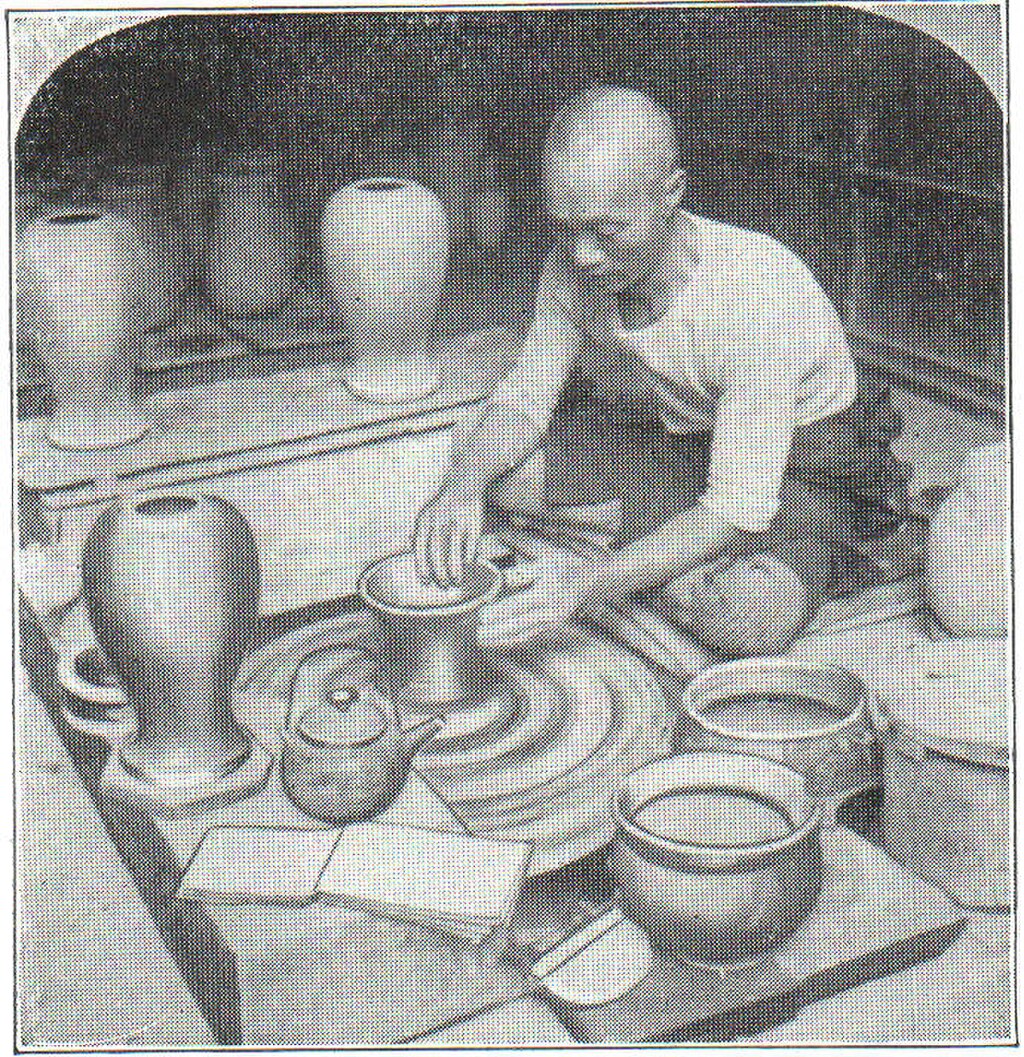
Nagatani-en (formally Nagatani Seitou Co.) was founded in 1832 — the third year of the Tenpō era — by the Nagatani family in Marubashira village. The kiln is now in its eighth and ninth generations; the multi-chamber climbing kilns installed in the early Meiji period are still on the property as designated cultural assets, though current production uses gas kilns for consistency. Iga ware as a whole was designated a METI Traditional Craft Product in 1982, and roughly fifty active kilns remain in Marubashira and the surrounding basin as of the mid-2020s.
“The clay was here before the kilns were here. The kilns were here before the tea masters arrived. The tea masters were here before Nagatani-en was founded — and Nagatani-en, founded in 1832, is now the youngest of those layers.”
The Kamado-san itself is an early-2000s product — recent by Iga standards — but the engineering reads as a translation of older Iga know-how into modern domestic use. The thick walls (肉厚成形, niku-atsu seikei) store heat and release it slowly, which means the cook does not need to ramp the gas flame down at the right moment: the pot itself manages the temperature curve. The double-lid design — a heavy inner lid plus an outer lid — pressurizes the cook chamber lightly and prevents boil-over, producing rice with more starch-broken sweetness than open-pot cooking. The far-infrared interior glaze finishes the grain centers evenly.
Per the maker, cumulative sales of the Kamado-san line have crossed one million units.
One practical fact, restated because international readers often miss it: the Kamado-san is a direct-flame stovetop product. It will not work on an induction range (IH). It requires gas — the assumed Japanese home setup — or an equivalent open flame. Some users place a heat-diffusion plate over an electric coil with limited success, but the maker’s official position is gas or open flame only.
What makes Iga ware visually identifiable
How Japanese cooks use the Kamado-san across the year
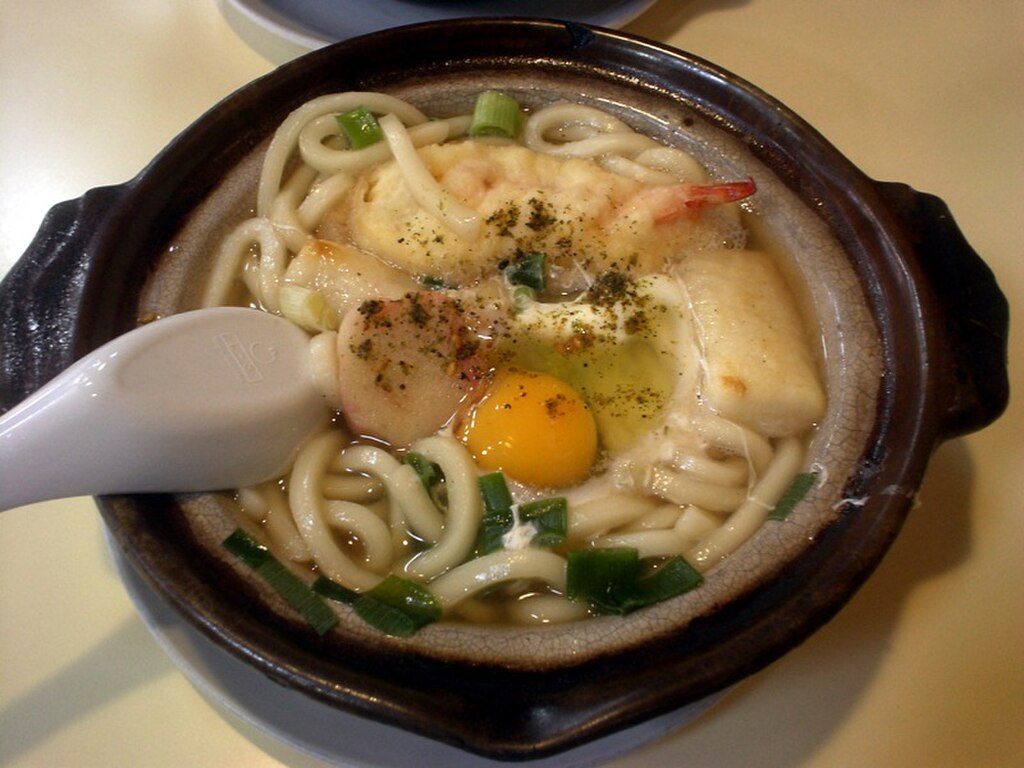
Rice is a year-round staple, so the Kamado-san sees year-round use in households that own one. Sales spike around the autumn rice harvest in October and November, when newly-harvested rice (新米, shinmai) is celebrated and serious home cooks bring out the donabe specifically to honor the new crop. Many Japanese households keep an electric rice cooker for everyday weeknights and reserve the Kamado-san for weekends, guests, or seasonal rice dishes — mushroom or chestnut takikomi gohan in autumn, sea bream tai-meshi in spring, sekihan (red-bean rice) for celebrations. With the separately-sold ceramic suno-ko (perforated rack), it converts into a steamer for dumplings, vegetables, or fish.
For an international reader interested in the regional food context: the Iga basin also produces Iga-gyū (Iga beef, the local wagyu line), several small-batch sakes built on local mountain water (Hanzō, Kibichō, Wakaebisu), and sits within a day-trip radius of Matsusaka (≈ 80 km east, of Matsusaka-gyū wagyu fame) and Ise-Shima (≈ 70 km east, home of the Akafuku mochi confectionary and the Ise Grand Shrine).
📦 Shipping & where to buy from outside Japan
The Kamado-san 3-gō ships at roughly 4 kg with substantial protective packaging for the fragile clay body. That weight, combined with the ceramic-fragile classification, drives the international shipping cost. Per the listing snapshot, the four main paths are:
- Amazon JP Global Store (primary path). Ships this item to most major destinations. Estimated international shipping ≈ $40–$90 USD depending on country. Customs duty exemption typically applies under local de minimis thresholds ($200–$800 depending on destination); above that, expect 5–15% combined duty + tax. No CITES or chemical-regulation flags — it is unglazed-fired clay tableware.
- Maker direct (igamono.co.jp). Nagatani-en’s official site ships internationally with limited English support. Direct-to-consumer pricing similar to Amazon; the official site occasionally lists special-edition variants that are not on Amazon.
- International retailers. Toiro Kitchen (US, toirokitchen.com) is the longest-established overseas Kamado-san reseller; prices typically run $180–$250 USD with US-domestic shipping, which can come out cheaper than Amazon JP + international shipping for some destinations. Specialty Japanese cookware boutiques in New York, London, Paris, Berlin, and Sydney also stock it.
- Proxy services (Buyee / Tenso). Workable if Amazon JP Global Store does not ship to your country. Expect 5–15% commission plus storage and packing fees on top of the item price.
⚠️ Confirm your cooktop type before buying. Gas stove: yes. Open flame / camping stove: yes. IH induction: no — the clay base has no metal layer. Electric coil: maybe with a heat-diffusion plate but not officially supported. Halogen: not officially supported. Verify your range before purchase.
Price snapshot across stores
| Store | Variant | Price (JPY) | ≈ USD | Notes |
|---|---|---|---|---|
| 🇺🇸 Amazon.com (US) | Browse Japanese donabe & clay rice cookers | varies | USD | Best if you’re shopping from the US — Prime shipping, USD pricing, no international customs. Amazon US carries donabe-style clay rice cookers from several makers; Nagatani-en’s Kamado-san 3-gō ships from Japan (next row). |
Prices and availability are based on listing data at the time of writing (May 2026) and may have shifted since. The JPY price is authoritative; USD figures use a ¥150/USD baseline and depend on the current exchange rate. Only the Amazon JP listing snapshot is available for the focus ASIN; live pricing may have shifted since the writing date.
What it does well
The thick clay wall stores and slowly releases heat, so the cook does not need to ramp the flame down at the right moment. The pot manages the temperature curve.
A heavy inner lid plus an outer lid pressurize the cook chamber lightly, preventing boil-over and producing measurably sweeter rice than open-pot cooking.
The coarse Iga clay buffers humidity like a wooden ohitsu rice tub, so rice left in the pot tends to stay distinct rather than going pasty.
With the separately-sold ceramic suno-ko rack, the same pot steams dumplings, vegetables, and fish — one piece of cookware, two functions.
Weaknesses and things to verify before buying
- Not compatible with IH (induction) ranges. The clay base has no metal layer. This is the single most common surprise for international buyers. If your kitchen is IH-only, look at the Nagatani-en × Siroca electric variant or a separate maker (Banko-yaki, Iwachu) with an explicit IH-compatible base.
- Hand-wash only. No dishwasher, no microwave, no freezer. Wash with lukewarm water and mild detergent; air-dry inverted to release residual moisture from the porous foot.
- International shipping cost is real. Expect $40–$90 USD for the 4 kg, ceramic-fragile package — sometimes more than the price of the pot itself in markets like Australia or the EU.
- Hairline crackle (kannyū) develops over time. The glaze develops fine surface cracking with use. This is cosmetic, not structural, but unfamiliar to buyers expecting porcelain-smooth surfaces.
- Drying matters. Per the care notes, if the exterior base becomes wet, dry it thoroughly before the next direct-flame use. Sudden steam inside the clay can crack the pot.
- Storage footprint. 24 cm diameter and 16 cm tall is a meaningful kitchen cabinet allocation. Households tight on storage may prefer the 2-gō.
- Replacement parts ship from Japan. The outer lid is the most fragile component; replacements are available from Nagatani-en but ordering across borders adds time and shipping cost.
- Listing language. The Amazon JP Global Store listing is partially translated; some seasonal details and care notes remain in Japanese. Save the maker’s English care PDF as a reference.
Conclusion — which buyer type are you?
You want a single primary rice pot for the next 20 years, and you cook on gas. Buy the 3-gō ACT-01. The thermal mass makes it the most forgiving, and it is the size most Japanese households actually use.
Couple or small family, weeknight cooking on gas. The 2-gō ACT-03 is lighter to lift and store; the 3-gō is fine if you also entertain.
Curious about clay-pot rice but not committed. Start with the 1-gō ACT-02 at ≈ ¥11,000; lower shipping weight, smaller storage footprint, real Iga ware.
IH-only kitchen, no time for hand-washing, or unwilling to absorb international shipping cost. Look at an IH-rated cast-iron or modern electric Japanese rice cooker instead.
Other ways to approach this purchase
Amazon JP discounts the Kamado-san occasionally around Prime Day, New Year, and the autumn rice-harvest season (October). Discount depth tends to be modest (5–10%).
Used Kamado-san pots appear regularly on Mercari Japan and Yahoo Auctions. Proxy services can forward them overseas. Verify both lids are present and the body has no cracks.
Amazon JP awards loyalty points (≈ 166 points = ≈ 1% on ¥16,500). Frequent buyers on Amazon JP Global Store also accumulate Prime Day coupons.
A heavy enameled cast-iron pot with a tight lid will produce decent stovetop rice, though it does not “breathe” like Iga clay. A reasonable substitute while you decide.
🏆 Editor’s Pick
¥16,500 (≈ $110 USD as of May 2026) · Iga coarse-clay body · ⌀24 × h16 cm, ≈ 4 kg · 3-gō capacity (serves 3–6) · gas / direct flame only.
Three reasons we’d start here:
- The 3-gō is the household-standard size in Japan; capacity vs. storage footprint is well-balanced.
- At ≈ 4 kg shipping weight, it stays under most international parcel limits without prohibitive fees.
- The larger thermal mass cooks more evenly than the smaller variants — the 1-gō, while elegant, is best for a single diner.
Per Amazon JP listing, May 2026. Prices and availability fluctuate — confirm at the listing before purchase.
This guide was assembled by the jpmono.com editorial team — a small group based in Toyama (Hokuriku region) and Nara (Kansai region), curating Japanese craft items for international readers. We do not test every item in our own kitchens; our role is to translate what Japanese makers, retailers, and craft historians say into English, and to flag international-buyer considerations (shipping, customs, care).
❓ Frequently Asked Questions
Will the Kamado-san work on my induction (IH) stovetop?
How long does it take to cook 3 cups of rice in the Kamado-san?
Do I need to season or “break in” the pot before first use?
Will Amazon JP Global Store ship the Kamado-san to my country?
3-gō or 2-gō — which size should I pick?
Is the Kamado-san dishwasher-safe?
What is the difference between Iga ware and Banko ware donabe?
jpmono.com is curated by a Japan-based editorial team (working out of Toyama in the Hokuriku region and Nara in Kansai) and is independent. We do not take payment from the makers we feature; income comes from affiliate links. Read more about our editorial standards.
This article was prepared with AI assistance based on Amazon JP listing data, the maker’s published specifications, and verifiable historical references. Editorial judgment, structure, and recommendations are the responsibility of the jpmono editorial team.
Affiliate disclosure: jpmono.com may earn a commission on qualifying purchases made through links on this page, at no additional cost to you.