![Takachiho Kagura-Suzu: Miyazaki Cast Brass Shinto Dance Bell Guide [2026]](https://jpmono.com/wp-content/uploads/2026/05/japan-map-regions-and-prefectures-800x1050.png)
A kagura-suzu (神楽鈴, sacred-dance bells) is a cluster of small cast bells fixed in tiers on a single ringed handle. Shaken in the hand of a dancer, it produces a bright, layered jingle that — in the Shinto tradition — both purifies a space and signals the presence of the gods. Cast brass with a polished gold-tone finish is one form of this ritual instrument.
What makes the kagura-suzu worth a closer look for a non-Japanese reader is not the metalwork alone but where the object’s meaning comes from. Takachiho, in the mountainous north of Miyazaki Prefecture on the island of Kyūshū, is the highland landscape that Japanese myth ties to the very origin of kagura. The all-night village dances still performed there keep the hand-held suzu in living ritual use rather than treating it as a museum piece.
This article is written for the reader who wants one of these bells as a ritual implement, an altar (kamidana) accessory, a sound object, or a culturally grounded gift — and who wants the regional context, the honest caveats about sourcing, and the practical shipping picture before buying. We cover what the bell is, where its meaning comes from, how it compares to related cast-bell objects, and where to buy it from outside Japan.
🔄 Last updated: June 12, 2026
⏱️ Read time: about 11 minutes
- Who this is for — and who should skip it
- Product overview (from published specs)
- 📍 Where this comes from — place, era, and the kagura tradition
- 📌 How does it compare?
- Where to buy Takachiho kagura bells
- What it does well
- Weaknesses and things to verify before buying
- Conclusion — which buyer type are you?
- Other ways to approach this purchase
- ❓ Frequently Asked Questions
Who this is for — and who should skip it
✅ A good fit if you…
- 🔔 Want a genuine hand-held Shinto ritual bell, not a costume prop
- ⛩️ Keep a home kamidana (神棚, household Shinto altar) and want a proper torimono implement
- 🎴 Study, perform, or teach kagura, mikomai, or Japanese sacred dance
- 🎁 Are giving a culturally grounded gift tied to Japanese myth and Takachiho
- 🎵 Collect sound objects and want the layered jingle of a multi-bell cluster
⚠️ Probably not for you if you…
- 🏷️ Require a documented Takachiho-made, named-workshop provenance (verify the maker first — see caveats below)
- 🪘 Want a single seated temple bowl-bell for meditation (→ consider an orin instead)
- 🎐 Are after a hanging summer wind bell with a clapper and strip (→ consider a fūrin)
- 🔇 Dislike a bright, sustained jingle — this is a loud, many-bell sound, not a soft single tone
Product overview (from published specs)
| Attribute | Cast brass kagura-suzu ★ this guide | Source |
|---|---|---|
| Item type | Kagura-suzu — Shinto dance hand-bell (tiered cluster on a ringed grip) | Product details |
| Material | Cast brass | Product details |
| Finish | Polished gold-tone | Product details |
| Form | Cluster of small bells in tiers on a single handle | Product details |
| Number of bells | Clusters are commonly 3, 5, 7, 12, or 15 bells. | — |
| Dimensions / weight | — | — |
| Maker / workshop | Unconfirmed — verify before purchase (cast Shinto brass is often produced by saishigu foundries in the Kyoto/Takaoka tradition) | data_notes |
| Cultural home | Takachiho, Miyazaki (Kyūshū) — birthplace of kagura | data_notes |
| Price | — | — |
📚 Glossary — key terms for understanding the kagura-suzu
kagura (神楽, “god-entertainment”): Shinto ceremonial music and dance offered to the gods. Japanese tradition treats it as originating in the dance performed before the Heavenly Rock Cave (see Ama-no-Iwato below).
suzu (鈴): a round Japanese bell — typically a hollow ball with a slit and a loose pellet inside, so it jingles rather than rings with a clapper. A kagura-suzu binds many such bells in tiers onto one handle.
torimono (採物): the hand-held implements a kagura dancer carries — a fan, a sakaki branch, a sword, or the suzu. They are not props; they are understood as vessels through which the divine is invited and addressed.
Ama-no-Iwato (天岩戸, “Heavenly Rock Cave”): the myth in which the sun goddess Amaterasu seals herself in a cave, plunging the world into darkness, until the goddess Ame-no-Uzume dances to draw her out.
Ame-no-Uzume (天鈿女命): the deity whose dance before the cave is traditionally regarded as the first kagura — and, by extension, the mythic ancestor of the ringing dance bell.
yokagura (夜神楽, “night-kagura”): the all-night form of village kagura performed through the winter in Takachiho, comprising a long sequence of sacred dances.
kamidana (神棚): a small household Shinto altar shelf. A suzu is one of the ritual implements kept and used at such altars and at shrines.
saishigu (祭祀具): Shinto ritual implements and altar fittings as a product category. Cast metal saishigu are frequently produced by specialist foundries in established casting centers such as Kyoto and Takaoka.
📍 Where this comes from — place, era, and the kagura tradition

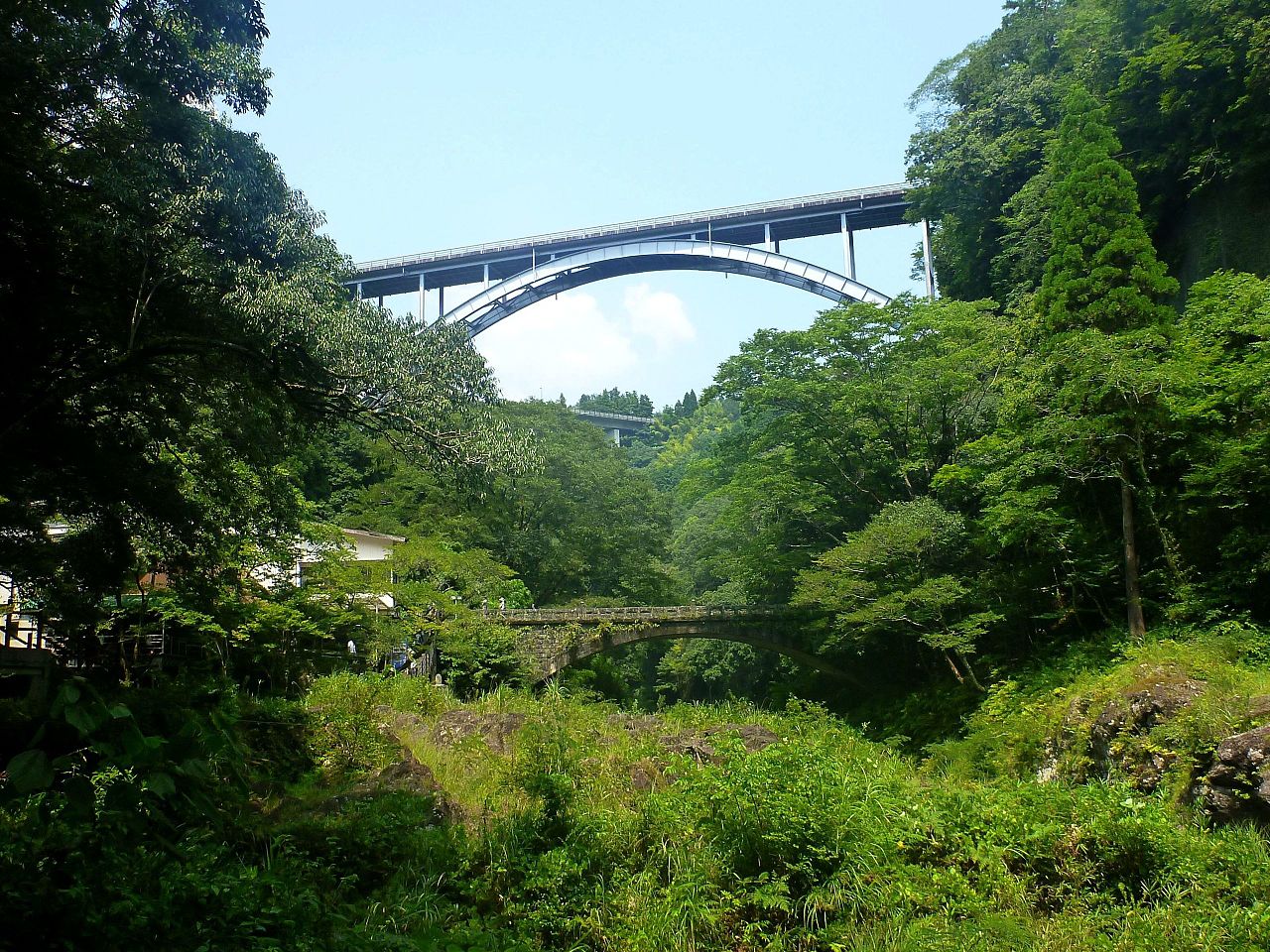
Takachiho sits in the highlands of northern Miyazaki, where the Gokase River has cut a narrow gorge of columnar basalt into the volcanic rock of central Kyūshū. It is not a coastal craft city like the metalcasting towns of the north; it is an inland, forested district whose importance is mythic and ritual rather than industrial. In Japanese tradition this is Takamagahara‘s earthly threshold — the place where the line between gods and people is told to have been thinnest.
The reason matters for the object. The kagura-suzu is meaningful here because Takachiho is where the dance that the bell accompanies is said to have begun.
The Ama-no-Iwato (天岩戸, “Heavenly Rock Cave”) myth tells how the sun goddess Amaterasu, in grief and anger, sealed herself inside a cave and took the light of the world with her. The assembled gods could not coax her out — until Ame-no-Uzume danced. Her dance before the sealed cave, ecstatic and rhythmic, drew the other deities into laughter and noise, and Amaterasu, curious, opened the cave a crack and the sun returned. That dance is what Japanese tradition treats as the first kagura, and the bright, shaken sound of bells is woven into its memory.
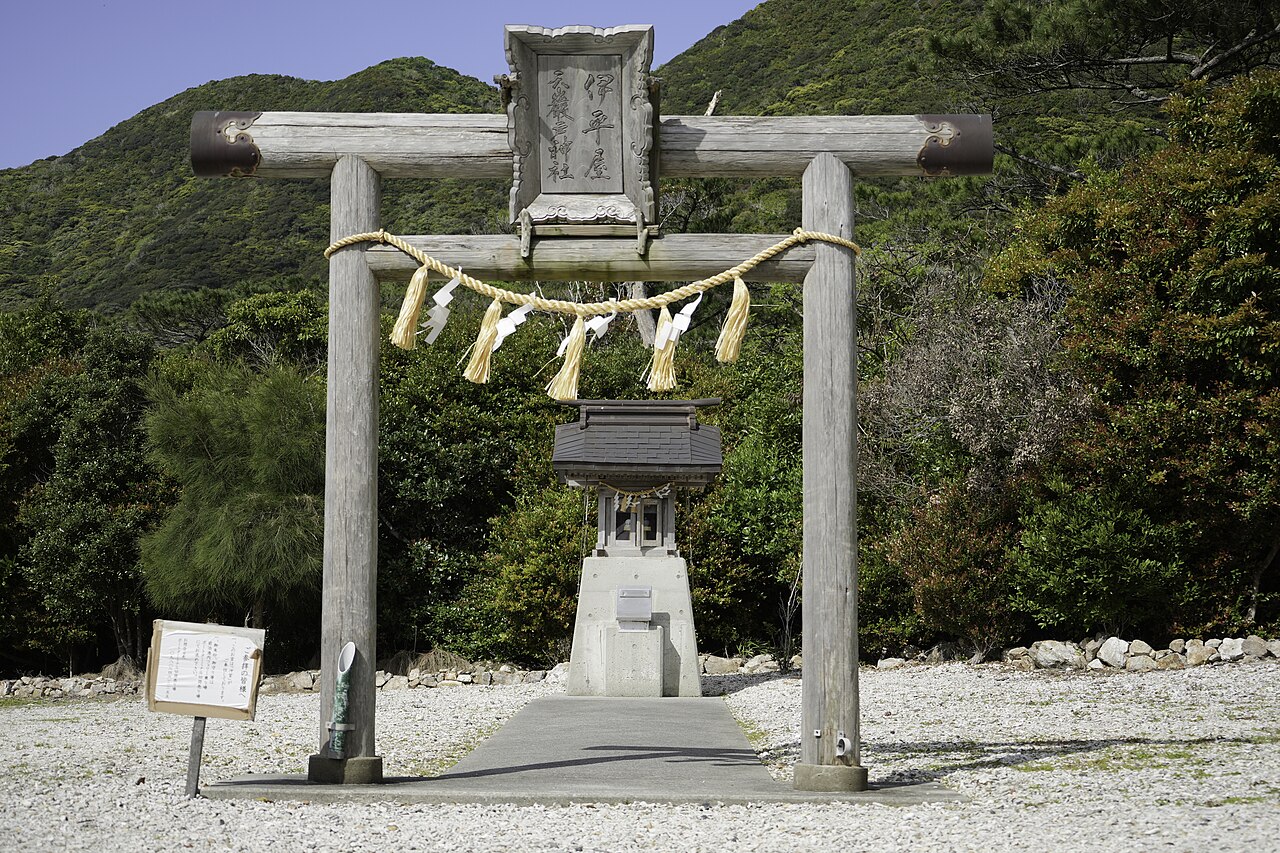
In the dancer’s hand, the suzu is a torimono — one of the implements through which the sacred is invited and addressed. Its layered jingle is traditionally believed to purify the space and to call the attention of the gods, the same function the noise served in the myth. This is the difference between a kagura-suzu and a decorative bell: it is built to be shaken in motion, in tiers, so that a single sweep of the wrist produces a wash of sound rather than one tone.
“In Takachiho the bell is not an ornament that happens to be old — it is the surviving instrument of a dance the country tells itself it has been performing since the sun first came back.”
-
Age of myth — Ame-no-Uzume dances before the Ama-no-Iwato cave; tradition treats this as the first kagura. -
712 — The Kojiki, Japan’s oldest chronicle, records the Ama-no-Iwato narrative. -
720 — The Nihon Shoki records the same myth, fixing Takachiho in the written tradition. -
Medieval–Edo period — Takachiho Yokagura takes its present form as a village night-kagura, danced through the winter. -
1978 — Takachiho no Yokagura receives national designation as an Important Intangible Folk Cultural Property. -
Today — A 33-dance, all-night kagura is still performed each winter; Takachiho Shrine offers a nightly demonstration to visitors.
Mythic-age entries are traditional, not dated events; the chronicle and designation years are historical.
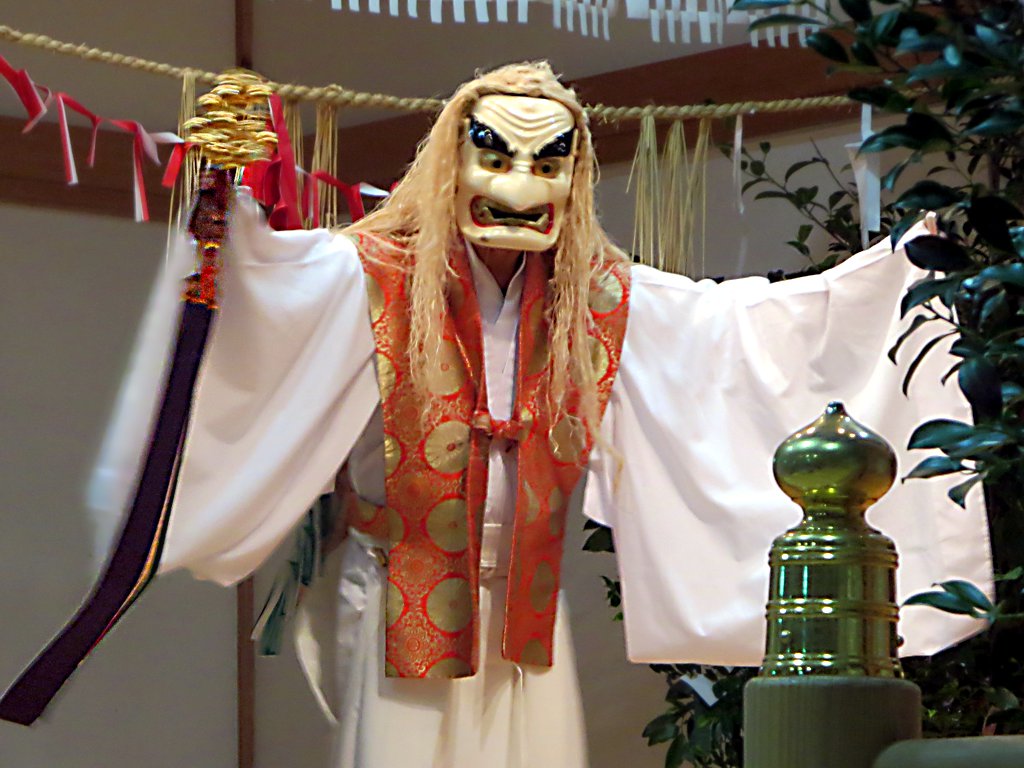
What “still being done here” means is straightforward in Takachiho: the dances have not been revived as a tourist reconstruction; they have continued. Through the winter season, communities across the district host all-night kagura in farmhouses and shrine halls, and Takachiho Shrine offers a shortened nightly demonstration so that visitors can see the form. The suzu remains a working implement in that practice — which is precisely why a cast brass kagura-suzu reads as a ritual object rather than a souvenir.
One point of honesty about the metal itself. The cultural home of this object is Takachiho, but cast Shinto brass — bells, altar fittings, and other saishigu — is frequently produced by specialist foundries in long-established casting centers such as Kyoto and Takaoka rather than in the highland district itself. This guide therefore frames Takachiho as the cultural origin of the kagura-suzu without assuming that every bell was made there. That is the accurate way to describe it, and it is more useful than a romanticized claim.
📌 How does it compare?
If you are weighing the kagura-suzu against other Miyazaki crafts or other Japanese cast-metal and sound objects, these related guides give the comparison points.
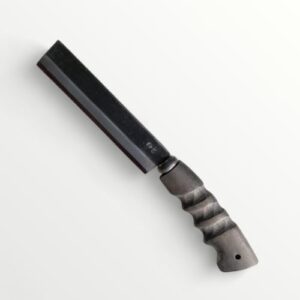 🪓Miyazaki blade: Miyakonojo nataAnother Miyazaki craft — hand-forged hatchets from Miyakonojo. How a forged blade tradition compares to cast ritual brass.
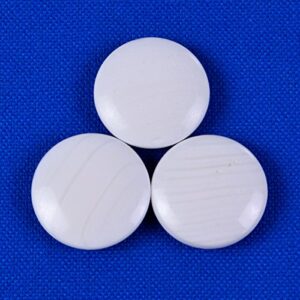 ⚪Miyazaki craft: Hyuga go stonesMiyazaki’s other signature craft — white clam-shell go stones from Hyūga. A second reference point for the prefecture.
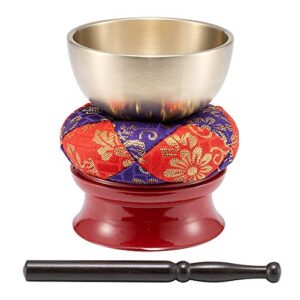 🪘Cast bell: Awa orinA seated bowl-bell struck for a single sustained tone — the closest functional contrast to the shaken jingle of a suzu.
 🎨Metalcraft: Owari shippoCloisonné enamel on metal — a different Japanese metal-finishing tradition for readers comparing decorative techniques.
 🍳Cast metal: Kuwana imonoCast iron from Kuwana — useful if you want to understand Japanese metal-casting (imono) as a process beyond brass.
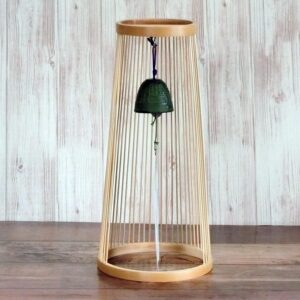 🎐Sound craft: Suruga fuurinA hanging wind bell with a clapper and paper strip — the seasonal, passive counterpart to a hand-shaken ritual bell.
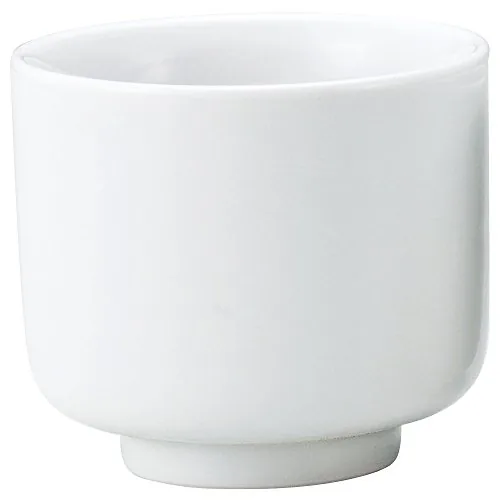 🍶Kyushu craft: Shiro-SatsumaA neighboring Kyūshū craft — white Satsuma ware sake cups, for readers building a regional Kyūshū collection.
Where to buy Takachiho kagura bells
What it does well
🔔 A real ritual implement
This is the torimono form used in Shinto dance and at altars, not a costume bell. For a kamidana, a shrine-style practice, or kagura study, the tiered cluster on a ringed grip is the correct, functional shape.
🎵 A layered, purposeful sound
Because many small suzu are bound together, one motion of the wrist produces a wash of overlapping jingles rather than a single tone — the bright, space-clearing sound the dance tradition is built around.
🥇 Cast brass durability
Cast brass with a polished gold-tone finish is hard-wearing and holds its color with minimal care. There is no clapper mechanism or fragile diaphragm to fail; the pellet-in-shell construction is simple and long-lived.
🌏 A culturally grounded gift
Tied to the Ama-no-Iwato myth and the living kagura of Takachiho, the bell carries a story that travels well as a present — concrete, place-rooted, and not generic “Japan” merchandise.
Weaknesses and things to verify before buying
- Maker and provenance are unconfirmed. Cast Shinto brass is often produced by saishigu foundries in the Kyoto/Takaoka tradition rather than in Takachiho itself, so the prefecture is the cultural home, not a guaranteed production address. Verify the actual maker if provenance matters to you.
- Bell count, size, and weight are not specified here. Kagura-suzu clusters vary widely (commonly 3, 5, 7, 12, or 15 bells), and that changes the size, heft, and loudness substantially. Confirm the exact configuration before buying for a specific use.
- It is loud, and that is the point. The sound is a bright, sustained, many-bell jingle. If you wanted a soft single tone for quiet meditation, an orin (bowl-bell) suits that far better than a suzu.
- Brass needs occasional care. A polished gold-tone brass finish can tarnish over time in humid conditions. Light dusting and an occasional gentle brass polish keep it bright; avoid abrasive pads that scratch the finish.
- International shipping and customs apply. Confirm that the specific seller ships to your country via Amazon JP Global Store, and budget for possible duties above your local import threshold. A proxy service may be needed if a seller is Japan-only.
Conclusion — which buyer type are you?
Ritual / practitioner
You keep a kamidana, study sacred dance, or want a working torimono. The cast brass kagura-suzu is the right form; choose the bell count and finish to suit its intended use.
Mainstream gift / collector ★ most readers
You want a meaningful, story-rich Japanese object for a gift or collection. → This bell fits well — durable, distinctive, and anchored to the Takachiho kagura myth.
Budget / sound-only
You mainly want a single calm tone or a low spend. → Consider an orin bowl-bell or a fūrin wind bell instead — see the cross-links above.
Skip it
You need documented named-workshop provenance or a confirmed price up front. Wait until the maker can be identified, or choose a specialist saishigu seller that provides those details.
Other ways to approach this purchase
Wait for a sale
Buy from a maker / specialist
If you can identify the foundry or a saishigu specialist, buying direct can give you confirmed provenance, the exact bell count, and sometimes a choice of sizes.
Points & rewards
If you already use an Amazon ecosystem, applying accumulated points or a card-linked reward can offset the international shipping cost on a small item like this.
Skip it for now
If unverified provenance or a missing price is a dealbreaker, it is reasonable to hold off until you can confirm the maker — or to choose an orin or fūrin with clearer maker information.
jpmono.com is curated by a Japan-based editorial team (working out of Toyama in the Hokuriku region and Nara in Kansai) and is independent. We do not take payment from the makers we feature; income comes from affiliate links. Read more about our editorial standards.
❓ Frequently Asked Questions
What exactly is a kagura-suzu?
Is this bell actually made in Takachiho?
How is a suzu different from an orin or a fūrin?
Can Amazon ship this internationally?
How do I care for cast brass?
Is it a good gift, and for whom?
Affiliate disclosure: jpmono.com may earn a commission on qualifying purchases made through links on this page, at no additional cost to you.