![Tsuboya-yaki Yachimun Plate: Where to Buy Okinawa Pottery [2026]](https://jpmono.com/wp-content/uploads/2026/07/tsuboya-yaki-yachimun-fish-plate-where-to-buy-2026-featured.jpg)
- What it is: A hand-thrown 5-sun (about 15 cm) Tsuboya-yaki plate — Okinawa’s thick, boldly glazed “yachimun” stoneware, carrying the classic fish or karakusa arabesque motif.
- Made in: Naha, Okinawa Prefecture — from the Tsuboya pottery district consolidated by the Ryukyu Kingdom in 1682.
- Price band: Mid-range for hand-thrown Okinawan folk stoneware (see the live listing — no fixed figure was in our snapshot).
- Best for: Everyday-table cooks who want a warm, sturdy, hand-made plate with visible maker’s marks rather than factory uniformity.
- Skip if: You need a matched set of identical plates, or delicate thin-walled porcelain.
- Shipping: ships internationally from Amazon Japan — jump to our pick ↓
The clay comes out of southern Okinawa’s ground heavy and iron-rich, and Tsuboya potters have never tried to hide it — they thicken the walls, pool the glaze, and let a single cobalt fish swim across the middle of the plate. This is yachimun (焼物, literally “fired thing,” the Okinawan reading of the word for pottery), and it looks nothing like the pale, precise porcelain most people picture when they think of Japanese ceramics. It is warm, a little irregular, and built to be used.
The piece in this guide is a small hand-thrown plate — roughly 5 sun (寸), the traditional Japanese unit that works out to about 15 cm across — glazed in the folk-craft palette of Naha’s Tsuboya district and decorated by hand with either a fish (sakana) or a karakusa (唐草, “Chinese grass” arabesque) pattern. Because it is thrown and painted individually, no two are identical, and the exact motif you receive depends on current stock.
Written from a Japan-based editorial desk (working out of Toyama in the Hokuriku region and Nara in Kansai), this article covers what the piece is, where Tsuboya-yaki comes from and why that matters, how to buy it from outside Japan, and who should choose something else. Prices and stock fluctuate; the linked listing is always the authoritative source.
ℹ️ Live pricing and some specs weren’t in our snapshot — the linked listing is authoritative; unconfirmed attributes are marked below.
🔄 Updated:
⏱️ Read time: ~9 min

- Who this is for — and who should skip it
- Product overview (from published specs)
- 📍 Where this comes from — place, era, and the craft tradition
- Price snapshot across stores
- What it does well
- Weaknesses and things to verify before buying
- Conclusion — which buyer type are you?
- Other ways to approach this purchase
- 🏆 Editor’s Pick
- ❓ Frequently Asked Questions
Who this is for — and who should skip it
- Want a genuinely hand-made everyday plate, not a factory reproduction
- Like visible brushwork and the bold cobalt-and-amber folk palette
- Value sturdy, thick stoneware that shrugs off daily use
- Enjoy that each piece is slightly different from the next
- Are building a mismatched, characterful table rather than a matched set
- Need several identical plates for a formal, uniform place setting
- Prefer thin, translucent porcelain over heavy stoneware
- Want a specific, guaranteed motif (fish vs. arabesque varies by stock)
- Require a confirmed exact size and weight before buying
- Are shopping strictly on lowest price rather than craft provenance
Product overview (from published specs)
The table below draws from the Amazon JP Global Store listing snapshot (the sourced listing) plus the maker-tradition facts for Tsuboya-yaki. Because this is a hand-thrown folk-craft object, several attributes are given as approximate ranges rather than exact figures; the live listing is authoritative.
Tsuboya-yaki Yachimun Plate
沖縄やちむん 壺屋焼 魚紋 小皿2枚セット 直径15.5cm 高さ3cm
通常6~7日以内に発送します。 · Sold by ハッピードア · ASIN B0HF55952Y
Price and availability as of 2026-09-01 05:22 JST. The Amazon listing at the time of purchase is authoritative. jpmono.com earns a commission on qualifying purchases at no extra cost to you.
| Attribute | Detail (per listing / tradition) |
|---|---|
| Craft | Tsuboya-yaki (壺屋焼) — Okinawan “yachimun” stoneware |
| Object | Hand-thrown small plate (mamezara / small dish size) |
| Diameter | ~5 sun (about 15 cm) — approximate; verify on listing |
| Material | Thick iron-rich Okinawan stoneware (jouyachi glazed ware) |
| Decoration | Hand-painted fish or karakusa arabesque; cobalt / amber glaze |
| Origin | Naha, Okinawa Prefecture (Tsuboya district) |
| Weight | Unconfirmed — check manufacturer / listing |
| Made by hand | Yes — each piece varies in motif, glaze pooling, and exact shape |
📖 Glossary — key Okinawan pottery terms
- Yachimun (焼物) — the Okinawan word for pottery; the everyday name for Tsuboya-style ware.
- Tsuboya (壺屋) — the pottery district in Naha where the Ryukyu Kingdom concentrated its kilns in 1682.
- Arayachi (荒焼) — unglazed, rougher ware, often used for larger vessels (water jars, awamori containers).
- Jouyachi (上焼) — glazed ware, including painted plates and bowls like this one.
- Karakusa (唐草) — a flowing “Chinese grass” arabesque, one of the classic yachimun motifs.
- Sun (寸) — a traditional Japanese unit of length, roughly 3.03 cm; a “5-sun” plate is about 15 cm.
- Noborigama (登り窯) — a wood-fired climbing kiln built up a slope; the traditional firing structure behind yachimun’s warm tones.
- Mingei (民芸) — the folk-craft movement led by Yanagi Sōetsu that championed everyday hand-made objects like Tsuboya-yaki.
📍 Where this comes from — place, era, and the craft tradition

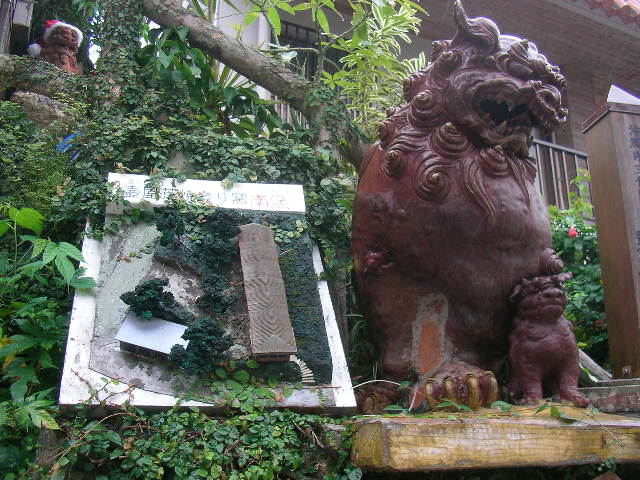
Naha sits at the southern end of Okinawa Island, the largest of the Ryukyu archipelago that stretches between Kyushu and Taiwan. This is not mainland Japan’s cool-temperate world of tea houses and snow country. It is subtropical — hot, bright, salt-aired — and for centuries it was the capital of an independent maritime state.
That maritime history is the key to the pottery. The Ryukyu Kingdom traded across the East China Sea with China, Korea, and Southeast Asia, and its ships carried back not only goods but techniques. Tsuboya-yaki fuses Southeast-Asian, Chinese, and mainland-Japanese ceramic methods absorbed through that trade — which is why yachimun feels different from any single mainland kiln tradition.
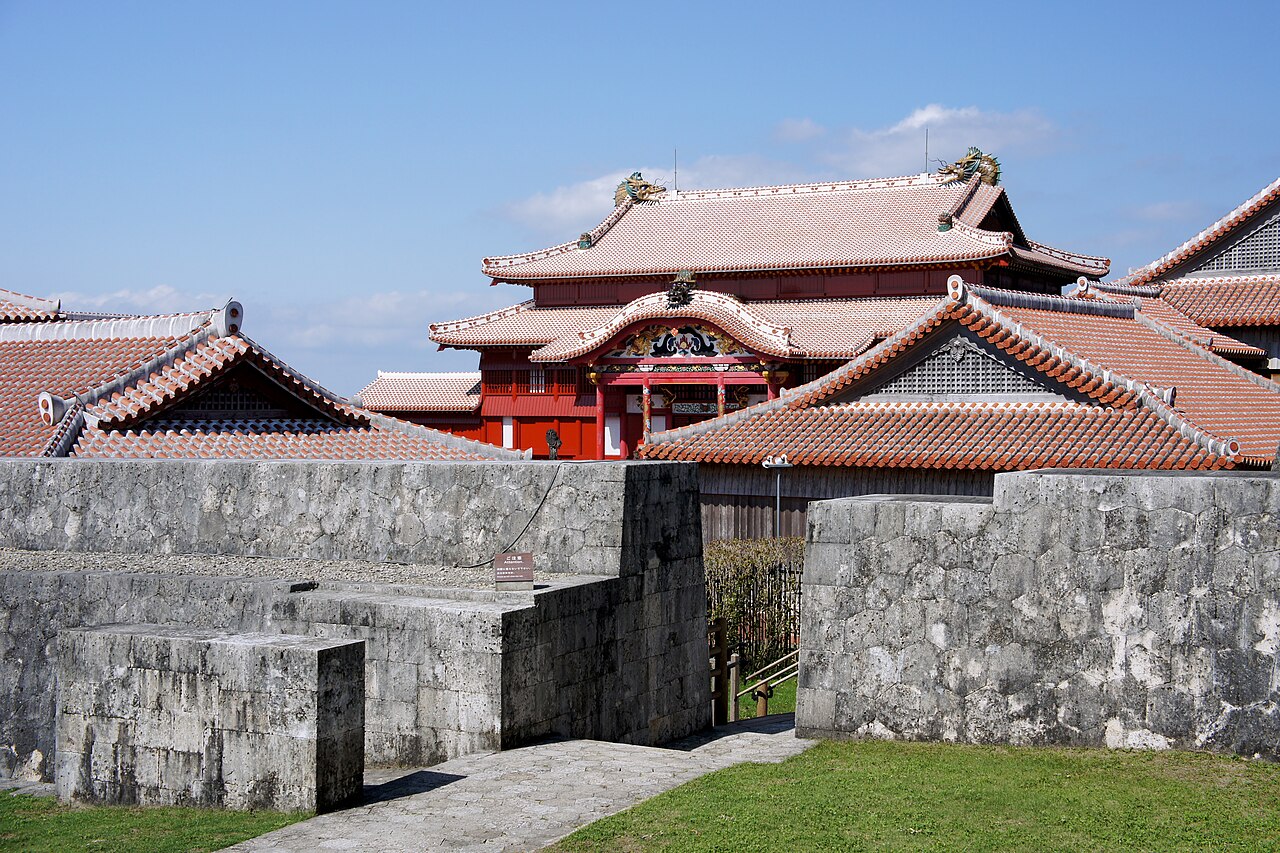
In 1682, the Ryukyu Kingdom consolidated scattered kilns from across the island into a single district in Naha — Tsuboya — to strengthen its ceramic trade. That act of concentration is what created “Tsuboya-yaki” as a named tradition, and the district still bears the name today.
-
14th–15th c. — Ryukyu’s maritime trade brings Southeast-Asian, Chinese, and mainland ceramic techniques to Okinawa. -
1682 — The Ryukyu Kingdom consolidates scattered kilns into the Tsuboya district of Naha. -
18th–19th c. — The arayachi (unglazed) and jouyachi (glazed) traditions mature into distinct ware types. -
Early 20th c. — The mingei folk-craft movement, led by Yanagi Sōetsu, champions yachimun as living craft. -
Mid 20th c. — Potter Kaneshiro Jirō and his successors sustain the Tsuboya line through the postwar decades. -
Today — Tsuboya Yachimun Street and surviving climbing kilns remain a working pottery quarter in central Naha.

Ryukyu-style kilns were fired with wood, up sloped noborigama that pull flame and ash through chamber after chamber. That firing, combined with the local iron-rich clay, is what gives yachimun its heft and its warm, slightly uneven color. The walls are thick because the clay and the firing suit thick walls — not as decoration, but as the honest result of the material.
“Tsuboya-yaki was never made to be looked at from behind glass. It was made to hold food under a strong subtropical sun — and it still is.”
What “still being made here” means for Tsuboya is unusually literal. Where many old kiln districts have become museums, Tsuboya remains a living quarter: Yachimun Street is lined with working workshops and shops, and surviving climbing kilns stand within the neighborhood. The folk-craft championing of the 20th century — Yanagi Sōetsu’s mingei movement and potters such as Kaneshiro Jirō — kept the tradition from fading into souvenir kitsch.
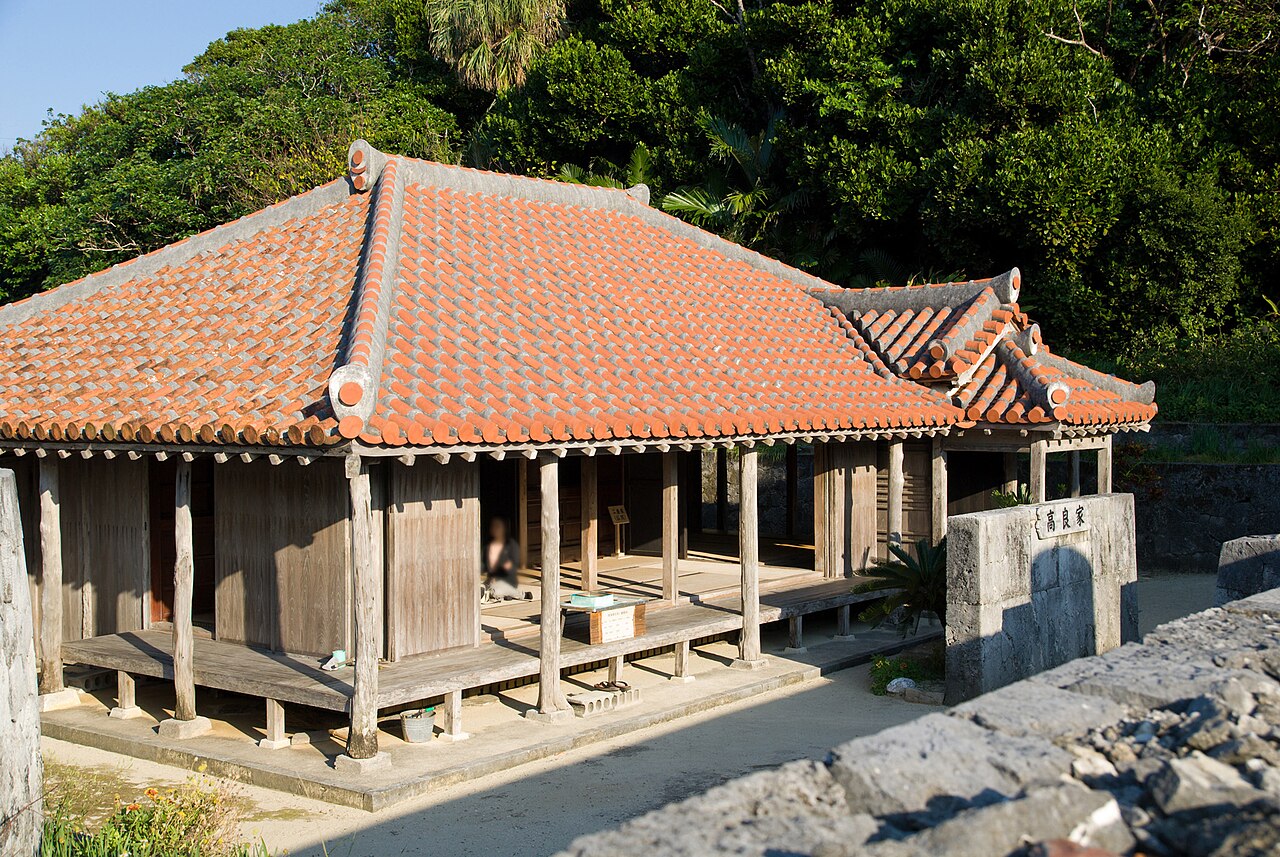
Set this plate on a table and it reads as Okinawan the way the red-tile roofs do: bold, generous, unfussy. The cobalt fish and the karakusa vine are the same visual language you see across the island’s design — motifs made for strong light and everyday meals, not for a display case.
- 🍽️ Dishwasher: Hand-washing is safest for hand-thrown, hand-painted glazed stoneware; check the listing before machine-washing.
- ♨️ Microwave: Glazed jouyachi ware is generally microwave-friendly for reheating, but confirm on the specific listing.
- 🧴 Daily care: Rinse and dry after use; thick stoneware is sturdier than thin porcelain for everyday handling.
- 🔧 Note: Glaze pooling, tiny pinholes, and slight warping are characteristic of hand-fired yachimun, not defects.
Other Okinawan and regional Japanese craft pieces we’ve covered — useful for building a coherent table or comparing traditions.
 🍶 Ryukyu Glass Kara-Kara Server
🎨 Ryukyu Bingata Placemat
🔪 Okinawa Hand-Forged Knife
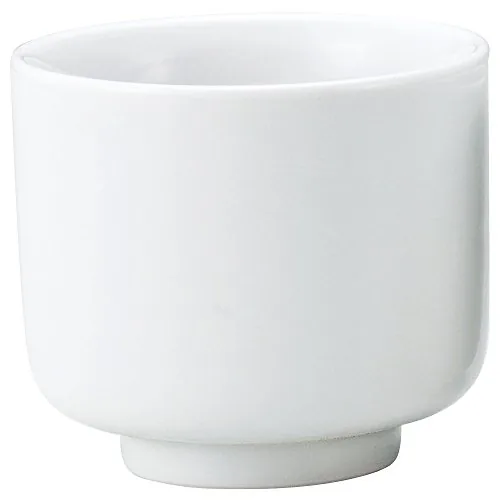 🍵 Satsuma Shiro-Satsuma Cup
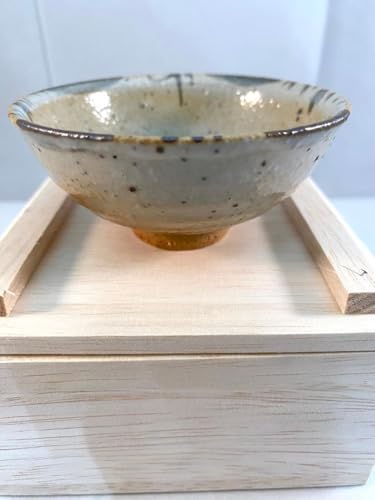 🏺 Karatsu E-Garatsu Guinomi
🟡 Fujina-yaki Slipware Plate
 ☕ Onta-yaki Mug
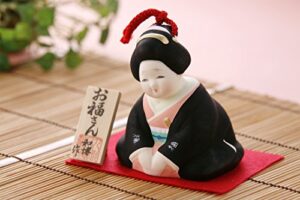 🎎 Hakata Ningyo Figurine
Price snapshot across stores
JPY is the authoritative price for the specific sourced listing; USD figures are approximate estimates at a ¥150/USD baseline as of mid-2026. Live pricing was not in our snapshot, so figures are shown as “see listing.”
| Store | Item / Variant | Price (JPY / USD est.) | Notes |
|---|---|---|---|
| 🇺🇸 Amazon.com (US) | Browse Japanese pottery & yachimun plates | varies (USD) | Best if you’re shopping from the US — Prime shipping, USD pricing, no international customs. Amazon US carries Japanese and Okinawan-style pottery from various makers, useful for comparing style and price tiers; this exact Tsuboya piece is sourced from Japan (next row). |
| 🇯🇵 Amazon JP Global Store | The specific hand-thrown Tsuboya-yaki plate in this guide | see listing (¥ authoritative) | Ships internationally from Japan to 65+ countries — including Canada, the UK and Australia — with import fees estimated at checkout. This is the sourced listing for the exact piece. |
| Maker direct / Tsuboya shops | Individual workshop plates on Yachimun Street | varies | Naha’s Tsuboya district shops sell directly, but most do not ship internationally; practical mainly if visiting Okinawa. |
| Proxy services (Buyee / Tenso) | Japan-only listings forwarded abroad | item + forwarding fee | Useful for Japan-only shop listings; adds a service fee and a second shipping leg. Only needed if the item isn’t on the Global Store. |
What it does well
Weaknesses and things to verify before buying
- Motif is not guaranteed. The fish and karakusa patterns vary by stock; if you need a specific one, confirm with the seller first.
- No two pieces are identical. Glaze pooling, minor warping, and small pinholes are normal for hand-fired yachimun — buyers wanting perfect uniformity will be disappointed.
- Exact size and weight were not confirmed in our snapshot. The ~15 cm (5-sun) figure is approximate; verify dimensions on the live listing if fit matters.
- Live pricing was unavailable at time of writing. Only the listing is authoritative; check the current price and stock before ordering.
- Not a matched set. Ordering multiples will likely yield visible piece-to-piece variation, which suits a characterful table but not a formal one.
- International shipping adds cost and time. Import fees are estimated at checkout, but total landed cost will exceed the sticker price.
Conclusion — which buyer type are you?
Other ways to approach this purchase
🏆 Editor’s Pick
❓ Frequently Asked Questions
What is Tsuboya-yaki (yachimun)?
Tsuboya-yaki is Okinawa’s signature pottery, known locally as “yachimun.” It is thick-bodied stoneware, boldly glazed and often hand-painted with fish or karakusa arabesque motifs, made in the Tsuboya district of Naha.
Where is it made?
In Naha, Okinawa Prefecture. The Ryukyu Kingdom consolidated scattered kilns into the Tsuboya district in 1682, and the quarter remains a working pottery neighborhood today.
Can I have it shipped outside Japan?
Yes. Amazon Japan’s Global Store ships to 65+ countries, including Canada, the UK, and Australia, with import fees estimated at checkout. See our guides for Canada, the UK, and Australia.
Is it dishwasher and microwave safe?
Hand-washing is safest for hand-painted glazed stoneware, and glazed (jouyachi) pieces are generally fine for microwave reheating. Because this is a hand-made piece, confirm care details on the specific listing.
What’s the difference between arayachi and jouyachi?
Arayachi (荒焼) is unglazed, rougher ware often used for larger vessels; jouyachi (上焼) is glazed ware, including painted plates and bowls like this one.
Will I get the fish motif or the karakusa pattern?
It depends on current stock. Both the fish and karakusa arabesque are classic yachimun motifs; if you need a specific one, confirm with the seller before ordering.
Is each plate identical?
No. Each plate is hand-thrown and hand-painted, so glaze pooling, exact shape, and the motif vary piece to piece. That individuality is characteristic of yachimun, not a defect.
jpmono.com is a Japan-based curation site, curated by an independent editorial team working out of Toyama (Hokuriku region) and Nara (Kansai region), that introduces Japanese household objects to international readers. We focus on items with verifiable craft heritage and clear international shipping paths. We do not physically test every product — we read maker’s specs and source listings — and we do not take payment from the makers we feature; income comes from affiliate links. Read more about our editorial standards.
🤖 This article was drafted with AI assistance and reviewed against source listings and verified craft-heritage notes by a Japan-based editor. Specifications and prices reflect the data available at the time of writing and may have changed.
Affiliate disclosure: jpmono.com may earn a commission on qualifying purchases made through links on this page, at no additional cost to you.