![Naruko Kokeshi Doll ‘Kotohogi’ 7-Inch by Kyugetsu — Hand-Turned Wooden Folk Doll from Miyagi (¥5,500 / ≈$37 USD) [2026 Buyer’s Guide]](https://jpmono.com/wp-content/uploads/2026/05/kyugetsu-naruko-kokeshi-doll-where-to-buy-2026-featured.jpg)
Naruko kokeshi (鳴子こけし) is the wooden folk-doll tradition of Naruko-onsen, a hot-spring district inside Ōsaki City in the mountains of northwestern Miyagi Prefecture. The form has been made there continuously since the early Edo period — roughly the 1700s — when local woodworkers began turning souvenirs for hot-spring travelers and discovered, more or less by accident, that a head fitted into a slightly under-sized socket on the body would rotate with a characteristic squeak. That squeak (キシミ音, kishimi-oto) is now the signature of the Naruko lineage. None of the other ten traditional kokeshi lineages of Tōhoku produce it.
The piece this article covers is a 7-inch (七寸, ~21 cm) Naruko-style kokeshi named “Kotohogi” (寿ぎ, “celebration”), produced by Kyugetsu (久月) — Japan’s largest doll house, founded in Edo in 1835. The ‘Kotohogi’ line is Kyugetsu’s celebration-gift kokeshi, made in partnership with Naruko craftspeople and sold under Kyugetsu’s serialized model code IPM-20-Z-US. The listing price on Amazon JP Global Store is ¥5,500 (about $37 USD as of May 2026), which puts it at the accessible entry of the real-Naruko market.
This guide is written for readers outside Japan who want to understand what they are actually buying when they buy a kokeshi — the 300-year arc from onsen souvenir to METI-designated traditional craft, where Naruko sits in the kokeshi family of eleven lineages, what Kyugetsu’s involvement guarantees and doesn’t guarantee, and how the ¥5,500 ($37) Kyugetsu-Naruko entry tier compares against direct-from-craftsperson alternatives. Specs and prices are pulled from the Amazon JP listing as of May 16, 2026; live values may have shifted.
🔄 Updated
⏱ Read time ~14 min
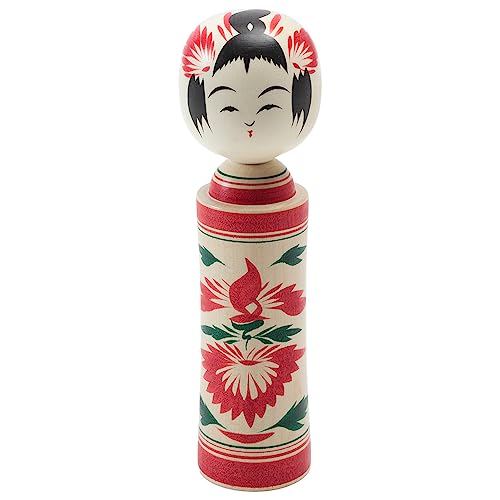
IPM-20-Z-US. Hand-turned wood, hand-painted face. — Image: Amazon JP listing- Who this is for — and who should skip it
- Product overview (from published specs)
- 📍 Where this comes from — place, era, and the craft tradition
- Price snapshot across stores
- What it does well
- Weaknesses and things to verify before buying
- Conclusion — which buyer type are you?
- Other ways to approach this purchase
- 🏆 Editor’s Pick
- ❓ Frequently Asked Questions
- 📌 Related Japanese Crafts
Who this is for — and who should skip it
- Readers who want a verifiably authentic Naruko-lineage kokeshi at the entry price tier, not a generic wooden doll from an undifferentiated marketplace listing
- Gift-givers looking for a celebration object — births, weddings, openings, retirements — where the 寿ぎ (Kotohogi, “celebration”) name carries explicit meaning
- Collectors building a starter set across the eleven traditional kokeshi lineages, where Naruko is one of the foundational pillars
- Households that want a single decorative folk-craft object with a documented 300-year tradition behind it, not a mass-market décor item
- International buyers who prefer Kyugetsu’s name-brand quality control over the variable hand-finishing of unbranded direct-from-Naruko purchases
- You want a named-craftsperson piece signed by a recognized Naruko master — Kyugetsu’s product is partnership-made and is not signed by an individual maker on the body
- You expect a child’s toy — kokeshi are display objects with hand-painted faces vulnerable to moisture and abrasion
- You want a large display piece — 七寸 (7-inch, ~21 cm) is standard adult kokeshi size, smaller than many imported “Japanese doll” expectations
- You are looking for the elaborate face-painting work of premium named kokeshi (¥20,000–¥60,000 tier); entry-tier Kyugetsu pieces are correct but not collector-elaborate
- You prefer modern minimalist or anime-derived Japanese décor — kokeshi are a folk-traditional form, not a contemporary design object
Product overview (from published specs)
The published specifications for this listing, drawn from the Amazon JP product page as of May 16, 2026:
Naruko Kokeshi Doll 'Kotohogi' 7-Inch by Kyugetsu
久月official 寿ぎ 鳴子こけし 七寸 IPM-20-Z-US
通常2~3日以内に発送します。 · Sold by 久月 · ASIN B0C9H95TJ5
Price and availability as of 2026-08-31 02:30 JST. The Amazon listing at the time of purchase is authoritative. jpmono.com earns a commission on qualifying purchases at no extra cost to you.
| Spec | Value (per Amazon JP listing) |
|---|---|
| Product name (JP) | 久月official 寿ぎ 鳴子こけし 七寸 IPM-20-Z-US |
| Product name (EN) | Kyugetsu Kotohogi Naruko Kokeshi 7-inch |
| Model code | IPM-20-Z-US |
| Brand | 東京 久月 (Tokyo Kyugetsu) |
| Manufacturer | Kyugetsu (久月) doll house, Tokyo — Naruko-style kokeshi production |
| Material | Hand-turned wood (typically mizuki / Itaya-kaede maple), hand-painted face and torso |
| Size | ~21 cm tall (七寸 / nana-sun) × ⌀ 6 cm |
| Weight | Approximately 180 g |
| Made in | Japan (Naruko-style production via Kyugetsu) |
| Listed price | ¥5,500 (≈ $37 USD at ¥150/USD baseline, as of May 2026) |
| ASIN | B0C9H95TJ5 |
| International shipping | Yes, via Amazon JP Global Store. ~180 g; estimated $10–20 USD shipping. Wooden doll unrestricted for personal import to most destinations. |
Source: Amazon JP listing snapshot retrieved May 16, 2026. Live pricing may have shifted since the writing date; verify at the retailer before ordering. USD figures are approximate and depend on the current exchange rate.
📖 Glossary — Japanese terms used in this article
- kokeshi (こけし)
- A traditional Japanese wooden folk doll of Tōhoku origin, turned on a lathe from a single piece of wood, with a simple cylindrical body and a round head. Eleven regional lineages are recognized as traditional.
- Naruko (鳴子)
- A hot-spring district inside Ōsaki City, northwestern Miyagi Prefecture, in the Tōhoku region. One of Japan’s densest concentrations of onsen sources; the eponym for the Naruko kokeshi lineage.
- kishimi-oto (キシミ音)
- Literally “creak sound” — the characteristic squeak produced when a Naruko kokeshi’s head is rotated against its socketed body. Unique to the Naruko lineage among the eleven traditional kokeshi types.
- 七寸 (nana-sun, 7-sun)
- A traditional Japanese unit of length. 1 sun ≈ 3.03 cm, so 7-sun is roughly 21 cm. The standard adult-size kokeshi.
- Kotohogi (寿ぎ)
- “Celebration” or “blessing” — a classical Japanese term used in the names of objects given on celebratory occasions (births, weddings, openings, milestone birthdays). The product name positions this kokeshi as a celebration gift.
- METI Traditional Craft Product (経済産業大臣指定伝統的工芸品)
- A designation by Japan’s Ministry of Economy, Trade and Industry recognizing craft traditions with continuous regional history (typically 100+ years), made primarily by hand using traditional materials. Miyagi traditional kokeshi (including Naruko) received this designation in 1981.
- Kyugetsu (久月)
- A Tokyo-based doll house founded in 1835 (Tenpō 6) in the Asakusa-bashi district. Japan’s largest manufacturer and retailer of traditional Japanese dolls (hina-ningyō, gogatsu-ningyō, and kokeshi).
- mizuki / itaya-kaede
- Mizuki (水木, dogwood) and itaya-kaede (板屋楓, painted maple) are the two woods most commonly used for kokeshi turning. Both are pale, fine-grained, and stable; mizuki is the traditional Naruko choice.
📍 Where this comes from — place, era, and the craft tradition


The region on the map
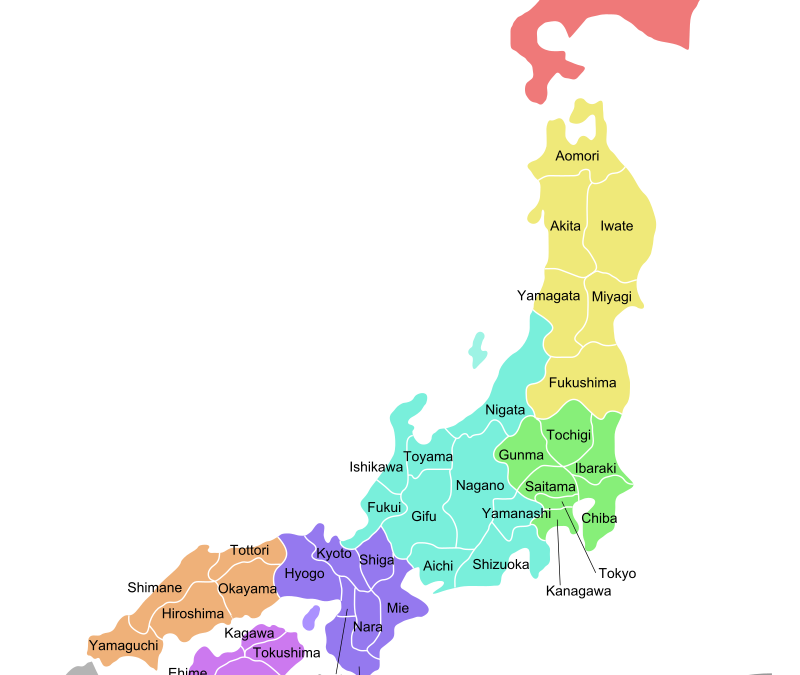
Naruko (鳴子) is a hot-spring district inside Ōsaki City (大崎市), in the mountainous northwestern corner of Miyagi Prefecture. Geographically the town sits at the head of the Eai River, sheltered by the Ōu mountain range, with the Pacific coast about 80 km to the east. The area has nine distinct onsen zones drawing on more than 400 hot-spring sources — one of the densest concentrations of geothermal water anywhere in Japan, comparable to Beppu (Ōita) and Kusatsu (Gunma).
The density of hot water is not incidental to the kokeshi tradition. From the early Edo period onward, Naruko-onsen functioned as a destination for therapeutic bathing, drawing travelers from across the Tōhoku region and beyond. The wooden bowls, trays, and household tools turned on local lathes — already an established cottage industry — were a natural starting point for souvenirs. The kokeshi form emerged from that intersection of bathing tourism and existing woodturning skill.
The historical anchor — Edo-period onsen tourism and the eleven lineages
The early Naruko kokeshi were simple cylindrical wooden dolls with painted faces. They were sold as omiyage — travel gifts brought home from a journey — at the onsen post-station from the 1700s onward. Competing onsen towns across Tōhoku developed their own kokeshi variants in roughly the same decades, which is why kokeshi history is structured around a family of eleven traditional lineages, each named for the onsen town that anchored it.
-
Early 1700s — Naruko onsen develops as a Tōhoku hot-spring destination; local woodturners begin producing simple cylindrical kokeshi as souvenirs. -
Late 1700s–1800s — The Naruko form develops its distinctive articulated head with the kishimi-oto squeak, separating it from the ten other lineages. -
1835 — Kyugetsu (久月) founded in Edo (Tokyo) as a doll house specializing in hina-ningyō and gogatsu-ningyō. -
Meiji–Shōwa — Kokeshi production expands across Tōhoku; Naruko remains one of the most prestigious lineages. -
1981 — Miyagi traditional kokeshi (including Naruko) designated a METI Traditional Craft Product. -
Late 20th century — Kyugetsu and other doll houses begin partnering with traditional kokeshi craftspeople for broader national distribution. -
2026 — The ‘Kotohogi’ 7-inch Naruko kokeshi listed on Amazon JP Global Store at ¥5,500, with international shipping to most major destinations.
“The Naruko form is the only one of the eleven traditional kokeshi lineages where the head turns. That single mechanical accident — a slightly under-sized socket producing a squeak — is what gives the lineage its identity.”
The eleven traditional kokeshi lineages, in geographic order across Tōhoku, are: Naruko, Tōgatta, Yajirō, and Sakunami (all in Miyagi); Tsugaru (Aomori); Nanbu (Iwate); Hijiori, Yamagata, and Zaō (Yamagata); Kijiyama (Akita); and Tsuchiyu (Fukushima). Each has distinct body geometry, face decoration, and band-pattern palette. A trained eye separates them at a glance; for a new collector, the Naruko’s articulated head is the easiest tell.
The making process
Production of a Naruko kokeshi follows a five-stage sequence that has not fundamentally changed since the late Edo period. Wood — typically mizuki (dogwood) or itaya-kaede (a Japanese maple) — is aged 1–2 years before turning to stabilize moisture. The body and head are turned separately on a lathe, originally foot-powered, now usually electric. The head is sized to fit into a socket on the body with deliberate slight friction; this is the mechanical source of the kishimi-oto squeak. Face features and body bands are painted by hand in a simple red, black, and yellow palette. Finally the surface is given a light wax or natural finish — no urushi lacquer.
A skilled kokeshi craftsperson produces 5–15 finished dolls per day at the basic tier. The premium named-craftsperson tier — pieces signed by recognized masters and sold at ¥20,000–¥60,000 — can take days per piece because of the elaborate face-painting work. The Kyugetsu Kotohogi line sits firmly in the basic tier; that is what enables the ¥5,500 price.
What “Kyugetsu Naruko” actually means — and what it doesn’t
Kyugetsu was founded in 1835 (Tenpō 6) in Edo, in what is now Tokyo’s Asakusa-bashi district — historically the doll-makers’ neighborhood of the city. The company’s core business for the first 150 years was hina-ningyō (Girls’ Day display dolls) and gogatsu-ningyō (Boys’ Day samurai-armor dolls), both highly seasonal and tied to the household ritual calendar. Quality control for hina face painting is rigorous; that institutional discipline is what Kyugetsu brings to its kokeshi line.
Kyugetsu’s kokeshi production is a relatively recent expansion. The company does not own kokeshi workshops in Naruko; it partners with traditional kokeshi craftspeople and applies its own QC and serialized model coding (the IPM-20-Z-US suffix on this piece is part of that system). The trade-off is straightforward: the buyer gets consistent quality at an accessible price, but does not get a piece signed by a single named master. For an entry-tier purchase, that trade-off favors the buyer; for a collector chasing named-craftsperson provenance, it does not.
Visiting Naruko, in case you ever get there
Naruko remains a working onsen town. The nine onsen zones still operate, the autumn foliage at Naruko Gorge (鳴子峡) remains one of Tōhoku’s most photographed seasonal sites, and the Japan Kokeshi Museum (日本こけし館) in Naruko holds approximately 5,000 kokeshi covering all eleven traditional lineages. For travelers from Tokyo, the practical route is the Tōhoku Shinkansen north to Furukawa (about 2.5 hours), then the JR Riku-u Tōsen Line west into the mountains (about 1 hour). Sendai is the closest international airport.
Price snapshot across stores
| Store | Item / Variant | Price (JPY + USD est.) | Notes |
|---|---|---|---|
| 🇺🇸 Amazon.com (US) | Browse Japanese kokeshi & folk dolls | varies (USD) | Best if you are shopping from the US — Prime shipping, USD pricing, no international customs. Amazon US carries kokeshi from various Tōhoku makers, useful for comparing sizes and price tiers. The exact Kyugetsu Kotohogi piece is sourced from Japan (next row). |
| 🇯🇵 Amazon JP Global Store | Kyugetsu ‘Kotohogi’ 7-inch Naruko kokeshi (IPM-20-Z-US) | ¥5,500 (≈ $37 USD) | Ships internationally from Japan via the Global Store. ~180 g; estimated $10–20 USD shipping. This is the sourced listing for the exact item in this guide. |
| Maker direct (Kyugetsu) | Kotohogi kokeshi line (various sizes) | ¥5,500 (≈ $37 USD) for 7-sun, subject to availability | Kyugetsu’s flagship is in Asakusa-bashi, Tokyo, and they operate a Japanese-language e-commerce site. Direct international shipping is generally not offered; viable as a maker-verification reference, not as a buying path from outside Japan. |
| Proxy services (Buyee / Tenso) | Independent named-craftsperson Naruko kokeshi via Yahoo! Auctions / Rakuten | ¥8,000–¥60,000+ (≈ $53–$400+ USD), plus proxy and shipping fees | Useful for collectors targeting signed pieces by named Naruko masters that do not appear on Amazon. Adds complexity (forwarding fees, declared-value paperwork, longer transit); pricing is highly variable. |
Prices verified against the Amazon JP Global Store listing on May 16, 2026; verify at the retailer before purchase. USD figures are approximate using a ¥150/USD baseline as of mid-2026.
What it does well
Weaknesses and things to verify before buying
- Not signed by a named craftsperson. The body bears Kyugetsu’s branding and the IPM-20-Z-US model code, not an individual maker’s signature. Collectors who care about named-master provenance should look at higher-tier listings on Yahoo! Auctions or specialist galleries instead.
- Display object, not a toy. The hand-painted face is fragile under abrasion and moisture. Per the listing care notes: dust with a soft brush only; do not use water or wet cloth on the face; keep out of direct sunlight to prevent paint fading; store upright in a dry environment.
- Variant availability shifts. Kyugetsu produces the Kotohogi line in 5-sun / 7-sun / 8-sun sizes and several motif variations, but only the 7-sun IPM-20-Z-US is currently confirmed on Amazon JP Global Store. If you want a different size, verify availability before assuming.
- Smaller than non-Japanese display expectations. 七寸 (~21 cm, about 8.3 inches) is the standard adult kokeshi size. Buyers expecting a foot-tall figurine will receive something noticeably smaller. The dimension is the tradition; it is not an error.
- International shipping is via Amazon JP Global Store, not Amazon US. The listing ships from Japan, generally arriving in 7–14 days to North America and Europe. Customs duties are usually below threshold at this price, but declare as “wooden decorative figure” if the form asks.
- The squeak is a feature, not a defect. First-time owners sometimes assume the kishimi-oto noise indicates a loose head. It does not. The slight friction in the socket is what defines the Naruko form; do not attempt to glue the head down.
- Pricing fluctuates and the listing snapshot is from a single date. Only the Amazon JP listing snapshot retrieved on May 16, 2026 was used to write this guide. Live pricing and stock may have shifted; verify at the retailer at the time of order.
Conclusion — which buyer type are you?
Other ways to approach this purchase
🏆 Editor’s Pick
Five reasons this is the recommended starting point:
- Kyugetsu (1835) is Japan’s largest doll house, with quality control developed for hina-ningyō face painting — it carries into the kokeshi line and narrows variability versus direct purchases.
- 7-inch (七寸, ~21 cm) is the standard adult Naruko size — not undersized, not oversized.
- ‘Kotohogi’ (寿ぎ, “celebration”) is an explicit gift-context name; suitable for births, weddings, openings, and milestone birthdays.
- Model code IPM-20-Z-US reflects Kyugetsu’s serialized production tracking, which makes the lineage and tier verifiable.
- ¥5,500 (≈ $37 USD) is the most accessible entry into real Naruko — below this you are buying generic wooden dolls, not the eleven-lineage tradition.
❓ Frequently Asked Questions
Will Amazon JP Global Store ship this kokeshi to my country?
Yes for most major destinations. The listing is enrolled in Amazon JP Global Store, and wooden dolls are an unrestricted personal-import category. At ~180 g the parcel is light; estimated shipping is in the $10–20 USD range to North America and Europe. Confirm the destination at checkout — Amazon will flag any country-specific restrictions before payment.
Why does the head squeak when I turn it? Is it broken?
It is not broken — the squeak (キシミ音, kishimi-oto) is the defining feature of the Naruko lineage. None of the other ten traditional kokeshi lineages have an articulated head. The head fits into a deliberately slightly-undersized socket on the body; the friction between the two wood surfaces produces the squeak when rotated. Do not attempt to glue the head down or oil the joint.
Is this signed by a named Naruko craftsperson?
No. The piece is produced in partnership between Kyugetsu and Naruko craftspeople, branded under Kyugetsu’s name with the IPM-20-Z-US model code. It is not signed by an individual master. If named-master provenance matters to you (typical for collectors), the relevant tier is ¥20,000–¥60,000 listings, generally found via Yahoo! Auctions and accessed through proxy services like Buyee.
Can children play with it?
It is intended as a display object, not a toy. The hand-painted face is fragile under abrasion and moisture, and the head is a separate piece that comes off if pulled. Per the listing care notes: dust with a soft brush only, avoid water and wet cloth on the painted surfaces, and keep out of direct sunlight to prevent paint fading.
What occasions is this an appropriate gift for?
The product name ‘Kotohogi’ (寿ぎ) translates directly as “celebration” or “blessing” — a classical Japanese term used in the names of objects given on celebratory occasions. It is well-suited for births, weddings, business openings, milestone birthdays (especially 60th and 70th, which carry their own kanji-named traditions in Japan), and retirements. It is less suited for somber or memorial contexts, where a different category of object would be conventional.
How does Naruko kokeshi differ from the other ten traditional lineages?
Naruko is one of eleven traditional kokeshi lineages, each named for the onsen town that anchored it: Naruko, Tōgatta, Yajirō, and Sakunami (Miyagi); Tsugaru (Aomori); Nanbu (Iwate); Hijiori, Yamagata, and Zaō (Yamagata); Kijiyama (Akita); and Tsuchiyu (Fukushima). The Naruko distinguishing features are the cylindrical body with horizontal stripe decoration and — uniquely among the eleven — the articulated head that produces the kishimi-oto squeak when rotated.
How should I declare the package for customs?
Declare as “wooden decorative figure” or “wooden craft doll for personal use.” At a declared value of about $37 USD (¥5,500) plus shipping, the parcel will typically fall well below the de-minimis customs thresholds for the US, Canada, the UK, the EU, and Australia, meaning no duties are usually assessed. Confirm your local threshold before assuming.
jpmono.com is curated by a Japan-based editorial team (working out of Toyama in the Hokuriku region and Nara in Kansai) and is independent. We do not take payment from the makers we feature; income comes from affiliate links. Read more about our editorial standards.
🤖 AI-assistance note: This article was researched and drafted with the assistance of generative AI tools, then reviewed by our Japan-based editorial team for accuracy against the source listing and craft-tradition references. Specs and prices reflect the Amazon JP listing snapshot retrieved on May 16, 2026.
Affiliate disclosure: jpmono.com may earn a commission on qualifying purchases made through links on this page, at no additional cost to you.