![Yaxell Ran Seki Hamono Damascus Santoku: Where to Buy [2026]](https://jpmono.com/wp-content/uploads/2026/05/yaxell-ran-seki-hamono-damascus-santoku-where-to-buy-2026-featured-1.jpg)
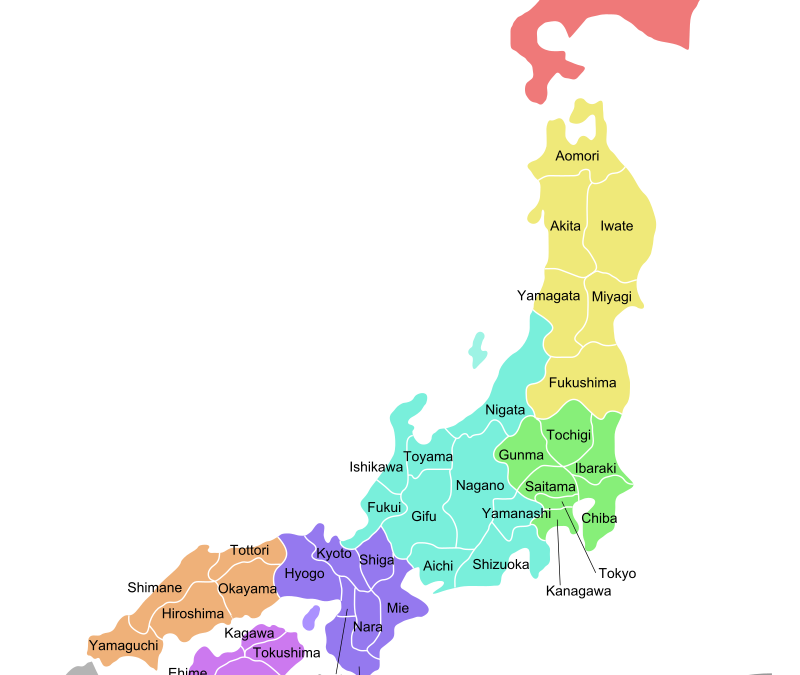
Seki (関市), in central Gifu Prefecture, is the address Japanese knife-making writes on its business cards. Roughly half of all kitchen knives manufactured in Japan ship from a 6 km² industrial cluster here — and the cluster’s heritage is not a modern marketing line. From the late Kamakura era (c. 1290), Seki was one of the five great schools of Japanese swordsmithing (Gokaden, 五ヵ伝), known as Mino-den (美濃伝). After the 1876 Haitōrei (廃刀令) banned the public wearing of swords, generations of those same forging families pivoted to kitchen knives, scissors, and razors. The forging discipline survived; the customer changed.
Yaxell (founded 1932) is one of the Seki cluster’s export-oriented houses, alongside near-neighbors KAI (the parent of Shun), Sumikama, Misono, and Tojiro. Its Ran line was the brand’s early entry into Western-format Damascus-clad VG10 cutlery — a 69-layer San-mai construction with a cobalt-rich VG10 core, micarta handle, and a 6.7″ (170 mm) santoku as the flagship size for home cooks. The geometry is unapologetically aimed at Western kitchens: a slightly thicker spine than a traditional Japanese gyūtō, a Western-style bolster, and a handle profile shaped for full-fist grips rather than the pinch-grip a traditional wa-handle assumes.
This guide is for the international reader who has seen “Damascus santoku, made in Seki” on a knife forum, wants to understand what the Ran actually is (and what it isn’t), and needs the shipping reality from outside Japan. We cover the Mino-den lineage, the VG10 / Damascus construction, who the knife actually suits, where to source it, and how it compares to the other Seki houses already on jpmono.
🔄 Last updated: May 20, 2026
⏱️ Read time: ~15 min
🏷️ Gifu · Seki · VG10 Damascus
VG10 Damascus
Santoku 6.7″
- Who this is for — and who should skip it
- Product overview (from published specs)
- 📍 Where this comes from — place, era, and the craft tradition
- Which finish should you choose?
- 📦 Shipping & where to buy from outside Japan
- Price snapshot across stores
- What it does well
- Weaknesses and things to verify before buying
- Conclusion — which buyer type are you?
- Other ways to approach this purchase
- 🏆 Editor’s Pick
- ❓ Frequently Asked Questions
- 📌 Related Japanese Crafts
Who this is for — and who should skip it
- Want one Japanese knife that handles 80% of home kitchen tasks (vegetables, boneless proteins, herbs) without learning a new grip
- Prefer a Western-format handle and bolster to a traditional octagonal wa-handle
- Are willing to hand-wash and dry a high-carbon stainless blade rather than rely on a dishwasher
- Value the visual character of forged Damascus cladding (the 69-layer wave pattern is the brand’s signature)
- Want a knife from the named Seki cluster but find Shun’s pricing or Misono’s professional-tier inventory hard to navigate from abroad
- Want a single-bevel traditional Japanese knife (deba, yanagiba, usuba) — santoku is double-bevel and Western-leaning
- Cut large bone-in proteins or frozen food often (the Damascus cladding is decorative; the VG10 edge will chip under impact)
- Need a dishwasher-safe blade for a high-volume kitchen workflow
- Are looking for an heirloom traditional kurouchi or honyaki blade — Ran is a modern industrial product, not a single-smith forging
- Already own a 200+ mm gyūtō and want a longer chef’s knife; the 170 mm santoku is shorter by design
Product overview (from published specs)
Per the maker’s published specifications for the Ran line and the Amazon US search results as of May 20, 2026. The exact ASIN of this specific Ran 6.7″ santoku was not captured in the fetched dataset for this guide; live pricing and inventory should be verified at the retailer before purchase.
| Spec | Value |
|---|---|
| Brand | Yaxell (founded Seki, Gifu, 1932) |
| Line | Ran (蘭) — the brand’s classic Damascus / micarta series |
| Form | Santoku (三徳) — three-virtue general kitchen knife |
| Blade length | ~170 mm (6.7″) |
| Construction | San-mai / 69-layer forged Damascus cladding |
| Core steel | VG10 (cobalt-rich stainless, ~60-61 HRC) |
| Cladding | 68 alternating layers of softer stainless (34 per side) |
| Bevel | Double-bevel, symmetric — suitable for both right- and left-handed users |
| Handle | Black micarta (canvas-resin composite), Western-style bolster, full tang |
| Origin | Seki city, Gifu Prefecture (the Seki Hamono cluster) |
| Care | Hand-wash and dry; not dishwasher-safe; avoid bone, frozen food, and prying |
| Price (sourced listing) | Not in fetched data — verify at retailer (Yaxell Ran 6.7″ santoku typically appears in the upper-mid tier among Seki Damascus knives) |
Sources: Amazon US search (primary path, moonill-20 tag), Amazon JP Global Store (secondary path, moonill-22 tag), and maker-published catalog descriptions. Only the keyword and product description were available in the fetched data for this article; specific ASIN and live price were unavailable at time of writing.
📖 Glossary — key Japanese terms used in this article
- Seki Hamono (関刃物)
- “Seki blades” — the cutlery industry of Seki city, Gifu Prefecture. METI-designated traditional craft (1993) covering kitchen knives, scissors, and razors descended from the Mino-den swordsmithing tradition.
- Mino-den (美濃伝)
- One of the Gokaden (五ヵ伝, “Five Traditions”) of Japanese swordsmithing, alongside Yamashiro, Yamato, Bizen, and Sōshū. Centered in Seki from the late Kamakura period (c. 1290).
- Santoku (三徳)
- “Three-virtue” knife — designed to handle meat, fish, and vegetables. Shorter and taller than a Western chef’s knife, with a flatter belly suited to up-and-down chopping rather than rocking. Standard length 165-180 mm.
- San-mai (三枚)
- “Three-layer” forged construction — a hard cutting core (here VG10) clad on each face by softer, more shock-tolerant stainless. The hard core delivers edge retention; the soft cladding absorbs lateral stress.
- VG10
- A cobalt-and-vanadium-alloyed high-carbon stainless steel developed by Takefu Special Steel (Fukui Prefecture). The de facto standard core steel for premium Japanese double-bevel knives; hardens to ~60-61 HRC.
- Damascus (ダマスカス)
- In modern Japanese-knife usage, “Damascus” refers to the patterned cladding produced by forge-welding many layers of differing stainless steels and then revealing the layered pattern via acid etch. It is decorative; the cutting edge itself is the single VG10 core layer at the center.
- Haitōrei (廃刀令)
- The 1876 Meiji-era “Sword Abolishment Edict” that prohibited the public wearing of swords. The edict ended the working market for swordsmiths and accelerated their conversion to kitchen-knife, scissors, and razor production — the founding pivot of modern Seki cutlery.
- Gokaden (五ヵ伝)
- “Five Traditions” of classical Japanese swordsmithing — Yamashiro-den (Kyoto), Yamato-den (Nara), Bizen-den (Okayama), Sōshū-den (Sagami / Kamakura), and Mino-den (Seki). Each had distinctive forging temperatures, clay-tempering patterns, and steel-folding rhythms.
- Micarta
- A composite handle material made by impregnating layers of linen or canvas with phenolic resin and pressure-curing. Stable across humidity changes, hygienic for kitchen use, and dimensionally indifferent to dishwasher heat — although the blade itself still should not go in a dishwasher.
📍 Where this comes from — place, era, and the craft tradition

Seki city sits on the central Gifu plain, at the confluence of the Nagara (長良川) and Tsubo rivers. For a swordsmithing culture, this geography is not incidental — it is the entire founding argument. Iron sand collected from the riverbeds, water cold enough and abundant enough to quench heated steel, and dense pine forests on the surrounding mountains that yielded the slow-burning charcoal a forge needs. The four conditions a Japanese swordsmith historically required — iron, water, charcoal, mountain quiet — sat in walking distance of one another.
From the late Kamakura era (c. 1290), Seki became one of the five regional schools of classical Japanese swordsmithing — the Gokaden (五ヵ伝, “Five Traditions”): Yamashiro-den around Kyoto, Yamato-den in Nara, Bizen-den in present-day Okayama, Sōshū-den in Kamakura, and Mino-den in Seki. The Mino school produced smiths whose names — Motoshige (元重), the Kanesada (兼定) line — were taken up by the Toki clan and later by Oda Nobunaga’s expanding domain in the 16th century. A Seki-forged blade in this period was not regional kitsch; it was state-of-the-art military hardware.
“The customer changed; the discipline did not. The hand that folded steel for a Sengoku warlord in 1570 became, by 1900, the hand that ground bevels for a vegetable knife — the same arm motion, a different blade in it.”
The pivot moment was the Haitōrei (廃刀令) of 1876, the Meiji-era edict that prohibited the public wearing of swords. The market for samurai blades collapsed in a single legislative stroke. Across the country, smithing families either left the craft or migrated to peacetime cutlery; Seki, with its dense concentration of forges, became one of the principal beneficiaries of that migration. By the early 20th century the city was already exporting scissors, razors, and pocket knives. Yaxell was founded in this transitional period — 1932 — and pioneered Damascus-clad VG10 cutlery for the postwar export market, pairing inherited Mino-era forging discipline with Western-style handles for European and North American home cooks.
-
c. 1290 — Mino-den swordsmithing school takes root in Seki during the late Kamakura period. -
c. 1500s — Mino smiths (Motoshige, Kanesada) serve the Toki and later the Oda clans through the Sengoku period. -
1876 — The Haitōrei edict abolishes public sword-wearing; Seki forges pivot to scissors, razors, and kitchen knives. -
1908 — KAI Corporation (parent of the later Shun line) founded in Seki, marking the start of the modern industrial cluster. -
1932 — Yaxell founded in Seki, oriented from the start toward export cutlery. -
1993 — “Seki Hamono” (Seki blades) designated a METI Traditional Craft. -
2000s — Damascus-clad VG10 construction becomes the dominant premium-export format; Yaxell Ran, Shun Classic, and similar lines mature. -
2026 — Roughly half of all kitchen knives manufactured in Japan still ship from the Seki cluster.
What “still being made here” means in 2026 is concrete. The Seki cluster is approximately 6 km² and contains the working facilities of KAI (Shun), Sumikama, Misono, Tojiro, and Yaxell, among others. The output is what makes Seki Seki: roughly half of every kitchen knife produced in Japan annually leaves this small area. Forging, grinding, heat treatment, handle assembly, and final edge-setting are usually carried out within a one-town radius — supplier proximity that explains why a $200 Seki Damascus knife can match the geometry of knives twice the price assembled out-of-cluster.
For the cultural extension: Gifu also gave Japan one of its largest pottery traditions (Mino-yaki, in Tajimi and Toki, the subject of our existing &NE Sendan yunomi guide). So if you assemble a Gifu-only table — Mino-yaki cups and bowls, a Seki Hamono knife, Mino-washi paper napkins from Mino city in the north of the prefecture — you have a near-complete domestic-craft table sourced from a single 80-km-wide region. Gifu’s craft economy is denser than its tourist profile suggests.
Which finish should you choose?
This piece is listed in 7 options. The photos below are the actual サイズ options on the listing right now — pick the one you want and confirm it on the product page before ordering, since hand-finished wares vary slightly piece to piece.
![Yaxell Ran Seki Hamono Damascus Santoku: Where to Buy [2026] — 101層鋼 finish](https://m.media-amazon.com/images/I/31qGnttJSwL._SL500_.jpg)
![Yaxell Ran Seki Hamono Damascus Santoku: Where to Buy [2026] — 69層鋼 finish](https://m.media-amazon.com/images/I/41bIPi1JcUL._SL500_.jpg)
![Yaxell Ran Seki Hamono Damascus Santoku: Where to Buy [2026] — 101層鋼 finish](https://m.media-amazon.com/images/I/311U+urN7EL._SL500_.jpg)
![Yaxell Ran Seki Hamono Damascus Santoku: Where to Buy [2026] — 101層鋼 finish](https://m.media-amazon.com/images/I/31Q3EEzL07L._SL500_.jpg)
![Yaxell Ran Seki Hamono Damascus Santoku: Where to Buy [2026] — 69層鋼 finish](https://m.media-amazon.com/images/I/41or63SL+AL._SL500_.jpg)
![Yaxell Ran Seki Hamono Damascus Santoku: Where to Buy [2026] — 101層鋼 finish](https://m.media-amazon.com/images/I/318ecRiU0UL._SL500_.jpg)
![Yaxell Ran Seki Hamono Damascus Santoku: Where to Buy [2026] — 37層鋼 finish](https://m.media-amazon.com/images/I/41T2gzl9tQL._SL500_.jpg)
📦 Shipping & where to buy from outside Japan
The Ran line is one of Yaxell’s most internationally distributed series, and the 6.7″ santoku ships from multiple paths to most major destinations. The practical reality from outside Japan:
- Amazon US (amazon.com) — Yaxell Ran knives are stocked on amazon.com for US-domestic shipping in many SKUs (the 6.7″ santoku is one of the more consistently available). Prime shipping where eligible, USD pricing, and no inbound customs to deal with. This is the path of least friction for US buyers.
- Amazon JP Global Store (amazon.co.jp) — the same family of SKUs is sourced from Japan and ships internationally to most major countries (US, EU, UK, Australia, much of Asia). International shipping typically runs $15-40 USD depending on weight and destination; allow 5-14 business days.
- Customs duties — under US $800 (de minimis threshold) most personal-use kitchenware imports clear without duty. EU buyers should expect VAT plus a small handling fee at delivery for purchases over local thresholds.
- Maker direct — Yaxell’s own online catalog (yaxell.co.jp) is the authoritative source for current SKUs and availability; not all listings ship abroad directly, so the Amazon paths are usually simpler.
- Proxy services (Buyee / Tenso) — useful only for SKUs or color variants not listed on the JP Global Store. For mainline Ran SKUs, the Global Store path is cheaper and faster.
Knife import regulations: most countries permit kitchen knives by mail without special permit, but some (UK, Germany, Australia in certain states) restrict knives over a specified blade length or with locking mechanisms. A 170 mm santoku is a standard kitchen knife and generally not subject to these restrictions, but international buyers should verify their local rules before purchase.
Price snapshot across stores
Live pricing for this specific Yaxell Ran 6.7″ santoku was not captured in the fetched dataset; the price column below reflects the typical retail tier for the line rather than a verified live listing. Verify at the retailer before purchasing.
| Store | Item / Variant | Price | Notes |
|---|---|---|---|
| 🇺🇸 Amazon.com (US) | Browse Yaxell Ran 6.7″ Damascus santoku | varies (USD) | Best if you’re shopping from the US — Prime shipping, USD pricing, no inbound customs. Amazon US carries hand-forged Japanese kitchen knives from Shun, Tojiro, Yoshihiro, Misono and other Seki makers as well, which makes it the right place to comparison-shop. Yaxell’s specific Ran 6.7″ santoku is also typically listed here in multiple SKUs. |
| 🇯🇵 Amazon JP Global Store | Yaxell Ran 170 mm santoku (sourced from Japan) | JPY varies (check listing); approximate USD at ¥150 = $1 | Ships internationally from Japan. Best path if a specific JP-spec SKU is out of stock on amazon.com, or if you want to confirm the item is shipped directly from the Seki manufacturer’s distribution chain. |
| Yaxell maker direct (yaxell.co.jp) | Ran 6.7″ santoku — maker’s own catalog | JPY MSRP | Authoritative source for current SKUs, color variants, and accessory kits (saya covers, gift boxes). Direct international shipping is not always offered; use as a reference catalog. |
| Proxy services (Buyee / Tenso) | Used / specialty Yaxell SKUs from JP marketplaces | JP listing price + ~10-15% proxy fee + shipping | Only worth the friction for old / discontinued color variants or accessory bundles not on the Global Store. For mainline Ran SKUs, skip — Global Store is faster and cheaper. |
USD figures are approximate, based on a ¥150 / USD baseline (mid-2026). Prices and stock fluctuate; treat the figures as orientation, not as commitments.
What it does well
Weaknesses and things to verify before buying
- Damascus is decorative, not functional. The 69-layer cladding looks striking, but the cutting edge is the single VG10 core in the middle. Pattern depth or “deeper Damascus” claims do not improve cutting performance. If pattern aesthetics are not a priority, a Tojiro DP (same VG10 core, no Damascus) cuts equivalently at roughly half the price.
- Not dishwasher-safe. The micarta handle survives dishwasher heat well, but the VG10 core is high-carbon stainless and will pit if left wet, and the cladding’s etched pattern can dull under detergent. Hand-wash, dry immediately, store dry.
- VG10 chips under impact. The hardness that gives the edge its retention is also what makes it brittle compared to softer Western stainless. Do not use the Ran for bone-in proteins, frozen food, prying jar lids, or twisting motions in a cut.
- The 6.7″ length is shorter than a Western chef’s knife. A santoku is, by Japanese convention, a shorter and taller knife than an 8″ chef’s. If most of your existing kitchen flow involves rocking the tip of a chef’s knife, you will find the santoku unfamiliar — the right cut motion is more of a push or chop.
- Sharpening is on you. Damascus knives are not impractical to sharpen, but they need a Japanese-style waterstone (1000 / 6000 grit pairing is standard) and a willingness to learn the bevel angle (~15° per side). Pull-through sharpeners will damage both the edge geometry and the etched pattern.
- “Made in Seki” does not mean every step was hand-forged. Yaxell, like most Seki houses at this price tier, uses CNC blanks that are then heat-treated, hand-finished, and hand-edged in Seki. This is normal for modern cluster production and does not reduce performance, but readers expecting a single-smith honyaki blade should adjust expectations or look at the higher Super GOU / Mon lines.
Conclusion — which buyer type are you?
Other ways to approach this purchase
🏆 Editor’s Pick
❓ Frequently Asked Questions
Is the Yaxell Ran the same as a Shun knife?
No — both brands are headquartered in the Seki cluster, but they are separate companies. Shun is the export line of KAI Corporation (founded 1908); Yaxell is its own company (founded 1932). They use different core steels in their main Damascus lines (Shun uses VG-MAX, Yaxell Ran uses VG10), different handle materials (pakkawood vs. micarta), and slightly different blade geometries. Performance is comparable; choose based on handle and aesthetic preference.
Will Yaxell Ran ship internationally from Amazon JP?
Yes — the Ran 6.7″ santoku and the rest of the line are typically eligible for Amazon JP Global Store international shipping to the US, EU, UK, Australia, and most of Asia. International shipping runs roughly $15-40 USD depending on weight and destination, with delivery in 5-14 business days. US buyers will usually find the same SKU available on amazon.com without the international leg.
Is the Damascus pattern just decorative?
For cutting purposes, yes. The 69 cladding layers do not contact the food — the cutting edge is the single VG10 core layer at the center of the San-mai sandwich. The cladding makes the blade more visually distinctive, slightly more resistant to lateral stress, and easier to sand-finish than a monosteel blade. Performance differences against a Tojiro DP (same VG10 core, no Damascus) are minimal in normal home use.
How do I sharpen a Yaxell Ran knife at home?
A pair of Japanese waterstones — 1000 grit (sharpening) and 5000-6000 grit (finishing) — is the standard setup. The bevel angle is about 15° per side, measured from the cutting surface. Honing on a ceramic rod between sharpenings extends edge life. Do not use a pull-through sharpener; it will damage both the bevel geometry and the etched Damascus pattern. If you are not comfortable with waterstones, a local Japanese-knife sharpening service (most US and EU major cities have at least one) is a reasonable alternative every six to twelve months.
Is a santoku better than a chef’s knife for home cooking?
Neither is strictly better; they are designed for different cutting motions. A santoku is shorter and taller with a flatter belly, suited to up-and-down push cuts of vegetables and small proteins. A Western chef’s knife is longer with a more curved belly, suited to a rocking motion. Home cooks who chop primarily on a small board usually find the santoku more comfortable; those used to a sweeping rocking motion may prefer the gyūtō.
Does the Yaxell Ran come with a warranty?
Yaxell offers a lifetime warranty against manufacturing defects on the Ran line. The warranty does not cover chip damage from impact use (bone, frozen food, dropping), corrosion from improper storage, or wear from normal sharpening. Coverage and claim procedures vary slightly between the Japanese maker-direct channel and international resellers; for international warranty claims, the path through the original retailer (Amazon) is usually simpler than going through Yaxell directly.
Why is the Seki cluster so concentrated in one small area?
Geographic and historical reasons compound. Seki sat at the confluence of two rivers (Nagara and Tsubo) with iron sand, soft water, and surrounding pine forests for charcoal — the four conditions a swordsmith needed. From the late Kamakura era onward, smiths concentrated to share suppliers, apprentices, and forging knowledge. When the 1876 Haitōrei ended the sword market, that concentrated supplier network was already in place, and it converted to scissors, razors, and kitchen knives as a single industrial cluster. Today’s 6 km² footprint is the modern descendant of that 700-year accretion.
jpmono.com is curated by a Japan-based editorial team (working out of Toyama in the Hokuriku region and Nara in Kansai) and is independent. We do not take payment from the makers we feature; income comes from affiliate links. Read more about our editorial standards.
Editorial note: this article was drafted with AI assistance using verified spec data and reviewed by the jpmono editorial team before publication. Factual claims about historical anchors (Mino-den, Gokaden, Haitōrei) are drawn from the article spec’s data_notes; product specifications follow the maker’s published catalog. Live pricing and ASIN-specific availability were not captured in the fetched dataset for this article and should be verified at the retailer before purchase.
Affiliate disclosure: jpmono.com may earn a commission on qualifying purchases made through links on this page, at no additional cost to you.