![Toyohashi Fude: Aichi’s Hand-Blended Calligraphy Brush [2026]](https://jpmono.com/wp-content/uploads/2026/05/toyohashi-fude-calligraphy-brush-where-to-buy-2026-featured.jpg)
A fude (筆, “writing brush”) is the single tool a calligrapher fusses over most, and in Japan three towns are widely treated as the centers of the craft: Kumano in Hiroshima, the city of Nara, and Toyohashi in eastern Aichi. Toyohashi is the least famous of the three to outside readers, yet it carries a specific reputation among serious practitioners — it is the home of high-grade neri-maze (練り混ぜ, “hand-blended”) brushes, where hairs from several animals are kneaded together wet so the finished brush holds ink and springs back the way an advanced hand wants.
This guide looks at a professional-grade Toyohashi calligraphy brush sourced through Amazon’s Japan Global Store, intended for kaisho (楷書, block script) and gyosho (行書, semi-cursive) practice. We cover what makes a Toyohashi fude different from a Nara or Kumano one, who the brush actually suits, how to buy it from outside Japan, and the honest caveats — including the fact that the live listing data for this specific item was thin at the time of writing.
Written from a Japan-based editorial desk (working out of Toyama in the Hokuriku region and Nara in Kansai), this is a catalog-and-comparison piece, not a hands-on review. We read maker descriptions and source listings; we do not claim to have tested the brush ourselves.
🔄 Last updated: May 31, 2026
⏱️ Read time: ~9 min
![Toyohashi Fude: Aichi's Hand-Blended Calligraphy Brush [2026]](https://m.media-amazon.com/images/I/21HlfA3eKqL._SL500_.jpg)
- Who this is for — and who should skip it
- Product overview (from published specs)
- Where this comes from — Toyohashi, Aichi
- 📌 How does it compare?
- Price snapshot across stores
- What it does well
- Weaknesses and things to verify before buying
- Conclusion — which buyer type are you?
- Other ways to approach this purchase
- 🏆 Editor’s Pick
- ❓ Frequently Asked Questions
Who this is for — and who should skip it
- Practice kaisho or gyosho and want a brush with real elasticity and ink retention
- Already understand brush maintenance (rinsing, reshaping, drying tip-down)
- Want a brush from a METI-designated traditional-craft region, not a mass disposable
- Are assembling the “four treasures of the study” — brush, ink, inkstone, paper
- Are comfortable ordering from Amazon’s Japan Global Store
- Are a complete beginner who has not yet learned to clean and store a brush
- Want a cheap practice brush you can replace without care
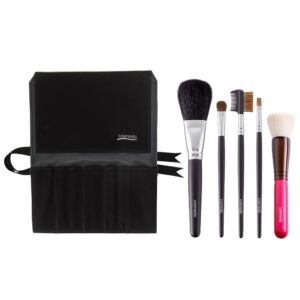
- Are looking for a makeup brush — that is Kumano’s specialty, not this item
- Need guaranteed fast domestic shipping (this ships from Japan)
- Cannot tolerate price/stock uncertainty (the live listing data was thin at writing)

Product overview (from published specs)
The notes below summarize what the source identifies about this item. Where a value was not present in the fetched data, it is marked rather than guessed.
Toyohashi Fude
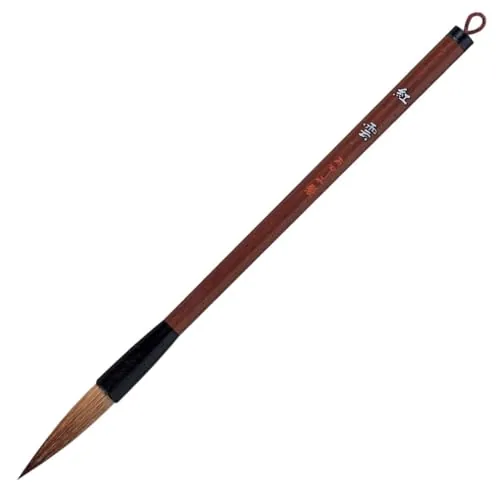
豊橋筆 太筆 兼毫 5号 8.5mm×49mm 福瑞作 書道筆
残り3点 ご注文はお早めに · Sold by アトリエマーノ · ASIN B0D69XM5YV
Price and availability as of 2026-08-31 02:30 JST. The Amazon listing at the time of purchase is authoritative. jpmono.com earns a commission on qualifying purchases at no extra cost to you.
| Attribute | Detail |
|---|---|
| Craft | Toyohashi fude (豊橋筆) — calligraphy / writing brush |
| Technique | Neri-maze (練り混ぜ) — hairs hand-blended wet, then re-blended for even mix |
| Hair | Goat and weasel (itachi) blend per the recommendation hint; horse and tanuki are also used in the region. Confirm the exact blend on the listing. |
| Intended use | Kaisho (block) and gyosho (semi-cursive) practice |
| Origin | Toyohashi, Aichi Prefecture (former Yoshida domain, 吉田藩) |
| Designation | National traditional craft (経済産業大臣指定伝統的工芸品), designated 1976 |
| Reference item ID | B0D69XM5YV (Amazon JP Global Store) |
| Length / weight | Unconfirmed — check the live listing |
| Price | Unconfirmed at time of writing — see the listing for current pricing |
Data note: the Amazon US search returned no individual listing for this item, and the Japan Global Store snapshot did not include a stable price or image at fetch time. Treat all figures as “verify on the listing.” We do not publish prices or specs that are not in the source data.
📖 Glossary — key terms
- Fude (筆) — a writing or painting brush.
- Neri-maze (練り混ぜ) — Toyohashi’s signature method: animal hairs of different types are kneaded together while wet and re-blended so the mix is even throughout the tuft.
- Itachi (鼬) — weasel; its hair is springy and is prized for fine, controlled strokes.
- Kaisho (楷書) — the formal, square “block” script taught first to learners.
- Gyosho (行書) — semi-cursive script, faster and more connected than kaisho.
- Yoshida domain (吉田藩) — the Edo-period feudal domain centered on what is now Toyohashi.
- Four treasures of the study (文房四宝) — brush, ink (sumi), inkstone (suzuri), and paper, the four tools of East Asian calligraphy.

Where this comes from — Toyohashi, Aichi

Toyohashi is a river-and-port city at the eastern edge of Aichi Prefecture, where the Toyokawa River reaches Mikawa Bay. It is squarely on the historic Tōkaidō — the road that linked Edo (Tokyo) and Kyoto — which is part of why a Kyoto craft could travel here and take root. The local climate is mild and the Toyokawa’s water is clean, and that mattered: making a brush starts with washing, sorting, and grading animal hair, and good water makes that work easier.
The craft has a specific origin date. Around 1804, in the Bunka era, the Yoshida domain (吉田藩) — the feudal domain centered on present-day Toyohashi — invited a Kyoto brush maker named Suzuki Jinzaemon (鈴木甚左衛門) to teach the trade. Lower-ranking samurai then produced brushes as a sanctioned side-industry, a common way for domains to give their retainers supplemental income during the long peace of the Edo period.
- 1804 — Yoshida domain invites the Kyoto brush maker Suzuki Jinzaemon; brush-making begins in the area.
- Edo period — Lower-ranking samurai make brushes as a sanctioned side-industry; clean Toyokawa-river water aids hair washing and sorting.
- 19th century — The neri-maze hand-blending method develops, mixing goat, weasel, horse, and tanuki hair for elasticity and ink-holding.
- 1976 — Toyohashi fude is designated a national traditional craft (経済産業大臣指定伝統的工芸品) by METI.
- 2026 — Toyohashi remains one of Japan’s three great brush centers and is said to hold a dominant share of the high-end writing-brush market.
What sets the place apart technically is neri-maze. Rather than layering hair types, Toyohashi makers knead hairs of different animals together while wet and then re-blend them so the mixture is uniform through the whole tuft. Goat hair is soft and holds ink; weasel (itachi) hair is springy and snaps back; horse and tanuki hair add body. Blended evenly, the result is a brush with the elasticity and ink retention that experienced calligraphers ask for — which is the practical reason the region is associated with higher grades rather than entry-level brushes.
“A Toyohashi brush is not layered, it is blended — several animals’ hair kneaded into one even tuft, which is why the region is known for the high end rather than the practice shelf.”
It is worth keeping the claim honest: “dominant share of the high-end market” is the figure traditionally cited for Toyohashi, and the 1976 METI designation is a matter of record. The exact blend, length, and price of any single brush, however, belong to the specific listing — and for this item, those details were not fully present in the source data, so verify them before buying.

📌 How does it compare?
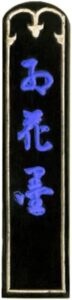
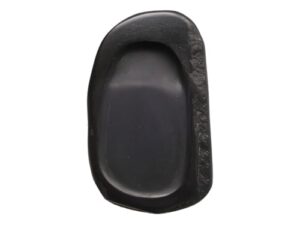
Toyohashi sits inside a family of related crafts on jpmono — the other two brush regions, plus the ink, inkstone, and paper that complete the “four treasures of the study.” If you are building a calligraphy set, these are the companion pieces.
Price snapshot across stores
| Store | Item / variant | Price (JPY + USD est.) | Notes |
|---|---|---|---|
| 🇺🇸 Amazon.com (US) | Browse Japanese calligraphy brushes & sumi supplies | varies (USD) | Best if you are shopping from the US — Prime shipping, USD pricing, no international customs. Amazon US carries calligraphy brushes and ink from several Japanese makers, useful for comparing sizes and hair types. The specific Toyohashi brush here is sourced from Japan (next row). |
| 🇯🇵 Amazon JP Global Store | Toyohashi neri-maze brush (item B0D69XM5YV) | Price unconfirmed at writing — verify on listing | Ships internationally from Japan. This is the sourced listing for the exact item; the price and image were not stable in our snapshot, so confirm before ordering. |
| Maker direct | Toyohashi brush cooperative / individual makers | — | Some Toyohashi workshops sell directly but often only domestically; international shipping is inconsistent. |
| Proxy services (Buyee / Tenso) | Forwarding from JP-only shops | item price + forwarding fee | Useful if you want a specific maker’s brush that only ships within Japan; adds a handling fee and a second shipping leg. |
Prices and stock fluctuate. USD figures, where shown, are approximate at a ¥150/USD baseline as of May 2026; the JPY price on the listing is authoritative.
What it does well
The hand-blended weasel/goat mix is the practical reason serious calligraphers reach for Toyohashi — the tip springs back instead of going limp.
Goat hair holds ink, so the brush carries a long stroke without constant reloading — useful for continuous gyosho lines.
A METI-designated traditional craft since 1976, with a founding line traceable to 1804 — not generic mass production.
Pairs naturally with sumi ink, an inkstone, and washi to complete the four treasures of the study.
Weaknesses and things to verify before buying
- Thin listing data. At the time of writing, the source did not provide a confirmed price or product image for item B0D69XM5YV. Verify both on the live listing before ordering.
- Exact hair blend unconfirmed. The recommendation describes a goat/weasel blend, but the precise ratio — which determines how soft or springy the brush feels — should be checked in the listing description.
- Not a beginner-proof tool. A good animal-hair brush needs proper rinsing, reshaping, and tip-down drying. Neglect mats and splays the tuft; a true beginner may be better served by a cheaper practice brush first.
- Easy to confuse with Kumano makeup brushes. Kumano is famous for cosmetic brushes; this is a writing brush. Make sure the listing is the calligraphy item you intend.
- Ships from Japan. Delivery is slower than domestic Prime, and orders above your country’s threshold may attract customs duty.
- Sizing varies. Tuft length and diameter affect which script and paper size suit the brush; confirm dimensions rather than assuming a “standard” size.
Conclusion — which buyer type are you?
You practice seriously and want the elasticity a hand-blended Toyohashi brush gives. This item is aimed at you — confirm the blend and buy the larger, weasel-rich grade.
You practice regularly and want one good brush that lasts. The standard practice size is the sensible pick; just commit to cleaning it properly.
You are early in practice and price-sensitive. A cheaper synthetic or entry brush first makes sense; graduate to a Toyohashi brush once your maintenance habits are solid.
You wanted a makeup brush, or you cannot maintain animal hair. This is the wrong tool — look at Kumano cosmetic brushes or a washable synthetic instead.
Other ways to approach this purchase
Amazon JP Global Store pricing shifts with the exchange rate. If the yen weakens against your currency, the effective price drops without any discount.
Used brushes are a false economy — a tuft takes the shape of its previous owner’s hand. Buy brushes new; this card is here only to say so.
If you order through Amazon US for related supplies, card and Amazon reward points can offset the cost of the JP-sourced brush.
If the listing’s price and image are still unconfirmed when you check, it is reasonable to wait until the data stabilizes rather than buy blind.
🏆 Editor’s Pick
❓ Frequently Asked Questions
What makes a Toyohashi fude different from a Kumano or Nara brush?
All three are major Japanese brush regions, but Toyohashi is associated with high-grade neri-maze (hand-blended) writing brushes, where several animal hairs are kneaded together wet for even elasticity and ink-holding. Kumano is especially famous for makeup brushes, and Nara is the oldest brush center. Same craft family, different region and reputation.
Does this brush ship internationally?
Yes — it is listed on Amazon’s Japan Global Store, which ships to most major destinations. Delivery is slower than domestic Prime, and orders above your country’s duty threshold may incur customs charges.
How do I care for an animal-hair calligraphy brush?
Rinse the tuft thoroughly in lukewarm water after each use until the water runs clear, gently reshape the tip with your fingers, and hang or lay the brush to dry tip-downward or flat. Do not leave ink to dry in the tuft, which mats and splays the hair.
Is this a good first brush for a beginner?
It is a serious practice brush rather than a disposable. A complete beginner who has not yet learned brush maintenance may prefer a cheaper brush first, then move to a Toyohashi brush once cleaning and storage are habit.
Why is the price not shown in this article?
The source snapshot for this specific item did not include a stable price at the time of writing, and we do not publish prices that are not in our data. Check the Amazon JP Global Store listing for the current figure.
What ink, inkstone, and paper pair with it?
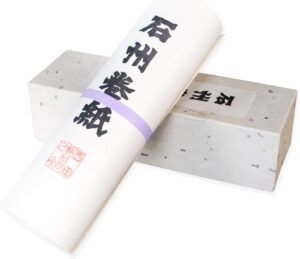
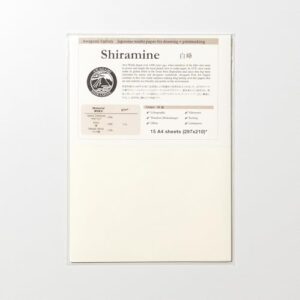
The brush is one of the “four treasures of the study.” A Nara sumi inkstick, an inkstone such as Amehata suzuri, and a quality washi such as Echizen, Sekishu, or Awagami paper complete the set — all linked in the comparison box above.
Can I buy a Toyohashi brush directly from the maker instead?
Some Toyohashi workshops sell directly, but many ship only within Japan. If you want a particular maker’s brush that is domestic-only, a proxy forwarding service such as Buyee or Tenso can ship it abroad for an added fee.
jpmono.com is curated by a Japan-based editorial team (working out of Toyama in the Hokuriku region and Nara in Kansai) and is independent. We do not take payment from the makers we feature; income comes from affiliate links. Read more about our editorial standards.
Note: this article was drafted with AI assistance and reviewed against source listings by the jpmono editorial desk. Specifications, prices, and availability should be confirmed on the retailer’s page before purchase.
Affiliate disclosure: jpmono.com may earn a commission on qualifying purchases made through links on this page, at no additional cost to you.